A big misconception about the carboniferous

Pycnogonid

Well-Known Member
People imagine the carboniferous as this backwards alien world where every arthropod was a giant invincible monster and vertebrates where tiny pipsqueaks that cowered in fear from such monsters.

This view could not be more wrong. The majority of carboniferous arthropods where tiny, just like modern ones. Only a handful could be called giant. And tetrapods had not become fully established on land, so arthropods had more ecological freedom. Even with this in mind, there where some pretty monstrous tetrapods that out sized arthropleura. The few giant bugs that did exist where more due to circumstance than anything else.
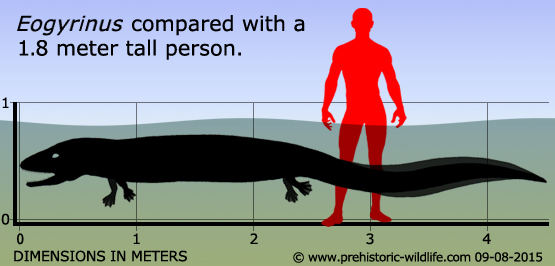
eogyrinus-size.jpg


So, the carboniferous was an age where terrestrial life was starting to diversify into many forms that are no longer around today. And this wave happened to include some big bugs.
 
Hi Pycnogonid. Thanks for posting.
The majority of carboniferous arthropods where tiny, just like modern ones. Only a handful could be called giant. And tetrapods had not become fully established on land, so arthropods had more ecological freedom.

This isn't something I know much about, but I think your explanation misses the most important factor. Arthropods face size constraints imposed not by competition, but by respiration, because they don't have the tetrapods' complex circulation systems. This is why the biggest (including Arthropleura, Meganeura, Pulmonoscorpius, etc.) typically have a dorso-ventrally flattened form; it reduces the distance oxygen must diffuse from the outside to the innermost tissues. So, weren't the high oxygen levels of the Carboniferous the reason its insects could grow so big?
So, the carboniferous was an age where terrestrial life was starting to diversify into many forms that are no longer around today.

Would you mind expanding on what you mean here?
And this wave happened to include some big bugs.

Again, I don't think it was random. Abiotic factors made evolution towards currently unattainable sizes virtually inevitable.
 
By the way, not all people imagine the Carboniferous as you mentioned. Probably, "normal" people not interested too much in nature don't even know what the Carboniferous is it, or the just know that it was a past period of time many millions of years ago. People that know more than this usually are people with wide knowlegde of nature, geology or paleology. And many of these people I think that imagine the Carboniferous in a more realistic, and less "hollywoodish" way than just giant artrhopods pursuing small vertebrates. I particularly imagined it as a very green world full of giant ferns, giant horestails and giant other primitive plants (many of them of extinct groups), where marshlands are quite abundant and terrestrial biodiversity, tough quickly expanding, was still low and looking poor if compared with nowadays one (for example, all insects were primitive hemimetabolous, roach-like or dragonfly-like insects, there was no modern insects such as beetles, butterflies or wasps).
 
Arthropods face size constraints imposed not by competition, but by respiration, because they don't have the tetrapods' complex circulation systems.
No, competition actually plays a bigger role than oxygen. Because of their endoskeleton, tetrapods take megafaunal niches in terrestrial environments wherever they go. In the triassic, oxygen levels where actually very low during the early Triassic. Yet, a group of large insects existed, the Titanopterans. Yet, the strangely disappeared when pterosaurs hit the seen. Gee, I wonder why.

Would you mind expanding on what you mean here?
Perhaps I was a little vague. What I mean, was terrestrial life was starting to kick off. Terrestrial plants and arachnids evolved in the ordovician, and insects and tetrapods in the devonian. Yet, these groups didn't start to really diversify until the carboniferous.
 
No, competition actually plays a bigger role than oxygen. Because of their endoskeleton, tetrapods take megafaunal niches in terrestrial environments wherever they go. In the triassic, oxygen levels where actually very low during the early Triassic. Yet, a group of large insects existed, the Titanopterans. Yet, the strangely disappeared when pterosaurs hit the seen. Gee, I wonder why.
I think you're not appreciating the difference between terrestrial arthropods which are simply large, and those which are gigantic. @Giant Panda is quite correct: there are physiological reasons preventing insects reaching above a certain size which are dependent on the level of oxygen in the atmosphere and probably also the air pressure. If you transferred a Meganeura into our world it would suffocate.

Do you have any actual sizes for Titanopterans? All I have ever seen on them are wingspan estimates ranging between 35 and 50cm (I suspect the range creeps upwards the more often they are discussed, so around 40cm is probably correct). Given their general body-shape they wouldn't be gigantic insects with this wingspan, just very large.
 
I think you're not appreciating the difference between terrestrial arthropods which are simply large, and those which are gigantic. @Giant Panda is quite correct: there are physiological reasons preventing insects reaching above a certain size which are dependent on the level of oxygen in the atmosphere and probably also the air pressure. If you transferred a Meganeura into our world it would suffocate.

Do you have any actual sizes for Titanopterans? All I have ever seen on them are wingspan estimates ranging between 35 and 50cm (I suspect the range creeps upwards the more often they are discussed, so around 40cm is probably correct). Given their general body-shape they wouldn't be gigantic insects with this wingspan, just very large.
And I feel like your underestimating the role competition plays. Looking at the largest land arthropod currently alive, the coconut crab. Lives on an islands with very few native tetrapods. I'm not denying the passive respiratory systems of arthropods depend on higher oxygen to grow to larger sizes, but competition from tetrapods plays just as big, if not a bigger role. Information on titanopterans is sparse, but it's usually around 30-40 cm. And where exactly does "big" end and "gigantic" begin?
 
And I feel like your underestimating the role competition plays. Looking at the largest land arthropod currently alive, the coconut crab. Lives on an islands with very few native tetrapods. I'm not denying the passive respiratory systems of arthropods depend on higher oxygen to grow to larger sizes, but competition from tetrapods plays just as big, if not a bigger role. Information on titanopterans is sparse, but it's usually around 30-40 cm. And where exactly does "big" end and "gigantic" begin?
no, what I (and I presume Giant Panda) are discussing are the gigantic invertebrates of the Carboniferous because you suggested (unless we misunderstood) that their size was due to lack of competition, which futher seemed to be your position with your statement "No, competition actually plays a bigger role than oxygen" and repeated in the quote above ("competition from tetrapods plays just as big, if not a bigger role") - which is simply wrong.

The coconut crab is generally acknowledged as being at the (more or less) maximum size for a terrestrial invertebrate in today's world. And its current island distribution is due to human predation, not because it cannot cope with vertebrates. It used to occur in tropical Australia and Madagascar for example (both of which have a substantial number of vertebrates, many of which are predatory mammals). If, for argument's sake, you wiped Africa clean of vertebrates and filled it with coconut crabs and centipedes - they aren't going to get to massive sizes, because they can't.

The distinction between "large" and "gigantic" I thought was obvious from the context of the thread. "Large" is simply what is theoretically attainable in terrestrial invertebrates today. "Gigantic" is anything above that size - such as the gigantic species from the Carboniferous.
 
no, what I (and I presume Giant Panda) are discussing are the gigantic invertebrates of the Carboniferous because you suggested (unless we misunderstood) that their size was due to lack of competition, which futher seemed to be your position with your statement "No, competition actually plays a bigger role than oxygen" and repeated in the quote above ("competition from tetrapods plays just as big, if not a bigger role") - which is simply wrong.

The coconut crab is generally acknowledged as being at the (more or less) maximum size for a terrestrial invertebrate in today's world. And its current island distribution is due to human predation, not because it cannot cope with vertebrates. It used to occur in tropical Australia and Madagascar for example (both of which have a substantial number of vertebrates, many of which are predatory mammals). If, for argument's sake, you wiped Africa clean of vertebrates and filled it with coconut crabs and centipedes - they aren't going to get to massive sizes, because they can't.

The distinction between "large" and "gigantic" I thought was obvious from the context of the thread. "Large" is simply what is theoretically attainable in terrestrial invertebrates today. "Gigantic" is anything above that size - such as the gigantic species from the Carboniferous.
I didn't say that oxygen plays no role. I said it played a smaller role than competiton. And about your scenario, no, they won't get buffalo sizes, but they would get noticeably bigger. The size of some arthropods during the carboniferous was a result of both oxygen and lack of competition, but more so lack of competition. Just look at it for a second. There was no herbivorous tetrapods, so arthropleura could thrive. There was no flying vertebrates, so meganeura could thrive.
 
I didn't say that oxygen plays no role. I said it played a smaller role than competiton. And about your scenario, no, they won't get buffalo sizes, but they would get noticeably bigger. The size of some arthropods during the carboniferous was a result of both oxygen and lack of competition, but more so lack of competition. Just look at it for a second. There was no herbivorous tetrapods, so arthropleura could thrive. There was no flying vertebrates, so meganeura could thrive.
but... they wouldn't "get noticeably bigger" - it is impossible, based on current understanding of how invertebrate bodies actually work, that coconut crabs could get "noticeably bigger" just because there is no competition. And it completely overlooks what I just said above, that coconut crabs existed both on mammal-free islands and mammal-occupied mainlands.

Nobody is disputing that invertebrates in the Carboniferous ranged from tiny to gigantic - that seems like an obvious thing to be the case. Nobody is even disputing that empty niches can be filled by invertebrates which attain larger sizes in the lack of competition - that is clearly visible in today's world, e.g. with weta in New Zealand; you don't even need a lack of other tetrapods for that to happen.

But invertebrate body sizes are reliant on the oxygen content of the atmosphere. You seem to be presenting an absolute from a pre-supposed opinion - "The size of some arthropods during the carboniferous was a result of both oxygen and lack of competition, but more so lack of competition."
 
Do you have any actual sizes for Titanopterans? All I have ever seen on them are wingspan estimates ranging between 35 and 50cm (I suspect the range creeps upwards the more often they are discussed, so around 40cm is probably correct). Given their general body-shape they wouldn't be gigantic insects with this wingspan, just very large.

Given the fact that the largest extant insect - in terms of wingspan - is the White Witch Moth (Thysania agrippina) which at 30cm is only slightly smaller than the very largest Titanopteran (which had a wingspan of 35cm), I think it is reasonably safe to say that were they around today we wouldn't view Titanopterans as vastly unusual.

And about your scenario, no, they won't get buffalo sizes, but they would get noticeably bigger.

If this were the case, then if your thesis was accurate one would expect the now-extirpated populations of Coconut Crab latterly present throughout the Indian Ocean in areas inhabited by tetrapod carnivores to have been smaller than those populations which survive to the present day.

Spoilers - they were not.
 
Given the fact that the largest extant insect - in terms of wingspan - is the White Witch Moth (Thysania agrippina) which at 30cm is only slightly smaller than the very largest Titanopteran (which had a wingspan of 35cm), I think it is reasonably safe to say that were they around today we wouldn't view Titanopterans as vastly unusual.
there is a reconstruction here: Titanopteran insect, Clatrotitan andersoni - Australian Museum - looking kind of like a mantid. Assuming the wingspan was 40cm, each wing is therefore less than 20cm, which makes the insect roughly 30cm long. It would be a very large insect in today's world but, as you say, no more unusual than other extant giant insects.

I'm not sure how pterosaurs come into their extinction. That would be like saying modern giant insects can't survive where there are birds.
 
Another point in favour of Chlidonias and Giant Panda arguments: during the K/T mass extinction, all large terrestrial vertebrates were virtually whiped out of Earth, leading the future into the smallest terrestrial vertebrates. Why the smallest terrestrial vertebrates evolved to fill the empty ecological niches than dinosaurs, pterosaurs, etc. left, instead being arthropods (much more diversified and able to a much more quick evolution) who filled these niches? I think that the answer is in the oxygen level...
 
I just looked up photos of large coconut crabs to see what we were talking about. Nightmares tonight.
note that a lot of photos use forced perspective or deliberate manipulation to increase the apparent size - but yes they are scary!
 
I'm not sure how pterosaurs come into their extinction. That would be like saying modern giant insects can't survive where there are birds.
To be honest, I actually dont remember where I heard that. Sorry.

Another point in favour of Chlidonias and Giant Panda arguments: during the K/T mass extinction, all large terrestrial vertebrates were virtually whiped out of Earth, leading the future into the smallest terrestrial vertebrates. Why the smallest terrestrial vertebrates evolved to fill the empty ecological niches than dinosaurs, pterosaurs, etc. left, instead being arthropods (much more diversified and able to a much more quick evolution) who filled these niches? I think that the answer is in the oxygen level...
Well, small vertebrates still have an endoskeleton.

But your right about the coconut crab. That was a mistake on my part. But there is also one more limit on arthropod size that needs to be addressed. The exoskeleton. After a certain size, its too much trouble to moult and the animal would end up as a giant pink lump of flesh.
 
I'm not sure that the need of moulting the exoskeleton as a whole is an actual limit for reaching bigger sizes. A 12 meters reticulated python shed its skin as a whole and don't turn into a pink flesh mass, and in the past, giant arthropods like sea scorpions also moulted their exoskeleton whole.
 
I'm not sure that the need of moulting the exoskeleton as a whole is an actual limit for reaching bigger sizes. A 12 meters reticulated python shed its skin as a whole and don't turn into a pink flesh mass, and in the past, giant arthropods like sea scorpions also moulted their exoskeleton whole.
That's different. Snakes and lizards shed a thin layer of scales and can act out of it almost immediately. Arthropods molt their entire exoskeleton meaning they can't walk, run, hunt, or defend itself until it's new one hardens.
 
TBut there is also one more limit on arthropod size that needs to be addressed. The exoskeleton. After a certain size, its too much trouble to moult and the animal would end up as a giant pink lump of flesh.
The trouble with exoskeletons in terms of extreme gigantism isn't moulting, it is with the structure of chitin. As a terrestrial arthropod increases in size the chitin has to increase in thickness otherwise it would collapse, but the thicker the chitin gets the less room there is inside for the animal's essential bits. However, the way most terrestrial arthropods' respiratory systems work over-rides this concern because an animal large enough to have issues with its exoskeleton would no longer be able to breathe.

I should also make the point that coconut crabs can get to the size they do because they breathe via branchiostegal lungs (which are basically modified gills). Insects and most other terrestral invertebrates breathe via tracheae. With today's oxygen levels, an insect could not get to the size of a coconut crab.
 
The trouble with exoskeletons in terms of extreme gigantism isn't moulting, it is with the structure of chitin. As a terrestrial arthropod increases in size the chitin has to increase in thickness otherwise it would collapse, but the thicker the chitin gets the less room there is inside for the animal's essential bits. However, the way most terrestrial arthropods' respiratory systems work over-rides this concern because an animal large enough to have issues with its exoskeleton would no longer be able to breathe.

I should also make the point that coconut crabs can get to the size they do because they breathe via branchiostegal lungs (which are basically modified gills). Insects and most other terrestral invertebrates breathe via tracheae. With today's oxygen levels, an insect could not get to the size of a coconut crab.
Well, it's certainly possible that some insect in the future could evolve a new way of breathing
 
Back
Top