A Guidebook Library: TLD's year-long randomised walkthrough of zoo guides

With all the travelling I have done lately I've been so tired I keep forgetting to upload my prepared "stopgap" posts to keep the thread chugging along - but the one I had specifically planned for today is important enough that it is worth setting aside some valuable travel spoons.

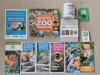
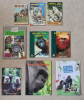
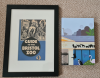
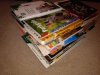
Given how bleak today is for those interested in zoo history - marking as it does the closure of Bristol Zoo, only a little more than a decade short of its bicentennial year and as such representing the loss of one of the oldest and most historically significant zoological collections in the world - I thought it appropriate to upload the following image depicting my personal collection of guidebooks from the zoo:

full


Doubtless due to the imminent closure, I have noticed that of late, even commonplace guidebooks for Bristol have been going for pretty large figures on the secondary market. I would be interested to hear about the guidebooks from Bristol Zoo owned by those reading this thread!

In a curious bit of happenstance, I am posting this from the grounds of one of the few collections which significantly exceed the age and historical significance of Bristol Zoo - to wit, Tiergarten Schönbrunn.
Other than the oldest two, I think I have all of these guides. I'll have a look when I get home and post what I have :)
 
Other than the oldest two, I think I have all of these guides. I'll have a look when I get home and post what I have :)

Excellent - there's a few variants of the middle four covers I believe, with differing contents - so it's entirely possible the ones in your collection are guides I lack. When I get a chance to sit down I'll be updating the media image with a comment listing dates, and will post the information here too!
 
  • Like
Reactions: TNT
Considering how often I visited Bristol Zoo from a very early age , I only have 5 Guide books -
1963 edition of Elephant Ride ( lacking front and back cover )
White Tiger 1960's - second edition Pygmy Hippos etc
White Tiger 1960's - third edition Peccaries etc.
12 Images 1987 - map across centre pages
Young Red Ruffed Lemur 2001
I also have 2 undated folded leaflets which include a map . The first has a baby Sumatran Orang Utan on the front and mentions that Hollywood Towers was recently acquired . The second is later and has a Gorilla on the front and advises visits to 'our sister establishment' Dudley Zoo .
 
I've just had a dig through my boxes and folders... Here's a complete haul of my Bristol Zoo memorabilia @TeaLovingDave :D

I believe I have a few more guidebooks elsewhere... But I can't seem to find them :eek: I also have some old photos, but as per ZooChat rules, I'm banned from posting them as they were not taken by myself. Though, they were given to me by a friend with the intent that I share them on the site!

upload_2022-9-4_17-2-39.png

upload_2022-9-4_17-2-51.png

upload_2022-9-4_17-3-27.png
 

Attachments

  • upload_2022-9-4_17-2-39.png
    upload_2022-9-4_17-2-39.png
    1.6 MB · Views: 63
  • upload_2022-9-4_17-2-51.png
    upload_2022-9-4_17-2-51.png
    1.2 MB · Views: 64
  • upload_2022-9-4_17-3-27.png
    upload_2022-9-4_17-3-27.png
    1.2 MB · Views: 61
Last edited:
My first visit to Bristol was in 1972 or 73. I have the guide with the 3 white tiger cubs on from that visit, sadly now minus cover, though I think I may still have it somewhere.
I didn't visit after 1975 until 2008 and have 2 more guides since then, the one with the Geoffroy's marmosets and another that I can't remember what is on the cover.
 
As I have alluded a few times here and there on the forum, I have been travelling in continental Europe over the course of the last few weeks - however, I have now returned home and want to get things going full steam on this thread once again :) and the nature of my trip provides a pretty good means of doing so!

The onset of the C19 pandemic led to the cancellation of two large-scale trips to the continent (a return visit to Bavaria and adjacent areas of Central Europe in March 2020 which was aborted mere days before it was due to happen, and a trip to Vienna and surrounding cities which I had intended for autumn 2020), and over the course of the pandemic I decided that once things calmed down I would attempt to join the two trips together to the best of my ability.

Having boosted my confidence about travelling abroad again with a pair of weekend trips to Poland and northern Germany earlier this year, I felt the time was right to put these plans into action - and the fact that the 2022 Zoohistorica event was planned to occur at Prague Zoo in early September 2022 provided further impetus, and a specific time and location around which I could construct the framework of my travels. Given the rough route and itinerary I had constructed, and the limitations of train schedules, it was rapidly apparent that the optimum strategy would be to position my attendance at Zoohistorica (the first time since the oft-mentioned Bristol Zoo event in 2013) at the end of the overall trip.

Once I have a little more mental energy, I intend to write about my travels in more detail, and post a review of the 2022 Zoohistorica event (during which time I had the pleasure of meeting some zoo enthusiasts for the first time, and renewing my acquaintance with others after a long hiatus) within this thread.... but in the meantime, the key point that should be noted is the following: between those guidebooks obtained during my wider travels around the continent, and those I was given, purchased or obtained in exchange during Zoohistorica itself, I have increased my personal collection of guidebooks by a total of 45 items!

306521971_1287091432130824_7947033931090407260_n.jpg

So, I think a great way of getting things flowing with this thread once again - and providing me with a jumping-off point for acquainting myself with the new additions to my personal guidebook collection - is to list the various items which I obtained during the last three weeks, and open the thread up to requests:

Alpenzoo 1983
Alpenzoo 1992
Alpenzoo 1996
Alpenzoo 2012
Alpenzoo 2012 (Italian)
Alpenzoo 2019 (children's guidebook)
Alpenzoo 2022
Haus des Meeres 2022
---
Zoo Dvur Kralove 2020
Zoo Hluboká 2021
Zoo Usti 2018
Zoo Olomouc 2021
Prague Zoo 2003
Prague Zoo 2018 (Tarantulas)
Prague Zoo 2022 (Tarantulas)
Zoo Plzen 2006
Zoo Plzen 2020
Zoo Plzen 2020 (English)
---
Ranua Zoo 1995
---
Vogelpark Marlow 1996
Tierpark Hellabrunn 2000
Tierpark Sababurg 2016
Wilhelma 1994
Wildpark Luneberger Heide 2015
Zoo Berlin Aquarium 1971
Zoo Frankfurt 2008
Zoo Frankfurt 2010
Zoo Koln 1991
Zoo Koln 1992
Zoo Darmstadt 1998
---
Budapest Zoo 1966
Budapest Zoo 1996
Zoo Szeged c.2020
---
Burgers Zoo 2019
Reptilienzoo Iguana 1992
---
Zoo Gdansk 2016
Zoo Lodz 2021
Warsaw Zoo 2018
---
Oceanário de Lisboa 1998 (English)
---
Moscow Zoo 1994 (English)
---
Zoo Bojnice 2012
---
Leningradsky Zoo 1977
---
Faruk Yalçın Zoo 1995
---
Bristol Zoo 2002
Cotswold Wildlife Park 1992
 

Attachments

  • 306521971_1287091432130824_7947033931090407260_n.jpg
    306521971_1287091432130824_7947033931090407260_n.jpg
    156.3 KB · Views: 55
So, I think a great way of getting things flowing with this thread once again - and providing me with a jumping-off point for acquainting myself with the new additions to my personal guidebook collection - is to list the various items which I obtained during the last three weeks, and open the thread up to requests:

Alpenzoo 1983
Alpenzoo 1992
Alpenzoo 1996
Alpenzoo 2012
Alpenzoo 2012 (Italian)
Alpenzoo 2019 (children's guidebook)
Alpenzoo 2022
Haus des Meeres 2022
---
Zoo Dvur Kralove 2020
Zoo Hluboká 2021
Zoo Usti 2018
Zoo Olomouc 2021
Prague Zoo 2003
Prague Zoo 2018 (Tarantulas)
Prague Zoo 2022 (Tarantulas)
Zoo Plzen 2006
Zoo Plzen 2020
Zoo Plzen 2020 (English)
---
Ranua Zoo 1995
---
Vogelpark Marlow 1996
Tierpark Hellabrunn 2000
Tierpark Sababurg 2016
Wilhelma 1994
Wildpark Luneberger Heide 2015
Zoo Berlin Aquarium 1971
Zoo Frankfurt 2008
Zoo Frankfurt 2010
Zoo Koln 1991
Zoo Koln 1992
Zoo Darmstadt 1998
---
Budapest Zoo 1966
Budapest Zoo 1996
Zoo Szeged c.2020
---
Burgers Zoo 2019
Reptilienzoo Iguana 1992
---
Zoo Gdansk 2016
Zoo Lodz 2021
Warsaw Zoo 2018
---
Oceanário de Lisboa 1998 (English)
---
Moscow Zoo 1994 (English)
---
Zoo Bojnice 2012
---
Leningradsky Zoo 1977
---
Faruk Yalçın Zoo 1995
---
Bristol Zoo 2002
Cotswold Wildlife Park 1992

To clarify, in case my sleep-deprived post last night wasn't clear enough - my intention is to review/discuss four or five of the guidebooks I recently obtained, and would like specific requests regarding which ones :)
 
To clarify, in case my sleep-deprived post last night wasn't clear enough - my intention is to review/discuss four or five of the guidebooks I recently obtained, and would like specific requests regarding which ones :)
Well, seeing as nobody else has suggested any, I'll go with these two:
Zoo Berlin Aquarium 1971
Zoo Frankfurt 2008
 
As I have alluded a few times here and there on the forum, I have been travelling in continental Europe over the course of the last few weeks - however, I have now returned home and want to get things going full steam on this thread once again :) and the nature of my trip provides a pretty good means of doing so!

The onset of the C19 pandemic led to the cancellation of two large-scale trips to the continent (a return visit to Bavaria and adjacent areas of Central Europe in March 2020 which was aborted mere days before it was due to happen, and a trip to Vienna and surrounding cities which I had intended for autumn 2020), and over the course of the pandemic I decided that once things calmed down I would attempt to join the two trips together to the best of my ability.

Having boosted my confidence about travelling abroad again with a pair of weekend trips to Poland and northern Germany earlier this year, I felt the time was right to put these plans into action - and the fact that the 2022 Zoohistorica event was planned to occur at Prague Zoo in early September 2022 provided further impetus, and a specific time and location around which I could construct the framework of my travels. Given the rough route and itinerary I had constructed, and the limitations of train schedules, it was rapidly apparent that the optimum strategy would be to position my attendance at Zoohistorica (the first time since the oft-mentioned Bristol Zoo event in 2013) at the end of the overall trip.

Once I have a little more mental energy, I intend to write about my travels in more detail, and post a review of the 2022 Zoohistorica event (during which time I had the pleasure of meeting some zoo enthusiasts for the first time, and renewing my acquaintance with others after a long hiatus) within this thread.... but in the meantime, the key point that should be noted is the following: between those guidebooks obtained during my wider travels around the continent, and those I was given, purchased or obtained in exchange during Zoohistorica itself, I have increased my personal collection of guidebooks by a total of 45 items!

View attachment 575381

So, I think a great way of getting things flowing with this thread once again - and providing me with a jumping-off point for acquainting myself with the new additions to my personal guidebook collection - is to list the various items which I obtained during the last three weeks, and open the thread up to requests:

Alpenzoo 1983
Alpenzoo 1992
Alpenzoo 1996
Alpenzoo 2012
Alpenzoo 2012 (Italian)
Alpenzoo 2019 (children's guidebook)
Alpenzoo 2022
Haus des Meeres 2022
---
Zoo Dvur Kralove 2020
Zoo Hluboká 2021
Zoo Usti 2018
Zoo Olomouc 2021
Prague Zoo 2003
Prague Zoo 2018 (Tarantulas)
Prague Zoo 2022 (Tarantulas)
Zoo Plzen 2006
Zoo Plzen 2020
Zoo Plzen 2020 (English)
---
Ranua Zoo 1995
---
Vogelpark Marlow 1996
Tierpark Hellabrunn 2000
Tierpark Sababurg 2016
Wilhelma 1994
Wildpark Luneberger Heide 2015
Zoo Berlin Aquarium 1971
Zoo Frankfurt 2008
Zoo Frankfurt 2010
Zoo Koln 1991
Zoo Koln 1992
Zoo Darmstadt 1998
---
Budapest Zoo 1966
Budapest Zoo 1996
Zoo Szeged c.2020
---
Burgers Zoo 2019
Reptilienzoo Iguana 1992
---
Zoo Gdansk 2016
Zoo Lodz 2021
Warsaw Zoo 2018
---
Oceanário de Lisboa 1998 (English)
---
Moscow Zoo 1994 (English)
---
Zoo Bojnice 2012
---
Leningradsky Zoo 1977
---
Faruk Yalçın Zoo 1995
---
Bristol Zoo 2002
Cotswold Wildlife Park 1992
Wildpark Luneberger Heide 2015 because that seems like an odd one out
 
Day 125: Budapest Zoo (1996) - Elephant Statues (English Edition)

full

full


Page count: 28 pages
Photographs: 30 photographs (15 in colour)
Illustrations/diagrams: 7 historical drawings and exhibit designs
Layout: Comprehensive historical account of collection, followed by a discussion of architectural and botanical highlights, concluding with a general walkthrough of the species held within the collection.
Map: Two; one showing location of the zoo within Budapest city centre within the interior front cover, and one showing the zoo itself within a fold-out segment of the rear cover


Before I discuss the various guidebooks requested above, I have decided to write about one of the hidden gems among my recent batch of zoological guidebook acquisitions; a short but rather excellent guidebook to Budapest Zoo which was published in the mid-1990s, and which as I shall relate provides a massive amount of detail about the history, architecture and botanical displays of the collection. As I have discussed on a number of occasions within this thread, I feel that where zoological guidebooks are concerned, providing information relating to these aspects of a collection is just as important as discussion of the animal species held within.

full


The guidebook opens with a lengthy discussion of the historical background to Budapest Zoo, including sections relating to the events which led to the zoo first opening in 1866, key points in the history of the zoo during the decades which followed, the design choices made in the construction of key exhibits and structures, and the impact of WWII on the zoo along with the subsequent rebuilding process. These passages are followed by a detailed walkthrough account of the architectural highlights found throughout the zoo, each referring to key structures using the numbering found within the collection map provided at the rear of the guidebook; for obvious reasons this walkthrough account contains much content which has a bearing on the information provided in the preceding historical discussion, and given the general style and presentation can be reasonably viewed as a de-facto continuation of these accounts.

Overall, these two segments of the guidebook occupy more or less 50% of the total length; although the guidebook is not overly long per se, covering a total of 28 pages, this level of detail and focus on subjects of this nature is laudable in my opinion. Moreover, the content and aesthetic style of these accounts is very much complemented by the copious presence of photographs and illustrative diagrams, showing various of the exhibits and houses discussed within the text, alongside promotional posters, architectural plans and other supplementary items of information

full

full


The architectural discussion is followed by a similar segment focusing on the botanical displays located throughout the collection; as I discovered when visiting the collection for the first time recently, Budapest Zoo represents one of those zoological collections which devotes a relatively high amount of attention to the botanical side of the natural world, with attractive gardens and flower displays complemented by a variety of plants and vegetation within several of the animal houses. As is the case for the architectural discussion, the botanical section of this guidebook makes regular reference to the map numbering of the exhibits and structures cited within - this allows for easy cross-reference between the contents of the main body of the text and the accompanying map, therefore increasing the value of the guidebook as a reference document significantly.

Beyond here, the main body of the guidebook concludes with a walkthrough account of the species collection at Budapest Zoo at the time of publication; this more or less follows the numbering found within the map of the zoo, and therefore provides a suggested route through the collection. The content provided within is relatively high quality despite its brevity, containing various items of information relating to the species discussed, the houses and exhibits within which they were located, and the individual animals held within the collection at the time of publication.

full


The guidebook contains a pair of maps; the first, located within the interior front page, is a simple street plan showing the rough location of the zoo and its environs within the city centre of Budapest, whilst the second comprises a rather detailed and aesthetically-pleasing map of the collection itself. As noted previously, each of the major exhibits and houses within the zoo are methodically numbered and labelled, with botanical displays and garden areas clearly visible alongside the precise orientation and shape of the paths throughout the zoo; although the zoo has changed in various ways over the decades which have followed, enough has remained the same for it to be fairly obvious that the guidebook and map will have been very useful as a reference tool for those visiting the collection at the time of publication.

full


Overall, this is a very interesting guidebook, containing a dense amount of information relating to the history of Budapest Zoo, the buildings and exhibits within, and the various plant and animal species present there at the time of publication; I suspect that the chances are fairly high that this was the first guidebook for Budapest Zoo published in English-language, considering the sociological and political history of the region, and therefore it may well be the case that some of the information presented within had not been readily available to Anglophone zoo enthusiasts until this point in time.

My enjoyment of this guidebook is, without a shadow of a doubt, somewhat influenced by the fact that I recently visited Budapest Zoo for the first time (with the kind assistance and guidance of @HungarianBison ensuring I made the most of my visit) and therefore have direct experience colouring my understanding of the text.... along with the fact that, pertaining as it does to one of the oldest extant zoological collections in the world, the guidebook hits a particular chord within my interests and sensibilities.
 
So, I think a great way of getting things flowing with this thread once again - and providing me with a jumping-off point for acquainting myself with the new additions to my personal guidebook collection - is to list the various items which I obtained during the last three weeks, and open the thread up to requests:

If you're open to reviewing more than the four already requested, the Haus des Meeres 2022 would be very interesting to me!
 
Day 126: Zoo-Aquarium Berlin (1971) - Majestic Angelfish

full


Page count: 44
Photographs: 24 black-and-white photographs, 7 colour photographs
Illustrations/diagrams: N/A
Layout: Introduction and history of the aquarium, followed by comprehensive walkthrough account of species and exhibits within.
Map: Located on back cover of guidebook


The first of the guidebooks requested by @Chlidonias from the batch which I obtained at Zoohistorica is one of the small handful which I specifically sought out, rather than obtaining opportunistically - or rather, although I was not seeking out this *particular* edition, I knew that one of my targets was to obtain as many guidebooks from the Berlin Zoo aquarium as possible. In the event, this was the only one I managed to pick up - but given the fact that it is a rather interesting and high-quality guidebook, and fills a gap in my personal collection, I am satisfied nonetheless. The publication of this guidebook, like the 1975 edition which I discussed some months ago, came after several decades of comprehensive repairs, rebuilding and growth subsequent to the destruction of WWII - although this particular edition is slightly older, and therefore represents an earlier stage in this process. As such, it provides an important insight into the timespan in question.

full


The guidebook opens with a short list of key visitor information - this primarily deals with material such as the opening times of the aquarium, feeding times for various species within, and entrance fees for daily and yearly entry. However, one interesting point which is perhaps less commonplace in modern-day zoological guidebooks, and zoological collections in general, is the presence of a section listing the requirement for a photography pass to be purchased by any visitor wishing to take photographs at the aquarium. To my knowledge, the only major European collection which still does something of this sort is Krokodýlí Zoo Protivín - which generally prohibits photography entirely but, at unpredictable times apparently determined "on the day", has been known to allow photography for those who pay for a day pass. This sort of policy makes rather more sense given the circumstances of the time, the need of the Zoo-Aquarium to recoup money wherever possible, and the fact that photographic equipment was rather bulkier and more specialist in the early 1970s... but is somewhat baffling when applied to the modern day :p

This information is followed by a pair of fairly brief but interesting sections; the first discusses the early history of the Zoo-Aquarium from the time it first opened in 1913 until the building was all-but destroyed during WWII, concluding with the 1952 re-opening; the second goes into some detail about the technical aspects relating to the operation and maintenance of the aquarium, covering subjects such as filtration and pressure systems, control of water temperature, and feeding schedules for the inhabitants of the collection. As I have made rather clear in the past, both of these subjects are highly interesting to me, with their presence in a zoological guidebook generally providing a strong indicator of the overall quality to come.

The main body of the guidebook comprises a walkthrough account divided into three major sections, discussing the species displayed on each floor of the aquarium; the first and longest section covers the wide range of fish and aquatic invertebrates displayed on the ground floor of the aquarium, divided into freshwater and saltwater exhibits. The majority of the species discussed within the guidebook, are referred to solely by their common name, and often only in the broadest of terms - although there are occasional points where a species is referred to by both common name and scientific name, to no apparent pattern - and therefore my ability to accurately judge which taxa are being referred to is somewhat more limited than I would like. That said, this is purely a matter of learning the German-language common names for more species - which is something that can be acquired over time, and is no bad thing to aim for!

full

full


The contents of the guidebook are illustrated throughout by a variety of attractive black-and-white photographs depicting some of the species displayed within the Zoo-Aquarium at the time of publication, with further colour images present within the central pages of the guidebook in a series of photographic plates. These photographs - both within the main body of the guidebook and in the central plates - are all fully labelled with both common and scientific names, which somewhat helps with the aforementioned issue.

The second section of the walkthrough account deals with the reptile and amphibian collection displayed on the first floor of the Zoo-Aquarium, whilst the third section discusses the invertebrate species displayed on the second floor. Curiously enough, although these two sections taken together are shorter than the first section alone, they seem to provide rather more detail overall - significantly more species are referred to in-text, and a noticeably higher proportion of the reptiles and amphibians are cited both by their common name and scientific name. This naturally means that these sections of the guidebook convey a rather stronger sense of the overall scale of the animal collection within the Zoo-Aquarium as a whole to an Anglophone reader, even if the guidebook as a whole doubtless presents this sense throughout if one is fully familiar with the German-language common names used within the first section. As I noted previously, this only provides further impetus to gain greater familiarity with the common names in question, and to improve my fluency in reading German overall!

full


Beyond here, the guidebook concludes with a brief segment discussing the number of species and individual animals displayed within the Zoo-Aquarium at the time of publication; as I did for the similar section provided in the 1975 edition I discussed some time ago, I feel it would be worthwhile presenting this information in full:

January 1st 1971 - total of 1438 species held, c.8030 individual animals held

Sponges and Jellyfish - 33 species, c.450 individual animals
Worms, Sea-squirts and Echinoderms - 36 species, c.150 individual animals
Crustaceans - 38 species, 360 individual animals
Insects - 105 species, c.1,975 individual animals
Arachnids - 31 species, c.100 individual animals
Molluscs - 41 species, c.800 individual animals
Freshwater Fish - 630 species, c.3,065 individual animals
Saltwater Fish - 179 species, c.330 individual animals
Amphibians - 59 species, c.160 individual animals
Lizards - 87 species, 267 individual animals
Snakes - 72 species, 118 individual animals
Tortoises and Turtles - 104 species, 217 individual animals
Crocodilians - 23 species, 38 individual animals


If one compares this list to the previously-discussed inventory, one will note that although the number of species presented here is rather higher, the total number of individual animals held in 1971 was noticeably lower than would be the case in 1975; this rather demonstrates the point I made previously that the guidebook in question represented a collection experiencing a new peak after years of rebuilding, whilst this guidebook comes from a time when the Zoo-Aquarium was still working towards this peak.

As was the case for all guidebooks published by the collection during this timespan, the back cover of the guidebook depicts an overall map of the Zoo-Aquarium, showing an isometric cross-section view with each of the major exhibit areas clearly numbered with corresponding labels in the key below. This provides an aesthetically-attractive and easy-to-understand resource which enhances the overall value of the guidebook as a whole.

full


Overall, as one may have learned to expect from publications released by Zoo Berlin and the associated aquarium, this is a highly-detailed, attractive and well-produced guidebook which provides a wide range of information on the collection to which it pertains, and which represents an important historical resource relating to the growth and rebuilding of a key European collection in the decades following the Second World War.
 
Amphibians - 102 species, c.300 individual animals
Lizards - 95 species, 205 individual animals
Snakes - 80 species, 141 individual animals
Tortoises and Turtles - 105 species, 216 individual animals
Crocodilians - 26 species, 53 individual animals

Amphibians - 59 species, c.160 individual animals
Lizards - 87 species, 267 individual animals
Snakes - 72 species, 118 individual animals
Tortoises and Turtles - 104 species, 217 individual animals
Crocodilians - 23 species, 38 individual animals

These are absurd numbers for all of these groups... any idea how this compares to Berlin Zoo Aquarium's collection today?

I love that cross-section map of the facility; I actually prefer those to maps that show each floor separately as a 2-D image, as it makes it easier to line up staircases, balconies, etc. It also just looks more aesthetically pleasing.
 
These are absurd numbers for all of these groups... any idea how this compares to Berlin Zoo Aquarium's collection today?

Per the information in the 2021 Annual Report for the Zoo, Zoo-Aquarium and Tierpark, the equivalent figures at the end of 2021 for the aquarium were as follows:

Amphibians - 46 species, 533 individual animals
Tuatara - 1 species, 4 individual animals
Lizards - 35 species, 132 individual animals
Snakes - 15 species, 45 individual animals
Tortoises and Turtles - 10 species, 54 individual animals
Crocodilians - 3 species, 6 individual animals


So a big drop for all groups barring amphibians, which makes a fair bit of sense considering the fact that since these guidebooks were published the second floor (which contained only invertebrates at the time) has been extended somewhat and now houses both invertebrates *and* amphibians.... so there is rather more space for the group than was the case in the 1970s, when they were restricted to a single corridor on the first floor.
 
Day 127: Haus des Meeres (2022) - 365 Tage 10,000 Tiere

full


Page count: 18 pages
Photographs: 30 colour photographs
Illustrations/diagrams: N/A
Layout: Fold-out guide containing summaries of major exhibits and species, accompanied by information about opening hours, public transport access, on-site restaurant and historical exhibition.
Map: Within main body of guide, showing location of collection within Vienna.


A nice short one today, once again returning to the eternal question of precisely how one defines a zooguide, and where the line between this category and a promotional leaflet or pamphlet can be drawn. Having looked into the matter prior to my recent visit, I knew that Haus des Meeres has not produced a more traditional guidebook for quite some time; however, on arriving at the collection and purchasing my entrance ticket, I was intrigued when - alongside my ticket and a separate single-sheet map showing the general layout of the aquarium and the displays found on each floor - I was given a fairly hefty fold-out booklet. Moreover, further copies of the booklet were available to be freely picked up by visitors just beyond the entrance area.... something which I took full advantage of, incidentally, collecting several spare copies to be dispersed among the UK zoo enthusiasts I knew would be attending Zoohistorica a few days later.

I shall put my cards on the table straight away, before discussing the actual content of this item in greater detail and providing a few scanned images as further illustration; given the fact that this item appears to not be an externally-available promotional leaflet, being obtained on arrival at the aquarium and in addition to a map of the collection, and furthermore taking into account the detailed and high-quality content within, I think that this *can* be justifiably described as a zoo guide, even if it is not a guide book per se.

full


The main body of the text comprises a series of segments discussing the various sub-sections within the aquarium (freshwater exhibits, saltwater exhibits and the tropical house) alongside supplementary information on other attractions and features at the collection; as can be seen within the provided sample images, these are lavishly-illustrated by large and brightly-coloured photographs depicting key species, and accompanied by more detailed information on key species. As I noted previously, the content within these sections is more detailed and higher-quality than one would expect from a mere promotional leaflet; in total, four pages apiece are devoted to the saltwater and tropical house regions of the aquarium, whilst two pages are provided for discussion of the freshwater exhibits, with information at the foot of each segment noting which floors of the aquarium pertain to which exhibits.

full


The precise date of publication can be fairly narrowly pinned down to sometime in the past year; on conversation with @Maguari and @robmv at Zoohistorica a few days after my visit, they mentioned that they had not come across this item when visiting Vienna earlier this year, but equally the text makes no mention of the Australia exhibit area which opened in the late spring of 2022 and therefore publication presumably occurred before this time.

full


The remainder of this guide comprises two rough segments; the first of these contains promotion of the "360° Ocean Sky" restaurant located on the top floor and roof of the aquarium, and which is open to visitors beyond the opening hours of the aquarium itself, whilst the second provides a range of general visitor information relating to opening hours, public transport access to the collection and showing the general location of Haus des Meeres within central Vienna. The latter section is accompanied by a short segment discussing the presence of a special historical exhibition within one of the upper floors of the aquarium, devoted to the original status of the building as a WWII flak tower and the wider effects of the war on Vienna and surrounding areas of Austria; given my interest in history, this exhibition was one of the highlights of the collection as a whole in my opinion, and something which I feel would merit further discussion within this guide beyond the short snippet provided.

full


Overall, this is an attractive and interesting item, which definitely merits recognition as a zoo guide - even if a true guidebook would be infinitely preferable, given the depth and scope of the collection as a whole. However, given the fact that it can be picked up for free when visiting Haus des Meeres - with no limit to the number of copies one can obtain, at that - one cannot really complain too much!
 
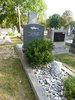
As a minor side-note which is off-topic from the wider thread, but is somewhat related to the collection I have discussed above, it is worth mentioning that whilst in Vienna I spent an afternoon visiting the Wiener Zentralfriedhof; despite the name, this is not in fact located close to the city centre, being situated several miles to the southeast, but it *is* the largest cemetery in Vienna and contains the graves of many significant historical figures, including Beethoven, Hedy Lamarr, Falco and Schubert. This was one of two reasons I wished to visit, the other being the hope of spotting wild European Hamster (although the species is present in higher densities within the more centrally-located Meidlinger Friedhof).

However, an unexpected bonus was stumbling across the following grave:

P1160682.JPG
 

Attachments

  • P1160682.JPG
    P1160682.JPG
    189.2 KB · Views: 53
Day 127: Haus des Meeres (2022) - 365 Tage 10,000 Tiere

full


Page count: 18 pages
Photographs: 30 colour photographs
Illustrations/diagrams: N/A
Layout: Fold-out guide containing summaries of major exhibits and species, accompanied by information about opening hours, public transport access, on-site restaurant and historical exhibition.
Map: Within main body of guide, showing location of collection within Vienna.


A nice short one today, once again returning to the eternal question of precisely how one defines a zooguide, and where the line between this category and a promotional leaflet or pamphlet can be drawn. Having looked into the matter prior to my recent visit, I knew that Haus des Meeres has not produced a more traditional guidebook for quite some time; however, on arriving at the collection and purchasing my entrance ticket, I was intrigued when - alongside my ticket and a separate single-sheet map showing the general layout of the aquarium and the displays found on each floor - I was given a fairly hefty fold-out booklet. Moreover, further copies of the booklet were available to be freely picked up by visitors just beyond the entrance area.... something which I took full advantage of, incidentally, collecting several spare copies to be dispersed among the UK zoo enthusiasts I knew would be attending Zoohistorica a few days later.

I shall put my cards on the table straight away, before discussing the actual content of this item in greater detail and providing a few scanned images as further illustration; given the fact that this item appears to not be an externally-available promotional leaflet, being obtained on arrival at the aquarium and in addition to a map of the collection, and furthermore taking into account the detailed and high-quality content within, I think that this *can* be justifiably described as a zoo guide, even if it is not a guide book per se.

full


The main body of the text comprises a series of segments discussing the various sub-sections within the aquarium (freshwater exhibits, saltwater exhibits and the tropical house) alongside supplementary information on other attractions and features at the collection; as can be seen within the provided sample images, these are lavishly-illustrated by large and brightly-coloured photographs depicting key species, and accompanied by more detailed information on key species. As I noted previously, the content within these sections is more detailed and higher-quality than one would expect from a mere promotional leaflet; in total, four pages apiece are devoted to the saltwater and tropical house regions of the aquarium, whilst two pages are provided for discussion of the freshwater exhibits, with information at the foot of each segment noting which floors of the aquarium pertain to which exhibits.

full


The precise date of publication can be fairly narrowly pinned down to sometime in the past year; on conversation with @Maguari and @robmv at Zoohistorica a few days after my visit, they mentioned that they had not come across this item when visiting Vienna earlier this year, but equally the text makes no mention of the Australia exhibit area which opened in the late spring of 2022 and therefore publication presumably occurred before this time.

full


The remainder of this guide comprises two rough segments; the first of these contains promotion of the "360° Ocean Sky" restaurant located on the top floor and roof of the aquarium, and which is open to visitors beyond the opening hours of the aquarium itself, whilst the second provides a range of general visitor information relating to opening hours, public transport access to the collection and showing the general location of Haus des Meeres within central Vienna. The latter section is accompanied by a short segment discussing the presence of a special historical exhibition within one of the upper floors of the aquarium, devoted to the original status of the building as a WWII flak tower and the wider effects of the war on Vienna and surrounding areas of Austria; given my interest in history, this exhibition was one of the highlights of the collection as a whole in my opinion, and something which I feel would merit further discussion within this guide beyond the short snippet provided.

full


Overall, this is an attractive and interesting item, which definitely merits recognition as a zoo guide - even if a true guidebook would be infinitely preferable, given the depth and scope of the collection as a whole. However, given the fact that it can be picked up for free when visiting Haus des Meeres - with no limit to the number of copies one can obtain, at that - one cannot really complain too much!
Does Nemo mean something German, or is that just referring to the movie?
 
Back
Top