A Guidebook Library: TLD's year-long randomised walkthrough of zoo guides

Thanks for the Haus des Meeres guide @TeaLovingDave. How large is the aquarium? The outdoor photos make it look rather small, but photos of the inside show a wide variety of exhibits.

I also think it's interesting how they have the Garra rufa for a spa treatment; it's a little bit of a controversial practice in the United States, but I don't know how Europeans view it.
 
Thanks for the Haus des Meeres guide @TeaLovingDave. How large is the aquarium? The outdoor photos make it look rather small, but photos of the inside show a wide variety of exhibits.

I also think it's interesting how they have the Garra rufa for a spa treatment; it's a little bit of a controversial practice in the United States, but I don't know how Europeans view it.
The now closed World Aquarium in St. Louis offered a Garra rufa spa.
 
Does Nemo mean something German, or is that just referring to the movie?

Just a reference to the movie!

Thanks for the Haus des Meeres guide @TeaLovingDave. How large is the aquarium? The outdoor photos make it look rather small, but photos of the inside show a wide variety of exhibits.

It's pretty sizeable - covers a total of 11 floors!

Ebenenplan_4717.jpg
 
Day 128: Zoo Frankfurt (2008) - Black Rhinoceros

full

full


Page count: 108 pages
Photographs: 116 colour photographs
Illustrations/diagrams: Plan of "Bogori-Wald" complex under construction.
Layout: Introduction and visitor information, followed by full walkthrough description of collection.
Map: Fold-out within interior rear cover of guidebook.


The next guidebook we shall take a look at is another request from @Chlidonias ; I rather suspect that the reason for his choice is that this guidebook was published a few years after his one and only visit to Zoo Frankfurt, and therefore represents a collection not all that dissimilar to the one he encountered. It is also one of the very last guidebooks published by the collection before it ceased to produce material of this sort, something which I feel is a distinct pity considering the high quality of this particular item both in terms of content and production standards; the final guidebook published by the collection was also among my recent acquisitions, incidentally.

full


The guidebook opens with a general introduction to the collection, providing a brief summary of the history of Zoo Frankfurt, some of the successes which it had experienced in the recent past, and recent developments and new construction projects, written by the cultural head of the local government department in Frankfurt am Main. It is specifically noted that the guidebook was issued to mark the 150th anniversary of the first opening of the zoo.

Beyond here, the main body of the text begins with a wide variety of noteworthy information for visitors, along with an overall discussion of the format and presentation style of the guidebook to come. This section opens with the observation that an information board located near to the main entrance of the zoo would provide up-to-date information on new arrivals, births and other current events at the zoo, and moreover provide a large-format map of the collection which could be used as a tool for orientation by visitors on arrival, before providing a list of several important contact telephone numbers; these include numbers for information, the main ticket office, animal adoptions and memberships, and the zoo education department. As one would expect, this section also includes a full list of admission hours and animal feeding times, both for the summer and winter seasons. However, more surprisingly, there is also a minor digression into the subject of the zoo's history; there are a handful of sentences discussing the construction of the Zoo-Gesellschafthaus (the main adminstrative building for the zoo, also containing a restaurant and function halls, located close to the entrance area) and the fact that it had been destroyed during WWII, before being rebuilt in the 1950s and subsequently redeveloped in the 1990s.

full


These introductory pages specifically note that the main section of the guidebook, a comprehensive walk-through account of the collection with numbered entries and accompanying symbols which correspond directly to the numbering and symbols used on the maps located throughout the zoo (and at the rear of the guidebook itself), is therefore intended to be used in combination with these maps. They also make the observation that all informational signage at exhibits and in animal houses was presented in both German and English, with scientific names of species used where required, and that this information should also be used in combination with the walk-through account within the guidebook.

The quality and quantity of information presented within these walk-through accounts maintains a consistently high standard throughout, providing a wide range of information about the diet, wild status, habitat and behaviour of the species held within each exhibit area, house or enclosure being discussed within a given numbered section; moreover, this information is regularly supplemented by content relating directly to those individual animals held at Zoo Frankfurt, both at the time of publication and throughout the history of the zoo. For instance, mention is made of the fact that Frankfurt was among the first German collections to display Aye-Aye in the early 20th century, and that the collection holds the German captive first-breeding record for Western Lowland Gorilla. These accounts also regularly highlight the historical background to exhibits and houses, with some of the more significant structures being discussed in some detail; most notably, a total of 25 pages (close to a quarter of the total length of the guidebook) are devoted to the subject of the Exotarium, with information about the house itself accompanying a de-facto secondary walkthrough providing a vast amount of detail about the species displayed within. Perhaps most importantly, the walkthrough accounts also regularly discuss the conservation work with which the zoo was involved at the time of publication, including in-situ projects, membership in professional bodies and international studbook programmes, and captive breeding efforts; providing information of this sort within guidebooks and related publications is vital for the purposes of educating the zoo-visiting public about the ongoing relevant and need for zoological collections.

full

full


The content of the guidebook is supplemented by a wide range of colour photographs showing various of the species cited within the text, generally labelled with the name of the species in question and sometimes supplementary information about their appearance or habits. Furthermore, in the section of the walkthrough account discussing the Bogori-Wald exhibit complex being constructed for Western Lowland Gorilla and Sumatran Orangutan, which at the time of publication had not yet been completed, the guidebook contains concept art showing the intended layout and appearance of the complex as a whole. These images and diagrams provide an aesthetically-appealing complement to the text, increasing the overall value of the guidebook as a resource for those interested in the zoological collection in question. The only major qualm I have with the content of this guidebook is a fairly old and recurring issue; those species cited within the text are almost-universally referred to solely under their German-language common name, with scientific names seldom appearing within the walkthrough account - however, given the overall extremely-high quality of this guidebook, one cannot complain too much... especially given the fact that, as I have noted in the past, this problem merely provides a good reason to gain further familiarity with the common names in question!

full


The guidebook concludes, as noted previously, with a rather attractive and well-presented fold-out map of the collection located within the interior rear cover; this is accompanied by methodical numbering and symbols which correspond to that used within the walk-through account within the main body of the text, and a comprehensive key located immediately alongside the map. Along with the fact that the map shows an accurate depiction of the overall layout and orientation of the enclosures, houses and exhibits within the zoo in relation to visitor areas, this means that the map and walk-through account can be consulted and cross-referenced with great ease. As such, this map heightens the overall value and quality of the guidebook as a whole by a notable margin in my opinion.

full


Given the very high quality of this guidebook - both in terms of the content, the overall aesthetic and presentation visible throughout, and the accessible and easy-to-interpret format - it strikes me as a great pity that Zoo Frankfurt has now ceased to produce material of this sort; that said, given the fact that Frankfurt has changed relatively little in the time that has elapsed since the publication of this guidebook, I feel that even now it stands up rather well as a solid representation of the strengths of the zoological collection to which it pertains. Only relatively minor edits would be required for a similar volume, were it released today, to provide a vast amount of value to a modern-day visitor to Frankfurt.
 
As the writing of the next post (which will pertain to the guidebook from Wildpark Luneburger Heide requested by @aardvark250 ) has been coming pretty slow due to my mental energy levels, I thought I would keep the thread chugging along by highlighting my personal collection of guidebooks from Alpenzoo Innsbruck; although I already owned several such guidebooks, my collection more than doubled during my recent trip thanks to a combination of acquisitions at Zoohistorica, and purchases at the collection itself. I was particularly pleased to note the recent publication of a new guidebook within the last few months to mark the 60th anniversary of the collection.

full


As most reading this thread will already know, Alpenzoo Innsbruck is one of my favourite zoological collections outside the "big hitters" such as Zoo Berlin, Tierpark Berlin, Zoo Praha and Chester Zoo; rather fittingly, it also exhibits a strong tradition of publishing *very* good zoological guidebooks!
 
Day 129: Wildpark Luneburger Heide (2015) - Snow Leopard

full

full


Page count: 74 pages
Photographs: c.158 colour photographs
Illustrations/diagrams: N/A
Layout: Introduction and visitor information, followed by general summary of species collection and discussion of visitor amenities.
Map: Located within main body of guidebook


We shall now take a look at a guidebook for Wildpark Luneburger Heide, at the request of @aardvark250 - I have to admit to some level of confusion regarding his surprise that I would obtain material from this zoological collection, and suggestion that it is out of place when compared to the other guidebooks within my personal collection, given the fact that my soft spot for Highland Wildlife Park, Alpenzoo and Wildpark Schwarze-Berge has been discussed at various points during the course of this thread! Given my mental energy levels and ability to focus has been somewhat limited recently - although my physical reserves have more or less fully recovered from my three-week trip around Central Europe, my mental spoons are still running close to empty - this post has been tricky to get going, and may well be rather more sparse than is my usual preference. Let it be stated up-front, then, that this is a very well-produced, interesting and attractive guidebook, which provides a wide range of information about the zoological collection to which it pertains in an accessible and aesthetically-appealing fashion.

full


The guidebook opens with a handful of introductory passages, discussing the history of the collection, the "wildpark" concept and the way in which it has developed, and the legal status of zoological collections of this sort; as is the case throughout the guidebook, an abridged English-language translation of the text is provided alongside the German-language content, and as such this guidebook is accessible and easy-to-interpret for those interested in zoological guidebooks who may lack knowledge of German. These passages are accompanied by a section containing a fairly wide range of visitor information; along with the "usual" details found within material of this sort, such as opening hours, ticket office closing time, and important contact telephone numbers, this segment also contains information relating to the on-site restaurants and amenities, education programmes and events, and the access policy for domestic dogs.

full


However, perhaps the most interesting segment of these introductory segments prior to the main body of the guidebook is the presence of an attractive and highly-detailed map of the collection; this shows the general layout of the footpaths and exhibits throughout Wildpark Luneburger Heide, with illustrations of key species dotted throughout to demonstrate their general location, with methodical numbering of each exhibit and house providing more precise information. This numbering, as can be seen above, corresponds to a detailed and comprehensive key at the base of the map; although this is not explicitly mentioned within the text, the exhibits are numerically listed in the order they are discussed within the main body of the guidebook, forming an overall suggested route through the collection.

full

full


The main body of the text, as noted, more or less represents a walkthrough account of the collection presented in the rough order that a visitor following the suggested route within the map would encounter them; each double-page spread provides a range of information about the species held within the collection, generally relating to their wild range, diet and behaviour but seldom going into much detail about the Wildpark itself, or specific information about the individual animals held at the collection or their breeding record. Nonetheless, the quantity and quality of the information provided is rather high, all things considered.

As one might expect from a zoological collection with a "wildpark" focus, the bulk of the species cited within the text represent taxa native to Germany and other regions of Central Europe - whether currently extant, or locally-extirpated at some point in the past - alongside a variety of domestic animals commonplace within the area. However, in a similar move to that taken by Highland Wildlife Park during the mid-2000s, by the time of publication the collection had expanded its focus to cover cold-climate species from throughout the Palaearctic and Nearctic, rather than merely those native to Central Europe; as such, the guidebook includes fairly lengthy segments on taxa such as Snow Leopard, Kamchatka Brown Bear, Amur Tiger and Canadian Timber Wolf. As is the case throughout the guidebook, the species accounts located within the walkthrough are copiously-illustrated with attractive and eye-catching photographic illustrations depicting various of the species discussed within the text; these complement the written content rather well, adding to an overall sense of aesthetic appeal and accessibility.

The guidebook concludes with three shorter segments relating to the giftshop, the various on-site restaurants and promotion of lodges and on-site accommodation, along with further supplementary information for visitors to the collection including a rough roadmap showing the location of the Wildpark in relation to key cities and towns within the surrounding areas of Niedersachsen, Schleswig-Holstein and Hamburg.

full

full


Overall, this is an appealing and interesting guidebook to a collection which - given my interest in zoological collections with a focus on European wildlife, and my established soft spot for Highland Wildlife Park, Wildpark Schwarze-Berge and Alpenzoo - I would rather like to reach at some point in the not-too-distant future; certainly the information contained within the guidebook, and the high quality standard visible in both the content and the physical production of the guidebook itself, conveys a rather good impression of the Wildpark.
 
Haha by "the odd one out" i mean this is a facilities that probably doesnt have too much attention as others, and the comment show my lack of understanding on this facility rather than the lack of understanding of TLD obsession with alpenzoo innsbruck :P

As said i dont know about this place at all but the quality is quite high! Didnt expect that from a place i never heard of.
 
Day 130: Faruk Yalçın Zoo and Botanical Garden (1995) - Macaws

full


Page count: 80 pages (including 18 full-page advertisements)
Photographs: c.245 colour photographs
Illustrations/diagrams: N/A
Layout: Introduction, followed by a selection of photographs taken throughout the zoo, a rough summary of species displayed, and a selection of botanical photographs and list of tree species within the botanical garden.
Map: N/A


The next guidebook we shall take a look at has been requested by @PossumRoach , and pertains to a Turkish zoological collection of which I know more-or-less nothing; to be quite honest, the main reason I obtained it was purely because (until very recently) my personal guidebook collection lacked any material from Turkey, and therefore when the opportunity arose to pick up this guidebook I seized the moment. Due to the large-scale format of the guidebook, and the rather tight binding, I found it extremely awkward to scan any pages; as such, I restricted myself to scanning the front cover, otherwise relying on photographs taken whilst I held pages open. As such, I apologise for the rather lower image quality within this post when compared to the usual standard provided. Furthermore, due to my lack of any fluency in Turkish and - as shall be made clear anon - the relatively low standard of accuracy where the information presented within the guidebook is concerned, this post will likely be rather more "lightweight" and lacking in-depth discussion than is usually the case.

full


From what little I have been able to gather online, the zoo - which at the time of publication carried the name "Bayramoğlu Kuş Cenneti ve Botanik Parkı" or Bayramoğlu Bird Sanctuary and Botanical Park - was founded in 1993 by the Turkish businessman and industrialist Faruk Yalçın, for whom the zoo is now named, and was the first privately-owned zoo in Turkey. Subsequently, it would also be the first Turkish zoo to become a member of EAZA.

The guidebook opens with a short introductory passage written by Yalçın, briefly discussing the opening of the zoo and the intention behind it, before remarking on the recent opening of an aquarium within the grounds of the zoo at the time of publication. Beyond here, ten pages containing a wide variety of colour photographs taken throughout the grounds of the zoo - not only showing animal exhibits and houses, but also visitor amenities such as the giftshop and food stands, and what appear to be general views of the surrounding city from within the zoo - provide a general impression of the "feel" of the collection as a whole. Unfortunately, none of these photographs are labelled in any way, with many of them overlapping one another in a somewhat awkward fashion. This introductory segment closes with another short passage which - as far as I can tell, through use of Google Translate on my phone camera - briefly discusses the various logistical, structural and manpower factors required for successful operation of the aquarium and the wider zoo.

It is here worth noting the fact that the guidebook contains a relatively large number of full-page advertisements, mostly for companies based in Istanbul, around 20 miles to the west of the zoo; although I have not photographed any of these for reproduction within this thread at the present time, I would be happy to do so if anyone is interested. These advertisements, as best as I can tell, pertain to the following:

  • Qualipet; a pet supplies shop which appears to have been located within the zoo itself
  • Lafarge Aslan Cimento; a cement and clinker company.
  • Makyal Enerji Sistemi Sanayi; a manufacturer of diesel generators.
  • Makyurt; a manufacturer of wooden garden furniture and decorations.
  • Mazpa; an automobile dealers.
  • Temsan Kalitesi; an industrial construction company.
  • Asbeton; a concrete manufacturing company.
  • HBB; either a television network or perhaps a manufacturer of televisions themselves.
  • Bengi Çiçekçilik; a florist shop.
  • DemirBank; a bank.
  • Gemas General Engineering and Architecture.
  • Mekon; a manufacturer of automatic garage doors.
  • İntec Alüminyum Konstruksiyon; a construction company specialising in metal doors, windows and roofs.
  • Çamlıca Country Club; a venue for dog training, kennels and veterinary treatment.
  • Qualipet; as above.
  • Gardena Pet Center'da; a gardening supplies shop which appears to have been located within the zoo itself.
  • Elektrik Ticaret ve Sanayi; an electrical engineering company.
  • Maktur; a manufacturer of industrial machinery.
  • Hotel Sun Zeynep; a five-star hotel located near Antalya.
Given the background of the founder of the zoo, it is rather obvious that the vast majority of these advertisements are *not* actually intended for the general members of the public who may have been visiting the collection and purchasing this guidebook, but rather serve as promotion of companies with which Faruk Yalçın had business interests!

full

full


Beyond here, the main body of the guidebook comprises a somewhat scattergun overview of the various species displayed within the collection at the time of publication; these accounts largely seem not to follow any particular taxonomic pattern, nor the order in which the visitor to the collection would be liable to encounter them - although this is impossible to say for certain without a map of the collection, which this guidebook lacks. The text appears to alternate between discussing the species within the collection in broader terms, providing information about wider taxonomic groups, their diet and behaviour, and their wild distribution, and on the other hand baldly listing all members of a given group found within the collection, or highlighting particular taxa. The headings for these latter segments are presented in Turkish, German, and English, alongside (in theory) the taxonomic name and colour photographs of the taxa in question, with the main body of the text being presented in Turkish-language only.

Unfortunately, even at a cursory glance the information presented seems to be erratic at best; there are numerous points where the names provided in German and English do not pertain to the same species as that cited in the Turkish text, and the taxonomic name pertains to yet another species. In some cases, the accompanying photographs depict species mentioned nowhere within the text at all, let alone the species for which they are intended as illustration; for instance, images of hornbills are labelled as spot-billed toucanet and plate-billed mountain toucan, and conversely an image of a coral-billed ground cuckoo is labelled as a fieldfare. Moreover, where lists of the species present within the collection are provided, they often include taxa which should be viewed with extreme scepticism... up to and including claims of Whooping Crane!

As a result, it is impossible to know for sure which species mentioned within the guidebook (or indeed present within the copious and, admittedly, very attractive photographic material) were genuinely part of the collection at the time of publication.

full

full


The guidebook concludes with a handful of pages relating to the botanical gardens located within the grounds of the zoo, comprising colourful photographic montages depicting a wide range of flowers, topiary displays, fruit and further overall views of the botanical exhibits, alongside what appears to be a comprehensive list of all tree species within the collection at the time of publication. Unlike the previously-discussed accounts within the segment of the guidebook relating to the zoo, this list solely provides the Turkish common name and taxonomic name for each tree species; given the fact that I have little knowledge of botanical taxonomy and none relating to the Turkish-language common names given to plants, I cannot make any judgements about the accuracy of this content. However, given the aforementioned inaccuracies within the guidebook as a whole, I would hesitate to use the botanical information presented here as a reliable source.

full


Overall, this is an interesting and aesthetically-appealing guidebook which is, unfortunately, deeply flawed as a reliable source of information relating to the zoological collection to which it pertains. However, there is nonetheless a certain charm in an attractive and well-produced guidebook even if the content within cannot be entirely trusted, and the photographs provided in the introductory passages depicting various aspects of the zoo *do* represent a valuable insight into the collection a mere two years after it first opened. As such, despite my issues with this guidebook I am glad to have added it to my personal collection.

I would, of course, be interested to hear any and all insight which @PossumRoach may be able to provide on this guidebook - whether this is through further knowledge of the collection to which it pertains, or the ability to interpret some of the text presented and spot aspects I have missed.
 
Last edited:
Honestly I don’t know if I should be surprised or not with regards to the accuracy (or the lack of it) of the information this provides to its readers.

Those of you who share the same platform with me outside this forum (discord) probably know that I’ve taken a few stabs at Turkey and how underdeveloped it is with regards to the zoological sciences. Sure there are some scientists and naturalists from Turkey such as the late Fahire Battalgil, Çağan Şekercioğlu, Deniz Mengüllüoğlu, and probably many more that I fail to know due to my ignorance. Sadly, however the knowledge and enthusiasm these experts have isn’t reflected by the general public, the trade, and the laws that manage it.

Now to further demonstrate the inaccuracies of the guidebook Mr. Dave has along with my takes on Turkey’s place in zoological sciences, I would like to look at the pages Mr. Dave posted with the alligators and carnivores.

The detailed accounts are pretty decent if it wasn’t for the taxonomic inaccuracies. For example, the raccoon has a good detailed account. However, the fact that there isn’t an image of a raccoon and the fact it is referred as small swamp bear or water bear in Turkish (I’ve only seen one other book refer raccoons as “bears” in Turkish in my life, otherwise we call then “rakun” here) really hampers the usefulness of this information.

Other inaccurate information I found include the described differences between alligators and crocodiles. Under the title “Timsahlar” (crocodiles) the first thing it says that “Alligator type” crocodiles only (yalnız in Turkish as mentioned in the guidebook) found in America while “Crocodile type” crocodiles live in Africa and tropical parts of Asia. The former information is contradicted by the text under “Alligater Tipi Timsahlar” with the mention of China. The latter information skips over the fact that crocodiles are also native to Americas as well, along with Australia. There is no mention of gharials anywhere.

In the bear section, it says that there are seven “cins”. Cins is a Turkish word used to mention breeds, not species nor sub species(the right words for the are tür and alt tür respectively). So there is also the wrong use of terms which could further damage the reliability of the guidebook. I speculate that the guidebook intended to say species considering that the book is describing the family Ursidae rather than a particular species of bear the park holds (brown bear). But they even got the species of living bears wrong.

The most irritating part is the entry for the nutria. The guidebook uses the picture of a ferret to describe the nutria while referring them using the word that is actually used to refer badgers. Nutria are one of those animals that still don’t have a consistent Turkish name. I’ve seen them referred as water badgers when I worked as a shadow keeper/apprentice for a month at FYZ during 2017. However I also heard them referred as “river rats”, “South American beavers, koypu, and the one that annoys me the most, “water monkeys”. This is pretty indicative of Turkeys relation with regards to animals. Also the formatting is very wonky with the picture of the ferret giving the block of text a very awkward shape.

Here’s the best way I can conclude my opinion on this guidebook: Let’s say that you are an employee at a EAZA member zoo and have heard that for the first time ever there is a new member from Turkey. You wonder about the collection and the expertise of the collection in question so you seek and obtain this very guidebook, only to see the images and the English and German names to not match. You definitely would have a hard time telling the actual content of the collection. If I was in such a position, I would ask myself “Is this really the best any Turkish collection could do?” If the answer is yes, then in the future I wouldn’t really expect the best from Turkey or feel hesitant if the facility I work at plans to send surplus animals to this place. What also doesn’t help would be the general public who would take this inaccurate information in face value.

The best source I know to have an insight to the past of the zoo was a compilation of old newspaper clippings the zoo had near their cafe by the entrance animals. I remember the zoo having in the past, per the clippings, cheetahs, parma wallabies, and hawk-headed parrots. However when I revisited the zoo, I wasn’t able to find it (and I was too anxious to ask staff where to find the clippings.)

Also fun fact: Faruk Yalçın Zoo is featured in the comic displayed on Pairi Daiza’s Mersus Emargo.
 
Now to further demonstrate the inaccuracies of the guidebook Mr. Dave has along with my takes on Turkey’s place in zoological sciences, I would like to look at the pages Mr. Dave posted with the alligators and carnivores.

Thank-you very much for your feedback and further insights :) this is precisely the sort of discussion I hope to provoke through this guidebook thread, after all.
Incidentally, I'm happy for people to make requests for guidebooks from particular zoological collections, countries or "styles" of collection anytime they want, not just when I specifically open the door for them! Quite apart from anything else, if people are interested in a specific guidebook it increases the chances of further feedback and discussion taking place.
 
Thank-you very much for your feedback and further insights :) this is precisely the sort of discussion I hope to provoke through this guidebook thread, after all.

Incidentally, I'm happy for people to make requests for guidebooks from particular zoological collections, countries or "styles" of collection anytime they want, not just when I specifically open the door for them! Quite apart from anything else, if people are interested in a specific guidebook it increases the chances of further feedback and discussion taking place.
I am glad you liked my comment. I was worried I wouldn’t add too much of value other than some translations and ramblings about the scene in Turkey.

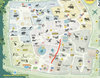
I also wanted to talk about the pages you posted showing the photos taken on the zoo grounds. The photo I recognize the most easily was the carp pond which is located behind the cafe. I never knew where the stegosaur-like statue (which I have uploaded to the gallery) was located at before it was relocated across the penguins and I am having a hard time telling from the photo. I do remember seeing the elephant statues (which I have also uploaded to the gallery)?around either where the hyenas or the alligators currently reside before being moved onto a building next to the llamas and maras. I wish I could recognize what the path on the top left corner of the page on the right consisted of. It does remind me of the area where I drew the red line on this map. But I cant get more precise than that, assuming that I marked the right place in the first place.

upload_2022-10-10_0-15-14.jpeg

Speaking of maps, I’m surprised that there isn’t a map of the zoo in the guidebook. It would probably be easier to tell what has changed if it gets compared and contrasted assuming that the old map was tangible.
 

Attachments

  • upload_2022-10-10_0-15-14.jpeg
    upload_2022-10-10_0-15-14.jpeg
    713.8 KB · Views: 54
Last edited:
Day 131: Stanley Zoo (c.1970) - Animal Coat Pattern

full


Page count: 6 pages (including interior front and rear covers)
Photographs: 1 black-and-white photograph
Illustrations/diagrams: 1 advertisement
Layout: Introduction and news, followed by feeding times, visitor amenities, admission prices and other general information
Map: Two; map of the collection within central pages, and map showing location of the zoo on rear cover.


There are currently a few randomly-selected guidebooks sat in the queue for discussion within this thread; however, as my mental energy and "spoons" have been running pretty low over the past few days I've been finding it quite hard to get anything written for them! However, one of the most recent additions to my personal collection of guidebooks - having arrived only yesterday - is both extremely unusual and also very brief, and therefore I feel it is well-worth presenting in its entirety within this thread. This will serve three important tasks; to preserve the information found within for posterity, given the fact that it is highly likely very few copies of this guidebook survive; to hopefully provoke some level of discussion and feedback; and finally to keep the thread flowing and prevent things coming to a halt entirely!

Stanley Zoo was a rather short-lived zoological collection located within County Durham in the north-east of England, with strong ties to several other zoological collections within this region; all of which (with the exception of Flamingo Park Zoo, now Flamingoland) have long since closed down. Given how long ago the collection closed down, and how briefly it was open in the first place, it is perhaps unsurprising that there is precious little information available online regarding Stanley Zoo; we were lucky enough to have the former manager of the collection Ian Gibb amongst our number on ZooChat for several years, posting under the username @mukisi , before he passed away in 2016. As such, I will open this post with a handful of odds and ends shared by him elsewhere on the forum:

stanley zoo

I managed Stanley zoo in the late 60's. The last Newcastle winter zoo had finished and all the caging came to Stanley for the summer; it was then decided by Flamingo park [Pentland Hick] to open year round. When Scotia bought the Flamingo park empire. I moved to Flamingo as Curator and Peter Dickison went to Stanley. Lambton lion park opened and there were agreements made to close Stanley.
While I was there it was the closest thing to running your own zoo.It was of course one of many small zoos at that time, which were acceptable in those days. I certainly am not ashamed of working there.
The 2 elephants that came to Flamingo from Tyseleys in the mid sixties were in fact a lot bigger than expected, and Flaming took them as a favour, the old coach house was converted in record time. Many of the little Thai elephants were imported by Ravensden and lodged at Flamingo,I especially remember Fred and tiny Emily.

Martin Lacey ,who I worked with at Chester in 1960 in the zebra house, was one of the first managers at Stanley and did a great job with the local media; this meant that Stanley got great TV coverage, when it was a poor newsday.
I think 1970 was the best year,with the zoo being full on many sundays.
Animal wise it was a small mixed collection which changed with the needs of the group.
As I remember paddocks held nilghai, llamas, crowned & demoiselle cranes; there were cages for young lions, young brown bears [bred at Flamingo],leopard & puma [breeding pairs], Gibbons, Capuchin monkeys, Spider monkeys, a wolf wood [breeding pack]. There was a SMALL aquarium & reptile house which connected to a tropical house [converted from a double garage] housing small birds.For 2 months we also had 2 baby African elephants from the group at Flamingo. This was run by 4 keepers,2 maintenance men and a married couple who ran the catering and bar
It brings back happy memories

In terms of our current membership, I have found posts by both @dean and @NigeW indicating that they visited the collection; I would be very interested to hear anything they have to say - either about Stanley Zoo or this guidebook!

full


Given the fact that I am presenting the contents of this guidebook entirely verbatim, supplemented by the above recollections of the former manager of Stanley Zoo, it seems somewhat superfluous to provide too much commentary from myself. As such, I will merely observe here that despite the brevity of this guidebook, there is a surprisingly large amount of interesting information provided within; for instance, although the map located within the central pages has been defaced by a previous owner - or, more likely, the child of a previous owner - it is nonetheless detailed and thoroughly-labelled with the species displayed within the collection at the time of publication.

full

full


One interesting point which I *can* make is that the map makes no mention of otters within the collection; although the guidebook contains no explicit dates beyond a mention on the map that a Pets Corner was due to open in May 1970, the lack of this species provides a further data point for estimating when this guidebook was published, as (per a book in my possession published by the Natural History Society of Northumbria, on the subject of mammal, reptile and amphibian species found within the northeast) a pair of the sindica race of Smooth-coated Otter escaped from Stanley Zoo in 1968 and were last sighted in the River Team six miles to the east.

The guidebook also, it should be noted, contains a wide range of other information useful to a zoo historian; the admission prices, feeding times and daily events listed all give a valuable insight into this long-closed zoological collection.

full


In conclusion, despite its brevity and simple format, this guidebook is extremely interesting; not only does it carry a great deal of value on zoo-historical grounds, but it is also a valuable primary source for those interested in the socio-economic and cultural history of the area in which I live and grew up. Considering how fragile this guidebook is, and how obscure the collection to which it pertains has become, I would not be surprised if very few copies survive.
 
although the guidebook contains no explicit dates beyond a mention on the map that a Pets Corner was due to open in May 1970, the lack of this species provides a further data point for estimating when this guidebook was published
The leopard cub pictured was born on 20 December 1969 (as per the photo caption), and the text at bottom-left of the same page, headed "New attractions for the seventies" says the tropical bird house and reptile house "will open for Easter". So it can be narrowed down to between January and April 1970.
 
I have to say that several things in this guidebook interest me.

First of all the guidebook opens with the following;
''Is a young progressive zoo''
Now forgive me for not knowing zoo history that well, but if I take a look at the collection presented and activities such as chimpanzee tea parties and cub petting(?) activies, it doesn't strike that progressive at all!
However the note of exhibiting certain species in a more progressive method in the passage that follows makes me wonder what exactly progressive is supposed to mean for this time and era of zoos.

Another thing I couldn't help but notice was that the map lists the ''ladies toilets'' and ''gents toilets'' seperately, and to my surprise even are located in a different place! Any insights on why this was the case? Is this just a byproduct of the times?
 
Day 132: Westfälischer Zoologischer Garten zu Münster (1959) - Red Pandas

full

full


Page count: 22 pages (including interior front and rear covers)
Photographs: 30 black-and-white photograph
Illustrations/diagrams: N/A
Layout: Introduction and information for visitors, followed by a general walkthrough of collection.
Map: Located within interior rear cover.


Today, we will be looking at a fairly short but very interesting guidebook relating to a closed German collection; the original site of Münster Zoo, which opened in 1875 and ultimately closed down in 1973 when the decision was taken to move to a new, larger site further to the west. I must admit to knowing relatively little about the latter collection, better known as Allwetterzoo Münster, but prior to obtaining this guidebook I knew next-to-nothing about its predecessor, This is, in point of fact, one of the main reasons why I took the opportunity to obtain this guidebook recently when it was listed for sale on eBay; not only does it allow me to expand my overall knowledge of German zoological collections past and present, but it also means that I am able to preserve a historical record relating to a closed collection for future generations.

full


The guidebook is fairly short and simple, comprising a brief introduction to the collection accompanied by a variety of visitor information, followed by a comprehensive exhibit-by-exhibit walkthrough account discussing a suggested route through the zoo.

Much of the aforementioned introductory content is fairly standard, comprising information on the opening times of the zoo, feeding times for various species (including a note relating to how these times differ seasonally) and the admission prices at the time of publication. However, two additional points merit further discussion; firstly, it is explicitly noted that visitors to the collection should consult the guidebook whilst walking around the zoo, following the suggested route and paying attention to the fact that each exhibit discussed and numbered within the walkthrough account was marked with a corresponding number at the enclosure itself. Secondly, it is mentioned that it was forbidden for visitors to feed the animals; this is not particularly unusual in and of itself, but in reading about the original Münster Zoo in preparation for this post I learned that this was a policy that had only recently been installed at the time of publication subsequent to a spate of animal deaths. As such, there was a pressing reason for this rule to be explicitly cited within the introductory passages.

full


The main body of the guidebook comprises a fairly comprehensive exhibit-by-exhibit walkthrough discussion of the collection at the time of publication, following a suggested numbered route. Each section of the walkthrough contains a general description of the species contained within, along with supplementary information relating to their diet, range and other key details. Gratifyingly, many of these accounts also contain information relating to the individual animals held within the zoo and the collection's prior record with the species in question, observations about the history of the exhibit or house in question, and other information of this nature. As I have observed on several occasions in the past, I feel that this is the sort of information which should occur more often within zoological guidebooks, given the fact that it provides a specific insight into the "feel" and history of the zoological collection concerned and therefore increases the value of the guidebook as a primary historical source.

These accounts are illustrated by numerous black-and-white photographs depicting various of the species discussed within the text, which are presented in an attractive and aesthetically-appealing fashion, labelled with supplementary information about their subject, and generally-speaking complement the accompanying text rather well. My only real reservation is the fact that very few images depicting the surrounding exhibits are presented here, something which would be less frustrating were it not for the fact that (as a collection which would close down within 15 years of publication, and has subsequently been all-but-demolished, this omission represents a major loss of a potential source of zoo-historical information. As a side-note, I am given to understand that a single exhibit from the zoo - an owl tower - has been preserved in-situ as a monument within the park which once contained the collection; when I eventually manage to visit the city for the first time, I will certainly aim to seek this out!

full


The guidebook concludes with an attractive and well-presented map of the collection, showing the layout of exhibits, paths and areas of woodland in a clear and easy-to-interpret fashion. Moreover, the exhibits and enclosures within the collection are labelled with numbers which correspond both to the accompanying key next to the map, but also that used within the walkthrough account in the guidebook and (per the remark within the introductory passages) on exhibit signage at the zoo itself.

full


As such, it is very much apparent that it would have been fairly easy for a visitor to the collection at the time of publication to use this guidebook as a true guide through the zoo in question; although, as noted, the lack of any images depicting the exhibits and enclosures within the collection is a major negative point, the overall quality of this guidebook both as a primary resource for those interested in zoological history and as a reference tool for the casual visitor is nonetheless rather high. One final point which occurred to me when reading through this guidebook for the first time is that it feels very much akin to those being published by Tierpark Hagenbeck during this timespan, both in general format, presentation and content; a comparison to the 1950s guidebook I recently discussed from said collection should, I think, make my point clear! I suspect this similarity is no coincidence, and that given the success of Hagenbeck at this time they presumably represented one of the two main "models" around which German zoological guidebook would have fashioned themselves, alongside the excellent content produced in Berlin.

As usual, I welcome any and all feedback, questions and general remarks!
 
Day 133: Zoo Berlin (1928) - Baby Gorilla

full


Page count: 52 pages
Photographs: 48 black-and-white photographs
Illustrations/diagrams: N/A
Layout: Comprehensive walkthrough account of collection.
Map: Fold-out at rear of guidebook


Today we will be discussing a guidebook published by Zoo Berlin which, in my opinion, is particularly noteworthy on several levels - even moreso than is usually the case for the material published by the collection over the course of the first half of the 20th century! Firstly, although it is younger than any of the Zoo Berlin guidebooks discussed thus far within this thread, it is almost certainly the rarest of *any* Zoo Berlin guidebook published after 1901, a point which I have several theories about as I shall relate anon. Secondly, in many ways it represents a transitional point between the guidebooks published at Zoo Berlin over the preceding decades, and those published during the tumultuous years that would follow - again, this is a point which I will return to. Finally, and on a more personal level, due to the rarity of this guidebook it was the final 20th century edition missing from my personal collection until earlier this year, when a copy was amongst those items listed for sale in the semi-regular auctions held by the antiquarian book dealer and publisher Klaus Schüling. This was, in point of fact, the very first copy I had ever encountered for sale, although I already knew of a smattering of copies in the personal collections of other guidebook enthusiasts - as such, I went to some lengths (and expense) to secure the guidebook for my own collection. Given the comprehensive and detailed resource that my completed collection of Zoo Berlin guidebooks from the 20th century represents, I feel obtaining the guidebook under discussion today was well-worth the effort!

full


Broadly speaking, this guidebook is very similar in layout, content and design to those published over the course of the preceding handful of years; in point of fact, at an initial glance one would think that it was all-but-identical to the guidebook published earlier in 1928 barring the difference in front cover - the polar bear image which had been replicated across several editions being replaced here with a photograph of the infant Western Lowland Gorilla "Bobby" who had recently arrived at the collection. As such, the main body of the text comprises a detailed walkthrough account of the collection at the time of publication , illustrated by several black-and-white photographs depicting some of the most noteworthy houses and discussed.

However, although the oft-bemoaned ornate typeface makes the task at hand a little trickier than it otherwise would be, careful examination of the text reveals that the contents of this guidebook have been somewhat updated from the previous edition; not to get too far ahead of myself, it is worth noting that the next Zoo Berlin guidebook which will be discussed within this thread was the first to use a more modern and readily-legible typeface, and despite several changes in layout and presentation which would become standard from that edition onwards, the text within said guidebook can be used as a de-facto "Rosetta Stone" to aid in the interpretation of the text here. As I will discuss in more detail next time, I strongly suspect that this 1928 guidebook represented a trial run of sorts, incorporating several of the updates and changes which were planned for future guidebooks whilst retaining the physical dimensions, binding and presentation found within the "polar bear" run of guidebooks, and that the print run for the "Bobby" guidebook was relatively small. This would certainly explain the rarity of this guidebook when compared to those editions which preceded and followed it.

full

full


As usual for the guidebooks published by Zoo Berlin during the opening decades of the 20th century, the main walkthrough account is followed by a series of black-and-white photographic plates depicting a wide variety of species held within the collection at the time of publication; however, although several of the photographs present within this section have been replicated from prior editions, this edition contains a relatively high number of entirely new images, some of which are particularly noteworthy in my opinion. For instance, along with the photograph present on the front cover of this guidebook, the image of Bobby the juvenile gorilla located within these plates is (to the best of my knowledge) the earliest surviving photographic image of this species in captivity; moreover, Bobby himself is a fairly significant individual, being the first captive gorilla to reach adulthood and - almost 90 years after his death - still depicted within the logo of Zoo Berlin to this day.

Another particularly interesting aspect of these photographic plates is the presence of numerous images depicting animals which had been recently imported from modern-day Tanzania, along with further photographs taken in the wild during the 1928 expedition in question; as such, these provide a valuable insight into one of the major imports of new species and captive stock into European zoological collections during the inter-war years, one which played an important role in shaping not only Zoo Berlin but numerous other collections which would ultimately receive stock descended from the animals imported at this time.

full


The guidebook concludes, as usual, with a highly-detailed and aesthetically-attractive map of the collection located within the interior rear cover; as far as I can tell, this has been reproduced more or less verbatim from the guidebook published earlier in the year, with no changes readily visible. This does not, of course, reduce the overall quality or value of the map in any way, shape or form, representing as it does an important primary record of the general design, layout and content of Zoo Berlin in the closing years of the 1920s.

full


Overall, this guidebook is once again a highly-interesting and well-produced publication, representing both an excellent guide to the zoological collection to which it pertains, and a valuable historical record of both Zoo Berlin and the wider sociological context within which it was located at this time, which should correspondingly be preserved and protected for future generations. Given the rarity of this particular guidebook, and my strong suspicion that relatively few copies survive when compared to other Zoo Berlin guidebooks from the Weimar years (both before and after the publication of this particular edition) I feel that it was well-worth the time and money which was required in order to add it to my collection - even if one dismisses the other consideration, that it was required to complete my personal collection of Zoo Berlin guidebooks from 1899 onwards!
 
I reckon the kleiner führer would have been far better than the führer who took over Germany a couple of years later
 
...along with the photograph present on the front cover of this guidebook, the image of Bobby the juvenile gorilla located within these plates is (to the best of my knowledge) the earliest surviving photographic image of this species in captivity..
There is a Zoological Society of London postcard, circa 1905, depicting a young gorilla at London Zoo. This is an earlier photographic image of a captive gorilla than the photo of Bobby in Berlin.
 
There is a Zoological Society of London postcard, circa 1905, depicting a young gorilla at London Zoo. This is an earlier photographic image of a captive gorilla than the photo of Bobby in Berlin.

Ah excellent :) I knew that if anyone would know otherwise it would likely be you!

I presume the animal in question was pretty short-lived?
 
Back
Top