Day 144: Whipsnade Zoological Park (1933) - American Bison
Page count: 48 pages (including 6 pages of advertisements)
Photographs:20 black-and-white photographs
Illustrations/diagrams: N/A
Layout: Introduction, followed by a comprehensive walkthrough account of collection, a list of captive species displayed within the collection, information relating to wild birds and plants found throughout the grounds, and further information on the Zoological Society of London. Supplementary visitor information relating to catering, public transport and rules of admission located throughout,
Map: Fold-out map of collection with inset road-map of surrounding area within interior rear cover.
In theory, the next guidebook which has been randomly-selected for discussion within this thread was actually the most recent edition published by Whipsnade Zoo in 2021; however, after I scanned images from the guidebook in question and started preparing notes and general thoughts in order to start writing a post, it occurred to me that - given the fact that I have yet to discuss any material from Whipsnade within this thread whatsoever – there was an opportunity to select a second item from the collection in order to provide an interesting comparison and jumping-off point for further discussion. To this end, given the fact that the guidebook I had originally intended to discuss reflects the Whipsnade Zoo of the present-day, I decided to select the oldest guidebook from the zoo within my personal collection, a 1933 edition published a few years after Whipsnade first opened; this is the guidebook we shall discuss today, with a post discussing the 2021 edition following afterwards.
The pair of reviews, once both complete, will hopefully demonstrate the growth and development of Whipsnade Zoo over the years, and how the content, style and format of the zoological guidebooks published by the collection reflect the changes both within Whipsnade itself, and in the trends and fashions within the wider genre of zoological guidebooks. I shall return to this matter at the end of the second review, but for now, I shall restrict myself to discussion pertaining to the 1933 edition.

The first feature of this guidebook which I feel merits some discussion is the presence of a variety of advertisements for a range of products and services throughout the interior front cover and several of the following pages, with further advertisements located within the final pages and on the rear cover; as I have discussed on a number of occasions in the past, although not always directly related to the zoological collection responsible for the publication of the guidebook, primary documentary evidence of this sort is extremely valuable when looking at the wider cultural and socio-economic landscape which the guidebook and collection existed within. Although advertisement material of this nature *does* occur within guidebooks published in more recent times (as several of the guidebooks we have already discussed within this thread demonstrate) this tends to be rather less commonplace than was the case within guidebooks published during the 19th century and the first few decades of the 20th century, and with a lower quantity of material overall. In my experience, the guidebooks published by the Zoological Society of London during the 1930s are some of the few which retain advertisement material at a similar density to that present within those guidebooks published several decades beforehand, and as such provide an extremely valuable primary resource for those interested in the sociological history of the United Kingdom during the interwar period.
As such, I think it would be worthwhile listing the various advertisements present within this guidebook:
- An exhibition of mounted taxidermy specimens of big game and related items, cited as "the largest known collection shot by one man" , held at the Powell-Cotton Museum in Kent; this museum still exists now, and seems to have opened for the explicit purpose of displaying this collection.
- An advert for Bassett's Original Liquorice Allsorts; these still exist today, with the brand name being retained as part of the Cadbury umbrella.
- A pair of adverts for pet food manufactured by Spratt's; this was the world's first large-scale manufacturer of dog biscuits, with the first of these advertisements pertaining to the Spratt's Ovals product line. The second advertisement pertains to Spratt's Egg & Fruit Canary Mixture.
- An advert for Kodak Verichrome Film, which states that the Pavilion at Whipsnade Zoo stocked this product.
- An advert for City Sale & Exchange Limited, a photographic equipment dealer; this advert contains discussion of leading camera lines, payment schedules, same-day photograph printing services, and part-exchange of old camera equipment. The company appears to have ceased business in c.1957.
- An advert for hotels operated by Trust Houses Limited in the vicinity of Whipsnade Zoo; this hospitality company appears to have been quite successful, operating from 1900 until eventually merging with the Forte Group in 1970.
- An advert for the National Anti-Vivisection Society.
- Information relating to the agent responsible for purchasing advertisement space within ZSL guidebooks.
- An advert for Carr & Co Limited, a biscuit and cracker manufacturer which still exists today as a subsidiary of United Biscuits.
- An advert for a product called "Elasto" sold by New Era Treatment Co. Ltd.; this appears to have comprised homeopathic salt tablets, which were alleged to be an effective treatment for varicose veins, rheumatism, phlebitis, arthritis and haemorrhoids!
- An advert for Seltochrome photographic film.

The guidebook opens with a fairly lengthy and detailed introduction to the zoological collection at hand; this contains a wide range of information pertaining to several subjects, including the following:
- The events which led to the zoo opening for the first time a handful of years beforehand, and the intention of the Zoological Society of London when it first purchased the farmland and associated estate on which Whipsnade was built.
- The general long-term plans held by the Zoological Society of London for how the collection would continue to build and expand over the years, both in terms of the zoological collection and free-roaming wildlife present on the site, and discussion of more immediate short-term plans for construction projects; the latter includes the observation that the zoo was intended, once fully developed, to have four distinct entrance gates.
- The geological and archaeological situation throughout the Whipsnade estate, including discussion of soil conditions, elevation, and the close proximity of the Dunstable Downs and the Chilterns, and discussion of the native fauna and flora present within the grounds.
- Difficulties experienced during the construction of the first exhibits within the collection, both logistical, financial and physical.
- Visitor information including admission prices, opening hours, and key rules and regulations relating to entry to the zoo.
As such, this introductory material is extremely interesting, providing a large amount of highly-informative content - much of which is very valuable to anyone interested in the historical background to Whipsnade Zoo.

The following half-dozen pages comprise an extremely detailed and comprehensive step-by-step walkthrough account of the collection at the time of publication; the text contains a continuous stream of information about precisely what visitors to Whipsnade could expect to see at each point in their journey as they walked throughout the zoo, with the caveat provided that the precise inhabitants of enclosures and exhibits could not be entirely locked down given the constant state of change and development underway throughout the collection. The concluding paragraphs contain further information relating to the downland areas located throughout the outlying regions of the Whipsnade site, pointing out physical features worthy of discussion and areas intended for future development, and discussing the footpath leading through these areas to a series of topographic viewpoints overlooking the surrounding countryside.
One of the best aspects of this segment of the guidebook, in my opinion, is the fact that a vast amount of supplementary information is provided throughout - many of the animal paddocks and enclosures are highlighted for further discussion of the way in which they have been designed, and in some cases how they have incorporated and taken into account pre-existing physical features such as chalk-pits, natural escarpments, ponds and areas of woodland, and the walkthrough account regularly makes specific mention of botanical features and locations where specific flowers, trees and other plants are found within the grounds of the zoo. Similarly, areas of the grounds rich in wildlife are pointed out wherever relevant - this fits very well with the intention (discussed within the introduction) held by the Zoological Society that Whipsnade Zoo would ultimately comprise a nature reserve and oasis for local wildlife and flora just as much as a zoological collection.
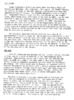
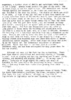
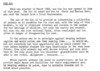
This section of the guidebook is followed by a short passage discussing the variety of catering arrangements provided within various locations within the zoo, along with the relevant bylaws and licencing restrictions; as can be seen in the below image, it is quite interesting to observe the fact that the majority of the catering venues present within Whipsnade Zoo at the time of publication were extremely formal - with one exclusive to Fellows of the Zoological Society - when compared to those present within more modern zoological collections. As such, this passage not only provides interesting information about Whipsnade Zoo itself, but also represents a valuable resource for those interested in zoo-history and the wider sociological environment which the zoo existed within at the time.

Beyond here, the longest segment of the book comprises a pair of alphabetical lists discussing the various mammalian and avian taxa which the visitor to Whipsnade Zoo could reasonably expect to see displayed at the collection at the time of publication; in some cases, a given entry pertains to a wider group, which is subdivided into additional alphabetically-listed taxa displayed within the zoo. Each of the entries contains a variety of information about the diet, range and behavior of the species discussed, with many containing further information about their conservation status within the wild, and the origin of the specific animals held within the collection. Where present, this latter information often includes details of the price paid by ZSL for the animals in question, the individuals responsible for purchasing or donating them, and the overall captive population in European collections.
This section is supplemented by a short list detailing the various species of wild bird which had been recorded within the grounds of the zoo at the time of publication, a total of 67 taxa; perhaps the most interesting aspect of this list is the presence of several species (for instance hawfinch, turtle dove and nightingale) which have suffered extreme contractions in UK population and range in the intervening 90 years, and which as a result would likely be absent from an equivalent list were one compiled in the present day, and naturally the presence of this list further strengthens the statement contained within the introduction that Whipsnade Zoo was originally intended to comprise a reserve for native wildlife as well as a zoological collection.


Much like the immediately-preceding passage, the section which follows displays a strong indication towards a desire to provide an educational tool with regards to the native fauna and flora of the Whipsnade estate and immediately-adjacent regions of the countryside; in this case, a comprehensive list of the various trees, shrubs and plants recorded within the grounds of the zoo, citing each taxon both by the family or widen taxonomic group and their common name. It is noted, however, that "
no complete botanical study has yet been made, partly because it is only since the estate was enclosed that the survivors of the native plants have had a chance of spreading and that plants that had been exterminated have been re-introduced" - as such the content of this section cannot be fully relied upon.
The next segment of the guidebook comprises a full account of the various by-laws and regulations which applied to entry to either of the ZSL zoological collections per Section 17 of the Zoological Society of London Act 1928; it is not, of course, all that unusual for zoo guidebooks to contain information on the various rules within the collection which published them, and many of the rules and regulations listed here are more-or-less as one would expect from such content - such as prohibitions on feeding captive livestock, entering enclosures, and acts of public indecency. However, the sheer number of by-laws (31 in total), the lengths to which the guidebook goes to describe the precise nature of these laws and how they are defined, and the fact that any visitor found in infringement of these by-laws is stated to be subject not only to expulsion from zoo premises but a summary conviction and fine of £5 (which, due to inflation, is equivalent to c.£425 in modern money) is rather more unusual to modern eyes.... as are less prosaic rules such as the following:
- No person shall (a) wash any article in any reservoir, lake, pond, trough or fountain; or (b) do any act likely to pollute the water within.
- No person shall cut, dig, fell, pluck, break or injure any timber, tree, shrub, brushwood, gorse, fern, turf, grass, flower (wild or cultivated), mushroom, berries or any plant.
- No person shall deliver, utter or read any public speech, lecture, prayer, scripture, sermon, or address of any kind or description whatsoever.
- No person shall sing any sacred or secular song, or sound or play upon any musical instrument.
- No person shall chase, catch, trap, or snare or attempt to chase, catch, trap or snare, or lay or place any net or trap for the taking of any animal.
Interestingly, and in a surprisingly modern move, another rule states that smoking within areas of the estate listed as non-smoking was prohibited..... which naturally indicates the presence *
of* such areas, to my surprise!
The guidebook concludes with a segment discussing the Zoological Society of London itself; this provides a small amount of information relating to the history of the society, before listing the council membership at the time of publication and key staff members. Alongside the royal patron of the time, King George V (the great-grandfather of the current king) individuals who I feel are worthy of particular mention here include the following:
- Herbrand Arthur Russell, 11th Duke of Bedford; President of the Zoological Society from 1899 to 1936, and otherwise notable due to his acquisition and breeding of Pere David's Deer on his Woburn estate, and his introduction of Himalayan Tahr to the Southern Alps of New Zealand.
- Alfred Ezra; Vice-President of the Zoological Society at the time of publication, and a prominent private keeper/breeder of rare birds at his Foxwarren Park estate - which during this timespan including the last-known group of Pink-headed Duck in the world.
- Sir Peter Chalmers Mitchell; Secretary of the Zoological Society from 1903 to 1935, and author of all guidebooks published by the Society during this period - including the guidebook under discussion here. He was also the individual most responsible for the foundation of Whipsnade Zoo.
Beyond here, further information is provided relating to the various benefits of Fellowship of the Society, which at the time of publication could only be obtained after nomination/proposal by an existing Fellow of one's personal acquaintance; this section also contains information relating to the admission hours and entry prices pertaining both to Whipsnade Zoo and London Zoo itself.
This seems an appropriate point at which to discuss the photographic content located within this guidebook; unlike the guidebooks published by London Zoo during the opening decades of the 20th century, which contain photographs of animals and exhibits interspersed throughout the main body of the text, photographic material is here limited to two distinct sections devoted to photographic plates. This is somewhat surprising when one considers that, as noted above, this guidebook was written and edited by the same individual responsible for the production of the aforementioned London Zoo guidebooks - as such, one would have expected greater similarities in content and presentation. In this regard, then, this Whipsnade Zoo guidebook actually bears closer resemblance to the format established by the material published at Zoo Berlin during the decades leading up to the time of publication... although even here, the similarity is limited given the fact that those guidebooks (as I have shown throughout this thread) also contained copious drawings and illustrations, something entirely lacking here.
However, the actual photographic content within this guidebook *is* very interesting nonetheless; the first and longer batch of photographic plates is located within the central pages of the guidebook, and depicts a fairly wide variety of the species held within the collection at the time of publication, along with images showing the general environs of Whipsnade and certain enclosures/exhibits. The second, shorter batch of photographic plates provides similar content pertaining to the collection and exhibits at Regents Park, and is located immediately after the aforementioned concluding passages relating to the Zoological Society of London as a whole.

The final major feature of this guidebook which should be highlighted is the presence of an extremely detailed and attractive fold-out map of Whipsnade Zoo and the surrounding estate, located within the interior rear cover. This contains copious annotation showing the location of animal exhibits, areas of natural and managed vegetation, visitor amenities and all major roads and footpaths throughout the zoo, along with interpretive notes where required. Moreover, a road-map of the surrounding area - listing the key roads leading to and from the zoo, distances to nearby major settlements, and the directions required to reach given locations - is provided as a supplementary inset. Not only is this map a high quality item in and of itself, providing a large amount of information about the collection in an attractive and easy-to-interpret way for those purchasing the guidebook at the time of publication, but it is also an extremely valuable and interesting resource for those with an interest in zoo-history... particularly given the fact that it comes from a time in the infancy of the zoological collection in question.

Overall, then, this is an attractive, highly-detailed and interesting guidebook which contains a large amount of valuable historical, sociological and zoological information - and as such represents an extremely valuable resource. Given the fragility of my copy - which is falling apart from the binding somewhat, held together only by a plastic slipcase applied by a previous owner - I suspect that once I have concluded this pair of reviews I will be placing this particular guidebook in secure storage to ensure it is preserved as best as possible for future generations!
As noted, I shall return to the subject of this guidebook somewhat in the conclusion to the next review; in the meantime, I would be extremely interested in any feedback, remarks and further insights which those reading this post with greater knowledge of ZSL than I possess may be able to provide.




 so that will have to wait for a few more days! Although my ability to read the ornate typeface is better than it was, it is still extremely slow, hesitant and requires a fair bit of proof-reading before it even reaches the translation stage...