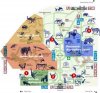
here i have taken the map of melbourne zoo and overlayed colour so we can see the areas that have been developed, areas planned to be developed and areas that are simply open for speculation.
clearly we can see the zoos existing asian asian rainforest, australian bush and african rainforest sections.
i have also taken the liberty of colouring in the area of the zoo that is soon to be redeveloped as an australian marine biome. as you can see it clearly overlays sections of the zoo that are curently inhabited by a variety of small cats, lions, coatis, binturongs and wild dogs and the amazon aviary with macaws and squirrel monkeys. the aviary is a heratage feature and will no doubt be retained, possibly refurbished for coastal birds. the lion park looks set to become a seal theater.
in addition i have added numbered points on the zoo map. below i explain what each area is and what i expect it will be developed into.
1) treetop monkeys & apes.
this exhibit is located in the heart of the african rainforest though houses most of the zoos expansive collection of primates from around the world. the zoo has indicated its desire to demolish the 70's exhibit and there is a sizeable adjacent area of undeveloped land above between the tigers and butterly house. i expect to see area largely redeveloped for primates, however it will probably be better subdivided with african species viewed from the african trail and asian species from the other.
2) old great ape exhibits.
with the orangutans move to their new enclosure imminent the old great apes enclosures will now sit largely empty. in the long-term i would like to see the area re-developed into a new entrance into the african rainforest with room for bongo and other species. this will be especially important if area 1) is overtaken by the asian rainforest zone. behind the outdated facade and moats is a building that still provides night dens for the gorillas as well as these older exhibits. with the outside flintstone-esque enclosures being completely filled in a redeveloped they could easily become a new second gorilla or chimpanzee habitat. however there are rumours of the area being overtaken by a new "zoo enterance plaza" with cafe's and shops. in the short-term i predict the zoos two baboon troops will most definately move in. the exhibits, with their rocky cliffs will suit them perfectly.
3) giraffe exhibit
with a heratage listing on their home, the giraffes are unlikey to be moving anywhere. instead i expect the surrounding picnic lawns, platypus house and giant tortoise exhibits transformed into a mini-african savannah with just the staple giraffe, zebra, lion, meerkat and maybe a few others.
4) bears, big cats & primate islands
currently this area consists of a decent sized lake with islands for lemurs and soon to be relocated siamangs. a path winds around it where visitors can view badgers, bears, porcupines then numerous big cats and finally maned wolves and peccaries. i have read that the zoo intends on transforming this area into a coniferous/decidous temperate forest. this could work quite well as the "big cat preserve" (essentially a row of about 5 big cat cages with the nighthouses concealed at rear) need only newly designed frontages for them to be transformed into a series of great snow leopard and golden cat habitats. red pandas, tahr and aviaries would also fit suitably into the area but numerous, mostly south american species will need to be relocated first.
5) the mixed bag!
this little visited section of the zoo has some magnificent ancient moreton bay figs, an empty old elephant yard, and a mixed bag of small mammal and bird species from around the world. essentially there is only one thing for it - the area will probably become either a south american rainforest or papua new guinea rainforest or be divided into both. certainly, the well estblished trees in the area would make for a lovely rainforest no matter where it was supposed to represent.
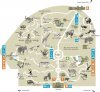
clearly we can see the zoos existing asian asian rainforest, australian bush and african rainforest sections.
i have also taken the liberty of colouring in the area of the zoo that is soon to be redeveloped as an australian marine biome. as you can see it clearly overlays sections of the zoo that are curently inhabited by a variety of small cats, lions, coatis, binturongs and wild dogs and the amazon aviary with macaws and squirrel monkeys. the aviary is a heratage feature and will no doubt be retained, possibly refurbished for coastal birds. the lion park looks set to become a seal theater.
in addition i have added numbered points on the zoo map. below i explain what each area is and what i expect it will be developed into.
1) treetop monkeys & apes.
this exhibit is located in the heart of the african rainforest though houses most of the zoos expansive collection of primates from around the world. the zoo has indicated its desire to demolish the 70's exhibit and there is a sizeable adjacent area of undeveloped land above between the tigers and butterly house. i expect to see area largely redeveloped for primates, however it will probably be better subdivided with african species viewed from the african trail and asian species from the other.
2) old great ape exhibits.
with the orangutans move to their new enclosure imminent the old great apes enclosures will now sit largely empty. in the long-term i would like to see the area re-developed into a new entrance into the african rainforest with room for bongo and other species. this will be especially important if area 1) is overtaken by the asian rainforest zone. behind the outdated facade and moats is a building that still provides night dens for the gorillas as well as these older exhibits. with the outside flintstone-esque enclosures being completely filled in a redeveloped they could easily become a new second gorilla or chimpanzee habitat. however there are rumours of the area being overtaken by a new "zoo enterance plaza" with cafe's and shops. in the short-term i predict the zoos two baboon troops will most definately move in. the exhibits, with their rocky cliffs will suit them perfectly.
3) giraffe exhibit
with a heratage listing on their home, the giraffes are unlikey to be moving anywhere. instead i expect the surrounding picnic lawns, platypus house and giant tortoise exhibits transformed into a mini-african savannah with just the staple giraffe, zebra, lion, meerkat and maybe a few others.
4) bears, big cats & primate islands
currently this area consists of a decent sized lake with islands for lemurs and soon to be relocated siamangs. a path winds around it where visitors can view badgers, bears, porcupines then numerous big cats and finally maned wolves and peccaries. i have read that the zoo intends on transforming this area into a coniferous/decidous temperate forest. this could work quite well as the "big cat preserve" (essentially a row of about 5 big cat cages with the nighthouses concealed at rear) need only newly designed frontages for them to be transformed into a series of great snow leopard and golden cat habitats. red pandas, tahr and aviaries would also fit suitably into the area but numerous, mostly south american species will need to be relocated first.
5) the mixed bag!
this little visited section of the zoo has some magnificent ancient moreton bay figs, an empty old elephant yard, and a mixed bag of small mammal and bird species from around the world. essentially there is only one thing for it - the area will probably become either a south american rainforest or papua new guinea rainforest or be divided into both. certainly, the well estblished trees in the area would make for a lovely rainforest no matter where it was supposed to represent.
Attachments
Last edited:

 )
)