PART 1- A Review of Taronga Zoo
I recently had the opportunity to visit Taronga Zoo during a trip to Sydney. Prior to this visit, I had never visited Taronga Zoo but ever since I can remember, it has long been a goal of mine. My walkthrough of Taronga comes from the perspective of someone who isn’t very familiar with the zoo nor its layout, so at times I might divert from the normal route of zoo shown on the map (see here:https://taronga.org.au/sites/default/files/content/maps/TZMap_Ed10v16.pdf ). I often revisited areas or retraced my steps through certain sections that had multiple pathways or methods to view the animals. It took me a while to become acquainted with Taronga’s labyrinth of pathways. Also where relevant, I will compare certain aspects of Taronga Zoo with Melbourne Zoo (the only other major zoo I have visited in Australia). For the sake of completeness, I will also include the species that were signed but not seen (especially in the bird aviaries) in my walkthrough of the zoo and the final species list. As always, I hope my reviews provide further insight and provoke additional interest.
A final note: I will divide this review into three sections- Part 1 (the majority of the Australian Walkabout and Backyard to Bush), Part 2 (Great Southern Oceans, Rainforest Trail and enclosures in the middle of the zoo) and Part 3 (the future African Savannah area, chimps, Reptile World and the remaining exhibits near the front of the zoo).
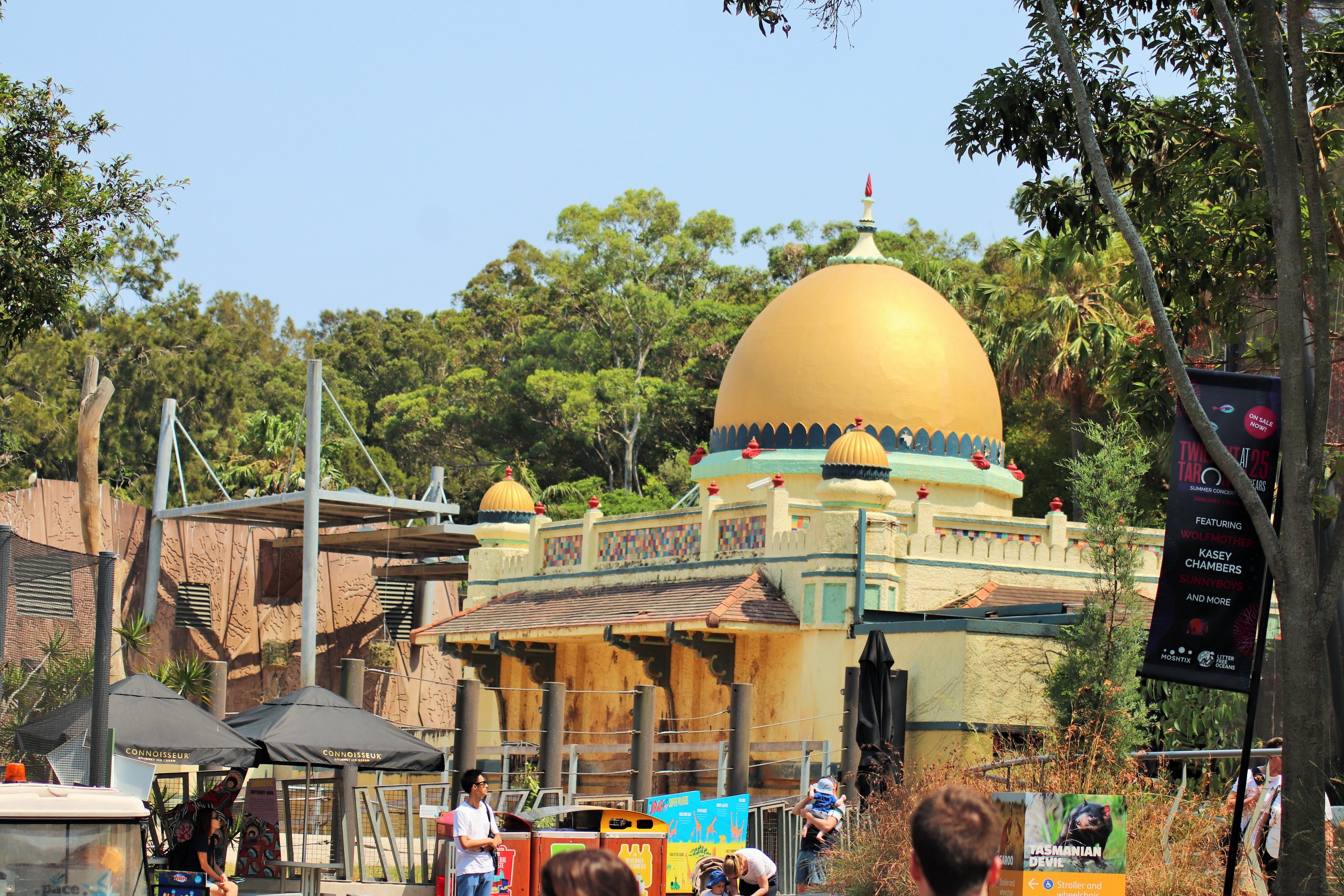
After arriving at Taronga Zoo’s impressive entrance and paying admission, I wanted to try and get to the nocturnal house as quickly as possible, so I headed straight towards the Australian Walkabout (as the map calls the area). Walking through a winding leafy path, the first animals I saw were free-ranging Helmeted Guineafowl foraging near the Rainforest Aviary entrance. Don’t worry the species get more interesting from here.
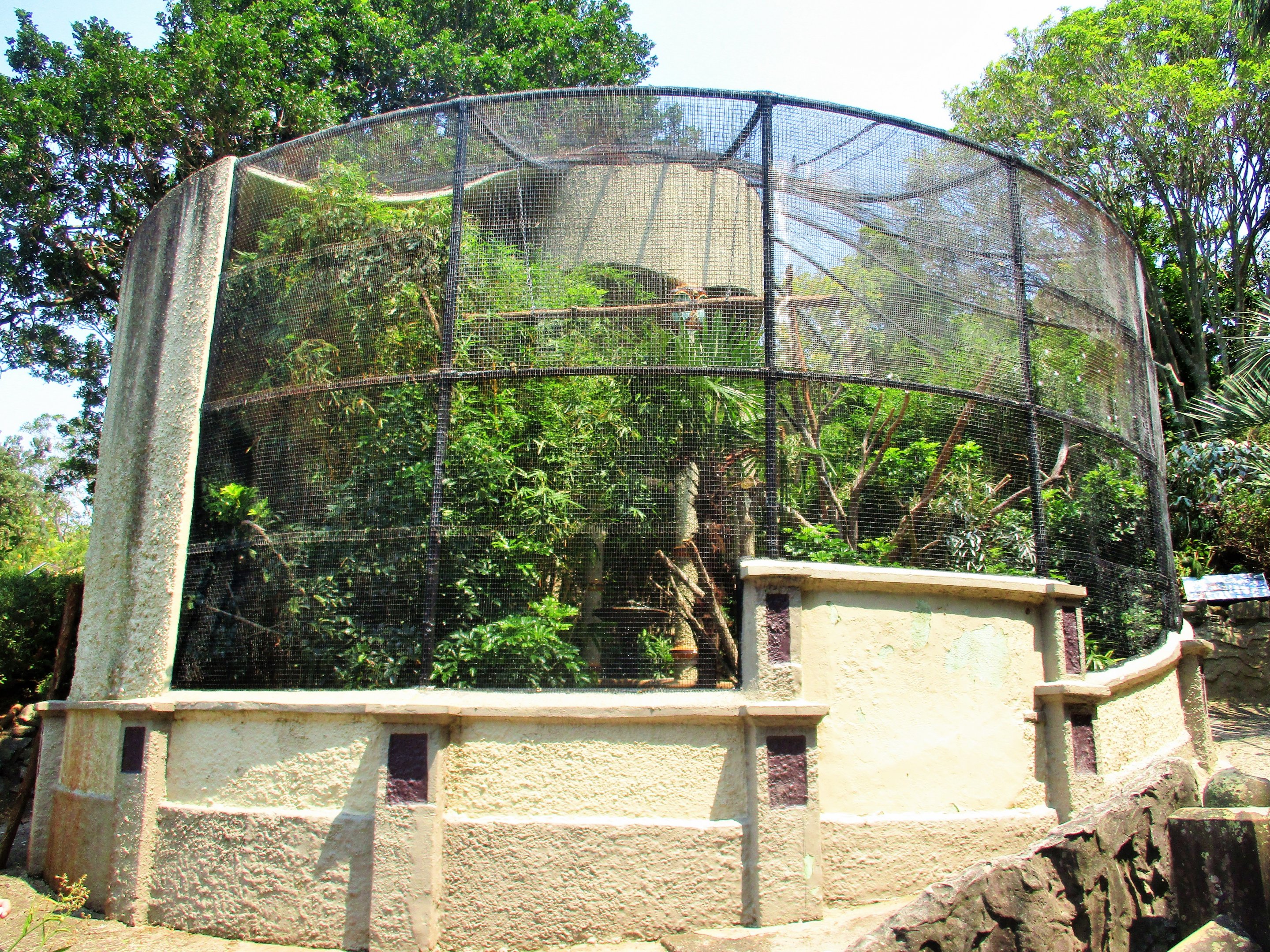
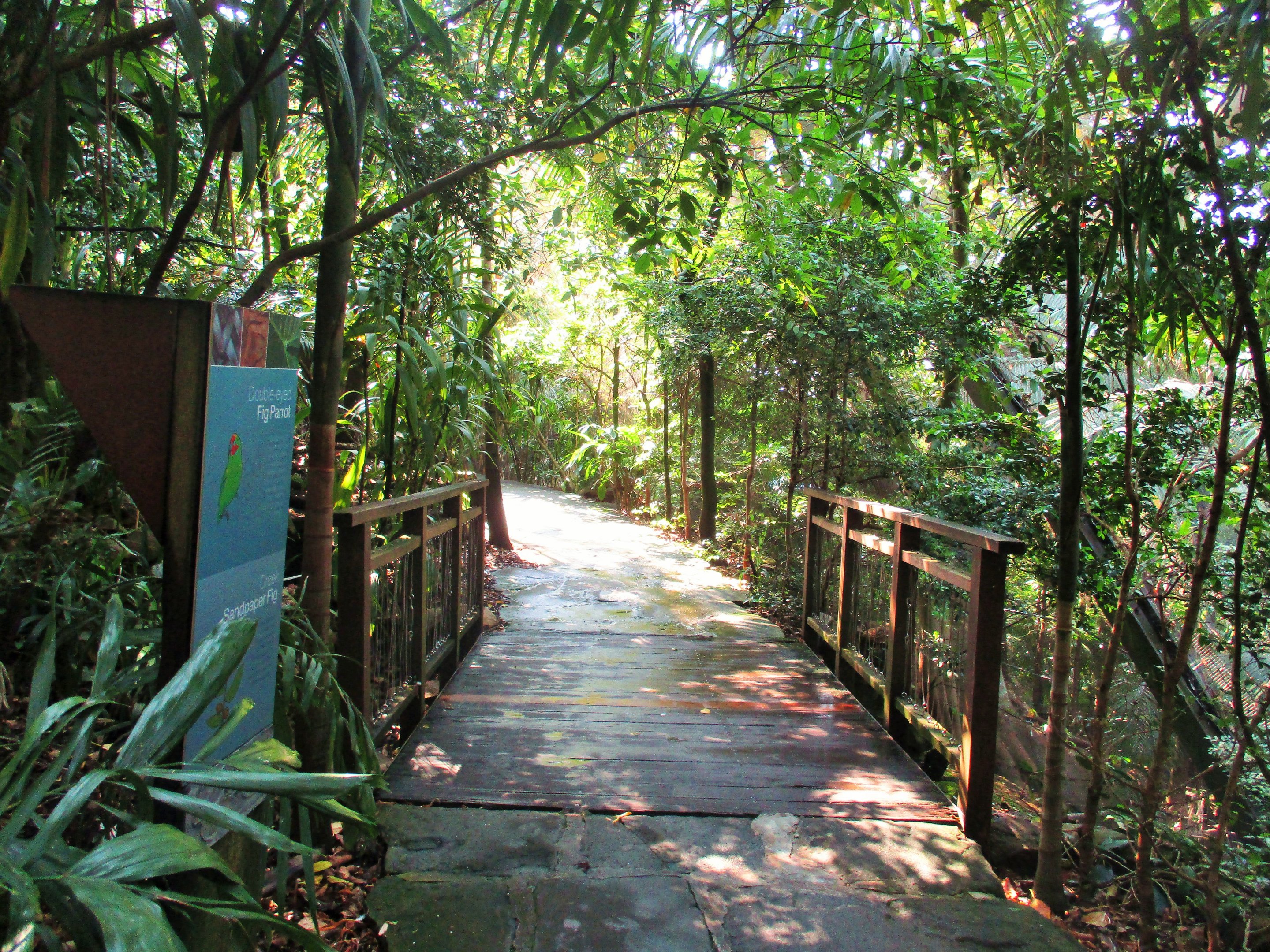
The nearby Rainforest Aviary left a lovely first impression. This lush walk-through aviary was filled with nesting Blue-faced Parrot Finches raising their young. In the treetops and low-lying branches, I saw a solid range of pigeons and doves; Purple-crowned Fruit Dove, Rose-crowned Fruit Dove, Brown Cuckoo Dove, White-headed Pigeon and Topknot Pigeon. The aviary was quite a tall structure with many matures trees and opportunities for the birds to escape public view. King Parrots, Eclectus Parrots (signed as E. r. macgillivaryi- the Australian subspecies) and a brief glimpse of a male Regent Bowerbird all added a pop of colour amongst the dense foliage. Additional species that were signed but not seen included Double-eyed Fig Parrot, Metallic Starling, Musk Lorikeet and Black-breasted Button Quail.
Up next was the most exciting area of the zoo in my opinion, Taronga’s nocturnal house, Australian Nightlife. According to a plaque, the building opened in August 1972 and was later renovated in 1991. I noted seventeen exhibits and couldn’t really fault any of them. They all were of an adequate (and in most cases spacious) size and were well-furnished. I was able to see all the species in one enclosure or another except for two; Squirrel Gliders and Greater Stick-nest Rats. The first two enclosures housed Bilbies, mixed with Ghost Bats in the first enclosure and the unseen Greater Stick-nest Rats in the second one. The following enclosure had a nice mix, with Red-tailed Phascogale and Brush-tailed Bettong. After many years of seeing Rufous Bettongs it was great to finally see a different bettong species.
The next enclosure had a mix of Feathertail Glider (always a crowd pleaser- there was an audience watching them scurry around the branches) and Yellow-bellied Glider. A Barn Owl was seen in the next enclosure which was mixed with a pair of very active Short-beaked Echidnas. So far all of these enclosures featured large glass viewing windows and plenty of branches and browse for the arboreal species. The sixth enclosure housed an active group of Fat-tailed Dunnarts.
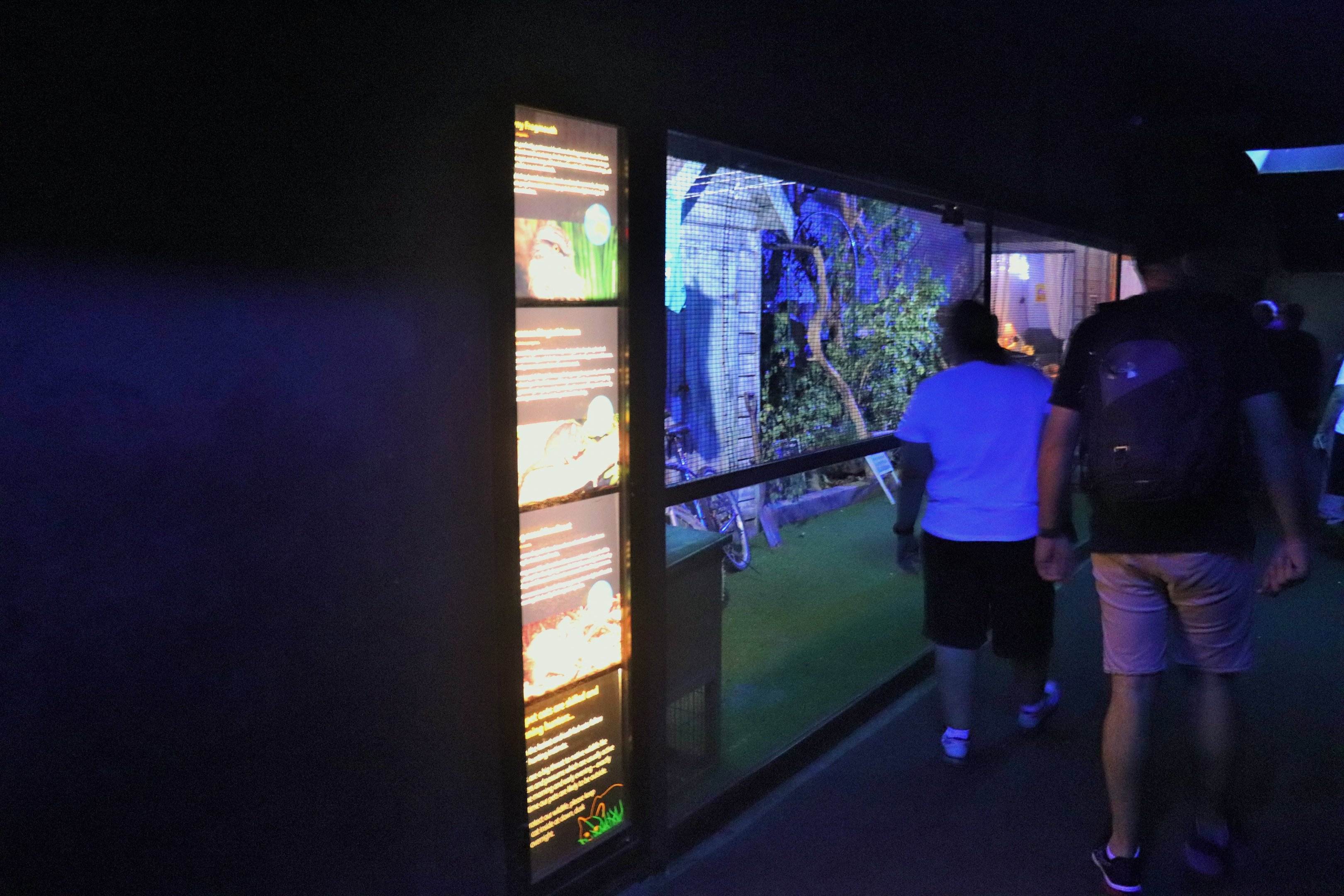
Moving along, there was an enclosure for more hyperactive Short-beaked Echidnas, and Squirrel Gliders. Next to it, was an enclosure for a Common Brushtail Possum. The following exhibit was particularly spacious for its inhabitants. This enclosure housed a mix of Yellow-bellied Glider, more Short-beaked Echidna (you can never have too many echidnas) and Long-nosed Potoroo. On my visit the yellow-bellied glider was hanging upside down from its nest box and stretching its gliding membranes. The next enclosure housed more Feathertail Gliders. This was then followed by two smaller reptile tanks for Golden-tailed Gecko and a massive New Caledonian Giant Gecko. The subsequent two enclosures contained rodents; Plains Rat and Spinifex Hopping Micee. The final corridor of the nocturnal house featured two large main enclosures that ran opposite of each other. The first enclosure (which was the only enclosure that was meshed) aimed to replicate a suburban backyard with heavy theming complete with artificial grass, a washing line, a magazine table and even a bicycle! This enclosure housed Long-nosed Bandicoot, Common Ringtail Possum and Tawny Frogmouth. All three species were very active during my visit.
Suddenly out of the corner of my eye, I saw a dark rotund figure materialize from the enclosure opposite the backyard scenery. I heard members of the public call out that this strange creature was wombat or rather a small bear. However the mysterious creature in question was in fact their Barton’s Long-beaked Echidna! What a special animal. He shared his enclosure with Brush-tailed Bettong and Squirrel Glider. The final enclosure in the nocturnal house had another colony of Ghost Bats.
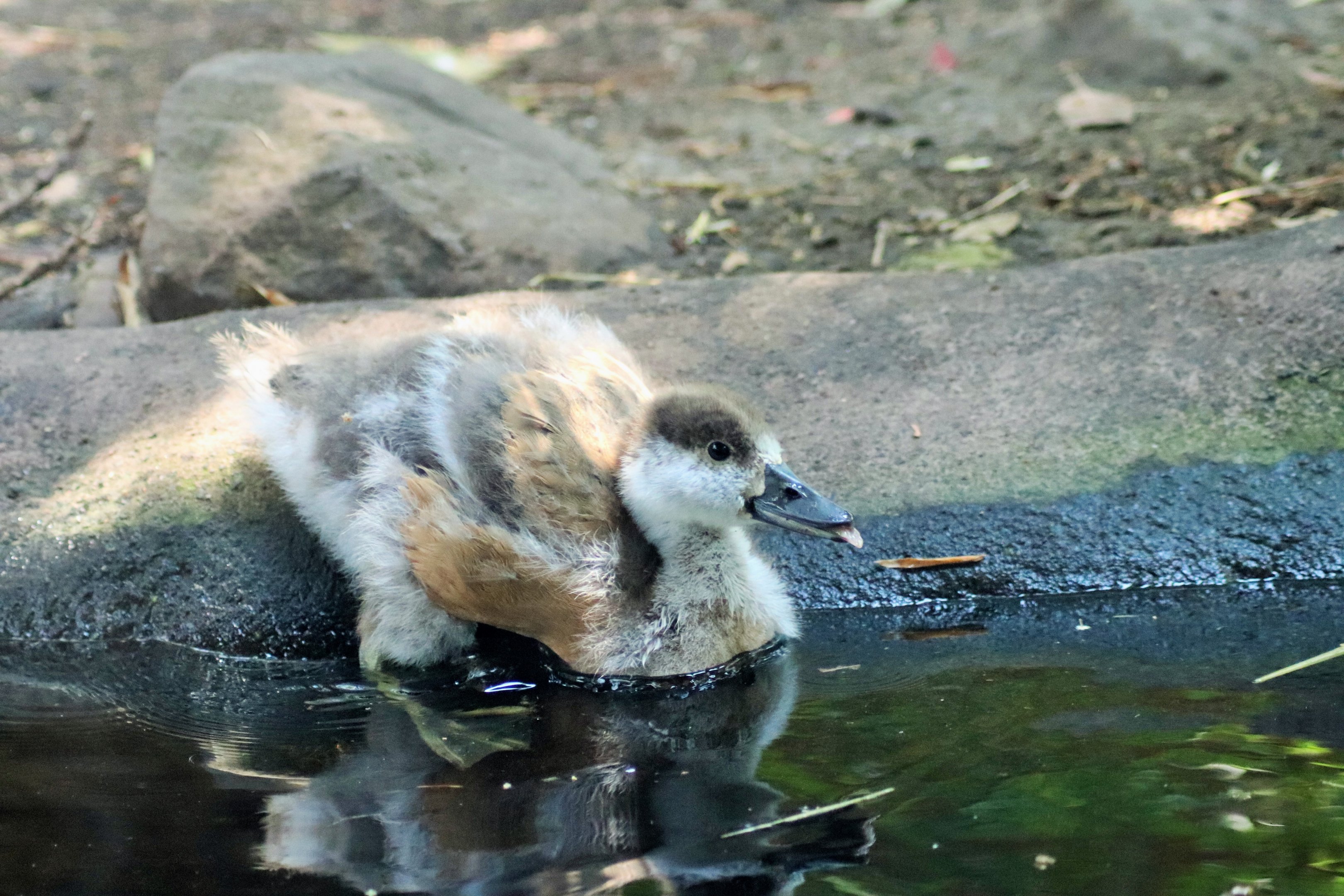
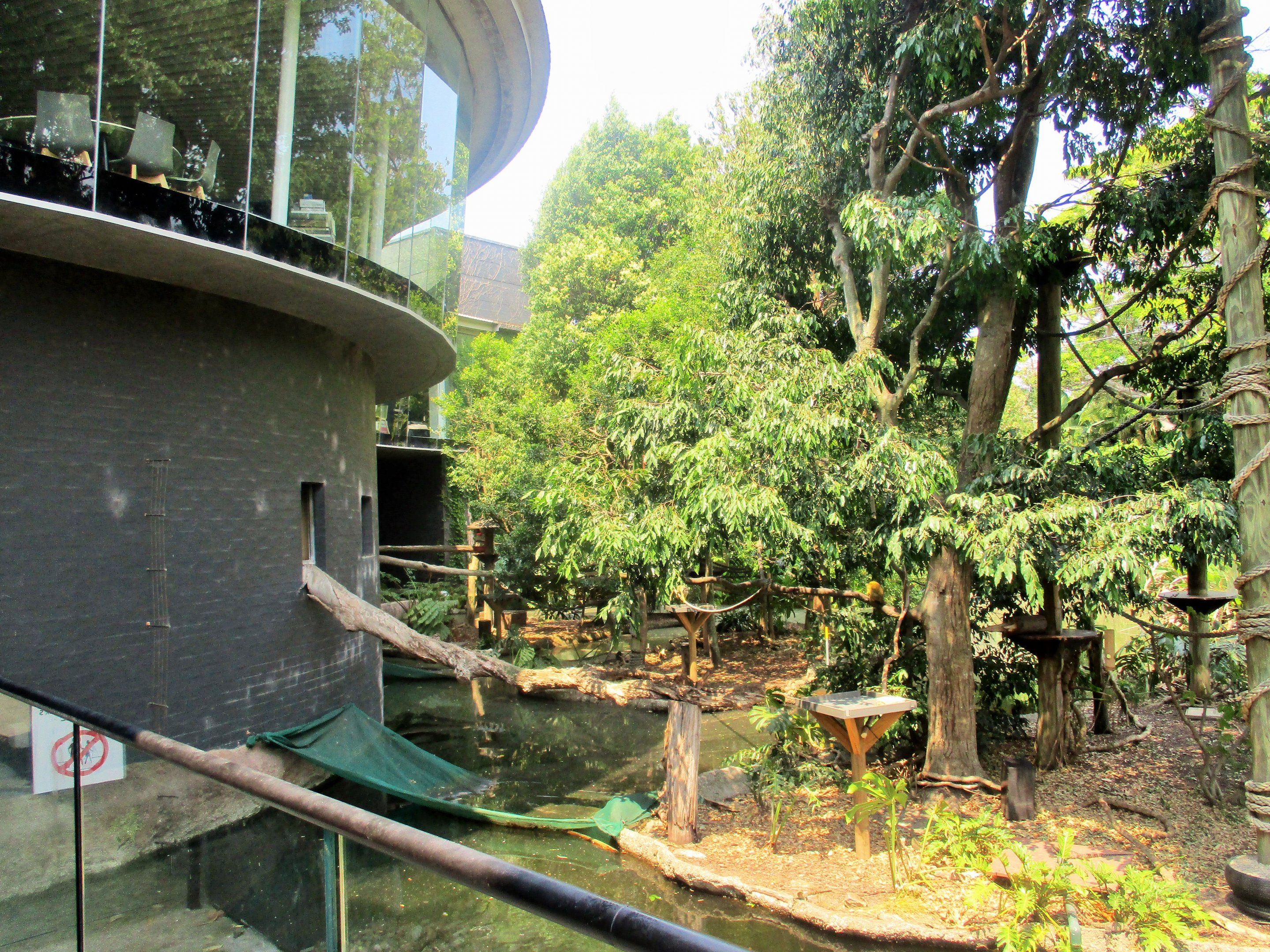
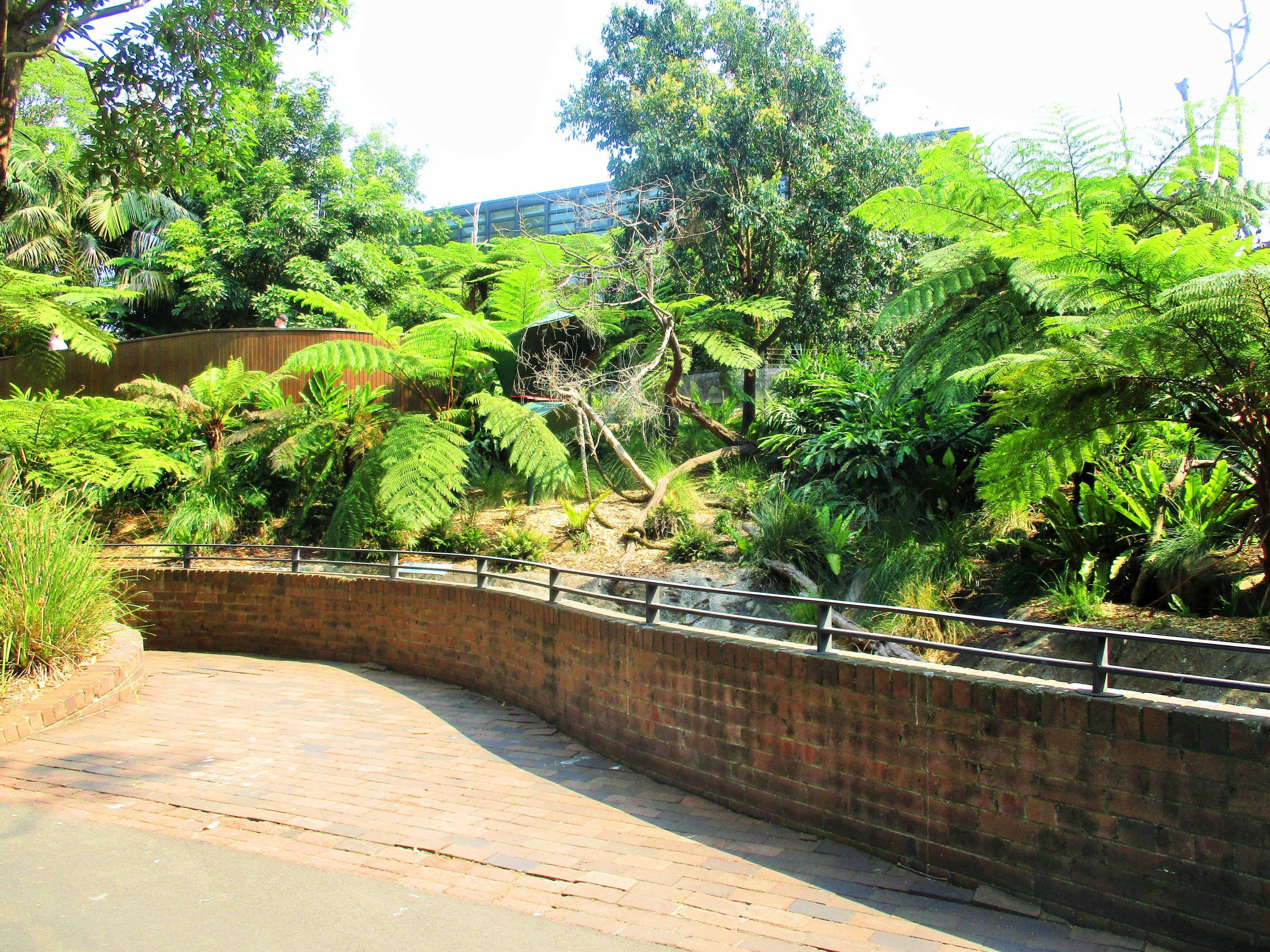
After the wonders of the nocturnal house, I briefly came across a small pond for water birds. The majority of the species seemed to be wild birds (moorhens, black ducks etc.) with a few expections; Australian Shelduck and Wandering Whistling Duck. Looking at the map after my visit, it seems like I only saw one portion of the enclosure and therefore there must have been additional species of waterfowl. Past the water birds was a thickly-planted enclosure for Goodfellow’s Tree Kangaroo. I really liked all the tree ferns and ground covers. There was also a Southern Cassowary enclosure around this area. The enclosure was lushly-planted and well-landscaped.
After retracing my steps past the nocturnal house, I reached the Platypus House. Before entering the dimly-lit building, there was an outdoor enclosure for a dozing Common Wombat. Inside there were a pair of tanks for Platypus (three species of monotreme in under half an hour!) This area had signage about Taronga’s success breeding the species, quirky facts and the main threats faced by platypus. All of it was presented very well. There was also a ‘platypus cam’ which live streamed the platypus’s burrow. Behind the two tanks was an enclosure for Fat-tailed Dunnart. After exiting the building, the next set of standard exhibits housed all the native crowd pleasers; Koalas, more Short-beaked Echidnas and a walk-through enclosure with Red Kangaroo, Swamp Wallaby, Red-necked Wallaby, Emu and Cape Barren Geese.
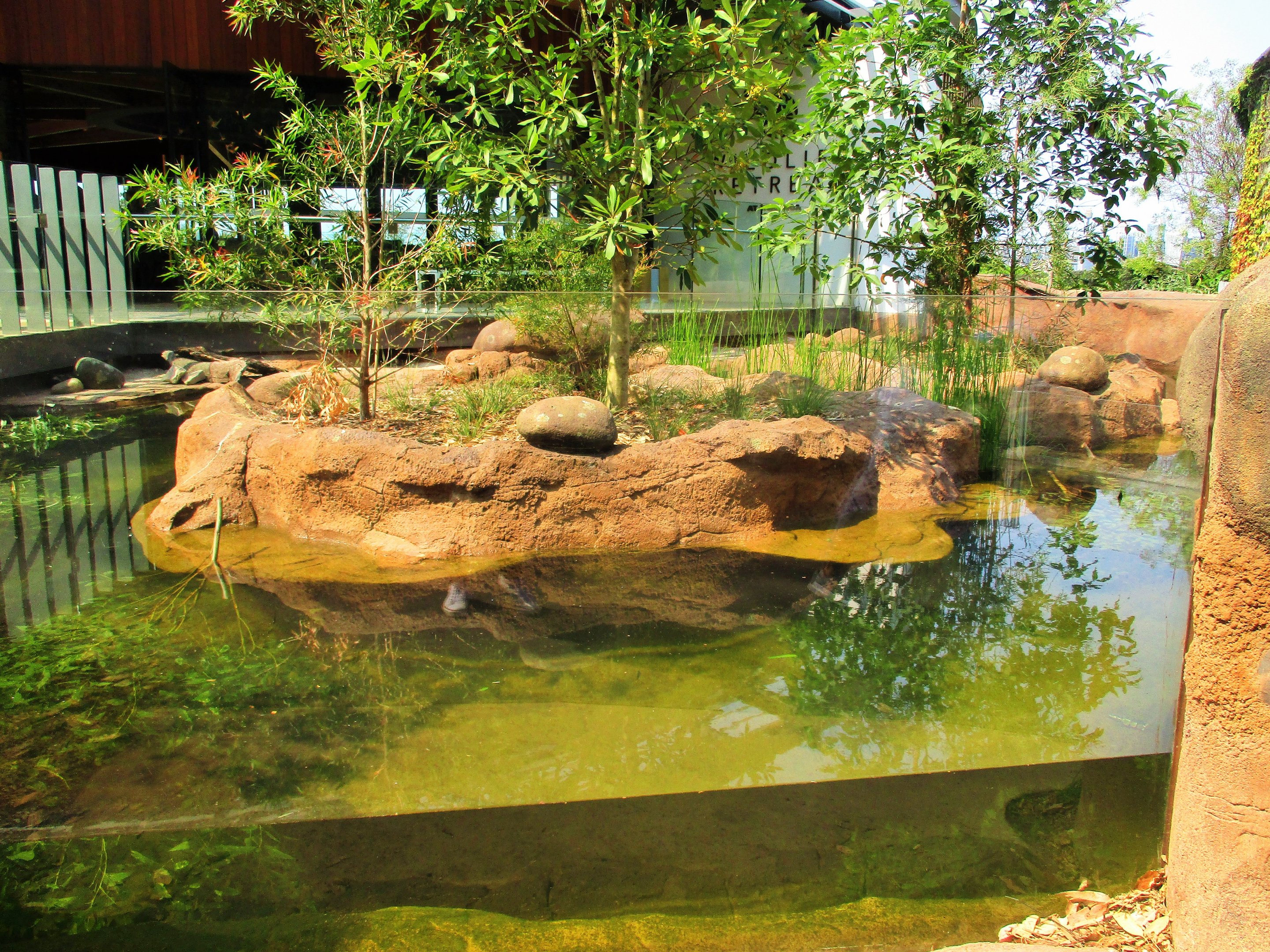
Up next was the newly-built outdoor enclosure for more Platypus. The glass-fronted enclosure with a large body of water was divided in half (one half for the Platypus and the other half for Broad-shelled River Turtle and Macquarie Turtle). I really enjoyed watching the platypus swim out in the open and thought it was a very unique way of displaying the species. Once the new vegetation and trees settle and grow, this area will make for a very attractive exhibit. Attached to the platypus pond was the Wildlife Retreat (a newly-built hotel for paying guests to stay overnight).
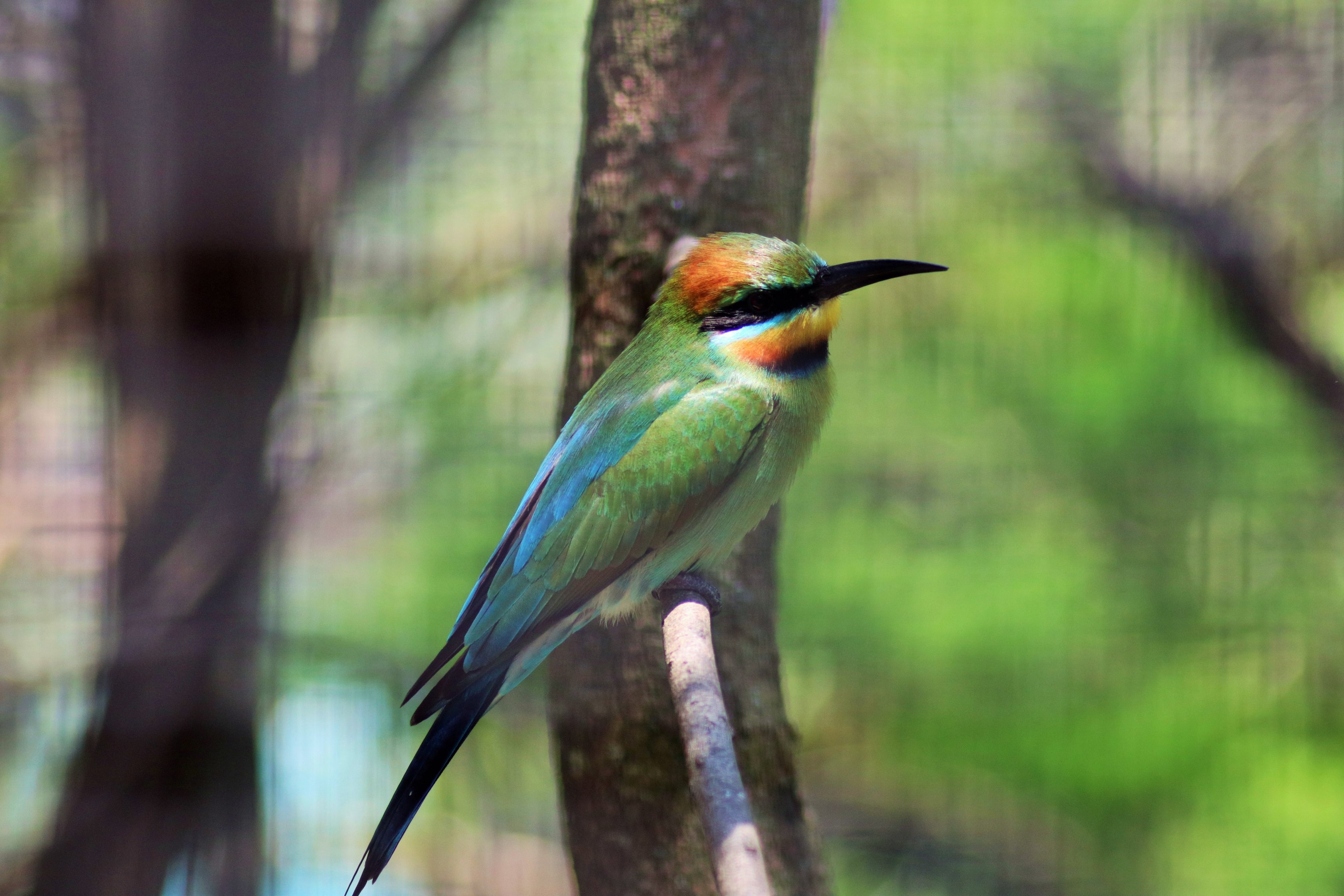
Past the nearby floral clock was the stunning Blue Mountains Bushwalk (Creatures of Wollemi) aviary which incorporates sandstone rock formations with mock rock, and featured a diverse range of vegetation and trees – notably the Wollemi Pine. There was also a body of water that ran through the aviary. This was easily one of the best walkthrough aviaries I have seen to date. The first group species that caught my attention were the parrots; Glossy Black Cockatoo, Gang-gang Cockatoo, Scaly-breasted Lorikeet and Superb Parrot. The pigeons were also well-represented with Peaceful Dove, Brown Cuckoo Dove, Rose-crowned Fruit Dove, Brush Bronzewing, Crested Pigeon and Emerald Dove all being noted. Zebra Finches were the commonest species found across the aviary and they were very well-established. Other bird species seen included Dollarbird, Noisy Pitta, Regent Honeyeater (a bird keeper later on told me that there are around thirty surplus honeyeaters living in the aviary), Wandering Whistling Duck, Striped Honeyeater and White-browed Woodswallow. I also caught a brief glimpse of a Brush-tailed Rock Wallaby, which reside in the aviary along with the birds.
Whilst I was searching for the birds, I heard a kookaburra call coming from a corner of the aviary and thought to myself that a kookaburra would easily predate on some of these bird species. I then heard the call of noisy miners, followed by some unusual construction noises. I soon came to the realization that I was witnessing the full-display and mimicry of a male Superb Lyrebird!
Unfortunately, he didn’t fully show himself however I did catch a glimpse of his magnificent tail feathers. Built into the sides of the mock rock were also some small terrariums for Southern Leaf-tailed Gecko and Cunningham’s Skink. Other species signed in this aviary included Sacred Kingfisher, Grey-crowned Babbler, Chestnut-breasted Mannikin, Little Lorikeet, Eastern Whipbird and Masked Lapwing.
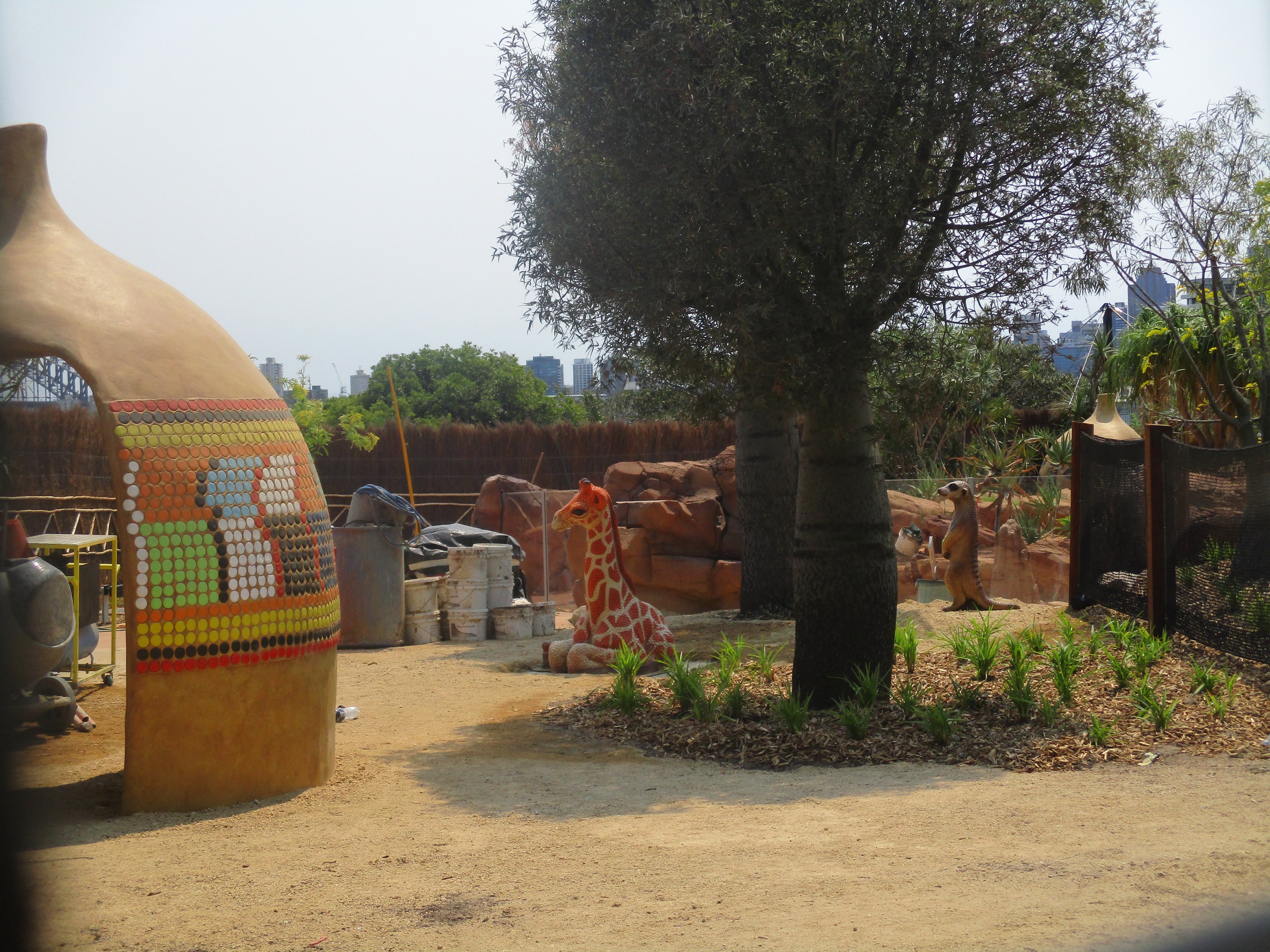
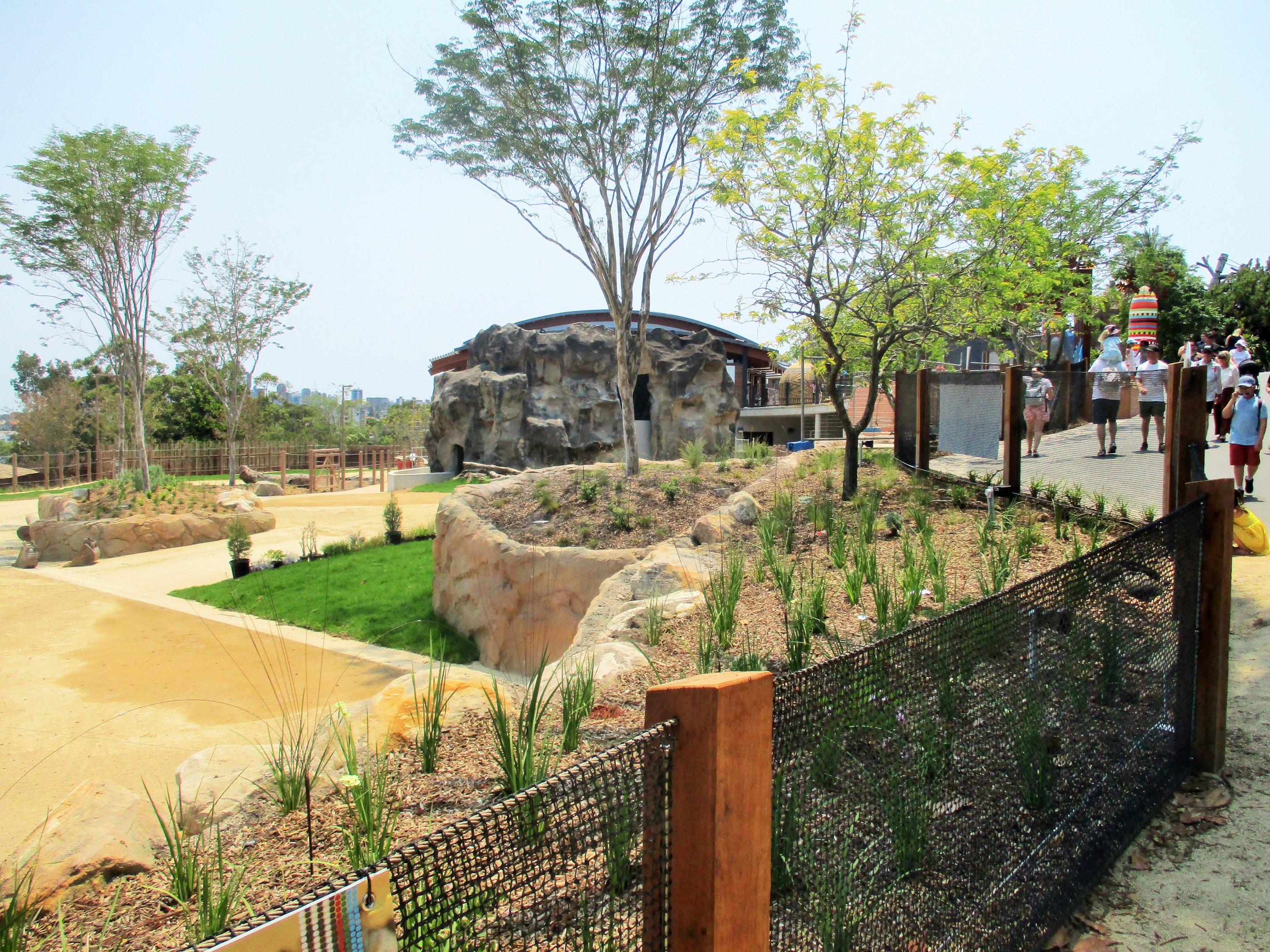
The Blue Mountains Bushwalk aviary is attached to another walk-through bird aviary. This aviary looks very new and hasn’t been stocked with birds yet. Continuing on, there was also a Red Kangaroo walk-through enclosure, however like the new aviary, it was also unoccupied. Guests staying in the wildlife retreat would be able to view the kangaroos via their hotel windows. There was also a lovely platypus statue in this area. Up next was a building for Tasmanian Devils, which had a pair of glass-fronted enclosures with additional signage and an interesting display about the devil’s plight in the wild. I liked the style of this area.
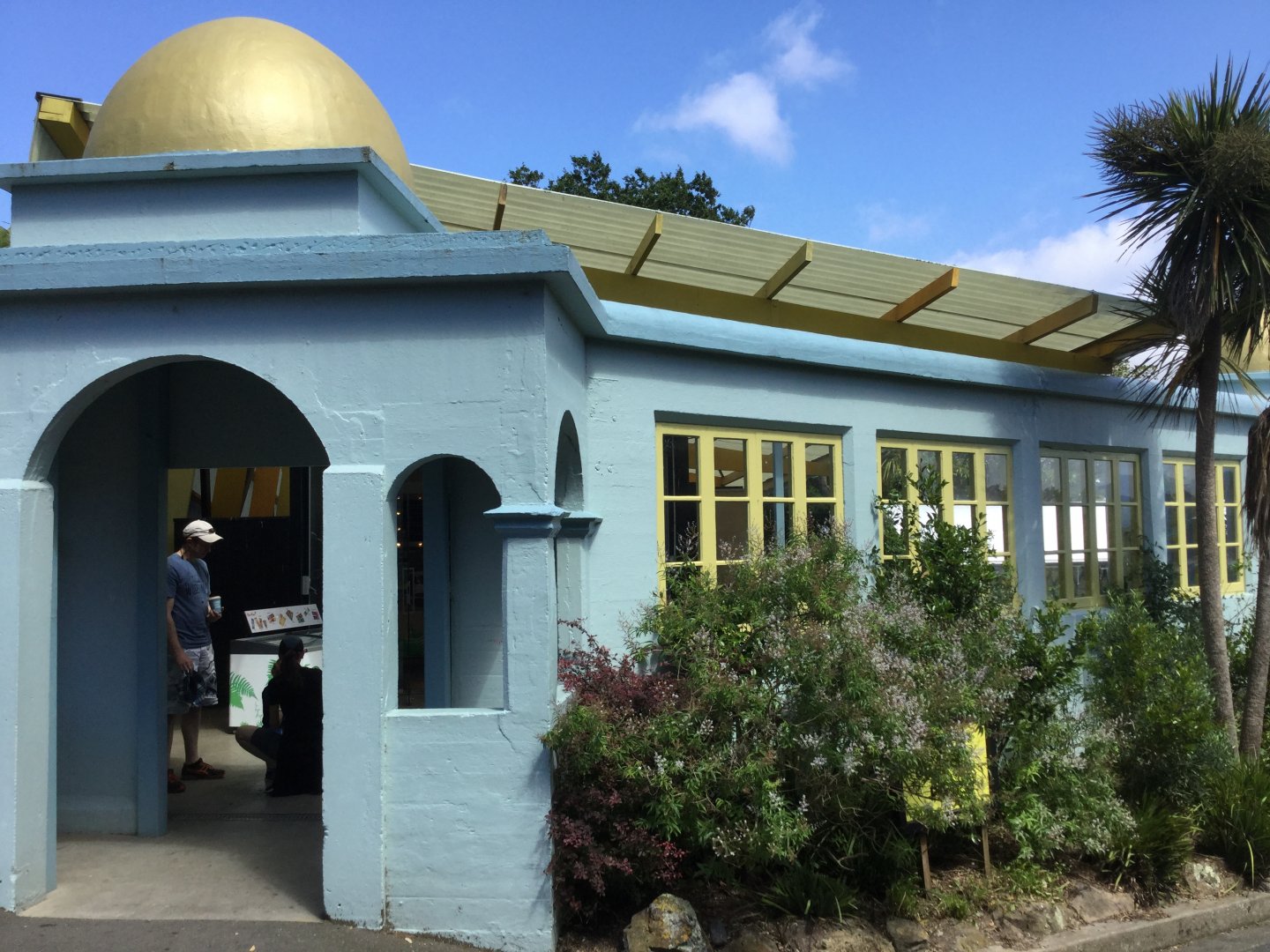
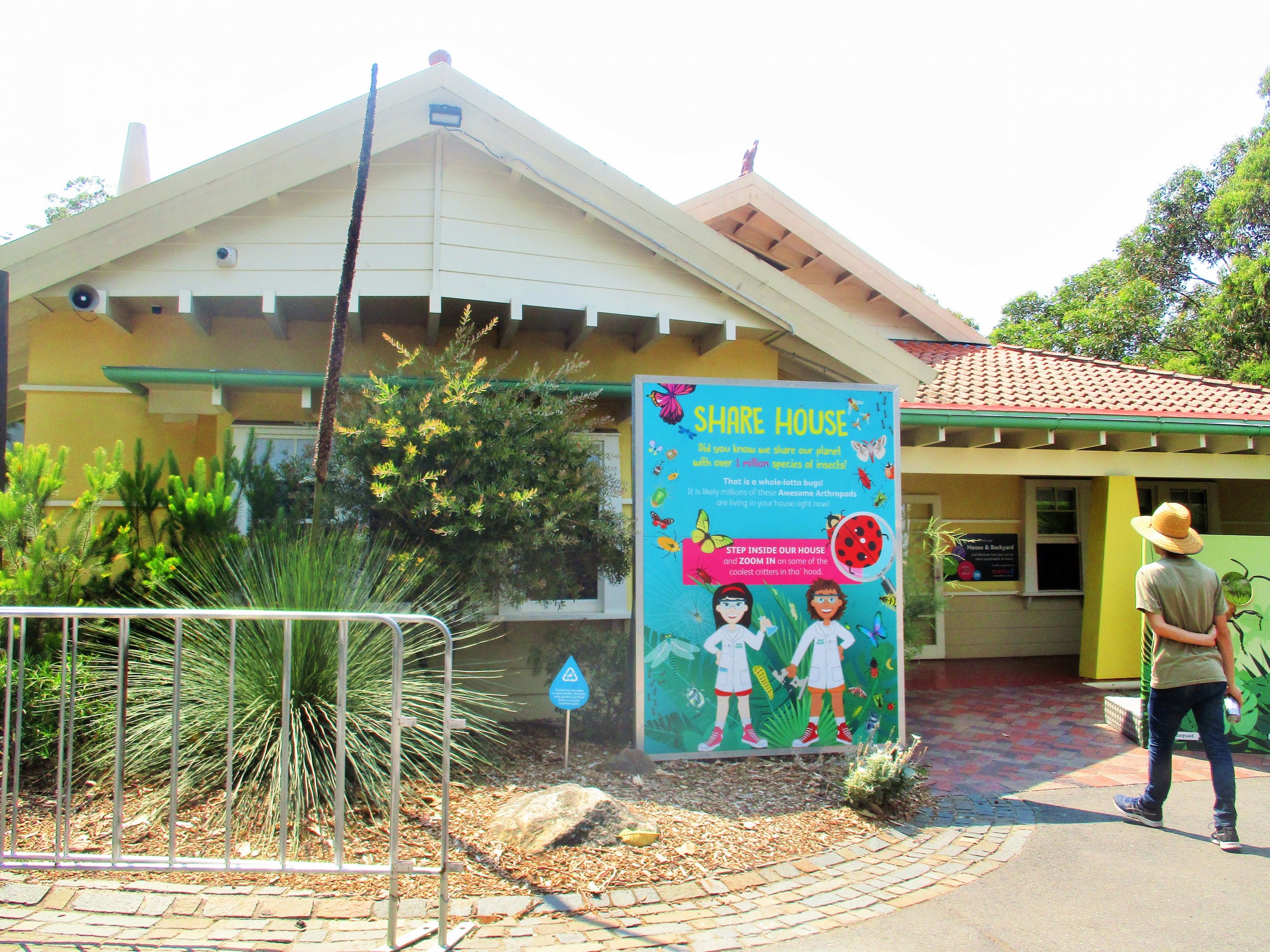
The Backyard to Bush precinct (called Kids Trail on the map) aims to showcase the creatures that live in and around our increasingly urban world. This area can loosely be divided into four parts; the house, the garden, the farmyard and the bush. The zoo literally tries and replicates all four areas with heavy theming found throughout the entire area.
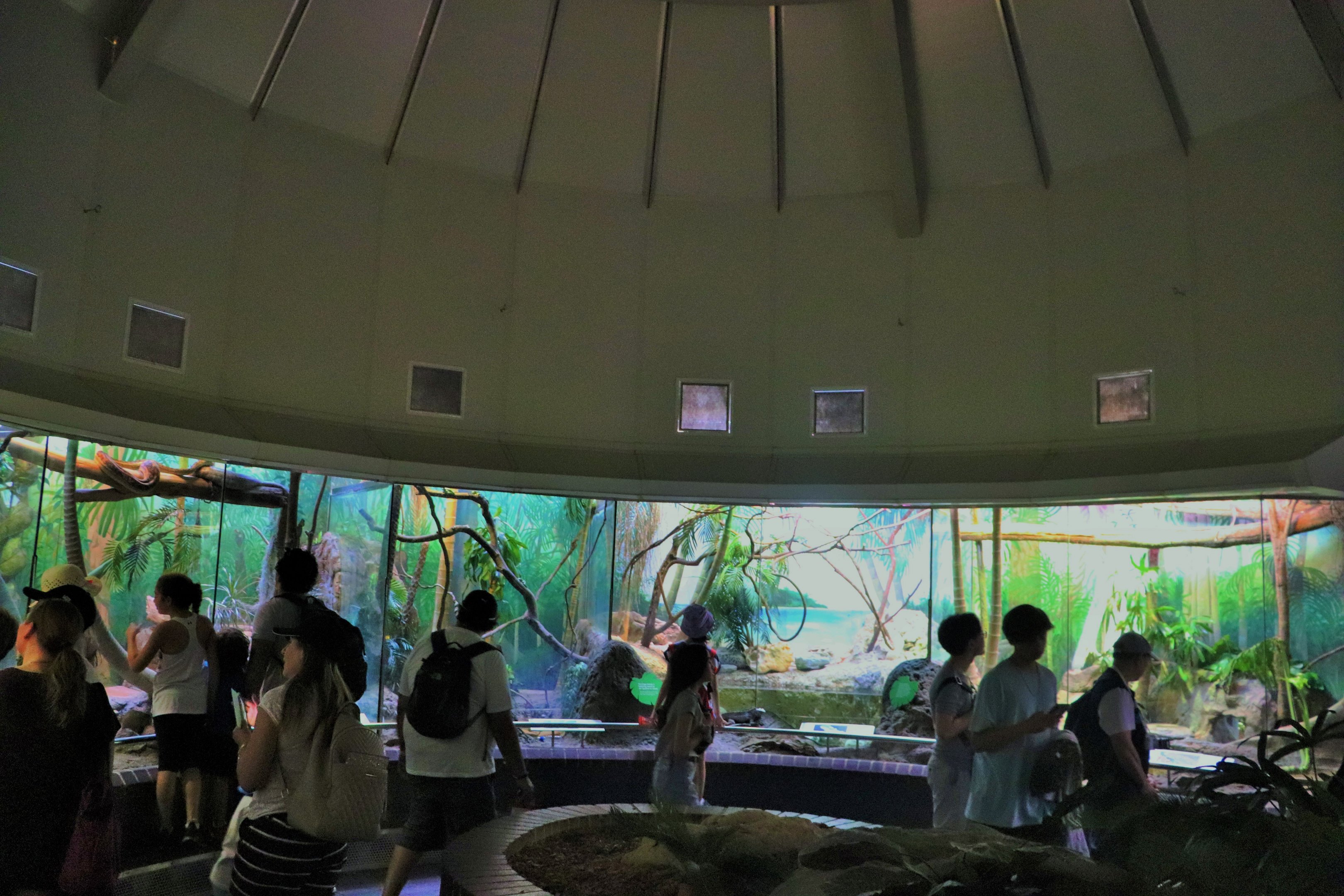
The Backyard to Bush House is divided into several rooms and had individual animal enclosures within each room. The first room contained standard tanks for Central Bearded Dragon, Golden Orb Weaver and Eastern Long-necked Turtle. There were also a pair of smaller tanks for Green Tree Frog and Green and Golden Bell Frog. Personally, I felt like they could have done a better job arranging some of these exhibits, it didn’t really have any flow. Another criticism was the lack of signage across the entire house. The majority of the signage didn’t have any scientific names and some of the animals were generically labelled (eg. ‘bearded dragon’ or ‘scorpion’).
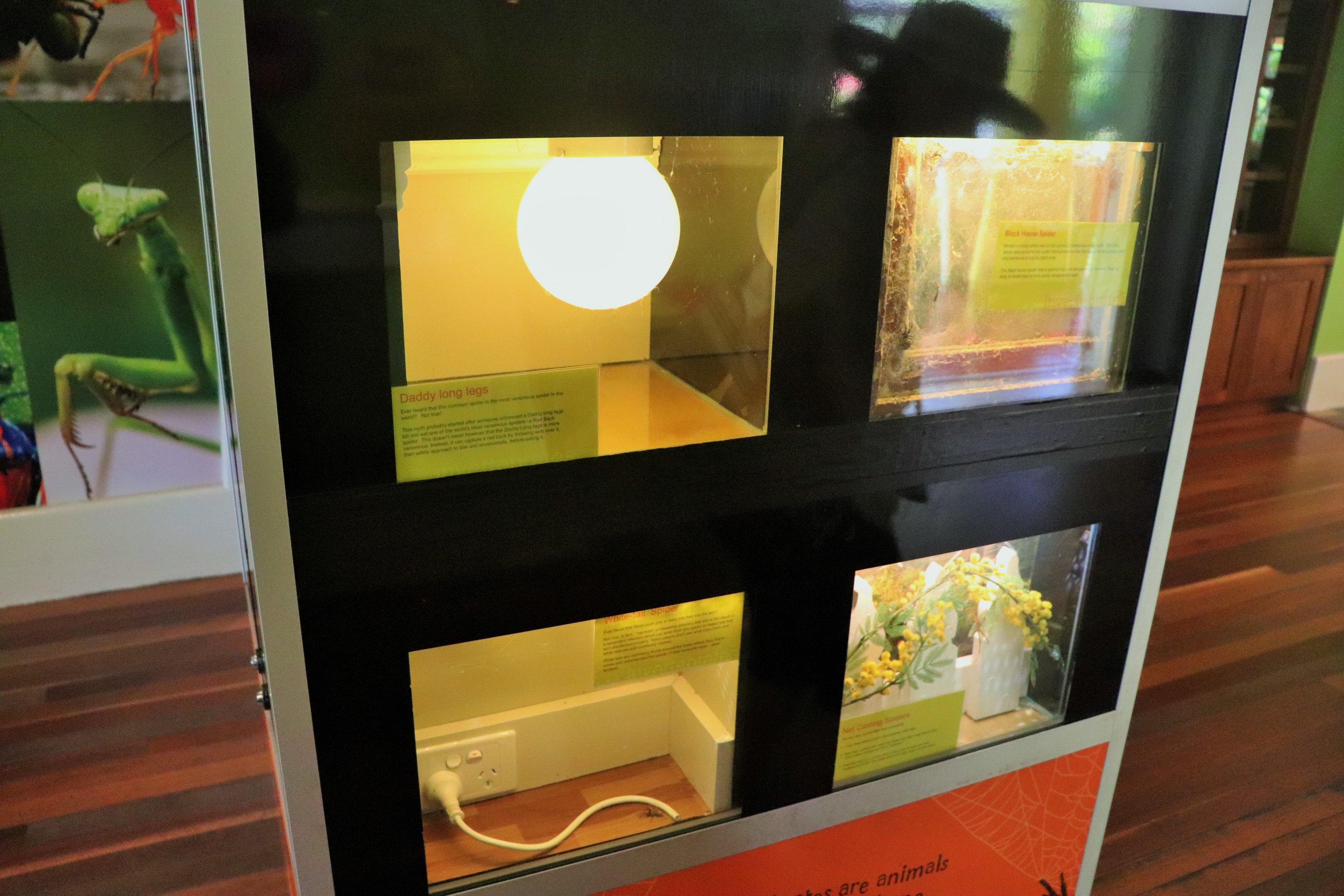
The other room that had animal exhibits within the house- the kitchen, began with a set of eight tanks (four on either side of a stand) for invertebrates. The first four tanks were nicely-done with leaf litter and had other appropriate substrates. These tanks contained Rainforest Snail, Scorpion (unlabeled species, most likely either Flinders Ranges or Desert Scorpion), Golden Huntsman Spider and Redback Spider. The next four exhibits had household items within the tanks. The four tanks featured a light bulb, a powerpoint with a cable, a window pane and a small picket fence. They housed a Daddy Long-legs Spider, a White-tailed Spider, a Black House Spider and a Net-casting Spider respectively. I wasn’t a big fan of these tanks. I thought they were tacky and that the spiders were better of having more natural coverings. Also in the kitchen were a pair of large vertical tanks for Spiny Leaf Insect and Goliath Stick Insect. I may have missed some additional enclosures within the house, some of the tanks could have been well-hidden
Outside of the house, there was a well-planted ornamental garden designed to attract flower-loving insects. I saw a few wild orchard swallowtail butterflies. The garden had a Phasmid Greenhouse which was a small building with four enclosures for Rainforest Katydid, Goliath Stick Insect, Spiny Leaf Insect and an additional unsigned species of stick insect. There was also a small tank for a Red-bellied Black Snake wedged in a wood pile nearby. Continuing through garden, there was a standard petting area for Domestic Rabbits. A volunteer was telling me that Queenslanders were their most popular customers to pat a rabbit (for those who don’t know it is illegal to keep rabbits as pets in the state of Queensland). Adjacent to the rabbits was an aviary for Bush Budgerigars and a pair of King Quail.
The next section was the farmyard area with standard paddocks for Alpaca, Domestic Pig, Domestic Goat and a chicken coop. There was also a wooden building that replicated a shearing shed. It contained a series of small enclosures for Communal Huntsman Spider, House Mouse, Shingleback, Cunningham’s Skink and what looked like locust (there was no signage on their enclosure). There was also a display for European Honeybee with a bee hive behind glass.
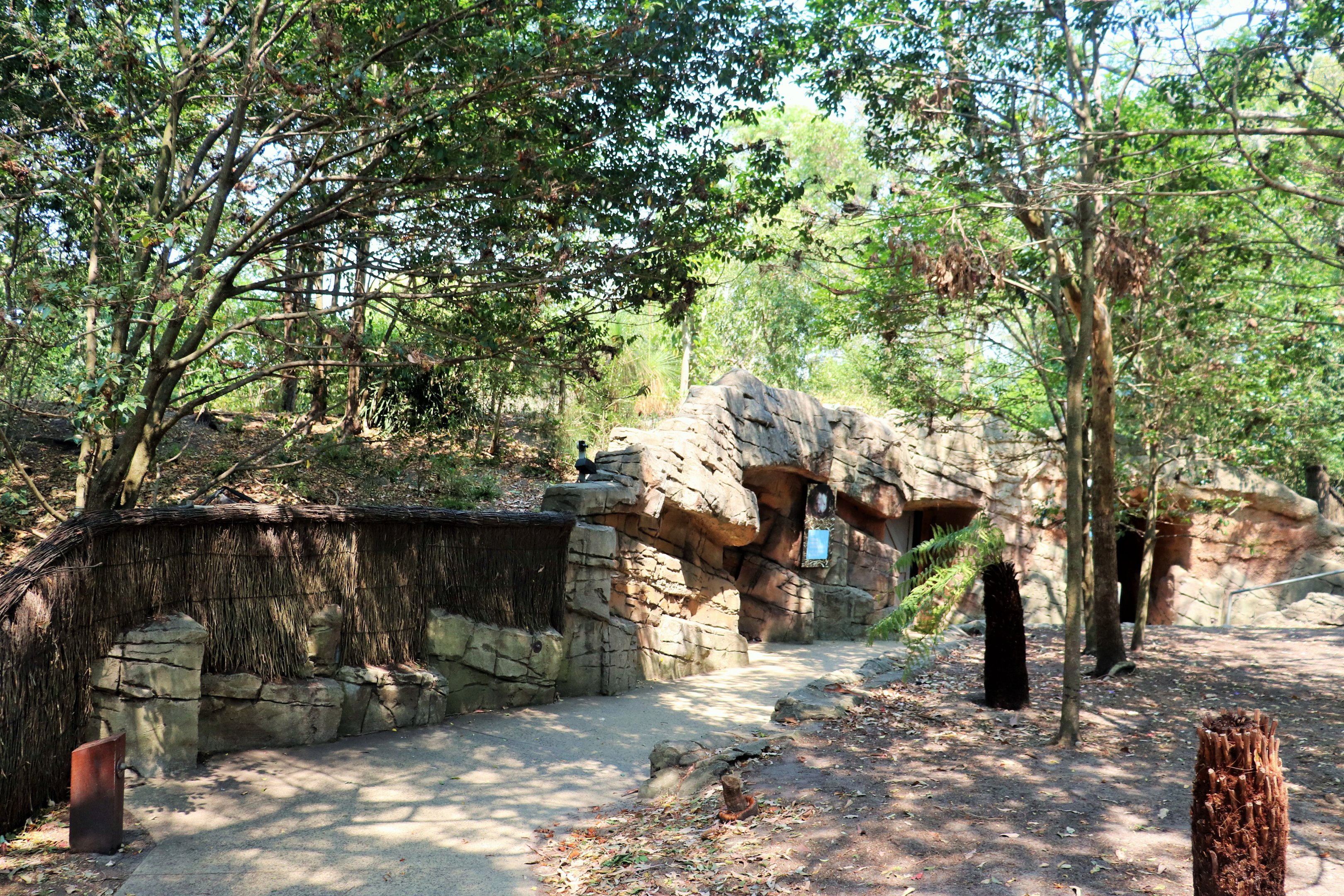
The bush area began with a standard walk-through enclosure with more Red Kangaroo, Emu and Quokka (unseen). This area also contained a cave-like structure called the Wombat Burrow which featured at least two Southern Hairy-nosed Wombats. There was also a tank for Spinifex Hopping Mice. Throughout the burrow there were smaller tanks built into the mock rock. The species seen in these tanks included Bird-eating Spider, Sydney Funnel Web Spider, Flinders Ranges Scorpion and Giant Burrowing Cockroach. Kudos to Taronga for exhibiting a nice range of invertebrates across the entire precinct. They rarely receive the attention they deserve. The final enclosure in this area was a glass-fronted exhibit for a very active Short-beaked Echidna.
Part two will discuss the magnificent Great Southern Oceans, the Rainforest Trail and the other enclosures situated in the middle of the zoo.
I recently had the opportunity to visit Taronga Zoo during a trip to Sydney. Prior to this visit, I had never visited Taronga Zoo but ever since I can remember, it has long been a goal of mine. My walkthrough of Taronga comes from the perspective of someone who isn’t very familiar with the zoo nor its layout, so at times I might divert from the normal route of zoo shown on the map (see here:https://taronga.org.au/sites/default/files/content/maps/TZMap_Ed10v16.pdf ). I often revisited areas or retraced my steps through certain sections that had multiple pathways or methods to view the animals. It took me a while to become acquainted with Taronga’s labyrinth of pathways. Also where relevant, I will compare certain aspects of Taronga Zoo with Melbourne Zoo (the only other major zoo I have visited in Australia). For the sake of completeness, I will also include the species that were signed but not seen (especially in the bird aviaries) in my walkthrough of the zoo and the final species list. As always, I hope my reviews provide further insight and provoke additional interest.
A final note: I will divide this review into three sections- Part 1 (the majority of the Australian Walkabout and Backyard to Bush), Part 2 (Great Southern Oceans, Rainforest Trail and enclosures in the middle of the zoo) and Part 3 (the future African Savannah area, chimps, Reptile World and the remaining exhibits near the front of the zoo).
After arriving at Taronga Zoo’s impressive entrance and paying admission, I wanted to try and get to the nocturnal house as quickly as possible, so I headed straight towards the Australian Walkabout (as the map calls the area). Walking through a winding leafy path, the first animals I saw were free-ranging Helmeted Guineafowl foraging near the Rainforest Aviary entrance. Don’t worry the species get more interesting from here.
The nearby Rainforest Aviary left a lovely first impression. This lush walk-through aviary was filled with nesting Blue-faced Parrot Finches raising their young. In the treetops and low-lying branches, I saw a solid range of pigeons and doves; Purple-crowned Fruit Dove, Rose-crowned Fruit Dove, Brown Cuckoo Dove, White-headed Pigeon and Topknot Pigeon. The aviary was quite a tall structure with many matures trees and opportunities for the birds to escape public view. King Parrots, Eclectus Parrots (signed as E. r. macgillivaryi- the Australian subspecies) and a brief glimpse of a male Regent Bowerbird all added a pop of colour amongst the dense foliage. Additional species that were signed but not seen included Double-eyed Fig Parrot, Metallic Starling, Musk Lorikeet and Black-breasted Button Quail.
Up next was the most exciting area of the zoo in my opinion, Taronga’s nocturnal house, Australian Nightlife. According to a plaque, the building opened in August 1972 and was later renovated in 1991. I noted seventeen exhibits and couldn’t really fault any of them. They all were of an adequate (and in most cases spacious) size and were well-furnished. I was able to see all the species in one enclosure or another except for two; Squirrel Gliders and Greater Stick-nest Rats. The first two enclosures housed Bilbies, mixed with Ghost Bats in the first enclosure and the unseen Greater Stick-nest Rats in the second one. The following enclosure had a nice mix, with Red-tailed Phascogale and Brush-tailed Bettong. After many years of seeing Rufous Bettongs it was great to finally see a different bettong species.
The next enclosure had a mix of Feathertail Glider (always a crowd pleaser- there was an audience watching them scurry around the branches) and Yellow-bellied Glider. A Barn Owl was seen in the next enclosure which was mixed with a pair of very active Short-beaked Echidnas. So far all of these enclosures featured large glass viewing windows and plenty of branches and browse for the arboreal species. The sixth enclosure housed an active group of Fat-tailed Dunnarts.
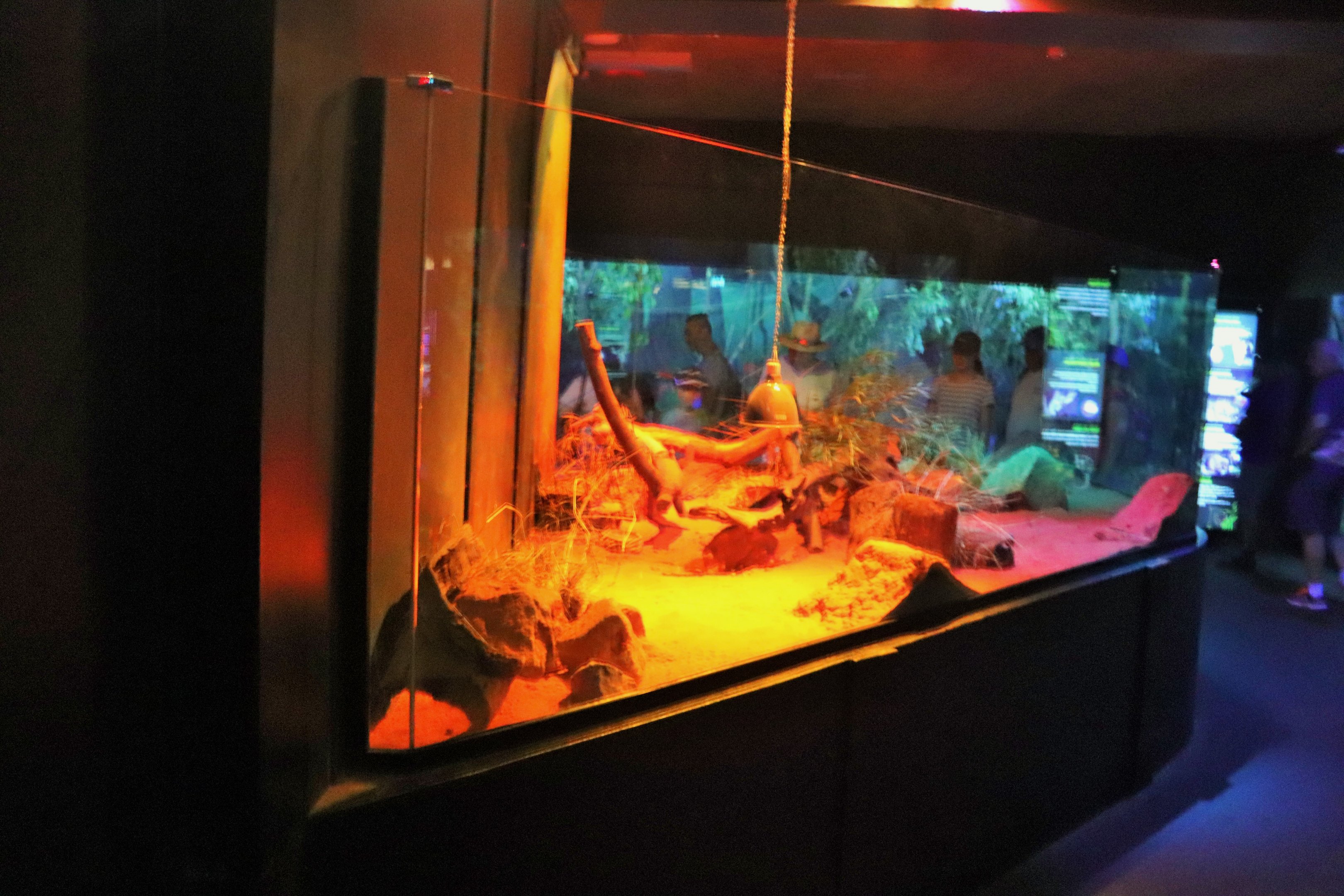
Moving along, there was an enclosure for more hyperactive Short-beaked Echidnas, and Squirrel Gliders. Next to it, was an enclosure for a Common Brushtail Possum. The following exhibit was particularly spacious for its inhabitants. This enclosure housed a mix of Yellow-bellied Glider, more Short-beaked Echidna (you can never have too many echidnas) and Long-nosed Potoroo. On my visit the yellow-bellied glider was hanging upside down from its nest box and stretching its gliding membranes. The next enclosure housed more Feathertail Gliders. This was then followed by two smaller reptile tanks for Golden-tailed Gecko and a massive New Caledonian Giant Gecko. The subsequent two enclosures contained rodents; Plains Rat and Spinifex Hopping Micee. The final corridor of the nocturnal house featured two large main enclosures that ran opposite of each other. The first enclosure (which was the only enclosure that was meshed) aimed to replicate a suburban backyard with heavy theming complete with artificial grass, a washing line, a magazine table and even a bicycle! This enclosure housed Long-nosed Bandicoot, Common Ringtail Possum and Tawny Frogmouth. All three species were very active during my visit.
Suddenly out of the corner of my eye, I saw a dark rotund figure materialize from the enclosure opposite the backyard scenery. I heard members of the public call out that this strange creature was wombat or rather a small bear. However the mysterious creature in question was in fact their Barton’s Long-beaked Echidna! What a special animal. He shared his enclosure with Brush-tailed Bettong and Squirrel Glider. The final enclosure in the nocturnal house had another colony of Ghost Bats.
Backyard Enclosure
This enclosure housed Long-nosed Bandicoot, Common Ringtail Possum and Tawny Frogmouth.
After the wonders of the nocturnal house, I briefly came across a small pond for water birds. The majority of the species seemed to be wild birds (moorhens, black ducks etc.) with a few expections; Australian Shelduck and Wandering Whistling Duck. Looking at the map after my visit, it seems like I only saw one portion of the enclosure and therefore there must have been additional species of waterfowl. Past the water birds was a thickly-planted enclosure for Goodfellow’s Tree Kangaroo. I really liked all the tree ferns and ground covers. There was also a Southern Cassowary enclosure around this area. The enclosure was lushly-planted and well-landscaped.
After retracing my steps past the nocturnal house, I reached the Platypus House. Before entering the dimly-lit building, there was an outdoor enclosure for a dozing Common Wombat. Inside there were a pair of tanks for Platypus (three species of monotreme in under half an hour!) This area had signage about Taronga’s success breeding the species, quirky facts and the main threats faced by platypus. All of it was presented very well. There was also a ‘platypus cam’ which live streamed the platypus’s burrow. Behind the two tanks was an enclosure for Fat-tailed Dunnart. After exiting the building, the next set of standard exhibits housed all the native crowd pleasers; Koalas, more Short-beaked Echidnas and a walk-through enclosure with Red Kangaroo, Swamp Wallaby, Red-necked Wallaby, Emu and Cape Barren Geese.
Up next was the newly-built outdoor enclosure for more Platypus. The glass-fronted enclosure with a large body of water was divided in half (one half for the Platypus and the other half for Broad-shelled River Turtle and Macquarie Turtle). I really enjoyed watching the platypus swim out in the open and thought it was a very unique way of displaying the species. Once the new vegetation and trees settle and grow, this area will make for a very attractive exhibit. Attached to the platypus pond was the Wildlife Retreat (a newly-built hotel for paying guests to stay overnight).
Past the nearby floral clock was the stunning Blue Mountains Bushwalk (Creatures of Wollemi) aviary which incorporates sandstone rock formations with mock rock, and featured a diverse range of vegetation and trees – notably the Wollemi Pine. There was also a body of water that ran through the aviary. This was easily one of the best walkthrough aviaries I have seen to date. The first group species that caught my attention were the parrots; Glossy Black Cockatoo, Gang-gang Cockatoo, Scaly-breasted Lorikeet and Superb Parrot. The pigeons were also well-represented with Peaceful Dove, Brown Cuckoo Dove, Rose-crowned Fruit Dove, Brush Bronzewing, Crested Pigeon and Emerald Dove all being noted. Zebra Finches were the commonest species found across the aviary and they were very well-established. Other bird species seen included Dollarbird, Noisy Pitta, Regent Honeyeater (a bird keeper later on told me that there are around thirty surplus honeyeaters living in the aviary), Wandering Whistling Duck, Striped Honeyeater and White-browed Woodswallow. I also caught a brief glimpse of a Brush-tailed Rock Wallaby, which reside in the aviary along with the birds.
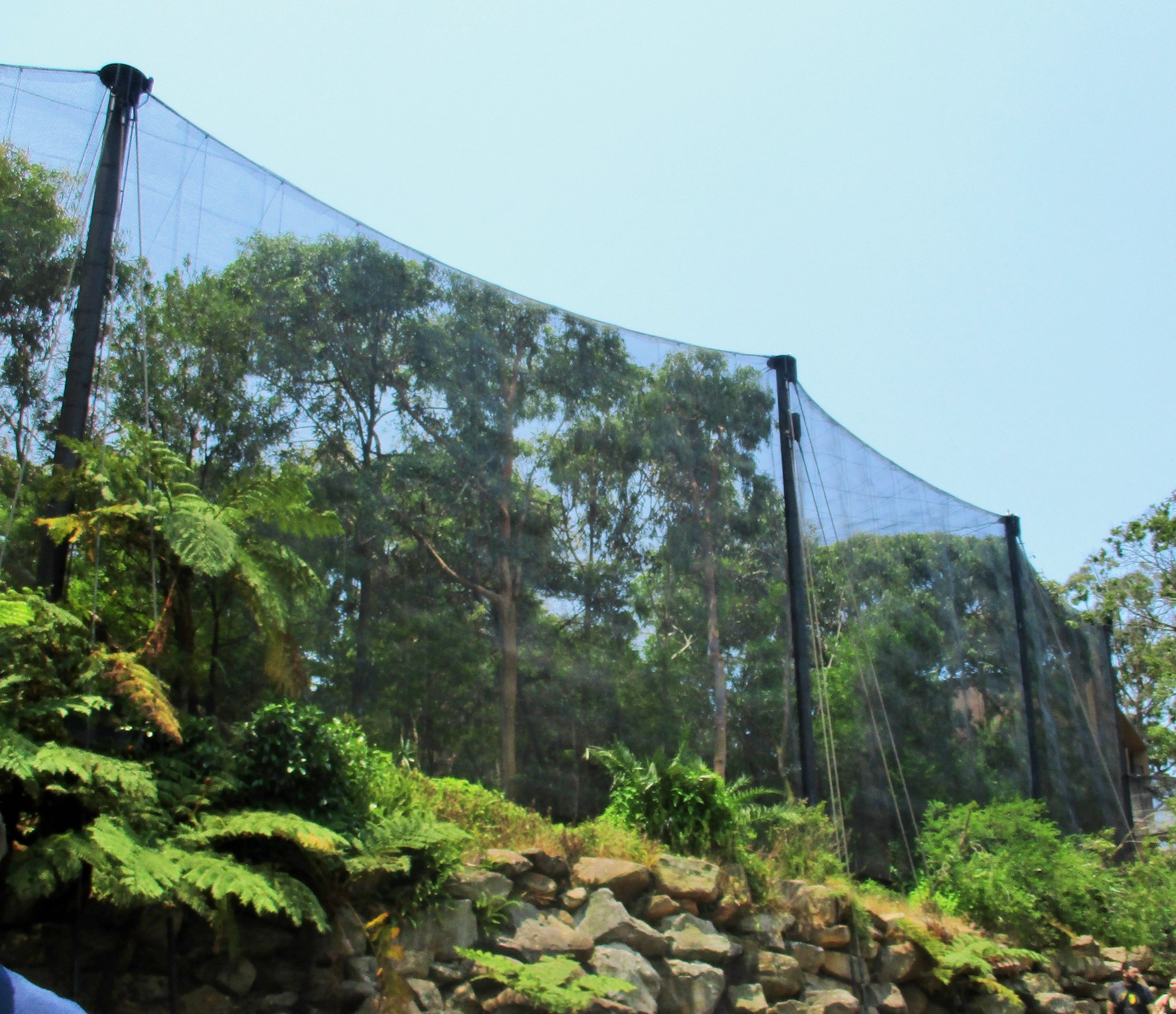
Whilst I was searching for the birds, I heard a kookaburra call coming from a corner of the aviary and thought to myself that a kookaburra would easily predate on some of these bird species. I then heard the call of noisy miners, followed by some unusual construction noises. I soon came to the realization that I was witnessing the full-display and mimicry of a male Superb Lyrebird!
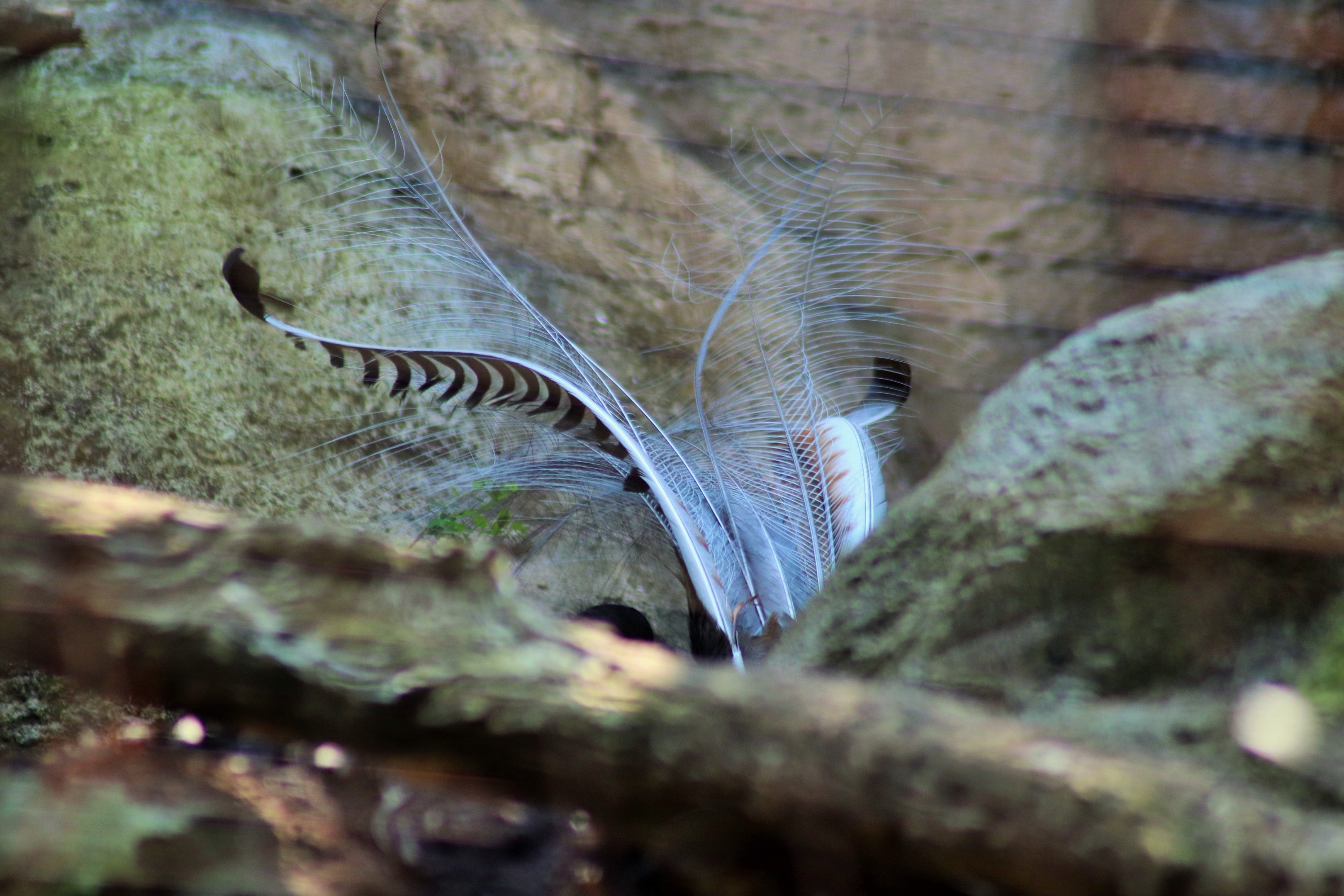
Unfortunately, he didn’t fully show himself however I did catch a glimpse of his magnificent tail feathers. Built into the sides of the mock rock were also some small terrariums for Southern Leaf-tailed Gecko and Cunningham’s Skink. Other species signed in this aviary included Sacred Kingfisher, Grey-crowned Babbler, Chestnut-breasted Mannikin, Little Lorikeet, Eastern Whipbird and Masked Lapwing.
The Blue Mountains Bushwalk aviary is attached to another walk-through bird aviary. This aviary looks very new and hasn’t been stocked with birds yet. Continuing on, there was also a Red Kangaroo walk-through enclosure, however like the new aviary, it was also unoccupied. Guests staying in the wildlife retreat would be able to view the kangaroos via their hotel windows. There was also a lovely platypus statue in this area. Up next was a building for Tasmanian Devils, which had a pair of glass-fronted enclosures with additional signage and an interesting display about the devil’s plight in the wild. I liked the style of this area.
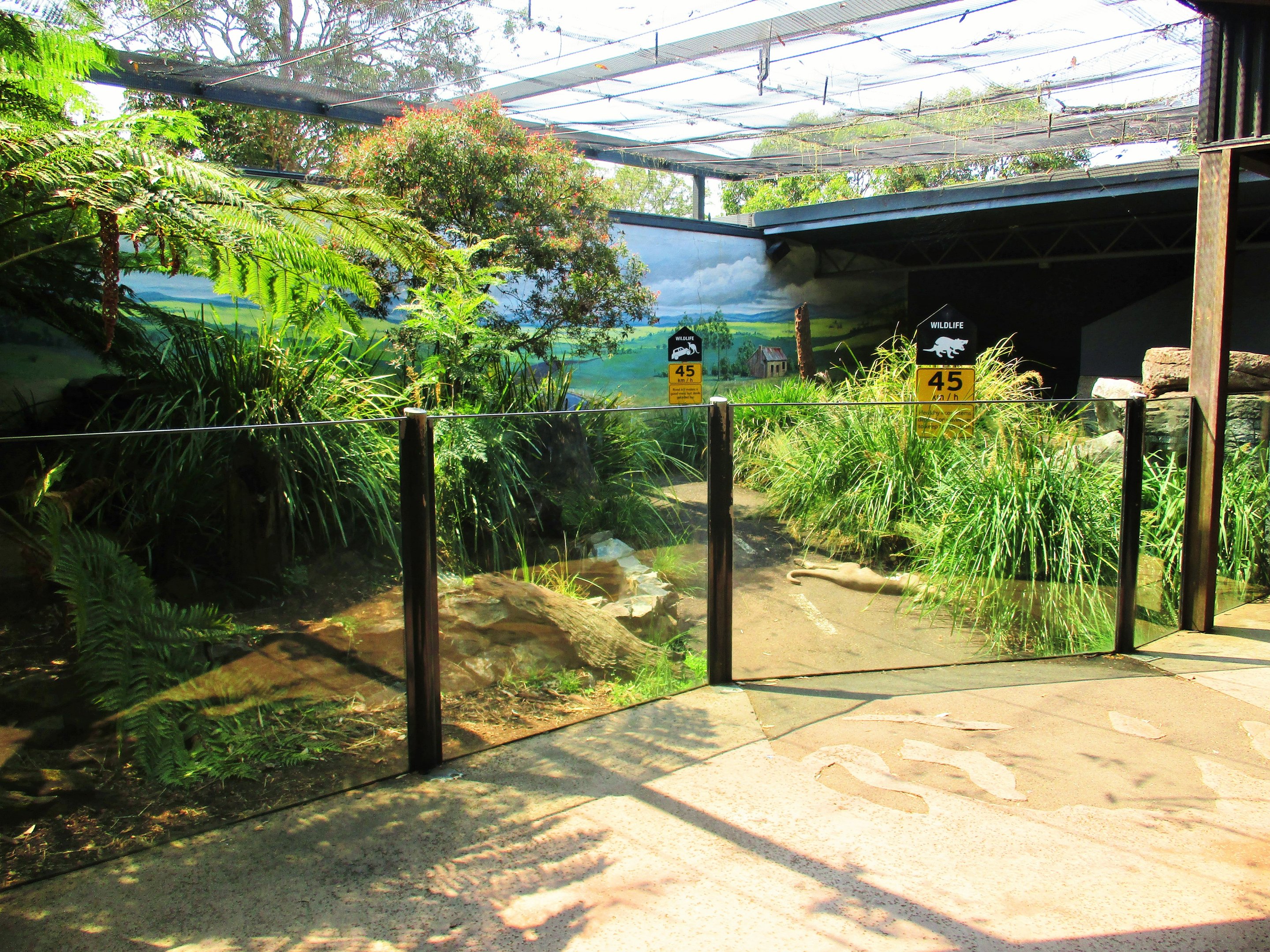
The Backyard to Bush precinct (called Kids Trail on the map) aims to showcase the creatures that live in and around our increasingly urban world. This area can loosely be divided into four parts; the house, the garden, the farmyard and the bush. The zoo literally tries and replicates all four areas with heavy theming found throughout the entire area.
The Backyard to Bush House is divided into several rooms and had individual animal enclosures within each room. The first room contained standard tanks for Central Bearded Dragon, Golden Orb Weaver and Eastern Long-necked Turtle. There were also a pair of smaller tanks for Green Tree Frog and Green and Golden Bell Frog. Personally, I felt like they could have done a better job arranging some of these exhibits, it didn’t really have any flow. Another criticism was the lack of signage across the entire house. The majority of the signage didn’t have any scientific names and some of the animals were generically labelled (eg. ‘bearded dragon’ or ‘scorpion’).
The other room that had animal exhibits within the house- the kitchen, began with a set of eight tanks (four on either side of a stand) for invertebrates. The first four tanks were nicely-done with leaf litter and had other appropriate substrates. These tanks contained Rainforest Snail, Scorpion (unlabeled species, most likely either Flinders Ranges or Desert Scorpion), Golden Huntsman Spider and Redback Spider. The next four exhibits had household items within the tanks. The four tanks featured a light bulb, a powerpoint with a cable, a window pane and a small picket fence. They housed a Daddy Long-legs Spider, a White-tailed Spider, a Black House Spider and a Net-casting Spider respectively. I wasn’t a big fan of these tanks. I thought they were tacky and that the spiders were better of having more natural coverings. Also in the kitchen were a pair of large vertical tanks for Spiny Leaf Insect and Goliath Stick Insect. I may have missed some additional enclosures within the house, some of the tanks could have been well-hidden
Outside of the house, there was a well-planted ornamental garden designed to attract flower-loving insects. I saw a few wild orchard swallowtail butterflies. The garden had a Phasmid Greenhouse which was a small building with four enclosures for Rainforest Katydid, Goliath Stick Insect, Spiny Leaf Insect and an additional unsigned species of stick insect. There was also a small tank for a Red-bellied Black Snake wedged in a wood pile nearby. Continuing through garden, there was a standard petting area for Domestic Rabbits. A volunteer was telling me that Queenslanders were their most popular customers to pat a rabbit (for those who don’t know it is illegal to keep rabbits as pets in the state of Queensland). Adjacent to the rabbits was an aviary for Bush Budgerigars and a pair of King Quail.
The next section was the farmyard area with standard paddocks for Alpaca, Domestic Pig, Domestic Goat and a chicken coop. There was also a wooden building that replicated a shearing shed. It contained a series of small enclosures for Communal Huntsman Spider, House Mouse, Shingleback, Cunningham’s Skink and what looked like locust (there was no signage on their enclosure). There was also a display for European Honeybee with a bee hive behind glass.
The bush area began with a standard walk-through enclosure with more Red Kangaroo, Emu and Quokka (unseen). This area also contained a cave-like structure called the Wombat Burrow which featured at least two Southern Hairy-nosed Wombats. There was also a tank for Spinifex Hopping Mice. Throughout the burrow there were smaller tanks built into the mock rock. The species seen in these tanks included Bird-eating Spider, Sydney Funnel Web Spider, Flinders Ranges Scorpion and Giant Burrowing Cockroach. Kudos to Taronga for exhibiting a nice range of invertebrates across the entire precinct. They rarely receive the attention they deserve. The final enclosure in this area was a glass-fronted exhibit for a very active Short-beaked Echidna.
Part two will discuss the magnificent Great Southern Oceans, the Rainforest Trail and the other enclosures situated in the middle of the zoo.
Last edited: