
Hello there ZooChat! Here before you is my first thorough review of a zoological facility; which, I hope to make more of whenever possible. To summarize, my first-ever visit was a last-minute addition to my pre-established travels. Therefore, said visit occurred on May 22nd, 2025, which would wrap up my time in the Philadelphia-Wilmington area.
Since this is a fairly small facility, there aren't too many standard zoo species that the zoo can adequately house (though, until 2016, they did display an Amur tigress). Relatively speaking, the largest animals one will find in this zoo (in terms of weight) are a giant anteater and some goats; with the remaining species being smaller and lighter in mass.
As for the zoo itself, the facility as we know it today was established 120 years ago in 1905 on 4.75 acres (1.9 ha) of the surrounding Brandywine Park in Wilmington, Delaware.
Currently, the entire facility is managed by Delaware’s DNREC* and is supported by the non-profit Delaware Zoological Society. Furthermore, the zoo is undergoing many active changes through the “Our Zoo Re-Imagined” capital campaign.
*Department of Natural Resources and Environmental Control
Being in the unique position as Delaware’s only accredited zoo; therefore, it is the only facility in the entire state that thoroughly meets the requirements of the AZA.

May 2025 - Entry Gate - ZooChat
Disclaimer: While the zoo categorizes their current exhibits by geography. I decided to arrange this species list similar to that of red river hog’s from 2022; which begins by listing the first seven exhibits approximate from the entrance:
Of the species listed above, the two that made the biggest impact were their cats; who were Squeakers the Bobcat, and Blue the Caracal. With the former being the first and last animal I saw on my visit; while the latter was considerably active for the duration of seeing her.
Following the last exhibit in this miscellaneous row (tamarins and sakis), the first exhibit with a dedicated theme (if you can even call it that) is Reptiles of Australasia; a very small reptile house with only three, publicly seen species:

May 2025 - Reptiles of Australasia (all of it) - ZooChat
While taking decent photography of the reptiles wasn’t easy (thanks to the glare); I later managed to successfully see all three species the exhibit has to offer.
Past the reptile house, two more exhibits with a miscellaneous collection of animals await us; which, as of my visit, contained the following:
Across from the crane and egrets, two additional areas are located in close proximity; with the first being a basic petting zoo labeled as the Barnyard; and the other being the North American Aviary which usually displays North American birds. However, on the day of my visit, the latter was devoid of any visible animals.

Photo Credit: yours truly, Austin the Sengi
Turning right from these two exhibits, ahead to our left is a self-explanatory South American Aviary that displays Lancaster (more about him below), and a trio of ibises that hail from the land of the titular continent.
While the diversity of this aviary was a bit lacking; the one animal that made up for missing out on the remaining waterfowl was Lancaster (the zoo’s giant anteater) being awake and active for the duration of seeing him. By the time I went to check on the anteater for a second time; he had already retreated to his night quarters. Furthermore, this later absence signified the tender moment we had spent together before parting ways.
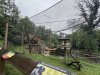
Opening in October of 2020, Madagascar is the newest major exhibit to have opened in the past few years; especially, as it is attached to the zoo’s current campaign. Personally, this is what I consider to be the zoo’s strongest attraction; and to draw comparisons to my local Central Florida Zoo. Both facilities each have a single, naturalistic enclosure that greatly contrasts the majority of their enclosures. In Brandywine’s case, that enclosure is Madagascar; and I’m more than happy this was able to successfully open in a time when the world was still recovering from the global pandemic.

May 2025 - Madagascar - Exhibit Overview - ZooChat
Ironically, while I did manage to see Madagascar’s tortoises and guineafowl. The notable exception was not seeing all three species of lemur; mostly due to the weather and the presence of zookeepers doing a routine cleaning.
Having reached the grand finale (Madagascar), the main path will take you all the way back towards the enclosures closest to the main entrance; which is where we conclude my mini-review.
Mammals - 12 (3 unseen)
Birds - 7 (2 unseen)
Reptiles - 4
Invertebrates - 1 (usually)
There are no fish and amphibians present in the zoo’s collection
Grand Total - 24 (23 excluding the domestic goats)
Species signed but not seen are in grey.
Since this is a fairly small facility, there aren't too many standard zoo species that the zoo can adequately house (though, until 2016, they did display an Amur tigress). Relatively speaking, the largest animals one will find in this zoo (in terms of weight) are a giant anteater and some goats; with the remaining species being smaller and lighter in mass.
As for the zoo itself, the facility as we know it today was established 120 years ago in 1905 on 4.75 acres (1.9 ha) of the surrounding Brandywine Park in Wilmington, Delaware.
Currently, the entire facility is managed by Delaware’s DNREC* and is supported by the non-profit Delaware Zoological Society. Furthermore, the zoo is undergoing many active changes through the “Our Zoo Re-Imagined” capital campaign.
*Department of Natural Resources and Environmental Control
Being in the unique position as Delaware’s only accredited zoo; therefore, it is the only facility in the entire state that thoroughly meets the requirements of the AZA.
May 2025 - Entry Gate - ZooChat
Disclaimer: While the zoo categorizes their current exhibits by geography. I decided to arrange this species list similar to that of red river hog’s from 2022; which begins by listing the first seven exhibits approximate from the entrance:
- Andean Condor / Vultur gryphus
- Bobcat / Lynx rufus
- North American Porcupine / Erethizon dorsatum
- Western Honey Bee / Apis mellifera - labeled as “Italian Honey Bee”
- Nepalese Red Panda / A. f. fulgens
- Caracal / Caracal caracal
- Binturong / Arctictis binturong ssp.
- Golden Lion Tamarin / Leontopithecus rosalia
- White-Faced Saki / Pithecia pithecia
Of the species listed above, the two that made the biggest impact were their cats; who were Squeakers the Bobcat, and Blue the Caracal. With the former being the first and last animal I saw on my visit; while the latter was considerably active for the duration of seeing her.
Following the last exhibit in this miscellaneous row (tamarins and sakis), the first exhibit with a dedicated theme (if you can even call it that) is Reptiles of Australasia; a very small reptile house with only three, publicly seen species:
May 2025 - Reptiles of Australasia (all of it) - ZooChat
- Green Tree Python / Morelia viridis
- Prehensile-Tailed Skink / Corucia zebrata
- Chahoua Gecko / Mniarogekko chahoua - labeled as “Mossy Prehensile-Tailed Gecko”
While taking decent photography of the reptiles wasn’t easy (thanks to the glare); I later managed to successfully see all three species the exhibit has to offer.
Past the reptile house, two more exhibits with a miscellaneous collection of animals await us; which, as of my visit, contained the following:
- Common Raven / Corvus corax
- Sandhill Crane / Antigone canadensis ssp. + Snowy Egret / Egretta thula
Across from the crane and egrets, two additional areas are located in close proximity; with the first being a basic petting zoo labeled as the Barnyard; and the other being the North American Aviary which usually displays North American birds. However, on the day of my visit, the latter was devoid of any visible animals.
- Domestic Goat / Capra hircus
- Bald Eagle / Haliaeetus leucocephalus
Photo Credit: yours truly, Austin the Sengi
Turning right from these two exhibits, ahead to our left is a self-explanatory South American Aviary that displays Lancaster (more about him below), and a trio of ibises that hail from the land of the titular continent.
- Giant Anteater / Myrmecophaga tridactyla + Scarlet Ibis / Eudocimus ruber
While the diversity of this aviary was a bit lacking; the one animal that made up for missing out on the remaining waterfowl was Lancaster (the zoo’s giant anteater) being awake and active for the duration of seeing him. By the time I went to check on the anteater for a second time; he had already retreated to his night quarters. Furthermore, this later absence signified the tender moment we had spent together before parting ways.
Opening in October of 2020, Madagascar is the newest major exhibit to have opened in the past few years; especially, as it is attached to the zoo’s current campaign. Personally, this is what I consider to be the zoo’s strongest attraction; and to draw comparisons to my local Central Florida Zoo. Both facilities each have a single, naturalistic enclosure that greatly contrasts the majority of their enclosures. In Brandywine’s case, that enclosure is Madagascar; and I’m more than happy this was able to successfully open in a time when the world was still recovering from the global pandemic.
May 2025 - Madagascar - Exhibit Overview - ZooChat
- Black-and-White Ruffed Lemur / Varecia variegata ssp.
- Crowned Lemur / Eulemur coronatus
- Ring-Tailed Lemur / Lemur catta
- Helmeted Guineafowl / Numida meleagris
- Radiated Tortoise / Astrochelys radiata
Ironically, while I did manage to see Madagascar’s tortoises and guineafowl. The notable exception was not seeing all three species of lemur; mostly due to the weather and the presence of zookeepers doing a routine cleaning.
Having reached the grand finale (Madagascar), the main path will take you all the way back towards the enclosures closest to the main entrance; which is where we conclude my mini-review.
Mammals - 12 (3 unseen)
Birds - 7 (2 unseen)
Reptiles - 4
Invertebrates - 1 (usually)
There are no fish and amphibians present in the zoo’s collection
Grand Total - 24 (23 excluding the domestic goats)
Species signed but not seen are in grey.
Attachments



Last edited: