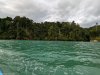
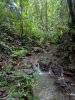
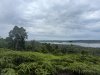
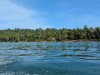
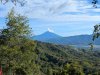
A short trip to Sumatra!

LaughingDove

Well-Known Member
10+ year member
Time for another travel thread! Those who have been on the forum for some years will remember a rather longer travel thread I posted a few years ago (*gulp* 7 years *gulp*). That thread can be found here: LaughingDove Goes Travelling - SE Asia and Australia

I haven't really been able to do anything like that in the intervening time and almost all of my travel in the last few years has been broadly for work. Next week, however, I'm finally going on a similar trip, although I only have just over two weeks and on this trip I'm focusing on West Sumatra. I've also really wanted to visit Bird Paradise in Singapore for a while now and for that I've added a stop in Singapore on my way home. No promises about detailed travel blog-style posts, but I do plan to write about some of the highlights on here and post some information that might be useful to others. Thanks also to @Vision for advice and key contacts in planning.

My plan is as follows:

I'm entirely UK-based now, but my parents still live in Thailand so I'll be staying with them just before the trip. On Saturday of next week, I then fly from Bangkok to Medan in North East Sumatra where I'll be spending two nights in the Bukit Lawang area. Here I hope to see Thomas' Leaf Monkeys and what I believe are semi-wild Sumatran Orangutans and this will ease me back into rainforest life. I then fly from Medan down to a place called Sibolga on a turboprop plane on a domestic Indonesian airline (wish me luck!). This is in the Tapanuli region of Sumatra, the name of which provides a clue as to why I'm going there.... I've then organised two nights in a camp in the Batang Toru forest. Home of the legendary Tapanuli Orangutan. I recently received a message from the guide who is organising this for me saying that the fig trees are in fruit, he knows where the orangutans are nesting, and he saw 5 individuals last week. Fingers crossed! I'm also hoping to see siamang, agile gibbon, black Sumatran langur, and various birds particularly nocturnal ones. Also some night herping and mammaling. What else would you do when staying in a tent?

I then drive down to the city of Padang, from where I'll be taking a ferry across to Siberut island in the Mentawai archipelago. Unfortunately, I only have two nights here but I just have to hope luck is on my side because amazingly, Siberut island is home to three endemic primate species! These are the dwarf Siamang or Bilou, the Siberut Macaque, and the Siberut langur. They can apparently be difficult to see so fingers crossed for my luck on the one full day in the forest. As with all the locations on this trip, my limited time (but slightly less limited money than when I was in Borneo in 2018) has necessitated hiring a guide to try and maximise my chances.

Finally upon return to Padang I will be spending 5 days/7 nights visiting the Kerinci Seblat National Park. This is the primarily birding part of the trip with several key target species including montane endemics and particularly exciting possibilities like Schneider's Pitta and Sumatran Ground Cuckoo. Nocturnal mammals are also on the list of targets too, as well as some unusual carnivorous plants that I'm particularly interested in seeing in the wild.

I then fly from Padang over to Singapore for another 2 nights where I'll finally be able to visit Bird Paradise before flying back to the UK.

Should be an exciting and endemic-filled trip and hopefully I'll soon be able to recommend these wildlife guides in the areas, having seen all of my target species (got to think positive!).

Where did I not manage to fit into the schedule?

So there's been quite a bit of planning for this trip and some rather difficult decisions had to be made. I really wish I had 4 weeks in Sumatra rather than 2, but I just thought I'd add what I've looked into but ultimately decided not to do in place of something else. With an extra 3-4 days I would have added the island of Simeulue, flying there and back from Medan. This island has several endemic bird taxa, either full species are very distinct subspecies of mainland species. They're supposed to be reasonably easy to see, as is the Silvery Pigeon which is also meant to be quite easy here. The latter is still a possibility for me on Siberut but I think less likely. Close to Simeulue, although probably best accessed by flying back in and out of Medan, is the Aceh region where birds like the Aceh bulbul, Aceh mesia, and Sumatran laughingthrush are the targets, these would need to be seen with a bird guide hired out of Meulaboh. Simeulue and Aceh would have been my additions on a 3 week trip. And with a 4th week I'd have added the far South of Sumatra, particularly Way Kambas and the southern part of the Barisan Mountain Range (of which Kerinci is also part). However I think Way Kambas and that southern part of Sumatra is best added on as part of a trip to Java and you'd probably get there via Jakarta. This and/or Sulawesi is something I'm already thinking about for 2027...

Anyway! I hope this thread is of interest to people, I'll let you know of my trials and tribulations once I head out to Thailand this week (just to see my parents - nothing interesting for ZooChat, although I posted some pictures in the Thailand-Wildlife gallery a few months ago of some little trips the last time I visited my parents in Bangkok 18 months ago) and then on to Sumatra a week today!
 
Just a few updates! I've now finished most of the trip on Sumatra and done all the big wildlife watching spots. Just one more Kerinci National Park forest day and then on to Singapore this weekend to visit Bird Paradise and have a relax more as a transit really. I'm currently lounging in the lovely and good value Cinnamon Guesthouse Homestay. I am planning to upload pictures to ZooChat and write up short posts for each location in this thread eventually but that will probably be a couple of weeks.

Overall it's been a very successful trip I'd say. There was one major missed target and general unpleasantness caused by me getting some sort of stomach flu/upset stomach/ bacterial infection that started to show as we were climbing down to the campsite in the Tapanuli forest to look for the as-named orangutan species. The guides did get one located and I saw a recent nest but once it became clear that I couldn't hold down water and was rapidly dehydrating I had to abort the mission while I could still get out of the forest and make the long journey to a basic hospital without needing emergency services. They still thought I was sufficiently dehydrated when I got there to put me on a drip within a couple of minutes of arriving at A&E...

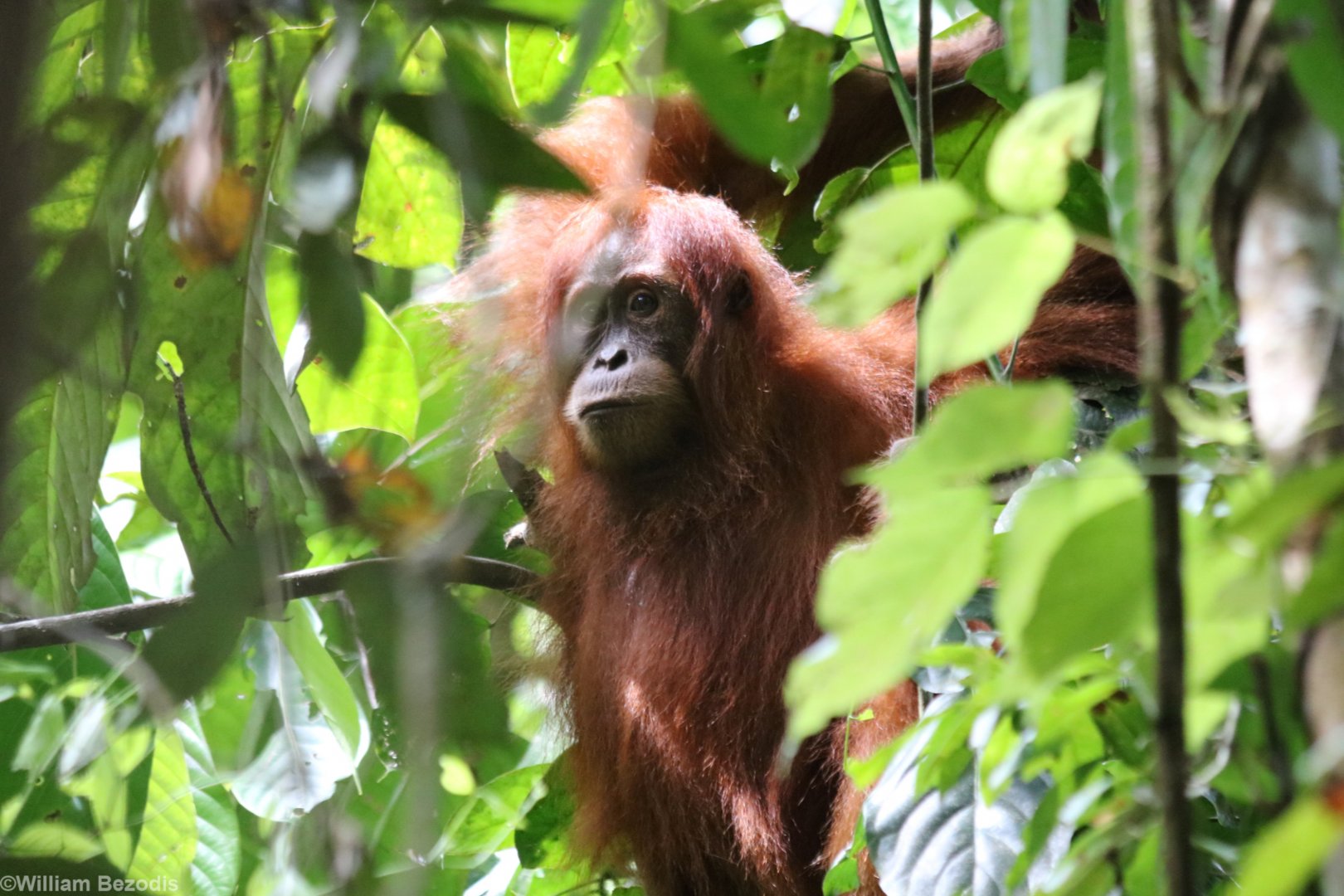
Anyway! I only got as close as recent nests of a Tapanuli Orangutan but I did see a genuinely wild Sumatran Orangutan near Bukit Lawang as a consolation prize.

Didn't see the Siberut macaque at all either but no one sees those without putting in a lot more time and the Siberut primates are all super shy so I only really got a proper long look at the Pig-tailed Langur (Simias concolor / Simakobu). Also didn't try for the very highest altitude Kerinci Mountain birds and didn't get any of the night birds in the broader Kerinci area but otherwise I managed to see the big targets and lots of other cool bits and pieces. More to come with some details later and a bird and mammal species list, probably only after I'm back in the UK and have caught up on work.
 
So my plan for this thread is to do a short post for each main location during the trip which I think will be five posts in Sumatra and a sixth for Singapore. I spent exactly two weeks on Sumatra, visiting three Indonesian provinces (North Sumatra, West Sumatra, and Jambi) and I would have liked to spend two or three times as long as I had in each place but these days I have work and responsibilities that I have to get back to.

Part 1: Bangkok to Medan and Bukit Lawang at the Foothills of Leuser National Park

Although I’m now entirely UK based, my parents live in Bangkok currently so just before heading to Sumatra I stayed with them briefly. AirAsia Indonesia operates a twice daily flight from Bangkok’s secondary Don Mueang Airport to Medan, the largest city on Sumatra and capital of North Sumatra province. Kuala Namu airport that serves Medan but is actually is quite new and fancy, and probably overbuilt as an infrastructure project compared to how many flights it actually gets. The airport is on the outskirts of Medan, and as well as being a convenient entry point for a further domestic flight within the region, it’s also a suitable pickup point to visit the popular ecotourism destination of Bukit Lawang which is the most mainstream of the wildlife watching destinations on Sumatra, although that’s not saying much. There are lots of accommodation options in Bukit Lawang and they all seem fairly similar and offer the same combination of guides and packages. Although I did book a guide and package through my accommodation here, it would be totally doable to visit on your own and you’d probably see pretty much all the same stuff which is unlike most of the other places I visited. A driver and private transfer to/from Medan airport was included in the package I booked, it’s meant to be a 3-4 hour drive but on the way there I didn’t know to insist on using the toll road so it took closer to 5 hours whereas on the return drive two days later using the toll road it was about 3.5 hours.

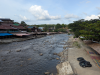
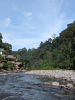
I landed in Medan in the mid-afternoon so it was dark before reaching Bukit Lawang, but I could see the forested mountains of Gunung Leuser National Park as we approached. The village/town of Bukit Lawang, which I only saw properly in the light the next day, is spread along the beautiful Bohorok River with forest behind the village on one side and the ever-present oil palm on the other. In Indonesia, even the cars/trucks run on palm oil where it makes up a minimum of 40% of the content of diesel. I just had two nights in Lawang, leaving one full day to explore the forest doing pretty much the standard ‘orangutan trekking’ experience with a guide from the lodge who also brings lunch to have in the forest and I think is most useful in staying in contact with all the other guides in the forest so that if anyone finds an orangutan then you’ve all found it.

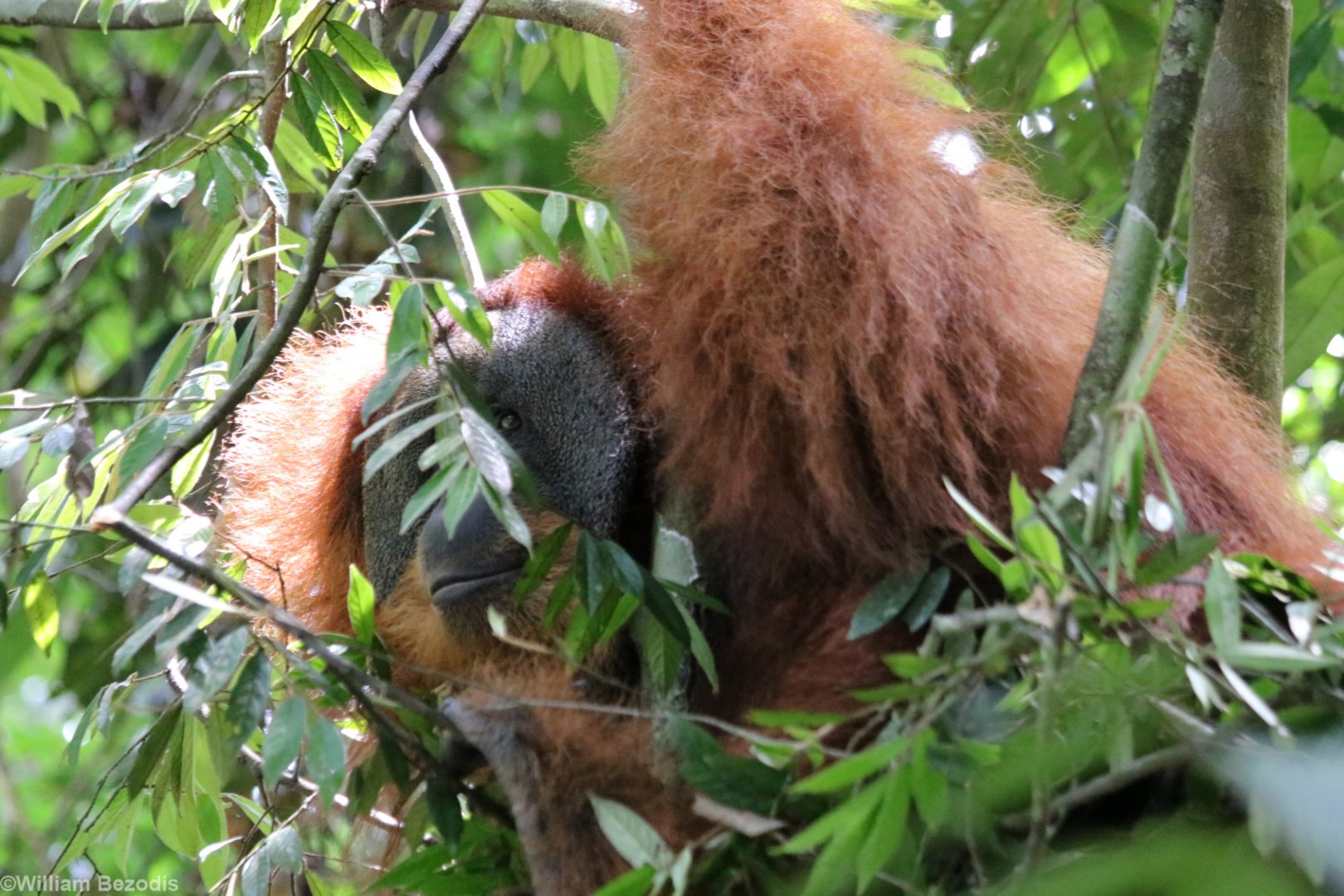
The forest of Leuser National Park near Bukit Lawang used to be the site for release and rehabilitation of orangutans and some amount of supplemental feeding used to be provided although this has all stopped since before COVID. Nonetheless, because of this legacy there are several orangutans that aren’t really wild and can be seen quite easily with minimal effort making the area popular with tourists. My guide first brought me to one of these orangutans, actually just outside the national park boundary, which although wild-born was very used to humans. This individual also had a cataract in one eye and was generally happy to be watched by a gathering of tourists as he stripped bark from a fairly exposed tree. We then continued into the national park itself where with some additional effort and detours off the main trail it’s possible to see genuinely wild Sumatran Orangutans unrelated to this now defunct rehabilitation programme. With the help of my guide, and his communication with a number of other guides, I was able to see three further and genuinely wild orangutans – one mother and oldish baby moving through the forest together fairly rapidly, and separately one large male who was happy to sit still and be watched from a distance.

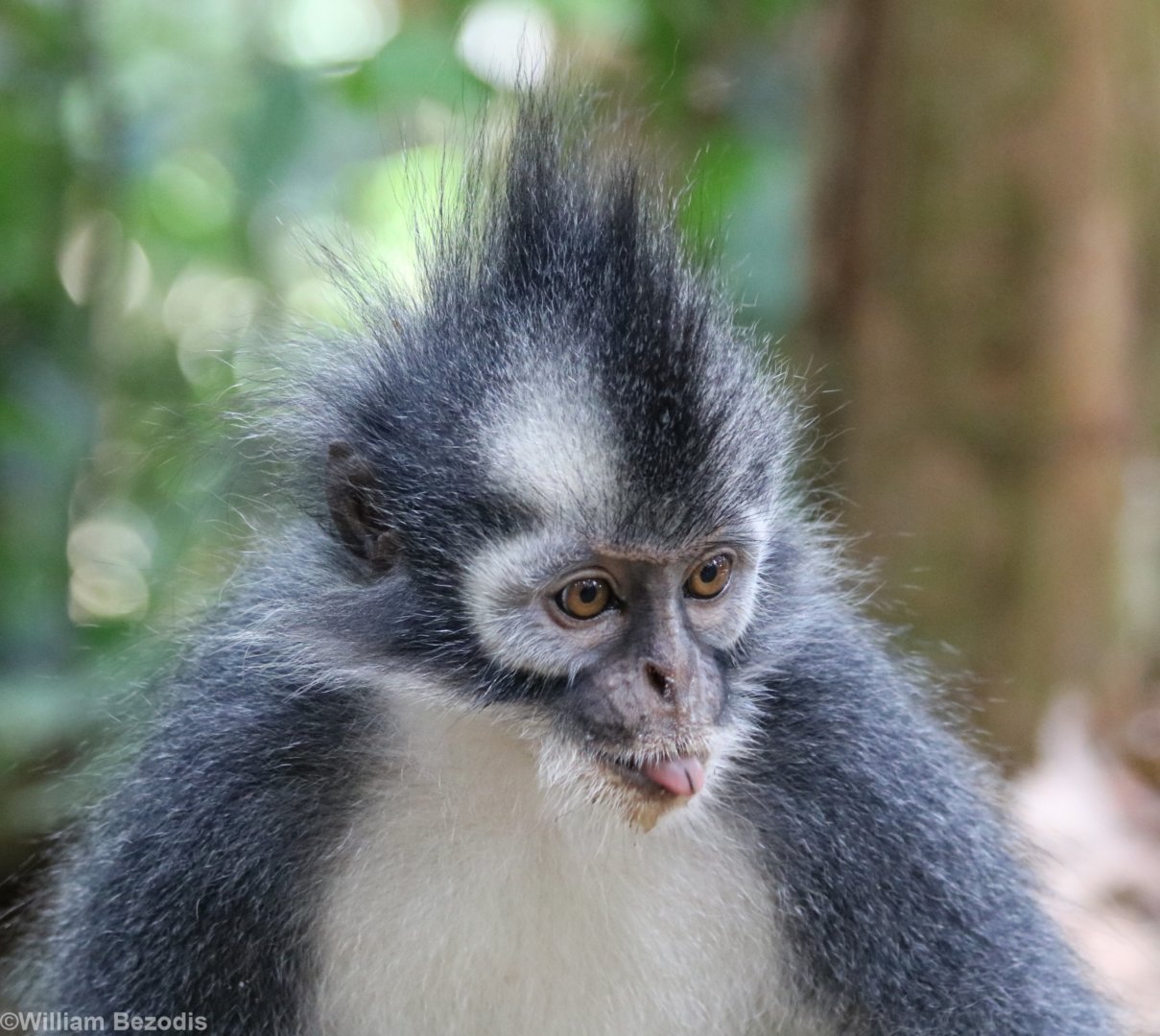
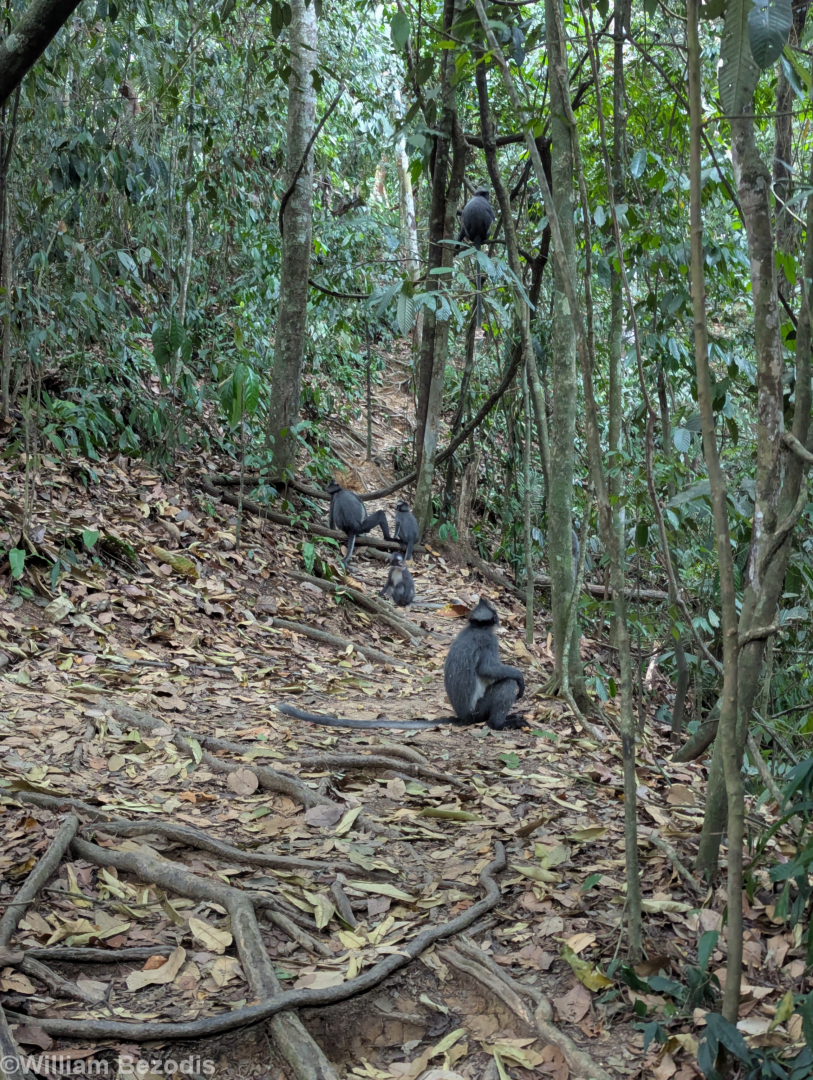
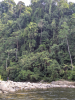
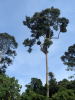
The forest around Bukit Lawang is beautiful old growth lowland rainforest with lots of large old trees. In addition to the orangutans, this one full day in the forest was wonderful for primate watching, and the primates here were showier and easier to see than anywhere subsequently on the trip. I saw five individual Sumatran White-handed Gibbons (Hylobates lar vestitus) with two pairs and one singleton. This is a taxon only found in North Sumatra and Aceh provinces. Two further primate species were quite common, Southern Pig-tailed Macaques, and Thomas’ Leaf Monkey aka Thomas’ Langur. The latter is a species I was especially excited to see as it’s also restricted to the northern tip of Sumatra in North Sumatra and Aceh. These guys have really striking black-and-white mohawks and a bold dark grey back and white front colouration. In the Bukit Lawang area they’re highly habituated to people and I suspect often fed but it means they’re really visible and easy to see and I saw several large groups of Thomas’ Langurs just lounging around near the trails. As well as primates, I also saw a slender squirrel.

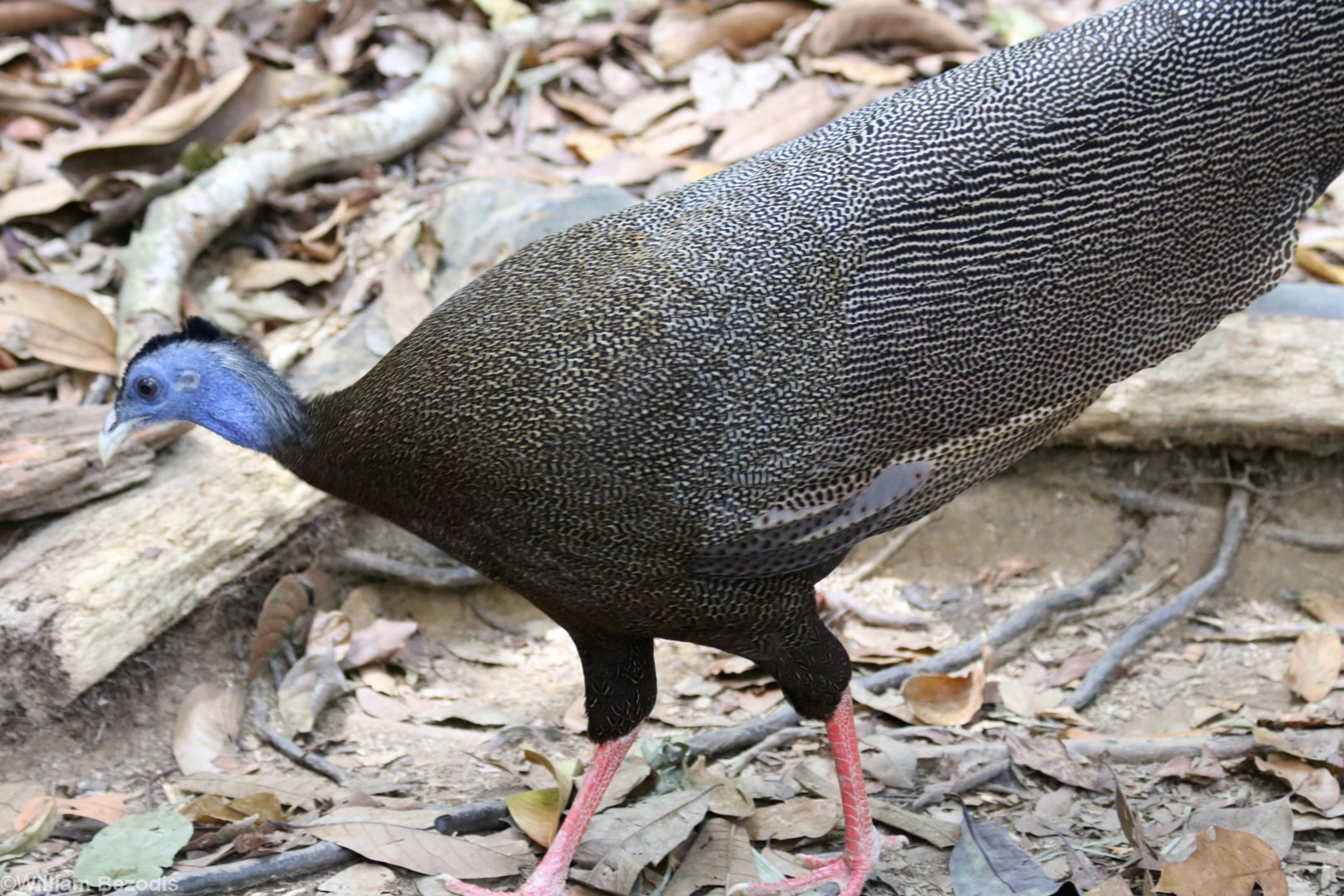
Unlike the primate watching, the area around Bukit Lawang is really not great for birding and this seems to be generally the review. The forest is extremely depleted in songbirds and I hardly saw any. Apart from in the Mentawai Islands where apparently people don’t keep caged birds, there seemed to be a caged leafbird or shama or bulbul or something else every few houses in all the villages everywhere that we drove past. No wonder you have to go away from villages to see any birds and this day in the forest I pretty much only saw common species like Crimson Sunbirds and unidentified bulbuls flying rapidly away in the forest. I did have one really excellent bird sighting this day in Leuser National Park though, quite far from the main track while going to the location that the large male orangutan had been seen, I got an excellent view of a gorgeous male Great Argus Pheasant walking between the trees near the track and then crossing the track just in front of me. Photos of all these sightings to come in the gallery and I’ll link them to this thread when they’re up.

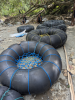
After quite a few hours in the forest, partly on the main tourist track but with rather long detours to see the orangutans that other guides had spotted and communicated to my guide, it was time to head back to the village/town of Bukit Lawang. You can just walk back, but what all the tourists do and is offered by all the lodges is to raft back along the Bohorok river into town which is what I did. Basically, the walk through the forest behind the village is all broadly upstream so that you can get back to the village quite quickly rafting down over what are technically rapids but really quite tame rapids. The rafting is in large rubber tyres with sort of hammock mats in the bottom to sit on so you do get wet but heavy duty sealed plastic sacks are provided to put your backpack/phone/camera in. The rafts are brought upstream from the village on the backs of motorbikes on the other side of the river and outside of the national park/primary rainforest which you walk through. Despite how I’d like to think of myself as focussed on the wildlife and nature and non your typical tourist I did quite like rafting back to the village in a tyre past really nice forest with big dipterocarps and tree ferns. I was back in Bukit Lawang with a bit of time before dark just to have dinner and get an early night. There are spots around Bukit Lawang where Rafflesia flowers grow and ‘Rafflesia tours’ to see them can be arranged if any are flowering. If any were flowering I would have left the national park a bit earlier to go and see one in the afternoon, but unfortunately there were none close to flowering when I was there.

I just had this one full day in Bukit Lawang and I was very happy with all the primate sightings considering the lack of time. The next morning I had a transfer back to Medan airport arranged for 4:30AM to allow for an up to 5 hour drive before my morning domestic flight with Wings Air on a very scenic journey across the mountains to the other coast of Sumatra and the town of Sibolga which is to come in the next post.
 
I've now uploaded pictures of the Bukit Lawang day to the Indonesia Wildlife gallery

This includes some photos of the very showy and somewhat habituated Thomas' Langurs up close and lounging on the trail , some photos of the Sumatran White-handed Gibbon such as this one , pictures of the great argus pheasant
And of course images of a few individual orangutans, including the big male the female and her youngster
 
And as well as the pictures of animals, here are a few general scenery pictures attached here.

Sun bear claw prints:
PXL_20250803_040728680.png

A rather pretty Selaginella plant
PXL_20250803_073515210.png

Picture from my phone of the great argus, showing how close he was to the trail
PXL_20250803_045334942.png

A couple of scenery and river pictures from the rafting back at the end of the day:
PXL_20250803_080653067.png
PXL_20250803_080832703.png
PXL_20250803_083330517.png
PXL_20250803_082946897.png

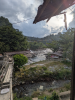
And a couple of views of the village. It really reminded me of Kuala Tahan in Malaysia which is the gateway village to Taman Negara.
PXL_20250803_083709754.png
PXL_20250803_101755230.png
 

Attachments

  • PXL_20250803_040728680.png
    PXL_20250803_040728680.png
    1.2 MB · Views: 74
  • PXL_20250803_045334942.png
    PXL_20250803_045334942.png
    1.3 MB · Views: 68
  • PXL_20250803_073515210.png
    PXL_20250803_073515210.png
    1,003.2 KB · Views: 70
  • PXL_20250803_080653067.png
    PXL_20250803_080653067.png
    1,008.9 KB · Views: 73
  • PXL_20250803_080832703.png
    PXL_20250803_080832703.png
    1 MB · Views: 72
  • PXL_20250803_083330517.png
    PXL_20250803_083330517.png
    1.2 MB · Views: 75
  • PXL_20250803_095011645.MP.png
    PXL_20250803_095011645.MP.png
    1.4 MB · Views: 2
  • PXL_20250803_082946897.png
    PXL_20250803_082946897.png
    807.6 KB · Views: 68
  • PXL_20250803_083709754.png
    PXL_20250803_083709754.png
    870.2 KB · Views: 83
  • PXL_20250803_101755230.png
    PXL_20250803_101755230.png
    957.4 KB · Views: 86
Part 2: Medan to Tapanuli to Padang

The return drive to Kualanamu Airport was mostly before sunrise and I made sure to ask to use the toll road when the taxi was arranged. Apparently the driver on the way to Bukit Lawang should have used the toll road as well but obviously decided to save a little bit of money at the expense of quite a lot of time. My impression is that generally the drivers do not own their car or pay for the fuel which means they don’t actually save any money by reducing wear and tear or fuel burn. The way these long distance taxis work is that I pay someone else who organises the transfer and then they pay for fuel, the rental of the car, and then a driver for their time, just for reference I paid 2 million rupiah (~£90) for a 13-14 hour drive from Padang Sidempuan to Padang in a car that seats up to three passengers + two drivers, one driving there while the other slept and then what I understood is that the they swapped over for the return drive.

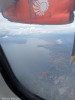
Anyway, the taxi back to the airport took closer to 3.5 hours than the 4.5 hours on the way there so I was at the airport with lots of time. The airport is very clean and nice and dominated by domestic flights to interesting sounding places across Indonesia. I was flying on Wings Air which operates turboprop aircraft (ATR 72s) on domestic flights between secondary and what you might call tertiary cities in Indonesia and they tend to be quite affordable and no-frills. Wings is a domestic subsidiary of Indonesian low cost carrier Lion Air. My flight was to FL Tobing Airport near Sibolga which is still in North Sumatra province but across the island on the Pacific Coast. It’s about a 40-60 minute flight, and looking at the tracking history it seems to almost always takeoff and land between one and two hours late. The flight is extremely scenic though, and it goes straight across Lake Toba, this is the huge crater lake that formed after the Toba Supervolcano Eruption. It was one of the biggest explosions ever on Earth’s history and may have come close to wiping out humanity. It’s also an important biogeographic barrier and many species occur only North or South of Lake Toba, including the Tapanuli Orangutan. My main reason for flying to Sibolga and then driving on to Padang, rather than flying straight down to Padang, was to try and see the Tapanuli Orangutan amongst other species that occur in the mid-altitude sub-montane forest that is present just South of Lake Toba.

As well as beautiful views of Lake Toba, most of the flight crossed the highlands that run along the centre of Sumatra, and these are still mostly forested. The lowlands, however, have clearly been substantially cleared to be replaced with either palm oil or rice. The approach into Sibolga Airport also flew low over the Pacific and beautiful ‘tropical paradise’-like islands just off the coast. Sibolga airport does not see many flights each week, most of the time it’s just this Wings Air flight a couple of times a week (planning this trip around both the Medan-Sibolga flight schedule and Padang-Siberut ferry schedule pretty much dictated all the dates). The terminal area of Sibolga Airport was quite good though, one small room for departures and one small room for arrivals and a rather short stretch of conveyer belt going through the wall functioned as the baggage reclaim. From Sibolga Airport I had arranged transport with Tapanuli Trekking and it takes a couple of hours to get to the large town/small city of Padang Sidempuan where lunch was, and then a further couple of hours to the village near Sipirok where the hiking into the forest to the campsite starts. Between Sibolga and Padang Sidempuan, the drive gains quite a lot of altitude up from the lowlands into the mountains and passes the site of an enormous gold mine, the Batang Toru/Martabe gold mine. It’s a huge blot on the landscape and has completely cleared a huge area of what was sub-montane forest. Apparently the mining waste is a further problem that’s polluting the rivers in the area and if that’s not enough there are plans to create a hydro power plant which, if happens, will flood a huge area of forest and cut what remains of Tapanuli Orangutan habitat in half. Some appropriate foreshadowing here is that I was starting to feel a bit of an upset stomach soon after landing and on the drive over.

The last 45 minutes of the drive to the village are on a highly rutted track through forest which seems to be a really interesting mixed agroforestry/secondary forest area. There are small clusters of houses (with the usual and worrying array of caged leafbirds and shamas) with a mixture of small hand-tilled rice paddies on the less steep bits of forest and small patches of vegetables, coffee, and rubber trees. Also quite a lot of signs about some biodiversity offset scheme that was being applied to this area, but it’s not clear what had been done apart from putting up the signs and the general area does not seem to be substantially protected. At a certain point, we reached the village where we met Decky who runs these tours to camp in the forest and look for the orangutans. With Decky and several porters to carry food and supplies, the hike in began through secondary forest past a few rubber taps and coffee plants. Soon after entering this secondary forest area, I saw some unidentified bulbuls and a small group of Blue-Crowned Hanging-Parrots in the distance, clearly already more birds than in the Bukit Lawang area. A little bit further along, a call came down the line telling me to get to the front and look at something, and rapidly moving through the forest was the smaller regional endemic primate, not the orangutan but a group of Sumatran Black Langurs (Presbytis sumatrana). I got a decent view of these black langurs with white bellies and some photos which are recognisable as record shots but no better. The sun set before we reached camp, and the trail was increasingly being created with a machete as we went which did become rather treacherous in the dark. There were also a substantial number of leeches and I ended up with 5 by the end of that day, all on one leg oddly enough. Camp was rapidly assembled in a clearing near a river with tarpaulins and string that had been brought down. The beds were sort of hammocks made of rice sacks between trees and some small saplings that were cut down to provide supports and firewood. These ‘beds’ were actually quite comfy considering the construction, and the fried rice dinner was quite good. I had a short look around the area for spotlighting, and I saw some eyeshine quite high up that was clearly mammalian, slow moving, and stayed in one spot for a long time. My suspicion is slow loris but I don’t really now. But having got up at 4 AM for an early start from Medan I didn’t stay up for too long.

I’m going to avoid any graphic details, but I didn’t have a very good night that night on account of the developing stomach upset and being out in the forest is not an ideal place for that particular affliction. As many travellers get the Bali Belly, I clearly had the Tapanuli Tummy. Most problematic though, is that I began to struggle to keep down much water and I was losing fluids. The next morning I wasn’t really able to drink but I managed to keep down some rehydration electrolytes so decided to make a start through the forest looking for the orangutans. A couple of guys struck out ahead to track them, and they knew there was one relatively nearby from earlier yesterday. Siamangs and agile gibbons could be heard, and I got a fleeting view of an agile gibbon through binoculars high on a tree across a small valley from me which was a great species to see. Around the same time I also saw my first Sumatran endemic bird of the trip, a Sumatran Leafbird. I was starting to struggle by now with nausea, stomach cramps, and I was struggling to make myself keep drinking water. An orangutan had been located, it was moving through the forest fairly quickly and needed work to get closer and I wasn’t really able to pick up the pace. I stopped and sat for a while, and could hear the really distinctive calls of two Helmeted Horbills calling to each other across the valley. Helmented Hornbills start with a ‘hoo hoo hoo’ sound that then progresses to become faster and faster and end in a kookaburra-like laugh that echoes across the valley. After a little while I did see one flying in the distance too, what a magnificent species.

After sitting for a while I was actually feeling more nauseous when even drinking a little bit of water and was having really painful stomach cramps – the classic symptoms of Tapanuli Tummy. And being out in the forest meant losing quite a lot of water as sweat and well clearly I’ve become too weak and pampered living in civilisation since I last travelled around Asia because I had to call it and leave the forest a day early.

So I was helped back to camp and then after the porters had their lunch we left the forest to head back to the village. One of the porters was some sort of forest medicine man who spent a lot of the walk back hitting my back with some special leaf and tied some kind of vine around my stomach to help it. The camp was a good couple of hours hike back to the village, this was the dry season camp location to get near the orangutans which I believe is a bit further than the wet season location, and I continued to get worse and more and more dehydrated. I don’t really remember much as we got near the village and I probably called it at the right time because I’m not sure I could have got myself out under my own power if I’d left it much longer.

The village had some sort of first aider/nurse who was called ahead and the ‘medicinal’ vine that had been tied around my waist was removed before reaching this nurse/first aider. I was given a couple of mystery injections by the first aider, some sort of antiemetic to help me keep down water. I then drove the couple of hours back to Padang Sidimpuan which has a hospital. There I was given IV fluids because of the dehydration and they decided I had a bacterial infection and was given a cocktail of three antibiotics. That night would have been the second night camping in the forest, but after being given IV fluids with various medications in and starting on a course of antibiotics I stayed in a hotel in Padang Sidimpuan that night. I had quite a bad night again that night, but I did start to feel better the next day and it was only about 48 hours that I was particularly ill. The problem with such a short and planned out trip is that you just have to keep moving on. So I saw the agile gibbon and the black leaf monkeys and a couple of nice birds, but no Tapanuli Orangutan. I think I would have done under normal circumstances though, and these two night camping stays in the forest have a decent success rate. I would recommend Tapanuli Trekking and happy to share contact details if anyone is interested.

The next day, the original plan was to leave the forest around lunchtime and then drive to Padang City, the largest city in this region and capital of West Sumatra province. The drive is at least 12 hours so would have gone into the early hours of the morning, but from a hotel in Padang Sidimpuan I was able to get the taxi to leave straight after breakfast and then get to Padang for dinner time. I was still not up to eating during that breakfast or lunch but I was starting to feel normal by the evening and could eat dinner properly. Because of this and now being clearly on the mend I decided to continue the trip as planned, rather than get my travel insurance to fly me home. One interesting stop on the way was in Bonjol where a large globe model by the road marks the equator. There’s also a bit of a park and a line on the ground marking the position of the equator and it seems like this place was built to try and be some sort of tourist attraction but doesn’t get many interested visitors. I can’t say it felt dramatically different in the southern hemisphere as I crossed from summer into winter.

In Padang I stayed at the Budget Hotel by the Harbour which is actually quite a nice hotel and not so budget. But most importantly for me it’s right by the port for the Mentawai Fast Ferry that would leave for Siberut at 7 AM the next day…
 
Some photos related to the above post:

Lake Toba:
PXL_20250804_050945352.png

The coast near Sibolga:
PXL_20250804_051919645.png

The complex baggage handling system at Sibolga
PXL_20250804_053856448.png

Drive up into the mountains:
PXL_20250804_063834682.png

Smaller road into the Batang Toru forest:
PXL_20250804_094637391.png

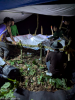
Camp construction
PXL_20250804_151250502.png

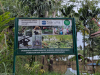
'Biodiversity offset' sign
PXL_20250805_093506391.MP.png

Small-scale rice cultivation
PXL_20250805_104825501.png

Sunset over the forest and rice paddies
PXL_20250805_112034906.png

Equator crossing monument at Bonjol (taken from the Northern hemisphere, the bridge over the road marks the equator line)
PXL_20250806_080514972.png
 

Attachments

  • PXL_20250804_050945352.png
    PXL_20250804_050945352.png
    502.9 KB · Views: 69
  • PXL_20250804_051919645.png
    PXL_20250804_051919645.png
    589.3 KB · Views: 66
  • PXL_20250804_053856448.png
    PXL_20250804_053856448.png
    564 KB · Views: 74
  • PXL_20250804_063834682.png
    PXL_20250804_063834682.png
    1.3 MB · Views: 71
  • PXL_20250804_094637391.png
    PXL_20250804_094637391.png
    1.6 MB · Views: 78
  • PXL_20250804_151250502.png
    PXL_20250804_151250502.png
    778 KB · Views: 73
  • PXL_20250805_093506391.MP.png
    PXL_20250805_093506391.MP.png
    1.8 MB · Views: 65
  • PXL_20250805_104825501.png
    PXL_20250805_104825501.png
    1.6 MB · Views: 71
  • PXL_20250805_112034906.png
    PXL_20250805_112034906.png
    1.2 MB · Views: 74
  • PXL_20250806_080514972.png
    PXL_20250806_080514972.png
    1.2 MB · Views: 68
Part 3: Mentawai

I really liked Siberut and the Mentawai Islands. I think this is the part of the trip that could have benefitted most from a few extra days and I would like to come back one day and maybe spend a week in the Mentawai Islands, maybe with a second attempt at the Tapanuli Orangutan as well.

The Mentawai islands are an archipelago off the coast of West Sumatra in the Pacific, and they feel very different to the mainland of Sumatra and don’t feel particularly Indonesian. They have a distinct language, are religiously Christian, and have quite a few distinct traditions and cultural aspects as well like the traditional tattoos. It’s also a very poor place with very little income from exports and most people live off what they can grow or get from the forest and the sea. The Mentawais, and particularly the largest island of Siberut (which I visited) have a mind-blowing level of endemism. There are so many endemic mammal species that it’s hard to believe. Something like 7 endemic squirrels, an endemic tree shrew, and 5 endemic primates. 4 on Siberut and these were my main targets. There’s an endemic gibbon, an endemic macaque, an endemic leaf monkey/langur, and then a second endemic langur, the Pig-tailed Langur, which is in its own monospecific genus most closely related to proboscis monkeys. A really weird species and it’s mad that there’s such an evolutionary distinct primate found in such a small area and that’s so little known. Calling it a Pig-tailed Langur doesn’t really capture this I feel, so I prefer to call it the Simakobu which is the Mentawai name for this species. The endemic Kloss’ Gibbon/Dwarf Siamang/Bilou must also be the extant ape species with the smallest natural range (happy to be corrected)? Being restricted to the island of Siberut, although unlike the Simakobu the other primate species are ‘only’ species-level endemics with representatives of the same genus on the main island.

The main way to get to the islands is the Mentawai Fast Ferry which leaves from Padang in the mornings, does a different set of islands each day, and then gets back to Padang in the evenings. Most of the individual ports are served a couple of times a week and South Siberut where I went is every two days. My primate-hunting trip to Siberut was organised through SwaraOwa, an Indonesian gibbon-conservation charity that has a project focused on the endemic gibbon. On Siberut, the main man is a local called Vinsen who speaks decent English and knows the mammals fo Siberut very well and the mammal watching is done out of the small Toloulago village (this means full moon in Mentawai) around the South West of the island. Getting there is quite a mission and is not cheap either (the ferry costs ~£16 per person each way, and transport on the Mentawais is quite expensive because of the cost of importing fuel and equipment), although there journey itself is quite enjoyable and has wildlife watching opportunities. The journey to the main island of Sumatra costs the same for locals as well which means most have never left the Mentawais. Unusually for Indonesia, the ferry left Padang exactly at 7 and it takes 4 hours travelling at a bit over 40 mph to get direct to South Siberut. This day the ferry was direct to South Siberut before continuing on, but the schedule varies. There were quite a few tourists on the ferry and a lot of surfboards too, because it’s apparently one of the best surfing destinations in the world and when I left Padang on my flight to Singapore a week later the large proportion of surfers in the area was clear with their rather ridiculous and awkwardly shaped baggage. All the tourists disappeared soon after arriving at the port though, off to their surf resorts and I think a lot stay on boats anchored off the islands.

I met Vinsen at the port and we took motorbike taxis across the village/small town (referred to as the ‘big city’ I think unironically) actually to his mum’s house where lunch was served. There we had to wait until a little later in the afternoon for the tide to come back up and make it possible to get the boat through the mangroves to the small village. This boat was made from a hollowed out tree in the traditional way, but with an outboard motor on the back. This ride was an hour and a half and really quite nice, first along a river then through some mangroves, then out into the ocean along the coast. Plenty of birds in the mangroves including some waders, gerygones, sunbirds and particularly impressive Stork-billed Kingfishers. Silvery woodpigeons can sometimes be seen in these mangroves too but I didn’t see them here. Going along the coast of the island in the boat was beautiful with small villages by the coast and pigs on the beach and the forest seems to be quite intact and unspoilt although I think some of the other islands may be somewhat more deforested.

It’s about an hour and a half on the boat to Toloulago village which is small and remote but does have a cellphone tower with weak but not-nonexistent phone/data connection and electricity from a generator roughly from sunset to sunrise. The village is nicely maintained with little gardens around each house and the accommodation is in one of the houses where some of the children are made to bunk up together while the tourists take up one of the bedrooms. The children didn’t seem too pleased about it. Vinsen gets groups visiting to look for primates/wildlife he estimates about 20 times a year so I suppose the children have to bunk up together one or two times a month but at least they have a TV and mobile phones in the house paid for by the proceeds. There isn’t a huge amount of arable agriculture on Siberut, they don’t grow grains/rice in any significant amounts and the main things being grown around the village were banana and sago which seem to be the predominant starch sources. The forest is quite interesting, it doesn’t have many huge old growth trees and has a lot more underbrush presumably due to regular wind and weather disturbance being so exposed out in the Pacific. An afternoon/evening walk didn’t produce any mammals, but my field guide lists the bulbuls as endemic ‘Barisan Bulbuls’ split from Olive-winged, and the one really good sighting of that afternoon was a pair of Silvery Woodpigeons seen reasonably well flying overhead as the evening was drawing in, presumably off to roost. This formerly widespread species is now very rare and only found on a few islands including Siberut.

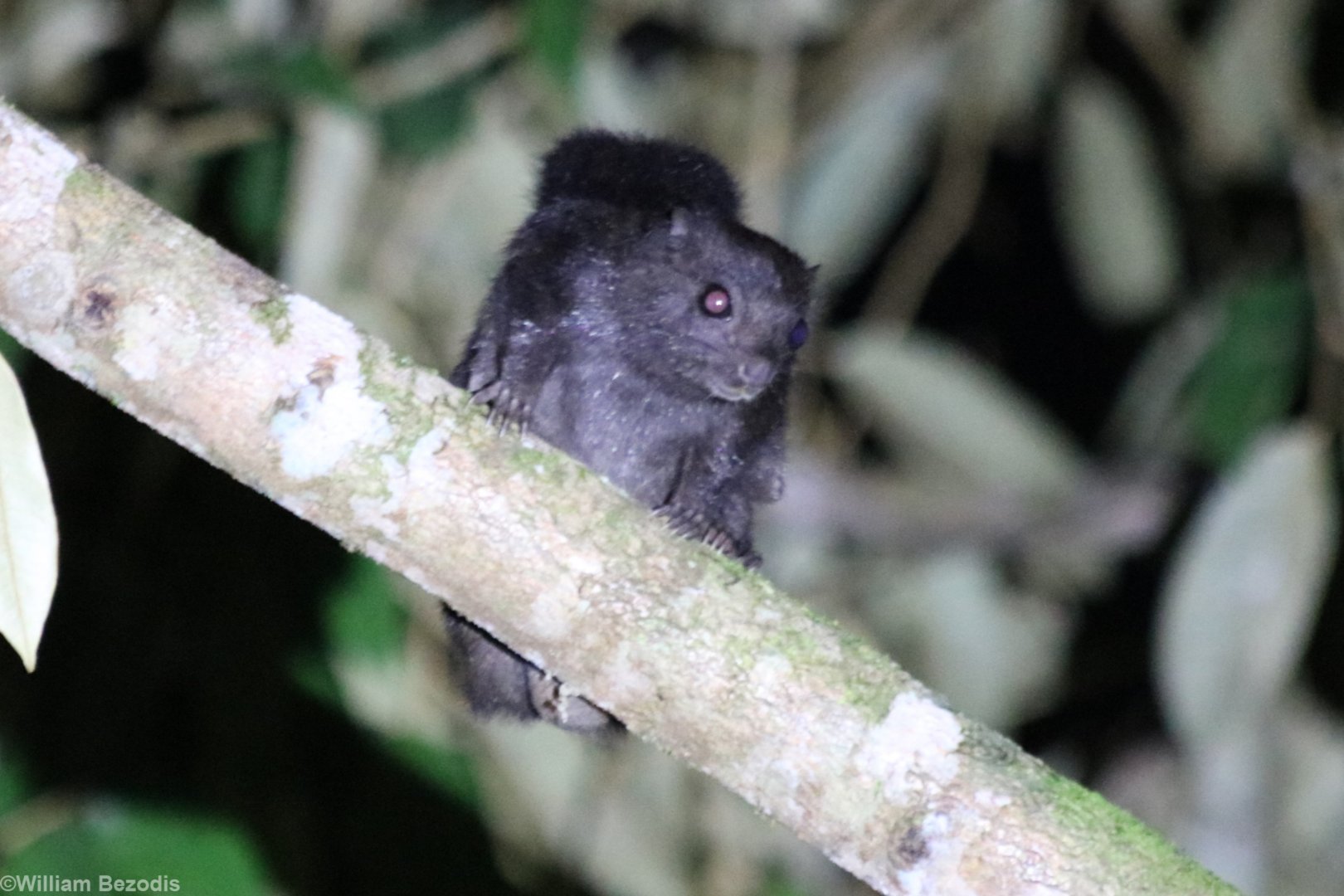
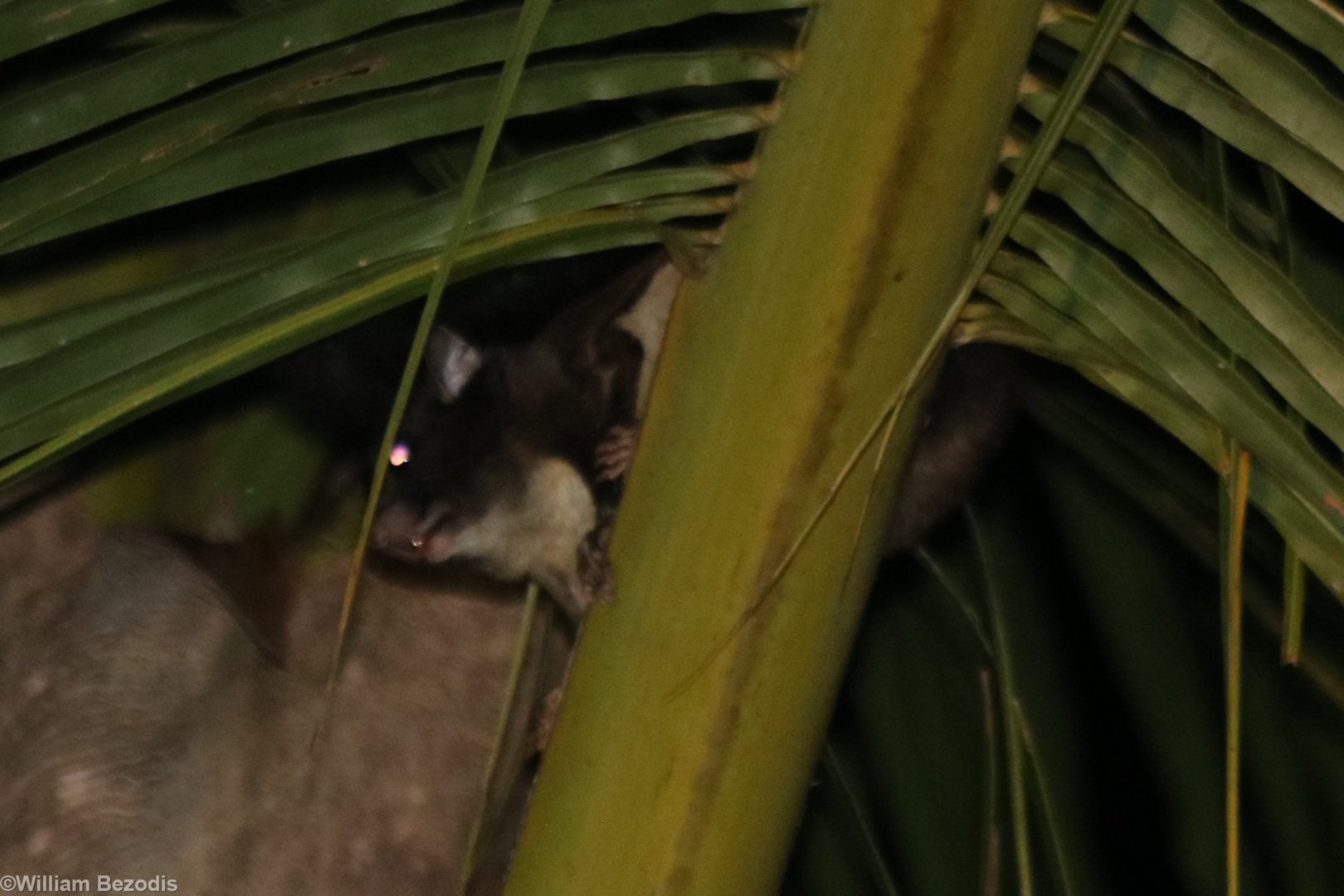
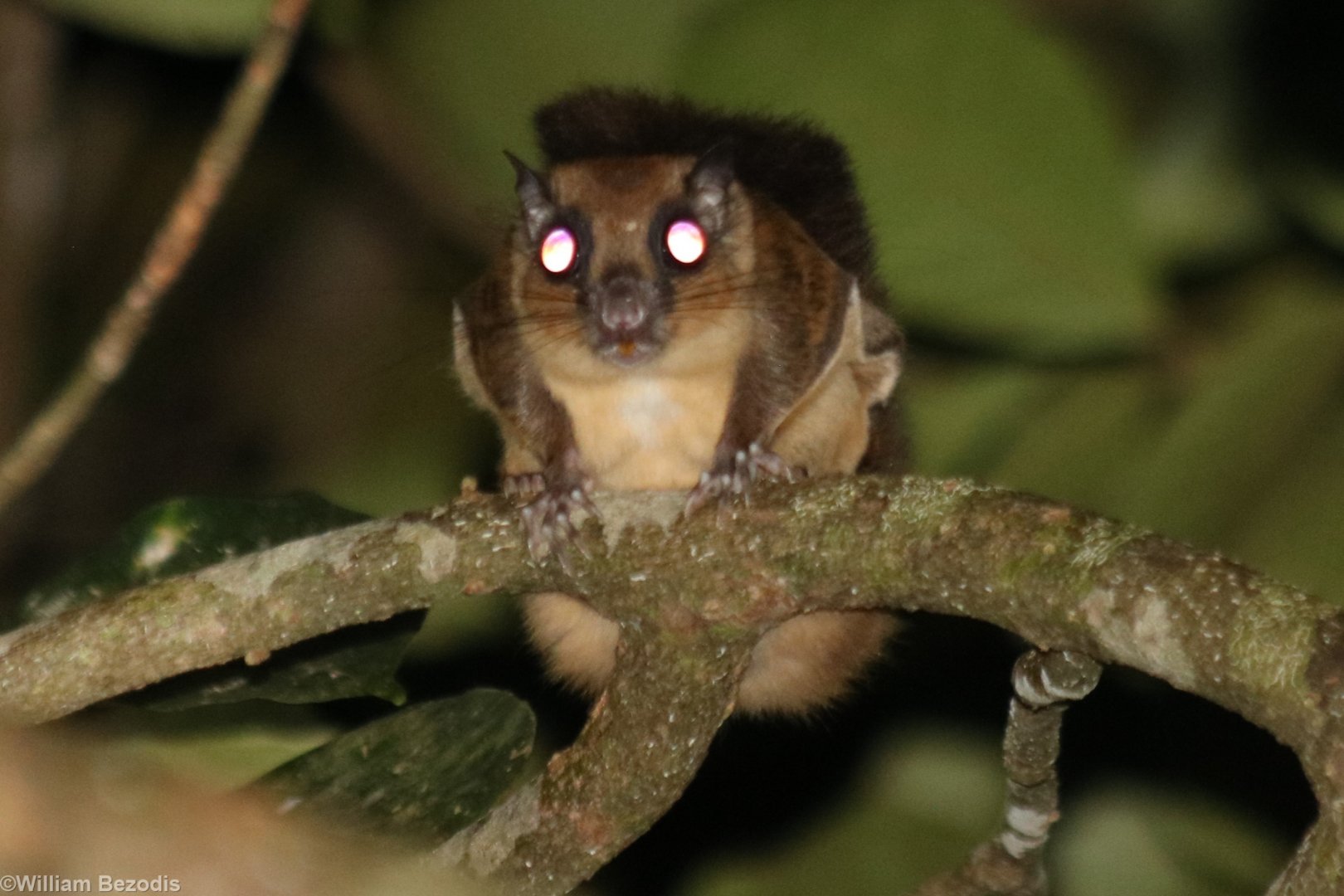
This first evening I did a long big of spotlighting, first through the sago and banana plantations and then in the edge of the forest. Flying squirrels were really abundant and happy to sit and be photographed and viewed at close range. There’s some confusion about what species of flying squirrel actually occur on Siberut and there are several posts on Mammalwatching about this. Most common are the relatively large Siberut Flying Squirrel (Petinomys lugens) which are uniformly dark and it has been reported that these are the only flying squirrels on Siberut but this is clearly incorrect. Vinsen said three species occur, this ‘large black one’ a different ‘small brown one’ and another ‘small black and white one’. Eventually, I was able to see and photograph all three species, the ‘small brown’ one I think is Mentawai Flying Squirrel Iomys sipora and the small black and white one would then be the Sipora Flying Squirrel Hylopetes sipora. I did see all three very well in the end and then also got a really good view and photos of a Mentawai Scops Owl in what I think is a spot that it can often be found. Also seen were presumed Mentawai Rats in and around the plantations but not seen up close. Other things potentially seeable spotlighting on Siberut which I didn’t see on either night are an undescribed species of frogmouth, the endemic Long-tailed Giant Rat, endemic spiny rat, and an endemic (sub) species of palm civet although Vinsen did not think any of these were likely. The civets are hunted for food, as are the primates in some areas although apparently not in this particular village.

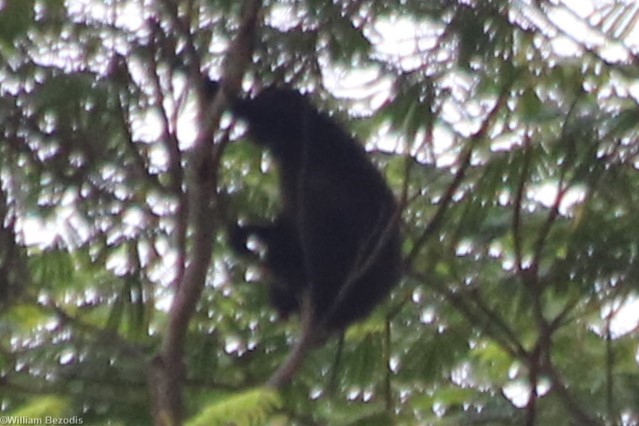
My one full day involved lots of quite difficult trekking through the forest away from trails, mostly using streams as naturally flat-ish paths to follow and then machete-ing up and down the ridges between streams. First thing in the morning, we took the boat out around a bit to start a couple of kms away from the village and then make our way back during the day. From the boat though and rather incredibly, Vinsen spotted two monkeys sitting high on a tree at the edge of the forest – the Simakobu! (Pig-tailed langur). Eventually I did locate them sitting up in a tree and feeding, and although distant and a bit silhouetted I was able to get a reasonable view and some record shots. I only carry a 300mm lens though and you’d have needed something quite a bit longer to get good photos. We watched these two, both of the dark morph, for quite a long time until they started retreated down from the canopy and became obscured.
The walk back to the village was really tough going and not much was seen at first apart from a fairy bluebird and briefly a fraternal squirrel – the endemic Mentawai species of Sundasciurus. In the late morning it started raining and I wasn’t sure if we’d see much more, but once it stopped raining the calls of the Bilou, the endemic gibbon started. These don’t carry anywhere near as far as the siamang or other larger gibbons so if you hear them you’re reasonably close. Two Kloss’ Gibbons were calling to each other from either side of us, first we tried to go towards one but reached a pretty much shear cliff face down to the stream to then switched to the other. Eventually we got right to it with it calling in the trees directly above us, then I heard crashing and saw movement. It was clearly a gibbon and clearly leaving the area promptly. As soon we located the actual animal it stopped calling and moved swiftly away and then the forest went silent and that was it for gibbons on Siberut. I was really buzzing, a good view of the Simakobu and then a fleeting but real view of the endemic Bilou gibbon although Vinsen was disappointed that he couldn’t get me a good view. A bit later and as we were getting closer to the village, some more crashing in the trees and rapidly departing primates were seen and heard calling. These must have been Siberut Langurs (Presbytis siberu) which is also what Vinsen said the call was, although I didn’t really see them properly.

A late afternoon walk didn’t produce any more mammals, although it was really good for birds. Lots of whiskered treeswifts, a couple of the endemic subspecies of hill mynas, little spiderhunter, a group of pied hornbills, and then very excitingly I got a reasonably good view of a Mentawai Malkoha, the recently split former subspecies of Chestnut-breasted and it’s quite a bit less chestnut on its breast. Nothing new was seen at night or the next morning before leaving, although we did go around the coast a bit looking for any other primate sightings. Just a sea eagle in the area that we saw the Simakobu yesterday. On the ferry back I saw some distant dolphins, I think they were spinner dolphins. Overall very happy with what I saw on Siberut especially given the time and the Siberut Macaque is supposed to be really difficult, requiring going much further from the village. There’s so many endemics to see in the Mentawais though, quite a few more diurnal squirrels and tree shrews that just need time in the forest. And although many of the mammals are hunted for food and therefore very skittish, there doesn’t seem to be a tradition of trapping caged songbirds so they seem to be more numerous.

The ferry got back to Padang just before sunset, and then after dinner started the long ~9 hour drive towards Kerinci-Seblat National Park for the birding focussed final tour of the trip with a bird guide rather than a mammal guide.
 
Here are some scenery pictures from Siberut

Some views of the island from the small boat on the way between the harbour and village, where you can see a layer of mangroves right on the edge of the coast and then forest behind:
IMG_6621.jpg
IMG_6006.jpg

The dock on arrival at Toloulago Village, where you stay to look for the primates in the surrounding forest:
PXL_20250807_075631979.jpg

View of the main path through the middle of the village (the homestay is in a house similar to these). There is electricity delivered to each house, from a central generator that is run during the night.
PXL_20250807_080726182.MP.jpg

The village viewed from the boat. Note the planted coconut palms.
PXL_20250809_013646360.jpg

Forest near where the Simakobu/Pig-tailed Langurs were seen from the boat. We got a bit closer than this in the boat, but they were still all the way up a tree like this. My guide Vinsen spotted them eating silently at the top of a tree from this far out which was very impressive.
PXL_20250808_004800314.jpg

Boat through the mangroves going across the island
PXL_20250807_065904713.jpg

Some views across the island/ocean beyond from a high ridge behind the village
IMG_6019.jpg

PXL_20250808_054912643.jpg

Small stream that we used as a route to walk through the get closer to the gibbon calls. Walking through a stream at least means it's relatively flat and not too dense with vegetation which I think was the logic for using them as paths.
PXL_20250808_030015708.jpg
 

Attachments

  • IMG_6006.jpg
    IMG_6006.jpg
    126.5 KB · Views: 67
  • IMG_6019.jpg
    IMG_6019.jpg
    129.6 KB · Views: 61
  • IMG_6621.jpg
    IMG_6621.jpg
    144.7 KB · Views: 60
  • PXL_20250807_065904713.jpg
    PXL_20250807_065904713.jpg
    168.1 KB · Views: 64
  • PXL_20250807_075631979.jpg
    PXL_20250807_075631979.jpg
    292.4 KB · Views: 60
  • PXL_20250807_080726182.MP.jpg
    PXL_20250807_080726182.MP.jpg
    244.5 KB · Views: 63
  • PXL_20250808_004800314.jpg
    PXL_20250808_004800314.jpg
    171.4 KB · Views: 63
  • PXL_20250808_030015708.jpg
    PXL_20250808_030015708.jpg
    193.1 KB · Views: 63
  • PXL_20250808_054912643.jpg
    PXL_20250808_054912643.jpg
    145.7 KB · Views: 66
  • PXL_20250809_013646360.jpg
    PXL_20250809_013646360.jpg
    159.6 KB · Views: 72
And pictures of the animals are directly in the Indonesia - Wildlife Gallery

Including the distant Simakobu

Scops owl

Siberut flying squirrel

Sipora flying squirrel

Mentawai flying squirrel

And there are various other birds and some herps in the gallery too.

Although an absolutely wonderful place to visit, the wildlife photography on Siberut was really quite difficult. However the final section of the trip, in which I visiting three different parts of Kerinci-Seblat National Park with the assistance of a bird guide who has hides, was better for photography.
 
Part 4: Kerinci-Seblat National Park
4.1: Mount Kerinci


As with the departing ferry, the return ferry also left and arrived exactly on time which was extremely atypical of anything else that happened on the trip which tends to run more on Indonesian time. The final 6 nights was all booked together as one tour with a specialist bird guide staying in three places around Kerinci-Seblat National Park with Wild Sumatra Tours. The transfers to and from Padang were also arranged with them and I left Padang after dinner heading to the village of Kersik Tuo. I slept for pretty much the whole drive, arriving at the accommodation around 2AM, although based on the drive back and the general speed that we made the journey I should have probably spent the drive fearing for my life. Kersik Tuo is on the foothills of Mount Kerinci itself and it was really quite cold upon arrival, around 10 degrees C. Quite a dramatic difference from the high 20s in Padang. This really reminded me of my arrival at Mt Kinabalu in Borneo 7 years ago to the month when I arrived at about a similar time and was also struck by the cold.

The next day was my full day of birding on the lower slopes of Mount Kerinci, a really striking volcano that has the claim to fame of being the tallest active volcano in South East Asia. From Kersik Tuo is a drive of 20 minutes or so through agricultural land dominated by an enormous tea plantation and some fields of potatos, chilis, and other vegetables. From there, you reach the entrance to this part of Kerinci National Park where there is a single track going through the forest and to the summit. This is the track that people use to climb to the summit, so the trail is a bit busy in the morning with people going up and then again in the late afternoon with people coming down but otherwise is fairly quiet. The birds here were really quite visible and there was a decent frequency of mixed-species bird waves throughout the day, and that’s not just because I had a bird guide who could identify calls and knew the usual spots although that did of course very much help. It was thanks to him that I saw my top target here on the mountain: Schneider’s Pitta! This was actually not seen in their dedicated Pitta hide though, and was actually just spotted by my guide off the trail moving through the forest and apparently no one else saw the Schneider’s pitta that day or for another two days.

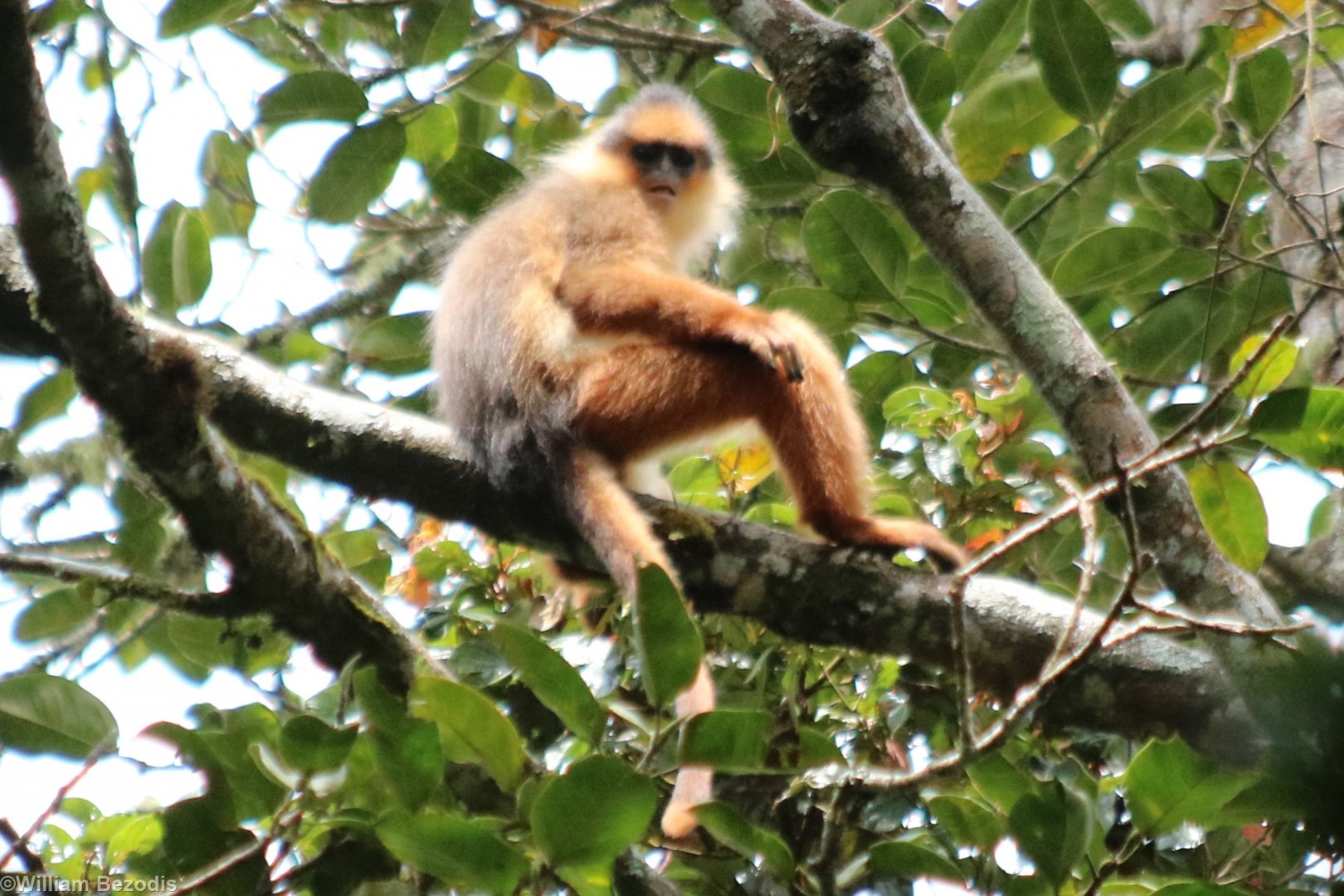
There were a few good mammals too, I saw a few squirrels which I still need to check the species of, and then two really nice primate species. I saw quite a few small groups of black-crested Sumatran langurs aka Sumatran surili Presbytis melalophos. This was the fourth species of Presbytis of the trip and a really beautiful one, they’re a really striking orange colour with black markings on the head and although I saw them best today I would see individuals of this species the next two days as well. At two separate points this day I got really close views of siamangs. The first moved away through the forest quite quickly, but the second near the end of the day was content to sit in a tree very close to the path and eat figs while being watched.

I didn’t try for the very high altitude birds, the main ones being Sumatran shortwing and Sumatran cochoa which occur much higher on the mountain and would have required a full day just to target those which are apparently not that easy even at the right elevation. I really enjoyed the high altitude forest though, with fairly visible birds, trees covered in mosses and lichens and ferns, and the occasional cloud rolling through the forest. It’s cold enough that the birds seemed to remain active all through the day as well. My guide spent quite some time looking in a particular patch of forest for a Sumatran frogmouth which he’s apparently seen roosting in that general area fairly often before but there was no success with this one unfortunately.

As it got towards the end of the day we then left the forest and drove on in the dark to the next location where I’d be staying in Sungai Penuh town for two nights to explore the range of altitudes that can be found along the Tapan Road

On this bird-focused part of the trip I’m just going to give full lists of those birds seen and heard on each day at the end with some extra notes.

Birds Seen

Long-tailed Shrike – ridiculously numerous in the fields around the base of the mountain and between the town and the entrance

Scarlet Minivet

White-throated Fantail

Mountain Tailorbird

Indigo Flycatcher

Large Niltava

*Heard Only* Bronze-tailed Peacock Pheasant – heard really close in the hide but sadly it did not come into view and then became more distant

Crested Serpent-eagle

Black-browed Barbet

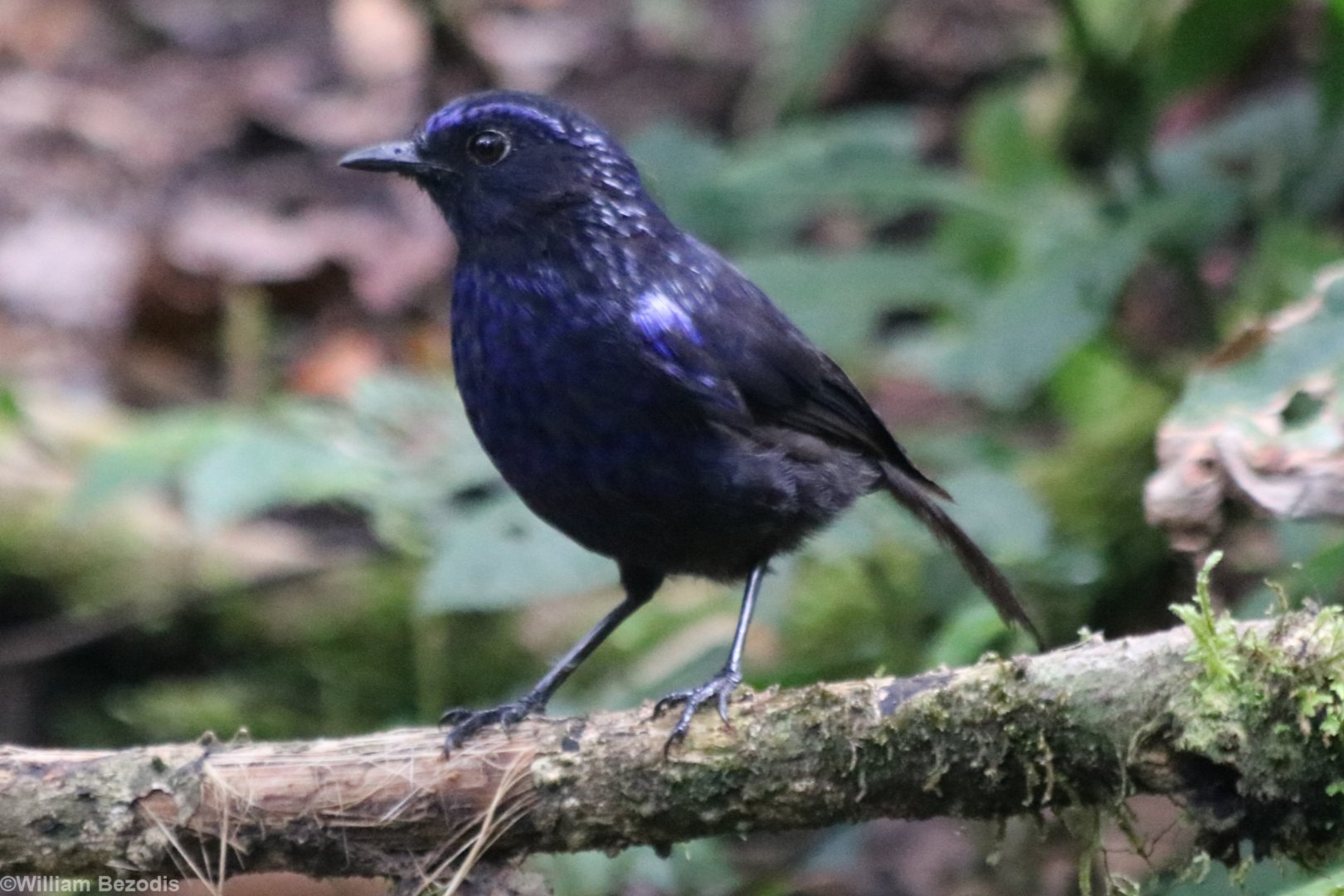
Shiny Whistling Thrush – endemic species seen extremely well

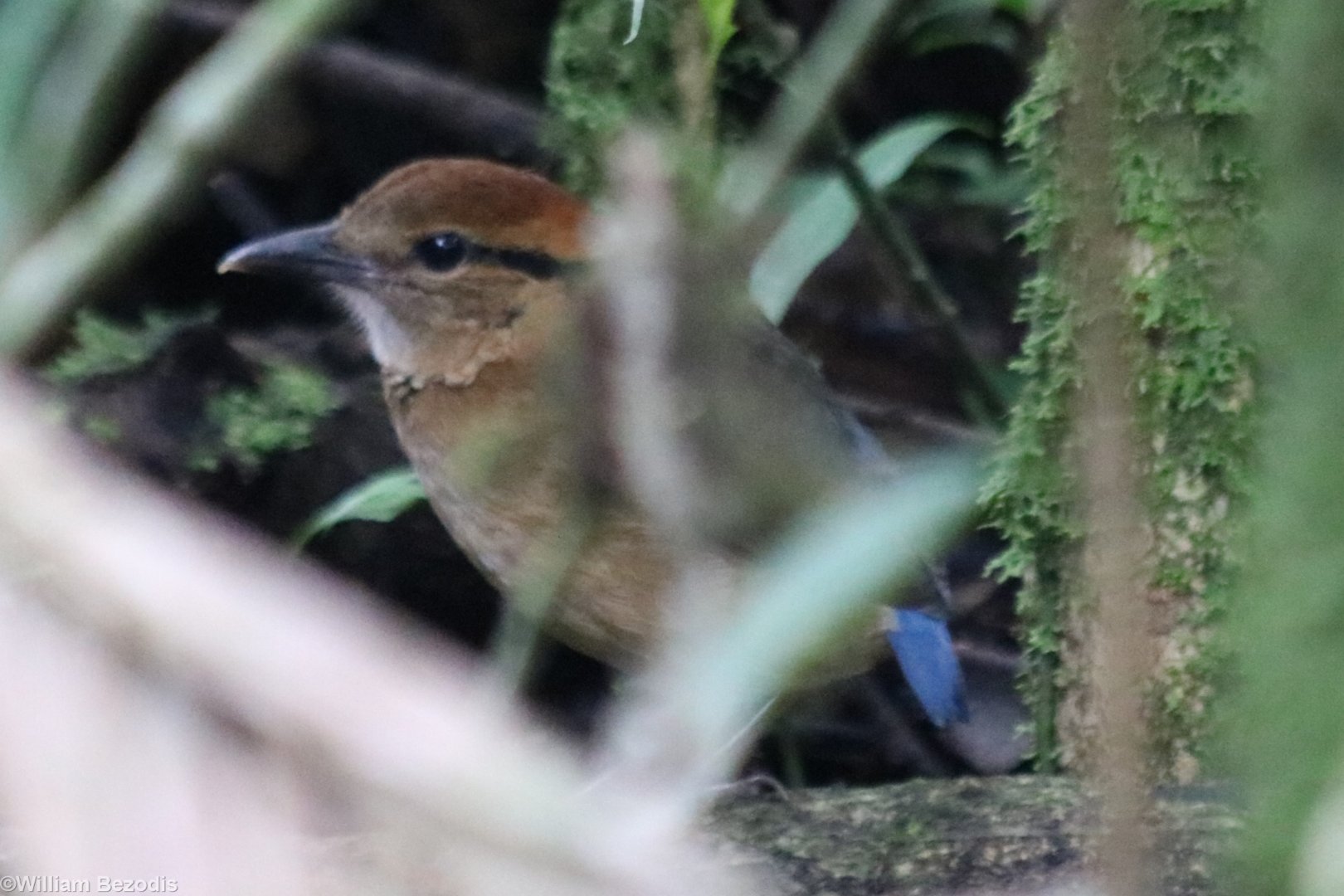
Schneider’s Pitta

Sangkar White-eye

Grey-headed Canary Flycatcher

Sunda Warbler

Black-capped White-eye

Little Pied Flycatcher

White-necked Babbler

*Heard Only* Sumatran Blue Robin

Sumatran Wren Babbler – much cooler bird than it sounds

Sumatran Green Pigeon

Sumatran Trogon

Sumatran Flowerpecker

Yellow-bellied Warbler

Sunda Minivet

Grey-chinned Minivet (the three species of red minivets present was really confusing!)


So a lack of ground birds (in addition to the heard-only peacock pheasant, Salvadori’s pheasant and red-billed partidge are targets here. I saw some scrapings near the trail that apparently come from the latter species) and no frogmouth, but otherwise a very nice set of birds especially when combined with the surili and siamang.


Some scenic photos:

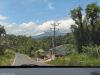
View of Mount Kerinci from Kersik Tuo
PXL_20250810_003101597 (1).jpg

Tea plantation around the foothills (also note the light green of tea plantations in the bottom right of the photo above). Apparently originally planted by the Dutch in colonial times, black tea is produced for domestic consumption and green tea is produced for export.
PXL_20250810_012313436 (1).jpg
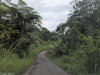
A couple of pictures showing the forest and the trail:

PXL_20250810_053157836.jpg
PXL_20250810_054431890.jpg
PXL_20250810_070902545.jpg

A low cloud rolling through:
PXL_20250810_083857110 (1).jpg

PXL_20250810_083657294.jpg
 

Attachments

  • PXL_20250810_083857110 (1).jpg
    PXL_20250810_083857110 (1).jpg
    158.8 KB · Views: 52
  • PXL_20250810_083657294.jpg
    PXL_20250810_083657294.jpg
    314.3 KB · Views: 68
  • PXL_20250810_070902545.jpg
    PXL_20250810_070902545.jpg
    362.4 KB · Views: 64
  • PXL_20250810_054431890.jpg
    PXL_20250810_054431890.jpg
    197.3 KB · Views: 62
  • PXL_20250810_053157836.jpg
    PXL_20250810_053157836.jpg
    357.4 KB · Views: 60
  • PXL_20250810_012313436 (1).jpg
    PXL_20250810_012313436 (1).jpg
    183.4 KB · Views: 64
  • PXL_20250810_003101597 (1).jpg
    PXL_20250810_003101597 (1).jpg
    148.5 KB · Views: 68
A few pictures now in the gallery from the above day. Including siamang and black-crested sumatran langur for primates:

And the bird highlights are Schneider's Pitta
And shiny whistling-thrush
 
Did you find that the Siamang looked huge at Kerinci? I think they are probably bulkier with thicker fur due to being montane, but they just seemed so much larger than zoo Siamang, or even than the Siamang at Bukit Fraser.

Yes! For sure! I wasn't sure if I'd just come across two really big males but they felt like the largest Siamangs I'd seen. I saw one quite close and very prolonged, but then I got really close views at Bukit Fraser too.

Animals in the wild often feel a lot bigger than zoo animals I think.
 
4.2: Tapan Road

I stayed in the small town of Sungai Penuh for two nights which is sort of along the valley from the base of Mount Kerinci. You can still see mount Kerinci from here, and then there are mountains rising up on either side. Although a relatively small place, it’s the biggest town in all the surrounding villages and Padang, Jambi, and Bengkulu are all roughly 9 hours drive away going in different directions. The main attraction in Sungai Penuh is Tapan Road which is one of only a couple of roads going up over the mountains and through Kerinci-Seblat National Park down to the coast. From Sungai Penuh to get to the national park you probably first have to get some black market petrol because there isn’t enough petrol in the official petrol stations at the official price to meet demand (unless you want to sleep in the car overnight). But once you’ve got some petrol, it’s about 20 minutes drive uphill to the forest before the Tapan Road winds around through unbroken forest from just under 2000m down to about 200m. The birding is done from the road but it’s a small road (barely one lane each way) and not excessively busy apart from the convoy of small oil tanker trucks that goes up and back down again to deliver apparently not enough fuel to the town. For my two days on Tapan road, we decided to focus on the highest altitude parts for the first day, from roughly 1200m and up and the second day would focus on the lower altitude parts – most birders who visit on the minimal tour just do the high altitude part because that’s where the Sumatran endemics are. The low altitude part has lots of nice species too, but they’re mostly also present on Peninsular Malaysia and Borneo which are logistically easier than Sumatra.

Anyway, for the first high altitude day we went straight to a small hide just off the road at a little clearing by a stream, getting there first thing before breakfast. This spot exists for two wonderful target species; Graceful Pitta: a red and black Sumatran highland endemic with electric blue highlights that lives in a fairly narrow altitude band on the mid-slopes of the mountains in West Sumatra and likes damp gullies and Marbled Babbler: a large and particularly beautiful babbler that is very rarely seen. This spot in a damp gully right in the altitudinal range for the pitta seemed perfect because just after we got there and stopped moving or making a noise, a graceful pitta appeared on the edge of the small clearing under a dark bush but where the electric blue and red really stood out. The marbled babbler was already calling as well but couldn’t really be seen. Also abundant running back and fourth across the clearing were what I thought were three-striped ground squirrels (though I did think they looked extra fluffy and chubby) but it seems at this altitude are actually Niobe ground squirrels. My guide had some mealworms with him which he put out and this almost immediately brough the pitta out from the bushes where it grabbed a couple of mealworms before the squirrels descended, much to the extreme annoyance of my guide. With appropriately timed claps and noises, the squirrels would run off to let the pitta back down for a little while. The marbled babbler took a little bit longer but it soon also emerged to show ridiculously well for this usually very skulky and shy species to grab a few mealworms. It was much less scared off than the pitta as well, being a bit larger than the graceful pitta which is quite a small pitta species, a lot smaller than the Schneider’s from yesterday which was a particularly big one.

Breakfast was had while watching the pitta and babbler (and squirrels) and although I initially disapproved of my guide’s idea to distract the squirrels by giving them one of our bananas on the side away from the mealworms but actually this was very effective at separating the incompatible mammalian and avian groups. Also seen along this stream passing the hide was a Sunda forktail, several of which I saw around mountain streams the next few days.

The whole day was spent birding up and down along the high altitude parts of Tapan road. Lots of nice species seen, and again I’ll put a day list of bird species seen at the bottom. Highlights were several sightings each of Sumatran treepie and Sumatran trogon. Although I got a brief view and record shot of the latter yesterday, I got lovely prolonged views of a pair today – such nice birds. Lots of nice bulbuls and barbets and drongos and babblers too. As well as the squirrels, there were lots of southern pig-tailed macaques hanging about on the road, they seem to be used to scrounging food from passing cars, and a few Sumatran black-crested langurs as seen yesterday but these ones seemed much more shy. They’re such a strikingly different colour to the almost completely black langurs with white fronts that I saw in Tapanuli despite being considered the same species by some authorities. During a brief but heavy downpour, we drove along the road to another spot where my guide had occasionally seen a different graceful pitta. Here, we could sit in the back with the open car boot as an umbrella looking down another dark damp gully with a stream running through. As well as several more forktails, while sitting in the back of the car in the heavy rain while being gently misted from the sides out popped a graceful pitta! No squirrel food or fancy hide required and the ideal way to sit out the rain.

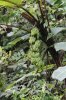
I really enjoy being in this sort of high altitude forest, lots of unusual and interesting plants with trees covered in all sorts of green things and substantial changes in the vegetation composition just with small changes to altitude. The highest parts of the Tapan road had lots of pines, and birds nest ferns growing on pines and filling with pine needles is quite a look. The land slips on the steep slope open up areas for lots of ground orchids and ground covering ferns. Also along the road were enormous tree ferns, the tallest ones I’ve seen, that really were like trees, and then quite a few wild bananas as well. Several of these wild bananas had big bunches of little green fruits bulging with seeds and I suppose these would have been macaque food if it weren’t for the much tastier human-bred bananas provided by passing traffic.

After dark was a long spotlighting session and I think it has a lot of potential for spotlighting being an easy road to walk along. Unfortunately luck was not with me this night despite spending several hours and I didn’t see any night birds or snakes at all, just quite a few palm civets. Very good views of some small-toothed palm civets and less good views of a possible masked palm civet.

The second day also involved leaving Sungai Penuh early, but then driving straight down to the lower altitude forest until the late afternoon when we’d be driving on to stay somewhere different that evening. I saw lots of nice species this day, mostly ones that occur across the broader region, and I think my guide was more excited himself about this day’s birds, things like red-headed trogon, because of course most of his time is spent taking people to see the high altitude local speciality species. The highlight had to be a really nice view of a Rhinoceros hornbill which we could hear calling and then I spotted through the binoculars perched in the canopy of a distant tree. It then took flight and flew pretty much right above us across the road and then away into the distance while we watched it for a long time. There were lots of small birds seen around fruiting and flowering trees like sunbirds, flowerpeckers, bulbuls, flycatchers etc. Some of which I spent time identifying on the day and others I managed to get photos to identify later. I haven’t actually gone through all the photos yet so there might be a few more additions to the below list. I did really enjoy this looking at birds that weren’t pre-identified or at special spots, more like solo rainforest birding. On a short trip like this having a guide makes all the difference and is essential for getting to the right spots and knowing where to look for target species but it does take some of the individual discovery out of it. Hiring a guide does make sense though when you’re only there for less than 3 weeks and the international flights are still more expensive than all the accommodation and guide costs combined.

We drove back up the Tapan road to Sungai Penuh in the mid-afternoon and my guide suggested stopping at a local wetland site where I saw more purple swamphens (or whatever they’re call in the region now post-split) than I’ve seen in one single view anywhere else. We also needed to buy some crickets to entice in my final big avian target the next day. If I’d though about it this would have been obvious but the cricket shop turned out to be the local caged bird shop with a few lovebirds and budgies but mostly filled with trapped native birds which although interesting to see is of course very sad. We’d actually found a string dangling from a tree earlier that day which apparently would have been covered in glue and used to trap bird coming in to respond to call playback. This was an illegal spot due to being in the national park but otherwise wouldn’t be. I didn’t get my big camera out to avoid drawing attention, but I did look at the caged birds a little bit and take a few pictures on my phone while my guide was negotiating over crickets. Lots of leafbirds, lots of shamas, lots of magpie-robins. The complete lack of shamas seen while I was in Indonesia was noticeable I felt, and unlike in Thailand there aren’t lots of wild magpie robins hopping around. I also saw a striking number of woodpeckers – just the small species and particularly piculets which I wasn’t expecting. And most sadly were a few launghingthrushes including one individual of the endangered black-and-white Sumatran laughingthrush. This species I’m told is now completely gone from the area around Kerinci and the forest gets stripped by using callback. They’re now only really seeable in parts of Aceh and who knows how much longer.

We then drove in the dark to Lempur Village and the appropriately named Cinnamon Guesthouse that a lot of birders stay in. I say appropriate because it’s actually made of cinnamon wood, a waste product from harvesting the bark, and the whole area around Lempur is dominated by cinnamon growing as one of the top cinnamon producing areas worldwide. It’s a lovely guesthouse, not very expensive, and I’d be staying here for three nights to round off the trip before returning to Padang.


Tapan Road Day 1 Birds:

Spotted Dove

Sumatran Treepie

Sunda Owlet

Edible-nest Swiftlet

Blyth’s Hawk-eagle

Fire-tufted Barbet

Sumatran Drongo

Little Cuckoo-dove

Graceful Pitta

Sunda Forktail

Marbled Wren-babbler

Sumatran Bulbul

Black-and-Crimson Oriole

Spot-necked Bulbul

Cream-striped Bulbul

Crimson Subird

Grey-chinned Minivet

Sumatran Babbler

Black-browed Barbet

Sunda Fulvetta

Giant Swift

Maroon Woodpecker

White-rumped Needletail

Blue-eared Barbet

Long-tailed Broadbill – loads of these both days

Sumatran Trogon

Black-faced Cuckooshrike

Plume-toed Swiftlet

Greater Yellownape

Ashy Drongo

Bar-winged Flycatcher-shrike

Yellow-eared Spiderhunter

Barred Cuckoo-dove

Whiskered Treeswift

Temminck’s Sunbird


Tapan Road Day 2 Birds: (not counting the caged bird shop of course)

Ochraceous Bulbul

Fire-tufted Barbet

Plume-toed Swiftlet

Ashy Drongo

Blue-eared Barbet

Cream-striped Bulbul

Long-tailed Bulbul

Lesser Yellownape

Lesser Racket-tailed Drongo

Mountain Tailorbird

Verditer Flycatcher

Sumatran Bulbul

Cinereous Bulbul

Sunda Forktail

Chestnut-breasted Malkoha

Little Cuckoo Dove

Black-and-yellow Broadbill – seen extremely well

Blyth’s Hawk-eagle

Asian Fairy-bluebird

Black eagle

Warbling White-eye

Temminck’s Sunbird

Black-capped White-eye

Orange-bellied Flowerpecker

Bar-winged Flycatcher-shrike

Ruby-throated Bulbul

Little Spiderhunter

Thick-billed Flowerpecker

Aberrant-bush Warbler

White-browed Shrike-babbler

Ruby-cheeked Sunbird

Orange-breasted Flowerpecker

Sangkar White-eye

Mountain Leaf Warbler

Ashy Tailorbird

Buff-vented Bulbul

Blue-winged Leafbird

Greater Green Leafbird

Rhinoceros Hornbill

Finsch’s H-Bulbul

Cream-vented Bulbul

Red-headed Trogon

Silver-rumped Spinetail

Yellow-vented Bulbul

Black-backed Swamphen

Eurasian Moorhen

Lesser Coucal

Cattle Egret

Great Egret

Baya Weaver

Little Egret

Pacific Swallow

White-breasted Kingfisher
 
Forgot to include Wreathed Hornbill on the list for day one at Tapan - I was too busy taking pictures and then forgot to write it down.

Here are some scenery pictures from Tapan:

A tree covered in epiphytes
PXL_20250812_030301553.jpg

View of the forest from the road:
PXL_20250812_014317879 (1).jpg

Mount Kerinci viewed from the top of the peak near Sungai Penuh:
PXL_20250812_011901065.jpg

View looking down into the valley where Sungai Penuh is, the Tapan road forest is in the other direction:
PXL_20250811_064937514.jpg

View of the Tapan Road:
PXL_20250811_083041299.jpg

Pine tree with birds nest ferns filling with pine needles:
PXL_20250811_081708937.MP.jpg

More forest viewed from the road:
PXL_20250811_075537352 (1).jpg

Example of a very large tree fern, with Zoochatter for scale:
PXL_20250811_075040929 (1).jpg

Wild bananas:
IMG_8498.JPG

The wetland area near Sungai Penuh where I saw the swamphens on the drive out of Sungai Penuh
IMG_9480.JPG
 

Attachments

  • PXL_20250812_030301553.jpg
    PXL_20250812_030301553.jpg
    392.8 KB · Views: 50
  • PXL_20250812_014317879 (1).jpg
    PXL_20250812_014317879 (1).jpg
    172.8 KB · Views: 43
  • PXL_20250812_011901065.jpg
    PXL_20250812_011901065.jpg
    234.7 KB · Views: 44
  • PXL_20250811_083041299.jpg
    PXL_20250811_083041299.jpg
    275.1 KB · Views: 45
  • PXL_20250811_081708937.MP.jpg
    PXL_20250811_081708937.MP.jpg
    216.8 KB · Views: 42
  • PXL_20250811_075537352 (1).jpg
    PXL_20250811_075537352 (1).jpg
    176 KB · Views: 44
  • PXL_20250811_075040929 (1).jpg
    PXL_20250811_075040929 (1).jpg
    175.6 KB · Views: 40
  • PXL_20250811_064937514.jpg
    PXL_20250811_064937514.jpg
    178.1 KB · Views: 44
  • IMG_9480.JPG
    IMG_9480.JPG
    129.5 KB · Views: 44
  • IMG_8498.JPG
    IMG_8498.JPG
    129.7 KB · Views: 43
purple swamphens (or whatever they’re call in the region now post-split)
Purple swamphen again post AviList lump ToT ToT
I believe in Sumatra it'd just be Black-Backed Swamphen, the complex was I believe lumped due to 'not enough work' being done on the complex in Indochina, where I believe Black-Backed and Grey-Headed hybridise? heavily?? Still quite annoyed about this lump given how unbelievably different they are across their range...
 
Purple swamphen again post AviList lump ToT ToT
I believe in Sumatra it'd just be Black-Backed Swamphen, the complex was I believe lumped due to 'not enough work' being done on the complex in Indochina, where I believe Black-Backed and Grey-Headed hybridise? heavily?? Still quite annoyed about this lump given how unbelievably different they are across their range...

My lifelist was on HBW taxonomy which had purple swamphen lumped but I've recently switched it to eBird which makes these Sumatran purple swamphens a lifer as black-backed. I've seen them in Thailand and Vietnam in the past which are still separated as Grey-headed on eBird. I guess they'll be lumped back together on eBird at some point though.

The ones I saw in Sumatra look more like the ones I've seen in Australia though to me than the Thai/Indochinese ones.
 
Back
Top