A Tale of Two Cities: Overlap Species in Nearby Zoos

Lincoln Park no longer keeps Asian Small-clawed Otter. Brookfield keeps Angolan Colobus, not Black-and-white.
I thought they were both Angolan black-and-white colobus, my mistake. Apparently they are Guereza black-and-white colobus.

News to me about the Asian otters. They are still listed on the website and were still being mentioned on social media last year. It does look like an image in the gallery shows their enclosure drained but the poster thought it was temporary... very surprising.
 
In the city of Boston MA, there are 3 AZA facilities - Franklin Park Zoo, New England Aquarium, and Museum of Science. Here are the overlapping animals that I remember from my last visits (no older than October).
  1. Franklin Park Zoo and Museum of Science - Ball Python, Brown Bullhead, Cotton-Top Tamarin, Eastern Screech Owl, Madagascar Hissing Cockroach, Pumpkinseed
  2. Franklin Park Zoo and New England Aquarium - Green Anaconda
  3. Museum of Science and New England Aquarium - Dyeing Poison Dart Frog
Soon, Franklin Park Zoo will aquire African penguins which will be an overlap between them and the aquarium.

If you include Stone (which is in the Greater Boston Area but is in Stoneham), there is only a little more overlap species.
  1. Franklin Park Zoo, Museum of Science, and Stone Zoo - Cotton-Top Tamarin
  2. Franklin Park Zoo and Stone Zoo - Barn Owl, Barrow's Goldeneye, Blanding's Turtle, Chicken, Linneaus's Two-Toed Sloth, Nigerian Dwarf Goat, Scarlet Ibis
  3. Museum of Science and Stone Zoo - Brazilian Porcupine, Chuckwalla, Corn Snake, Desert Rosy Boa, Eastern Box Turtle
  4. New England Aquarium and Stone Zoo - Green And Black Poison Dart Frog
 
New York: Alley Pond Environmental Center, Bronx, Central Park, Queens and Staten Island : Chilean chinchilla
Bronx and Central Park: American grizzly bear, collared lemur, greater Indo-Malayan chevotrain, Nepalese red panda, Patagonian mara, snow leopard, white-faced saki
Bronx, Central Park, New York Aquarium, Prospect Park and Queens: California sea lion
Bronx, Central Park, Prospect Park and Staten Island: Moholi bushbaby, white-eared titi,
Bronx, Central Park and Staten Island: Cotton-top tamarin, Rodriguez flying fox
Bronx and Prospect Park: Barbary striped grass mouse, black-tailed prairie dog, dwarf mongoose, Eurasian harvest mouse, red-crested tamarin, western Chinese tufted deer
Bronx, Prospect Park and Staten Island: Fennec fox
Bronx and Queens: Lesser hedgehog tenrec, plains buffalo, southern pudu
Bronx and Staten Island: American beaver, Amur leopard, Cape porcupine, fossa, Hofmann's two-toed sloth, narrow-toed feather-tail glider, nine-banded armadillo, ring-tailed lemur, serval, southern three-banded armadillo, striped skunk
Central Park and Staten Island: Black-and-white ruffed lemur, Seba's short-tailed bat
Prospect Park and Staten Island: North American porcupine, North American river otter

I wonder why 5 places keep California sea lions
 
Here is an updated comparison for Roger Williams Park Zoo and Capron Zoo. Here are the overlap species;
  1. North American River Otter
  2. Nine-Banded Armadillo
  3. Alpaca
  4. Red-Crowned Crane
  5. Red Panda
  6. Reeve's Muntjac
  7. Serval
  8. Sunbittern
  9. Red-Footed Tortoise
 
New York: Alley Pond Environmental Center, Bronx, Central Park, Queens and Staten Island : Chilean chinchilla
Bronx and Central Park: American grizzly bear, collared lemur, greater Indo-Malayan chevotrain, Nepalese red panda, Patagonian mara, snow leopard, white-faced saki
Bronx, Central Park, New York Aquarium, Prospect Park and Queens: California sea lion
Bronx, Central Park, Prospect Park and Staten Island: Moholi bushbaby, white-eared titi,
Bronx, Central Park and Staten Island: Cotton-top tamarin, Rodriguez flying fox
Bronx and Prospect Park: Barbary striped grass mouse, black-tailed prairie dog, dwarf mongoose, Eurasian harvest mouse, red-crested tamarin, western Chinese tufted deer
Bronx, Prospect Park and Staten Island: Fennec fox
Bronx and Queens: Lesser hedgehog tenrec, plains buffalo, southern pudu
Bronx and Staten Island: American beaver, Amur leopard, Cape porcupine, fossa, Hofmann's two-toed sloth, narrow-toed feather-tail glider, nine-banded armadillo, ring-tailed lemur, serval, southern three-banded armadillo, striped skunk
Central Park and Staten Island: Black-and-white ruffed lemur, Seba's short-tailed bat
Prospect Park and Staten Island: North American porcupine, North American river otter

I wonder why 5 places keep California sea lions
@birdsandbats, the creator of this thread did say that:
However, I don't want to see just straight, boring lists of species. In addition to lists of species, your posts should include numbers, stats, graphs, and commentary why zoos may or may not have similar collections. Use my posts as an outline and feel free to expand upon my format!

I'm not sure there's much benefit to listing random species lists off of ZTL, especially when you don't know the context behind them. For example, multiple of the species listed above are behind-the-scenes (i.e., as ambassador animals) in at least one of the zoos, which really means they aren't "duplicate" in the idea that someone who visits each of the zoos listed isn't going to see them multiple times.

There could be some really interesting analysis done comparing the overlap in all six NYC collections (I'm excluding whatever "Alley Pond Environmental Center" is as it has basically no mentions on here), especially since multiple of the facilities have rather specific themes and five of the six are operated by the same organization. I'd much rather see a post analyzing this and examining these overlaps rather than a post simply listing species that doesn't give any rhyme or reason for why.

Plus, the fact you need to ask "why five places keep California sea lions" shows me that you know basically nothing about the zoos you are posting about- all five WCS facilities intentionally exhibit California sea lions as a centerpiece species of sorts, including in extremely similar exhibits at the three more historic zoos:
full

Photo By: @Moebelle
full

Photo By: @Dhole dude
full

Photo By: @ThylacineAlive
 
Providence Metropolitan Area
Here is an updated and more detailed analysis and comparison between the collections of the zoological (non aquarium) facilities in the Providence Metropolitan Area.

Capron Park Zoo Full Species List: Capron Park Zoo Review and Species List - June 2025 [Capron Park Zoo]
Roger Williams Park Zoo Full Species List: Roger Williams Park Zoo Review and Species List - June 2025 [Roger Williams Park Zoo]

Capron Park Zoo Estimated Species Count (there are likely more unsigned birds): 47 species
Roger Williams Park Zoo Estimated Species Count (there are likely unsigned species): 86 species

List of overlap species:
Red-crowned Crane (Grus japonensis)
Reeve's Muntjac (Muntiacus reevesi)
Red Panda (Ailurus styani and Ailurus fulgens, one in each zoo)
Serval (Leptailurus serval)
North American River Otter (Lontra canadensis)
Bolivian Grey Titi (Plecturocebus donacophilus)
Red-footed Tortoise (Chelonoidis carbonarius)
Snowy-crowned Robin-Chat (Cossypha niveicapilla)
Sunbittern (Eurypyga helias)
Total number of overlap species: 9

Capron Park Zoo and Roger Williams Park Zoo has little overlap in collections. This is likely because the Capron Park Zoo focuses on smaller species while Roger Williams Park Zoo has larger species (eye-catching type) such as elephants. Additionally, Capron Park Zoo is only 8 acres large while Roger Williams Park Zoo is 5 times larger. Even a couple of the overlap species are "different" such as Chinese Red Pandas at Roger Williams and Himalayan Red Pandas at Capron Park Zoo.

Capron Park Zoo and Roger Williams have similar-ish species though, however the amount isn't that high (likely due to Capron gradually filling in empty exhibits)
- Silvery-cheeked Hornbill at Capron vs. Trumpeter and Wrinkled Hornbills at Roger Williams
- Barred Owls at Capron vs. Barn Owls at Roger Williams
- Geoffroy's Tufted-ear Marmoset at Capron vs. Golden Lion Tamarin at Roger Williams
- Hoffmann's Two-toed Sloth at Capron vs. Linne's Two-toed Sloth at Roger Williams
- Domestic Yak at Capron vs. Takin at Roger Williams

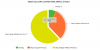
Despite the small size, Capron Park Zoo is popular (though often has budget problems) but obviously doesn't rival Roger Williams. Roger Williams is popular for its megafauna while Capron Park Zoo is popular for its small size (which makes it easier for children). Mammals and birds dominate the Roger Williams collection with invertebrates absent while mammals and birds also dominating Capron Park collection with fish absent

Screenshot 2025-06-04 6.28.49 PM.png
 

Attachments

  • Screenshot 2025-06-04 6.28.49 PM.png
    Screenshot 2025-06-04 6.28.49 PM.png
    42.9 KB · Views: 34
Back
Top