A Zoo Man's Notebook, 2025

There is probably no group of reptiles that I can think of which fascinate the public so much, and yet are so seldom encountered in zoos, than the chameleons. Compared to all of the other major groups of lizards – geckos and iguanas, monitors and skinks – these lizards are relatively scarce, and yet every visitor knows them and loves them. Even with all of the diverse reptiles I’ve worked with over the years, I’ve only worked with two species of chameleon at a single zoo.

The chameleons in question were two panthers and a veiled – all males, all living in the reptile house of a large AZA zoo. The lizards were kept in a series of tall glass enclosures in the lobby of the building, each exhibit in a row, jutting out of the wall, with one chameleon per cage (there were actually four exhibits, one was empty). The panthers were on opposite ends of the row, with the veiled and the empty cage in the middle. Each cage was a densely-planted tangle of vines and branches, with heat and light at the top. The arrangement allowed the lizards to thermoregulate fairly effectively, as they could go up to get warm, down to keep cooler. Though I often hear the virtues of screened-in enclosures extolled for chameleons, these ones were glassed-in.

Water bowls were at the bottom of the enclosures, but to be honest I think those were more for the visitors and their peace of mind than for the animals. The chameleons received their moisture through constant mistings – there was a drip system, but I don’t recall it working particularly well, so I was constantly misting and spraying the chameleons. Sometimes when I would do morning checks, I wouldn’t be able to find a chameleon. After a quick glance at the floor of the enclosure – to make sure it wasn’t lying there – I’d start misting, and sure enough, the missing chameleon would soon appear in the middle of the spray of water.

It was important that the two panther chameleons be kept out of visual contact with one another, lest they stress each other out, hence their being kept at the opposite ends of the row (neither really seemed to react to the veiled). Being a new keeper, I took all of the instructions of my curator very seriously, to the point that if I had to take one panther to the back of the reptile house, perhaps for a weighing or something, I’d walk the animal all the way around the building so it didn’t have to pass by its rival.

upload_2025-4-21_11-14-45.png

Chameleons are best known for their changes in colors, though I didn’t often see them do that – perhaps because husbandry, temperature, and environment were fairly consistent, so they didn’t often feel the need to. I was frequently asked by visitors if I could pull out a chameleon and put it on their shirts to watch it instantly change to match the color and pattern of what they were wearing, and was forced to disappoint many of them by explaining that it wasn’t actually how that worked, that I couldn’t walk a chameleon across a checkerboard and let them see it turn to red and black squares. Besides, chameleons, unlike some other lizards I’ve worked with, especially iguanas and varanids, often seem to dislike handling, so I tried to minimize hands-on disturbances of them.

The one time that I would try to handle them a bit was during feedings. The exhibits of the chameleons were front opening, which meant that when I was servicing them, they were open to the lobby and the visitor area, giving visitors not only a great view, with no glass in the way (the glass was often a bit smeary as a result of all of the misting), but a keeper front and center to ask question. We primarily fed crickets and superworms, held several inches in front of the chameleons, then slowly backed away. The chameleons would fix the insect in sight with their turret-like eyes, engage in slow, stealthy approach, and then, very slowly, open their mouths a bit and aim. By the time the tongue would finally flick out, the visitors were usually all waiting with bated breath, and more than one clapped when the strike finally came. Usually I fed the chameleon while it was still in the branches, but sometimes one would climb out onto my arm and let me take it a little further into the lobby for feeding so more visitors could see.

One of my supervisors told me that when he was a young keeper, his favorite trick was to place a (live) cricket between his lips for the chameleon to flick up with his tongue. He assured me that it was a great way to impress good-looking female visitors, though looking back on this now as a somewhat jaded adult, I’m not sure why I ever believed that. This may have all been some sort of elaborate hazing, now that I think about it. Anyway, I was determined to give it a try, and for the next week weeks, every time I tried to feed the chameleons, I would pop a cricket into my mouth and give it a go. The chameleon would actually go for it maybe one time out of ten… which meant that the other nine times, I was standing there like a dummy with a live bug in my lips. Good-looking female visitors were, at least on those occasions, unimpressed.

Chameleons have a reputation for being very delicate animals, which explains perhaps why they aren’t as popular as one would expect in zoos (but fails to explain why every pet store I’ve ever been to seems to had a sad-looking Jackson’s or veiled chameleon for sale). These aren’t the first animals I’ve come across which have a reputation of “poor doers” that scares off many folks. They aren’t an actual rarity per se, but I’m still surprised at how rarely I see them, and how many major reptile collections I’ve been to lack a single species. It’s true that they can be easily stressed, have more exacting habitat requirements than many other lizards, and, in the eyes of some visitors, may be something of a disappointment, failing to live up to they hype of how they are expected to behave. Still, I think that chameleons are some of the most charismatic and unique of lizards, and worthy of a little more consideration in zoos.
 

Attachments

  • upload_2025-4-21_11-14-45.png
    upload_2025-4-21_11-14-45.png
    559.2 KB · Views: 177
I’ve worked with two species of wallaby in my zoo career, with two very different experiences. These were likely due to both the species involved, as well as the nature of the facilities.

I first worked with parma wallabies at a non-AZA facility. A male and two females, our holdings were soon reduced to one – the male killed one of the females, and the remaining female was sold off. I don’t know if the plan had been for us to keep them at all, originally – the owner of the zoo brought in lots of animals as part of his trade and transport business – but maybe he just found a mate-killer hard to unload. So, we kept the male and, not having anything else to do with him, dumped him in our kangaroo exhibit.

It’s strange – I looked up pictures of parma wallabies to refresh my memory when writing this, and it’s very different from how I remember the little beast. The pictures show a fairly cute little kangaroo cousin – I remember ours as a slinking, almost rodent-like creature; more than once, I came in for morning checks, started counting the kangaroos, saw him out of the corner of my eye, and my initial reaction was that there was a rat in the barn. He was very secretive, and I doubt 1 in 100 visitors ever saw him. I don’t think we even had a sign up for him.

The habitat (if I can use such a grandiose term) was a sandy yard with a barn at the back, with viewing from the front through hog panels, spacing large enough for visitors to offer grain to the kangaroo (in retrospect, the spacing was also large enough that I’m surprised the wallaby didn’t at least try to weasel through). We’d erected a section of hog-paneling (with a little door cut into it) off in a corner of the barn to give him a private retreat from the kangaroos, and he seemed to spend most of his time in there, bedding down in the hay. He had a little water bowl and a food bowl (like the kangaroos, he was fed Legends horse grain), and his poop was so small and so scarce that it seemed like we never really had to clean up after him. It seemed like he mostly emerged at night, and he wanted nothing to do with us, in contrast to the kangaroos, which were very nosy and often wanted to interact. Really, the little guy was a ghost; you forgot about him as soon as you left the barn.

I much preferred my experiences working with red-necked wallabies at an AZA facility. This is in many ways the ideal zoo macropod – perfect size (small enough to be cute and non-threatening to visitors, large enough to be easily seen and managed), good temperament, tolerant of a wide variety of temps, breeds readily (more on that later), and overall a gorgeous animal. They’re become so commonplace in zoos that I think we sometimes have a tendency to dismiss them as boring, which happens with many species. But, as with many “boring” species – there’s a reason that they’re so common. They just work really, really well for zoos.

upload_2025-4-22_9-28-30.png

The species was brand new to the zoo, and we’d just built a new exhibit (I was helping with the construction of it my first day on the job) – a grassy field with large rocks and a small pond for water, with an adjacent holding building. Well, it started out as grass - the wallabies were pretty hard on it, and in the winter it tended to look pretty desolate, though it did usually green back up a bit in the spring. I developed a neurotic habit, much discussed by my coworkers, of sometimes cleaning the exhibit by hand, plucking up the poop myself so I didn't rake out the growing grass. Wallaby droppings are hard, dry pellets the size and shape of a large marble, so fairly inoffensive. When we first opened it, there was – unwisely – visitor viewing at both ends. We later removed the viewing area from one side, expanding the yard into that space and putting up a solid fence, which allowed the wallabies to feel much more secure since they wouldn’t be surrounded). They were fed Mazuri macropod pellets every day along with chopped produce (apple, carrot, sweet potato, topped with lettuce), as well as ad lib hay (always have an indoor – or at least covered – place to put hay for your animals. Otherwise, on a rainy day, you might as well just be throwing it in the compost).

We’d talked at one point about adding emu and/or waterfowl (Cereopsis? Black swan?) to the exhibit, but felt it would get too crowded, so decided against it in the end. Which was the right call. The wallabies did a great job filling out the yard themselves.

We started off with two females – I drove across a few states to their natal zoo, spent a few days with the keepers there learning the ins and outs of their care (whenever possible, I always recommend doing this, though it seldom works out), and drove them back. We then acquired a male from another zoo. Not surprisingly, we soon had joeys. In fact, from the moment we opened the exhibit, we virtually always had joeys. Macropods are like little production lines, and you’ve got to keep close track of them, otherwise you’ll be up to your ears in them in no time. The options are contraception, such as castration, or just keep males and females separately. It was always a considerable source of delight on that moment would you could say with 100% certainty that there was a joey in the pouch after previously just suspecting it. We had a few incidents of joeys, right out of the pouch for the first time, hopping through the fencing (a woven black mesh), gaps being tight enough to keep adults in, but not the very young joeys, but they never strayed more than a yard or two from the fence and always came back to their mothers.

upload_2025-4-22_9-29-23.png
A wallaby joey peeking out of the pouch
We did have one escape incident, early on after we got the wallabies.

It was a very mild winter day, which meant that a) we were unseasonably busy and b) we had relatively few keepers scheduled. I was actually alone at the time, because it was lunch, and the other keepers that day decided to go off grounds for lunch. Because there were so many guests on grounds, I thought it best to not take my lunch yet, but to be out where I could keep an eye on things and get some work done. Being the lone keeper, I wouldn't have worked any of the dangerous animals like bears or big cats while I was by myself. I figured I might as well clean up the wallaby yard, though.

I was just finishing up, pushing my wheelbarrow through the gate, when a brown streak zipped between my legs and out the door. It was one of the females, a very tame individual who had opted to follow me out. No big deal, I thought. Most exhibits in the zoo were configured with a keeper area, double-door system that serves as a secondary level of contact if the animal follows the keeper out. This wallaby had done this to me plenty of times when she was in her off-exhibit holding pen elsewhere in the zoo, waiting for the exhibit to be completed.

Except, I realized half a second later, we hadn't finished the keeper area here - it was part of the adjacent aviary construction. Which meant that the wallaby was now loose in the zoo - and I was the only keeper.

The next half hour was a fun (for the wallaby, I guess, to say nothing of the visitors) chase as I sprinted around the zoo, alternately trying to catch the wallaby as well to get ahead of her and block her exit from the zoo - I was having terrified images of her bouncing out a gate, into the street, and under the wheels of a passing truck. All the while, I was frantically going back and forth between my radio, trying to see if anyone was on grounds to help (it being the winter, concessions and gift shop were closed) and my phone, trying to get in touch with the other keepers to get them back from lunch. I did manage to secure the assistance of one youth volunteer (who ran around a lot and accomplished little) and one part-time educator, who unexpectedly appeared to be terrified of animals.

The visitors, as one would expect, were no help whatsoever.

Through dumb luck, I was able to corral the wallaby for long enough for the other keepers to get back - then we cornered her, grabbed her, and unceremoniously dumped her back in the pen. We made an executive decision to finish a keeper area that afternoon, as soon as my pulse went back to below 200 bpm. I called our director to let him know what had happened... and listened to him guffaw on the other end of the phone for a good five minutes.

That night, as I was grocery shopping after work, wondering what comfort food would best make me forgot the day, another keeper - one who was also in that day and had helped with the recapture - texted me a screenshot from Twitter. Apparently, our mayor had tweeted early afternoon that he was taking advantage of the great weather to visit the zoo, and that everything looked great. From the timestamp, it looked like he was there at the exact time that the wallaby was running amok, and never noticed a thing.

upload_2025-4-22_9-30-20.png
 

Attachments

  • upload_2025-4-22_9-28-30.png
    upload_2025-4-22_9-28-30.png
    670.2 KB · Views: 157
  • upload_2025-4-22_9-29-23.png
    upload_2025-4-22_9-29-23.png
    437.8 KB · Views: 163
  • upload_2025-4-22_9-30-20.png
    upload_2025-4-22_9-30-20.png
    1 MB · Views: 175
Clouded leopards historically have been among the most challenging of cats to breed in zoos, largely due to male aggression towards females. A number of solutions have been suggested, but what the zoo community in the US has largely settled on is hand-rearing.

Out of curiosity, what other solutions were proposed?

Chameleons have a reputation for being very delicate animals, which explains perhaps why they aren’t as popular as one would expect in zoos
They aren’t an actual rarity per se, but I’m still surprised at how rarely I see them, and how many major reptile collections I’ve been to lack a single species.

Both anecdotally and through doing research for my herp thread in 2023, it seemed to me like many zoos' reptile houses would have a chameleon on exhibit for months, maybe a year, then it would disappear. So not actually rare, but most places didn't hold them very long or consistently. I suspect them being short-lived might be at least part of why that happens; I'm not sure how much chameleon breeding happens in zoos, but it would be great if some of the big herp departments could start breeding one or two species regularly to create a more sustainable population.
 
I’ve worked with two species of wallaby in my zoo career, with two very different experiences. These were likely due to both the species involved, as well as the nature of the facilities.

I first worked with parma wallabies at a non-AZA facility. A male and two females, our holdings were soon reduced to one – the male killed one of the females, and the remaining female was sold off. I don’t know if the plan had been for us to keep them at all, originally – the owner of the zoo brought in lots of animals as part of his trade and transport business – but maybe he just found a mate-killer hard to unload. So, we kept the male and, not having anything else to do with him, dumped him in our kangaroo exhibit.

It’s strange – I looked up pictures of parma wallabies to refresh my memory when writing this, and it’s very different from how I remember the little beast. The pictures show a fairly cute little kangaroo cousin – I remember ours as a slinking, almost rodent-like creature; more than once, I came in for morning checks, started counting the kangaroos, saw him out of the corner of my eye, and my initial reaction was that there was a rat in the barn. He was very secretive, and I doubt 1 in 100 visitors ever saw him. I don’t think we even had a sign up for him.

The habitat (if I can use such a grandiose term) was a sandy yard with a barn at the back, with viewing from the front through hog panels, spacing large enough for visitors to offer grain to the kangaroo (in retrospect, the spacing was also large enough that I’m surprised the wallaby didn’t at least try to weasel through). We’d erected a section of hog-paneling (with a little door cut into it) off in a corner of the barn to give him a private retreat from the kangaroos, and he seemed to spend most of his time in there, bedding down in the hay. He had a little water bowl and a food bowl (like the kangaroos, he was fed Legends horse grain), and his poop was so small and so scarce that it seemed like we never really had to clean up after him. It seemed like he mostly emerged at night, and he wanted nothing to do with us, in contrast to the kangaroos, which were very nosy and often wanted to interact. Really, the little guy was a ghost; you forgot about him as soon as you left the barn.

I much preferred my experiences working with red-necked wallabies at an AZA facility. This is in many ways the ideal zoo macropod – perfect size (small enough to be cute and non-threatening to visitors, large enough to be easily seen and managed), good temperament, tolerant of a wide variety of temps, breeds readily (more on that later), and overall a gorgeous animal. They’re become so commonplace in zoos that I think we sometimes have a tendency to dismiss them as boring, which happens with many species. But, as with many “boring” species – there’s a reason that they’re so common. They just work really, really well for zoos.

View attachment 787358

The species was brand new to the zoo, and we’d just built a new exhibit (I was helping with the construction of it my first day on the job) – a grassy field with large rocks and a small pond for water, with an adjacent holding building. Well, it started out as grass - the wallabies were pretty hard on it, and in the winter it tended to look pretty desolate, though it did usually green back up a bit in the spring. I developed a neurotic habit, much discussed by my coworkers, of sometimes cleaning the exhibit by hand, plucking up the poop myself so I didn't rake out the growing grass. Wallaby droppings are hard, dry pellets the size and shape of a large marble, so fairly inoffensive. When we first opened it, there was – unwisely – visitor viewing at both ends. We later removed the viewing area from one side, expanding the yard into that space and putting up a solid fence, which allowed the wallabies to feel much more secure since they wouldn’t be surrounded). They were fed Mazuri macropod pellets every day along with chopped produce (apple, carrot, sweet potato, topped with lettuce), as well as ad lib hay (always have an indoor – or at least covered – place to put hay for your animals. Otherwise, on a rainy day, you might as well just be throwing it in the compost).

We’d talked at one point about adding emu and/or waterfowl (Cereopsis? Black swan?) to the exhibit, but felt it would get too crowded, so decided against it in the end. Which was the right call. The wallabies did a great job filling out the yard themselves.

We started off with two females – I drove across a few states to their natal zoo, spent a few days with the keepers there learning the ins and outs of their care (whenever possible, I always recommend doing this, though it seldom works out), and drove them back. We then acquired a male from another zoo. Not surprisingly, we soon had joeys. In fact, from the moment we opened the exhibit, we virtually always had joeys. Macropods are like little production lines, and you’ve got to keep close track of them, otherwise you’ll be up to your ears in them in no time. The options are contraception, such as castration, or just keep males and females separately. It was always a considerable source of delight on that moment would you could say with 100% certainty that there was a joey in the pouch after previously just suspecting it. We had a few incidents of joeys, right out of the pouch for the first time, hopping through the fencing (a woven black mesh), gaps being tight enough to keep adults in, but not the very young joeys, but they never strayed more than a yard or two from the fence and always came back to their mothers.

View attachment 787359
A wallaby joey peeking out of the pouch
We did have one escape incident, early on after we got the wallabies.

It was a very mild winter day, which meant that a) we were unseasonably busy and b) we had relatively few keepers scheduled. I was actually alone at the time, because it was lunch, and the other keepers that day decided to go off grounds for lunch. Because there were so many guests on grounds, I thought it best to not take my lunch yet, but to be out where I could keep an eye on things and get some work done. Being the lone keeper, I wouldn't have worked any of the dangerous animals like bears or big cats while I was by myself. I figured I might as well clean up the wallaby yard, though.

I was just finishing up, pushing my wheelbarrow through the gate, when a brown streak zipped between my legs and out the door. It was one of the females, a very tame individual who had opted to follow me out. No big deal, I thought. Most exhibits in the zoo were configured with a keeper area, double-door system that serves as a secondary level of contact if the animal follows the keeper out. This wallaby had done this to me plenty of times when she was in her off-exhibit holding pen elsewhere in the zoo, waiting for the exhibit to be completed.

Except, I realized half a second later, we hadn't finished the keeper area here - it was part of the adjacent aviary construction. Which meant that the wallaby was now loose in the zoo - and I was the only keeper.

The next half hour was a fun (for the wallaby, I guess, to say nothing of the visitors) chase as I sprinted around the zoo, alternately trying to catch the wallaby as well to get ahead of her and block her exit from the zoo - I was having terrified images of her bouncing out a gate, into the street, and under the wheels of a passing truck. All the while, I was frantically going back and forth between my radio, trying to see if anyone was on grounds to help (it being the winter, concessions and gift shop were closed) and my phone, trying to get in touch with the other keepers to get them back from lunch. I did manage to secure the assistance of one youth volunteer (who ran around a lot and accomplished little) and one part-time educator, who unexpectedly appeared to be terrified of animals.

The visitors, as one would expect, were no help whatsoever.

Through dumb luck, I was able to corral the wallaby for long enough for the other keepers to get back - then we cornered her, grabbed her, and unceremoniously dumped her back in the pen. We made an executive decision to finish a keeper area that afternoon, as soon as my pulse went back to below 200 bpm. I called our director to let him know what had happened... and listened to him guffaw on the other end of the phone for a good five minutes.

That night, as I was grocery shopping after work, wondering what comfort food would best make me forgot the day, another keeper - one who was also in that day and had helped with the recapture - texted me a screenshot from Twitter. Apparently, our mayor had tweeted early afternoon that he was taking advantage of the great weather to visit the zoo, and that everything looked great. From the timestamp, it looked like he was there at the exact time that the wallaby was running amok, and never noticed a thing.

View attachment 787360
My experience with parmas was the complete opposite, the male and three females were friendly, charming animals. All of them enjoyed having their heads scratched and their ears tickled. They always interacted with all the keepers.
 
@Coelacanth18, some of the other solutions – which are also implemented – were relocating clouded leopards away from the vicinity of other large carnivores in zoos and more focus on off-exhibit/off-site breeding; both of these suggestions have also done wonders for boosting reproduction in another previously hard-to-breed felid, the cheetah. Another theory that I heard discussed was exhibit furniture. The idea was that in the wild, the smaller, lighter female clouded leopards were able to retreat to the thinner branches where the bigger, heavier males wouldn’t be able to pursue them. In a zoo, with concrete mock trees, or with branches being securely anchored and able to sustain more weight, females would have nowhere safe to run. I haven’t heard much about that last point in years, so I’m wondering if that ended up being a dead end.

I do feel like I’m at least seeing Meller’s chameleons more often these days, so at least there’s that. As a young herp keeper, it struck me as weird that we had SSPs (at the time) for four species of Uroplatus, but not a single chameleon.

@Strathmorezoo, I’ve often wondered if there was something… off about our male wallaby, maybe that would have explained why he was a mate-killer as well, some sort of psychological off-balance with him? Or, maybe, we all knew he was a mate-killer, and took a subconscious dislike to him for that reason. Who can say?

I worked with common squirrel monkeys at two non-AZA facilities. As I’ve mentioned many times on here, I’m not an enormous primate person, but I will admit that I found these guys to be some of the more endearing monkeys I’ve worked with. At each zoo we had a single pair, and I would have liked to have had the opportunity to work with a larger troop. At zoos we often think of enrichment in terms of toys or puzzle feeders or novel foods, but a proper social group is the best form of enrichment for most primates, especially if they have an exhibit large enough and varied enough to let them spread out and choose where and with whom they spend their time.

Caging at both zoos was fairly simple – a wood and wire frame (maybe 10’ x 10’, smaller than I’d have liked), with lots of tangled perching and a nest box heated with a red bulb. Diet was also similar – Mazuri monkey chow, supplemented with chopped produce. I would often provide extra treats for enrichment – mealworms, hard-boiled eggs, etc. One feeding technique I’d often do was use tiny dabs on peanut butter, scattered around branches around the exhibit, to “glue” raisins or tiny pieces of fruit to the perching, thereby encouraging the monkeys to climb around and forage. Of course, like every small New World primate I’ve ever worked with (except the titis), the squirrel monkeys also enjoyed supplementing their own diet by grabbing sparrows and starlings that alit on their cage, pulling them inside, and ripping them apart. As with all of our primates, winter holding was my biggest worry – or, more accurately, the lack of any. We were closed in the winter, so we often took to wrapping some of the exhibits, including this one, with tarps or plastic to help conserve heat, but at the expense of light and fresh air. The zoo owner was very smug that, unlike AZA zoos, his animals got to be outdoors year round – but is being swaddled with tarps and heated only by a single red bulb really preferable to a nice indoor exhibit (especially if there is still outdoor access in warmer weather)?

I was working on my master’s degree when I was working at this zoo, and wrote a paper for it on squirrel monkey husbandry and exhibitry. I had hopes that I would be able to use it (based heavily on conversations that I had with the AZA studbook keeper, who was very generous with her time – while I was in non-AZA zoos, I had very mixed results with reaching out to the SSPs for advice, with some helpful and some hostile) to convince the owner of the zoo to let me build a bigger, better, more natural exhibit. Unfortunately, I was unsuccessful, though it still provided good practice for research, design, and budgeting, so it was hardly a waste.

upload_2025-4-23_8-59-43.png

Whereas most of the primates I’ve worked with have been fairly aloof or skittish (or, in some cases, hostile), the squirrel monkeys always seemed like the wanted to interact. It was a rare time that I went into their enclosure to clean when one or the other would hop onto my shoulder. Or, I would rake out the exhibit with one hand, because a monkey would be sitting on a perch near me, holding onto one of the fingers of my non-raking hand with both of its hands. They just seemed like they always wanted to be physical contact. It was a lot easier to enjoy if you were able to overlook their habit of urinating on their hands, which were now stroking your hair. I’ve seen and gone through the walk-through exhibit at Phoenix Zoo (which I loved primarily for seeing a large troop), and found myself wondering if the personality of squirrel monkeys made them the best or worst New World monkeys for such exhibits. Best because I could certainly see them being more interactive; worst because I could easily imagine them trying to sneak out with visitors, perhaps climbing into someone’s shirt if attendants weren’t keeping an eye on them closely.

(Having covered spider monkey, titi, capuchin, callitrichids, and now squirrel monkey, this concludes my New World primate experience... I mean, I had a pair of black howler monkeys that I was babysitting for two or three days while they were in transit between zoos, but apart from the fact that they smelled awful - and who wouldn't after several days in crates? - I have no real memories or insights about them).
 

Attachments

  • upload_2025-4-23_8-59-43.png
    upload_2025-4-23_8-59-43.png
    750.1 KB · Views: 176
Today we’ll look at a pint-sized predator, the eastern screech owl. I’ve worked with this bird at two AZA and one non-AZA zoo, along with a rescue/rehab/education facility (described in part on my post on North American accipiters). Birds that I’ve worked with have been a mix of exhibit and ambassador birds, with some birds occupying both roles.

Quality of screech owl enclosures has varied widely. Not surprisingly, ambassador birds tend to get the short end of the stick, their mews being small and plain, though the screech owls at the non-AZA zoo impressed me with the absolute mediocrity of the cage they were given – a wood and wire cube about 6’ x 6’ x 6,’ with a few scraggly perches, sawdust on the floor, and viewing on essentially all sides. The best exhibit I ever saw for this species was a mixed-species exhibit at the AZA zoo, irregular in shape but easily over 40’ long, shared with beaver, ducks, turtles, and black-crowned night herons, with several trees, two pools (which, to be clear, the owl did not drink from – he had an elevated water bowl), and large rocks. Thankfully the owl was fairly loyal to a perch in that exhibit, otherwise finding it every morning might have been a challenge, though sometimes he liked to squeeze in among the wooden beams that framed the roof of the enclosure. I don’t think that any of our visitors ever saw him unless he was pointed out by a keeper, but it did feel cool to see him in such a large, natural exhibit.

upload_2025-4-24_10-39-11.png

In almost all cases, the screech owls I’ve worked with have been housed alone. The exception was the non-AZA zoo, where three were kept together.

Diet for a screech owl in a zoo setting usually consists of one prey item a day, a mouse or a day old chick. This has been the standard diet of the species at every facility I’ve been at, though in recent years I’ve wondered if it’s necessarily the healthiest for them – those items are a lot fattier and nutrient dense than what they’d be eating in the wild – sure, some rodents and small birds, but lots of bugs. When possible, I’ve tried to supplement the diet with insects, such as crickets, superworms, and cicadas. Like other owls, screech owls cough up pellets, but fairly tiny and generally not worth saving for program use. In most cases, we’d leave food out and the owls would eat at night. The exception was in the large, mixed-species habitat, where we – and the owl – both learned that if it didn’t get its food fast, there was a decent chance that the night herons would try to steal it. We tried to mitigate this by putting the food in a place where the much larger herons couldn’t access it.

Native owls are very popular as ambassador animals – not only are non-releasable specimens readily available, but they have a lot of cool adaptations and can provide great educational messaging on behaviors that visitors can change to help owls in the wild (i.e., not throwing trash out car windows, which attracts mice – and in turn, owls – onto roads where they’ll get hit by cars). Many owls have a behavioral tendency to, when frightened or stressed in the day, just sit very still and very quiet in hopes that the danger will pass them by. This, unfortunately, makes them super easy to use as program animals in many cases, as they won’t bate like a hawk, scream like a parrot, or do other behaviors that might otherwise let an inexperienced trainer/handler know that the bird doesn’t want to participate. Which isn’t to say that owls can’t be good program animals, it just means we shouldn’t automatically assume that just because they aren’t resisting means they’re happy with a situation.

Unlike other owls I’ve used in programs, I often didn’t wear a glove when handling screech owls, and would let them just perch on my bare hand, wearing jesses and anklets. If I did wear a glove, it would be the thinnest I could find – I was always worried about accidentally injuring a bird due to the reduced dexterity of a glove. Even when the screech owl would dig in on occasion, the talons rarely broke the skin.

upload_2025-4-24_10-39-30.png
A volunteer handling a screech owl - with a glove that seems to be a bit overkill for the animal

The screech owls at the non-AZA zoo double-functioned as ambassadors, as did many of our animals there. One day, I was carrying a crated owl back to its exhibit after a program, when I realized that the crate suddenly had gotten a lot lighter. Looking down, I saw that this was because I was only carrying the top half of the crate – the screws had broken, the bottom half had dropped straight down, and the owl was now flying away. It landed in a smallish (15’ tall?) tree several yards away. Thankfully, that basic owl instinct of “hunker down in the day” kicked in, and the bird sat still on a branch long enough for us to formulate a plan. We couldn’t quite reach it with a net. Our director, who was a fairly petite woman, shimmied up the tree. At my suggestion, she carried a hose – I recommended that she mist the owl lightly with the water, wetting its feathers so it couldn’t fly as well, and then net it. I think she misunderstood the plan. She climbed the tree, got within five feet of the bird (getting so close that I thought was going to forget the hose and just grab it) – and then power-washed the bird clear off the branch. Thankfully, I was below with a net of my own and caught the bird as it fell. It was startled (understandably) but unharmed.

My favorite screech owl memory came from college, where a young owl was the first of the rehab patients that I was able to nurse back and then release into the wild. After being convinced that he’d recovered from a collision injury and that he could see, hear, and fly to the same extent as a wild owl, I was able to turn him loose where he was found. For a few nights after the release, I was able to hear the call of a screech owl – which is not a screech, but rather a soft little tremolo whistling sound, like a tea kettle – from the woods where I’d last seen him fly off.
 

Attachments

  • upload_2025-4-24_10-39-11.png
    upload_2025-4-24_10-39-11.png
    898.6 KB · Views: 172
  • upload_2025-4-24_10-39-30.png
    upload_2025-4-24_10-39-30.png
    164.4 KB · Views: 161
Today we’ll look at a pint-sized predator, the eastern screech owl. I’ve worked with this bird at two AZA and one non-AZA zoo, along with a rescue/rehab/education facility (described in part on my post on North American accipiters). Birds that I’ve worked with have been a mix of exhibit and ambassador birds, with some birds occupying both roles.

Quality of screech owl enclosures has varied widely. Not surprisingly, ambassador birds tend to get the short end of the stick, their mews being small and plain, though the screech owls at the non-AZA zoo impressed me with the absolute mediocrity of the cage they were given – a wood and wire cube about 6’ x 6’ x 6,’ with a few scraggly perches, sawdust on the floor, and viewing on essentially all sides. The best exhibit I ever saw for this species was a mixed-species exhibit at the AZA zoo, irregular in shape but easily over 40’ long, shared with beaver, ducks, turtles, and black-crowned night herons, with several trees, two pools (which, to be clear, the owl did not drink from – he had an elevated water bowl), and large rocks. Thankfully the owl was fairly loyal to a perch in that exhibit, otherwise finding it every morning might have been a challenge, though sometimes he liked to squeeze in among the wooden beams that framed the roof of the enclosure. I don’t think that any of our visitors ever saw him unless he was pointed out by a keeper, but it did feel cool to see him in such a large, natural exhibit.

View attachment 787801

In almost all cases, the screech owls I’ve worked with have been housed alone. The exception was the non-AZA zoo, where three were kept together.

Diet for a screech owl in a zoo setting usually consists of one prey item a day, a mouse or a day old chick. This has been the standard diet of the species at every facility I’ve been at, though in recent years I’ve wondered if it’s necessarily the healthiest for them – those items are a lot fattier and nutrient dense than what they’d be eating in the wild – sure, some rodents and small birds, but lots of bugs. When possible, I’ve tried to supplement the diet with insects, such as crickets, superworms, and cicadas. Like other owls, screech owls cough up pellets, but fairly tiny and generally not worth saving for program use. In most cases, we’d leave food out and the owls would eat at night. The exception was in the large, mixed-species habitat, where we – and the owl – both learned that if it didn’t get its food fast, there was a decent chance that the night herons would try to steal it. We tried to mitigate this by putting the food in a place where the much larger herons couldn’t access it.

Native owls are very popular as ambassador animals – not only are non-releasable specimens readily available, but they have a lot of cool adaptations and can provide great educational messaging on behaviors that visitors can change to help owls in the wild (i.e., not throwing trash out car windows, which attracts mice – and in turn, owls – onto roads where they’ll get hit by cars). Many owls have a behavioral tendency to, when frightened or stressed in the day, just sit very still and very quiet in hopes that the danger will pass them by. This, unfortunately, makes them super easy to use as program animals in many cases, as they won’t bate like a hawk, scream like a parrot, or do other behaviors that might otherwise let an inexperienced trainer/handler know that the bird doesn’t want to participate. Which isn’t to say that owls can’t be good program animals, it just means we shouldn’t automatically assume that just because they aren’t resisting means they’re happy with a situation.

Unlike other owls I’ve used in programs, I often didn’t wear a glove when handling screech owls, and would let them just perch on my bare hand, wearing jesses and anklets. If I did wear a glove, it would be the thinnest I could find – I was always worried about accidentally injuring a bird due to the reduced dexterity of a glove. Even when the screech owl would dig in on occasion, the talons rarely broke the skin.

View attachment 787802
A volunteer handling a screech owl - with a glove that seems to be a bit overkill for the animal

The screech owls at the non-AZA zoo double-functioned as ambassadors, as did many of our animals there. One day, I was carrying a crated owl back to its exhibit after a program, when I realized that the crate suddenly had gotten a lot lighter. Looking down, I saw that this was because I was only carrying the top half of the crate – the screws had broken, the bottom half had dropped straight down, and the owl was now flying away. It landed in a smallish (15’ tall?) tree several yards away. Thankfully, that basic owl instinct of “hunker down in the day” kicked in, and the bird sat still on a branch long enough for us to formulate a plan. We couldn’t quite reach it with a net. Our director, who was a fairly petite woman, shimmied up the tree. At my suggestion, she carried a hose – I recommended that she mist the owl lightly with the water, wetting its feathers so it couldn’t fly as well, and then net it. I think she misunderstood the plan. She climbed the tree, got within five feet of the bird (getting so close that I thought was going to forget the hose and just grab it) – and then power-washed the bird clear off the branch. Thankfully, I was below with a net of my own and caught the bird as it fell. It was startled (understandably) but unharmed.

My favorite screech owl memory came from college, where a young owl was the first of the rehab patients that I was able to nurse back and then release into the wild. After being convinced that he’d recovered from a collision injury and that he could see, hear, and fly to the same extent as a wild owl, I was able to turn him loose where he was found. For a few nights after the release, I was able to hear the call of a screech owl – which is not a screech, but rather a soft little tremolo whistling sound, like a tea kettle – from the woods where I’d last seen him fly off.
When feeding, did you get any complaints about dead prey in the aviaries ? In one zoo I was at ,they received so many, that we were told to try and hide them . Strangely, the birds would quite happily eat the food in front of the visitors with hardly any complaints.
 
@Strathmorezoo - not nearly as much as I expected to when I started. I suspect that's because most predatory animals are inclined to grab and eat their food right away rather than leave it lying about long enough for many people to notice.. Even most of the owls I worked with eat right away. Screech owls were a bit of an exception, presumably because they were so small and more secretive. Which isn't to say that people didn't comment - but when they did, it was usually either with excitement or disgust-but-understanding, if that makes sense.

upload_2025-4-25_13-27-29.png

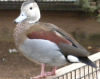
Today, I’ll take a look at four species of South American ducks that I’ve worked with – the Brazilian teal, the puna teal, the Chiloe wigeon, and, one of the most ubiquitous of all zoo waterfowl, the ringed teal.

Except for the ringed teal – which I worked with at three facilities, two non-AZA, one AZA – all three species were at one AZA facility, where they shared an exhibit with cotton-topped tamarin and Brazilian agouti. The exhibit was a fairly large, fully-enclosed aviary with a single large pool. The ground substrate was pea gravel in the vicinity of the pool, dirt (covered to varying degrees with leaves and pine needles) elsewhere. In addition to the perching for the tamarins, there were several large pieces of deadfall, including a few large hollow logs, as well as some decent-sized rocks. The tamarins had an adjacent holding building, but the ducks did not have access to it (the only animal door into the exhibit was at tree-level), and stayed out on exhibit year round. The pool was drained and housed out as needed, power-washed once every week in the summer, every other week for the rest of the year. Diet for all species was Mazuri waterfowl, supplemented with some bugs and chopped greens.

We had a pair each of the ringed and Chiloe, four male Puna, and two pairs of the Brazilians (there was also a lone mandarin duck that lived with them, an older bird that was there for companionship until she passed). So, about the ringed teal first, because it’s a species that I have a lot of feelings about… and one that speaks a lot about AZA animal collections.

I will say, I genuinely like this bird. It’s very handsome and endearing. It’s super hardy and easy to take care of. Visitors love it. It breeds like a champ – it was the first species of waterfowl that I ever bred (at one of the non-AZA zoos, where it was in an aviary with flamingos and sloths), and I wasn’t even trying to. When zoos open an aviary that’s either South American in theme or just general rainforest, it’s one of the go-to species (the other general go-to waterfowl for non-geographic aviaries being the white-faced whistling duck and the mandarin duck). You have a pond, you want a duck on it, most zoos (and almost all zoo visitors) don’t particularly care which duck you put on it, so you take the omnipresent ringed teal.

And those spots come at the expense of other species, species which are maybe a little trickier to manage, or a little less colorful, but maybe more endangered, and not having the abundance in the private hobby sector that the ringed teal has. That gets to be a problem.


I see some people on this forum saying “AZA is phasing out this species” OR “AZA doesn’t want zoos to work with X species anymore” and the simple fact is – that’s not really the case. AZA isn’t phasing species out. The individual zoos are, largely independently, because too many facilities are, to be blunt, getting lazy, losing specialized knowledge, and just want the easy, low-hanging fruit to fill niches for their zoo. You could look at this across taxa – the homogenization of zoo collections is happening because some species are easier and cheaper to take care of, the visitors won’t care either way, so more zoos keep focusing on those species. Then, the relevant TAG goes to make an RCP every few years and whoops, we keep losing facilities with our TAG managed species, no matter much we beg or plead, but I’ll be darned, the ringed teals are dominating the space survey.

Rant over (though I’m always willing to expand upon it if requested).

The Brazilian teals were a species I’d never heard of before working at that zoo, but quickly became my favorites. I hadn’t given them much thought at the beginning, but things changed one year when we had an especially bad winter. The agoutis, which had traditionally stayed out in the exhibit year round, began to look very uncomfortable, and so we pulled them inside to a heated building (something we were loath to do – they’re a very skittish species, and we were worried that the disturbance and closer confinement would hamper our plans to breed them). And that was the first winter that our Brazilian teals laid eggs.

upload_2025-4-25_13-25-44.png

In turns out, agoutis are voraciously fond of bird eggs (and will also happily eat ducklings, if given the chance), so the birds had never bothered nesting before or, if they had, the agoutis had eaten the eggs before we’d even noticed them. One morning, I couldn’t find one of the Brazilian hens, until I looked into a fallen log and found her – and her clutch – inside. We left her to incubate the eggs naturally, but pulled the resultant three ducklings inside for rearing once they hatched, not trusting the tamarins to leave the ducklings alone, or the exhibit mesh to exclude potential predators that may have been too small to tackle the parents, but more than a match for the ducklings. Upon reaching adult size, we shipped them out to three separate zoos and aquariums – I was pleased to actually see one of them years later when I visited their new facility.

Personality wise, the ringed teals were the sweet, engaging birds in the exhibit. The Brazilians were cocky, rambunctious trouble-makers, even outside of breeding season. The Puna teals were even unrulier, four boys that acted like a little street gang, always chasing the others around, but never badly enough that we felt we needed to intervene (it was a fairly large exhibit and they could all avoid one another). The Chiloes (I’ve spent a lot of exasperating time with different bird keepers arguing about how we’re supposed to pronounce that) were the calm, stately ones, which helped because they were the largest birds of the exhibit. In retrospect, I wonder if they were a little sluggish because of the heat – we have a regrettable tendency to always think South America = the Amazon, but species from the Southern Cone are accustomed to much cooler temperatures. This was really driven home to me not long after I started working with the species, when I paid my first visit to the Cincinnati Zoo. A keeper I met up with was showing me around, and let me into the penguin exhibit in the bird house to get some better pictures. And what should I see in that chilly, refrigerated exhibit, paddling among the penguins? A Chiloe wigeon, perfectly at home.

upload_2025-4-25_13-27-50.png

When one of our pair died, another keeper and I drove to a facility a few hours away to pick up a replacement bird to pair off with our surviving bird. The morning had started off cold, but by the time we were heading back, my companion (a newer and not especially bright keeper) had taken off her fleece and tossed it in the backseat. We’d stopped for gas and I happened to look in the back – and saw that her jacket and landed completely over the wigeon’s crate. I rushed back into the car and tossed off the jacket, and saw the bird looking like it was on the cusp of passing out from heat exhaustion. For the remainder of the drive, my thoroughly-chastised colleague drove, while I sat in the front sit with the bird on my lap, air conditioner on full blast and aimed directly at her. She did recover just fine, but the near miss left me quite rattled.
 

Attachments

  • upload_2025-4-25_13-25-44.png
    upload_2025-4-25_13-25-44.png
    560.2 KB · Views: 149
  • upload_2025-4-25_13-27-29.png
    upload_2025-4-25_13-27-29.png
    945.7 KB · Views: 147
  • upload_2025-4-25_13-27-50.png
    upload_2025-4-25_13-27-50.png
    841.9 KB · Views: 153
  • upload_2025-4-25_13-32-21.png
    upload_2025-4-25_13-32-21.png
    915 KB · Views: 8
@Strathmorezoo - not nearly as much as I expected to when I started. I suspect that's because most predatory animals are inclined to grab and eat their food right away rather than leave it lying about long enough for many people to notice.. Even most of the owls I worked with eat right away. Screech owls were a bit of an exception, presumably because they were so small and more secretive. Which isn't to say that people didn't comment - but when they did, it was usually either with excitement or disgust-but-understanding, if that makes sense.

View attachment 787991

Today, I’ll take a look at four species of South American ducks that I’ve worked with – the Brazilian teal, the puna teal, the Chiloe wigeon, and, one of the most ubiquitous of all zoo waterfowl, the ringed teal.

Except for the ringed teal – which I worked with at three facilities, two non-AZA, one AZA – all three species were at one AZA facility, where they shared an exhibit with cotton-topped tamarin and Brazilian agouti. The exhibit was a fairly large, fully-enclosed aviary with a single large pool. The ground substrate was pea gravel in the vicinity of the pool, dirt (covered to varying degrees with leaves and pine needles) elsewhere. In addition to the perching for the tamarins, there were several large pieces of deadfall, including a few large hollow logs, as well as some decent-sized rocks. The tamarins had an adjacent holding building, but the ducks did not have access to it (the only animal door into the exhibit was at tree-level), and stayed out on exhibit year round. The pool was drained and housed out as needed, power-washed once every week in the summer, every other week for the rest of the year. Diet for all species was Mazuri waterfowl, supplemented with some bugs and chopped greens.

We had a pair each of the ringed and Chiloe, four male Puna, and two pairs of the Brazilians (there was also a lone mandarin duck that lived with them, an older bird that was there for companionship until she passed). So, about the ringed teal first, because it’s a species that I have a lot of feelings about… and one that speaks a lot about AZA animal collections.

I will say, I genuinely like this bird. It’s very handsome and endearing. It’s super hardy and easy to take care of. Visitors love it. It breeds like a champ – it was the first species of waterfowl that I ever bred (at one of the non-AZA zoos, where it was in an aviary with flamingos and sloths), and I wasn’t even trying to. When zoos open an aviary that’s either South American in theme or just general rainforest, it’s one of the go-to species (the other general go-to waterfowl for non-geographic aviaries being the white-faced whistling duck and the mandarin duck). You have a pond, you want a duck on it, most zoos (and almost all zoo visitors) don’t particularly care which duck you put on it, so you take the omnipresent ringed teal.

And those spots come at the expense of other species, species which are maybe a little trickier to manage, or a little less colorful, but maybe more endangered, and not having the abundance in the private hobby sector that the ringed teal has. That gets to be a problem.


I see some people on this forum saying “AZA is phasing out this species” OR “AZA doesn’t want zoos to work with X species anymore” and the simple fact is – that’s not really the case. AZA isn’t phasing species out. The individual zoos are, largely independently, because too many facilities are, to be blunt, getting lazy, losing specialized knowledge, and just want the easy, low-hanging fruit to fill niches for their zoo. You could look at this across taxa – the homogenization of zoo collections is happening because some species are easier and cheaper to take care of, the visitors won’t care either way, so more zoos keep focusing on those species. Then, the relevant TAG goes to make an RCP every few years and whoops, we keep losing facilities with our TAG managed species, no matter much we beg or plead, but I’ll be darned, the ringed teals are dominating the space survey.

Rant over (though I’m always willing to expand upon it if requested).

The Brazilian teals were a species I’d never heard of before working at that zoo, but quickly became my favorites. I hadn’t given them much thought at the beginning, but things changed one year when we had an especially bad winter. The agoutis, which had traditionally stayed out in the exhibit year round, began to look very uncomfortable, and so we pulled them inside to a heated building (something we were loath to do – they’re a very skittish species, and we were worried that the disturbance and closer confinement would hamper our plans to breed them). And that was the first winter that our Brazilian teals laid eggs.

View attachment 787990

In turns out, agoutis are voraciously fond of bird eggs (and will also happily eat ducklings, if given the chance), so the birds had never bothered nesting before or, if they had, the agoutis had eaten the eggs before we’d even noticed them. One morning, I couldn’t find one of the Brazilian hens, until I looked into a fallen log and found her – and her clutch – inside. We left her to incubate the eggs naturally, but pulled the resultant three ducklings inside for rearing once they hatched, not trusting the tamarins to leave the ducklings alone, or the exhibit mesh to exclude potential predators that may have been too small to tackle the parents, but more than a match for the ducklings. Upon reaching adult size, we shipped them out to three separate zoos and aquariums – I was pleased to actually see one of them years later when I visited their new facility.

Personality wise, the ringed teals were the sweet, engaging birds in the exhibit. The Brazilians were cocky, rambunctious trouble-makers, even outside of breeding season. The Puna teals were even unrulier, four boys that acted like a little street gang, always chasing the others around, but never badly enough that we felt we needed to intervene (it was a fairly large exhibit and they could all avoid one another). The Chiloes (I’ve spent a lot of exasperating time with different bird keepers arguing about how we’re supposed to pronounce that) were the calm, stately ones, which helped because they were the largest birds of the exhibit. In retrospect, I wonder if they were a little sluggish because of the heat – we have a regrettable tendency to always think South America = the Amazon, but species from the Southern Cone are accustomed to much cooler temperatures. This was really driven home to me not long after I started working with the species, when I paid my first visit to the Cincinnati Zoo. A keeper I met up with was showing me around, and let me into the penguin exhibit in the bird house to get some better pictures. And what should I see in that chilly, refrigerated exhibit, paddling among the penguins? A Chiloe wigeon, perfectly at home.

View attachment 787992

When one of our pair died, another keeper and I drove to a facility a few hours away to pick up a replacement bird to pair off with our surviving bird. The morning had started off cold, but by the time we were heading back, my companion (a newer and not especially bright keeper) had taken off her fleece and tossed it in the backseat. We’d stopped for gas and I happened to look in the back – and saw that her jacket and landed completely over the wigeon’s crate. I rushed back into the car and tossed off the jacket, and saw the bird looking like it was on the cusp of passing out from heat exhaustion. For the remainder of the drive, my thoroughly-chastised colleague drove, while I sat in the front sit with the bird on my lap, air conditioner on full blast and aimed directly at her. She did recover just fine, but the near miss left me quite rattled.
I’ve bred those three duck species over the years (never worked with Puna), always pronounced Chiloe as ‘Chyloey’. So do most waterfowl people
 
I’ve bred those three duck species over the years (never worked with Puna), always pronounced Chiloe as ‘Chyloey’. So do most waterfowl people
And that is how Mike Lubbock told me it was pronounced. And when I later referred to the bird as such to an (American) bird curator, he snapped, "It's pronounced like Shiloh, we aren't British!"
 
The pythons have always been my favorite group of snakes, and my favorite pythons have, for many years, been the members of the genus Aspidites – the woma and (especially) the black-headed python. I’ve been lucky enough to work with both species – the black-head at two AZA facilities, the woma at one non-AZA.

I first encountered the black-headed pythons, leaving off-exhibit in a Neodesha in the back of an AZA zoo reptile house. I was young, in the early stages of my career and getting to see/learn about many species for the first time. There wasn’t much to be learned about from the husbandry of these snakes, except the ongoing lesson that back in the day (and to a lesser extent, today) zoo reptile curators had a tendency to be hoarders and take on more animals than they could reasonably accommodate. The Neodesha was fairly bare, with newspaper substrate, a water bowl, and a large hide. Not large enough, though – these black-heads were easily the biggest two members of their species I’ve ever seen, with the female getting fairly close to the 10 foot (6 feet being a more common length) and so thick that I could barely get my hands around her at her widest point. As was the custom of the species, the male was a bit smaller, but still larger than other black-heads I’ve since seen.

Their large size helped explain what they were doing behind-the-scenes, as our reptile house was very short on large exhibit spaces, and there was no available display where they would have fit. I want to say that there had been some potential exposure to Crypto years earlier (though they seemed hale and hearty), which prevented us from sending them elsewhere, and so they were stuck in zoo purgatory.

The rather drab living conditions meant that a) I was always having to clean out their enclosure and change the paper (especially because they always managed to spill water everywhere) and b) they required a lot of handling due to cramped quarters and frequent cleanings. Fortunately, they were two of the most docile snakes that I ever worked with which, combined with their beauty, size, and novelty, made them the favorite snakes I ever worked with. They never had any negative reaction to being handled, and I never picked up on any tension or anxiety from them. Compared to the twitchy, bitey nature I experienced from some of the smaller pythons and boas in that collection, they were a pleasure.

Diet was rodents, which I accepted without question back then as being the norm for any snake. The natural diet of this species is more focused on reptiles, so I do wonder if the diet might not have been as ideal as it should have been, and I wonder what sort of nutritional comparison we’d find if we compared the diets (rodents being much fattier than lizards).

After this zoo, I went to another zoo with black-headed pythons, some on exhibit, some behind the scenes for breeding. These snakes were much smaller (or, to be accurate, more normal than the previous giants). They were also subject to one of the most devastating failures I’d ever experienced in a reptile collection, though not my own. A keeper (not a supervisor, but more senior than myself) was in charge of trying to breed our off-exhibit snakes, and chilled them to get them ready for breeding, trying to prepare them for breeding. I don’t know how low he took them, but I suspect it was too low. When I came in the day that he was checking on them, he was holding them fretfully as they vomited clear liquid. The chilled black-heads all passed away. We never did breed the species at that zoo.

upload_2025-4-28_8-59-19.png

My experience with the black-heads smaller and, to be blunt, drabber cousin, the woma, came in the small reptile house of a non-AZA zoo – I was actually pretty tickled to have come across such an unusual species in what was essentially a glorified children’s zoo. She had no name when I started, so I called her Taronga, after the Australian zoo. Taronga lived in an exhibit about 4’ x 4’ x 4’, with sand substrate, lots of rocks (some of which I arranged to make a cave for her), and a few perches, including one stylized as a didgeridoo, which let her get close to the heat lamp. There was also a water bowl, and a few tufts of dried grass for visual barriers. Taronga was about 4’ long, so it was a decent set up for her. Like the black-heads she was fed rats, though of a smaller size.

Compared to my beloved black-heads, Taronga was a fairly bitey, irritable snake; I’ve frequently wondered if bigger pythons and boas just tend to be more serene, confident that their size will protect them, whereas smaller ones feel that the best defense is a good offense. She definitely got her teeth into me more than once, though with more regular handling – I liked to weigh snakes monthly, which had not been the custom before I started there, and cleaned and rearranged the enclosure more than she was used to – she settled down fairly well. Our relationship became settled enough that, towards the end of my time at that zoo, I was able to “convince” Taronga to make an animal painting with me, for inclusion at a wine and cheese animal art gala that we were participating in. At the end of the gala, I decided to keep that painting for myself, and it hangs on the wall of my home until today.

Such was the impression that the black-heads had left on me that, when I decided I wanted to get a fancy pet reptile, I seriously considered getting a pair of black-headed pythons – until I saw the price tag they carried, which might explain why you don’t see them as pets more often. I ended up getting a pair of ackie monitors instead. Just as well – my luck, I would have ended up getting a pair with the same mutant giant genes that my first pair had, and I would’ve had to devote an entire room to housing them properly. (When I left that non-AZA zoo, I gave serious thought to asking the owner to sell Taronga to me on the grounds that no one else there really liked her, but decided I didn’t have the wherewithal for another pet at that time).
 

Attachments

  • upload_2025-4-28_8-59-19.png
    upload_2025-4-28_8-59-19.png
    729.8 KB · Views: 140
When I was in college, I had an opportunity to intern at a zoo, and was given a choice between two sections to work in. I hemmed and hawed a lot, because each section had one animal that I really wanted to work with. One featured pygmy hippos. The other maned wolves. After a lot of soul searching, I eventually went with the wolves – pygmy hippos seemed to be the more common species back then, and I figured I’d probably have the chance to work with them later, whereas I’d never even seen a maned wolf. More than twenty years later, I’ve still never worked with pygmy hippos, but I still think that I made the right call.

My first introduction to the boys – for the wolves in question were three brothers – was eventful. The exhibit was a large grassy paddock, a former hoofstock yard (like cheetahs, which I often associate them with, maned wolves are the “honorary hoofstock” of carnivores), with a long holding building (again, a former hoofstock barn with large, roomy stalls) running along the back. The keeper I was working with that day told me that the wolves were very shy, so not to be surprised if I didn’t see them for days after I started. And so she left me alone to clean their yard and building. I was in the building, sweeping up soiled wood shavings, and was bending over, my legs somewhat splayed. At that moment, I heard a sniff behind me. I looked down and, between by legs, I saw three pointed noses sniffing the back of my legs.

upload_2025-4-29_9-8-55.png

The keeper I was working with was across the visitor pathway from the wolf exhibit, servicing another exhibit. She told me that she heard a loud squawk, almost like a parrot, and the clang of a broom and shovel being dropped. When she turned to look, she saw all three wolves, scared stiff, sprinting out of holding.

Despite that first meeting, the boys and I got along fairly well.

The initial introduction aside, they were, true to reputation, very shy – somewhere between the grays and the reds that I worked with, in that they would at least stand and watch you while you work, but would generally not approach (keepers I’ve worked with you have had past experience with African wild dog describe them as being much bolder than other canids, to the point where the keepers felt very uncomfortable being in an exhibit with them). The yard had a series of huts set up for the wolves. I’d make a modest amount of noise as I walked to inform them of my location, and as I approached a hut they’d generally move from that one to the next one, allowing me to clean. The exhibit was spacious with a slight incline, especially towards the front where it sloped down as a moat in front of the public path. It had tall grass and a few rocks.

An amazingly small number of visitors ever saw our wolves – though they are very tall, they are also very thin, and a wolf lying down on its side essentially vanishes into the grass. Everyone smelled them, though. Unlike most of our visitors, who gagged theatrically whenever they approached the exhibit (I’ve heard many visitors say that they thought someone was smoking pot in the keeper area as an explanation for the smell), I actually like the smell of maned wolves. I’m not sure if it’s because I really do like the smell, or because I associate it with the animals – there are very few animal smells that I don’t like to varying degrees.

upload_2025-4-29_9-9-21.png
The posture that I most often saw the maned wolves in - turned around, but looking over their should at me, ready to move away if I approached too closely.

One of my favorite aspects of maned wolf care was making the diets – I like diets with lots of different ingredients that let me pretend that I’m a chef. There was a kibble base, with wet dog food mixed over it like a gravy, and then different fruits cut up, especially papaya and banana (I despise the taste of papaya, but cutting it up in the diet felt exotic and fancy). Maned wolves are one of the more omnivorous of the large canids, with fruit being a big part of their diet in the wild, and are at risk of kidney disease if fed a diet too heavy in protein in zoos. One of the most important components of the diet was their daily mice. Each wolf got mice tossed to them every day – but every week, I’d cut a slit into one of the mice and stuff it with corn or peas. When we wanted a fecal sample from one of the wolves (we were collecting them for a research project for someone on the staff), we’d target the stuffed mouse towards that wolf, and then look for the feces with corn or peas in it.

The wolves were tolerant of a variety of weather. I saw occasional evidence of them using the barn at the back of the exhibit, but my first day with them is the only time I ever actually saw them inside of it. Every other cold day, I’d find them out in the yard, bedded down inside the little huts in their exhibit, sometimes together but more often with each keeping to their own hut (the wolves seldom seemed to really interact with each other, and largely moved around one another, seemingly indifferent. I’d frequently see them out in the snow (I even made a snow capybara for them as an enrichment opportunity one day. Though we had actual capybara elsewhere in the zoo, mixing the species was not an option, as the wolf exhibit had no water feature that would be suitable for the capybaras. Maned wolves are well known in zoos for their ability to be mixed with other species – the most dramatic example I saw of this was Houston Zoo in 2008, where I saw maned wolf, capybara, giant anteater, and Brazilian tapir all in one exhibit together – and all visible. It’s a combination I haven’t seen since.
 

Attachments

  • upload_2025-4-29_9-8-55.png
    upload_2025-4-29_9-8-55.png
    559.5 KB · Views: 131
  • upload_2025-4-29_9-9-21.png
    upload_2025-4-29_9-9-21.png
    286.4 KB · Views: 132
When I was in college, I had an opportunity to intern at a zoo, and was given a choice between two sections to work in. I hemmed and hawed a lot, because each section had one animal that I really wanted to work with. One featured pygmy hippos. The other maned wolves. After a lot of soul searching, I eventually went with the wolves – pygmy hippos seemed to be the more common species back then, and I figured I’d probably have the chance to work with them later, whereas I’d never even seen a maned wolf. More than twenty years later, I’ve still never worked with pygmy hippos, but I still think that I made the right call.

My first introduction to the boys – for the wolves in question were three brothers – was eventful. The exhibit was a large grassy paddock, a former hoofstock yard (like cheetahs, which I often associate them with, maned wolves are the “honorary hoofstock” of carnivores), with a long holding building (again, a former hoofstock barn with large, roomy stalls) running along the back. The keeper I was working with that day told me that the wolves were very shy, so not to be surprised if I didn’t see them for days after I started. And so she left me alone to clean their yard and building. I was in the building, sweeping up soiled wood shavings, and was bending over, my legs somewhat splayed. At that moment, I heard a sniff behind me. I looked down and, between by legs, I saw three pointed noses sniffing the back of my legs.

View attachment 788820

The keeper I was working with was across the visitor pathway from the wolf exhibit, servicing another exhibit. She told me that she heard a loud squawk, almost like a parrot, and the clang of a broom and shovel being dropped. When she turned to look, she saw all three wolves, scared stiff, sprinting out of holding.

Despite that first meeting, the boys and I got along fairly well.

The initial introduction aside, they were, true to reputation, very shy – somewhere between the grays and the reds that I worked with, in that they would at least stand and watch you while you work, but would generally not approach (keepers I’ve worked with you have had past experience with African wild dog describe them as being much bolder than other canids, to the point where the keepers felt very uncomfortable being in an exhibit with them). The yard had a series of huts set up for the wolves. I’d make a modest amount of noise as I walked to inform them of my location, and as I approached a hut they’d generally move from that one to the next one, allowing me to clean. The exhibit was spacious with a slight incline, especially towards the front where it sloped down as a moat in front of the public path. It had tall grass and a few rocks.

An amazingly small number of visitors ever saw our wolves – though they are very tall, they are also very thin, and a wolf lying down on its side essentially vanishes into the grass. Everyone smelled them, though. Unlike most of our visitors, who gagged theatrically whenever they approached the exhibit (I’ve heard many visitors say that they thought someone was smoking pot in the keeper area as an explanation for the smell), I actually like the smell of maned wolves. I’m not sure if it’s because I really do like the smell, or because I associate it with the animals – there are very few animal smells that I don’t like to varying degrees.

View attachment 788821
The posture that I most often saw the maned wolves in - turned around, but looking over their should at me, ready to move away if I approached too closely.

One of my favorite aspects of maned wolf care was making the diets – I like diets with lots of different ingredients that let me pretend that I’m a chef. There was a kibble base, with wet dog food mixed over it like a gravy, and then different fruits cut up, especially papaya and banana (I despise the taste of papaya, but cutting it up in the diet felt exotic and fancy). Maned wolves are one of the more omnivorous of the large canids, with fruit being a big part of their diet in the wild, and are at risk of kidney disease if fed a diet too heavy in protein in zoos. One of the most important components of the diet was their daily mice. Each wolf got mice tossed to them every day – but every week, I’d cut a slit into one of the mice and stuff it with corn or peas. When we wanted a fecal sample from one of the wolves (we were collecting them for a research project for someone on the staff), we’d target the stuffed mouse towards that wolf, and then look for the feces with corn or peas in it.

The wolves were tolerant of a variety of weather. I saw occasional evidence of them using the barn at the back of the exhibit, but my first day with them is the only time I ever actually saw them inside of it. Every other cold day, I’d find them out in the yard, bedded down inside the little huts in their exhibit, sometimes together but more often with each keeping to their own hut (the wolves seldom seemed to really interact with each other, and largely moved around one another, seemingly indifferent. I’d frequently see them out in the snow (I even made a snow capybara for them as an enrichment opportunity one day. Though we had actual capybara elsewhere in the zoo, mixing the species was not an option, as the wolf exhibit had no water feature that would be suitable for the capybaras. Maned wolves are well known in zoos for their ability to be mixed with other species – the most dramatic example I saw of this was Houston Zoo in 2008, where I saw maned wolf, capybara, giant anteater, and Brazilian tapir all in one exhibit together – and all visible. It’s a combination I haven’t seen since.
I had the pleasure of working with these fabulous animals, a young male and female,at Dudley zoo in the 1990s. I agree, they were nervous animals the female, was almost timid. Thanks for explaining their diet, I was going to compare your diet to the diet the Dudley animals had,but, having searched my zoo notes, I can't find it anywhere. Unfortunately the pair never had cubs whilst i was there. They were housed where the Bush Dogs currently are.
 
Last edited:
Years ago, I was at a non-AZA zoo that was contemplating (but ended up not, at the time) acquiring African penguins for an exhibit. The owner was asking if any of the staff had experience with penguins, African or otherwise, and no one raised their hands. Then, one of the keepers asked me, “Didn’t you say that you worked with them before?” and, a little startled, I rose my hand. You see, I had been a keeper for African penguins… but I’d never really thought of myself as a penguin keeper.

That’s because the birds in question were ambassador penguins.

Depending on the species, the divide between the management of an animal as an exhibit animal, a breeder animal, and an ambassador animal can be miniscule, with one individual comfortably taking on all three roles, to night-and-day different. My experience with ambassador penguins was night-and-day, to the point where the penguin exhibit keepers at that AZA zoos, so many years ago, and I never really seemed to even talk about our birds to each other. There just seemed to be little room for comparison.

upload_2025-5-1_10-51-29.png
An unimpressed penguin crated for a move

At the time, I was managing two female penguins in the education collection. They lived in a room in our ambassador holding area, with a pool that was essentially a large bathtub and a poured concrete floor with matting to protect their feet. The birds had been hatched in our zoo but were deemed surplus to the population, and so the decision was made to use them for education programs. This is something that is widely done today (with differences), but was fairly uncommon back then.

Many zoo penguins undergo a hybrid parent/keeper rearing. This is largely done to overcome one of the challenges that arose early on in the keeping of penguins – getting them to take dead fish. It would be impossible (or at least wildly impractical) to maintain enough live fish to keep even a modest-sized colony of penguins fed, to say nothing of the risk of supply disruption, so the birds need to be conditioned to understand that food can come in the form of a dead fish or squid handed to them by a keeper. In the case of larger colonies, handfeeding also allows staff to better track which penguins are eating which fish to monitor food intake; it also makes it a lot easier to medicate birds. (I have seen a few zoos broadcast feed fish into the pools of their penguin exhibits so as to replicate some natural feeding behavior, while most of the fish is still fed on land, by hand).

Our penguins were kept indoors – mostly for space and climate control, but also to protect the birds from one of the greatest threats to the health and longevity of zoo penguins, avian malaria. Though African penguins can breed year round, many zoos – primarily those that keep their birds outdoors – focus breeding so that birds hatch in the winter months, so the chicks aren’t subject to mosquitos in their younger days. Of course, when you keep aquatic, water-loving birds indoors, you then run the risk of dealing with the other major threat to penguins, the fungus Aspergillosis. Being the stars of our education program, they did go outside fairly often on program.

There has traditionally been a debate among zoo professionals on the housing of ambassador animals. If you compare the holding for an ambassador animal to a member of that same species that’s on exhibit, you would historically have seen that the ambassador animal’s habitat was smaller, starker, and less-furnished. The philosophy was that, since they got out into the world so much more and had so many enriching experiences this way (as well as staff interaction), it compensated for the plainer housing. This viewpoint has been increasingly challenged in recent years, with husbandry standards for ambassador animal housing (at least within AZA facilities) greatly improving, and an increased number of zoos putting their ambassador animal housing on public display.

upload_2025-5-1_10-52-39.png
Hanging out with someone else's ambassador penguins during a facility visit

Ambassador penguins are typically selected as young birds for habituation. This is because African penguins are, left to their own devices, not especially friendly birds. Many exhibit penguin keepers I know sport many scars, cuts, etc from their beaks, as well as bruises on their shins from the flippers. One keeper I knew was at a convenience store, getting a soda, when the cashier saw the cuts on her forearms and started speaking to her about self-harm. “Oh, I’m not a cutter,” the keeper replied, “It wasn’t me, it was the penguins.” The cashier gave her a puzzled, worried look. “Great, the keeper though, now she thinks I’m a cutter AND that I’m crazy…”

Presentation of penguins was facilitated by the fact that, on land, anyway, they aren’t very fast. They could be plopped down on a mat (needed because they poop constantly) and allowed to waddle around. One of the key challenges of managing ambassador penguins is managing the visitors – they look so sweet that it’s very tempting to pick them up and snuggle them, which can result in a nip or stab from a sharp beak. (Not a story involving one of my birds, but a few years ago I was visiting one well-known non-AZA zoo, walking through their penguin house, where the birds were separated from the guests just by a rope net fence. I saw a mother about to take a picture of her little girl in front of the exhibit and, having hospitality behavior imbedded in me by years of working in zoos, went up to her and asked if she’d like me to take the photo so she could be in it too. She posed with her daughter, and the instant I took the picture, the girl screamed and jumped up, then her mother frantically pulled the girl’s pants down – a penguin had reached through the rope fencing and bitten the little girl in the butt).

I’ve said that ambassador penguin husbandry had changed over the years, with those changes all being for the better. One change has been the recognition of the social nature of penguins extending to these birds as well as exhibit birds; ambassador colonies are now larger to provide more social opportunities. There also is more focus on offering programs in the ambassador animal housing – not only does this mean less travel for the animals and more comfortable surroundings, but it also has gotten many zoos to upgrade their ambassador housing, since they know that it will be seen by the public. Some zoos even do their meet and greets in the penguin exhibits themselves.

I am aware of several instances of penguins which have been ambassadors suddenly being determined to be valuable to the SSP and brought into breeding or exhibit situations with larger colonies. The birds in these scenarios have all proven to be behaviorally competent, and essentially able to “penguin” appropriately. Though I don’t work with the species anymore, I also know that there is a lot more collaboration between ambassador and exhibit/breeding personnel at different zoos, to the benefit of all birds and staff.

A final thought on African penguins. Sometimes I get a little bored with this species, as it is easily the most common penguin in American zoos. But what made this species so popular? Two things. First, South Africa has a temperate climate, so the species adjusts more easily to life in the US or Europe, with fewer disease issues than many cold-weather penguins Second, South Africa is a heck of a lot more accessible than, say, the sub-Antarctic islands, which made importing these birds a lot cheaper and easier – besides, they used to be so common that collecting was easy. That’s something that a lot of folks forget – these birds, which are now IUCN Critically Endangered, were Lower Risk just 30 years ago. The SSPs used to beg some zoos not to take African penguins, to save space for the Humboldt penguin, which was the more endangered species. All of that began to change in the early 2000s, and now the species is in serious trouble in the wild. Thankfully, we now know so much about their husbandry and wellbeing and breeding that we have a thriving captive population, and staff from many zoos are able to support the wild population through rehab and rescue efforts, like they did following a dramatic oil spill off the coast of South Africa in 2000. But we only know all of this because of lots of trial and error (read: lots of failure) keeping this species for the proceeding decades. It wasn’t the end of the world that we lost a lot of penguins back then, because there were still lots of them left. Compare this to the disastrous results of, say, trying to save the Sumatran rhino in the 1990s.

The moral of the story? The time to start saving an endangered species is before it becomes endangered.
 

Attachments

  • upload_2025-5-1_10-51-29.png
    upload_2025-5-1_10-51-29.png
    656.2 KB · Views: 104
  • upload_2025-5-1_10-52-39.png
    upload_2025-5-1_10-52-39.png
    547.5 KB · Views: 106
Years ago, I was at a non-AZA zoo that was contemplating (but ended up not, at the time) acquiring African penguins for an exhibit. The owner was asking if any of the staff had experience with penguins, African or otherwise, and no one raised their hands. Then, one of the keepers asked me, “Didn’t you say that you worked with them before?” and, a little startled, I rose my hand. You see, I had been a keeper for African penguins… but I’d never really thought of myself as a penguin keeper.

That’s because the birds in question were ambassador penguins.

Depending on the species, the divide between the management of an animal as an exhibit animal, a breeder animal, and an ambassador animal can be miniscule, with one individual comfortably taking on all three roles, to night-and-day different. My experience with ambassador penguins was night-and-day, to the point where the penguin exhibit keepers at that AZA zoos, so many years ago, and I never really seemed to even talk about our birds to each other. There just seemed to be little room for comparison.

View attachment 789631
An unimpressed penguin crated for a move

At the time, I was managing two female penguins in the education collection. They lived in a room in our ambassador holding area, with a pool that was essentially a large bathtub and a poured concrete floor with matting to protect their feet. The birds had been hatched in our zoo but were deemed surplus to the population, and so the decision was made to use them for education programs. This is something that is widely done today (with differences), but was fairly uncommon back then.

Many zoo penguins undergo a hybrid parent/keeper rearing. This is largely done to overcome one of the challenges that arose early on in the keeping of penguins – getting them to take dead fish. It would be impossible (or at least wildly impractical) to maintain enough live fish to keep even a modest-sized colony of penguins fed, to say nothing of the risk of supply disruption, so the birds need to be conditioned to understand that food can come in the form of a dead fish or squid handed to them by a keeper. In the case of larger colonies, handfeeding also allows staff to better track which penguins are eating which fish to monitor food intake; it also makes it a lot easier to medicate birds. (I have seen a few zoos broadcast feed fish into the pools of their penguin exhibits so as to replicate some natural feeding behavior, while most of the fish is still fed on land, by hand).

Our penguins were kept indoors – mostly for space and climate control, but also to protect the birds from one of the greatest threats to the health and longevity of zoo penguins, avian malaria. Though African penguins can breed year round, many zoos – primarily those that keep their birds outdoors – focus breeding so that birds hatch in the winter months, so the chicks aren’t subject to mosquitos in their younger days. Of course, when you keep aquatic, water-loving birds indoors, you then run the risk of dealing with the other major threat to penguins, the fungus Aspergillosis. Being the stars of our education program, they did go outside fairly often on program.

There has traditionally been a debate among zoo professionals on the housing of ambassador animals. If you compare the holding for an ambassador animal to a member of that same species that’s on exhibit, you would historically have seen that the ambassador animal’s habitat was smaller, starker, and less-furnished. The philosophy was that, since they got out into the world so much more and had so many enriching experiences this way (as well as staff interaction), it compensated for the plainer housing. This viewpoint has been increasingly challenged in recent years, with husbandry standards for ambassador animal housing (at least within AZA facilities) greatly improving, and an increased number of zoos putting their ambassador animal housing on public display.

View attachment 789632
Hanging out with someone else's ambassador penguins during a facility visit

Ambassador penguins are typically selected as young birds for habituation. This is because African penguins are, left to their own devices, not especially friendly birds. Many exhibit penguin keepers I know sport many scars, cuts, etc from their beaks, as well as bruises on their shins from the flippers. One keeper I knew was at a convenience store, getting a soda, when the cashier saw the cuts on her forearms and started speaking to her about self-harm. “Oh, I’m not a cutter,” the keeper replied, “It wasn’t me, it was the penguins.” The cashier gave her a puzzled, worried look. “Great, the keeper though, now she thinks I’m a cutter AND that I’m crazy…”

Presentation of penguins was facilitated by the fact that, on land, anyway, they aren’t very fast. They could be plopped down on a mat (needed because they poop constantly) and allowed to waddle around. One of the key challenges of managing ambassador penguins is managing the visitors – they look so sweet that it’s very tempting to pick them up and snuggle them, which can result in a nip or stab from a sharp beak. (Not a story involving one of my birds, but a few years ago I was visiting one well-known non-AZA zoo, walking through their penguin house, where the birds were separated from the guests just by a rope net fence. I saw a mother about to take a picture of her little girl in front of the exhibit and, having hospitality behavior imbedded in me by years of working in zoos, went up to her and asked if she’d like me to take the photo so she could be in it too. She posed with her daughter, and the instant I took the picture, the girl screamed and jumped up, then her mother frantically pulled the girl’s pants down – a penguin had reached through the rope fencing and bitten the little girl in the butt).

I’ve said that ambassador penguin husbandry had changed over the years, with those changes all being for the better. One change has been the recognition of the social nature of penguins extending to these birds as well as exhibit birds; ambassador colonies are now larger to provide more social opportunities. There also is more focus on offering programs in the ambassador animal housing – not only does this mean less travel for the animals and more comfortable surroundings, but it also has gotten many zoos to upgrade their ambassador housing, since they know that it will be seen by the public. Some zoos even do their meet and greets in the penguin exhibits themselves.

I am aware of several instances of penguins which have been ambassadors suddenly being determined to be valuable to the SSP and brought into breeding or exhibit situations with larger colonies. The birds in these scenarios have all proven to be behaviorally competent, and essentially able to “penguin” appropriately. Though I don’t work with the species anymore, I also know that there is a lot more collaboration between ambassador and exhibit/breeding personnel at different zoos, to the benefit of all birds and staff.

A final thought on African penguins. Sometimes I get a little bored with this species, as it is easily the most common penguin in American zoos. But what made this species so popular? Two things. First, South Africa has a temperate climate, so the species adjusts more easily to life in the US or Europe, with fewer disease issues than many cold-weather penguins Second, South Africa is a heck of a lot more accessible than, say, the sub-Antarctic islands, which made importing these birds a lot cheaper and easier – besides, they used to be so common that collecting was easy. That’s something that a lot of folks forget – these birds, which are now IUCN Critically Endangered, were Lower Risk just 30 years ago. The SSPs used to beg some zoos not to take African penguins, to save space for the Humboldt penguin, which was the more endangered species. All of that began to change in the early 2000s, and now the species is in serious trouble in the wild. Thankfully, we now know so much about their husbandry and wellbeing and breeding that we have a thriving captive population, and staff from many zoos are able to support the wild population through rehab and rescue efforts, like they did following a dramatic oil spill off the coast of South Africa in 2000. But we only know all of this because of lots of trial and error (read: lots of failure) keeping this species for the proceeding decades. It wasn’t the end of the world that we lost a lot of penguins back then, because there were still lots of them left. Compare this to the disastrous results of, say, trying to save the Sumatran rhino in the 1990s.

The moral of the story? The time to start saving an endangered species is before it becomes endangered.
In the past, I have worked with two species of penguin, Humboldt and Macaroni. The colony of Humboldt comprised of 9 pairs and the Macaroni of 3 pairs. The Humboldt bred more readily. They were given 2 feeds a day. The morning feed was by hand, to try and ensure that individuals had a fish eater tablet each and then a larger feed in the afternoon,when sprats were thrown onto the pool to encourage lots of swimming and diving. The afternoon feeds are always popular with the visitors. I remember two embarrassing incidents, one that I was involved in and another that involved a colleague. My colleague unfortunately lost his footing and both himself and a full bucket of fish ended up up in the pool. As you can imagine ,the large crowd of visitors were hysterical and so was I. How I got him out without falling in I'll never know.
My embarrassing incident was also during the afternoon feed. As I approached the penguin enclosure I could see that there quite a crowd. I managed to get to the fence and successfully placed my bucket of fish on the other side, so far, so good. As I tried to get my leg over the fence, kicked a boy in the head and sent him flying . I wanted the ground to open up ,so I could hide . Fortunately ,he was unhurt and his parents actually saw the funny side of it. Oh the joy of being a zookeeper!
 
Compared to the lizards and snakes I’ve worked with, many of the turtles and tortoises that I’ve worked with over the years kind of blend together. Not so much as species, but as individuals – apart from maybe some of the bigger tortoises, I have a hard time remembering many individual chelonians from my career. There is, however, one exception – it helped that she was the only member of her species that I ever worked with, but even I’d worked with 100 of them, I’m pretty sure I’d always remember the Nile softshell that (for purposes of this post) I’ll call Jabba.

Mixing chelonians and crocodilians is a fairly classic combo in zoo exhibits – at the time I started working at the zoo, our crocodile pool already had about a dozen smaller turtles. Everyone seemed to get along well enough – the crocodiles ignored the turtles, the turtles ignored the crocodiles. That peace was shattered when Jabba came along. She was donated by a member of the public, and I really wish I could have seen her in her former home. Mostly, I wanted to know who – and why – and where and how – someone was keeping a voracious aquatic turtle the circumference of a car tire. Jabba was enormous, an giant green, rubbery pancake with feet and a head.

I'm really frustrated with myself that I don't have any pictures of her - this was about 20 years ago, before everyone had cell cameras, and the enclosure - with the poor lighting and the constant fogginess - made taking pics with a regular camera difficult. You'll just have to take my word for it, she was a sight to behold. I've only very rarely seen another member of her species, and none that matched her massive girth.

I got to test Jabba's size myself shortly after her arrival at the zoo. After clearing her mandatory quarantine in the Hospital, Jabba was being carried to her new exhibit in a bathtub carried by another keeper and myself. The last step to getting her into the exhibit was to carry her up the rickety wooden stairs that led to the service door - I, foolishly, offered to go first. About half way up, Jabba decided that she wanted out. The next thing that I knew, I had an enormous turtle climbing onto my shoulder, clawed feet scrambling to find a foothold in my back. Not finding any, she began to try and make some, with painful success. Her weight was almost unbearable as it throbbed up and down my spine, while my colleague in the rear, unable to do anything for fear of dropping the tub, did what I would have probably done in the same situation. He froze - and then laughed.

When we finally got Jabba settled into the crocodile exhibit, it took her little time to establish her dominance. She had no fear of her larger exhibit mates. If anything, they came to fear her. Driven by an overwhelming hunger, she let nothing stand between her stomach and that which could fill it. The crocodile feedings soon became much more daunting, and through no fault of the crocodiles. Jabba would belligerently charge into their midst and take what she considered her due, regardless of our having fed her before. Things could get dicey.

On one occasion that I fed them early on in Jabba's residence, the male crocodile swam up to the shoreline and opened his jaws, patiently waiting for a rat to be deposited as was his custom. Suddenly, there was a flash of bluish-green, as Jabba rammed her flabby neck into his open jaws and snatched the skinned rodent from his very mouth, basically sticking her head down his throat. Crocodilians are thought to have quite a poker face, being fairly fixed of facial features. Nevertheless, in that moment I swear that I saw shock, disgust, and outrage in equal parts on the face of the male crocodile. This was to be typical of Jabba's feeding frenzies.

The turtle was almost suicidal in her hunger. The situation could very well have ended life right then and there, had the horrified croc decided to chomp down anyway. I certainly wouldn’t have blamed him. The tiny nicks that would eventually appear periodically along Jabba's soft shell indicated that the crocs weren’t always so tolerant.

Unfortunately, Jabba's appetites weren't satisfied by fish and rodents. When the female crocodile began to build a nest and lay eggs, it took Jabba very little time to plow into the mound of vegetation and start feasting on the eggs. That was the last straw. We pulled her from the exhibit but, like her former owner, found a giant aquatic turtle wasn’t the easiest animal to house – at least not if you have any considerations for her welfare, which is pretty poor if you’re a big turtle in a metal cattle trough. Every once in a while, someone would relent and put her back in the croc exhibit, convinced that this time, things would be better. Spoiler: they never got better. Jabba continued to be a holy terror. She was promptly placed on the surplus list and banished to another zoo. She lived out her life happily there, perhaps achieving something close to a sated appetite. I must say, I'm pretty sure our crocodiles were much happier too.

Years later, at another zoo, I had a spiny softshell in my section - much smaller animal, of course. Still, there was something about that animal that left me very unsettled. Perhaps it was that she was essentially just a tiny version of Jabba, and, looking at her cool, appraising stare through the glass of her tank, I suspected that, if she was large enough, she would happily have tried to eat me as well.

upload_2025-5-2_9-55-42.png
 

Attachments

  • upload_2025-5-2_9-55-42.png
    upload_2025-5-2_9-55-42.png
    784.4 KB · Views: 94
Large softshell turtles are a sight to behold. Huge specimens of Trionyx triunguis are imho probably the best explainations for Mokele mbembe and other African cryptid "dinosaur" sightings.

One of my earliest and most impressive zoo memories as a child was a large T. triunguis specimen kept at Munich Zoo for almost five decades.
The specimen at Zoo Rostock had a very similar domineering attitude as Jabba regarding the caimans it was kept with.
For anyone who wants to meet such an animal up close in a safe environment: "Ramses" at the Munich reptile shelter is a approachable fellow and "grants an audience" during guided tours. ;)
 
Back
Top