A Zoo Man's Notebook, 2025

Aardwolf

Well-Known Member
In 1964, Lee Crandall of the Bronx Zoo wrote his magnum opus "The Management of Wild Mammals in Captivity." To this day, the book serves as a valuable reference for zoo professionals interested in various aspects of how various species were housed, fed, bred, and otherwise maintained - I've had a worn copy on my shelf for years. Two years later, in 1966, Crandall (in partnership with William Bridges) rewrote a shorter, simply version of the book for a public audience, more focused on his adventures and anecdotes of working with various animals. That book was "A Zoo Man's Notebook."

I thought, for fun, I'd try something similar, which might be of interest to some ZooChatters who might have been interested in working with zoo animals but who may never have had the chance. My list won't be as comprehensive as Crandall's of course - I've worked at a lot of zoos, but not the Bronx, for one thing, so I haven't had direct access to many of the animals he has - and I'll also be covering some birds, reptiles, and amphibians as well. These stories are meant to provide some insight as to what it's like being on the other side of the fence with some of this animals, and maybe answer some questions as to why zoos manage them the way that they do. Questions are always welcome!

One final caveat/observation before I begin - zookeepers working with wild animals have small sample sizes, which often leads anecdote being accepted as fact, or what I consider the development of superstition. A zookeeper who works with giraffes, for example, might work with the same 1.2 giraffes for several years, and no others. That doesn't make that keeper an expert on giraffes - it makes them an expert on those particular giraffes. I've heard a lot of keepers tell me confidently what certain species are like, but based solely on their experience with a small number of individuals, while other keepers have worked with those some species have had the complete opposite experiences. So if you HAVE worked with animals, and I'm saying the opposite of what you are, I'm not calling you a liar, or am I one myself - that's just the reality of our experiences!

I'll begin with my first species in the next post, perhaps tomorrow. I'm open to taking requests, but if I don't have much relevant experience with that species I may not have much to add.

Cheers!
 
In 1964, Lee Crandall of the Bronx Zoo wrote his magnum opus "The Management of Wild Mammals in Captivity." To this day, the book serves as a valuable reference for zoo professionals interested in various aspects of how various species were housed, fed, bred, and otherwise maintained - I've had a worn copy on my shelf for years. Two years later, in 1966, Crandall (in partnership with William Bridges) rewrote a shorter, simply version of the book for a public audience, more focused on his adventures and anecdotes of working with various animals. That book was "A Zoo Man's Notebook."

I thought, for fun, I'd try something similar, which might be of interest to some ZooChatters who might have been interested in working with zoo animals but who may never have had the chance. My list won't be as comprehensive as Crandall's of course - I've worked at a lot of zoos, but not the Bronx, for one thing, so I haven't had direct access to many of the animals he has - and I'll also be covering some birds, reptiles, and amphibians as well. These stories are meant to provide some insight as to what it's like being on the other side of the fence with some of this animals, and maybe answer some questions as to why zoos manage them the way that they do. Questions are always welcome!

One final caveat/observation before I begin - zookeepers working with wild animals have small sample sizes, which often leads anecdote being accepted as fact, or what I consider the development of superstition. A zookeeper who works with giraffes, for example, might work with the same 1.2 giraffes for several years, and no others. That doesn't make that keeper an expert on giraffes - it makes them an expert on those particular giraffes. I've heard a lot of keepers tell me confidently what certain species are like, but based solely on their experience with a small number of individuals, while other keepers have worked with those some species have had the complete opposite experiences. So if you HAVE worked with animals, and I'm saying the opposite of what you are, I'm not calling you a liar, or am I one myself - that's just the reality of our experiences!

I'll begin with my first species in the next post, perhaps tomorrow. I'm open to taking requests, but if I don't have much relevant experience with that species I may not have much to add.

Cheers!
This reminds me of a comment by an old mentor of mine ,when I first started my career of working with exotics. He said " be careful son,animals will always prove you to be a lier". I asked him ,what he meant, with a smile, he replied "you will soon find out ". How right he was !
 
In 1964, Lee Crandall of the Bronx Zoo wrote his magnum opus "The Management of Wild Mammals in Captivity." To this day, the book serves as a valuable reference for zoo professionals interested in various aspects of how various species were housed, fed, bred, and otherwise maintained - I've had a worn copy on my shelf for years. Two years later, in 1966, Crandall (in partnership with William Bridges) rewrote a shorter, simply version of the book for a public audience, more focused on his adventures and anecdotes of working with various animals. That book was "A Zoo Man's Notebook."

I thought, for fun, I'd try something similar, which might be of interest to some ZooChatters who might have been interested in working with zoo animals but who may never have had the chance. My list won't be as comprehensive as Crandall's of course - I've worked at a lot of zoos, but not the Bronx, for one thing, so I haven't had direct access to many of the animals he has - and I'll also be covering some birds, reptiles, and amphibians as well. These stories are meant to provide some insight as to what it's like being on the other side of the fence with some of this animals, and maybe answer some questions as to why zoos manage them the way that they do. Questions are always welcome!

One final caveat/observation before I begin - zookeepers working with wild animals have small sample sizes, which often leads anecdote being accepted as fact, or what I consider the development of superstition. A zookeeper who works with giraffes, for example, might work with the same 1.2 giraffes for several years, and no others. That doesn't make that keeper an expert on giraffes - it makes them an expert on those particular giraffes. I've heard a lot of keepers tell me confidently what certain species are like, but based solely on their experience with a small number of individuals, while other keepers have worked with those some species have had the complete opposite experiences. So if you HAVE worked with animals, and I'm saying the opposite of what you are, I'm not calling you a liar, or am I one myself - that's just the reality of our experiences!

I'll begin with my first species in the next post, perhaps tomorrow. I'm open to taking requests, but if I don't have much relevant experience with that species I may not have much to add.

Cheers!
Excited about this thread, especially since your last Spec. Zoo Design thread (Pages from Aardwolf's Notebook) was done absolutely flawlessly, and this one is looking just as great already!
 
Sounds interesting. I wonder if you could cover the larger hornbills (particularly the Asian species), eagles (particularly harpies and any of the sea eagles) or pretty much any of the psittacines.
 
I'm not going to be making these posts in any particular order, taxonomic or otherwise, but for the first one, why not have some fun and start with the very first alphabetically?

I've worked with a single aardvark in my career. I'm going to say right off the bat, what follows is more for entertainment purposes and should not be construed as a "how to" for appropriate or ideal aardvark husbandry, should you ever find yourself in possession of one. Come to think of it, a lot of my zookeeping experience has come from watching things go wrong, and then resolving to do better when I have the chance to make decisions.

I had a hard time getting my footing out of college, and barely a year after graduating I found myself working at what I freely admit was a roadside zoo - the sort of place where half the animals were in Behlen (silo, or "corn crib") cages, most of the remaining enclosures were knocked together with lumber and chicken wire, and enrichment, training, and welfare assessments were not words we were using too often. Still, I was happy to have a job in the field, and I felt like maybe the place was on the rise when, less than a month after I started, we received the aardvark. To me, that seemed like a sign that we were a zoo on the rise, getting such a classy, unique animal.

The job of setting up the enclosure fell to me, the brand new guy, which probably gives you an idea of how serious this place really was. I was given a room about the size of my studio apartment with one glass wall - apart from our ramshackle reptile house, this was the only indoor exhibit in the zoo (it had previously served as a nursery for our director's kids while she was at work, and I had to scrape Disney character decals off the glass). I added wheelbarrow after wheelbarrow of dirt and mulch to try and provide enough digging material. Then, I used some branches to frame out a large cave to provide shelter at the back of the exhibit, which I then roofed with tarps, then added more substrate on top to make it look more natural. Looking back it was a bad idea; if the aardvark had ever decided to climb on top of it (which thankfully he never did), he would have collapsed it, possibly hurting himself. A few rocks, some tufts of tall grasses, and voila, we had a habitat - or some approximation thereof. At the time, the only aardvark exhibits I'd ever seen had been indoor ones, such as those of Lincoln Park and Philadelphia, so mine seemed decent enough.

A last minute impulse struck me as a chance to improve animal welfare for another of our zoo residents. At the time, we had an ambassador fennec fox who was living in our keeper office. It didn't strike me as the best living situation for him, so I convinced the director to let me add the fox to the exhibit. Besides, I was tired of the fox peeing over our paperwork all the time.

One thing that happens a lot when you work with zoo animals, you're often surprised by the size of things. Some animals are smaller than you expect - I know that was my first impression working with leopards. Most are bigger. Aardvarks are definitely bigger. I'd seen them before (including a super brief glimpse of one in the wild), but I was vaguely expecting something the size of a beagle. Here, up close to one, literally hands on, it was massive. Suddenly my enclosure started to feel inadequately small. Which I know now it probably was. He was a pretty easy going animal, actually, and I remember one day when my family was visiting I took them in to meet him, and posed for a photo with him - I stretched my arm around him, and even then I was surprised at what a reach it took.

The feeding of myrmecophagous (termite-eating) animals in zoos was historically a challenge, but the invention of specialized chows, like Mazuri insectivore, theoretically made it easier. The zoo's owner (not to be confused with the director) was a cheapskate and wouldn't buy that. Instead, he decided that a mixture of leafeater biscuit and dry cat food, soaked in water and mixed in a blender, was the same thing nutritionally. Every day I made a bowl of the viscous red slop, measured it out, and put it in a bowl for the aardvark. And, while I have no idea of its nutritional value, we did lap it up vigorous, sometimes out of my cupped hands. He got the slop all over the face in the process. I used to take a wet clothe to dab it off - until I realized that, if I waited five minutes, the fennec fox would emerge from his lair on top of the aardvark's cave and lick the aardvark's face clean (I am not aware of any other fennec-aardvark mixes, so maybe I invented this combo? It would be nice to think something came of the mess that followed).

We were a very interactive zoo, lots of feeding and petting opportunities, and the plan had been for the aardvark to be an ambassador animal. Unfortunately, the mindset at this place was, if you could hold an animal for visitors and they could pet it without you or them getting bitten, it was a suitable ambassador. No training, no voluntary participation, nothing. As I mentioned, the aardvark was big, and while he was very docile, borderline friendly if he knew you, he was also averse to change. So one day the curator put a harness on him and tried to drag him outside with no habituation. It... did not go well. The poor guy was traumatized, the keepers involved were terrified - he'd apparently leapt several feet straight up, came crashing down, and tried to bolt, jerking several of them off their feet - and no one ever tried again.

Eventually the owner decided that the aardvark was too expensive, too poor of an exhibit animal, and overall not worth keeping if he wouldn't be a program animal (I was denied permission to try working his way back up to going outside again), and he was sold or traded off. It was the sort of place where I never really got much of an answer to what happened to animals that disappeared.

I've never worked with another aardvark, but that experience - and other encounters I've had with the species elsewhere - have really colored my perceptions of the animal. My coworkers basically told me that aardvarks were inherently stupid and untrainable, and that's why the attempt to use him didn't work. For a time, I believed them. Since then, I've interacted with several ambassador aardvarks (some of which double-functioned as breeding animals). So, someone was stupid and untrainable in that previous experience, but it wasn't the aardvark. I've also seen aardvarks in much superior exhibits - I have a personal philosophical grudge with Detroit, but I have to admit their aardvark exhibit is spectacular, at least when you see the animal - and have realized how inadequate the dressed-up nursery we cooked together was.

So, the lessons that I learned from this? Before even considering obtaining a new species to your collection, do your research - husbandry manuals, surveys, call other facilities for advice (and the program leader, if its a managed species), visit other zoos to see their exhibits, ask what does work, ask what they'd do differently (the latter is important - otherwise, we keep copying the same mistakes over and over again). Not a job for the brand new kid...

upload_2025-1-3_11-7-17.png
Aardvark eating his slop. Note the fennec on the left-hand side, waiting to swoop in for some face licking action.
 

Attachments

  • upload_2025-1-3_11-7-17.png
    upload_2025-1-3_11-7-17.png
    521.1 KB · Views: 534
Last edited:
This is going to be a fascinating 2025 thread and thanks for sharing these stories. It would be interesting to know how many total zoos you've worked at, because it is definitely common for some individuals to bounce around in the industry from zoo to zoo until they are established. Some folks settle down and end up at an establishment for 30 years, while others continue to move around depending on advancement opportunities, increases in salary, being closer to family, or a variety of other reasons. It would be neat to hear of your rationale for shifting around from zoo to zoo, if you don't mind sharing in the future.

One fantastic zoo highlight for me was seeing a really active Aardvark at Detroit Zoo in 2008, and I remember reaching over and petting a couple of Aardvarks at Randers Regnskov Zoo (Denmark) in 2022 in a nocturnal area. I realize that it's not always advisable to touch exotic zoo animals, but many visitors were petting the Aardvarks and they are are huge critters up close.

Your point about the Aardvark at that particular zoo being either sold or traded is an interesting remark, as I've met employees at roadside U.S. zoos and it's true that animals suddenly just disappear and are never to be seen again. One true case example is that a zoo needed money for some new fencing, and so a few animals were sold off to other facilities and then a month later the fencing was in place!
 
(I am not aware of any other fennec-aardvark mixes, so maybe I invented this combo? It would be nice to think something came of the mess that followed).

Sacramento attempted an Aardvark/Fennec mix for about a yearish starting in late 2014 - my understanding is the Fennecs were harassing the Aardvark too much and ended up being sent away. Whether the reason is accurate I'm not entirely sure, but maybe it's individual temperament that makes or breaks it (as is often the case with mixed exhibits.) Sacramento's duo were females and you were working with a male, maybe that influenced things too.
 
Aardvarks are one of my favorite animals, so this was a very fun story. I never imagined a fennec/aardvark mix - so cool that you were able to make it work. Very sad to hear the poor animal was traumatized in the attempt to make it an ambassador though. Also appreciated the exhibit design insight.
 
Alright, a little housekeeping before diving into the next profile. @snowleopard, I've worked at six zoos since college (two of which I'd also volunteered at as a teenager). That's excluding an additional zoo I interned at in college and an aquarium I volunteered at because I wanted to see how the other half (the wet half) lived. Of those eight facilities, four of them, I will say, were profiled in your book. I also did some volunteer work in rehab and nature centers when I was younger, which added a little more experience as well. @greatargus, that's interesting to know - mine was back in 2009 so who knows, maybe they got the idea from me (kidding!)

Today let's hang out with sloths! I've worked with Hoffman's two-toed at two facilities (both non-AZA) and Linne's at one (AZA), the latter being a zoo that successfully bred the species multiple times while I was there. I didn't really notice any difference working with the two species, so we'll treat them together.

Sloths are inherently cold intolerant, and they can be a pain to move back and forth, both due to their slowness (though I will say it right now - they are not nearly as slow as people seem to think they are, and I've been frustrated by having a sloth book it away from me) and their fondness for seeking the most inaccessible points of their exhibit to hang in, so it's always seemed to me that the best way to manage them is a large, indoor rainforest exhibit where they can remain year round. I have not worked with a sloth in such a setting. One non-AZA facility had sloths in a hoop aviary, and we'd have to get them down and bring them in for the colder months, when we were closed anyway. One kept them in a fairly small exhibit in a reptile house. And the AZA zoo had them in an outdoor exhibit with an adjacent off-exhibit holding building, that they could move in and out of as they pleased. Social groups ranged from a single female in the reptile house exhibit to a pair in the hoop aviary to a breeding group of 1.2 and offspring in the other exhibit. The reptile house exhibit was fairly short-lived... because the sloth was fairly short-lived... so I don't have much to say about that.

Between the three exhibits, the sloths lived with a variety of species, including Chilean flamingos, titi monkeys, red-footed tortoises, green iguanas, Geoffroy's marmosets, Orinoco geese, great curassow, and assorted pheasants, pigeons, and small parrots (not all species all together all at once). I never really saw any interactions, with the only issue being a tendency for animals to eat each other's diets. For example, at the hoop aviary exhibit, the sloths loved to eat the parrot's food, while at another facility, we had to rig up a special barrier so that small primates had a place to eat and sleep without the sloths getting in their diet.

Sloth diet across the facilities generally were the same - lettuce, some primate chow, a bit of fruit, and cooked sweet potato and squash, the latter cut into large, wedge-shaped pieces, like big French fries, to make it easier for the sloths to pick up and eat. Food was presented in buckets, usually clipped to the mesh on the side of the enclosure or in holding to prevent it from falling over; water was either in a lixit or, as I preferred, in a bucket clipped next to the food bucket. It's been said that sloths only come to the ground once a week, and that being for purposes of pooping. I think our sloths pooped more often that that, perhaps because their diet was richer than that of a wild sloth, but not by too much. I never saw a sloth on the exhibit floor except for when they were pooping, never one crawling around.

One of the pleasures of being a keeper is that you get to observe your animals when the public isn't around, and I have some pretty cool memories of being in outdoor exhibits with sloths at night well after we closed, when they are so much more active and engaged. Well, usually it was fun. Sometimes it was not. I remember one night, at the AZA zoo, when it was a very warm day for winter - unseasonably so - but it was going to get cold early the next morning. I was going to the movies late that night with some other keepers, but I wanted to let the sloths have as much outdoor time as possible, so I left them out, and decided to lock them back up before I left for the show. The result? Me standing on a step ladder in the dark, around 8PM, irritatably trying to herd some sloths in, while other sloths keep coming OUT of holding into the exhibit, all with a lot of determination. I was finally able to shoo everyone back inside, lock them in, and just made it to the movie. Of course, the movie was one of the Star Wars sequels, so maybe I should have just stayed with the sloths. I digress.

Visitors love sloths, but rarely saw them (except in the reptile house exhibit, where there was really nowhere to hide), which made them sad. I was unprepared for the impact that they had on people, or how many visitors were Kristen Bell-level obsessed with sloths. This was especially true at the exhibit with an attached holding building, where the sloths liked to hang out during the day; plenty of visitors refused to believe we actually had them. If it was a slow day, I'd invite visitors into the holding area to see the sloths (by this time we had no small primates in the exhibit, so I felt safe doing so), and eventually got our zoo to offer sloth encounters as an AAZK fundraiser to raise money for conservation (I had one lady book the program three times). The sloths largely were indifferent to it - a little stroking of them if they were at a low level, no handling/picking up/holding, no following them if they moved on. I've never used a sloth as an actual ambassador animal.

For as sweet as they generally seemed, sloths could be irritable sometimes, and I've had them swipe at/snap at me. The teeth are a lot bigger and sharper looking than you might expect. The claws, despite their size, are not very sharp, and are very brittle - I had a few that I found that had snapped off, then grew back (I've kept a few for myself). So, sloth attacks are not very threatening, mind you, but there's something inherently unsettling about being threatened by a sloth. It just feels... wrong.

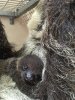
Left to their own devices, they'll breed pretty well, and I've had a few babies born in my time as a sloth keeper. The pups are about the size of a small guinea pig (maybe smaller, but they always struck me as surprisingly big), slender, with very short, chocolate brown fur compared to the adults. They may be some of the most endearing animals I've ever seen, perched on their momma's bellies, looking up at you with curiosity. Perhaps one of my most special zookeeping memories ever was walking into the holding building one morning and watching a sloth actually in the act of giving birth (I mean, it was special once I figured out what was actually going on - for a moment I was freaking out).

So, that about covers sloths - any questions before we try the next animals?
 

Attachments

  • Baby Sloth I.JPG
    Baby Sloth I.JPG
    189.3 KB · Views: 54
  • Baby Sloth VI.JPG
    Baby Sloth VI.JPG
    141.6 KB · Views: 53
  • IMG_4569.JPG
    IMG_4569.JPG
    253.8 KB · Views: 49
  • Linne's Two-Toed Sloth II.JPG
    Linne's Two-Toed Sloth II.JPG
    194.2 KB · Views: 50
Interesting you say that sloths are inherently cold-intolerant - Hoffmann's occurs at high elevations in the Talamanca Cordillera where it regularly dips below freezing at night, though not by much.
 
Alright, a little housekeeping before diving into the next profile. @snowleopard, I've worked at six zoos since college (two of which I'd also volunteered at as a teenager). That's excluding an additional zoo I interned at in college and an aquarium I volunteered at because I wanted to see how the other half (the wet half) lived. Of those eight facilities, four of them, I will say, were profiled in your book. I also did some volunteer work in rehab and nature centers when I was younger, which added a little more experience as well. @greatargus, that's interesting to know - mine was back in 2009 so who knows, maybe they got the idea from me (kidding!)

Today let's hang out with sloths! I've worked with Hoffman's two-toed at two facilities (both non-AZA) and Linne's at one (AZA), the latter being a zoo that successfully bred the species multiple times while I was there. I didn't really notice any difference working with the two species, so we'll treat them together.

Sloths are inherently cold intolerant, and they can be a pain to move back and forth, both due to their slowness (though I will say it right now - they are not nearly as slow as people seem to think they are, and I've been frustrated by having a sloth book it away from me) and their fondness for seeking the most inaccessible points of their exhibit to hang in, so it's always seemed to me that the best way to manage them is a large, indoor rainforest exhibit where they can remain year round. I have not worked with a sloth in such a setting. One non-AZA facility had sloths in a hoop aviary, and we'd have to get them down and bring them in for the colder months, when we were closed anyway. One kept them in a fairly small exhibit in a reptile house. And the AZA zoo had them in an outdoor exhibit with an adjacent off-exhibit holding building, that they could move in and out of as they pleased. Social groups ranged from a single female in the reptile house exhibit to a pair in the hoop aviary to a breeding group of 1.2 and offspring in the other exhibit. The reptile house exhibit was fairly short-lived... because the sloth was fairly short-lived... so I don't have much to say about that.

Between the three exhibits, the sloths lived with a variety of species, including Chilean flamingos, titi monkeys, red-footed tortoises, green iguanas, Geoffroy's marmosets, Orinoco geese, great curassow, and assorted pheasants, pigeons, and small parrots (not all species all together all at once). I never really saw any interactions, with the only issue being a tendency for animals to eat each other's diets. For example, at the hoop aviary exhibit, the sloths loved to eat the parrot's food, while at another facility, we had to rig up a special barrier so that small primates had a place to eat and sleep without the sloths getting in their diet.

Sloth diet across the facilities generally were the same - lettuce, some primate chow, a bit of fruit, and cooked sweet potato and squash, the latter cut into large, wedge-shaped pieces, like big French fries, to make it easier for the sloths to pick up and eat. Food was presented in buckets, usually clipped to the mesh on the side of the enclosure or in holding to prevent it from falling over; water was either in a lixit or, as I preferred, in a bucket clipped next to the food bucket. It's been said that sloths only come to the ground once a week, and that being for purposes of pooping. I think our sloths pooped more often that that, perhaps because their diet was richer than that of a wild sloth, but not by too much. I never saw a sloth on the exhibit floor except for when they were pooping, never one crawling around.

One of the pleasures of being a keeper is that you get to observe your animals when the public isn't around, and I have some pretty cool memories of being in outdoor exhibits with sloths at night well after we closed, when they are so much more active and engaged. Well, usually it was fun. Sometimes it was not. I remember one night, at the AZA zoo, when it was a very warm day for winter - unseasonably so - but it was going to get cold early the next morning. I was going to the movies late that night with some other keepers, but I wanted to let the sloths have as much outdoor time as possible, so I left them out, and decided to lock them back up before I left for the show. The result? Me standing on a step ladder in the dark, around 8PM, irritatably trying to herd some sloths in, while other sloths keep coming OUT of holding into the exhibit, all with a lot of determination. I was finally able to shoo everyone back inside, lock them in, and just made it to the movie. Of course, the movie was one of the Star Wars sequels, so maybe I should have just stayed with the sloths. I digress.

Visitors love sloths, but rarely saw them (except in the reptile house exhibit, where there was really nowhere to hide), which made them sad. I was unprepared for the impact that they had on people, or how many visitors were Kristen Bell-level obsessed with sloths. This was especially true at the exhibit with an attached holding building, where the sloths liked to hang out during the day; plenty of visitors refused to believe we actually had them. If it was a slow day, I'd invite visitors into the holding area to see the sloths (by this time we had no small primates in the exhibit, so I felt safe doing so), and eventually got our zoo to offer sloth encounters as an AAZK fundraiser to raise money for conservation (I had one lady book the program three times). The sloths largely were indifferent to it - a little stroking of them if they were at a low level, no handling/picking up/holding, no following them if they moved on. I've never used a sloth as an actual ambassador animal.

For as sweet as they generally seemed, sloths could be irritable sometimes, and I've had them swipe at/snap at me. The teeth are a lot bigger and sharper looking than you might expect. The claws, despite their size, are not very sharp, and are very brittle - I had a few that I found that had snapped off, then grew back (I've kept a few for myself). So, sloth attacks are not very threatening, mind you, but there's something inherently unsettling about being threatened by a sloth. It just feels... wrong.

Left to their own devices, they'll breed pretty well, and I've had a few babies born in my time as a sloth keeper. The pups are about the size of a small guinea pig (maybe smaller, but they always struck me as surprisingly big), slender, with very short, chocolate brown fur compared to the adults. They may be some of the most endearing animals I've ever seen, perched on their momma's bellies, looking up at you with curiosity. Perhaps one of my most special zookeeping memories ever was walking into the holding building one morning and watching a sloth actually in the act of giving birth (I mean, it was special once I figured out what was actually going on - for a moment I was freaking out).

So, that about covers sloths - any questions before we try the next animals?
At the facilities you worked with them at, were any of the sloths given animal protein as part of their diet? At the one sanctuary I volunteered at in my teenage years, the Linne’s two-toed sloths were given canned tuna and chopped hard-boiled eggs a couple times a week (I think) in addition to their plant food.
 
Visitors love sloths, but rarely saw them (except in the reptile house exhibit, where there was really nowhere to hide), which made them sad. I was unprepared for the impact that they had on people, or how many visitors were Kristen Bell-level obsessed with sloths. This was especially true at the exhibit with an attached holding building, where the sloths liked to hang out during the day; plenty of visitors refused to believe we actually had them.

This is definitely true in my visiting experience, I've only very rarely seen sloths. They really don't seem the best exhibit animals.

If it was a slow day, I'd invite visitors into the holding area to see the sloths (by this time we had no small primates in the exhibit, so I felt safe doing so)

This comment is interesting, as the only time I've seen Sacramento's sloth active was during an animal encounter they were doing for another guest. They took them into the main exhibit with the sloth - which now that I think about it, is interesting as that exhibit also contains white-faced sakis. The monkeys were no doubt locked in the back as they were nowhere to be seen, but that seems like a bit of a disease transmission risk.

Interesting you say that sloths are inherently cold-intolerant - Hoffmann's occurs at high elevations in the Talamanca Cordillera where it regularly dips below freezing at night, though not by much.

I suspect this is mostly due to the fact sloths have a lower body temperature than most mammals and partially rely on external temperatures given their slow metabolism. While Hoffmann's at least can certainly be found at rather high elevation and can certainly handle colder temperatures in some way, the general consensus seems to be that it's better to keep them between 70-80 F or so.
 
Visitors love sloths, but rarely saw them (except in the reptile house exhibit, where there was really nowhere to hide), which made them sad. I was unprepared for the impact that they had on people, or how many visitors were Kristen Bell-level obsessed with sloths. This was especially true at the exhibit with an attached holding building, where the sloths liked to hang out during the day; plenty of visitors refused to believe we actually had them. If it was a slow day, I'd invite visitors into the holding area to see the sloths (by this time we had no small primates in the exhibit, so I felt safe doing so), and eventually got our zoo to offer sloth encounters as an AAZK fundraiser to raise money for conservation (I had one lady book the program three times). The sloths largely were indifferent to it - a little stroking of them if they were at a low level, no handling/picking up/holding, no following them if they moved on. I've never used a sloth as an actual ambassador animal
Whenever I have been to zoos with sloths, I have seen the sloths on most occasions, but they were sleeping in a spot where you can only barely catch a glimpse of them. You have to be very lucky to see an active and visible sloth, they're always curled up, hiding and sleeping whenever I'm in front of one!
 
@evilmonkey239 , at the AZA facility, hard-boiled egg was occasionally offered for enrichment. I also suspect that the canned marmoset diet that was part of the daily diet was a good protein source. It certainly seemed to be one of their favorite parts of the diet, and was what I'd often use to smuggle meds to them.

As a few of you have confirmed, sloths can be hard to see on exhibit. It's a shame, because they are such fascinating animals with so many cool adaptations. Still, I think some folks use their supposed slowness and inactivity to justify putting them in exhibits that are too small (and thereby make them more visible to guests), when in reality they really will use a lot of space, given the chance.

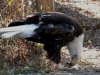
Today, I'll talk about a species that might be my least favorite to work with - bald eagles (and a few side comments about golden eagles). It's not that I don't like bald eagles - they're cool enough, though I do find them to be one of the less attractive eagle species. It's that I often feel bad because of how much stress they seem to experience.

You often hear anti-zoo folks say that they think zoos should just focus on rescuing animals that can't survive in the wild rather than breed animals just to live in zoos. In recent years, I've found that philosophy to be increasingly foolish. I've long felt that the single most important thing that determines an animal's wellbeing in zoos isn't enclosure size, or complexity, or enrichment - it's the relationship with the keeper, and it being positive or at least neutral. Animals born and bred in zoos, raised in proximity to humans since birth, are comfortable around humans. Animals that have had to be removed from the wild as a result of an already traumatic experience, such as an injury, often remain very shy and uncomfortable around us for their entire lives. That's definetely been my experience with bald eagles at the three facilities (two zoos, both AZA, and one raptor center) where I've worked with them. From the second they see me approach the exhibit, they get extremely nervous - and it's exacerbated by the fact that these permanently injured eagles always seem to forget that they can't fly anymore.

As a result, I've tried to make my daily time working with eagles as short as possible. Feed. Water. Quick cleaning. Out. In the past, I've tried habituating them to my presence, but with no luck, so I've stopped and just concentrated on being in their hair (feathers?) as little as possible. Fortunately bald eagles are pretty low maintenance in captivity. I've typically fed a rotation of fish, chicken, and rodent (and rabbit when available). I liked to keep the water source (usually a big tub) near the door, so I don't have to go too far into the enclosure. Rake it out quickly, then get out. Even so, I often found myself cringing when an eagle would run around in a panic. Catch ups for medical procedures or beak trims were done as quickly as possible; we'd usually all go together to make sure that we could catch the birds as fast as possible to minimize stress, and then release them as soon as we could.

I think that there is a tendency for zoos to say "oh, this bird can't fly, it doesn't need a large enclosure" (and USFWS, which maintains ownership of all bald and golden eagles in US facilities, has different space standards for eagles deemed flighted vs non-flighted), and they get exhibits that are too small. I'd recommend going larger than needed - also, in my experience, eagles, like many animals, do best in enclosures that are circular or square-shaped, rather than rectangular, so it's easier for them to maintain distance from you, rather than getting boxed into a corner. The new best practice is for zoos to build bald eagle habitats that are fully-enclosed, regardless of the bird's supposed flight status, so that the exhibit could potentially hold flighted eagles if the need arose. It's also especially helpful in this age of everlasting HPAI, because it helps keep other birds out, that might be attracted to the eagle's food (I've also had several instances of wild bald eagles being attracted to eagle exhibits)

In addition to zoo eagles, I've also taken in a few eagles brought in by the public with injuries - i.e., the police have a bird and call the zoo in the middle of the night, and some of us come in to tend the bird. I've spent a late night in my pajamas picking maggots out of an eagle's wing, surrounded by sheriff deputies who are snapping selfies with the bird (and me) in the background, all excited to make a facebook post about how they saved this bird. In each case (and this happened three or four times), we'd stabilize the bird as best as we could, then send it off to a rehabber the next day. I don't think many of those eagles actually recovered, though - all were in pretty bad shape.

As I said in my first post, these experiences are all my own, and are different for others. I know some folks who've worked with bald eagles that have been calm enough to handle, and even use for free-flight demos and ambassador encounters. Similarly, I've had people tell me that Cooper's hawks will go into hypoglycemic shock and die if you look at them for more than two seconds, let alone try to hold one. I've worked with one that was a great ambassador bird. The right bird in the right set-up with the right handler can often do wonders.

My experience with golden eagles is limited to a single bird and the aforementioned raptor center, who was an ambassador animal (and, as you can probably tell from that, a much calmer animal than any bald eagle I ever worked with). I took care of her, but as a program bird she was used solely by our director, and usually only for donor events when we needed the "big guns." As a treat on my last day, he did let me hold her on my glove - I, who was used to red-tailed hawks, Harris' hawks, those sorts of birds, almost tipped over, surprised by the weight. The only way I could really hold her was to lock my elbow into my waist - which, I will admit, did put her beak very close to my eye. Thankfully she was a very tranquil eagle.

On a last note, you know the only person in the zoo who finds eagles more stressful than the keepers? The registrar. Since all golden and bald eagles are owned by USFWS, there is a special permit that must be maintained to keep not only live specimens of those birds, but also their parts, including talons and feathers. An annual report is required at the beginning of each year. Feathers shed from the birds (or their bodies, when they die) are sent to the repository in Colorado, where they are distributed to Native American tribal offices for use in ceremonial regalia (I've had many visitors ask me for eagle feathers, or even try to pluck them from my wheelbarrow as I've shuffled across the zoo, and I've had to explain to them that it's not be saying no, it's the federal government).
 

Attachments

  • Bald Eagle.JPG
    Bald Eagle.JPG
    199.8 KB · Views: 34
I love this thread - sure it will be a fantastic resource for others :) the actual husbandry and care of zoo animals is often a neglected topic on this forum (unsurprisingly, given that most don't have extensive experience with it) and it seems like a lot of questions that arise from things we see in zoos can be answered with nuts-and-bolts, day-to-day practices like the ones you're detailing here.

Animals that have had to be removed from the wild as a result of an already traumatic experience, such as an injury, often remain very shy and uncomfortable around us for their entire lives.

This is an interesting point, in that on the one hand it makes perfect sense - and yet there are so many non-releasable wild raptors now used as ambassador animals that it doesn't seem like this would obviously be the case.

My baseline assumption would be that, in addition to individual personalities and the animal's background (how it was injured, where it lived before, etc) some species may be more adaptable to being captive and flightless than others? Your note about Cooper's hawk gives me this impression especially, I've noticed before that Accipiter hawks are a lot rarer in zoos and in raptor centers than their wild abundance suggests they should be.
 
@evilmonkey239 , at the AZA facility, hard-boiled egg was occasionally offered for enrichment. I also suspect that the canned marmoset diet that was part of the daily diet was a good protein source. It certainly seemed to be one of their favorite parts of the diet, and was what I'd often use to smuggle meds to them.

As a few of you have confirmed, sloths can be hard to see on exhibit. It's a shame, because they are such fascinating animals with so many cool adaptations. Still, I think some folks use their supposed slowness and inactivity to justify putting them in exhibits that are too small (and thereby make them more visible to guests), when in reality they really will use a lot of space, given the chance.

Today, I'll talk about a species that might be my least favorite to work with - bald eagles (and a few side comments about golden eagles). It's not that I don't like bald eagles - they're cool enough, though I do find them to be one of the less attractive eagle species. It's that I often feel bad because of how much stress they seem to experience.

You often hear anti-zoo folks say that they think zoos should just focus on rescuing animals that can't survive in the wild rather than breed animals just to live in zoos. In recent years, I've found that philosophy to be increasingly foolish. I've long felt that the single most important thing that determines an animal's wellbeing in zoos isn't enclosure size, or complexity, or enrichment - it's the relationship with the keeper, and it being positive or at least neutral. Animals born and bred in zoos, raised in proximity to humans since birth, are comfortable around humans. Animals that have had to be removed from the wild as a result of an already traumatic experience, such as an injury, often remain very shy and uncomfortable around us for their entire lives. That's definetely been my experience with bald eagles at the three facilities (two zoos, both AZA, and one raptor center) where I've worked with them. From the second they see me approach the exhibit, they get extremely nervous - and it's exacerbated by the fact that these permanently injured eagles always seem to forget that they can't fly anymore.

As a result, I've tried to make my daily time working with eagles as short as possible. Feed. Water. Quick cleaning. Out. In the past, I've tried habituating them to my presence, but with no luck, so I've stopped and just concentrated on being in their hair (feathers?) as little as possible. Fortunately bald eagles are pretty low maintenance in captivity. I've typically fed a rotation of fish, chicken, and rodent (and rabbit when available). I liked to keep the water source (usually a big tub) near the door, so I don't have to go too far into the enclosure. Rake it out quickly, then get out. Even so, I often found myself cringing when an eagle would run around in a panic. Catch ups for medical procedures or beak trims were done as quickly as possible; we'd usually all go together to make sure that we could catch the birds as fast as possible to minimize stress, and then release them as soon as we could.

I think that there is a tendency for zoos to say "oh, this bird can't fly, it doesn't need a large enclosure" (and USFWS, which maintains ownership of all bald and golden eagles in US facilities, has different space standards for eagles deemed flighted vs non-flighted), and they get exhibits that are too small. I'd recommend going larger than needed - also, in my experience, eagles, like many animals, do best in enclosures that are circular or square-shaped, rather than rectangular, so it's easier for them to maintain distance from you, rather than getting boxed into a corner. The new best practice is for zoos to build bald eagle habitats that are fully-enclosed, regardless of the bird's supposed flight status, so that the exhibit could potentially hold flighted eagles if the need arose. It's also especially helpful in this age of everlasting HPAI, because it helps keep other birds out, that might be attracted to the eagle's food (I've also had several instances of wild bald eagles being attracted to eagle exhibits)

In addition to zoo eagles, I've also taken in a few eagles brought in by the public with injuries - i.e., the police have a bird and call the zoo in the middle of the night, and some of us come in to tend the bird. I've spent a late night in my pajamas picking maggots out of an eagle's wing, surrounded by sheriff deputies who are snapping selfies with the bird (and me) in the background, all excited to make a facebook post about how they saved this bird. In each case (and this happened three or four times), we'd stabilize the bird as best as we could, then send it off to a rehabber the next day. I don't think many of those eagles actually recovered, though - all were in pretty bad shape.

As I said in my first post, these experiences are all my own, and are different for others. I know some folks who've worked with bald eagles that have been calm enough to handle, and even use for free-flight demos and ambassador encounters. Similarly, I've had people tell me that Cooper's hawks will go into hypoglycemic shock and die if you look at them for more than two seconds, let alone try to hold one. I've worked with one that was a great ambassador bird. The right bird in the right set-up with the right handler can often do wonders.

My experience with golden eagles is limited to a single bird and the aforementioned raptor center, who was an ambassador animal (and, as you can probably tell from that, a much calmer animal than any bald eagle I ever worked with). I took care of her, but as a program bird she was used solely by our director, and usually only for donor events when we needed the "big guns." As a treat on my last day, he did let me hold her on my glove - I, who was used to red-tailed hawks, Harris' hawks, those sorts of birds, almost tipped over, surprised by the weight. The only way I could really hold her was to lock my elbow into my waist - which, I will admit, did put her beak very close to my eye. Thankfully she was a very tranquil eagle.

On a last note, you know the only person in the zoo who finds eagles more stressful than the keepers? The registrar. Since all golden and bald eagles are owned by USFWS, there is a special permit that must be maintained to keep not only live specimens of those birds, but also their parts, including talons and feathers. An annual report is required at the beginning of each year. Feathers shed from the birds (or their bodies, when they die) are sent to the repository in Colorado, where they are distributed to Native American tribal offices for use in ceremonial regalia (I've had many visitors ask me for eagle feathers, or even try to pluck them from my wheelbarrow as I've shuffled across the zoo, and I've had to explain to them that it's not be saying no, it's the federal government).

I worked with a geriatric bald eagle during my time at college. She was one of the animals I had the pleasure to work with.

The old bird did keep her distance during the morning and came towards her food when she was called and shown the reflection of the bowl. We had to walk in the enclosure with a broom to keep our distance from her in case she got to excited for food. The eagle took her meds in her food so it was very important that there weren’t local vultures which could steal parts of the whole prey.

The feather collection was a really confusing part since there were vultures loitering around the enclosure which are likely to preen and molt. So when I saw feathers in the enclosure I had a hard time telling wether or not those feathers were eagle or vulture feathers.
 
As a former sloth keeper, how can you mention caring for them without mentioning the
incredible overpowering stench of their bi monthly crapping? :)
 
Back
Top