AI Animal Images in the News/Media

Great Argus

Well-Known Member
5+ year member
Questionable animal images are nothing new, but AI has brought it a whole new level. Unfortunately it's easy to do and sometimes looks convincing til you look harder. Recently I've seen an increasing number of what I suspect or know were AI images used in headlines, some not particularly convincing, others could easily be overlooked.

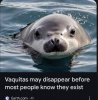
Example #1, the seal-quita
Screenshot_20250118_135125_One UI Home.jpg

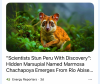
It looks like a seal and a porpoise got squished together - given the amount of whiskers and obvious snout why would anyone think it's a suitable image for an article about dolphins? And what is going on with the extra nose holes?

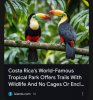
Example #2, the not quite Keel-bills
Screenshot_20250119_212601_One UI Home.jpg

I'm not quite sure if this is AI, but its giving me that impression. It looks innocent enough at a glance, but no real Keel-billed Toucan has a red belly and that bill pattern. The feet also raise questions to me.

Other examples include everything from viral giant axolotls to men using brooms to push weirdly formed barnacles off oversized Belugas. So far it's mostly been more out there sites using such media, but I've seen it popping up more and more lately.

A few questions I'd like to pose as this ugly content continues making its way across the internet:

What happened to the respect for good photography, or just photos in general that we're turning to this garbage to headline articles? Surely it cannot be that hard to find a cheap stock photo of the animal you want? There's free sites for goodness sake. Are people that adverse to giving credit for photos these days?

What kind of impressions is this giving people about animals? That seal-quita is a disgrace to the plight of the Vaquita, it could have at least been a harbor porpoise or something. I've seen thumbnails for videos where there's obvious (to me anyway) AI animals interacting with humans, and it gives so many false impressions.

Also, what do you all feel can be done? Personally I don't click on articles or especially videos featuring such content, as I don't care to contribute to their traffic. It concerns me however that the general public often may not realize what they're looking at is not the real deal, giving false impressions of a species or the world in general and potentially contributing to animal misinformation. I realize it's a bit of a drop in the bucket given the loads of color edited photos of birds and fish out there, but weird AI creations should not be headlining any nature article.
 

Attachments

  • Screenshot_20250118_135125_One UI Home.jpg
    Screenshot_20250118_135125_One UI Home.jpg
    97.5 KB · Views: 215
  • Screenshot_20250119_212601_One UI Home.jpg
    Screenshot_20250119_212601_One UI Home.jpg
    91.5 KB · Views: 212
I think it's simply a case of not having to pay photographers/other artists and the accessibility of such image-generating models that have made this become more prevalent.

If you can instantly get an image for free that the general reader won't notice anything wrong with, why bother doing anything else? And at the end of the day, cost and efficiency is unfortunately what these firms care about most.
 
I recently came across a pet information website that used only ai imaging. All the articles for different fish species/families (tetras, Asian barbs, minnows, loaches, etc) had images of ai-generated mutant goldfish. Same was true for the ants and spiders.

It just seems so insane to me that as a pet shop, where you have the animals at hand to take pictures of, would use ai imaging.

I well and truly hate ai imaging, not only for the way its poisoning google images and pinterest, but also because of the economical aspects, the costs on the planet (lot of water and electricity) and the generally unethical way it works. And sadly I've seen it work its way into zoos. To me it says the information is automatically untrustworthy and the provider is a cheapskate crook.

Example #2, the not quite Keel-bills
View attachment 765566

I don't believe this is AI. I've gotten pretty good at recognising the tells.
One of the easiest ways to tell is to look at the plants in the background. AI can't handle random patterns like moss, fur or leaves. In fur, it'll almost always look freshly combed. With leaves, the leaves will come out of nowhere and won't be based in a stem. With moss, it doesn't know the border between moss and wood and it'll merge together. There's a lot of consistency in this image, there's also not too much contrast (another tell) so I think it's real (although possibly edited)
 
I don't believe this is AI. I've gotten pretty good at recognising the tells.
One of the easiest ways to tell is to look at the plants in the background. AI can't handle random patterns like moss, fur or leaves. In fur, it'll almost always look freshly combed. With leaves, the leaves will come out of nowhere and won't be based in a stem. With moss, it doesn't know the border between moss and wood and it'll merge together. There's a lot of consistency in this image, there's also not too much contrast (another tell) so I think it's real (although possibly edited)
It certainly doesn't represent any real toucan species. AI images have gotten really good with background details in the past couple months.
 
Questionable animal images are nothing new, but AI has brought it a whole new level. Unfortunately it's easy to do and sometimes looks convincing til you look harder. Recently I've seen an increasing number of what I suspect or know were AI images used in headlines, some not particularly convincing, others could easily be overlooked.

Example #1, the seal-quita
View attachment 765565

It looks like a seal and a porpoise got squished together - given the amount of whiskers and obvious snout why would anyone think it's a suitable image for an article about dolphins? And what is going on with the extra nose holes?

Example #2, the not quite Keel-bills
View attachment 765566

I'm not quite sure if this is AI, but its giving me that impression. It looks innocent enough at a glance, but no real Keel-billed Toucan has a red belly and that bill pattern. The feet also raise questions to me.

Other examples include everything from viral giant axolotls to men using brooms to push weirdly formed barnacles off oversized Belugas. So far it's mostly been more out there sites using such media, but I've seen it popping up more and more lately.

A few questions I'd like to pose as this ugly content continues making its way across the internet:

What happened to the respect for good photography, or just photos in general that we're turning to this garbage to headline articles? Surely it cannot be that hard to find a cheap stock photo of the animal you want? There's free sites for goodness sake. Are people that adverse to giving credit for photos these days?

What kind of impressions is this giving people about animals? That seal-quita is a disgrace to the plight of the Vaquita, it could have at least been a harbor porpoise or something. I've seen thumbnails for videos where there's obvious (to me anyway) AI animals interacting with humans, and it gives so many false impressions.

Also, what do you all feel can be done? Personally I don't click on articles or especially videos featuring such content, as I don't care to contribute to their traffic. It concerns me however that the general public often may not realize what they're looking at is not the real deal, giving false impressions of a species or the world in general and potentially contributing to animal misinformation. I realize it's a bit of a drop in the bucket given the loads of color edited photos of birds and fish out there, but weird AI creations should not be headlining any nature article.

Sadly Youtube is full of AI videos now, some very questionable in taste, and it's clear from the comments that people are believing what they see.
 
Sadly Youtube is full of AI videos now, some very questionable in taste, and it's clear from the comments that people are believing what they see.
Hello.

Their thumbnails usually contain AI-generated images as well. Nobody wants to upload videos with real photographs anymore. Instead they prefer using clickbait automated pictures.
 
Last edited:
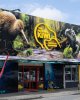
I think that I have found something worse. It appears that a small zoo in New Zealand, which is named the National Kiwi Centre & Aquarium, now has a huge AI art poster on the front of the building, going by this recent photo of the facility from the internet. Most noticeable is the Tuatara having too many spikes, which are also too long.

FB_IMG_1739378453067.jpg
 

Attachments

  • FB_IMG_1739378453067.jpg
    FB_IMG_1739378453067.jpg
    107 KB · Views: 139
I think that I have found something worse. It appears that a small zoo in New Zealand, which is named the National Kiwi Centre & Aquarium, now has a huge AI art poster on the front of the building, going by this recent photo of the facility from the internet. Most noticeable is the Tuatara having too many spikes, which are also too long.

View attachment 771021

This is very upsetting to see for a zoo. Sigh. The kiwi is also interesting looking, somethings wrong about it but I can't put my finger on it
 
View attachment 832642

Do people really pat their backs after using garbage like this to refer to scientific discourse?
The people who use these images [typically] have no real interest in what they are writing about... and as little interest in how they choose to illustrate it.
Anyone who truly deeply cares about the subject they write about......[almost] none of them use an AI generated image to illustrate it. Those that do are simply interested in efficiency....getting a surface-level article out as fast as possible.
And what is truly insidious about AI articles is that they will often add in extra details that are not true, even in writing.... so without human intervention an AI generated article's veracity is inherently diminished.
But now that it's the thing which seems to make money and get people hooked, corporate really wants us to use it. To write our own articles, to greet our loved ones, to have in lieu of a friend, in lieu of a partner, to avoid us from thinking too much about anything . . . anyone who wants to communicate information or emotions ends up being the loser . . . and the big companies end out as the winner. And the losers all forget how to think.
 
Back
Top