America's 100 Must See Exhibits

The concept itself is interesting but the execution isn’t, and the result is that EO is the zoo exhibit equivalent of being the worst house on the best street in America.
Even worse than the monkey crib-cages and bear grottos? ;)

It's been a few years since I last saw Elephant Odyssey, but the only enclosures I recall being particularly mediocre were the lion exhibit and the secretary bird/magpie aviary. Everything else was at the very least decent and I even quite liked the jaguar exhibit which provides excellent vertical space and much better tree coverage than the other habitats in the complex. The rattlesnake terrariums and the reptile streamside habitat were definitely the two highlights however - searching for the small turtles and lizards in the streamside habitat was particularly fun.

I think what irks me most of the exhibit is the lack of effort into hiding what are really some hideous looking buildings. One of the primary reasons San Diego became "world famous" was because of the zoo's ability to immerse visitors in natural landscapes and obscure obvious barriers. Look at the original tiger river or the kopje and compare it to Elephant Odyssey. The Elephant Care Center is an ugly cluster of steel and metal, and the holding building for the South American fauna looks absolutely hideous. To see the zoo throw away the very principles that made them such a globally revered institution is very disappointing.

With that said, I don't think there's any way I could have left it off this list. The sheer craziness of the design and fascinating concept is absolutely worth seeing by itself. As an elephant complex alone it's very good for the animals. @StoppableSan already made a very good case for it above so I won't reiterate too much, but I do want to emphasize it has what's probably one of the greatest enrichment programs in the country and the 24/7 access to the outdoors is also a huge benefit for the pachyderms.

Although I have to agree with @groundskeeper24 that the inclusion of the horse/donkey pen was just silly and one of the most baffling decisions made when designing this exhibit.
 
Yes and no. The crib cages are obviously ‘worse’ exhibits, but they’re also hangovers from a distant past, not a US$50 million multi-hectare complex that the zoo is likely stuck with into the 2060s.

You’ll note I stopped short of saying I disagree with it being on the list - I don’t really have a view on that either way, since I understand the logic of its inclusion and certainly can’t name 100 exhibits I’d have in ahead of EO.
 
Bonus Post #3 - What Could've Been: Canceled Exhibits that would have been 'Must-see'.

It's safe to say that must-see exhibits take time, imagination, and in many cases a lot of money. As a result, there have been many lost plans for exhibits that could have been something amazing, but never made it past the conceptual drawings. For this post, I'd like to take a look back at three exhibits that were planned and in all likelihood would have been considered must-see, but unfortunately never saw the light of day.

1. Blue World Project
SeaWorld San Diego, CA
Planned Inhabitants: Killer Whale


Few animal enclosures are as controversial in the mainstream media as SeaWorlds killer whale tanks. Regardless of your thoughts on keeping whales and dolphins in captivity, there's no denying that the general public has expressed serious concern about captive cetaceans and the public outcry was enough for SeaWorld to take action. The Blue World Project was a plan to dramatically expand the existing orca tanks, beginning at SeaWorld San Diego before eventually doing the same at the parks in Orlando and San Antonio. This would have been a 10 million gallon series of tanks that would have stretched a surface area of 1.5 acres. With features such as wave machines and depths of 50 feet, this would have likely been the most advanced cetacean facility anywhere in the world. Unfortunately, the intense pressure from animal activists was enough for SeaWorld to cancel the development and make the announcement that they would permanently halt breeding orcas. Even if the orcas were eventually phased out, this exhibit would have worked even better for dolphins or other smaller cetaceans and it’s really a shame it never came to be.

seaworldblueworld01.jpg

90

Image2.jpg


2. Indian Monsoon
San Francisco Zoo, CA
Planned Inhabitants: Asian Elephant, Malayan Tiger, Bornean Orangutan, Siamang, Water Buffalo, Chital, Asian-small Clawed Otter, Reeve's Muntjac and more.


To put it lightly, San Francisco Zoo isn't exactly known for outstanding exhibits and a lack of direction has burdened the zoo for many years. There was once an ambitious plan for an enormous Indian Monsoon exhibit. It would have begun with an enormous pasture for water buffalo and other large hoofstock which could be overlooked by a restaurant. From there the path would split off into numerous trails that would have led to an immersive pair of elephant habitats, a tiger exhibit, and an enormous walkthrough marsh aviary. Smaller things weren't forgotten about either with giant squirrels, pythons planned for exhibit as well. This plan is now several decades old and never saw the light of day. Plus, after an ordinance was put in place requiring any new elephant exhibit at San Francisco to be a minimum of 16 acres in size, it's clear that the project will never be able to commence. Had it come to fruition, this in all likelihood could have been one of the most holistic and highly detailed Asian exhibits in any zoo and perhaps could have set up San Francisco Zoo for a brighter future.

sfz-indian-plan-final-copy1.jpg


3. Silk Road
Saint Louis Zoo, MO
Planned Inhabitants: Giant Panda, Amur Tiger, Snow Leopard, Pallas Cat, Golden-snub Nosed Monkey, Red Panda, Sea Otter, several antelope species and various mountain ungulates.


While many would mourn the loss of Saint Louis Zoo's Red Rocks zone, at one point it was slated to be replaced by what could have been a showstopper of an exhibit complex. The Silk Road would have been an expansive trail spanning over ten acres exhibiting a diverse array of Asian species. New cat habitats would have been a big focus as well a new nocturnal house. Ungulates would have still had a major presence including desert species like addax and addra gazelles as well as a mountain range for takin, goral and urial. The concept is completely unique and the scale would have been incredible, but the master plan this was a part is long out of date and is no longer being followed. Of course, the prospect of giant pandas and golden-snub nosed monkeys was almost certainly never going to become reality and always made this development feel more like a fantasy than a concrete plan.

Screen Shot 2023-03-11 at 9.23.08 PM.png

It's also worth mentioning the long-planned Arctic Shores complex at Calgary Zoo. There was a time where this was one of the most hotly anticipated projects in the zoo world with the promise of new exhibits for polar bears and beluga whales. The controversial nature of its planned inhabitants combined with insanely high construction costs as a result of economic turmoil forced the zoo to pull the plug on the project. I included this segment not just to lament the exhibits that never were, but to evoke a greater appreciation for the must-see exhibits that did come to fruition. Not everything makes it from concept to reality and we should be thankful there are enough must-see exhibits to justify the existence of a list like this. If there are any other canceled exhibits they may have been "must-see" please bring them up below.
 

Attachments

  • Screen Shot 2023-03-11 at 9.23.08 PM.png
    Screen Shot 2023-03-11 at 9.23.08 PM.png
    197.2 KB · Views: 222
2. Indian Monsoon
San Francisco Zoo, CA
Planned Inhabitants: Asian Elephant, Malayan Tiger, Bornean Orangutan, Siamang, Water Buffalo, Chital, Asian-small Clawed Otter, Reeve's Muntjac and more.


To put it lightly, San Francisco Zoo isn't exactly known for outstanding exhibits and a lack of direction has burdened the zoo for many years. There was once an ambitious plan for an enormous Indian Monsoon exhibit. It would have begun with an enormous pasture for water buffalo and other large hoofstock which could be overlooked by a restaurant. From there the path would split off into numerous trails that would have led to an immersive pair of elephant habitats, a tiger exhibit, and an enormous walkthrough marsh aviary. Smaller things weren't forgotten about either with giant squirrels, pythons planned for exhibit as well. This plan is now several decades old and never saw the light of day. Plus, after an ordinance was put in place requiring any new elephant exhibit at San Francisco to be a minimum of 16 acres in size, it's clear that the project will never be able to commence. Had it come to fruition, this in all likelihood could have been one of the most holistic and highly detailed Asian exhibits in any zoo and perhaps could have set up San Francisco Zoo for a brighter future.

sfz-indian-plan-final-copy1.jpg

A shame this never came to fruition, as this encompasses one of the rather little used areas of the zoo. The proposed Chital exhibit is the current Puente Del Sur, and the only other actual exhibit losses would be the Peccary exhibit and two grotto style exhibits. The Grizzly expansion might cut into the ape area too possibly. That said, given the rather long stagnated situation of the zoo and the snail's pace of which any construction goes on (Madagascar for example...) I'm not surprised it never came to be.
 
Bonus Post #3 - What Could've Been: Canceled Exhibits that would have been 'Must-see'.

It's safe to say that must-see exhibits take time, imagination, and in many cases a lot of money. As a result, there have been many lost plans for exhibits that could have been something amazing, but never made it past the conceptual drawings. For this post, I'd like to take a look back at three exhibits that were planned and in all likelihood would have been considered must-see, but unfortunately never saw the light of day.

1. Blue World Project
SeaWorld San Diego, CA
Planned Inhabitants: Killer Whale


Few animal enclosures are as controversial in the mainstream media as SeaWorlds killer whale tanks. Regardless of your thoughts on keeping whales and dolphins in captivity, there's no denying that the general public has expressed serious concern about captive cetaceans and the public outcry was enough for SeaWorld to take action. The Blue World Project was a plan to dramatically expand the existing orca tanks, beginning at SeaWorld San Diego before eventually doing the same at the parks in Orlando and San Antonio. This would have been a 10 million gallon series of tanks that would have stretched a surface area of 1.5 acres. With features such as wave machines and depths of 50 feet, this would have likely been the most advanced cetacean facility anywhere in the world. Unfortunately, the intense pressure from animal activists was enough for SeaWorld to cancel the development and make the announcement that they would permanently halt breeding orcas. Even if the orcas were eventually phased out, this exhibit would have worked even better for dolphins or other smaller cetaceans and it’s really a shame it never came to be.
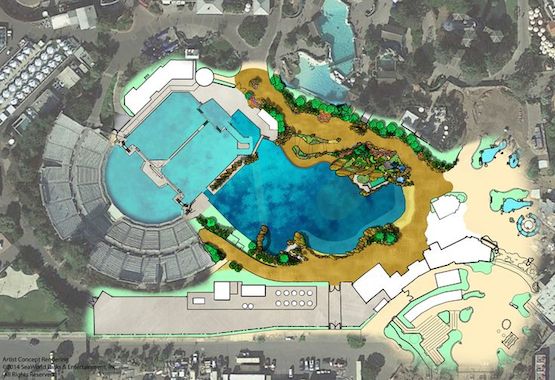
seaworldblueworld01.jpg

90

Image2.jpg


2. Indian Monsoon
San Francisco Zoo, CA
Planned Inhabitants: Asian Elephant, Malayan Tiger, Bornean Orangutan, Siamang, Water Buffalo, Chital, Asian-small Clawed Otter, Reeve's Muntjac and more.


To put it lightly, San Francisco Zoo isn't exactly known for outstanding exhibits and a lack of direction has burdened the zoo for many years. There was once an ambitious plan for an enormous Indian Monsoon exhibit. It would have begun with an enormous pasture for water buffalo and other large hoofstock which could be overlooked by a restaurant. From there the path would split off into numerous trails that would have led to an immersive pair of elephant habitats, a tiger exhibit, and an enormous walkthrough marsh aviary. Smaller things weren't forgotten about either with giant squirrels, pythons planned for exhibit as well. This plan is now several decades old and never saw the light of day. Plus, after an ordinance was put in place requiring any new elephant exhibit at San Francisco to be a minimum of 16 acres in size, it's clear that the project will never be able to commence. Had it come to fruition, this in all likelihood could have been one of the most holistic and highly detailed Asian exhibits in any zoo and perhaps could have set up San Francisco Zoo for a brighter future.

sfz-indian-plan-final-copy1.jpg


3. Silk Road
Saint Louis Zoo, MO
Planned Inhabitants: Giant Panda, Amur Tiger, Snow Leopard, Pallas Cat, Golden-snub Nosed Monkey, Red Panda, Sea Otter, several antelope species and various mountain ungulates.


While many would mourn the loss of Saint Louis Zoo's Red Rocks zone, at one point it was slated to be replaced by what could have been a showstopper of an exhibit complex. The Silk Road would have been an expansive trail spanning over ten acres exhibiting a diverse array of Asian species. New cat habitats would have been a big focus as well a new nocturnal house. Ungulates would have still had a major presence including desert species like addax and addra gazelles as well as a mountain range for takin, goral and urial. The concept is completely unique and the scale would have been incredible, but the master plan this was a part is long out of date and is no longer being followed. Of course, the prospect of giant pandas and golden-snub nosed monkeys was almost certainly never going to become reality and always made this development feel more like a fantasy than a concrete plan.

View attachment 610540

It's also worth mentioning the long-planned Arctic Shores complex at Calgary Zoo. There was a time where this was one of the most hotly anticipated projects in the zoo world with the promise of new exhibits for polar bears and beluga whales. The controversial nature of its planned inhabitants combined with insanely high construction costs as a result of economic turmoil forced the zoo to pull the plug on the project. I included this segment not just to lament the exhibits that never were, but to evoke a greater appreciation for the must-see exhibits that did come to fruition. Not everything makes it from concept to reality and we should be thankful there are enough must-see exhibits to justify the existence of a list like this. If there are any other canceled exhibits they may have been "must-see" please bring them up below.
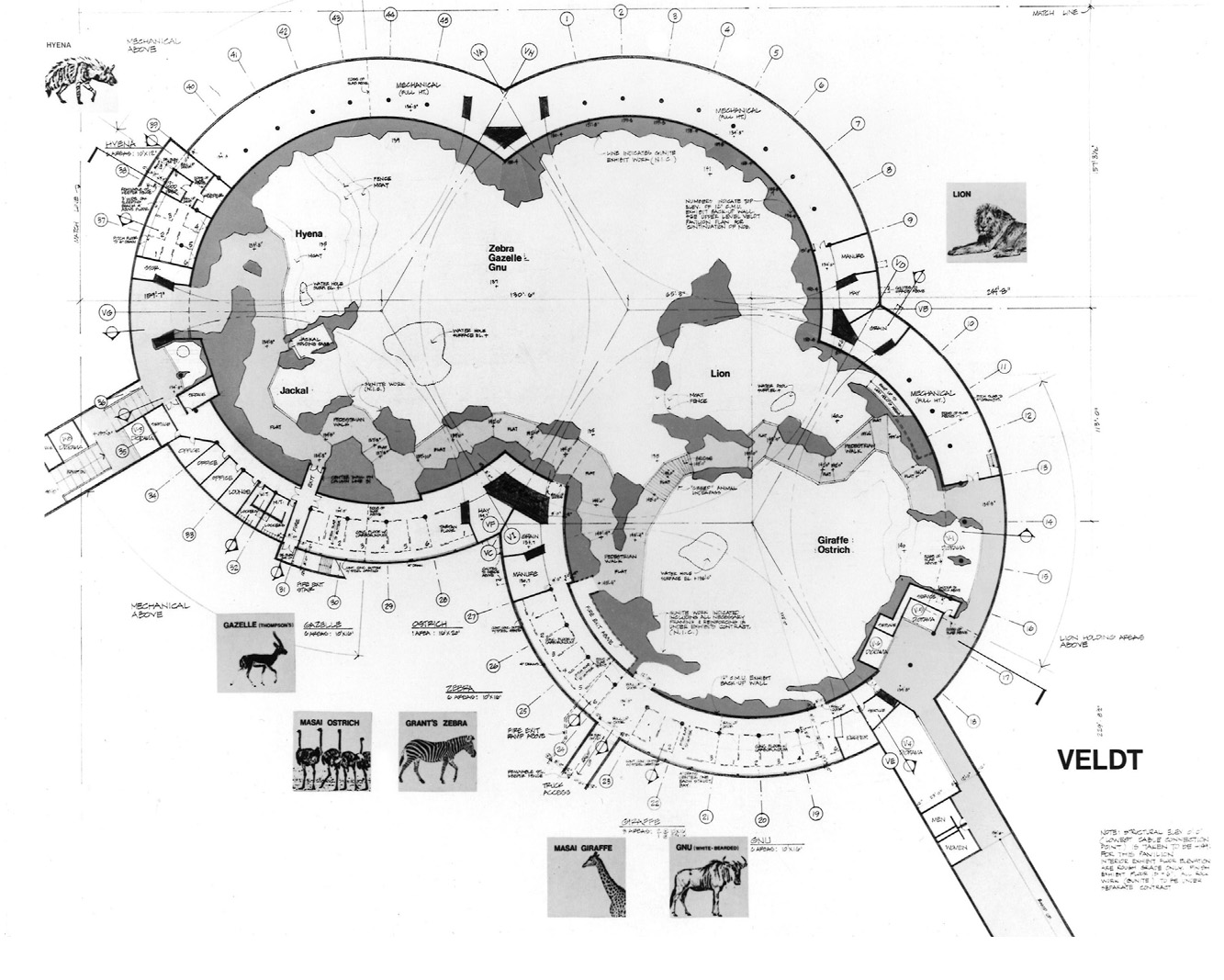
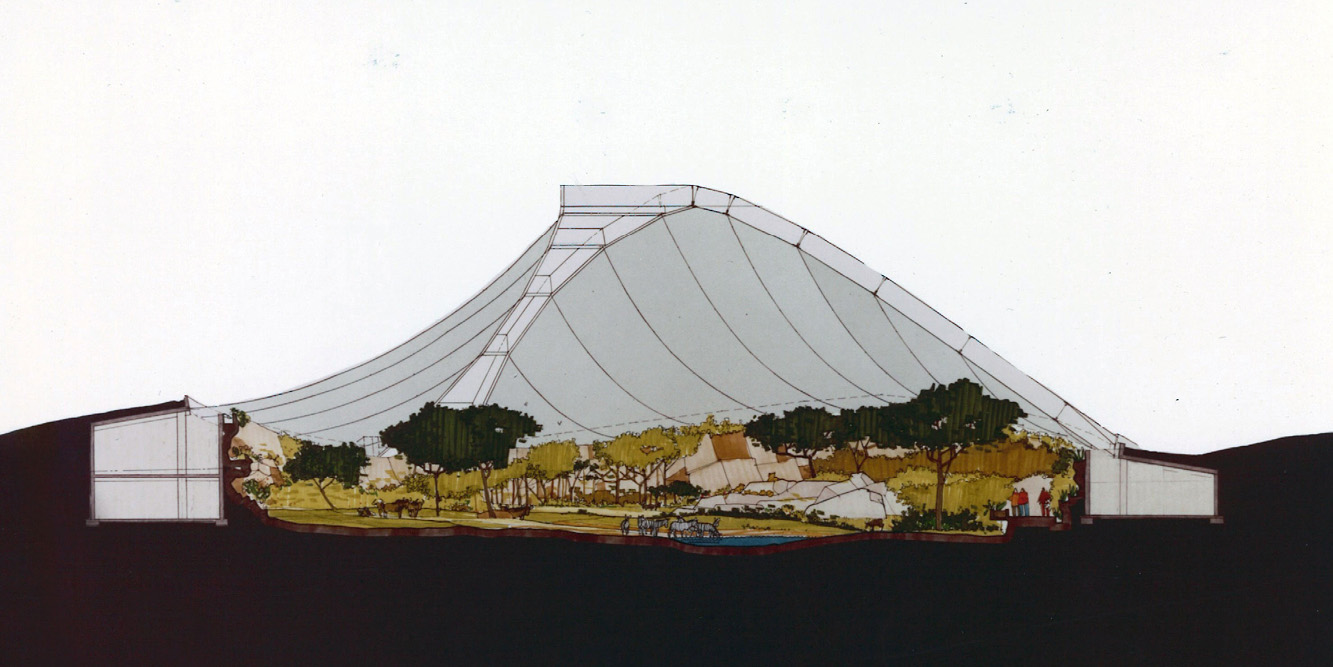
While all three of these would have been incredible in their own right, I'd like to take this moment to highlight one more exhibit that would've been must-see had it came to fruition: "The Veldt", part of Franklin Park Zoo's 1972 Masterplan. The zoo's 1972 masterplan called for four large domes each focusing on a different African biome and connected through underground tunnels, though only one of these domes (the Tropical Forest) was ever completed. The Tropical Forest was supposed to be the smallest of the four domes, and had the others been completed, I have no doubt that Franklin Park Zoo would've been on a much better trajectory for the past fifty years. "The Veldt" was supposed to be the largest of these domes, and was slated to contain animals as large as giraffes, zebras, lions, and hyenas in naturalistic indoor-outdoor exhibits.

Information of this plan, including pictures can be found here: FROM A to ZOO - DiMella Shaffer
franklinparkzoo10.jpg

Map of "The Veldt" from above link.
franklinparkzoo9.jpg

"The Veldt" Concept Art
 
While all three of these would have been incredible in their own right, I'd like to take this moment to highlight one more exhibit that would've been must-see had it came to fruition: "The Veldt", part of Franklin Park Zoo's 1972 Masterplan. The zoo's 1972 masterplan called for four large domes each focusing on a different African biome and connected through underground tunnels, though only one of these domes (the Tropical Forest) was ever completed. The Tropical Forest was supposed to be the smallest of the four domes, and had the others been completed, I have no doubt that Franklin Park Zoo would've been on a much better trajectory for the past fifty years. "The Veldt" was supposed to be the largest of these domes, and was slated to contain animals as large as giraffes, zebras, lions, and hyenas in naturalistic indoor-outdoor exhibits.

Information of this plan, including pictures can be found here: FROM A to ZOO - DiMella Shaffer
franklinparkzoo10.jpg

Map of "The Veldt" from above link.
franklinparkzoo9.jpg

"The Veldt" Concept Art

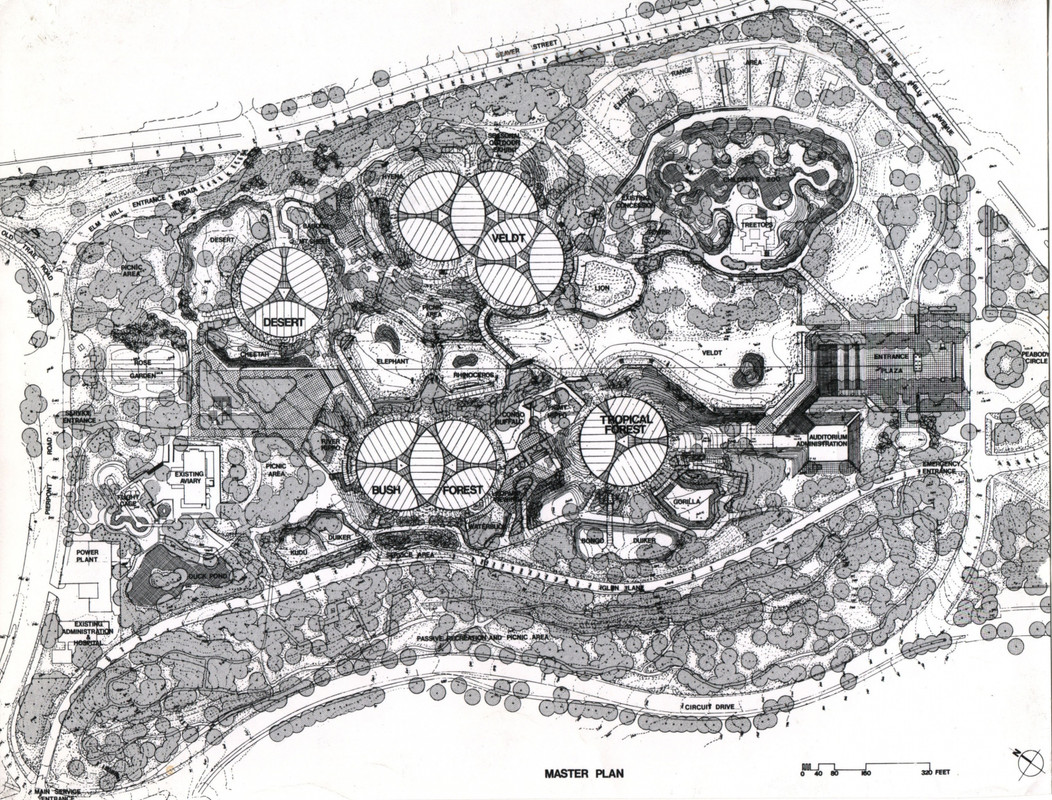
I have always been really interested in FPZ's 1972 masterplan, and I sometimes wonder what the zoo would be like today if the plan had been actualized. Here is an image of the full masterplan map, which includes all 4 Domes. The map also shows outdoor exhibits for high-profile species like African Elephants, Rhinos, Lions, Gorillas, Cheetahs, and Nile and Pygmy Hippos (as if actualized, this plan would have made Franklin Park focus on almost exclusively African species).

Franklin-plan-02.jpg


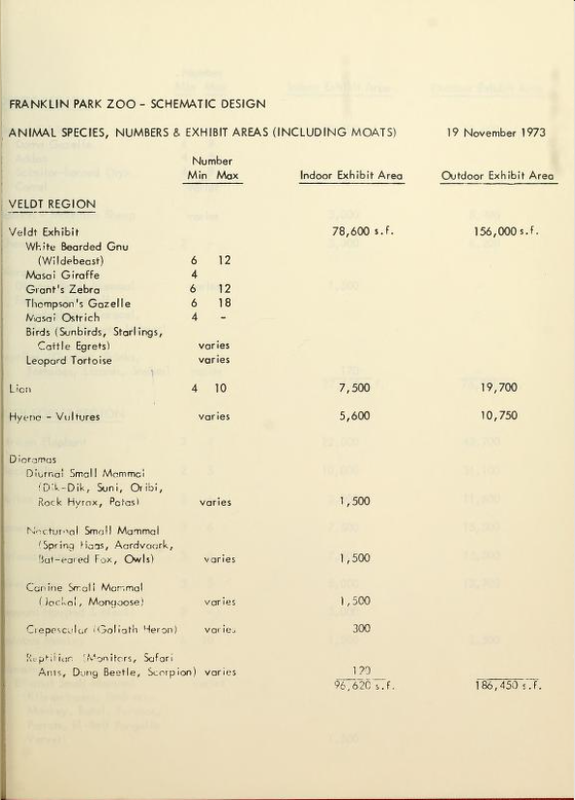
For anyone interested in reading further, the full 500-page version of the 1972 masterplan is available online at this link. The document is fascinating to pore through, and it includes environmental impact information, as well as more details on each of the potential domes (including species lists, and stats on exhibit sizes). Below I have included a screenshot of this information for The Veldt, as it is the major exhibit of focus for the sake of this thread:

FPZ-Veldt-Species-List-2.png
 
I have always been really interested in FPZ's 1972 masterplan, and I sometimes wonder what the zoo would be like today if the plan had been actualized. Here is an image of the full masterplan map, which includes all 4 Domes. The map also shows outdoor exhibits for high-profile species like African Elephants, Rhinos, Lions, Gorillas, Cheetahs, and Nile and Pygmy Hippos (as if actualized, this plan would have made Franklin Park focus on almost exclusively African species).

Franklin-plan-02.jpg


For anyone interested in reading further, the full 500-page version of the 1972 masterplan is available online at this link. The document is fascinating to pore through, and it includes environmental impact information, as well as more details on each of the potential domes (including species lists, and stats on exhibit sizes). Below I have included a screenshot of this information for The Veldt, as it is the major exhibit of focus for the sake of this thread:

FPZ-Veldt-Species-List-2.png

Well, there goes my whole day...
 
I have always been really interested in FPZ's 1972 masterplan, and I sometimes wonder what the zoo would be like today if the plan had been actualized. Here is an image of the full masterplan map, which includes all 4 Domes. The map also shows outdoor exhibits for high-profile species like African Elephants, Rhinos, Lions, Gorillas, Cheetahs, and Nile and Pygmy Hippos (as if actualized, this plan would have made Franklin Park focus on almost exclusively African species).

Franklin-plan-02.jpg


For anyone interested in reading further, the full 500-page version of the 1972 masterplan is available online at this link. The document is fascinating to pore through, and it includes environmental impact information, as well as more details on each of the potential domes (including species lists, and stats on exhibit sizes). Below I have included a screenshot of this information for The Veldt, as it is the major exhibit of focus for the sake of this thread:

FPZ-Veldt-Species-List-2.png
It certainly would be an interesting thought experiment to wonder what the zoo would be like today if the Four Domes plan did occur. While I do think overall it would be in a better place had the plan came to fruition, especially with the Veldt and Desert, the interesting part of this thought experiment would be the Bush Forest Dome- as the exhibits proposed for rhinos, elephants, and hippos would be painfully small by today's standards. The zoo likely would've needed to make either some serious adjustments to that pavilion, or phase out multiple megafauna species sometime between the plan's completion and now. While the plans for Desert and Veldt do seem as though they'd hold up rather well today (to the point that I wouldn't mind seeing a slightly modified version of these pavilions being constructed still), the Bush would not have held up nearly as well, and especially tied with the zoo's economic downturn would've been a major headache for the zoo in the early 2000's as they would've had to navigate bringing an expensive, out-of-date building to the modern day- something that luckily hasn't been overly necessary in terms of Tropical Forest.
 
It certainly would be an interesting thought experiment to wonder what the zoo would be like today if the Four Domes plan did occur. While I do think overall it would be in a better place had the plan came to fruition, especially with the Veldt and Desert, the interesting part of this thought experiment would be the Bush Forest Dome- as the exhibits proposed for rhinos, elephants, and hippos would be painfully small by today's standards. The zoo likely would've needed to make either some serious adjustments to that pavilion, or phase out multiple megafauna species sometime between the plan's completion and now. While the plans for Desert and Veldt do seem as though they'd hold up rather well today (to the point that I wouldn't mind seeing a slightly modified version of these pavilions being constructed still), the Bush would not have held up nearly as well, and especially tied with the zoo's economic downturn would've been a major headache for the zoo in the early 2000's as they would've had to navigate bringing an expensive, out-of-date building to the modern day- something that luckily hasn't been overly necessary in terms of Tropical Forest.

When I first learned about the failed master plan I did just that sort of thought experiment. I hadn't seen the full document until today and I was surprised to see how close my species list was in some regards!

Is there a thread about this? I would love to discuss it further but don't want to stray too far from the original thread's purpose.
 
"The Veldt", part of Franklin Park Zoo's 1972 Masterplan. The zoo's 1972 masterplan called for four large domes each focusing on a different African biome and connected through underground tunnels, though only one of these domes (the Tropical Forest) was ever completed.

It seems that these projects appeared at the same time as the Burgers Mangrove and then Bush rainforest hall in Arnhem were conceptualized in Europe. However, the projects in Europe were realized.
 
61. Wild Reef
Shedd Aquarium, IL
Opened: 2003
Size: 750,000 Gallons (2.8 Million Liters)
Inhabitants: >150 species of fish and invertebrate indigenous to the Philippines.


Shedd Aquarium is well known for its unparalleled assortment of aquatic life, but it also shines through its exhibitry. What lies 25 feet beneath Shedd’s historic shell is one of the aquarium world's most fascinating galleries. Only accessible via elevator, Wild Reef zones in on species native to the Apo Island reefs in the Philippines by putting guests in a coral reef ecosystem. Not only does this create a truly immersive atmosphere, but few aquarium galleries have such an emphasis on education regarding the coral. Supersized coral displays detail their life cycles and how they are very much animals themselves, something that many visitors often overlook. Of course there is also a selection of hugely impressive aquarium tanks including a curved 400,000 gallon display containing various sharks, guitarfish and other large species, which is directly across from a transparent floor with stingrays underneath. Equally spectacular is a circular series of floor to ceiling tanks fully surrounding visitors, exhibiting mid-sized predators and various schooling fish. Supplementing the large showstopping tanks are a variety of smaller aquaria which are home to dozens of fascinating species such as garden eels and many unusual reef fish. The hall ends with a mangrove forest composed of a few open-topped tanks that provides a nice contrast with the rest of the exhibit and is followed by a coral propagation display. With fish above, below and beside you, this exhibit never fails to engage the visitor and unlike some other aquarium galleries has maintained a clear focus since its unveiling.

full

@pachyderm pro
full

@pachyderm pro
full

@Milwaukee Man
full

@pachyderm pro
full

@Moebelle
full

@Moebelle

Similar Exhibits: None.
 
2. Indian Monsoon
San Francisco Zoo, CA
Planned Inhabitants: Asian Elephant, Malayan Tiger, Bornean Orangutan, Siamang, Water Buffalo, Chital, Asian-small Clawed Otter, Reeve's Muntjac and more.


To put it lightly, San Francisco Zoo isn't exactly known for outstanding exhibits and a lack of direction has burdened the zoo for many years. There was once an ambitious plan for an enormous Indian Monsoon exhibit. It would have begun with an enormous pasture for water buffalo and other large hoofstock which could be overlooked by a restaurant. From there the path would split off into numerous trails that would have led to an immersive pair of elephant habitats, a tiger exhibit, and an enormous walkthrough marsh aviary. Smaller things weren't forgotten about either with giant squirrels, pythons planned for exhibit as well. This plan is now several decades old and never saw the light of day. Plus, after an ordinance was put in place requiring any new elephant exhibit at San Francisco to be a minimum of 16 acres in size, it's clear that the project will never be able to commence. Had it come to fruition, this in all likelihood could have been one of the most holistic and highly detailed Asian exhibits in any zoo and perhaps could have set up San Francisco Zoo for a brighter future.

sfz-indian-plan-final-copy1.jpg

I think it's a real shame that San Francisco didn't get this exhibit as it's such an amazing concept, especially for the elephants.
As well, I think the ordinance demanding a new elephant exhibit being 16 acres is utter animal rights bullcrap and if SF Zoo had any sense, they'd object loudly, especially with facilities like Portland, St. Louis, and Houston.
 
61. Wild Reef
Shedd Aquarium, IL
Opened: 2003
Size: 750,000 Gallons (2.8 Million Liters)
Inhabitants: >150 species of fish and invertebrate indigenous to the Philippines.

I knew Amazon Rising and the Oceanarium were shoe-ins, but this is the exhibit at Shedd I was waiting for. Despite not getting discussed nearly as much as the other two, IMO Wild Reef is heavily underrated and at least on par with both in terms of focus, theming and exhibit design. The walls covered in coral displays, the specific Philippine focus, the mangroves at the end - it's all brilliant. I'm very glad you chose to highlight it, as I think it could easily be the best coral reef display in the country.
 
Ah, Wild Reef. As a kid I thought taking the elevator down to an area with tanks above the path was incredibly cool. As an adult I like the educational signage for coral and the insistence on a theme that isn’t Great Barrier Reef (or Indonesian reef, I guess). Lost some of its headliner species, though. The exhibit can still stand without them but it’s a little disappointing.
 
Ah, Wild Reef. As a kid I thought taking the elevator down to an area with tanks above the path was incredibly cool. As an adult I like the educational signage for coral and the insistence on a theme that isn’t Great Barrier Reef (or Indonesian reef, I guess). Lost some of its headliner species, though. The exhibit can still stand without them but it’s a little disappointing.
Yeah the loss of Green Sawfish and Chambered Nautilus in particular is a bit disappointing, but with 311 total species in the entire exhibit you can't really complain too much. I've always though the highlights of the exhibit were the smaller species in the individual tanks - lots of cool stuff hiding in there. Particular shoutout to the Engineer Gobies, Cockatoo Waspfish, Splitfin Flashlightfish, Stumpy Cuttlefish, Sculptured Slipper Lobster, two species of garden eels, Crown-of-Thorns Starfish, ect., ect. My personal favorites are the bioluminescent anemones, which can actually be seen in one of the photos in the post above.
 
I knew Amazon Rising and the Oceanarium were shoe-ins, but this is the exhibit at Shedd I was waiting for. Despite not getting discussed nearly as much as the other two, IMO Wild Reef is heavily underrated and at least on par with both in terms of focus, theming and exhibit design. The walls covered in coral displays, the specific Philippine focus, the mangroves at the end - it's all brilliant. I'm very glad you chose to highlight it, as I think it could easily be the best coral reef display in the country.
Indeed it is quite remarkable and I've grown to it appreciate more with age. As a kid I loved the shark tank and the stingray floor, but I was at the aquarium a few weeks ago and this time was absolutely transfixed by the garden eel displays. There is one thing that will always bother me about the exhibit however, although it doesn't have to do with the design itself. Right before you enter the gallery after taking elevator, you have to go through one of those green-screen photo stands where staff are insistent on you taking a photo. This leads to me having to awkwardly mumble that I'm not interested in taking a photo while quickly shuffling past. It does little to damper my enjoyment of the exhibit, but it's an inconvenience certainly.
but with 311 total species in the entire exhibit you can't really complain too much
I'm not sure what I was thinking, but I guess I was a little bit off in my estimation of only 150 species. :p
 
Indeed it is quite remarkable and I've grown to it appreciate more with age. As a kid I loved the shark tank and the stingray floor, but I was at the aquarium a few weeks ago and this time was absolutely transfixed by the garden eel displays. There is one thing that will always bother me about the exhibit however, although it doesn't have to do with the design itself. Right before you enter the gallery after taking elevator, you have to go through one of those green-screen photo stands where staff are insistent on you taking a photo. This leads to me having to awkwardly mumble that I'm not interested in taking a photo while quickly shuffling past. It does little to damper my enjoyment of the exhibit, but it's an inconvenience certainly.

I'm not sure what I was thinking, but I guess I was a little bit off in my estimation of only 150 species. :p
Where did you get the 150 species estimation?
 
I wrote this profile months ago so I'm genuinely stumped as to where I came up with that estimate. I think that was me just counting the fish species, although even then I was a bit off in that regard.
You estimated Amazon Rising as having >250 species earlier, but by my count they only have 213.
 
Back
Top