America's 100 Must See Exhibits

On another note, quick question for @pachyderm pro- is there any rhyme or reason to the order that exhibits are appearing in this thread? I'm not saying there needs to be one, but it'd be nice to know for those of us anticipating what exhibits are coming up if there is any method surrounding the ordering of exhibits

In the OP Pachy stated that the order is random.

Re: Madagascar... the Abilene Zoo has a very small but surprisingly diverse Madagascar complex that just opened in 2021. Nowhere near the scale of the two mentioned here, but given the lack of sizable Madagascar-themed areas in the US I decided to give it a mention.
 
Loved Madagascar when I saw it the year it opened. It's basically everything I like to see in an indoor exhibit. Plenty of diversity, well designed habitats, and a coherent theme are all here. The repurposing of a historic structure is icing on the cake.

My only minor gripe is the size of the nile croc enclosure, but it's hardly over-the-top bad.

This would be the best exhibit in a whole lot of American zoos on it's own. At Bronx, it's debatable whether it's even in the top 5 (although it probably is).
 
Then why did you like my post about it? :p
When you initially posted it, I was under the impression you had included it for the unique guest experience aspect, which I thought was a respectable criterion for a list of this nature. It is a unique and memorable guest experience and certainly contrasts with the only other zoo dolphin exhibit in the country; that all seems fairly easy to understand, regardless of other factors. If you were using guest experience as a criterion, I had no disagreement with you including it. A unique experience for visitors will not always align completely with a well-designed exhibit in my opinion.

I expressed in a previous post that I thought guest experience was a key criterion that you were using, speculating only about what you as the original poster intended, and made the catastrophic error of using rarities as an example of one possible thing a zoo enthusiast may value. This was cast by multiple users here as me suggesting I value collection over exhibit design, something I have extensively argued against in other threads recently.

Based on that conversation, I was lead to believe I had misunderstood your intentions and that "must-see" was a stand-in for "best" and that animal welfare and aesthetic were higher priorities than guest experience, and that the latter was not a factor in your decisions. That in my mind eliminated the reason why I saw Indianapolis' inclusion on the list as justifiable; I had to re-evaluate it in light of that understanding, and it no longer met the definition of a 'must-see' exhibit that had been laid out for me. I do not think it is a 'pretty' exhibit and I do not think it provides anything special for the animals; so if guest experience is eliminated as a primary factor, I saw little reason for it to be here.

EDIT:

- This automatically means that must see does not necessarily mean good animal welfare. A unique visitor experience, historic value and unique theming would also qualify. It is hard to deny that the African panorama in Tierpark Hagenbeck is a must see as it is one of the most significant historic zoo exhibits period. But the lion enclosure in the panorama is shamefully tiny by todays standards.
This is exactly what I was trying to convey in my earlier post!
 
Last edited:
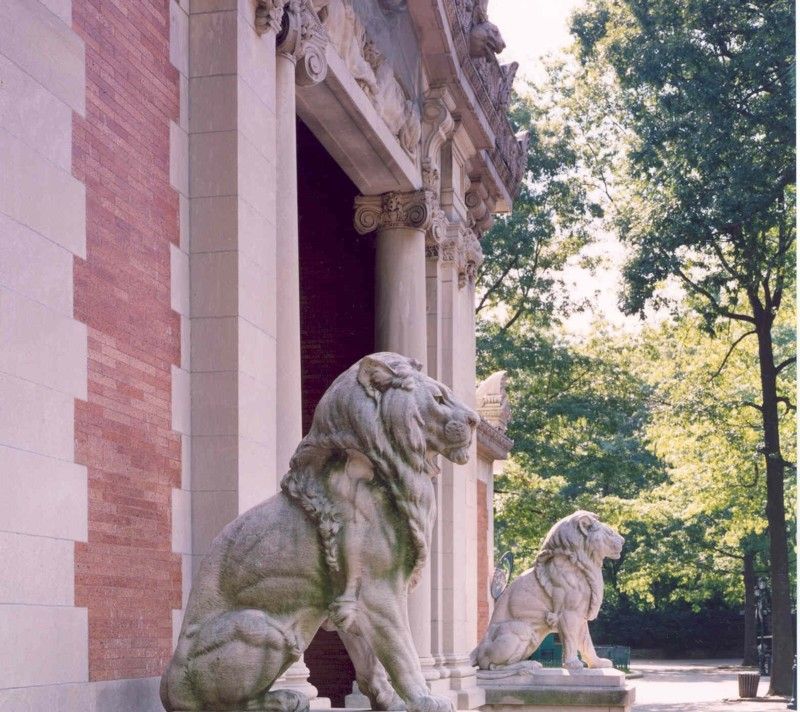
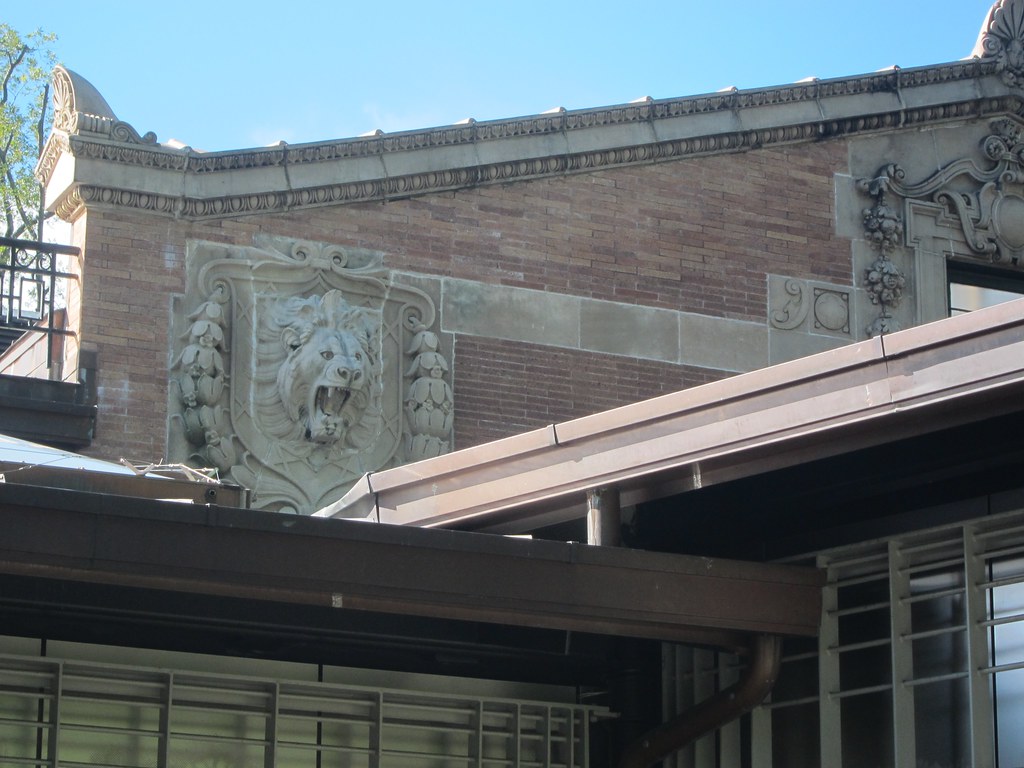
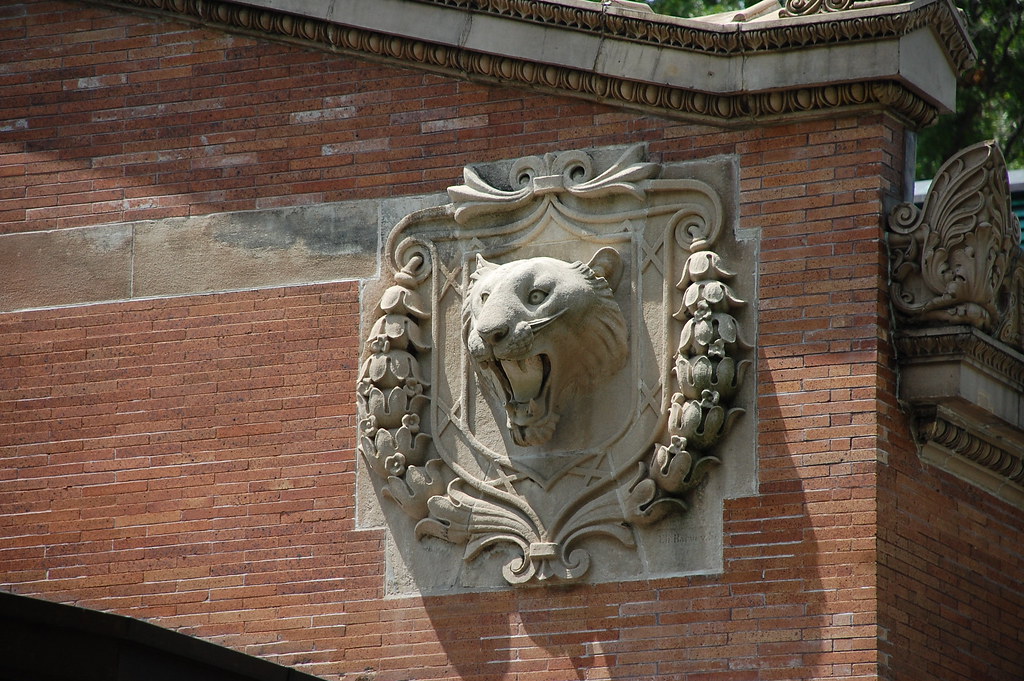
In addition to the excellent exhibit that Madagascar! is, the pure artwork that is the old Lion house (as well as all the Astor Court buildings) is something I'd urge every Bronx visitor to pay close attention to. The masterfully carved decor on these buildings isn't something well documented on ZC I don't think (I suppose I should change that!), but every one of these buildings are beautiful and a gem of the US zoo world in their own right.

Here's a handful of images I could find online, though they still don't do the art justice!

7675037e224f7a87aac54c981c60f912.jpg

6151364229_86005e3017_b.jpg

Bronx-Zoo-Lion-House-Rear-Entrance-Closeup-With-Middle-Pillar.jpg

4861468215_5024f6a3a4_b.jpg

z.gif

z.gif

z.gif

z.gif

Wildlife-Conservation-Society-1193-Lion-House-sculpture-detail-Lion-MAD-BZ-09-00-03-e1433260176888.jpg


z.gif

~Thylo
 
In addition to the excellent exhibit that Madagascar! is, the pure artwork that is the old Lion house (as well as all the Astor Court buildings) is something I'd urge every Bronx visitor to pay close attention to. The masterfully carved decor on these buildings isn't something well documented on ZC I don't think (I suppose I should change that!), but every one of these buildings are beautiful and a gem of the US zoo world in their own right.

Here's a handful of images I could find online, though they still don't do the art justice!

7675037e224f7a87aac54c981c60f912.jpg

6151364229_86005e3017_b.jpg

Bronx-Zoo-Lion-House-Rear-Entrance-Closeup-With-Middle-Pillar.jpg

4861468215_5024f6a3a4_b.jpg

z.gif

z.gif

z.gif

z.gif

Wildlife-Conservation-Society-1193-Lion-House-sculpture-detail-Lion-MAD-BZ-09-00-03-e1433260176888.jpg


z.gif

~Thylo

Every time I go it's too bright to get decent photos of the buildings like I want, but I did take this last year.

21a - Copy.jpg
 

Attachments

  • 21a - Copy.jpg
    21a - Copy.jpg
    281.1 KB · Views: 144
Thanks @pachyderm pro for the continued great work on this thread, with lots of interesting comments from others along the way. The 6th selection, Madagascar! at Bronx Zoo, is one that I saw in 2008 during my one and only visit to that famous New York City zoological garden. The historic architecture, incredibly detailed exhibits and choice selection of species offsets the all-indoor enclosures.

It is amusing for me to recall meeting the long-time director of NaturZoo Rheine (Germany) in 2019 and Achim Johann is an avid zoo nerd, having visited more than a hundred zoos on each side of the Atlantic. He could not believe that the lemurs at the Bronx Zoo had zero outdoor access, as at his zoo the half-dozen species usually have 24/7 access to their indoor and outdoor areas. It's clearly a flaw at the Bronx Zoo, as an outdoor exhibit would allow for a tremendous amount of enrichment (smells, grass, insects, sunshine, etc.) for the lemurs. Also, many people have watched the Bronx Zoo television series and it's surprising to note a few of the quirks of the Madagascar House. For example, the Ring-tailed Lemurs are taken from their entirely indoor exhibit each evening and put into a fairly small metal cage behind the scenes for approximately 16+ hours...then let back into their all-indoor exhibit each morning. Hmmm...would that fly in Germany? I think not.

Lastly, while the exhibits are definitely hit and miss, and it's clearly not Omaha's finest building, when I saw Expedition Madagascar in 2018 there was a very impressive selection of animals. Bronx and Omaha really do lead the way in American zoos when it comes to Madagascan wildlife.

Expedition Madagascar species list (40 species?): Fossa, Aye-aye, Red Ruffed Lemur, Black-and-White Ruffed Lemur, Ring-tailed Lemur, Black Lemur, Mongoose Lemur, Common Brown Lemur, Red-collared Brown Lemur, Crowned lemur, Grey Mouse Lemur, Giant Jumping Rat, Straw-coloured Fruit Bat, Madagascar Ibis, Madagascar Teal, Madagascar Button Quail, Lesser Vasa Parrot, Radiated Tortoise, Flat-tailed Tortoise, Madagascar Big-headed Turtle, Malagasy Hognose Snake, Madagascar Ground Boa, Plated Lizard, Spiny-tailed Iguana, Cheke's Day Gecko, Giant Day Gecko, Oustalet's Chameleon, Panther Chameleon, Powder Blue Reed Frog, Tomato Frog plus various Mantellas and freshwater fish.
 
I've said this before, but Nashville really is cruel for going out of their way to obtain so many rare small carnivores just to keep them behind the scenes. :p

I know Jim Breheny (director at Bronx and Executive Vice President of the WCS) mentioned wanting to establish a ring-tailed vontsira population in American zoos. Happy to hear there are collections who are interested!

Very happy to hear that there are directors out there interested in keeping rare and obscure species.
 
Just because an exhibit is indoors doesn’t necessarily mean it’s worse than an outdoors exhibit. As long as the exhibit fulfills the animal’s needs, I see no problem with it being indoors.
The late Bib Fortuna would fiercly disagree with you here, and as pointed out by @snowleopard , this wouldn't fly in other countries. Even more so with the small night quarters he's mentioned above. Imho, if you have the options and means to offer suitable outdoor enclosures for your animals (and I'm quite certain the Bronx Zoo would have had both), in particular primates, you should go for it. In this regard, the Madagascar complex looks very nice to the visitor, but might not be optimal for all the animals kept within. And no, that’s not nitpicking. ;)
 
While the Madagascar! crocodile exhibit may be small and all indoors, it has still always been a very memorable exhibit for me. I remember how amazed I was when I saw it in person for the first time, due to the jarring and surprising transition from the lush sifaka habitat in the first room of Madagascar, to the harsh wet caves in the second. The crocodiles themselves are also enormous in scale and it was incredible to see them swimming with the fish right up against the glass.
 
While I won't deny that outdoor enclosures would have been a nice addition, I really don't think it's as big of a necessity as it's being made out to be. All three of the main lemur enclosures have skylights, a controlled climate system, live plants, natural substrate, high perching opportunities and plenty of areas where they can be out of view of visitors and other lemurs if they so choose. It's also not an exaggeration to say that the indoor exhibits at Bronx are similar in size to most outdoor lemur enclosures. To give a proper comparison, many of Omaha's outdoor lemur exhibits are smaller than Bronx's indoor lemur exhibits. There are also far more brachiation opportunities in the Bronx enclosures and unlike Omaha, the lemurs remain in these exhibits year-round. With all of this said, I struggle to see how the lemurs being taken into their night quarters - in which there are multiple off-exhibit cages for each species - is any different than having them brought in from an outdoor exhibit every night.

What NaturZoo Rheine has provided for their lemurs is fantastic, especially the 24/7 access to the outdoors during the warmer months. However, it also gets pretty cold in Germany and they too must bring their lemurs indoors for half of the year, indoor enclosures that are also much smaller than Bronx may I add. I don't say this to discredit Rheine and their excellent lemur complex, but merely to compare the pros and cons of each facility. Bronx may keep lemurs in indoor-only exhibits, but those indoor exhibits are incredibly dynamic and are far better than many outdoor enclosures at other zoos. Rheine has an amazing outdoor lemur exhibit that is great during the Summer, but their indoor quarters aren't nearly as large and well-designed as the ones at Bronx.
 
While I won't deny that outdoor enclosures would have been a nice addition, I really don't think it's as big of a necessity as it's being made out to be. All three of the main lemur enclosures have skylights, a controlled climate system, live plants, natural substrate, high perching opportunities and plenty of areas where they can be out of view of visitors and other lemurs if they so choose. It's also not an exaggeration to say that the indoor exhibits at Bronx are similar in size to most outdoor lemur enclosures. To give a proper comparison, many of Omaha's outdoor lemur exhibits are smaller than Bronx's indoor lemur exhibits. There are also far more brachiation opportunities in the Bronx enclosures and unlike Omaha, the lemurs remain in these exhibits year-round. With all of this said, I struggle to see how the lemurs being taken into their night quarters - in which there are multiple off-exhibit cages for each species - is any different than having them brought in from an outdoor exhibit every night.

What NaturZoo Rheine has provided for their lemurs is fantastic, especially the 24/7 access to the outdoors during the warmer months. However, it also gets pretty cold in Germany and they too must bring their lemurs indoors for half of the year, indoor enclosures that are also much smaller than Bronx may I add. I don't say this to discredit Rheine and their excellent lemur complex, but merely to compare the pros and cons of each facility. Bronx may keep lemurs in indoor-only exhibits, but those indoor exhibits are incredibly dynamic and are far better than many outdoor enclosures at other zoos. Rheine has an amazing outdoor lemur exhibit that is great during the Summer, but their indoor quarters aren't nearly as large and well-designed as the ones at Bronx.
I think many people don’t like the “look” of keeping primates indoors, but to me it’s perfectly fine if they have enough space, climbing opportunities, sunlight, and vegetation. Bronx does this perfectly so I find Madagascar great in terms of animal welfare.
 
Last edited:
Keep in mind that, while there are advantages to outdoor exhibits, such as the enrichment options being outdoors provides, I feel it's also important to acknowledge that giving outdoor access also has some cons:
- For cold climate zoos, outdoor exhibits can't be accessed year-round for many species. I'm not saying Bronx has this problem, but many zoos are tight on space and hence it'd be more effective building a big indoor exhibit that is always accessible instead of building a big outdoor exhibit that can't be accessed all year connected to a small indoor exhibit. While it may be ideal for there to be both indoor and outdoor exhibits, if I had the choice of giving a non-cold tolerant species a good indoor exhibit or a good outdoor exhibit, nine times out of ten I'd choose the good indoor exhibit.
- From a weather perspective, outdoor exhibits are harder to maintain over time. A storm coming through is much more likely to damage an outdoor exhibit with mesh or chain link barriers than a building built of concrete, bricks, etc. Furthermore, over time the weather is going to cause wear and tear on outdoor exhibits that will require replacement/repairs more often than an indoor exhibit. This is especially true when snow is involved. There's a good reason that most large outdoor aviaries in the US are located in southern states, whereas northern states are much more likely to build aviaries indoors (e.g. under a geodesic dome).
- Outdoor exhibits can lead to contact with wild animals, which leads to an increased risk of disease transmission into a zoo population. Most recently, this was seen in the case of the Avian Flu, in which many zoos had to move their birds temporarily indoors due to the risk of disease transmission in outdoor exhibits.
I think really it's important to acknowledge that there are both pros and cons to outdoor exhibits, and also pros and cons to indoor exhibits. I'd be interested to read any actual research on this subject and could provide actual evidence to the behavioral affect indoor vs. outdoor spaces have on captive wildlife, including primates. Unfortunately, I'm not aware of any projects that have tackled this question.

I would agree, however, that one place that the Bronx Zoo should reconsider is the no night access to the exhibit. Whenever it is safe to do so, I'm a huge proponent of access to all portions of an animal's exhibit as much as possible- including both access to full exhibits when the zoo is closed and access to behind-the-scenes spaces when the zoo is open. Neither of these things has happened often enough historically, but some zoos have slowly been making progress on re-evaluating when animals have access to different parts of their exhibits/holding areas. Obviously this doesn't work with all taxa in all exhibits, but when it is a possibility, offering animals the freedom to choose their location in their exhibit is always a great thing to happen.
 
@pachyderm pro & @Pleistocene891 : I usually don't like to anthrophomorize, but: what about confining the two of you strictly indoors for a longer period of time and see whether you feel "perfectly fine" afterwards? The German word for the feeling you'd probably get is Lagerkoller, btw. ;) And no, it's not just the superficial "look"...
When did you visit Germany and Rheine in particular @pachyderm pro ?
There have been many discussions on the advantages (and maybe shockingly new for Neil, even the disadvantages) of (even temporary) adequate outdoor husbandry of zoo animals, both in the relevant scientific literature and even on ZC, for decades. Going into the details would probably lead even further OT than necessary. Let's just say I do not agree with your assessment. In some countries and species, not offering outdoor enclosures could even be considered illegal.
Well, probably it's another culture clash.*shrugs*
 
Last edited:
What NaturZoo Rheine has provided for their lemurs is fantastic, especially the 24/7 access to the outdoors during the warmer months. However, it also gets pretty cold in Germany and they too must bring their lemurs indoors for half of the year, indoor enclosures that are also much smaller than Bronx may I add.
Why do you think they are only allowed outside during "the warmer months"? You might be surprised if you found out that most zoos outside the USA don't lock their animals away inside a building as soon as winter starts.

I struggle to see how the lemurs being taken into their night quarters - in which there are multiple off-exhibit cages for each species - is any different than having them brought in from an outdoor exhibit every night.
But, don't you think it is peculiar having an entirely indoors exhibit and yet locking the animals out of it at night? These are lemurs, not tigers.

There are also far more brachiation opportunities in the Bronx enclosures
Just a nitpick, but lemurs don't brachiate. Gibbons brachiate. It is not a synonym for "climbing".
 
@pachyderm pro & @Pleistocene891 : I usually don't like to anthrophomorize, but: what about confining the two of you strictly indoors for a longer period of time and see whether you feel "perfectly fine" afterwards? The German word for the feeling you'd probably get is Lagerkoller, btw. ;) And no, it's not just the superficial "look"...
When did you visit Germany and Rheine in particular @pachyderm pro ?
There have been many discussions on the advantages (and maybe shockingly new for Neil, even the disadvantages) of (even temporary) adequate outdoor husbandry of zoo animals, both in the relevant scientific literature and even on ZC, for decades. Going into the details would probably lead even further OT than necessary. Let's just say I do not agree with your assessment. In some countries and species, not offering outdoor enclosures could even be considered illegal.
Well, probably it's another culture clash.*shrugs*
You said you don’t like to anthropomorphize, but you just did. Comparing human emotions to animal emotions doesn’t make any sense. Also I tend to stay in my house a lot. I only need to leave my house to either buy things, exercise, and socialize. Lemurs have access to all of these things inside their enclosure so there’s really no need for them to move outside.
 
@pachyderm pro & @Pleistocene891 : I usually don't like to anthrophomorize, but: what about confining the two of you strictly indoors for a longer period of time and see whether you feel "perfectly fine" afterwards? The German word for the feeling you'd probably get is Lagerkoller, btw. ;)
Well that's just the thing, I'm not a lemur :p. If we were to go down this rabbit-hole, should we wonder how reptiles and fish feel "confined" to strictly indoor exhibits?
When did you visit Germany and Rheine in particular @pachyderm pro ?
All I said was that the indoor exhibits at Rheine are smaller than the indoor exhibits at Bronx, which is an objective fact. I'm sure the enclosures there are perfectly suitable for their inhabitants and I wasn't saying one was better or worse. I was simply making a comparison between two husbandry methods.
Going into the details would probably lead even further OT than necessary. Let's just say I do not agree with your assessment.
Fair enough. Nothing wrong with agreeing to disagree.
Why do you think they are only allowed outside during "the warmer months"? You might be surprised if you found out that most zoos outside the USA don't lock their animals away inside a building as soon as winter starts.
Perhaps I should have rephrased this. Of course the lemurs will have occasional access to their outdoor space during the colder months, but they still spend quite a lot of times indoors during that period.
But, don't you think it is peculiar having an entirely indoors exhibit and yet locking the animals out of it at night? These are lemurs, not tigers.
I believe this is done to give the plants a break from being torn apart by the inhabitants.
 
Well that's just the thing, I'm not a lemur :p. If we were to go down this rabbit-hole, should we wonder how reptiles and fish feel "confined" to strictly indoor exhibits?
If you were a lemur, you would probably know that you can't brachiate.:p:p As for your little dig at my zoo: who says that my animals are all strictly kept indoors? Come to Europe to see for yourself; then you can also visit the local establishments and feel the local weather in person. ;)
All I said was that the indoor exhibits at Rheine are smaller than the indoor exhibits at Bronx, which is an objective fact. I'm sure the enclosures there are perfectly suitable for their inhabitants and I wasn't saying one was better or worse. I was simply making a comparison between two husbandry methods.
Please read again what @Chlidonias wrote. And for a truly fair comparison, you'd have to come to Rheine yourself.
Fair enough. Nothing wrong with agreeing to disagree
Your words; not mine...
 
I just responded to your question on how I would feel being “locked up”. I never said it was the norm.
True; I'd surprised if lemurs bought things...
But maybe, just maybe, does your reclusive indoor lifestyle influence your individual conception of what you think makes an adequate lemur exhibit. Which might not be the universal truth. Hence my rare attempt at anthrophomorization, to make you reconsider your opinion.
 
Back
Top