America's 50 Must See Zoos

I feel like some of what you included in here should have been included in the review, because your arguments are making more sense to me.

Also, Buttonwood has rarities like Ma's Night Monkey
Nancy Ma’s Night Monkey isn’t very rare, as it can be found at quite a few private collections and Roadside Zoos.
Nancy Ma's Night Monkeys may not be a rarity, but Buttonwood also has some very rare Waterfowl species, such as pink-footed Geese and Magellan Geese, along with Sora Rail.
 
Nancy Ma's Night Monkeys may not be a rarity, but Buttonwood also has some very rare Waterfowl species, such as pink-footed Geese and Magellan Geese, along with Sora Rail.

Most zoos have a few rarities, I don't think that automatically makes a zoo "must see" except for the individuals who really want to see those species.
 
Most zoos have a few rarities, I don't think that automatically makes a zoo "must see" except for the individuals who really want to see those species.
I agree, Buttonwood Park Zoo likely should not be included in this thread, and most zoos do have some rarities. However, I'd also argue that Central Park Zoo doesn't exactly belong here either, but respect @pachyderm pro's decision to include it.
 
North Carolina - Duke Lemur Center

Founded: 1966
Size: 85 Acres (34 Hectares)
Species & Subspecies (On and Off Exhibit): 13
Mammals 13
Birds 0
Reptiles & Amphibians 0
Fish 0
Invertebrates 0


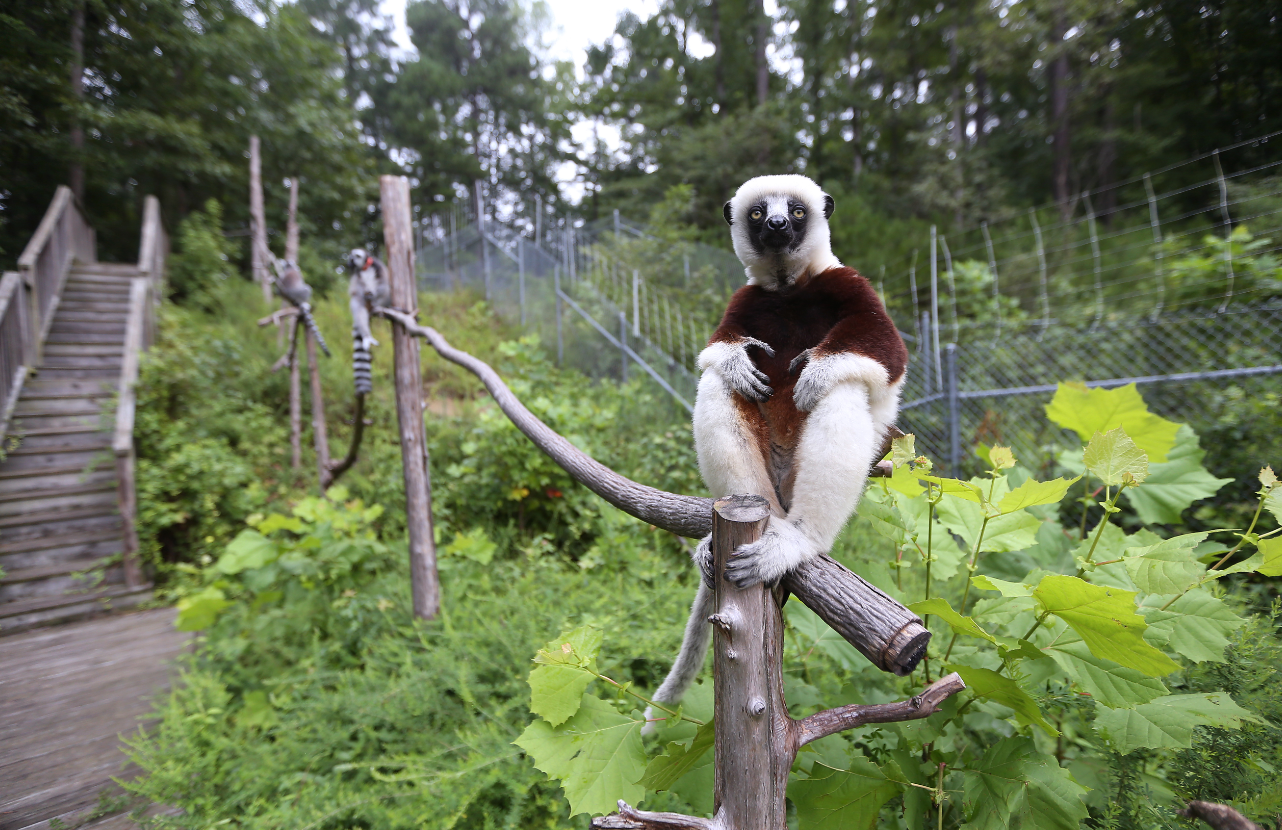
Who would have guessed the largest population of lemurs outside of Madagascar would be found at the campus of one of America's most prestigious schools. The Duke Lemur Center is only open for guided tours that must be booked in advance and while there’s no guarantee you will see all 12 lemur species present on any given tour, you will see at least a few species that are uncommon in zoos worldwide such as red-bellied and red-fronted lemurs. The standard tour is relatively cheap, but the more expensive guided tour option involves entering some of the multi-acre free ranging lemur habitats that utilize the existing forest area. It works wonders when it comes to creating an amazing environment for the lemurs and visitors, as observing a family of coquerel's sifaka traversing the treetops with no barriers is spectacular. There are many smaller, functional cages connected to a large building as well as other enclosures scattered through the grounds. The various groups of lemurs will rotate between the naturalistic forest habitats and the more traditional ones depending on the circumstances. There is also a dedicated nocturnal building that features even more rarities such as aye-aye, gray mouse lemur, and fat-tailed dwarf lemur, as well as some mohol bushbabies which are the only non-lemur residents at the facility. With over 3,200 births since its founding, the center has been a big contributor to in-situ and ex-situ conservation initiatives and overall you'd be hard pressed to find a more in depth experience with lemurs at any other zoo.

full

One of the Walkthrough Lemur Enclosures, @jayjds2
full

Various Lemur Enclosures, @Arizona Docent
full

Aye-aye Enclosure, @jayjds2
duke-lemur-center-321.jpg

Indoor Lemur Enclosures, barnhillcontracting.com
NHE-1.png

Coquerel's Sifaka and Ring-tailed Lemur Walkthrough Enclosure, lemur.duke.edu

Zoochat Gallery:
Duke Lemur Center - ZooChat

Zoo Website:
Home - Duke Lemur Center

Zoo Map:
N/A
 
Why do I have the gut feeling that this will start a discussion similar to that of the listing of White Oak?
It won’t. Duke is much cheaper than White Oak and imo is very much a must-see facility. Unlike White Oak, a majority of Duke’s animals can only be seen there or at a few other facilities across the country. Yes, White Oak has some wonderful habitats and some rarities as well, but I feel like Duke just gives visitors a better experience for the expense paid.
 
One facility I would add, being a similar concept to Duke Lemur Center in that they are both taxonomically specialized facilities is the International Crane Foundation.
We haven't gotten there yet, it might still be on the list (if it is, it will probably the last one covered).
 
  • Like
Reactions: CMP
North Carolina - North Carolina Zoo

Founded: 1976
Size: 2,600 Acres (1,052 Hectares)
Species & Subspecies (On and Off Exhibit): 242
Mammals 45
Birds 86
Reptiles & Amphibians 84
Fish 16
Invertebrates 11


Set on a beautiful forested property in the rural countryside, North Carolina is one of the largest traditional zoos in America. Despite this, the species list is considerably smaller than many of the collections it dwarfs in size. There's only a focus on two continental zones with North American and African sections on opposite ends of the park, but the focus on just two parts of the world on an enormous site means that there are some truly huge exhibits. The North American area is extremely comprehensive covering several different biomes and regions. The polar bear complex is a particularly impressive development that takes a much different approach than most. Instead of the usual open tundra environment, a variety of well-planted furnishings and large conifer trees create a forest edge habitat. Other highlights of this area include various aquariums for alcids and native fish, an incredibly dense cypress swamp habitat, and a massive prairie habitat for elk and bison. At the center of the grounds is a modest Desert Dome that originally had a Sonoran desert focus, but has recently branched out with species like sand cat and gray mouse lemur. The African section has a smaller collection that focuses almost exclusively on crowd-pleasing mammals, but has some even larger exhibits with the highlights being a seven-acre elephant paddock and the whopping 43-acre Watani Grasslands exhibit with white rhinos, ostriches and a variety of different antelope. Unfortunately the closure of the African Pavilion saw the removal of many smaller species and hopefully the zoo can find a way to have some return one day. Before then however, the current priority is completing the long awaited Asian and Australian complexes. With two new continental zones being added, the collection will be rounded out better than ever and North Carolina will continue to elevate its position into the upper echelon of zoos worldwide.

full

Watani Grasslands, @Breckenridge
full

Polar Bear Exhibit, @Coelacanth18
full

Magnum Desert Dome, @Coelacanth18
full

American Alligator Exhibit, @Milwaukee Man
full

African Elephant Exhibit, @kpd_86

Zoochat Gallery:
North Carolina Zoo - ZooChat

Zoo Website:
The North Carolina Zoo - Asheboro, NC | North Carolina Zoo

Zoo Map:
https://www.nczoo.org/sites/default/files/2021-11/CovidParkMap_November.pdf
 
North Carolina - Sylvan Heights Bird Park

Founded: 2006
Size: 18 Acres (7.2 Hectares)
Species & Subspecies (On and Off Exhibit): 241+
Mammals 0
Birds 240+
Reptiles & Amphibians 1
Fish 0
Invertebrates 0

Unlike our neighbors across the pond, the United States lacks many significant avian facilities. That’s not at all to say that there aren’t any places that standout however, you just have to dig a little deeper to find them. Sylvan Heights boasts the largest collection of waterfowl in the world and includes dozens upon dozens of rarities, including many of which it is the only holder in the country. It has existed for many decades after a couple from England sought to create a facility to breed rare waterfowl, but only opened to the public about 15 years ago. Since then the overall bird collection has expanded to become the second largest in the United States. All of the big walkthrough aviaries are continentally focused with the exception of a large multinational aviary with ducks, teals, eiders and pochards from all parts of the world. They are all functionally designed with well furnished interiors and the diversity within them is incredibly impressive. Various smaller aviaries dot the grounds including a feeding aviary with some exotics alongside the more traditional budgies and sun conures, plus a mid-sized tropical house. One of the newest sections has been titled Birds of Paradise, although only raggiana bird-of-paradise is present in the collection. The selection of more charismatic birds is very good as well, all four species of flamingo that can be found in American collections are present and there are at least five species of crane. Beyond the main facility there is also a private avian breeding center that rears over 1,000 chicks annually and the park is involved with various local conservation projects.

full

General View, @Coelacanth18
full

Eurasian Aviary, @jayjds2
full

Wings of the Tropics, @Coelacanth18
full

Birds of Paradise Aviary, @Coelacanth18
full

Multinational Aviary, @jayjds2

Zoochat Gallery:
Sylvan Heights Bird Park - ZooChat

Zoo Website:
Sylvan Heights Bird Park

Zoo Map:
https://shwpark.com/images/park_map_2021.jpg
 
North Carolina - Sylvan Heights Bird Park

Founded: 2006
Size: 18 Acres (7.2 Hectares)
Species & Subspecies (On and Off Exhibit): 241+
Mammals 0
Birds 240+
Reptiles & Amphibians 1
Fish 0
Invertebrates 0

Unlike our neighbors across the pond, the United States lacks many significant avian facilities. That’s not at all to say that there aren’t any places that standout however, you just have to dig a little deeper to find them. Sylvan Heights boasts the largest collection of waterfowl in the world and includes dozens upon dozens of rarities, including many of which it is the only holder in the country. It has existed for many decades after a couple from England sought to create a facility to breed rare waterfowl, but only opened to the public about 15 years ago. Since then the overall bird collection has expanded to become the second largest in the United States. All of the big walkthrough aviaries are continentally focused with the exception of a large multinational aviary with ducks, teals, eiders and pochards from all parts of the world. They are all functionally designed with well furnished interiors and the diversity within them is incredibly impressive. Various smaller aviaries dot the grounds including a feeding aviary with some exotics alongside the more traditional budgies and sun conures, plus a mid-sized tropical house. One of the newest sections has been titled Birds of Paradise, although only raggiana bird-of-paradise is present in the collection. The selection of more charismatic birds is very good as well, all four species of flamingo that can be found in American collections are present and there are at least five species of crane. Beyond the main facility there is also a private avian breeding center that rears over 1,000 chicks annually and the park is involved with various local conservation projects.

full

General View, @Coelacanth18
full

Eurasian Aviary, @jayjds2
full

Wings of the Tropics, @Coelacanth18
full

Birds of Paradise Aviary, @Coelacanth18
full

Multinational Aviary, @jayjds2

Zoochat Gallery:
Sylvan Heights Bird Park - ZooChat

Zoo Website:
Sylvan Heights Bird Park

Zoo Map:
https://shwpark.com/images/park_map_2021.jpg
Wow, thanks for pointing this place out, I did not know it existed!
 
Great to see this gem on the list. My first visit in 2016 I couldn’t find much about it but drove over for a day trip and fell in love with the place. So much to see and the non-waterfowl collection has only improved since then. Its not flashy but it doesn’t need to be. Also worth mentioning is the zoo is along a creek with a variety of native wildlife. I’ve seen deer, beaver, yellow-billed cuckoo, and such.
 
North Carolina - Sylvan Heights Bird Park

Founded: 2006
Size: 18 Acres (7.2 Hectares)
Species & Subspecies (On and Off Exhibit): 241+
Mammals 0
Birds 240+
Reptiles & Amphibians 1
Fish 0
Invertebrates 0

Unlike our neighbors across the pond, the United States lacks many significant avian facilities. That’s not at all to say that there aren’t any places that standout however, you just have to dig a little deeper to find them. Sylvan Heights boasts the largest collection of waterfowl in the world and includes dozens upon dozens of rarities, including many of which it is the only holder in the country. It has existed for many decades after a couple from England sought to create a facility to breed rare waterfowl, but only opened to the public about 15 years ago. Since then the overall bird collection has expanded to become the second largest in the United States. All of the big walkthrough aviaries are continentally focused with the exception of a large multinational aviary with ducks, teals, eiders and pochards from all parts of the world. They are all functionally designed with well furnished interiors and the diversity within them is incredibly impressive. Various smaller aviaries dot the grounds including a feeding aviary with some exotics alongside the more traditional budgies and sun conures, plus a mid-sized tropical house. One of the newest sections has been titled Birds of Paradise, although only raggiana bird-of-paradise is present in the collection. The selection of more charismatic birds is very good as well, all four species of flamingo that can be found in American collections are present and there are at least five species of crane. Beyond the main facility there is also a private avian breeding center that rears over 1,000 chicks annually and the park is involved with various local conservation projects.

full

General View, @Coelacanth18
full

Eurasian Aviary, @jayjds2
full

Wings of the Tropics, @Coelacanth18
full

Birds of Paradise Aviary, @Coelacanth18
full

Multinational Aviary, @jayjds2

Zoochat Gallery:
Sylvan Heights Bird Park - ZooChat

Zoo Website:
Sylvan Heights Bird Park

Zoo Map:
https://shwpark.com/images/park_map_2021.jpg

Just recently considered a weekend trip to Raleigh for this coming May, just to go to the North Carolina Zoo, but I'm gonna have to consider whether or not I want to go there, to Duke Lemur Center, or to this place that I'd never heard of before this post. Or all three...somehow.
 
Ohio - Cincinnati Zoo

Founded: 1875
Size: 65.5 Acres (26.5 Hectares)
Species & Subspecies (On and Off Exhibit): 381
Mammals 98
Birds 127
Reptiles & Amphibians 96
Fish 12
Invertebrates 46

Not quite the first zoo in the country, but still one of the oldest and most significant collections to be found in the states. Cincinnati has been a pioneer in the American zoo world ever since it’s conception with several firsts under its belt. The insectarium was the first of its kind in the county and is still widely considered the best of its kind by many. The listed buildings are quite remarkable even if they aren’t anything special when it comes to exhibiting animals. The reptile house was originally the monkey house and is the oldest existing animal building in America. The elephant house similarly is an absolutely beautiful structure that is also over a century old and it will be interesting to see how it’s going to be utilized once the elephants are shifted into a new complex next year. Recent developments have focused almost exclusively on common ABC species, a significant contrast to the days when rarities were brought in frequently. While they aren’t as prevalent as they once were, there are still many to be found with the nocturnal collection being particularly strong including potto, aye-aye, ringtail, large-spotted genet and North America's only aardwolves. However, the zoo has never been one to shy away from that legacy. A listed aviary formally home to the last known passenger pigeon in existence has been carefully converted into a thought provoking memorial for the species. The park is also notable for being the last holder of the Sumatran rhino in the Western Hemisphere and it can’t help but sting just a little that their old exhibit is now occupied by a ropes course. The botanical gardens are also extensive and the stunning historic buildings complimented with gorgeous flora add up to make one of the most visually pleasing zoos in America.

full

Botanical Gardens with Reptile House, @Moebelle
full

World of Insects, @Moebelle
full

Indoor Gorilla Exhibit, @Moebelle
full

Elephant House, @Moebelle
full

African Savannah, @ZooNerd1234

Zoochat Gallery:
https://www.zoochat.com/community/media/categories/cincinnati-zoo-and-botanical-garden.604/

Zoo Website:
Welcome to the Cincinnati Zoo - Cincinnati Zoo & Botanical Garden®

Zoo Map:
https://cincinnatizoo.org/system/assets/uploads/2022/01/Entry_Map_1-17-22-01-scaled.jpg
 
Ohio - Columbus Zoo

Founded: 1927
Size: 148 Acres (60 Hectares)
Species & Subspecies (On and Off Exhibit): 556
Mammals 106
Birds 136
Reptiles & Amphibians 97
Fish 138
Invertebrates 79


Columbus might be the most quintessentially American zoo all of all time. It loves it's mock-rock temples, over-the-top thematics, and has no problem dropping in a few roller coasters here and there. Luckily, it was at the very least willing to regulate most of the amusement attractions into a single section of the park away from the main zoo. In spite of the occasional theme park-esque atmosphere, it doesn't come at the expense of the exhibit quality which is consistently top-notch. The manatee building is fantastic, as is the Australian collection with koala, wombat, Tasmanian devil and others. The polar bear exhibit is the only one in the United States that rivals Detroit and the collection of North American fauna in general is quite extensive with wolverine, moose and a migratory bird aviary standing out. The North American exhibits also manage to avoid excessive theming, which cannot be said for most of the other exhibit complexes. The African area culminates in a beautiful savannah habitat, but the satellite exhibits are fitted with thematic touches like a crashed jet plane in the windows of the lion exhibit or a backyard barbecue in the vervet monkey enclosure. Those are admittedly fun for guests, so not the most egregious examples by any means. That description is better reserved for the orangutan exhibit or the rather shocking animal ambassador complex which may be the biggest zoological misfire in recent history. At a facility where so much money is spent on theming and immersion, it may come as a surprise to find what’s very much a Howletts-inspired gorilla enclosure in the African Forest section, contrasting a rather lush bonobo habitat. Compared to America's other zoological juggernauts, it's very much a place that will be found more or less alluring depending on taste, but regardless there are dozens of fantastic animal habitats that make the zoo among the best.

full

Polar Bear Exhibit, @ZooNerd1234
full

African Savannah, @Kudu21
full

Manatee Tank, @Moebelle
full

Australasian Aviary, @Moebelle
full

Gorilla Exhibit, @geomorph

Zoochat Gallery:
Columbus Zoo and Aquarium - ZooChat

Zoo Website:
Columbus Zoo and Aquarium - Home

Zoo Map:
https://columbuszoo.org/Media/image.../cza_park_map_2021_web.jpg?sfvrsn=64d3bfa6_3/
 
Ohio - Columbus Zoo

Founded: 1927
Size: 148 Acres (60 Hectares)
Species & Subspecies (On and Off Exhibit): 556
Mammals 106
Birds 136
Reptiles & Amphibians 97
Fish 138
Invertebrates 79


Columbus might be the most quintessentially American zoo all of all time. It loves it's mock-rock temples, over-the-top thematics, and has no problem dropping in a few roller coasters here and there. Luckily, it was at the very least willing to regulate most of the amusement attractions into a single section of the park away from the main zoo. In spite of the occasional theme park-esque atmosphere, it doesn't come at the expense of the exhibit quality which is consistently top-notch. The manatee building is fantastic, as is the Australian collection with koala, wombat, Tasmanian devil and others. The polar bear exhibit is the only one in the United States that rivals Detroit and the collection of North American fauna in general is quite extensive with wolverine, moose and a migratory bird aviary standing out. The North American exhibits also manage to avoid excessive theming, which cannot be said for most of the other exhibit complexes. The African area culminates in a beautiful savannah habitat, but the satellite exhibits are fitted with thematic touches like a crashed jet plane in the windows of the lion exhibit or a backyard barbecue in the vervet monkey enclosure. Those are admittedly fun for guests, so not the most egregious examples by any means. That description is better reserved for the orangutan exhibit or the rather shocking animal ambassador complex which may be the biggest zoological misfire in recent history. At a facility where so much money is spent on theming and immersion, it may come as a surprise to find what’s very much a Howletts-inspired gorilla enclosure in the African Forest section, contrasting a rather lush bonobo habitat. Compared to America's other zoological juggernauts, it's very much a place that will be found more or less alluring depending on taste, but regardless there are dozens of fantastic animal habitats that make the zoo among the best.

full

Polar Bear Exhibit, @ZooNerd1234
full

African Savannah, @Kudu21
full

Manatee Tank, @Moebelle
full

Australasian Aviary, @Moebelle
full

Gorilla Exhibit, @geomorph

Zoochat Gallery:
Columbus Zoo and Aquarium - ZooChat

Zoo Website:
Columbus Zoo and Aquarium - Home

Zoo Map:
https://columbuszoo.org/Media/image.../cza_park_map_2021_web.jpg?sfvrsn=64d3bfa6_3/
Columbus is definitely on my "list" of places I want to get to.
 
Ohio - The Wilds

Founded: 1994
Size: 9,000 Acres (3,642 Hectares)
Species & Subspecies (On and Off Exhibit): 25
Mammals 20
Birds 3
Reptiles & Amphibians 1
Fish 0
Invertebrates 1


Drive-through safari parks are a dime a dozen in America and hardly leave anything to the imagination. It's easy to fence off an empty lawn, throw in a few llamas and rheas, and call it a day. The Wilds is the antitheses of these places, providing the drive-through park experience at the largest scale imaginable, literally. It's one of the world's largest zoos in physical space and the views are truly phenomenal. No expense is spared on space, with over 400 acres set aside for a herd of roughly 100 American bison. The cart tour navigates through several giant pastures all hundreds of acres in size, home to large herds of giraffes, rhinos, antelope and equids set in rolling hills and vast plains. The collection is by no means huge with an almost exclusive focus on ungulates and carnivores, but there are a handful of surprises for rarity hunters such as Persian onager, Bactrian deer and Javan banteng. Although most of the grounds are only seen from the cart tour, there are a few areas viewed on foot. The Mid-sized Carnivore Conservation Center has several spacious yards for cheetahs, painted dogs and dholes, all over an acre in size with even more off exhibit. There is also a single offshoot exhibit for Chinese goral and red-crowned crane, plus a small area for eastern hellbender conservation. The park is also a reserve for native wildlife, with designated areas for butterfly watching and year-round birding.

full

General View, @Moebelle
full

One of Several Pastures, @Moebelle
full

Mid-sized Carnivore Conservation Center, @Moebelle
full

Chinese Goral and White-naped Crane Enclosure, @Kudu21
full

American Bison Paddock, @Moebelle

Zoochat Gallery:
The Wilds - ZooChat

Zoo Website:
The Wilds - Home

Zoo Map:
N/A
 
Last edited:
Back
Top