You are using an out of date browser. It may not display this or other websites correctly.
You should upgrade or use an alternative browser.
You should upgrade or use an alternative browser.
Durrell Wildlife Conservation Trust Amphibian identification?
- Thread starter Al
- Start date


JerseyLotte
Well-Known Member
I can't say I've looked in the guidebook anytime recently!
Does the picture look like one of these? The patternation is very variable, there may be lots, may be none...
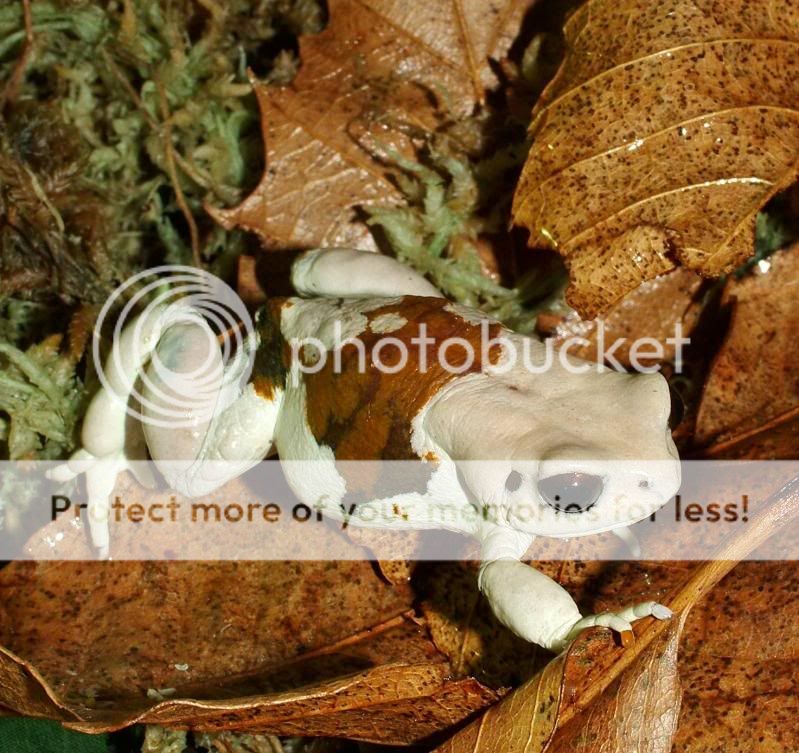
Does the picture look like one of these? The patternation is very variable, there may be lots, may be none...
JerseyLotte
Well-Known Member
Hiya Al,
I'm very happy to hear that you love this species as much as I do!
The pictured species is Nectophrynoides viviparus, the Morogoro Tree Toad.
These wonderful little bufonids are livebearing as the name suggests and have internal fertilisation, fascinating and adorable all at once!
Here in Jersey we have the only (known) captive group of this species worldwide and we also have the world first for breeding them
Cheers!
Lotte***
I'm very happy to hear that you love this species as much as I do!
The pictured species is Nectophrynoides viviparus, the Morogoro Tree Toad.
These wonderful little bufonids are livebearing as the name suggests and have internal fertilisation, fascinating and adorable all at once!
Here in Jersey we have the only (known) captive group of this species worldwide and we also have the world first for breeding them
Cheers!
Lotte***


JerseyLotte
Well-Known Member
There's about as much information as you can find here!
IUCN Red List (version 2009.1) - Nectophrynoides viviparus
They were a confiscation from customs in the UK, so not part of any larger project but they do fit our islands and highlands agenda as a montane species endemic to a small region of Tanzania.
We have 17 individuals currently, working on replicating the initial success is proving troublesome! That or longwinded!
IUCN Red List (version 2009.1) - Nectophrynoides viviparus
They were a confiscation from customs in the UK, so not part of any larger project but they do fit our islands and highlands agenda as a montane species endemic to a small region of Tanzania.
We have 17 individuals currently, working on replicating the initial success is proving troublesome! That or longwinded!

We have 17 individuals currently, working on replicating the initial success is proving troublesome! That or longwinded!
I hope it's not another case like the Omani Cave Fish at Chester which bred in 1992, and never again.
JerseyLotte
Well-Known Member
I hope it's not another case like the Omani Cave Fish at Chester which bred in 1992, and never again.
Certainly nothing like that

We've only had them for 3 years and it's important to remember that working out the initial husbandry of a species that no one else is keeping or has ever kept is challenge enough let alone recreating breeding cues

They're in amplexus constantly through their "wet season", plenty of calling, females seeming to ovulate, but we all know there's so much more to it than just that!
