Animals You've Seen That Few Zoochatters Have Seen

-I'm one of if not the only Zoochatter that has seen Equus ferus caballus (Namib Wild Horse)

-Chacma Baboon

-Antarctic Fur Seal

-Indian yellow-nosed albatross

-Desert Elephant
i have sean the baboon.in sothe africa. i asume that is whare you alos saw it
 
  • Like
Reactions: Nix
I saw chacmas at the old Monkey House at London Zoo in the 1960s.
I don't think they had Chacma in that era?. I was a frequent visitor there, they certainly had both Olive and Yellow, yes.

I've only ever seen Chacmas once in a zoo, I think it was somewhere like Munich, also late 60's.
 
I don't think they had Chacma in that era?. I was a frequent visitor there, they certainly had both Olive and Yellow, yes.

I've only ever seen Chacmas once in a zoo, I think it was somewhere like Munich, also late 60's.
Maybe mine was a false memory and what I saw was a big male baboon of one of those species.
 
Maybe mine was a false memory and what I saw was a big male baboon of one of those species.

They had a mature pair of Olives, called Ebb & Flo (after 'Daily Mirror' cartoon characters I think). 'ebb' was big wth a thick coat. Also an adult male Yellow I think- much more rangy, which they normally are. Chacmas are even bigger and very grey in colour- never seen one in a UK zoo. Tim May would probably know if London(or anywhere) have ever had them though.
 
I saw chacmas at the old Monkey House at London Zoo in the 1960s.
I remember seeing at least one there in the very early 70s.
I don't think they had Chacma in that era?. I was a frequent visitor there, they certainly had both Olive and Yellow, yes.
Like " Pertinax", I remember seeing both olive baboons and yellow baboons in London Zoo's old Monkey House during the 1960s.

Also like "Pertinax", I have no recollection of ever seeing chacma baboons in that building. However, we are going back over half-a-century, so they could have just slipped my mind (although I have very vivid memories of many of that building's other inhabitants).

I have just been through all the ZSL's Annual Reports for the 1960s; there are many references to both yellow and olive baboons but none to chacma baboons. However the Annual Reports from that era did not provide a full species list so that proves nothing.
 
They had a mature pair of Olives, called Ebb & Flo (after 'Daily Mirror' cartoon characters I think). 'ebb' was big wth a thick coat. Also an adult male Yellow I think- much more rangy, which they normally are. Chacmas are even bigger and very grey in colour- never seen one in a UK zoo. Tim May would probably know if London(or anywhere) have ever had them though.
I think it must have been the Yellow male that I saw.
London Zoo definitely had Chacma in the early years. My ‘List of the Animals’ for 1879, gives eighteen accessions of the species between 1861 and 1878
 
Last edited:
Also like "Pertinax", I have no recollection of ever seeing chacma baboons in that building. However, we are going back over half-a-century, so they could have just slipped my mind (although I have very vivid memories of many of that building's other inhabitants).

I am perfectly sure there were no Chacmas there, at least in the 1960's. Like you I have a good memory of most of the inhabitants, even to some of the order of which cages held which species.
 
[
London Zoo definitely had Chacma in the early years. My ‘List of the Animals’ for 1879, gives eighteen accessions of the species between 1861 and 187

Major Stanley Flower records that the ZSL had chacma baboon as long ago as 1831.

(NB Flower uses the scientific name Papio pocarius not Papio ursinus.)
 
An update after my last few trips to Uganda, Kenya, Ecuador, Brazil, Arizona and Cape Cod:

1. African Golden Cat
2. Side-striped Jackal
3. Yellow-winged bat
4. Noack's Dormouse
5. Mauritian Tomb Bat
6. Lord Derby's Anomalure
7. Spectacled Bushbaby
8. Thomas's Bushbaby
9. Prince Demidoff's Bushbaby
10. Johnston's Mangabey
11. Uganda Mangabey
12. Silver Monkey
13. Semliki Red Colobus
14. Ashy Red Colobus
15. Ruwenzori Sun Squirrel
16. Alexander's Bush Squirrel
17. Boehm's Bush Squirrel
18. Link Rat
19. Kemp's Gerbil
20. Franquet's Epauletted Fruit Bat
21. Angolan Free-tailed Bat
22. Ruwenzori Horseshoe Bat
23. Benito Roundleaf Bat
24. Black-fronted Duiker
25. Weyn's Duiker (thermal scope only)
26. Golden Rumped Elephant Shrew
27. Striped Ground Squirrel
28. Northeast African Mole-rat
29. Mountain Gorilla
30. Dent's Monkey
31. Gray Climbing Mouse
32. Golden-rumped Elephant Shrew
33. Eastern Tree Hyrax
34. Kenya Coast Galago
35. Tana River Mangabey
36. Tana River Red Colobus
37. Zanj Sun Squirrel
38. Ochre Bush Squirrel
39. Southern Pouched Rat
40. East African Gerbil
41. Emin's Tateril
42. Nairobi Grass Rat
43. Ruwenzori Thicket Rat
44. Least Long-fingered Bat
45. Little Free-tailed Bat
46. African Sheath-tailed Bat
47. Hairy Slit-faced Bat
48. Heart-nosed Bat
49. Lander's Horseshoe Bat
50. Striped Leaf-nosed Bat
51. African Trident Bat
52. Indian Humpback Dolphin
53. Desert Warthog
54. Coke's Hartebeest
55. Hirola
56. Peter's Gazelle
57. Hinde's Dik-dik
58. Costal Suni
59. Mountain Suni
60. Harvey's Red Duiker
61. Bunyoro Rabbit
62. Ecuadorian Small-eared Shrew
63. Andean Cottontail
64. Stump-tailed Porcupine
65. Taczanowski's Oldfield Mouse
67. Golden-mantled Saddle-back Tamarin
68. Ecuadorean Squirrel Monkey
69. Lemurine Night Monkey
70. Napo Saki
71. Fringe-lipped Bat
72. Maned Sloth
73. Masked Titi
74. Buffy-headed Marmoset
75. Northern Muriqui
76. Guyana Squirrel
77. Little Yellow-shouldered Bat
78. Gray Slender Opossum
79. Bahia Porcupine
80. Coastal Black-handed Titi
81. Big Bonneted Bat
82. White-lined Broad-nosed Bat
83. Lesser Fishing Bat
84. Broad-eared Bat
85. Superagui Lion Tamarin
86. Lami Tuco-tuco
87. Greater Naked-tailed Armadillo
88. Humid Chaco Arboreal Rice Rat
89. Atlantic Forest Arboreal Rice Rat
90. Maués Marmoset
91. Gold-and-white Marmoset
92. Martins's Tamarin
93. Black-handed Tamarin
94. Spix's Red-handed Howler
95. Golden-backed Uakari
96. Neblina Uakari
97. Chestnut-bellied Titi
98. Caqueta Titi
99. Hershkovitz's Titi
100. White-footed Saki
101. Pygmy Brocket
102. Small Red Brocket or Bororo
103. Amazonian Brown Brocket
104. Woodland Vole
105. Arizona Gray Squirrel
106. Arizona Cotton Rat
107. Antelope Jackrabbit
108. Northern Right Whale
109. Sei Whale
 
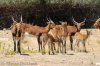
Last week I have done my zoo tour through spain. While the last klipspringer in europe at Bioparc Valencia was the driving force for this journey, at the end the most impressive sighting was probably the last herd of black lechwes (Kobus smithemani) at Safari Madrid, which is difficult to impossible to access without car and that's maybe why this species was hidden from many zoo fans. Unfortunaltely these seem to be the last individuals outside of Africa, I have seen 6 males, 2 females and 2 young. upload_2021-8-12_10-2-26.jpeg
 

Attachments

  • upload_2021-8-12_10-2-26.jpeg
    upload_2021-8-12_10-2-26.jpeg
    165.1 KB · Views: 46
Last week I have done my zoo tour through spain. While the last klipspringer in europe at Bioparc Valencia was the driving force for this journey, at the end the most impressive sighting was probably the last herd of black lechwes (Kobus smithemani) at Safari Madrid, which is difficult to impossible to access without car and that's maybe why this species was hidden from many zoo fans. Unfortunaltely these seem to be the last individuals outside of Africa, I have seen 6 males, 2 females and 2 young. View attachment 502007

Very nice photo of them, gorgeous animals.
 
Back
Top