Are there any Galapagos species besides tortoises in zoos?

It took a little searching but I found it ! In The Avicultural Magazine Vol. 90 number 2 1984 it's written on page 126 News and Vieuws : " All four feature articles in the latest copy of International Zoo News ( Vol. 30, No. 5 ) are devoted to birds. They cover breeding the Noisy Pitta, Egg-laying and incubating in the Emu, The Galapagos Penguin at the Bermuda Govemment Aquarium and advances in hand-rairing techniques of Thick-billed Parrots at Jersey Wildlife Preservation Trust. " It is written by D.C.
I don't have the International Zoo News in which the article was published so I don't know if it's about the Penguins kept in 1930 or about more recently kept Penguins but maybe another ZooChatter has Volume 30 of IZN and can help us out !
 
In the past besides the New York Aquarium, Galapagos penguins were are also held at the Point Defiance Zoo, San Diego Zoo, and SeaWorld San Diego

San Diego Zoo also held Galapagos sea lions from 1957 to 1961
And
San Diego Zoo also held Galapagos fur seal from 1932 to 1935
 
Around 1922 -1923 the Zoological Society of New York made a collecting trip to the Galapagos Islands and collected the following animals :
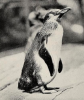
3 Galapagos penguins
2 Galapagos cormorants
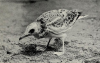
3 Swallow-tailed gulls
1 Buzzard ( not sure about this one because the also collected animals in Middle America that same expedition and they don't give a species name for the Buzzard )
42 Lizards - among them both Land and Sea Iguanas --> the Sea iguanas proofed to be very difficult to get to eat and they didn't eat for more then 100 days. Don't know if they started after that period or if they died.
Some photos of the collected animals :

galapagos land iguana bronx 1923.png
Galapagos land iguana

galapagos penguin bronx 1923.png
Galapagos penguin

young fork-tailed gull at bronx new york 1923.png
Young Fork-tailed gull ( all 3 photos, no copyrights anymore on them )
 

Attachments

  • galapagos land iguana bronx 1923.png
    galapagos land iguana bronx 1923.png
    344.1 KB · Views: 68
  • galapagos penguin bronx 1923.png
    galapagos penguin bronx 1923.png
    275.2 KB · Views: 69
  • young fork-tailed gull at bronx new york 1923.png
    young fork-tailed gull at bronx new york 1923.png
    328.5 KB · Views: 71
I don't have the International Zoo News in which the article was published so I don't know if it's about the Penguins kept in 1930 or about more recently kept Penguins but maybe another ZooChatter has Volume 30 of IZN and can help us out !
I am sorry that it has taken me 7 years to answer this post, but I downloaded the relevant issue some years ago. I have copied the article (effectively by OCR) and corrected all the errors that I could find.
 

Attachments

There is a red-footed booby at Aquarium of the Pacific in the Los Angeles area, I believe.
 
This may sound like a bit of a tall tale, but I have a little anecdote on "marine iguanas" in captivity. In the summer of 1999, maybe 2000 (I was 7 or 8 at the time) I went to the Merced County Fair in Merced, CA, and there was a small reptile menagerie there, "Biggest Alligator in the US", snakes galore, all that jazz. One of the main temporary exhibits was a walled pool with viewing windows, with signs talking about exotic marine iguanas, the Galapagos, etc. The center had rocks piled, with some rugged non-green iguanas resting instead of remotely using the water.

Little me was gullible and enchanted, but when I remembered that experience almost two decades later I looked into it and realized that it was an impossibility. Did some cross-checking with accessible pet trade animals + what I remembered seeing, and I'm pretty sure the guy was displaying Cyclura nubila, Cuban iguanas. Maybe some very unhappy rhinoceros iguanas. I don't know why marine iguanas were the go-to ruse for someone at a carnival in rural California, but it is what it is :p
 
This may sound like a bit of a tall tale, but I have a little anecdote on "marine iguanas" in captivity. In the summer of 1999, maybe 2000 (I was 7 or 8 at the time) I went to the Merced County Fair in Merced, CA, and there was a small reptile menagerie there, "Biggest Alligator in the US", snakes galore, all that jazz. One of the main temporary exhibits was a walled pool with viewing windows, with signs talking about exotic marine iguanas, the Galapagos, etc. The center had rocks piled, with some rugged non-green iguanas resting instead of remotely using the water.

Little me was gullible and enchanted, but when I remembered that experience almost two decades later I looked into it and realized that it was an impossibility. Did some cross-checking with accessible pet trade animals + what I remembered seeing, and I'm pretty sure the guy was displaying Cyclura nubila, Cuban iguanas. Maybe some very unhappy rhinoceros iguanas. I don't know why marine iguanas were the go-to ruse for someone at a carnival in rural California, but it is what it is :p

That is interesting, I wonder if such a ruse has been used elsewhere. Many iguanas are easy enough to come by and are tough enough to withstand poor conditions for some time. The general public wouldn't know the difference between the two.
 
Big, impressive reptiles are all the public needs to be enthusiastic, or fearful yet fascinated. So big ol' iguanas in a group with official-looking signage definitely did the trick, especially for folks who likely didn't even know what a marine iguana was to begin with. I still hear folks calling albino Burmese pythons "banana snakes" years after encountering them at similar events, due to misinformation or the snake simply being named Banana.
 
Some historical notes from London Zoo :
- first Galapagos doves recieved July 11 1893 - 4 of them
1932 small shipment of Galapagos animals recieved :
-4 Marine iguanas
1 Flightless cormorant
5 Galapagos doves
with the Galapagos doves the zoo bred in Aug. 1933 2 young
 
Gabbert Raptor Center in St. Paul, Minnesota, had a flock of 20 Galapagos Hawks starting in 2010. They had the for a few months (possibly a few years) before eventually being released into the wild.
 
Gabbert Raptor Center in St. Paul, Minnesota, had a flock of 20 Galapagos Hawks starting in 2010. They had the for a few months (possibly a few years) before eventually being released into the wild.

Really? Because I can only find info about lending their expertise to design and implement an invasive species mitigation program. Nowhere can I find information stating that hawks were imported to the US, nor does that really make sense in context of what is known.

  • Galapagos National Park, the Charles Darwin Foundation, and Island Conservation asked The Raptor Center to work with them to design and implement a mitigation plan to protect Galapagos hawks during a project to eradicate invasive rats on ten small islands in Galapagos.

History
 
Gabbert Raptor Center in St. Paul, Minnesota, had a flock of 20 Galapagos Hawks starting in 2010. They had the for a few months (possibly a few years) before eventually being released into the wild.

I doubt that's actually true. I think @Ituri's information about them working to help conserve the hawks on the islands is correct. I can't imagine Ecuador allowing export of 20 Galapagos hawks, especially for only a few months/years before returning them.
 
Gabbert Raptor Center in St. Paul, Minnesota, had a flock of 20 Galapagos Hawks starting in 2010. They had the for a few months (possibly a few years) before eventually being released into the wild.
Really? Because I can only find info about lending their expertise to design and implement an invasive species mitigation program. Nowhere can I find information stating that hawks were imported to the US, nor does that really make sense in context of what is known.
I'm guessing that @birdsandbats has read this article (or a similar one) and completely misunderstood it: Raptor Center will round up about 20 Galapagos hawks | MinnPost
 
Some historical notes from London Zoo :

1932 small shipment of Galapagos animals recieved :
-4 Marine iguanas
1 Flightless cormorant
A little more information:-

Lord Moyne presented the four marine iguanas and the flightless cormorant to London Zoo on 20th December 1932; it was the first time that either species has been held at London Zoo.

Sadly, but not surprisingly, the marine iguanas did not live long. The longest-lived individual survived for one year and five months; it died on 27th May 1934.
 
ZTL lists marine iguanas at Belle Vue (25 June-6 September 1964), Berlin Zoo (1964), Frankfurt (1960-62), Jersey (1964), London (1932-4).

I wonder how three zoos all had marine iguanas in 1964.
 
Back
Top