Auckland Zoo Auckland Zoo News 2020

Ref the Marabous - you are wrong. Our breeding male (which had bred successfully before unfortunately he died last winter) and who we'd had for 17 years before his female arrived, was a full imprint.

That is a new info to me. Thanks. All imprinted marabous I did know about were useless at creating any working pair, let alone to sire any chicks.
 
Ref the Flamingos ... spot-on Jana. I would agree with everything you said. Our Greaters have followed exactly that route. Numbers and choice are the key. We hand-reared for the first couple of years following years of 'failures' (which were probably part of the natural build-up cycle of the flock). Now we have 40+ they breed every year and are bomb-proof when nesting. I was cutting grass with a ride-on lawnmower within a metre and a half of the nests just this week and not one bird even stood up!

Ref the Marabous - you are wrong. Our breeding male (which had bred successfully before unfortunately he died last winter) and who we'd had for 17 years before his female arrived, was a full imprint.
Regarding marabous: I guess the male was an outlier as generally speaking imprinted marabou do not do well breeding with their kinsfolk.

I agree that Auckland needs to use every trick of the way to get their birds to double or triple clutch. Greater flamingos really benefit from being in large colonies. I would not suggest a move out from current exclosure (disturbance is major put off for a colony and breeding in next years might be a non-starter).
 
22 Cobble skinks have been born this year:

The cobble skink was discovered in 2007 on a narrow strip of diminishing coastline in Granity, north of Westport on the South Island’s West Coast.

In 2016, with frequent storms threatening their habitat, DOC salvaged all remaining individuals (34) to establish a captive population as insurance against extinction.

The skinks were sent to Auckland Zoo, which also holds Chesterfield skinks, another critically threatened coastal lizard species. There have been few baby cobble skinks until this year, when 22 were born, bringing the population to 49.

Read full article here: Baby boom for rare skinks | Scoop News
 
Auckland Zoo has officially announced that their new High Canopy Habitat for their orangutans and siamangs is open! From their Facebook page:
It’s the news you’ve all been waiting for...our High Canopy habitat is now open!

It’s an exciting time for our Zoo as we welcomed the first visitors into our high canopy habitat, the new home for our orangutans and siamang, earlier today. Opening just in time for the July School Holidays, this incredible and immersive area for our primates (and you!) to enjoy is first phase of our South East Asia Jungle Track to be completed. In time, the track will include a whole host of South East Asian species including new habitats for Sumatran tigers, Asian small-clawed otters as well as a climate-controlled Swamp Forest with Sunda gharial and a school of Indonesian fish.

“To see our orangutans and siamangs – ambassadors for their wild counterparts – having this immersive environment that so brilliantly provides for how I see their species behave in the wild, and ensures their absolute best care, is just wonderful. These primates are among the most intelligent, fascinating and extraordinary animals on our planet, and I can’t wait for our visitors to experience them here in their new home,” says primate team leader Amy.

This work has only been made possible for the Zoo as a part of Regional Facilities Auckland with the fantastic support, trust, and backing of Auckland Council who have shared the excitement and vision for this incredible project.

See more on their website here: Auckland to South East Asia – no passport required! | Auckland Zoo News
 
Last edited:
I found a nice video by the New Zealand Herald that shows a large portion of the new High Canopy Habitat. At around 4:40 the primate team leader mentions that the zoo will begin the slow introduction process to mix the orangutans and siamangs.

Source: NZ Herald
 
Last edited:
News Update

This is a general news update from my visit (12/07/2020):

The Cape porcupine babies (born 18/01/2020) have been sexed as 1.1 and named Ayanfe (male) and Arewa (female).

The zoo now has just two female American alligators - Tallulah is in the larger exhibit; Dixie is in the smaller exhibit. I don’t know what happened to the other three, though I’m guessing they’ve been dispersed to other collections due to aggression between the females.

There have been no further attempts to perform AI on Anjalee the Asian elephant since the two unsuccessful attempts made in 2017-2018.

A male Capybara pup was born 03/05/2020.

Southern white rhinoceros, Jamila, is due to give birth in the next few weeks. Her pregnancy is progressing well.

Plains zebra, Dalila, died early last year aged five years. Layla is pregnant and due in December this year.

The Serval pair have been separated to prevent breeding after three unsuccessful litters.

The zoo have 1.3 Waterbuck - Roy (2016), Etana (2006), Ina (2007) and Kwacha (2008). They are still not on display.

Twin Cotton top tamarins were born 03/12/2019.

The Bornean orangutans are settling in well to their new exhibit. Keepers are surprised how well they have taken to the new exhibit - especially considering how Bornean orangutan are less aboreal than Sumatran orangutan. Wanita is still reluctant to climb compared to the others and spends a lot of time on the ground.

Kera the female Siamang is on contraception and won’t be breeding in the near future.

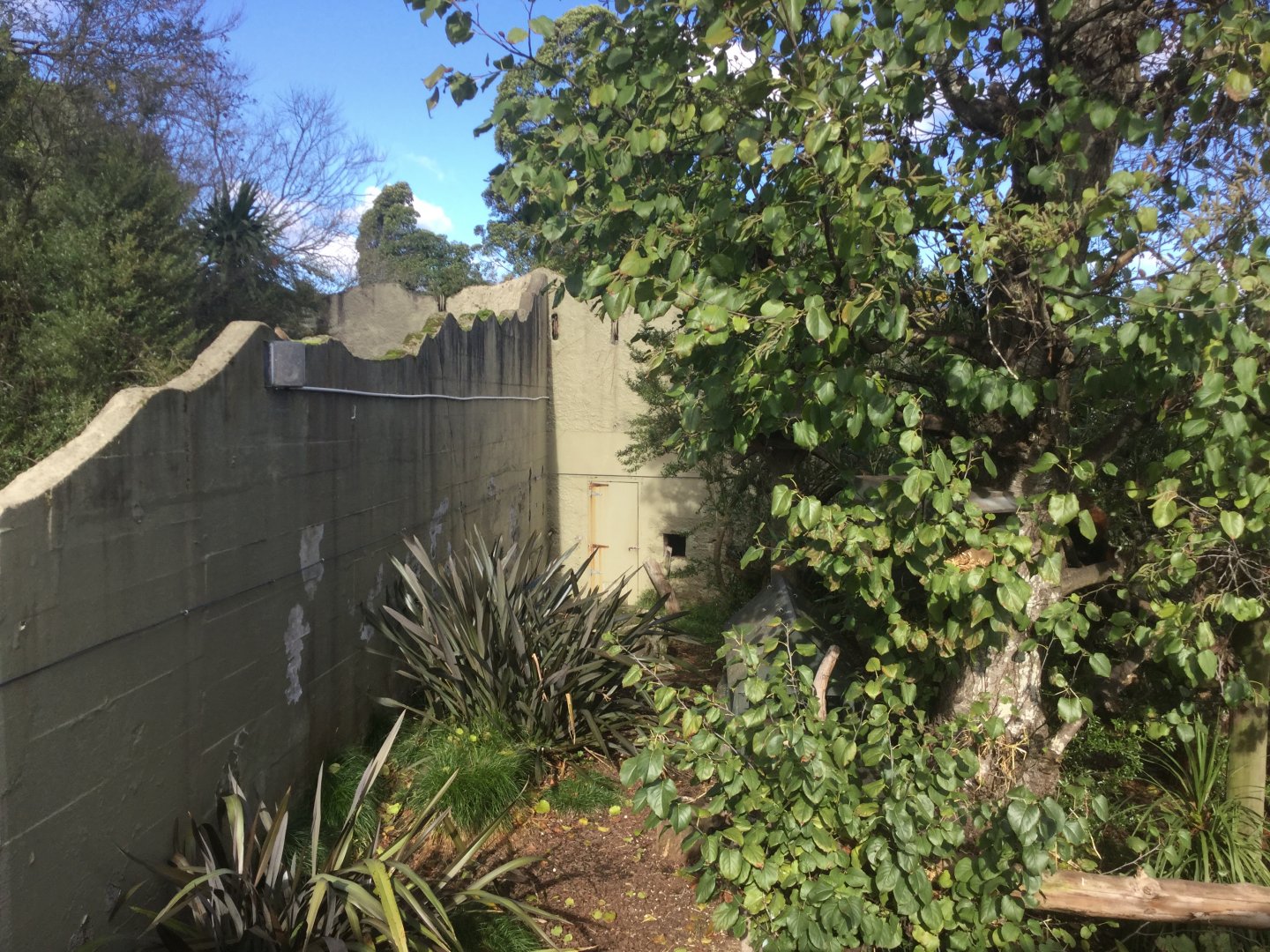
The old Nepalese red panda exhibit (a remodelled 1922 bear pit) has been removed from the map and I feared it’d been demolished to make way for the South East Asia precinct. It’s actually still there (with a fence around it) and if you’re tall enough, you can still see it - I’ve uploaded photos in the gallery.

I will also be updating the gallery with photos and stuff I found out which isn’t necessarily newsworthy but may still be of interest to some people - birthdates of spider monkeys, baboons hierarchies, species in Lizard Lane, names and ages of meerkats, how many tarantulas the zoo has etc.
 
News Update

This is a general news update from my visit (12/07/2020):

The Cape porcupine babies (born 18/01/2020) have been sexed as 1.1 and named Ayanfe (male) and Arewa (female).

The zoo now has just two female American alligators - Tallulah is in the larger exhibit; Dixie is in the smaller exhibit. I don’t know what happened to the other three, though I’m guessing they’ve been dispersed to other collections due to aggression between the females.

There have been no further attempts to perform AI on Anjalee the Asian elephant since the two unsuccessful attempts made in 2017-2018.

A male Capybara pup was born 03/05/2020.

Southern white rhinoceros, Jamila, is due to give birth in the next few weeks. Her pregnancy is progressing well.

Plains zebra, Dalila, died early last year aged five years. Layla is pregnant and due in December this year.

The Serval pair have been separated to prevent breeding after three unsuccessful litters.

The zoo have 1.3 Waterbuck - Roy (2016), Etana (2006), Ina (2007) and Kwacha (2008). They are still not on display.

Twin Cotton top tamarins were born 03/12/2019.

The Bornean orangutans are settling in well to their new exhibit. Keepers are surprised how well they have taken to the new exhibit - especially considering how Bornean orangutan are less aboreal than Sumatran orangutan. Wanita is still reluctant to climb compared to the others and spends a lot of time on the ground.

Kera the female Siamang is on contraception and won’t be breeding in the near future.

The old Nepalese red panda exhibit (a remodelled 1922 bear pit) has been removed from the map and I feared it’d been demolished to make way for the South East Asia precinct. It’s actually still there (with a fence around it) and if you’re tall enough, you can still see it - I’ve uploaded photos in the gallery.

I will also be updating the gallery with photos and stuff I found out which isn’t necessarily newsworthy but may still be of interest to some people - birthdates of spider monkeys, baboons hierarchies, species in Lizard Lane, names and ages of meerkats, how many tarantulas the zoo has etc.

News I forgot to mention:

Three of the flamingo chicks born at the zoo have now been sexed and ‘Chick’ has been renamed ‘Richard.’ The zoo now has 22 flamingo, comprised of 16 founders and six Auckland born chicks:

Richard (January 2014) Male
Cole (January 2017) Male
Otis (January 2017) Female
Willoughby (February 2017) Unknown
Sullivan (January 2018) Unknown
Eleanor (January 2018) Unknown

Two male Lowland nyala have been born this year - one was born 12 January; the other 9 March. This brings the herd to 4.9 nyala.

As mentioned in the Lizard Lane photo on my media, I couldn’t find out details on the Glass lizard. I’ve contacted the zoo and they have one male and one of unknown gender.
 
Cotton-top tamarins:

The twins born 03/12/2019 have been sexed as two females and have been named Nomi and Sofia. They are the third litter for their parents, bring the troop to 1.7 Cotton-top tamarins:

1.0 Nuri (07/08/2013)
0.1 Mrs Nuri (15/12/2013)

0.1 Tito (01/06/2018) Nuri x Mrs Nuri
0.1 Monito (01/06/2018) Nuri x Mrs Nuri

0.1 Yara (07/05/2019) Nuri x Mrs Nuri
0.1 Cali (07/05/2019) Nuri x Mrs Nuri

0.1 Nomi (03/12/2019) Nuri x Mrs Nuri
0.1 Sofia (03/12/2019) Nuri x Mrs Nuri

It’s great to see a decent sized troop forming, with all offspring produced to date being female. Their new exhibit is a vast improvement on the typical hothouse style exhibit I usually see this species housed in:

 
Auckland Zoo have welcomed a female Southern White Rhinoceros calf to female Jamila! The calf was born on 14th August. This is the second Southern White Rhinoceros calf to be born in Auckland Zoo's history and the first in two decades. The Australasian population have been producing lots of female rhino calves recently (Taronga Western Plains, Australia Zoo, Hamilton Zoo, Monarto). From their Facebook page:
We have THE BEST news for you this week – Jamila has given birth to a healthy rhino calf!
This is a momentous occasion for all Aucklanders as it’s the first time in twenty years that a rhino calf has been born at Auckland Zoo, as well as an incredible win for the Australasian breeding programme.
This sturdy female calf, with a birth weight of around 65kgs, was born in the early hours of August 14th in a speedy one-hour labour. Rhino gestation lasts 16-months in total and faecal testing for progesterone levels provided a great indicator of when Jamila would give birth. With the support of
Panasonic New Zealand
, we were able to install and utilise low light security camera equipment that allowed our ungulates team to monitor Jamila’s pregnancy at all hours of the day – both at the Zoo and from home.
As many of you will know, in late-2018 Jamila made the journey to Auckland from our friends at Hamilton Zoo and it was our hope that she would soon become a first-time mum. “It’s been a long wait, but absolutely worth every second,” says ungulates team leader Tommy. “Jamila’s total focus on her calf’s needs is really impressive. She’s growing by the day, and as she’s finding her feet, doing these little jumps, almost dancing, which is pretty adorable.”
It's early days so the calf and her mum have not yet ventured out into their African Savannah habitat and we’ll keep you updated on when you’ll be able to see them. See more photos and learn how you help us to support rhino conservation every time you visit the Zoo, here – www.aucklandzoo.co.nz/news/auckland-zoos-new-baby-rhino-makes-speedy-entry-into-world
Security Check

 
Last edited:
Auckland Zoo have welcomed a female Southern White Rhinoceros calf to female Jamila! The calf was born on 14th August. This is the second Southern White Rhinoceros calf to be born in Auckland Zoo's history and the first in two decades. The Australasian population have been producing lots of female rhino calves recently (Taronga Western Plains, Australia Zoo, Hamilton Zoo, Monarto). From their Facebook page:

Security Check


That's fantastic news. Of the 15 Southern white rhinoceros calves conceived in New Zealand zoos (seven of which survived and are now of breeding age), Jamila is the first to breed. While it's clearly possible for females to conceive in 1.1 herds, I'm under the impression better breeding success comes from herds of at least 1.2 (despite the effects of estrus suppression); so this is an achievement in itself.

The birth of this calf brings Auckland Zoo's population to 2.2. The last time they held this number of rhinos was when they held four bulls in July 2007. While it's great to see Auckland Zoo hold a breeding herd for the first time since the early 2000's, their recent success really cements the decision not to replace their hippos (whose exhibit was remodelled to expand the rhino exhibit). We all knew this would be the case, but still...
 
Auckland Zoo have successfully bred Golden Lion Tamarins!
We’ve got more wonderful news – precious golden lion tamarin twins have been born at Auckland Zoo!

On 17 July mum Frida gave birth to twins – a male and female – but unfortunately was unable to produce milk for her offspring which, as with human babies, is essential for their survival and growth.

At two days old a carefully considered decision was made by our life sciences staff to intervene and give these twins a chance of life. “Hand-rearing is never a decision we make lightly and there are always risks, but we had strong science-based evidence to inform this call and the full support of this programme’s species coordinator. Globally in zoos there are many examples of successfully hand-rearing callitrichids…and being twins we knew these animals would have the advantage of being able to focus on and seek comfort from each other…we also knew the support time needed from us would be short and we could get them back with their parents” says primate team leader Amy.

With just 2,500 of these precious South American primates in the wild (a third of which are descended from individuals bred in human care and painstakingly reintroduced) and owing to the importance of these twins to the Australasian breeding programme, the birth of these twins is a huge win for the species.

It’s been a full-on five weeks for our vet and primate teams but thanks to their expertise and dedication, the twins have both grown to a healthy weight for their age, are meeting physical milestones and have been having lots of close protected contact with Frida and dad Alonzo. In a few weeks’ time the twins will be fully integrated with their parents and will start to venture out into their rainforest habitat. Until this happens, you won’t be able to see them when you visit but stay tuned to our social channels to find out when you can!

See more gorgeous photos of the twins, and learn more about them, here - www.aucklandzoo.co.nz/news/golden-lion-tamarin-twins-thriving-under-expert-care
Security Check
 
Auckland Zoo have successfully bred Golden Lion Tamarins!

Security Check

Though not mentioned, this is the first successful birth/rearing of this species in New Zealand.

It’s great to see Auckland Zoo experience success, after decades of holding this species. To my knowledge, this is the zoo’s second breeding pair. They previously held a pair named Janeiro and Gabrielle - and prior to that held elderly surplus animals including Teresina (born 1988 at Adelaide Zoo).

Let’s hope Wellington Zoo, who have held a succession of pairs in recent years, will also experience success soon.
 
Though not mentioned, this is the first successful birth/rearing of this species in New Zealand.

It’s great to see Auckland Zoo experience success, after decades of holding this species. To my knowledge, this is the zoo’s second breeding pair. They previously held a pair named Janeiro and Gabrielle - and prior to that held elderly surplus animals including Teresina (born 1988 at Adelaide Zoo).

Let’s hope Wellington Zoo, who have held a succession of pairs in recent years, will also experience success soon.

Do you know happened to their last pair (Janeiro and Gabrielle)?
I seem to a keeper talking about them when I visited at least three years ago.
 
Do you know happened to their last pair (Janeiro and Gabrielle)?
I seem to a keeper talking about them when I visited at least three years ago.

Janeiro and Gabrielle would be long deceased. Gabrielle was born at Adelaide Zoo in 1997 and arrived at Auckland Zoo in 2002. Janeiro was born 1997/1998 and arrived 2010. Given that the life expectancy of this species is 15 years, Gabrielle would have been well past prime breeding age by then, so my assumption is Janeiro was only intended as a companion in her old age. Prior to this, Auckland Zoo had housed only surplus elderly females.

Their current breeding pair, Frida (aged ten) and Alonzo (aged six), arrived in 2014 and 2017 respectively.
 
New Female Emu

Auckland Zoo have imported a new female Emu, named Ellie-May. She has been introduced to their male, Elvis, who is 23 years of age. Ellie-May is the third mate of Elvis, who was previously paired with Priscilla (deceased); and Matilda - with whom he sired a clutch of chicks in 2017. Their has been courtship behaviour already, so fingers crossed for more chicks.
 
Auckland Zoo have welcomed a female Southern White Rhinoceros calf to female Jamila! The calf was born on 14th August. This is the second Southern White Rhinoceros calf to be born in Auckland Zoo's history and the first in two decades. The Australasian population have been producing lots of female rhino calves recently (Taronga Western Plains, Australia Zoo, Hamilton Zoo, Monarto). From their Facebook page:

Security Check

The female rhino calf has been named Nyah (Swahili for purpose or goal).
Security Check

 
It looks like Auckland Zoo are going to be taking a break from breeding Nepalese red panda this year:

In a Facebook post, they’ve announced they’re now living in single sex groups - Bo (2009), Khela (2014) and Dalha (2019) can be seen in the upper exhibit; while the males, Ramesh (2015) and Tashi (2018), are in this off display exhibit:

 
Auckland Zoo have welcomed five Brown Teal (pāteke) ducklings. From their Facebook page:
We’ve just welcomed five precious pāteke ducklings into the world!

Did you know? Pāteke (brown teal) are Aotearoa’s rarest waterfowl and their conservation status is currently ‘at risk’, though we’re helping to boost their numbers each year as part of a breed and release programme with our partners Department of Conservation. If you missed our video with bird keeper Devon discussing the programme, you can watch it here –
Once these ducklings are 8-weeks-old they’ll be heading for The Isaac Conservation and Wildlife Trust to get them used to 'wild conditions' before their release into the wild.

Come and visit them in The Forest aviary this weekend!
Security Check
 
Auckland Zoo have welcomed a female Southern White Rhinoceros calf to female Jamila! The calf was born on 14th August. This is the second Southern White Rhinoceros calf to be born in Auckland Zoo's history and the first in two decades. The Australasian population have been producing lots of female rhino calves recently (Taronga Western Plains, Australia Zoo, Hamilton Zoo, Monarto). From their Facebook page:

Security Check


A small update on Southern Whit Rhino calf, Nyah.

A couple of days ago, she was introduced to dad Zambezi for the first time. Apparently they will continue to have Nyah, Jamila and Zambezi on display together from now on, but only for short periods of time as Nyah is still young.

Log into Facebook | Facebook
 
Back
Top