Auckland Zoo Auckland Zoo News 2020

5 Asian Small Clawed Otter pups born!

Takumi and Kanan produced this litter 4 weeks ago and with the births of two sets of triplets last year, the current raft at the zoo is of 13 individuals!

121570384_10157795259861984_2215611432232679868_o.jpg
 
5 Asian Small Clawed Otter pups born!

Takumi and Kanan produced this litter 4 weeks ago and with the births of two sets of triplets last year, the current raft at the zoo is of 13 individuals!

121570384_10157795259861984_2215611432232679868_o.jpg

Wow, that's a decent sized litter! When I visited in August, they were a highly active and engaging exhibit; so with 13 otters, this will soon be a hive of activity.

Auckland Zoo's Asian small-clawed otters:

1.0 Kanan (2009)
0.1 Takumi (2014)
1.0 Arif (May 2019) Kanan x Takumi
1.0 Ketut (May 2019) Kanan x Takumi
0.1 Indah (May 2019) Kanan x Takumi
1.0 Panuta (Dec 2019) Kanan x Takumi
1.0 Budi (Dec 2019) Kanan x Takumi
0.1 Dewi (Dec 2019) Kanan x Takumi
0.0.1 Unnamed (Sep 2020) Kanan x Takumi
 
Auckland Zoo have hatched their first Kiwi for the season:
We’ve got great news this #SaveKiwiMonth with the first chick at Auckland Zoo to hatch this breeding season!
We’re proud to be helping conserve kiwi in the wild through the Operation Nest Egg (ONE) programme with
Department of Conservation
,
Kiwis for kiwi
and other regional conservation partners. This egg from sire Taringama was collected by our friends at
Thames Coast Kiwi Care
and brings valuable Coromandel genetics to the kiwi breeding population.
Kiwi can take up to three days to hatch once they externally pip (create a hole in the outer shell), building up their strength and using their strong legs to push through. Being nocturnal birds, they usually hatch at night where our bird keepers aren’t there to see it, who get a pleasant surprise come morning. This chick however, decided to make quick work of his entry into the world and our keepers were able to film the result. You can watch the full hatch here – https://fal.cn/3aVKe
Our bird team will carefully monitor the growth of this chick and once it’s reached the right weight, it will be sent to a predator-free island and hopefully one day have chicks of its own.
We’re caring for three more ONE eggs at present, so we’ll keep you updated on their hatch-dates!
Log into Facebook | Facebook
 
Auckland Zoo have announced the birth of a 0.1 Hamadryas Baboon to female Mali. The zoo now have a group of ten (4.6) baboons. From their Facebook page:
Our baby boom continues at Auckland Zoo!

This healthy female Hamadryas baboon was born to mum Mali and dad Yafeu just three weeks ago. Primate keeper Craig says the little one is doing great and Mali is being a “very attentive, very proud mumma”.

Our baboon troop is now ten-strong with four males and six females, including the baby girl who can be seen visually exploring the landscape while clinging tightly to mum. Gestation in baboons takes almost six months and once a baby is born, the other females will help to support her and share child-care duties.

Come and visit the troop this week!
Log into Facebook | Facebook
 
Auckland Zoo have announced the birth of a 0.1 Hamadryas Baboon to female Mali. The zoo now have a group of ten (4.6) baboons. From their Facebook page:

Log into Facebook | Facebook

Brilliant news!:) I believe this Auckland's first since 2012.

This is highly exciting news as it confirms Auckland Zoo are not allowing the troop to collectively age/phase out as Perth’s current troop appear to be doing. This also suggests they have no plans to phase this species out from their collection. :)

This is Auckland Zoo’s first baboon birth since Mali was born in 2015; who was proceeded by Zara, born 2013.

It’s interesting to hear that Yafeu is the sire; which means Mali has changed one male units/harems since the start of the year when she was in Wasaro’s. Mali would have started in Wasaro’s OMU by default as her mother was; but the emigration to Yafeu’s probably reflects that at eleven, he’s in his social prime versus the aging Wasaro.
 
I recently found an update on the twin Golden Lion Tamarins that the zoo are currently hand-raising. An interview in September mentions that the male has been named Rufino and the female, Aurora [not sure on spelling, the recording quality isn't the best]. The zoo have also been giving the parents protected contact with their offspring in the hopes of reintroducing back into the group.


On the topic of callitrichids, I recently noticed that Auckland Zoo doesn't have Pygmy Marmoset on their new map [https://rfacdn.nz/zoo/assets/media/azoo-visitors-map-covid-2020-sept-online.pdf] in their usual mixed exhibit with the Emperor Tamarins. I messaged the zoo and found out they are down to only one Pygmy Marmoset called Piccolo. He is currently unwell and is off-display for the time being.
 
I recently found an update on the twin Golden Lion Tamarins that the zoo are currently hand-raising. An interview in September mentions that the male has been named Rufino and the female, Aurora [not sure on spelling, the recording quality isn't the best]. The zoo have also been giving the parents protected contact with their offspring in the hopes of reintroducing back into the group.


On the topic of callitrichids, I recently noticed that Auckland Zoo doesn't have Pygmy Marmoset on their new map [https://rfacdn.nz/zoo/assets/media/azoo-visitors-map-covid-2020-sept-online.pdf] in their usual mixed exhibit with the Emperor Tamarins. I messaged the zoo and found out they are down to only one Pygmy Marmoset called Piccolo. He is currently unwell and is off-display for the time being.

Appropriate names - Rufino means red in Spanish; and Aurora is the Roman goddess of the dawn/sunrise - the perfect name for the first successful Golden lion tamarin birth at Auckland Zoo; and hopefully the beginning of a long and successful breeding programme. :cool:
 
I recently found an update on the twin Golden Lion Tamarins that the zoo are currently hand-raising. An interview in September mentions that the male has been named Rufino and the female, Aurora [not sure on spelling, the recording quality isn't the best]. The zoo have also been giving the parents protected contact with their offspring in the hopes of reintroducing back into the group.


On the topic of callitrichids, I recently noticed that Auckland Zoo doesn't have Pygmy Marmoset on their new map [https://rfacdn.nz/zoo/assets/media/azoo-visitors-map-covid-2020-sept-online.pdf] in their usual mixed exhibit with the Emperor Tamarins. I messaged the zoo and found out they are down to only one Pygmy Marmoset called Piccolo. He is currently unwell and is off-display for the time being.

I noticed that too and wondered the same thing. That's very sad, hopefully they don't disappear altogether
 
I messaged the zoo and found out they are down to only one Pygmy Marmoset called Piccolo. He is currently unwell and is off-display for the time being.

I noticed that too and wondered the same thing. That's very sad, hopefully they don't disappear altogether

They’ve only had one (Piccolo) since at least May this year, meaning the female (June) died sometime ago. Hamilton and Wellington have both had success in breeding this species, so a companion for Piccolo could likely be obtained within New Zealand.
 
They’ve only had one (Piccolo) since at least May this year, meaning the female (June) died sometime ago. Hamilton and Wellington have both had success in breeding this species, so a companion for Piccolo could likely be obtained within New Zealand.
Natureland have also been having notable success with their Pygmy Marmosets with their most recent set of twins being born in June of this year. Australian zoos also have a growing population of the species so hopefully the zoo chooses to continue housing them.
 
A detailed update about the new lowlands habitat for tigers and otters. Auckland will be acquiring a younger pair (1.1) of Sumatran tigers in the future with the intention of breeding.
Our new Lowlands habitat for tigers and otters is fast transforming!
Next summer when it opens, you and your whānau will be able to immerse yourselves in this stunning environment that will be home to two young Sumatran tigers (a male and female) and our raft of Asian small-clawed otters.
The tigers’ outside caves, built into the habitat’s rockface, are almost complete. The viewing shelter is about to get its roof on, and its glass windows will be installed over the next few months. It’s here you’ll come face-to-face with these water-loving big cats at their waterfall, swimming pool and beach area. Soon to begin, is planting in the lowlands and high ridge areas of this habitat. From bamboo stands to broadleaf species and other flora, the design and landscaping is all about giving our tigers plenty of choice, and enabling them to be and behave as they would in the wild – be it sleeping in the shade or sun, staying dry, resting in a cave, swimming, or leaping up a 7m high climbing tree to retrieve some kai!
As tigers are apex predators that like to be up high looking out and down on their prey, we’re also creating two large overpasses for their use, as seen in the artist impression – one up to 16.5m (54 feet!) long.
To be installed by late summer/early autumn, these overpasses will also give our keepers the flexibility to move tigers into any of the three different areas of the habitat, that all going well in the future could also include tiger cubs!
Auckland Zoo
 
Auckland Zoo have announced that the Golden Lion Tamarin twins have been successfully introduced to their parents. Visitors can now seen the group of four on-display. A fantastic and heartening result for them and below is a 10 minute video showing the whole process over the past three months.
Calling all callitrichid lovers - you can now visit our golden lion tamarin twins!
It’s been a long and rewarding journey to get the twins, female Aurora and male Raffino, to this point and has required the considerable skill, passion and commitment of our primate and vet teams.
As Primate team leader Amy explains, the decision to hand rear is never taken lightly as there are always risks involved. Our primate team used their expertise, coupled with the best science and knowledge that the twins would have each other to bond with, to make this decision and without it these critically endangered twins would have simply not survived.
Filmed over the past three and a half months, we follow the journey of our primate team as they go from feeding the twins around the clock, to weaning them off of milk and onto solid foods like delicious mango, the successful integration with their parents Alonzo and Frida, and finally, welcoming the family unit into their Rainforest habitat!
We’re now one of the few places in the world that can proudly say we’ve successfully hand reared golden lion tamarins and will be adding to global knowledge about the species. Come and see our troop of four this weekend!

 
Last edited:
Auckland Zoo have announced the birth of two Nyala calves. They have been named Anubis and Bahati. The nyala herd at Auckland is currently at 16 individuals including (potentially) three pregnant females.
We’ve got even more fresh faces for you to visit!
Healthy nyala calves Anubis and Bahati were born last month, increasing our nyala herd to 16 individuals, and there may even be more on the way! Our ungulates team think there could be another three females that are pregnant and if so, they will calve within the next month.
Our nyala coordinator Jess says the weeks’ old calves are doing well and the older of the two, Anubis, has started following the herd out into the African Savannah habitat they share with our Southern white rhino. The youngest, Bahati, is just two weeks old so it may be a week or so before she starts to venture out.
Keep an eye out for these two and rhino calf Nyah when you next visit the zoo!
Log into Facebook | Facebook
 
Auckland Zoo successfully hatched five Orange-fronted Kakarikis recently. This is their first clutch for the season.
We’ve just hatched five nationally threatened kākāriki karaka (orange fronted parakeet) at the Zoo!
With a wild population of just 100-300 birds, these precious parakeets need all the help they can get. This involves active conservation work as well as advocacy, so that more Kiwis can be aware of these special birds, their plight and why #PredatorFree2050 is so important.
As birds team leader Carl explains, Auckland Zoo is part of a dedicated breed for release programme with the
Department of Conservation
and
The Isaac Conservation and Wildlife Trust
to boost the populations of these kākāriki and soon these chicks will be heading to Isaacs in Christchurch before their release into the wild.
We’re asking you to help us spread the word and back this bird for
Forest & Bird
#BirdOfTheYear with our friends at
Biology - Massey University Albany
. Vote here - www.birdoftheyear.org.nz/orange-fronted-parakeet

Source: Auckland Zoo's Facebook page
 
Auckland’s recent litter of Asian Small-clawed Otter pups have been sexed as 3.2. Their group of otters now consists of 13 individuals.
This week our carnivore team were able to vacinnate and sex our five youngest Asian small clawed otter pups and excitingly, we have three boys and two girls.

As you can see these nine-week-old pups are now starting to become 'real otters', learning how to swim under the watchful gaze of parents Takumi and Kanan, and have also started to use their strong teeth to munch on solid foods like snapper heads and king prawns.

Our 13-strong raft of otters are in and out of their dens during the day so you’re likely to catch a glimpse of the pups with their wider whānau on your next zoo visit.
Auckland Zoo
 
Auckland Zoo have announced the birth of two Nyala calves. They have been named Anubis and Bahati. The nyala herd at Auckland is currently at 16 individuals including (potentially) three pregnant females.

Log into Facebook | Facebook
Good news indeed but I cant help wondering why they want to hold on to that many I would be quite sure there are other zoos that would take a few off their hands!
 
Auckland’s recent litter of Asian Small-clawed Otter pups have been sexed as 3.2. Their group of otters now consists of 13 individuals.

Auckland Zoo

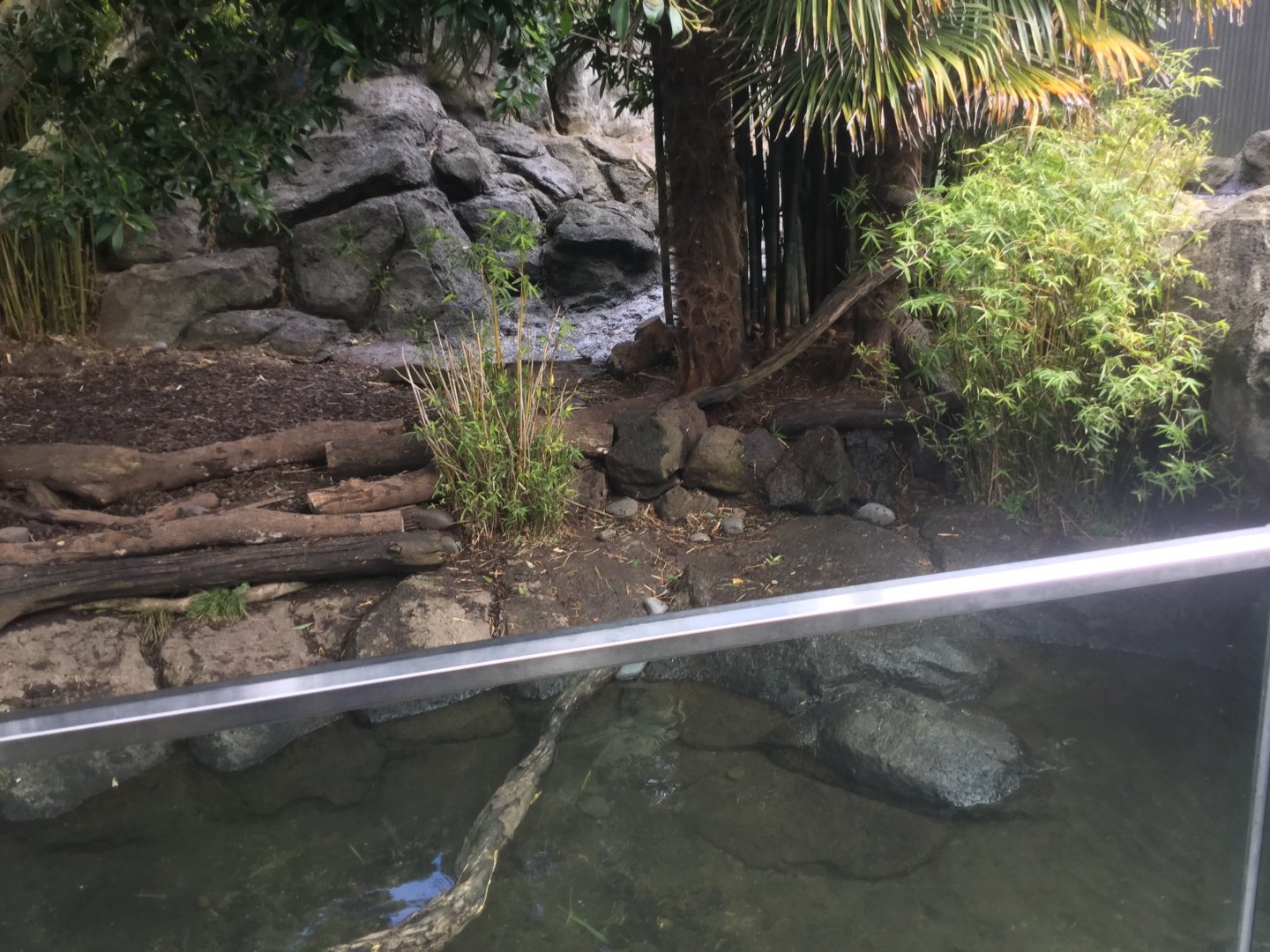
It's great Auckland Zoo has continued their successful rearing of otter pups, with this litter of five surviving the critical first weeks. I can't help but feel the recent breeding was planned on the assumption their new exhibit as part of the South East Asian precinct would be complete by now. Their current (otherwise excellent) exhibit isn't huge compared to previous otter exhibits used at Auckland Zoo and will soon be looking cramped.

With eleven successful pups, Auckland Zoo now has seven young males and four young females that could potentially form single sex groups down the line; either for export or housing elsewhere in the zoo.

 
Three Brown Teal (pāteke) ducklings have hatched to the zoo’s other breeding pair. Like the five ducklings born earlier in the year, they will eventually be released.
Success! Three more rare pāteke ducklings have hatched at the zoo!

These 17-day-old ducks are the offspring of our second pair of pāteke (brown teal) parents, and just like the five ducklings that hatched in September, they’ll soon be heading south for release into the wild.

We’re part of a dedicated breed-for-release programme with our partners Department of Conservation Pāteke Recovery Group and The Isaac Conservation and Wildlife Trust, and our bird keepers would normally leave the ducklings with their parents to rear for a few weeks, before getting them ready for their big move. This time, the nest was abandoned by the parents so our bird team collected the eggs, artificially incubated them and are now hand-rearing the ducklings.

While they’re in our care the ducklings will eat a mix of specially formulated duck pellets that contain much of the nutrients they need, as well as some small insects. Every time you visit our pāteke adults in The Forest aviary, Te Wao Nui, you’re helping support Wild Work just like this!
Log into Facebook | Facebook
 
Auckland Zoo have announced the birth of two Nyala calves. They have been named Anubis and Bahati. The nyala herd at Auckland is currently at 16 individuals including (potentially) three pregnant females.

Log into Facebook | Facebook

Good news indeed but I cant help wondering why they want to hold on to that many I would be quite sure there are other zoos that would take a few off their hands!

When I visited in July, there was 13 in the herd. Their founder male had apparently died/moved zoos as the herd consisted of six founder females; 2.3 born at Auckland Zoo 2018-2019; and 2.0 born 12/01/2020 and 09/03/2020. There has been one birth (gender unknown) between then and the birth of the two males in October 2020. Males attain sexual maturity at around 18 months, so one of their first generation males must be the zoo’s new breeding male.

Personally I’m glad large numbers of Nyala were imported as it’s given the region a decent founder base that will sustain for several generations. Both Auckland and Wellington have transferred surplus males to Hamilton and Keystone; as well as females exported by Wellington Zoo to Werribee Open Range Zoo.
 
Back
Top