I could not agree more I am glad the involved zoos did a bulk import something which should of happened in regards to the Bongos in the region. I am surprised Auckland want to keep that many really!When I visited in July, there was 13 in the herd. Their founder male had apparently died/moved zoos as the herd consisted of six founder females; 2.3 born at Auckland Zoo 2018-2019; and 2.0 born 12/01/2020 and 09/03/2020. There has been one birth (gender unknown) between then and the birth of the two males in October 2020. Males attain sexual maturity at around 18 months, so one of their first generation males must be the zoo’s new breeding male.
Personally I’m glad large numbers of Nyala were imported as it’s given the region a decent founder base that will sustain for several generations. Both Auckland and Wellington have transferred surplus males to Hamilton and Keystone; as well as females exported by Wellington Zoo to Werribee Open Range Zoo.
You are using an out of date browser. It may not display this or other websites correctly.
You should upgrade or use an alternative browser.
You should upgrade or use an alternative browser.
Auckland Zoo Auckland Zoo News 2020
- Thread starter Zoofan15
- Start date

From the Facebook-site :
"More healthy kiwi chicks have hatched at Auckland Zoo!
These three chicks’ range in age from 6 to 22-days-old, and once they reach the right weights they will be released on to crèche and kōhanga predator-free islands where they can safely have chicks of their own.
A few days after they hatch, each kiwi chick is transferred to a large brooder where they will eat, sleep and fossick around in the leaf litter for bugs. Yesterday, bird keepers Ashleigh and Debs carefully weighed each kiwi to track their growth, with the chicks weighing between 271 – 360 grams.
We’ve been part of the Operation Nest Egg (ONE) programme since the late 1990’s, helping to boost populations of brown kiwi in the wild with
Department of Conservation
,
Kiwis for kiwi
and regional conservation partners. All three chicks bring valuable genetics from Te Mata and Kuaotunu in the Coromandel, and without conservation intervention like this only 5% of kiwi chicks would go on to reach breeding age. You contribute to our Wild Work every time you visit the zoo!"
"More healthy kiwi chicks have hatched at Auckland Zoo!
These three chicks’ range in age from 6 to 22-days-old, and once they reach the right weights they will be released on to crèche and kōhanga predator-free islands where they can safely have chicks of their own.
A few days after they hatch, each kiwi chick is transferred to a large brooder where they will eat, sleep and fossick around in the leaf litter for bugs. Yesterday, bird keepers Ashleigh and Debs carefully weighed each kiwi to track their growth, with the chicks weighing between 271 – 360 grams.
We’ve been part of the Operation Nest Egg (ONE) programme since the late 1990’s, helping to boost populations of brown kiwi in the wild with
Department of Conservation
,
Kiwis for kiwi
and regional conservation partners. All three chicks bring valuable genetics from Te Mata and Kuaotunu in the Coromandel, and without conservation intervention like this only 5% of kiwi chicks would go on to reach breeding age. You contribute to our Wild Work every time you visit the zoo!"

Auckland Zoo are incubating nine Fairy tern eggs:
New Zealand fairy tern: Stormy weather threatens eggs of country's rarest bird
With fewer than 40 birds in existence, every egg counts for the small coastal-dwelling bird, which has teetered on the brink of extinction since the 1980s.
So when heavy rain and severe winds were forecast for Northland last Thursday, Department of Conservation rangers took matters into their own hands, transferring nine eggs from beach nests to Auckland Zoo for incubation.
“We will keep an eye on the weather, the adult birds and the eggs over the coming weeks, with the aim of moving the eggs back to a safe beach nest prior to hatching.”
New Zealand fairy tern: Stormy weather threatens eggs of country's rarest bird
With fewer than 40 birds in existence, every egg counts for the small coastal-dwelling bird, which has teetered on the brink of extinction since the 1980s.
So when heavy rain and severe winds were forecast for Northland last Thursday, Department of Conservation rangers took matters into their own hands, transferring nine eggs from beach nests to Auckland Zoo for incubation.
“We will keep an eye on the weather, the adult birds and the eggs over the coming weeks, with the aim of moving the eggs back to a safe beach nest prior to hatching.”

Auckland Zoo have welcomed more Nyala births - a female called Jama and a male calf that has yet to be named.The nyala herd is now at 18 individuals.
Log into Facebook | FacebookWe've welcomed two more nyala calves into the world!
Both born last week, the female is called Jama while the male is yet to be named. Our ungulates keepers say both are doing really well and will slowly start venturing out with their family soon.
With these four calves born our nyala herd has now grown to 18 individuals. You can see them in the African Savannah habitat they share with our southern white rhino herd - including playful rhino calf Nyah who is growing by the day. Come and see them this weekend!

Auckland Zoo have welcomed more Nyala births - a female called Jama and a male calf that has yet to be named.The nyala herd is now at 18 individuals.
Log into Facebook | Facebook
Auckland Zoo has achieved outstanding success with their Nyala, considering their breeding program only began a few years ago. A brilliant job, Auckland!


Auckland zoo has announced they will be exporting their 2 Asian elephants in mid 2021
Auckland Zoo announces decision to move elephants | Auckland Zoo News
Auckland Zoo has made the heart-breaking decision to move its two female Asian elephants Burma and Anjalee to a new home - to give them both the family herd they need for their long-term wellbeing.
“In 2011, Auckland Zoo with the support of Auckland Council, committed to building a sustainable elephant family herd in Auckland. But over the past five years, changing circumstances beyond our control mean that we are no longer in a position to give them the long-term future they need,” says Auckland Zoo director, Kevin Buley.
Read the full article here:
Auckland Zoo announces decision to move elephants | Auckland Zoo News
Auckland Zoo announces decision to move elephants | Auckland Zoo News
Auckland Zoo has made the heart-breaking decision to move its two female Asian elephants Burma and Anjalee to a new home - to give them both the family herd they need for their long-term wellbeing.
“In 2011, Auckland Zoo with the support of Auckland Council, committed to building a sustainable elephant family herd in Auckland. But over the past five years, changing circumstances beyond our control mean that we are no longer in a position to give them the long-term future they need,” says Auckland Zoo director, Kevin Buley.
Read the full article here:
Auckland Zoo announces decision to move elephants | Auckland Zoo News
Auckland Zoo have opened a new Brolga habitat in their Australian area. The zoo now have three brolgas - their resident male and a pair that came from Hamilton Zoo.
Log into Facebook | FacebookHave you been in to see our beautiful new brolga habitat?
We now have three of these fascinating Australian wetland birds at Auckland Zoo - with this male and female arriving earlier this year from our friends at Hamilton Zoo.
Brolga are one of Australia's largest birds - standing a metre tall with a wing span of up to 2.4 metres, with long stilt-like legs.
We're pleased to announce their lush, green habitat on our Australian Bush Track is now open for visiting - come along and see them and other iconic Aussie species this week!
Auckland Zoo have opened a new Brolga habitat in their Australian area. The zoo now have three brolgas - their resident male and a pair that came from Hamilton Zoo.
Log into Facebook | Facebook
That’s good news. They never bred at Hamilton Zoo and had been off display for several years. Consolidating three of the four remaining Brolga in the country (including the only female) into one facility; which is also the only facility to have successfully bred them, seems like a logical move. I look forward to hearing of success in the future! It’d be great shame to loose this species from New Zealand zoos.
How old are the Hamilton pair?
One was hatched 2014 at Auckland Zoo; I don’t know for sure about the other.
They (and the male at Brooklands Zoo) are the offspring of Auckland Zoo’s male - hatched 1982 at Melbourne Zoo; and his now deceased mate (1991-2020).
I remember seeing them at Hamilton Zoo from around 2008; and since Auckland Zoo hatched one 28/08/2006, it’s possible this was the other. From memory, the male at Hamilton Zoo killed his first mate; who was replaced by another female.

The male was hatched in September 2005, the female in October 2014 (so about 15 and 6 years old respectively).How old are the Hamilton pair?
[Additional edit FYI: the male at Brooklands was hatched in August 2012, so is about 8 years old]
Last edited:
The male was hatched in September 2005, the female in October 2014 (so about 15 and 6 years old respectively).
[Additional edit FYI: the male at Brooklands was hatched in August 2012, so is about 8 years old]
Was the male at Wellington (Bruce) another offspring from this pair?
All the Brolga were bred from the Auckland pair.Was the male at Wellington (Bruce) another offspring from this pair?
It'd be interesting to know how many chicks Auckland's Brolga pair produced.
I'm aware of:
0.0.1 August 2006 (fate unknown)
1.0 September 2005 (sent to Hamilton; returned to Auckland)
1.0 August 2012 (sent to Brooklands)
0.1 October 2014 (sent to Hamilton; returned to Auckland)
0.0.1 January 2020 (died February 2020)
There was at least one more hatched 2003 or prior (there's a husbandry document published that year with photos of a chick), which was hand raised; as well as the note in the media that Bruce at Wellington Zoo had been suspected of killing his mate (presumably from Auckland - the only importer?); and another female that died at Hamilton Zoo.
Auckland's female was born 1991 at Melbourne Zoo (imported 1992), dating possible hatch dates to 1994 onwards.
I'm aware of:
0.0.1 August 2006 (fate unknown)
1.0 September 2005 (sent to Hamilton; returned to Auckland)
1.0 August 2012 (sent to Brooklands)
0.1 October 2014 (sent to Hamilton; returned to Auckland)
0.0.1 January 2020 (died February 2020)
There was at least one more hatched 2003 or prior (there's a husbandry document published that year with photos of a chick), which was hand raised; as well as the note in the media that Bruce at Wellington Zoo had been suspected of killing his mate (presumably from Auckland - the only importer?); and another female that died at Hamilton Zoo.
Auckland's female was born 1991 at Melbourne Zoo (imported 1992), dating possible hatch dates to 1994 onwards.
Auckland Zoo have opened a new Brolga habitat in their Australian area. The zoo now have three brolgas - their resident male and a pair that came from Hamilton Zoo.
Log into Facebook | Facebook
There used to be four Tasmanian Devil enclosures, two on either side of the path. It seems that they have combined the two on the right side of the path (if you’re coming from the Bandstand direction), to create a new habitat for their Brolga.
It’s nice to see them settled in to a permanent enclosure. For at least the past five years they have been moved about frequently, including spending time in an enclosure across from the macaws, and in one (which I think used to hold meerkats) below the Alligators. Fingers crossed for future breeding success.
On a sidenote, for anyone interested, here is the new Auckland Zoo Map. It’s an interesting design:
https://rfacdn.nz/zoo/assets/media/azoo-map-rebrand-online.pdf

Actually, that map is not updated with the new brolga habitat. When I visited about two weeks ago, they were building the new brolga habitat in the emu and wallaby enclosure, on the side against the aviary. There are also new gates for the walkway into the emu and wallaby enclosure (from South East Asia track) which have more aboriginal designs. My guess is the habitat which the brolgas occupied before, the smallest Tasmanian Devil enclosures, will return to being for the Tasmanian Devils.There used to be four Tasmanian Devil enclosures, two on either side of the path. It seems that they have combined the two on the right side of the path (if you’re coming from the Bandstand direction), to create a new habitat for their Brolga.
It’s nice to see them settled in to a permanent enclosure. For at least the past five years they have been moved about frequently, including spending time in an enclosure across from the macaws, and in one (which I think used to hold meerkats) below the Alligators. Fingers crossed for future breeding success.
On a sidenote, for anyone interested, here is the new Auckland Zoo Map. It’s an interesting design:
https://rfacdn.nz/zoo/assets/media/azoo-map-rebrand-online.pdf
Also, there are technically only three enclosures with the left side one when entering from Bandstand being a large enclosure, while the right has two separated. As I recall, the first one on the right is where the female Tasmanian Devil is housed.
This also reminds me from the new map, if no one has mentioned before, that the waterbucks are now living with the nyalas and rhinos.
Actually, that map is not updated with the new brolga habitat. When I visited about two weeks ago, they were building the new brolga habitat in the emu and wallaby enclosure, on the side against the aviary. There are also new gates for the walkway into the emu and wallaby enclosure (from South East Asia track) which have more aboriginal designs. My guess is the habitat which the brolgas occupied before, the smallest Tasmanian Devil enclosures, will return to being for the Tasmanian Devils.
Also, there are technically only three enclosures with the left side one when entering from Bandstand being a large enclosure, while the right has two separated. As I recall, the first one on the right is where the female Tasmanian Devil is housed.
This also reminds me from the new map, if no one has mentioned before, that the waterbucks are now living with the nyalas and rhinos.
This was the entrance way I saw being built on my visit in July (next to the old tiger pit):
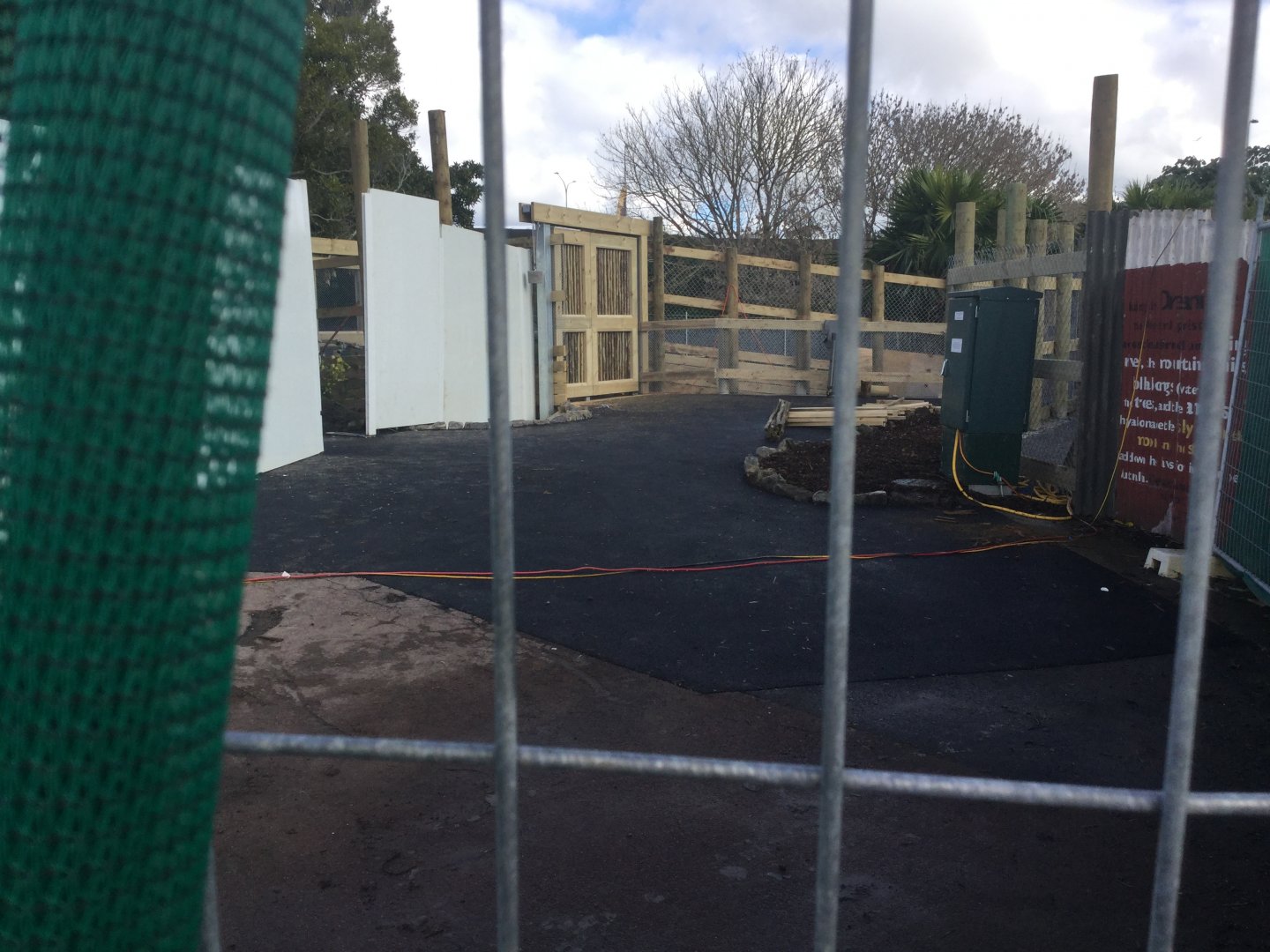
It’s clearly come on a lot over the last few months with a new Brolga exhibit. I’m planning to visit next month, as one of my sons is keen to go.
Did you also say that they have a female Tasmanian devil now? They previously had been reduced to two males - Levi and Smiley.
This is the larger exhibit (housing Levi):
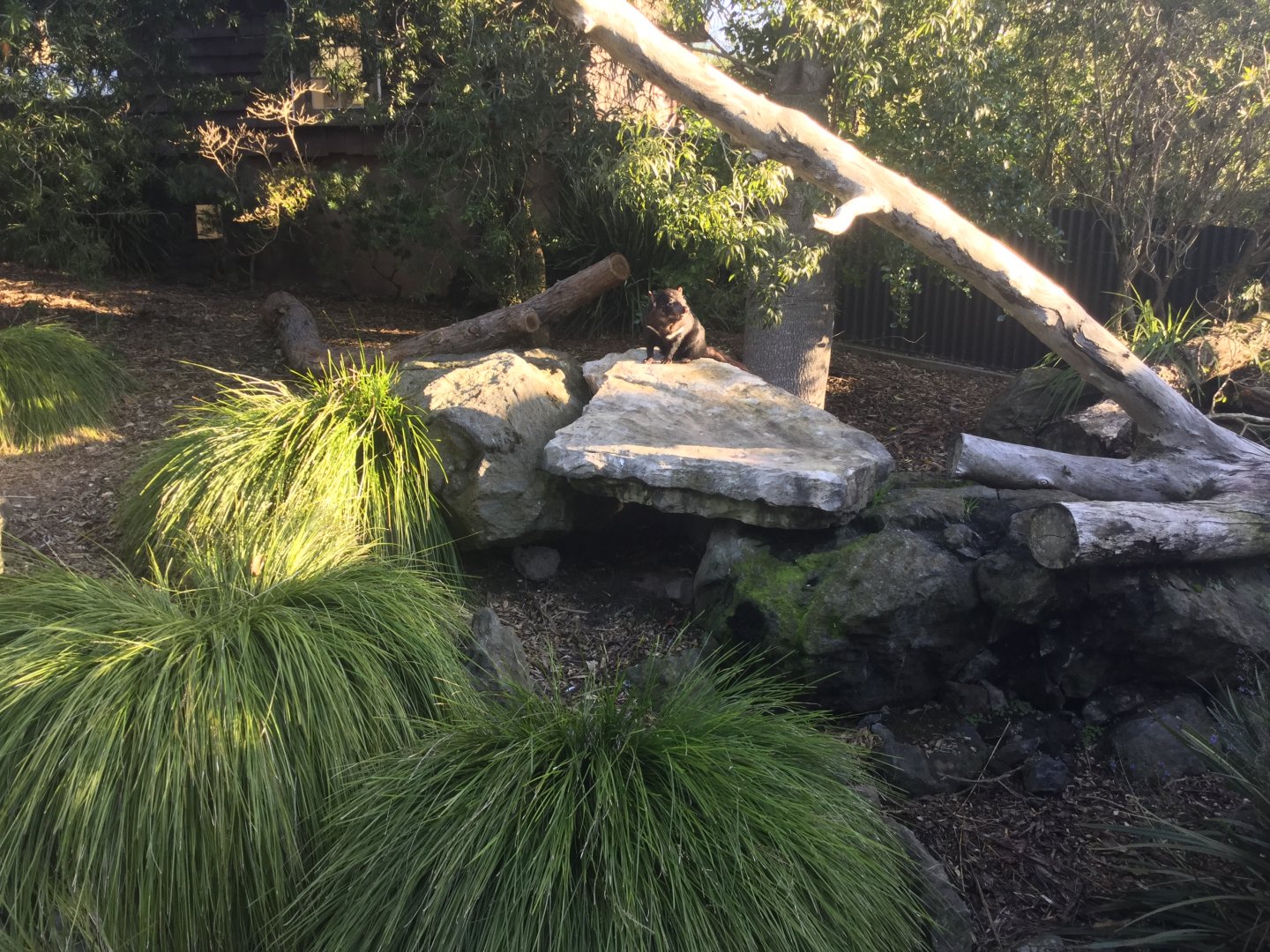
Your information is probably more updated compared to mineThis was the entrance way I saw being built on my visit in July (next to the old tiger pit):
It’s clearly come on a lot over the last few months with a new Brolga exhibit. I’m planning to visit next month, as one of my sons is keen to go.
Did you also say that they have a female Tasmanian devil now? They previously had been reduced to two males - Levi and Smiley.
This is the larger exhibit (housing Levi):
 I haven't really checked about the Tasmanian Devils status for a decent while so I'm probably wrong. Do you have any idea what happened to their previous female?
Your information is probably more updated compared to mine
She would be long dead. There have been two imports since the exhibit opened - 3.1 in 2014; and 2.0 in 2018. When the two males arrived in 2018, only one of the original four (a male named Herod) was still alive. He’s since died.
You were also right about there being three exhibits - the large one on the left housing Levi (Tasmanian devil); the first small one on the right housing Smiley (Tasmanian devil); and the second small one on the right was until recently housing Brolga (previously devils) and divided from the other one by a wall:
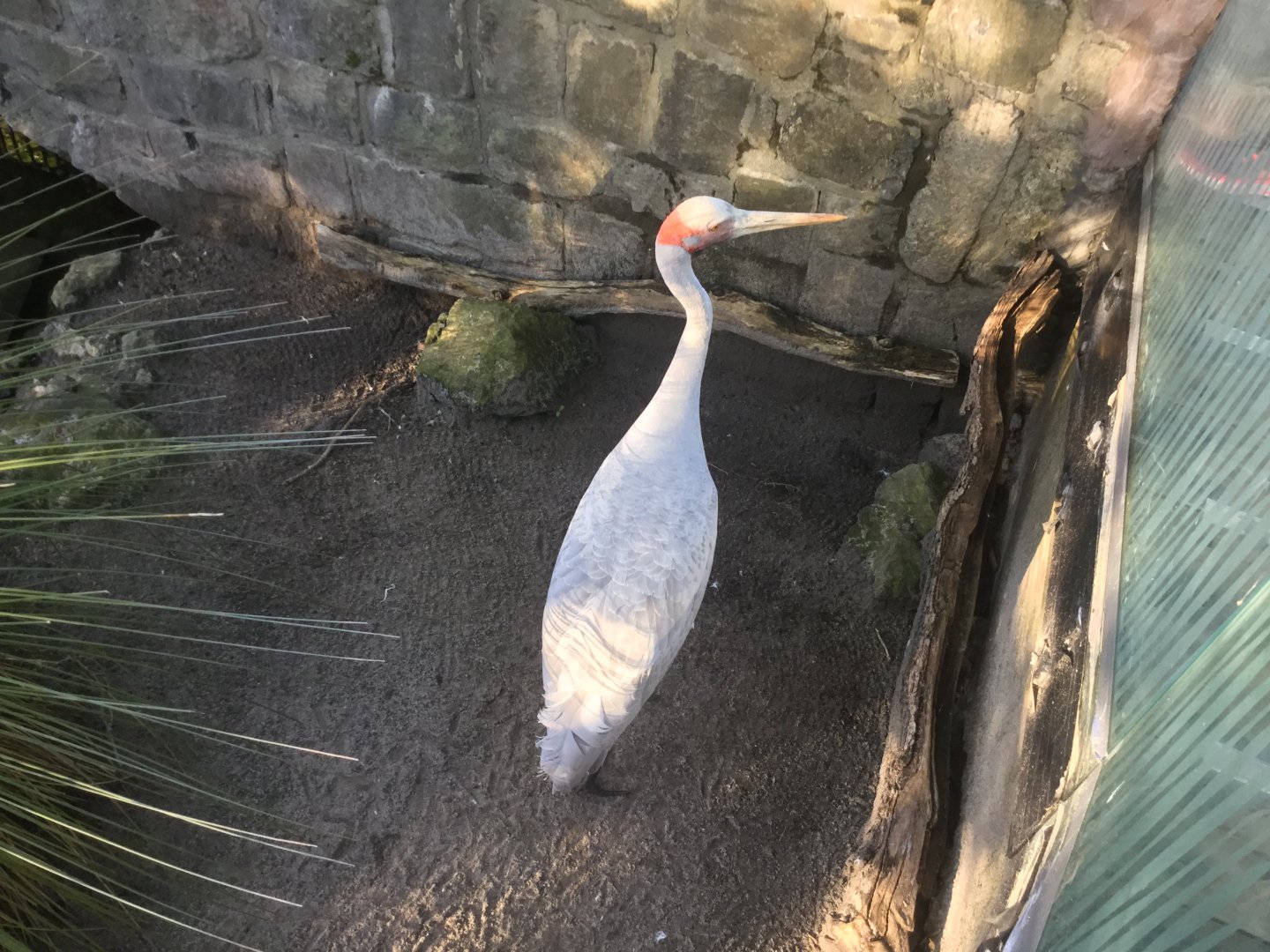
A construction update on the new Sumatran tiger habitat:
Log into Facebook | FacebookWe're making progress on our new South East Asia Jungle Track habitat for Sumatran tigers!
Planting has begun, and the beach and waterfall, pool and surrounding rocky outcrop, is almost complete. It’s here on a hot sunny day next summer you could be watching a tiger doing what it loves – shallow bathing with half its body in water - the best way to cool off and sleep at the same time! The pool also has deeper areas to enable a tiger to wade (not swim) as they prefer, and still have its head above water.
You'll be able to view this through large 3.5m high floor to ceiling windows in the shared shelter that’s now in the process of getting its roof on. This is where you and a tiger can come face to face! Our carnivore team leader Lauren says the best thing about this new ‘lowlands’ habitat is the quality of its topographically different spaces “that will enable our tigers to spend time in different areas of their territory – just like they do in the wild”.
The tigers’ inside area is also progressing and excitingly, this week, Lauren and the rest of the team will be moving into their new office space inside this building. “It’s a great Christmas present ahead of tigers arriving later next year! It features a fantastic kitchen and food prep area, and in the tigers’ areas – a design that really enhances our ability to manage and do training with them, particularly monitoring their physical health.”
Come and see the progress we've made AND visit our completed high canopy habitat for primates this weekend!