Auckland Zoo Auckland Zoo News 2022

Two female False gharial have been imported:

0.2 False gharial have been imported by Auckland Zoo.

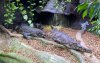
12 year old sisters (Malu and Sumpit) came from the Krokodile Zoo in Denmark and will go on display Friday 21 October.

This is the first time this species has been held in a New Zealand zoo.

From socials:

The 12-year-old sisters are currently undertaking their 30-day precautionary quarantine period in their back-of-house pool within the climate controlled tropical dome that is our swamp forest – where the air and water temperature is a beautiful balmy 28-30ºC.

Shy and secretive, they are renowned for their distinctive snout – characteristics that the Zoo team were inspired by when naming them. “Malu means shy in Indonesian, and Sumpit is Indonesian for chopsticks, and as you can see their long slender snouts are more than a little reminiscent of chopsticks – so much so that one of their indigenous names is buaya (crocodile) sumpit, or chopstick crocodile!” explains Richard.


Photo of Malu and Sumpit:
upload_2022-9-16_12-35-3.jpeg
Photo source: Krokodile Zoo (via Auckland Zoo’s socials)
 

Attachments

  • upload_2022-9-16_12-35-3.jpeg
    upload_2022-9-16_12-35-3.jpeg
    79.9 KB · Views: 27
Two female False gharial have been imported:

0.2 False gharial have been imported by Auckland Zoo.

12 year old sisters (Malu and Sumpit) came from the Krokodile Zoo in Denmark and will go on display Friday 21 October.

This is the first time this species has been held in a New Zealand zoo.

From socials:

The 12-year-old sisters are currently undertaking their 30-day precautionary quarantine period in their back-of-house pool within the climate controlled tropical dome that is our swamp forest – where the air and water temperature is a beautiful balmy 28-30ºC.

Shy and secretive, they are renowned for their distinctive snout – characteristics that the Zoo team were inspired by when naming them. “Malu means shy in Indonesian, and Sumpit is Indonesian for chopsticks, and as you can see their long slender snouts are more than a little reminiscent of chopsticks – so much so that one of their indigenous names is buaya (crocodile) sumpit, or chopstick crocodile!” explains Richard.


Photo of Malu and Sumpit:
View attachment 575379
Photo source: Krokodile Zoo (via Auckland Zoo’s socials)
Awesome news
 
Awesome news

Since there’s no mention of importing a male False gharial, I assume Auckland Zoo are happy to hold a same sex pair for advocacy. This species reaches sexual maturity at around 20 years or age, so they’re still immature at 12 years of age.

Based on the interest from other holders in the region over the next decade, they may decide to import a male and breed - but either way it’s highly exciting to have this species in the region for the first time in history.
 
Hamadryas baboon birth:

A Hamadryas baboon infant has been born at Auckland Zoo.

Visitor photos tagged to the zoo’s social media from mid August show an infant that looks around four weeks old (born approx mid July 2022) on exhibit with its mother.

The mother would be Naeemah (2011), Zala (2013) or Mali (2015). Mali has a 23 month old daughter, who is the next youngest member of the troop.

This birth takes the zoos Hamadryas baboon population to 4.6.1 baboons.

Hamadryas baboon infant update:

The baboon infant is a male and was born in June to Badi and Mali. This is interesting as Mali was in Yafeu’s harem when her daughter Iniko was conceived in 2020 and prior to this was in Wasaro’s harem.

Afar and Wasaro are the founders and at 17 years old, are well past their prime. It’s therefore expected that the younger males - Yafeu and Badi would now be the harem leaders, with the five females likely split between the two of them.

In the next year or two, Iniko will either become one of the females in Badi’s harem or transfer back to her father’s harem.
 
Staff on birth watch for Southern white rhinoceros calf:

Staff are now on nightly birth watch ahead of the birth of Jamila's calf, which is due soon.

This will be the third Southern white rhinoceros born at Auckland Zoo - following on from Kito in 2000 and Nyah in 2020.

Source: Socials
 
A female Southern white rhinoceros calf was born 24/09/2022:

This is the zoo’s third calf (all females) - following on from Kito (2000) and Nyah (2020). Her birth takes the zoo’s herd to 1.3 rhinoceros.

The Zoo welcomes rhinoceros calf Amali! | Auckland Zoo


Southern white rhinoceros Jamila became a mother for the second time in the early hours of Saturday morning - giving birth to her newborn (estimated to weigh around 60kg) at 3.20am.

Tommy and the team have chosen the name Amali for Nyah’s new sibling, which is Swahili in origin, and means ‘hope’.

A new sibling is big change and adjustment for two-year-old Nyah, who has close visual access to her mum and new sister from a separate stall within the rhinoceros barn and will be fully integrated with them over the coming week.
 
A female Southern white rhinoceros calf was born 24/09/2022:

This is the zoo’s third calf (all females) - following on from Kito (2000) and Nyah (2020). Her birth takes the zoo’s herd to 1.3 rhinoceros.

The Zoo welcomes rhinoceros calf Amali! | Auckland Zoo


Southern white rhinoceros Jamila became a mother for the second time in the early hours of Saturday morning - giving birth to her newborn (estimated to weigh around 60kg) at 3.20am.

Tommy and the team have chosen the name Amali for Nyah’s new sibling, which is Swahili in origin, and means ‘hope’.

A new sibling is big change and adjustment for two-year-old Nyah, who has close visual access to her mum and new sister from a separate stall within the rhinoceros barn and will be fully integrated with them over the coming week.

Great news to have yet another female for the regional breeding program; we've seen quite a lot of male calves lately. Jamila and Zambezi have proven themselves as quite the successful breeding pair thus far. Fingers crossed everything goes well with Amali.
 
Great news to have yet another female for the regional breeding program; we've seen quite a lot of male calves lately. Jamila and Zambezi have proven themselves as quite the successful breeding pair thus far. Fingers crossed everything goes well with Amali.

It’s especially beneficial to have another female given the South African import will bring multiple founders bulls to the region, making many of our current bulls redundant to the breeding programme; versus cows which can be slotted into almost any herd irregardless of their genetic representation.

Nyah (2020) and Amali (2022) are well represented on their maternal side, but three of Zambezi’s four eldest offspring are deceased - and the fourth is a behavioural non breeder (at least with Kruger).
 
Last edited:
Auckland Zoo TV Series Starts October 8:

Not to be outdone by Taronga and Zoos Victoria, a TV series about Auckland Zoo is coming to screens next month.

Good news for fans of The Zoo, which ran for 12 seasons from 1999-2012. They’ll certainly be plenty of content with an orangutan infant, a giraffe calf, a rhino calf, a new Sumatran tiger and the arrival of a pair of False gharial - not to mention the opening of the South East Asia precinct.

From socials:

Auckland Zoo is coming to your screens from Saturday 8 October (7pm on Three and streaming on threenow.co.nz) in an exciting new wildlife conservation series, ‘Wild Heroes’!

Produced with our partners, Magnetic Pictures, this nine-episode series takes you behind-the-scenes here at the Zoo, and out into the wild across Aotearoa New Zealand to discover the vital roles a modern progressive zoo like Auckland plays in 2022 – our 100th year!
[/QUOTE]
 
Auckland Zoo TV Series Starts October 8:

Not to be outdone by Taronga and Zoos Victoria, a TV series about Auckland Zoo is coming to screens next month.

Good news for fans of The Zoo, which ran for 12 seasons from 1999-2012. They’ll certainly be plenty of content with an orangutan infant, a giraffe calf, a rhino calf, a new Sumatran tiger and the arrival of a pair of False gharial - not to mention the opening of the South East Asia precinct.

From socials:

Auckland Zoo is coming to your screens from Saturday 8 October (7pm on Three and streaming on threenow.co.nz) in an exciting new wildlife conservation series, ‘Wild Heroes’!

Produced with our partners, Magnetic Pictures, this nine-episode series takes you behind-the-scenes here at the Zoo, and out into the wild across Aotearoa New Zealand to discover the vital roles a modern progressive zoo like Auckland plays in 2022 – our 100th year!
[/QUOTE]

Interesting!

Unfortunately the Three website is geoblocked in Australia (although I did suspect that would be the case), although I'll post the info if it ends up being broadcast elsewhere as well.
 
Interesting!

Unfortunately the Three website is geoblocked in Australia (although I did suspect that would be the case), although I'll post the info if it ends up being broadcast elsewhere as well.

I’m sure it’ll come to Australia in time. It promises to be a step up from the usual zoo shows (Mega Zoo had a particularly childish vibe), so it’ll be interesting to see how good it is. I’m not expecting a huge amount of news we haven’t already uncovered.

According to this sire, the first episode will be about their orangutans (birth of Bahmi; death of Wanita) as well as their field work with Archey’s frogs: Local series Wild Heroes turns the spotlight on Auckland Zoo
 
Auckland Zoo TV Series Starts October 8:

Not to be outdone by Taronga and Zoos Victoria, a TV series about Auckland Zoo is coming to screens next month.

Good news for fans of The Zoo, which ran for 12 seasons from 1999-2012. They’ll certainly be plenty of content with an orangutan infant, a giraffe calf, a rhino calf, a new Sumatran tiger and the arrival of a pair of False gharial - not to mention the opening of the South East Asia precinct.

From socials:

Auckland Zoo is coming to your screens from Saturday 8 October (7pm on Three and streaming on threenow.co.nz) in an exciting new wildlife conservation series, ‘Wild Heroes’!

Produced with our partners, Magnetic Pictures, this nine-episode series takes you behind-the-scenes here at the Zoo, and out into the wild across Aotearoa New Zealand to discover the vital roles a modern progressive zoo like Auckland plays in 2022 – our 100th year!

Auckland Zoo TV Series

Auckland Zoo’s TV series begins tonight. For those unable to watch, but wanting to follow the storylines, I will be posting a detailed episode synopsis every weekend for each of the nine episodes in this thread: Wild Heroes (Auckland Zoo TV Series) - Episode Guide [Auckland Zoo]

In the very first episode of Wild Heroes (8 October): The Zoo’s primate team welcomes the birth of Bornean orangutan baby Bahmi. Some of our ectotherm specialists head into the Pureora Forest to conduct vital survey work on Aotearoa’s endemic Archey’s frog – the world’s most evolutionarily distinct and globally endangered amphibian. And at the Zoo, bird keeper Sarah introduces you to the world’s only alpine parrot, and Monica (our head of zoo environment, design, and construction) to our South East Asia Jungle Track – the biggest development in our history.

Excitingly, 8 October brings you a special full hour (double episode) of Wild Heroes. Episode two sees an update on baby orangutan Bahmi, the arrival of Sumatran tiger Sali, and an incredible story of the rescue, rehabilitation, and release of marine sea turtles!

‘Wild Heroes’ - Auckland Zoo on screen! | Auckland Zoo News
 
Visited yesterday and haven't for a few years, and so was interested in a few of the developments.

The Crested Porcupines are currently in the outdoor Meerkat enclosure. Not sure how long this has been the case.

Only saw a single Waterbuck, which towered over the Nyala; i'm assuming this may have been a male? Unfortunately couldn't see the young rhino calf as Inkosi was out on display, but I have to say this exhibit has came far, with a lot of new additional shaded areas which the antelope were congregated under.

The flamingo enclosure is definitely looking older; it's a real shame they're not considering a free flight aviary to replace the elephants across the path.

Saw eight baboons, including the young baby. Two obvious adult males were present; i'm assuming Yafeu and Badi? The other six would then be Naaemah, Zala, Mali, Aiysha/Kito and then the youngest two offspring.

The Seal enclosure is looking very depleted; with only the single fur seal remaining. Penguins may be a nice replacement, but they have a decent home as it is. Also, they've took away the shade at the viewing window which now means there's a glare due to the sun.:rolleyes:

The new South East Asian area is looking phenomenal. The arboreal ropes are absolutely amazing, and it was awesome to watch Charlie cross right over the top of me at one point. The Saimangs were incredibly vocal; but it seems the plantation in their enclosure has been removed from when the complex initially opened. I was also extremely lucky to catch Bahmi; although Melur was hiding him really well. I had thought Auckland had constructed three enclosures, and the complex is smaller than I had initially thought (with two enclosures) but is still decently sized. The new enclosures have provided the Orangs and Saimangs with much more arboreal space - something the orangs (and saimangs) previously lacked at the zoo.

The Tiger/Otter area is really nice. The otter enclosures are very simple but serve their purpose well. The otters still haven't moved in unfortunately though. The tiger enclosures are well planted, and give the tigers a lot of privacy. I was disappointed to see the enclosures were rather small though; especially compared to Auckland's previous enclosures. Once Auckland receive Ramah and Zayana down the line; their tiger complex will be rather packed.

The new Cafe is also amazing; the architecture is quite plain, but it's spacious and well designed, with a lookout over the lake towards the Orangutans. It's definitely an upgrade from Darwins.

Continuing on, Emperor Tamarins were on the former Golden Lion Tamarin island. Saw a decent seven or eight of them, so Auckland do have quite a lot. On the subject of Tamarins, their Cotton Tops are doing incredibly well; the tree has grown up and they can climb all the way to the top which is phenomenal. There was a young baby too (not sure if it's been mentioned on here); they had at least 10+ individuals too; i'd assume the breeding pair and all of their offspring.

The Squirrel Monkey enclosure has also become heavily overgrown; I struggled to see any!:D It's a shame they phased out their Capybaras which were always quite an addition to that enclosure.

The Saimang enclosure has been demolished which I was especially sad to see. The Spider Monkey enclosure is also looking better than ever; I noticed more arboreal ropes have been installed, and the Spider Monkeys were making the most of these too.

I discovered the former Macaw cages had been demolished in favour of a new Macaw presentation area. I wasn't entirely disappointed, but the cages were of course heritage, constructed in the zoo's very early days.

The Australian area is looking great. I did notice though that they had constructed a Brolga enclosure opposite the Wallaby/Emu walkthrough, in a part which I believe was part of the walkthrough initially. There were also no Wallabies! Not sure why, but it did look like they were doing some sort of construction. The two emus were the only inhabitants of the walkthrough.

Not sure who decided it; but putting the Lemurs in the former Tiger enclosure was a terrible choice. Not only does the glare permit you from getting a good look in through the glass; the heavy plantation also makes it almost impossible to spot them. I certainly didn't manage to see any.:rolleyes:

Auckland also only had about five otters on display. I thought they had eight males (I could be wrong though). It's possible some may have been moved into the off display enclosure (opposite the Orangs).

Overall, it was a nice visit and within the past three years Auckland has definitely changed in a huge way. The amount of progress is phenomenal and the zoo is definitely improving in the right direction. All of the enclosures are well sized, and also incredibly natural (some too well planted imo:D); and I do love the easy flow the zoo has (allowing you to continue on a single route around the zoo passing through the many different geographical zones on the way). Quite a worldclass zoo.
 
Auckland Zoo Notes

A few notes to add to your visit:
Only saw a single Waterbuck, which towered over the Nyala; i'm assuming this may have been a male? Unfortunately couldn't see the young rhino calf as Inkosi was out on display, but I have to say this exhibit has came far, with a lot of new additional shaded areas which the antelope were congregated under.

Auckland Zoo should have three female Waterbuck. They received a bull, but he’d disappeared from the collection by April this year. I assume he was returned to Orana due to integration issues.

Inkosi the Southern white rhinoceros passed away earlier this year, but through context I can tell you’re referring to his sire Zambezi (also the sire of the latest calf). Long term, they’re aiming for an integrated herd of 1.3 with the first step being to reintroduce Jamila’s two year old daughter.
Saw eight baboons, including the young baby. Two obvious adult males were present; i'm assuming Yafeu and Badi? The other six would then be Naaemah, Zala, Mali, Aiysha/Kito and then the youngest two offspring.

As of June, the zoo had 5.6 baboons. Yafeu (2009) and Badi (2012) are harem leaders and would have been the caped males you saw. I assume due to their age (2005), the elder males have relinquished any females in their harems. As the enter their late teens, they’ll be beginning to look drab compared to the prime age males.
The new South East Asian area is looking phenomenal. The arboreal ropes are absolutely amazing, and it was awesome to watch Charlie cross right over the top of me at one point. The Saimangs were incredibly vocal; but it seems the plantation in their enclosure has been removed from when the complex initially opened. I was also extremely lucky to catch Bahmi; although Melur was hiding him really well. I had thought Auckland had constructed three enclosures, and the complex is smaller than I had initially thought (with two enclosures) but is still decently sized. The new enclosures have provided the Orangs and Saimangs with much more arboreal space - something the orangs (and saimangs) previously lacked at the zoo.

The Bornean orangutan exhibit isn’t huge, but when you consider it links to 2km of aerial pathway, it’s the biggest enclosure in the zoo. Like you, I was also hoping for multiple exhibits to manage a larger number of orangutans. This is my only criticism of the complex.
The tiger enclosures are well planted, and give the tigers a lot of privacy. I was disappointed to see the enclosures were rather small though; especially compared to Auckland's previous enclosures. Once Auckland receive Ramah and Zayana down the line; their tiger complex will be rather packed.

The Sumatran tiger complex is the second largest in the region after Taronga Zoo. I’ve estimated it’s capacity as up to seven adult tigers, depending on social configurations. I’d consider it very well equipped for raising cubs through to adulthood as the exhibits cater to their different developmental stages. The smallest exhibit for example is ideal for 6-12 week old cubs adjusting to being on exhibit.
On the subject of Tamarins, their Cotton Tops are doing incredibly well; the tree has grown up and they can climb all the way to the top which is phenomenal. There was a young baby too (not sure if it's been mentioned on here); they had at least 10+ individuals too; i'd assume the breeding pair and all of their offspring.

Earlier this year, I counted the breeding pair and their six daughters; as well as five juveniles. This indicates in addition to the breeding female producing young, at least one of her daughters has in addition - something which can happen in spacious exhibits such as this one.
Not sure who decided it; but putting the Lemurs in the former Tiger enclosure was a terrible choice. Not only does the glare permit you from getting a good look in through the glass; the heavy plantation also makes it almost impossible to spot them. I certainly didn't manage to see any.

I agree, though I think I’m bias because seeing some Ring-tailed lemur in what was formerly a tiger exhibit is disappointing. The lemurs needed an exhibit and his was vacant at the time, so long term I doubt we’ll see them in five years.
Auckland also only had about five otters on display. I thought they had eight males (I could be wrong though). It's possible some may have been moved into the off display enclosure (opposite the Orangs).

Auckland Zoo have seven Asian-small clawed otter (brothers). They’re held in two groups, so I’d assume the other group were back of house in the otter exhibit. On my last visit, Nepalese red panda were kept in the two off off display exhibits. Did you look over the fence? I always enjoy admiring the architecture of this 1922 bear pit - the last remaining in the zoo now the old meerkat exhibit has been demolished.
 
Auckland Zoo should have three female Waterbuck. They received a bull, but he’d disappeared from the collection by April this year. I assume he was returned to Orana due to integration issues.

Inkosi the Southern white rhinoceros passed away earlier this year, but through context I can tell you’re referring to his sire Zambezi (also the sire of the latest calf). Long term, they’re aiming for an integrated herd of 1.3 with the first step being to reintroduce Jamila’s two year old daughter.

That's interesting. I only saw one Waterbuck, of which was sitting under one of the little trees with some of the Nyala.

Yep, I was referring to Zambezi, thanks for picking up on that. :)

I'm not sure of Auckland's back of house set up but I was interested to see how they'd keep Jamila and her two daughters off display at the same time; especially if Nyah's still separated. They don't have an off display paddock do they? The Rhino enclosure backs onto the back of the Seals, so I don't think there's the space.

The Bornean orangutan exhibit isn’t huge, but when you consider it links to 2km of aerial pathway, it’s the biggest enclosure in the zoo. Like you, I was also hoping for multiple exhibits to manage a larger number of orangutans. This is my only criticism of the complex.

The enclosures are still great; well planted, decent sized, and best of all give the orangs the opportunity to climb, which their previous enclosure severely lacked. It's definitely a massive improvement; and kudos to Auckland for designing such an innovative habitat. Charlie seemed to thoroughly enjoy the arboreal pathways; so they definitely make up for the lack of enclosures present. To be honest, Auckland is limited on space; but a small island in the centre of the lake would've been better than nothing imo.

The Sumatran tiger complex is the second largest in the region after Taronga Zoo. I’ve estimated it’s capacity as up to seven adult tigers, depending on social configurations. I’d consider it very well equipped for raising cubs through to adulthood as the exhibits cater to their different developmental stages. The smallest exhibit for example is ideal for 6-12 week old cubs adjusting to being on exhibit.

If we're going on the size of individual enclosures though; they are on the smallish scale (Melbourne and Adelaide definitely have bigger enclosures). I do enjoy the plantation within the enclosures though; and the fencing is well done. The smallest exhibit is (i'm assuming) the central one; behind the otters? Unfortunately when I visited Sali was indoors, but the benefit now is she has access to two enclosures.

Earlier this year, I counted the breeding pair and their six daughters; as well as five juveniles. This indicates in addition to the breeding female producing young, at least one of her daughters has in addition - something which can happen in spacious exhibits such as this one.

I saw at least ten, so the 13 you counted earlier this year seems to be about right. There was a younger individual too, which I assume is a new addition.

I agree, though I think I’m bias because seeing some Ring-tailed lemur in what was formerly a tiger exhibit is disappointing. The lemurs needed an exhibit and his was vacant at the time, so long term I doubt we’ll see them in five years.

I agree, that exhibit has always housed tigers for me.:p I believe the plan is for a walkthrough Lemur enclosure to be built on the place of their current exhibit down the line. I think Auckland are down to only two or three girls now too, which obviously makes viewing them more complicated.

Auckland Zoo have seven Asian-small clawed otter (brothers). They’re held in two groups, so I’d assume the other group were back of house in the otter exhibit. On my last visit, Nepalese red panda were kept in the two off off display exhibits. Did you look over the fence? I always enjoy admiring the architecture of this 1922 bear pit - the last remaining in the zoo now the old meerkat exhibit has been demolished.

I looked over the fence and didn't see any otters nor red pandas. The left enclosure though seemed to be better suited for otters imo, with a flowing stream; and the tree was bare, compared to the right enclosure's tree which wasn't. The pit's are incredibly small and it's hard to imagine they were once pits for bears!
 
I'm not sure of Auckland's back of house set up but I was interested to see how they'd keep Jamila and her two daughters off display at the same time; especially if Nyah's still separated. They don't have an off display paddock do they? The Rhino enclosure backs onto the back of the Seals, so I don't think there's the space.

They don’t have an off display exhibit for the Southern white rhinoceros, but they do have several holding yards. At one stage, they had to manage five rhinoceros across four groups following Kito’s birth in 2000. Mazithi wouldn’t tolerate the presence of her elder daughter around the new calf for close to a year and the then two year old couldn’t be safe housed with either of the bulls (which also had to be held separately).
The enclosures are still great; well planted, decent sized, and best of all give the orangs the opportunity to climb, which their previous enclosure severely lacked. It's definitely a massive improvement; and kudos to Auckland for designing such an innovative habitat. Charlie seemed to thoroughly enjoy the arboreal pathways; so they definitely make up for the lack of enclosures present. To be honest, Auckland is limited on space; but a small island in the centre of the lake would've been better than nothing imo.

It’s been really great seeing Charlie enjoy the aerial pathways. There’s nothing like seeing a mature male orangutan brachitate. Melur is also very engaged with the aerial ropes, despite having an infant now.
If we're going on the size of individual enclosures though; they are on the smallish scale (Melbourne and Adelaide definitely have bigger enclosures). I do enjoy the plantation within the enclosures though; and the fencing is well done. The smallest exhibit is (i'm assuming) the central one; behind the otters? Unfortunately when I visited Sali was indoors, but the benefit now is she has access to two enclosures.

Hamilton Zoo also has a much larger exhibit than any of Auckland’s three exhibits, but like many of the large exhibits in Australasian zoos, it only has the capacity to house a cohesive group. The rationale behind dividing the floor space of what could have potentially been a very large exhibit at Auckland Zoo is to allow them to manage multiple groupings of a solitary/semi-social species.
 
The zoo has hatched three kiwi chicks:

From socials:

We’ve got great news this - three healthy kiwi chicks have hatched at our Zoo!

This Coromandel brown kiwi chick (a distinct form of North Island brown kiwi) is 21 days old and is currently being cared for at our special kiwi incubation facility. See socials for photo.

The chicks progress will be monitored during its growth and development, and once it reaches the right age and weight it will head to a beautiful predator free wild site for release.

Senior bird keeper Nat says, “this chick is the offspring of Ngawari - an Operation Nest Egg (ONE) chick that we hatched and reared at the Zoo in previous years. It's so rewarding to know that we're helping generations of kiwi to survive and have chicks of their own."
 
New Asian small-clawed otter exhibit now open:

It’ll be great to see any interactions they have with the Sumatran tigers in the overhead tunnels.

From socials:

We’ve got otterly awesome news – you can now visit these Asian small-clawed otters in their new Lowlands habitat!

One of the final phases of our South East Asia Jungle Track to open, this exciting new habitat custom-made for otters features rocky terrains, log dens, lush trees and grasses, as well as waterfall and pool areas for this semi-aquatic species to dive and swim in.


The Zoo’s raft of five otters were welcomed into their new habitat on Tuesday, and have been busy exploring. Carnivore team leader Lauren says, “It’s so exciting to finally welcome the otters (and our visitors!) to this immersive new space, and see them using all of the features that we and our incredible design and construction partners created for them."
 
New Asian small-clawed otter exhibit now open:

It’ll be great to see any interactions they have with the Sumatran tigers in the overhead tunnels.

From socials:

We’ve got otterly awesome news – you can now visit these Asian small-clawed otters in their new Lowlands habitat!

One of the final phases of our South East Asia Jungle Track to open, this exciting new habitat custom-made for otters features rocky terrains, log dens, lush trees and grasses, as well as waterfall and pool areas for this semi-aquatic species to dive and swim in.


The Zoo’s raft of five otters were welcomed into their new habitat on Tuesday, and have been busy exploring. Carnivore team leader Lauren says, “It’s so exciting to finally welcome the otters (and our visitors!) to this immersive new space, and see them using all of the features that we and our incredible design and construction partners created for them."

Well only a week after I visit this had to happen. :rolleyes:

I'm thinking if the five moved into the Jungle track exhibit; then the other pair must remain in the enclosure next to the lemurs?
 
Back
Top