Auckland Zoo Auckland Zoo News 2023

Thanks so much for the information, @Zoofan15 ! That is absolutely great to know, and I will definitely read through that report. The history of NZ's great ape and gibbon populations is something that fascinates me no end.

I think you're right about Charlie liking any fertile female! According to zoo staff, he is already making eyes at Daya!

Your post about Melur's parents was amazing - thanks for that - and has led me to confirm something that I was curious about, being that Yasmin is indeed Toledo Zoo's Yasmin! And she, as far as I know, is still alive, living in one of two orangutan groups with a male named Boomer and her youngest child, 8-year-old male Wakil. I've seen photos of Yasmin on Facebook, and she does look remarkably like Melur! There is also a video on YouTube of the Toledo Zoo orangutans from earlier this year, and I got a good look at young Wakil, who bears quite a strong facial resemblance to little Bahmi!

No problem, I’d also highly recommend the following population threads. I’ve uploaded countless records regarding Australasia’s great ape population (past and present):

Australasian Common Chimpanzee Population

Australasian Orangutan Population

Australasian Western Lowland Gorilla Population

Apparently none of Auckland’s males had an interest in Wanita. The report I linked in my previous post theorised this was due to either her being a hybrid or her partial sterilisation. I’m inclined to believe it was the latter since orangutans readily hybridise. Wanita had a temper that made some of the others wary of her, though she generally had a good relationship with Madju.

Season 3 of The Zoo (2001) implied Wanita, Melur and Gangsa were a close trio. It makes sense as Melur and Gangsa (half-sisters) were imported by Taronga Zoo as juveniles in 1995 and Wanita may well have had a similar relationship with them as she did with Madju at that age. Gangsa’s jealousy at sharing Charlie’s attention with Melur was attributed to their falling out in their late teens.
 
No problem, I’d also highly recommend the following population threads. I’ve uploaded countless records regarding Australasia’s great ape population (past and present):

Australasian Common Chimpanzee Population

Australasian Orangutan Population

Australasian Western Lowland Gorilla Population

Apparently none of Auckland’s males had an interest in Wanita. The report I linked in my previous post theorised this was due to either her being a hybrid or her partial sterilisation. I’m inclined to believe it was the latter since orangutans readily hybridise. Wanita had a temper that made some of the others wary of her, though she generally had a good relationship with Madju.

Season 3 of The Zoo (2001) implied Wanita, Melur and Gangsa were a close trio. It makes sense as Melur and Gangsa (half-sisters) were imported by Taronga Zoo as juveniles in 1995 and Wanita may well have had a similar relationship with them as she did with Madju at that age. Gangsa’s jealousy at sharing Charlie’s attention with Melur was attributed to their falling out in their late teens.

Thanks for those links! I will really enjoy reading up on those. I do wonder if Wanita, had she survived, would have developed a similar relationship with Bahmi as he grew. Bahmi seems to have a very similar temperament to the young Madju, playful, cheeky and very mischievous!

Further looking into Melur's family, it seems that Kecil, who made headlines when he had to be transferred to another zoo to be fostered when he and mother Yasmin didn't bond after a difficult birth and consequent separation, is another half-brother of Melur's. Recent photos of him also show a facial resemblance to Bahmi, although not so much to Madju who has a stronger resemblance to Charlie.

It's doubtful that Toledo Zoo will breed from Yasmin again, as she is advanced in age and they now have younger female Leela (mother of social media sensation Fajar) and, as you mentioned, Yasmin's line is well represented. Although Gladys Porter Zoo's 46-year-old Sumatran female, Dodie, recently gave birth to a healthy daughter, so who knows?

It's interesting how the relationship between sisters Melur and Gangsa changed due to jealousy over Charlie. I wonder if the fact that Gangsa never produced an infant had something to do with the increased tension? Would you know if Auckland Zoo chose not to breed from Gangsa, or if there is a fertility issue with her? As far as I know, I haven't heard of Gangsa and Isim producing any offspring. Looks like Gangsa and Melur were paternal half-sisters - Gangsa's mother was apparently called Surabaya, according to a Facebook post, but I couldn't find out anything else about her.
 
Thanks for those links! I will really enjoy reading up on those. I do wonder if Wanita, had she survived, would have developed a similar relationship with Bahmi as he grew. Bahmi seems to have a very similar temperament to the young Madju, playful, cheeky and very mischievous!

Further looking into Melur's family, it seems that Kecil, who made headlines when he had to be transferred to another zoo to be fostered when he and mother Yasmin didn't bond after a difficult birth and consequent separation, is another half-brother of Melur's. Recent photos of him also show a facial resemblance to Bahmi, although not so much to Madju who has a stronger resemblance to Charlie.

It's doubtful that Toledo Zoo will breed from Yasmin again, as she is advanced in age and they now have younger female Leela (mother of social media sensation Fajar) and, as you mentioned, Yasmin's line is well represented. Although Gladys Porter Zoo's 46-year-old Sumatran female, Dodie, recently gave birth to a healthy daughter, so who knows?

It's interesting how the relationship between sisters Melur and Gangsa changed due to jealousy over Charlie. I wonder if the fact that Gangsa never produced an infant had something to do with the increased tension? Would you know if Auckland Zoo chose not to breed from Gangsa, or if there is a fertility issue with her? As far as I know, I haven't heard of Gangsa and Isim producing any offspring. Looks like Gangsa and Melur were paternal half-sisters - Gangsa's mother was apparently called Surabaya, according to a Facebook post, but I couldn't find out anything else about her.

Wanita definitely got a lot of benefit out of her relationship with Madju, though as noted in the report, it was strictly play-based. He didn’t seek her out as a maternal/comfort figure. I feel like Bahmi would have had a similar relationship with her and as I’m sure you know, he took his name from Wanita’s nickname.

Auckland Zoo chose not to breed with Gangsa. Madju was a surprise birth (contraception failure) and was conceived around the time Auckland Zoo made the decision to phase out Bornean orangutan and import Sumatran orangutan. Prior to this, Melur had a daughter that died the same day she was born in August 2002. The sire was unknown, which makes me think that pregnancy was unplanned also.

Gangsa returned Charlie’s interest, which was considered unusual. Melur was a more submissive female than Wanita, Indra and Gangsa, who were assertive females and she was preoccupied with Madju. Since Bahmi’s birth, she’s grown weary of Charlie’s interest and with that in mind, yes I do believe Gangsa having her own infant would have redirected her obsession with Charlie.

Since her export to the US, Isim and Gangsa have had a non surviving infant. Sadly I haven’t heard news of a subsequent pregnancy. She and Melur are born 18 months apart and are indeed paternal half-siblings.
 
Wanita definitely got a lot of benefit out of her relationship with Madju, though as noted in the report, it was strictly play-based. He didn’t seek her out as a maternal/comfort figure. I feel like Bahmi would have had a similar relationship with her and as I’m sure you know, he took his name from Wanita’s nickname.

Auckland Zoo chose not to breed with Gangsa. Madju was a surprise birth (contraception failure) and was conceived around the time Auckland Zoo made the decision to phase out Bornean orangutan and import Sumatran orangutan. Prior to this, Melur had a daughter that died the same day she was born in August 2002. The sire was unknown, which makes me think that pregnancy was unplanned also.

Gangsa returned Charlie’s interest, which was considered unusual. Melur was a more submissive female than Wanita, Indra and Gangsa, who were assertive females and she was preoccupied with Madju. Since Bahmi’s birth, she’s grown weary of Charlie’s interest and with that in mind, yes I do believe Gangsa having her own infant would have redirected her obsession with Charlie.

Since her export to the US, Isim and Gangsa have had a non surviving infant. Sadly I haven’t heard news of a subsequent pregnancy. She and Melur are born 18 months apart and are indeed paternal half-siblings.

Thank you so much, this is all very interesting to know! Personally, I do hope that Bahmi and Daya will develop a similar play-based relationship to the one Madju and Wanita had, as I think it would be very beneficial for both of them, both in the short term and possibly for long-term bonding purposes should Auckland Zoo decide to retain Bahmi as breeding male when Charlie passes on. (I often wonder if this is why a female of Daya's young years was selected - she will be old enough to breed with Charlie in the near future and will still be of prime breeding age when Bahmi matures).

I did hope to see Bahmi befriend the siamang pair, as many young orangutans have done with gibbons in other zoos, but it seems siamang introductions have been placed on hold due to Daya's arrival.

Thanks for the information about Gangsa! I do agree with you that Gangsa's focus would have shifted from Charlie to the infant if she was allowed to breed - this has certainly happened with Melur, who has become far more assertive with Charlie, not only in rebuffing his advances but in taking first pick of whatever food is on offer.

I am very glad that Auckland Zoo has decided to rejoin the breeding programme for Bornean orangutans, given their critically endangered status and the genetically valuable status of Charlie (and also Melur as her father has few surviving descendants). If I remember correctly, wasn't Charlie's father, Zabu, a wild-born founder? I remember an earlier post of yours saying Zabu sired 22 offspring - did some of these not survive to adulthood or just didn't have any offspring? An Australian friend told me that relatives of Charlie's are still living at Mandai but did not specify if they are descended from Zabu or from Girlie only.

An interesting side note: I think it's possible that Zabu may have actually sired one or more hybrids as well as the 22 Bornean infants recorded. Although exact paternity was never established for iconic Sumatran female Ah Meng's hybrid daughter Medan, Zabu is the most likely candidate due to his prolific track record and popularity with the females! :p
 
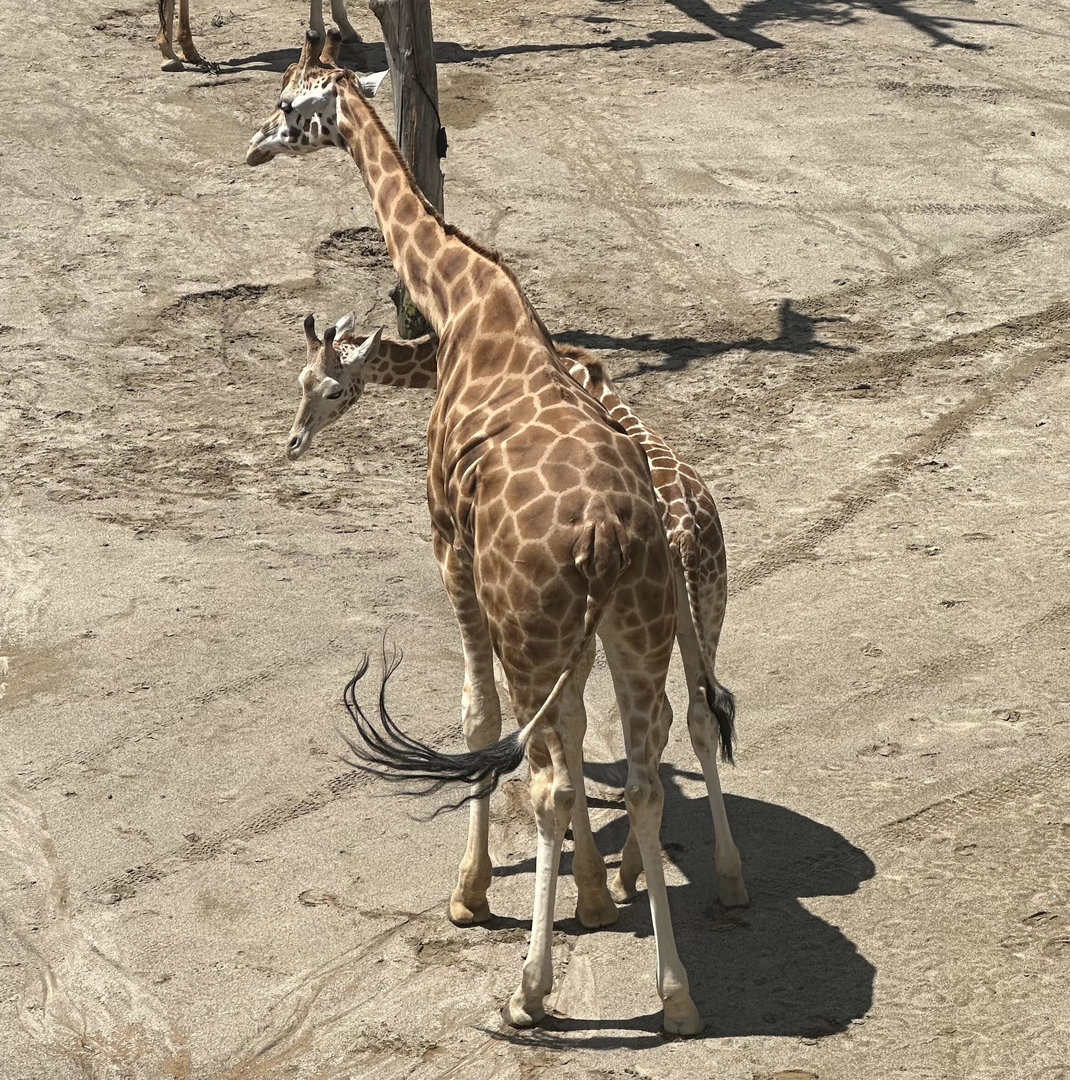
This is exciting news! It seems very soon after the birth of Jabali, but by the looks of things, this seems a normal pattern for giraffes.

A 16 month birth interval is definitely on the shorter side as gestation is only 15 months. Regionally, there’s been several births from 17 months onwards; but only a handful where the calf has survived and the mother produced a subsequent calf 16 months later.

A few examples are:

Zabulu (1998-2017) and Kiraka (2009) at Auckland Zoo produced Mdomo in August 2015 and Kabili/Unnamed twin in December 2016 (16 months).

William (1967-1983) and Matilda (1963-1991) at Melbourne produced Jane in July 1971 and Walter in November 1972 (16 months); and Hayati in February 1977 and Wilma in June 1978 (16 months).

Jan Smuts (1943-1968) and Hazel (1953-1981) at Taronga produced Peter in July 1963 and Swinger in November 1964 (16 months).

Twin births usually come early, so that likely explains why Kiraka features in the above example (you can imagine how hopeful I am for a repeat of twins based on this predicted birth interval :p).

Removal of rejected calves for handraising effectively simulates the loss of a calf and indeed 16 month birth intervals have been seen between non surviving calves at Auckland Zoo. After delivering twins in August 1990 (non surviving), Manyara gave birth again 16 months later in December 1991.
 
A 16 month birth interval is definitely on the shorter side as gestation is only 15 months. Regionally, there’s been several births from 17 months onwards; but only a handful where the calf has survived and the mother produced a subsequent calf 16 months later.

A few examples are:

Zabulu (1998-2017) and Kiraka (2009) at Auckland Zoo produced Mdomo in August 2015 and Kabili/Unnamed twin in December 2016 (16 months).

William (1967-1983) and Matilda (1963-1991) at Melbourne produced Jane in July 1971 and Walter in November 1972 (16 months); and Hayati in February 1977 and Wilma in June 1978 (16 months).

Jan Smuts (1943-1968) and Hazel (1953-1981) at Taronga produced Peter in July 1963 and Swinger in November 1964 (16 months).

Twin births usually come early, so that likely explains why Kiraka features in the above example (you can imagine how hopeful I am for a repeat of twins based on this predicted birth interval :p).

Removal of rejected calves for handraising effectively simulates the loss of a calf and indeed 16 month birth intervals have been seen between non surviving calves at Auckland Zoo. After delivering twins in August 1990 (non surviving), Manyara gave birth again 16 months later in December 1991.

That's interesting, @Zoofan15 - thanks for that! Twins would be amazing, but also, so would a single healthy calf. The giraffe exhibit appears to be doing well, and young Jabali seems to be thriving from what I've seen.
 
That's interesting, @Zoofan15 - thanks for that! Twins would be amazing, but also, so would a single healthy calf. The giraffe exhibit appears to be doing well, and young Jabali seems to be thriving from what I've seen.

Jabali is indeed thriving and I can’t wait to see what height he eventuates. He’s one of the tallest calves at birth on record within the region and with his lineage (Forrest holding the world record), I have high hopes of him surpassing that record.

It would be great to have surviving twins, though the odds aren’t in their favour. I don’t know if you recall much about the zoo’s herd in the 70’s, 80’s and 90’s but would love to know if you remember any of the calves? Kahiroa (born 1975) was the first to survive to adulthood; and his daughters, Kiri (1984) and Kay (1986) were the only calves born in the 1980’s to survive to adulthood.

It looks like Manyara’s son, Manuel (1991-1994), was was set to be the next breeding bull before his death. He died the same year as Kendall (1992-1994), who was the daughter of Kiri. That otherwise would have been a nice matrilineal of Kinshasa - Kiri - Kendall.
 
Jabali is indeed thriving and I can’t wait to see what height he eventuates. He’s one of the tallest calves at birth on record within the region and with his lineage (Forrest holding the world record), I have high hopes of him surpassing that record.

It would be great to have surviving twins, though the odds aren’t in their favour. I don’t know if you recall much about the zoo’s herd in the 70’s, 80’s and 90’s but would love to know if you remember any of the calves? Kahiroa (born 1975) was the first to survive to adulthood; and his daughters, Kiri (1984) and Kay (1986) were the only calves born in the 1980’s to survive to adulthood.

It looks like Manyara’s son, Manuel (1991-1994), was was set to be the next breeding bull before his death. He died the same year as Kendall (1992-1994), who was the daughter of Kiri. That otherwise would have been a nice matrilineal of Kinshasa - Kiri - Kendall.

Jabali does indeed seem to be getting taller every time I see him, and with that lineage, it's no wonder. I sometimes think he might be on track to equal or surpass Forrest's record, but we'll see. I also love seeing Jabali interacting with dad Billy, the herd's two males seem to have quite a strong rapport!
 
Jabali does indeed seem to be getting taller every time I see him, and with that lineage, it's no wonder. I sometimes think he might be on track to equal or surpass Forrest's record, but we'll see. I also love seeing Jabali interacting with dad Billy, the herd's two males seem to have quite a strong rapport!

Curiously, Forrest was only 1.8 metres at birth; though with the exception of Jabali, that still compares favourably to other calves born at Auckland Zoo:

0.1 Ntombi (2007) Zabulu x Kay = 1.8 metres
1.0 Forrest (2007) Zabulu x Rukiya = 1.8 metres
1.0 Jelani (2010) Zabulu x Rukiya = 1.8 metres
0.1 Savannah (2011) Harold x Tunu = 1.7 metres
0.1 Nakuru (2012) Zabulu x Rukiya = 1.8 metres
0.1 Shira (2013) Zabulu x Rukiya = 1.7 metres
0.1 Zuri (2015) Zabulu x Rukiya = 1.8 metres
0.1 Kabili (2016) Zabulu x Kiraka = 1.6 metres (twin, premature)
0.1 Jabali (2022) Billy x Kiraka = 1.95 metres

Nakuru was also a tall calf. She’s noticeably larger than Melbourne’s bull, who at five years old, should be close to full grown. It’s been surprising to see the height difference between them.

I too have seen Billy and Jabali spending a lot of time together:

 
Curiously, Forrest was only 1.8 metres at birth; though with the exception of Jabali, that still compares favourably to other calves born at Auckland Zoo:

0.1 Ntombi (2007) Zabulu x Kay = 1.8 metres
1.0 Forrest (2007) Zabulu x Rukiya = 1.8 metres
1.0 Jelani (2010) Zabulu x Rukiya = 1.8 metres
0.1 Savannah (2011) Harold x Tunu = 1.7 metres
0.1 Nakuru (2012) Zabulu x Rukiya = 1.8 metres
0.1 Shira (2013) Zabulu x Rukiya = 1.7 metres
0.1 Zuri (2015) Zabulu x Rukiya = 1.8 metres
0.1 Kabili (2016) Zabulu x Kiraka = 1.6 metres (twin, premature)
0.1 Jabali (2022) Billy x Kiraka = 1.95 metres

Nakuru was also a tall calf. She’s noticeably larger than Melbourne’s bull, who at five years old, should be close to full grown. It’s been surprising to see the height difference between them.

I too have seen Billy and Jabali spending a lot of time together:


Thanks for this! Although my first love is primates, the history of Auckland's other species is also fascinating. From what I've seen, Jabali seems to spend more time now with Billy than with mother Kiraka, who no doubt will be putting all her energies into the new calf. It'll be interesting to see what sex the new arrival will be, and what effect that will have on the future dynamics of the herd.
 
Thanks for this! Although my first love is primates, the history of Auckland's other species is also fascinating. From what I've seen, Jabali seems to spend more time now with Billy than with mother Kiraka, who no doubt will be putting all her energies into the new calf. It'll be interesting to see what sex the new arrival will be, and what effect that will have on the future dynamics of the herd.

On my last couple of visits, the three cows were together; with the two bulls hanging out. Irregardless of what gender the upcoming calf is, we can guarantee it’ll be transferring out. Being a young bull (five years old), Billy could be in place as a breeding bull for the next 15 years and so his daughters will have to leave the natal herd (as well as his sons).

Hamilton Zoo advised me they won’t acquire any additional giraffes until their elderly bulls pass on; so with that in mind, Australia seems the likely destination for both Jabali and the new calf.
 
On my last couple of visits, the three cows were together; with the two bulls hanging out. Irregardless of what gender the upcoming calf is, we can guarantee it’ll be transferring out. Being a young bull (five years old), Billy could be in place as a breeding bull for the next 15 years and so his daughters will have to leave the natal herd (as well as his sons).

Hamilton Zoo advised me they won’t acquire any additional giraffes until their elderly bulls pass on; so with that in mind, Australia seems the likely destination for both Jabali and the new calf.

Would you know which Australian zoo is likely to received Jabali and the new calf? And if the new calf is a female, would Orana be an option for her (it wouldn't be a destination for Jabali if Orana intend to retain Kevin as breeding male).
 
Would you know which Australian zoo is likely to received Jabali and the new calf? And if the new calf is a female, would Orana be an option for her (it wouldn't be a destination for Jabali if Orana intend to retain Kevin as breeding male).

I would say Monarto is the most likely option for Jabali.

I feel like we can discount Werribee on the basis they’ve just received three young bulls from Dubbo and Australia Zoo (all close in age to Jabali). It’s well known juvenile bulls assimilate best into bachelor herds when they have peers, so that would have been a prime opportunity to send Jabali there (that hasn’t been taken).

While Dubbo have a bachelor herd, they’ve just sent a bull Jabali’s age to Werribee. If they had a space for a bull in their bachelor herd, why give it to Jabali instead of their own bull calf, who’s also surplus to the breeding programme?

There’s a very slim chance Jabali could go into a breeding herd. Perth’s bull has just died and so that would be my other guess.

I’d be surprised if a female calf from Auckland went to Orana. They already have four adult females, none of which are old animals. I imagine they’ll retain current numbers and breed Kevin with 1-3 of the cows that isn’t his mother going forward. I would say Australia is the most likely destination for a female; unless Auckland want to retain her (on contraception) to replace Rukiya when she passes.
 
I would say Monarto is the most likely option for Jabali.

I feel like we can discount Werribee on the basis they’ve just received three young bulls from Dubbo and Australia Zoo (all close in age to Jabali). It’s well known juvenile bulls assimilate best into bachelor herds when they have peers, so that would have been a prime opportunity to send Jabali there (that hasn’t been taken).

While Dubbo have a bachelor herd, they’ve just sent a bull Jabali’s age to Werribee. If they had a space for a bull in their bachelor herd, why give it to Jabali instead of their own bull calf, who’s also surplus to the breeding programme?

There’s a very slim chance Jabali could go into a breeding herd. Perth’s bull has just died and so that would be my other guess.

I’d be surprised if a female calf from Auckland went to Orana. They already have four adult females, none of which are old animals. I imagine they’ll retain current numbers and breed Kevin with 1-3 of the cows that isn’t his mother going forward. I would say Australia is the most likely destination for a female; unless Auckland want to retain her (on contraception) to replace Rukiya when she passes.

If Jabali is sent to Australia, would this likely be in 2024-2025, or perhaps later, do you think?
 
If Jabali is sent to Australia, would this likely be in 2024-2025, or perhaps later, do you think?

If he goes to Australia, it’d likely be in 2024. Due to their height, giraffes are typically shipped before two years of age (usually between 12-18 months), so it wouldn’t surprise me to see him leave around March next year. Shipping during the hottest months is typically avoided and in the event he’s going into a breeding herd (i.e. the one at Perth), they might want him to experience calves underfoot before he leaves.
 
Cotton-top tamarin birth:

Another birth to the zoo’s highly successful breeding pair, which also has daughters Yara and Cali at Hamilton and Altina respectively.

From socials:

The cotton-top family just got bigger with the birth of this new baby.

This brings the total family to ten – Mr and Mrs Nuri and their eight offspring!

It will be some time before our keepers determine its sex, but so far the baby is strong, healthy and becoming more aware of its surroundings daily.
 
Cotton-top tamarin birth:

Another birth to the zoo’s highly successful breeding pair, which also has daughters Yara and Cali at Hamilton and Altina respectively.

From socials:

The cotton-top family just got bigger with the birth of this new baby.

This brings the total family to ten – Mr and Mrs Nuri and their eight offspring!

It will be some time before our keepers determine its sex, but so far the baby is strong, healthy and becoming more aware of its surroundings daily.

This is indeed wonderful news! I was actually lucky enough to catch sight of the newborn on my latest zoo visit, last Saturday. Mr and Mrs Nuri appeared to be taking turns carrying the infant. I read on socials that the previous twins are confirmed as males - one volunteer I spoke with said that these twins were the first male offspring that Mr and Mrs Nuri have produced. Would you know if this is correct?
 
This is indeed wonderful news! I was actually lucky enough to catch sight of the newborn on my latest zoo visit, last Saturday. Mr and Mrs Nuri appeared to be taking turns carrying the infant. I read on socials that the previous twins are confirmed as males - one volunteer I spoke with said that these twins were the first male offspring that Mr and Mrs Nuri have produced. Would you know if this is correct?

Cotton-top tamarin family:

Yes that would be correct. Their family is as follows:

1.0 Nuri (07/08/2013)
0.1 Mrs Nuri (15/12/2013)
0.1 Tito (01/06/2018) Nuri x Mrs Nuri
0.1 Monito (01/06/2018) Nuri x Mrs Nuri
0.1 Yara (07/05/2019) Nuri x Mrs Nuri - at Hamilton
0.1 Cali (07/05/2019) Nuri x Mrs Nuri - at Altina
0.1 Nomi (03/12/2019) Nuri x Mrs Nuri
0.1 Sofia (03/12/2019) Nuri x Mrs Nuri
0.1 Unknown (00/07/2021) Nuri x Mrs Nuri
1.0 Unknown (27/03/2023) Nuri x Mrs Nuri
New infant (November 2023)
 
Back
Top