Auckland Zoo Auckland Zoo News 2025

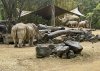
On my Saturday visit to the zoo, I saw a sign in the former elephant habitat saying, "something big is coming" and a footprint that seemed bird or reptile-like and wondered if there would be some kind of temporary display or exhibit there while they readied the space for rhinos. A volunteer said something about the zoo getting some sort of statues, so wondered if they might be showing those in there.
I’m sorry to say this has animatronic dinosaurs written all over it. They’ve been doing the rounds across several zoos in the region of late, with them also set to fill in for Permai at Perth Zoo until something better comes along.

On the plus side, it was exciting going into Burma’s exhibit many years ago to do an encounter. If said experience sees the visitors undertake a lap of the exhibit (and back paddock), I won’t be complaining at an another chance to enter one of the zoo’s most iconic exhibits.

As predicted, it will indeed be a dinosaur exhibition in Burma’s exhibit; though I’m excited to hear visitors will soon have access to the exhibit.

Update on elephant exhibit:

From socials:

Something big is on the way… As elephant Burma continues to thrive at her new home at Monarto Safari Park, we know many of you are curious about what’s afoot in her former habitat.

This space will eventually become part of our Africa Safari Track, and feature a variety of African species, as part of the next stage of the Zoo’s Masterplan.

While we plan for this future development, we're doing some minor works to open up this outdoor space for you, our visitors, for the first time!


From this April to October, we’ll be bringing you an exciting temporary experience, as part of your Zoo visit, that will feature some of world’s ancient animals – the dinosaurs.

Dinosaurs share fascinating connections to many of the animals we care for at the Zoo, including one of Aotearoa New Zealand’s most extraordinary taonga, the tuatara. Their story helps us understand extinction and adaption, driving our work together to protect wildlife and our environment for future generations!
 
Auckland Zoo News

Update from my visit (15/02/2025):

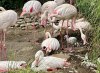
A second Greater flamingo chick has hatched! It was around a third of the size of the first chick (hatched January 26) and I would estimate is around 5-7 days old. Several more flamingos were sitting on nests and I saw decoy eggs (which represent real eggs being incubated, which are swapped in as they’re about to hatch). The juveniles from last season are beginning to get their pink feathers.

The male Serval (Toure) has died. He was euthanised due to suffering from an ongoing leg injury (suspected to have been sustained prior to import) which was causing him pain/not responding to treatment. This leaves the female (Shani) as the last of her species in New Zealand.

Nita the Tasmanian devil may have died. I suspected he’d passed when a newsletter mentioned only the sisters (Wiri and Wayana); and when I arrived at the zoo, I discovered the second Tasmanian devil exhibit (with the dividing brick wall) was closed for maintenance. The two females were indeed in the first exhibit; and upon enquiring, I was told a Tasmanian devil had died within the past six months. Nita was last mentioned in November 2024; but the previous devil to die (Luna) was deceased sometime prior to March 2024, suggesting Nita has also passed. I will try and get confirmation on my next visit.

Jamila the Southern white rhinoceros was out on exhibit with her three offspring in the afternoon. I didn’t see Zambezi with them, but according to socials, he’s met his new son and introductions are going well.

It was difficult to ascertain visually whether the zoo’s breeding female giraffe (Kiraka) is pregnant again. It was very obvious to me with her previous pregnancies in the later months; but while she looked significantly rounder than the other two adult females, she didn’t look heavily pregnant. Birth intervals can be as short as 16 months following the birth of a surviving calf in this species; but with the above in mind, I think we can rule out a May/June calf. It wouldn’t amaze me to hear news of a calf due circa August down the line, but this is my speculation.

I will discuss future developments in the developments thread.

Photos from my visit are here: Auckland Zoo - ZooChat
 
Last edited:
Auckland Zoo News

Update from my visit (15/02/2025):

A second Greater flamingo chick has hatched! It was around a third of the size of the first chick (hatched January 26) and I would estimate is around 5-7 days old. Several more flamingos were sitting on nests and I saw decoy eggs (which represent real eggs being incubated, which are swapped in as they’re about to hatch). The juveniles from last season are beginning to get their pink feathers.

The male Serval (Toure) has died. He was euthanised due to suffering from an ongoing leg injury (suspected to have been sustained prior to import) which was causing him pain/not responding to treatment. This leaves the female (Shani) as the last of her species in New Zealand.

Nita the Tasmanian devil may have died. I suspected he’d passed when a newsletter mentioned only the sisters (Wiri and Wayana); and when I arrived at the zoo, I discovered the second Tasmanian devil exhibit (with the dividing brick wall) was closed for maintenance. The two females were indeed in the first exhibit; and upon enquiring, I was told a Tasmanian devil had died within the past six months. Nita was last mentioned in November 2024; but the previous devil to die (Luna) was deceased sometime prior to March 2024, suggesting Nita has also passed. I will try and get confirmation on my next visit.

Jamila the Southern white rhinoceros was out on exhibit with her three offspring in the afternoon. I didn’t see Zambezi with them, but according to socials, he’s met his new son and introductions are going well.

It was difficult to ascertain visually whether the zoo’s breeding female giraffe (Kiraka) is pregnant again. It was very obvious to me with her previous pregnancies in the later months; but while she looked significantly rounder than the other two adult females, she didn’t look heavily pregnant. Birth intervals can be as short as 16 months following the birth of a surviving calf in this species; but with the above in mind, I think we can rule out a May/June calf. It wouldn’t amaze me to hear news of a calf due circa August down the line, but this is my speculation.

I will discuss future developments in the developments thread.

Photos from my visit are here: Auckland Zoo - ZooChat

Thank you for the updates! It's sad to hear of the passing of Toure, and possibly Nita. With Toure's passing, it will be interesting to see what the future of serval in NZ will be - whether Auckland Zoo will continue with a phase-out and what species might possibly replace them.

I did hear there was another flamingo chick, which is a promising start to the new year for the flamingos! And on a recent visit to the zoo, I was fortunate enough to be able to see little Zuka, who was on exhibit with his mother and sisters. Zuka was in fine spirits and seemed to enjoy chasing Amali around!
 
Thank you for the updates! It's sad to hear of the passing of Toure, and possibly Nita. With Toure's passing, it will be interesting to see what the future of serval in NZ will be - whether Auckland Zoo will continue with a phase-out and what species might possibly replace them.

I did hear there was another flamingo chick, which is a promising start to the new year for the flamingos! And on a recent visit to the zoo, I was fortunate enough to be able to see little Zuka, who was on exhibit with his mother and sisters. Zuka was in fine spirits and seemed to enjoy chasing Amali around!

It was great to see the Southern white rhinoceros calf Zuka, though I only saw him briefly as Jamila and her offspring all went inside and didn’t reappear. It was incredible to see a rhino with three offspring - ranging from three months old to four and half years old; and the first time I’d seen something like this. Caballe at Hamilton Zoo produced three surviving calves in five years, but her two sons (Inkosi and Mtoto) were transferred to Auckland not long after the birth of their sister (Imani) and were never housed with her.

Jamila (2012) with her offspring Nyah (2020), Amali (2022) and Zuka (2024):

upload_2025-2-17_12-1-35.jpeg

Fingers crossed more Greater flamingo chicks follow. The redevelopment of their exhibit has clearly had the desired affect on breeding; and the keepers have developed a good system of maximising output from the flock, while ensuring chicks are parent (or surrogate) reared.

Unfortunately I was advised Auckland Zoo are now planning to phase out Serval (as was the original plan a few years ago). I’ve discussed this further (as well as other phase outs/plans) in this thread:

Future Development of Auckland Zoo (Speculation) [Auckland Zoo]
 

Attachments

  • upload_2025-2-17_12-1-35.jpeg
    upload_2025-2-17_12-1-35.jpeg
    277.9 KB · Views: 112
It was great to see the Southern white rhinoceros calf Zuka, though I only saw him briefly as Jamila and her offspring all went inside and didn’t reappear. It was incredible to see a rhino with three offspring - ranging from three months old to four and half years old; and the first time I’d seen something like this. Caballe at Hamilton Zoo produced three surviving calves in five years, but her two sons (Inkosi and Mtoto) were transferred to Auckland not long after the birth of their sister (Imani) and were never housed with her.

Jamila (2012) with her offspring Nyah (2020), Amali (2022) and Zuka (2024):

View attachment 772228

Fingers crossed more Greater flamingo chicks follow. The redevelopment of their exhibit has clearly had the desired affect on breeding; and the keepers have developed a good system of maximising output from the flock, while ensuring chicks are parent (or surrogate) reared.

Unfortunately I was advised Auckland Zoo are now planning to phase out Serval (as was the original plan a few years ago). I’ve discussed this further (as well as other phase outs/plans) in this thread:

Future Development of Auckland Zoo (Speculation) [Auckland Zoo]

Thanks for the updates! That's an amazing photo of the rhinos. Zuka already looks to be growing fast and getting stronger!

Since Zuka is a male, I wonder if the intention is for the zoo to retain him as Zambezi's successor and import more females in the future. As you've mentioned, Nyah will almost certainly be transferred out as she's related to all New Zealand's bulls, and Amali also when she is old enough. With Zambezi being genetically valuable, Zuka would be a great future asset to the breeding programme.
 
Update from my visit (15/02/2025):

A second Greater flamingo chick has hatched! It was around a third of the size of the first chick (hatched January 26) and I would estimate is around 5-7 days old. Several more flamingos were sitting on nests and I saw decoy eggs (which represent real eggs being incubated, which are swapped in as they’re about to hatch). The juveniles from last season are beginning to get their pink feathers.

Announcement of second flamingo chick:

Foster parents are experienced pair Neil and Cheviot.

From socials:

A second flamingo has hatched – with potentially more on the way!

This chick hatched last week under foster parents Neil and Cheviot, who are doing a fantastic job raising the chick.

If you look closely when you visit, you’ll see both chicks venturing around the habitat. Flamingo chicks typically leave the nest after about five days and begin exploring.

The first flamingo chick of the season has already doubled in size and can often be seen enjoying the pond under the watchful eye of its parents.

We’ll keep you updated with more flamingo news!

upload_2025-2-18_14-6-7.jpeg

Photo of second chick from my visit (15/02/2025).
 

Attachments

  • upload_2025-2-18_14-6-7.jpeg
    upload_2025-2-18_14-6-7.jpeg
    260.1 KB · Views: 121
Announcement of second flamingo chick:

Foster parents are experienced pair Neil and Cheviot.

From socials:

A second flamingo has hatched – with potentially more on the way!

This chick hatched last week under foster parents Neil and Cheviot, who are doing a fantastic job raising the chick.

If you look closely when you visit, you’ll see both chicks venturing around the habitat. Flamingo chicks typically leave the nest after about five days and begin exploring.

The first flamingo chick of the season has already doubled in size and can often be seen enjoying the pond under the watchful eye of its parents.

We’ll keep you updated with more flamingo news!

View attachment 772360

Photo of second chick from my visit (15/02/2025).

How many flamingos does that make for Auckland now?
 
How many flamingos does that make for Auckland now?

Auckland Zoo should currently have 30 flamingos.

The five chicks from last year (which hatched between January 28 and February 27) took the flock to 28 flamingos; so assuming no deaths in the last year, then these chicks will be the 29th and 30th members of the flock.

@Jana kindly provided data once to illustrate how breeding takes off when a flock numbers 40, so as Auckland’s flock edges closer and closer to that number, I’m excited to see if we reach an similar exponential growth phase!
 
Auckland Zoo should currently have 30 flamingos.

The five chicks from last year (which hatched between January 28 and February 27) took the flock to 28 flamingos; so assuming no deaths in the last year, then these chicks will be the 29th and 30th members of the flock.

@Jana kindly provided data once to illustrate how breeding takes off when a flock numbers 40, so as Auckland’s flock edges closer and closer to that number, I’m excited to see if we reach an similar exponential growth phase!

That's great they are getting close to the 'magic number'! Do you know if they're getting good genetic diversity from their chicks? From memory they had a good number of founders but not many of those were successfully breeding.
 
That's great they are getting close to the 'magic number'! Do you know if they're getting good genetic diversity from their chicks? From memory they had a good number of founders but not many of those were successfully breeding.

Accounting for a small number of deaths, the number of surviving founders would be in the mid-teens. With regards to genetic diversity, you raise an interesting point. It appears the Auckland bred males have a better reproductive success than the imported founders. It’s been suggested this is because their flight feathers have been left intact.

In addition to this, you’re correct that only a small number of founders have bred, meaning their more successful descendants are dominating the gene pool. There would surely be multiple founders who have no descendants.
 
Little blue penguins hatch/arrive:

Irregardless of whether this species is phased out, it’s great to hear of successful breeding within the New Zealand captive population.

Great teamwork for kororā | Auckland Zoo News


From socials:

If you’ve visited recently – you may have seen two little penguins have joined the colony!

Last October, our birds team leader Chris travelled to @nationalaquariumnz in Napier to collect a kororā (little penguin) egg that was hatched at our Zoo, with the chick hand-reared by our dedicated keepers.


Soon after, a three-week-old kororā chick was rescued by the National Aquarium after being found abandoned on a Napier beach – where it wouldn’t have survived. The great news is, the chick was able to be brought into our care and both chicks were then hand-reared together.

Both chicks are now fully integrated with the kororā colony – an amazing success by our bird team – with mana whenua Te Kaha Hawaikirangi gifting beautiful names for both chicks, Kaumoana and Tāwhai.
 
Third Greater flamingo chick hatches:

From socials:

A third flamingo chick has hatched this season!

Hatching out on 24 February to parents Cole and Willoughby, this chick is being raised by its biological parents.


Flamingo chicks grow rapidly! In just a few weeks this little one will be nearly half its adult size. It’s at this stage that it’ll start to mingle with the flock and socialise with the other two chicks, who are thriving and developing quickly.

The hatching of this chick closes out another fruitful breeding season for the flamboyance, which is now 31 birds strong.


It’s a great time to visit and see all three chicks at different stages of their development!
 
New Zealand fairy tern conservation work:

Conservation work with New Zealand’s most endangered bird (35 known adults alive):

From socials:

We’ve had our most successful season yet for the critically endangered New Zealand fairy tern!

This is the fifth year of our New Zealand fairy tern Recovery Programme with our strategic partners the Department of Conservation, which has seen an incredible new approach to intensive management – what we believe is a world first for terns!


First, they head to a purpose-built predator-proof area on the beach. It’s here that the chicks perfect their flying and fishing skills before joining the wild population. New Zealand fairy tern are New Zealand’s most endangered bird as there are just 35 adults existing today. Every successful chick that reaches breeding age is a massive win for the future of the species.

The great news is monitoring efforts have meant that six of the eight New Zealand fairy tern that were hand-reared at the Zoo have been sighted along the West Coast.

———————

Update on elephant exhibit redevelopment (temporary exhibit):

25 dinosaurs will inhabit the elephant exhibit in a temporary exhibit from April.

60K views · 493 reactions | We've got a sneak-peek for you! Mahi is underway to create our Dinosaur Discovery Track. This track – set inside what was once our Asian elephant... | By Auckland Zoo | Facebook
 
The West Coast Wildlife Centre in Franz Josef has made what appears to be their first social media post about their upcoming first-ever enclosure for Little Blue Penguin, which is scheduled to open in early October 2025. One of the penguins that is to be housed in the new enclosure is a female that is named Katy, who is currently being kept at Auckland Zoo Vet Hospital.

Log in to Facebook
 
The West Coast Wildlife Centre in Franz Josef has made what appears to be their first social media post about their upcoming first-ever enclosure for Little Blue Penguin, which is scheduled to open in early October 2025. One of the penguins that is to be housed in the new enclosure is a female that is named Katy, who is currently being kept at Auckland Zoo Vet Hospital.

Log in to Facebook

This line is particularly interesting:

The facility will be for sick and injured little blue penguins that cannot be released back into the wild and in the past may have faced euthanasia.These ambassador birds will be provided with a safe and enriching environment to thrive as living symbols and conservation ambassadors.

If Auckland Zoo go ahead with phasing out their Little blue penguin exhibit, then this could be an avenue for relocating their penguins.
 
The West Coast Wildlife Centre in Franz Josef has made what appears to be their first social media post about their upcoming first-ever enclosure for Little Blue Penguin, which is scheduled to open in early October 2025. One of the penguins that is to be housed in the new enclosure is a female that is named Katy, who is currently being kept at Auckland Zoo Vet Hospital.

Log in to Facebook

This line is particularly interesting:

The facility will be for sick and injured little blue penguins that cannot be released back into the wild and in the past may have faced euthanasia.These ambassador birds will be provided with a safe and enriching environment to thrive as living symbols and conservation ambassadors.

If Auckland Zoo go ahead with phasing out their Little blue penguin exhibit, then this could be an avenue for relocating their penguins.
Reading between the lines, it seems this is indeed the intention.

Little Penguins are an incredibly social species, so we can perhaps see a few of Auckland's individuals joining her initially. Or perhaps the whole group will be moved across in the coming months with construction on the Nature Playground set to begin next year.
 
Southern white rhinoceros calf update:

From socials:

Rhino calf Zuka weighs in at a healthy 218 kgs!

Our keepers have begun tactile training with this clever three-month-old — which is the same approach we take with all of the southern white rhinoceros crash. This proactive and positive training has added benefits, allowing him to build relationships with the keepers that care for him. It will also help to pave the way for more advanced training, such as voluntary blood draws, which are an essential part of his long-term healthcare.

A key part of Zuka’s routine health checks is his weekly weigh ins. In the rhino barn, our keepers have a specially designed weigh plate set up inside a chute, creating a one-way path to keep things running smoothly. First, Jamila steps onto the plate, allowing her weight to be recorded. Once she moves into the next stall, Zuka instinctively follows, stepping onto the plate himself. He’s rewarded with lucerne hay—his favourite.

As he grows, he’ll be encouraged to step onto the weigh plate more independently. Zuka is full of personality and energy, already showing his playful side. Though still very dependent on Jamila, he’s becoming more adventurous—exploring new areas of the habitat and learning from his surroundings."
 
Reading between the lines, it seems this is indeed the intention.

Little Penguins are an incredibly social species, so we can perhaps see a few of Auckland's individuals joining her initially. Or perhaps the whole group will be moved across in the coming months with construction on the Nature Playground set to begin next year.
I am just thankful that a solution has been found to help injured and non-releasable little penguins back to health in an ex situ rescue and rehabilitation facility.

Anyhow, the thought regarding that previously injured and non-releasables might have been "humanely" euthanised by failure to provide due care when rescued .... (well that is worthy of a separate discourse).
 
I am just thankful that a solution has been found to help injured and non-releasable little penguins back to health in an ex situ rescue and rehabilitation facility.

Anyhow, the thought regarding that previously injured and non-releasables might have been "humanely" euthanised by failure to provide due care when rescued .... (well that is worthy of a separate discourse).

A large number of captive Little blue penguins in New Zealand zoos were wild birds that were rescued and deemed unreleasable. Auckland Zoo’s entire flock (bar one surviving captive born chick) are unreleasable wild caught birds; and Wellington Zoo regularly report new additions to their flock of unreleasable adults. Obviously that’s not been the fate of every rescued unreleasable bird in the past, but the zoo’s have provided an alternative for a vast number of unreleasable birds over the years.

The establishment of a facility to continue this work in the face of a potential phase out by Auckland Zoo would indeed be valuable.
 
A large number of captive Little blue penguins in New Zealand zoos were wild birds that were rescued and deemed unreleasable. Auckland Zoo’s entire flock (bar one surviving captive born chick) are unreleasable wild caught birds; and Wellington Zoo regularly report new additions to their flock of unreleasable adults. Obviously that’s not been the fate of every rescued unreleasable bird in the past, but the zoo’s have provided an alternative for a vast number of unreleasable birds over the years.

The establishment of a facility to continue this work in the face of a potential phase out by Auckland Zoo would indeed be valuable.

Since rescues will always be readily available from the wild and little blue penguins aren't particularly endangered, perhaps another good function for captive penguin colonies could be to incubate eggs from abandoned nests in the wild and raise their chicks? This isn't to say that any and all captive breeding of little blue penguins in New Zealand should be halted, just that zoos should be thinking a little more widely about the conservation possibilities.
 
Back
Top