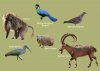
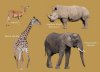
Austin the Sengi’s Exhibit Showcase

Austin the Sengi

Well-Known Member
5+ year member
With the Rembrandt Park Zoo being officially completed. I suppose that some of you might’ve been curious as to what will come next after Rembrandt’s conclusion. Knowing this, I figured that now would be the start of something new, and this thread will be exactly that. Essentially, this thread will highlight certain ideas and concepts, without having the burdensome feeling that I often had during the Rembrandt days.

Now besides coming up with these brand new ideas; I also plan to occasionally redesign my older exhibit maps, and to give each one a proper description that the originals never truly had. With “Arctic Passage” being the first of these maps to receive this new treatment. For the most part, a decent majority of these ideas will only be posted here on this thread. With some of these ideas being bigger and more ambitious than others, and in the case of this thread; I will be welcome to your ideas, inputs, and comments that you might have for each description.

But for now, as you will see momentarily in the following post. I’ll begin to start things off with a rather ambitious project that I know a certain @Pleistohorse will absolutely love.


~ @Austin the Sengi
 
Last edited:
1. Beringia: Past and Present: - (9 exhibits)

To begin our time-traveling journey, you’ll first enter *Beringia: Past and Present* through a 65 foot long replication of a permafrost tunnel. Placed throughout the tunnel’s walls are graphic panels that orient visitors to the ideas behind Beringia; and defines a transition zone from the Zoo’s present day setting to that of the Bering Land Bridge during the Pleistocene.

Beyond the tunnel’s end, you’ll step into a small plaza featuring a life-sized pair of Woolly Mammoth statues that guests can interact with. Also, near the second statue is a sign that helps to connect and compare these prehistoric pachyderms with their modern day relatives. If you walk past these statues, the general vista opens up onto a sprawling, 89,559 sq ft paddock that currently displays 0.4.0 Bactrian Camels and 1.5.4 Siberian Reindeer. As seen from a sign towards your left, the sign tells you that sometimes, on select days of the week; this enclosure might be home to a different animal while the camels and reindeer are displayed elsewhere. This means that the inhabitants of each paddock are on a scheduled rotation to better improve the animals’ welfare, in addition to make things more unpredictable and exciting for zoo visitors.

In a separate, 900 sq ft enclosure lowered beneath the first paddock, not unlike the watering hole at the Columbus Zoo and Aquarium; contains a lively scurry of 6.6.0 Arctic Ground Squirrels. Visitors can passively watch the playful squirrels while the rotating ungulates look down from above, giving us a good sense on how impressive the megafauna truly are. The path then curves towards the right, to which you can already notice the man-made mud walls towering above as you continue to head straight. Shortly afterward, you encounter a sliding door that leads you into an air-conditioned viewing gallery concealed with strategically-planted grasses and the aforementioned mudbanks.

Once inside and directly towards your right, is a large, floor-to-ceiling angled glass window that looks out into the lair of the zoo’s mighty 1.3.0 African Lions. Now some of you might be puzzled as to why there are lions in an ice age-themed exhibit. Well, in the case of both them and several other animals in this complex; they are described as a “living example” of an extinct animal that was closely related to them. Which in this case, is the Beringian Cave Lion, which once prowled Beringia’s ancient steppe on the pursuit of potential prey.

Adjacent to this habitat are more graphic panels that provide visitors with additional information of both species of lion; as well as a cast replica of a cave lion skull, that shows us how big these cats truly were. But it’s not just the lions that visitors will pay attention to, for on the opposite end of the building is yet another angled window that overlooks a smaller habitat for a relatively small predator. It is here that one could find our dozing pair of 0.2.0. Arctic Foxes; where they have 1,392 sq ft of room to spread out and explore. Another unique feature of this otherwise simple habitat is that the foxes are able to look out towards one of the three rotational paddocks; which we’ll see momentarily. But first, we must exit, since there is another sliding door that directly leads you out of the building. Towards the right of this exit, is a panoramic outdoor viewing area that overlooks the lion enclosure; which, in contrast to what we have seen indoors, is that the amount of space for the zoo’s pride of four is much larger than how it first appears, especially since this enclosure alone is an impressive 28,400 sq ft in size.

Facing left, the path continues to meander through a series of man-made hills and rocky terrain; which makes for the perfect setting for a 4,000 sq ft aviary. At the moment, this aviary contains a single 0.1.0 Golden Eagle, along with a flock of Common Ravens that have kept her company, after the eagle lost her partner many years ago. Regardless of its size, the aviary itself is still spacious enough for the birds to occasionally spread their wings; to which the eagle especially takes full advantage of.

Passing by a few more rock formations and looking out to your left once more; straight ahead is the largest enclosure in the entire complex. An impressive, 120,899 sq ft grassy paddock with panoramic vistas as far as the eye can see. This is the same paddock that guests can view from the Arctic Fox habitat, which just comes to show on how enormous this paddock truly is. Currently inhabiting this paddock, and serving as the modern representatives of their Steppe Bison relatives, are the zoo’s aging herd of 1.2.0 American Bison. While the 0.5.0 Persian Onagers that share the same space as them represent the Yukon Horses that were once present on the ancient steppe. Through the use of nearby interpretative signs, guests are informed of how Beringia was once a vast patchwork of steppe and mesic tundra; and how the region’s herbivorous megafauna were each an important keystone species in their respective ecosystem. This is further compared to the conservation success story of the American Bison, and it shows how the bison of today are a modern example of a keystone species.

Past the second paddock and after walking a short distance straight. Up ahead is an immersive, 37,070 sq ft enclosure that is the next to be encountered. Similar to the lions and foxes, the zoo’s 2.0.0 Alaskan Brown Bears are primarily viewed from an indoor viewing gallery; but contrary to the first building, the glass viewing windows here are curved in shape. The bear exhibit itself is also much larger in size than it first appears; with the enclosure being a vast, grassy meadow with the occasional boulder or log being scattered throughout.

Upon entering and exiting out of the same sliding doors; to your right is a far smaller, outdoor viewing area for the bears we saw moments ago. While to your left, is the third and final rotational paddock in the complex. At an approximate size of 76,600 sq ft, it is also the smallest of the three, although it might not appear that way at first glance, since this is still a very large enclosure. Rather than representing an extinct relative, the herd of 0.4.0 Musk Oxen that currently inhabit this paddock are a stellar example of a living Ice Age survivor.

Backtracking the path from the musk ox paddock, and after making a right past the brown bears. Directly up ahead is a spacious, 35,150 sq ft portion of enclosed native forest; which is considerably larger than what is typically expected for the following species. That is, if you are lucky enough to catch a glimpse of the zoo’s pair of 1.1.0 Wolverines. Carried on from the musk oxen sign, the graphics in front of this habitat also tell you how wolverines are another great example of surviving the warming era that ended the Ice Age; and how they too, are in risk of extinction today.

The graphic signs also inform you that as the megafauna began to die out, and sea levels began to rise. Beringia as we have seen it so far would never be the same ever again. From here, the mostly straight path takes you deeper and deeper into the more wooded areas of the zoo; which marks it as the official conclusion of today’s journey.

But until next time, do feel free to discuss, and let me know on what you think of the current design of this first exhibit.
 
Last edited:
1. Beringia: Past and Present: - (9 exhibits)

To begin our time-traveling journey, you’ll first enter *Beringia: Past and Present* through a 65 foot long replication of a permafrost tunnel. Placed throughout the tunnel’s walls are graphic panels that orient visitors to the ideas behind Beringia; and defines a transition zone from the Zoo’s present day setting to that of the Bering Land Bridge during the Pleistocene.

Beyond the tunnel’s end, you’ll step into a small plaza featuring a life-sized pair of Woolly Mammoth statues that guests can interact with. Also, near the second statue is a sign that helps to connect and compare these prehistoric pachyderms with their modern day relatives. If you walk past these statues, the general vista opens up onto a sprawling, 89,559 sq ft paddock that currently displays 0.4.0 Bactrian Camels and 1.5.4 Siberian Reindeer. As seen from a sign towards your left, the sign tells you that sometimes, on select days of the week; this enclosure might be home to a different animal while the camels and reindeer are displayed elsewhere. This means that the inhabitants of each paddock are on a scheduled rotation to better improve the animals’ welfare, in addition to make things more unpredictable and exciting for zoo visitors.

In a separate, 900 sq ft enclosure lowered beneath the first paddock, not unlike the watering hole at the Columbus Zoo and Aquarium; contains a lively scurry of 6.6.0 Arctic Ground Squirrels. Visitors can passively watch the playful squirrels while the rotating ungulates look down from above, giving us a good sense on how impressive the megafauna truly are. The path then curves towards the right, to which you can already notice the man-made mud walls towering above as you continue to head straight. Shortly afterward, you encounter a sliding door that leads you into an air-conditioned viewing gallery concealed with strategically-planted grasses and the aforementioned mudbanks.

Once inside and directly towards your right, is a large, floor-to-ceiling angled glass window that looks out into the lair of the zoo’s mighty 1.3.0 African Lions. Now some of you might be puzzled as to why there are lions in an ice age-themed exhibit. Well, in the case of both them and several other animals in this complex; they are described as a “living example” of an extinct animal that was closely related to them. Which in this case, is the Beringian Cave Lion, which once prowled Beringia’s ancient steppe on the pursuit of potential prey.

Adjacent to this habitat are more graphic panels that provide visitors with additional information of both species of lion; as well as a cast replica of a cave lion skull, that shows us how big these cats truly were. But it’s not just the lions that visitors will pay attention to, for on the opposite end of the building is yet another angled window that overlooks a smaller habitat for a relatively small predator. It is here that one could find our dozing pair of 0.2.0. Arctic Foxes; where they have 1,392 sq ft of room to spread out and explore. Another unique feature of this otherwise simple habitat is that the foxes are able to look out towards one of the three rotational paddocks; which we’ll see momentarily. But first, we must exit, since there is another sliding door that directly leads you out of the building. Towards the right of this exit, is a panoramic outdoor viewing area that overlooks the lion enclosure; which, in contrast to what we have seen indoors, is that the amount of space for the zoo’s pride of four is much larger than how it first appears, especially since this enclosure alone is an impressive 28,400 sq ft in size.

Facing left, the path continues to meander through a series of man-made hills and rocky terrain; which makes for the perfect setting for a 4,000 sq ft aviary. At the moment, this aviary contains a single 0.1.0 Golden Eagle, along with a flock of Common Ravens that have kept her company, after the eagle lost her partner many years ago. Regardless of its size, the aviary itself is still spacious enough for the birds to occasionally spread their wings; to which the eagle especially takes full advantage of.

Passing by a few more rock formations and looking out to your left once more; straight ahead is the largest enclosure in the entire complex. An impressive, 120,899 sq ft grassy paddock with panoramic vistas as far as the eye can see. This is the same paddock that guests can view from the Arctic Fox habitat, which just comes to show on how enormous this paddock truly is. Currently inhabiting this paddock, and serving as the modern representatives of their Steppe Bison relatives, are the zoo’s aging herd of 1.2.0 American Bison. While the 0.5.0 Persian Onagers that share the same space as them represent the Yukon Horses that were once present on the ancient steppe. Through the use of nearby interpretative signs, guests are informed of how Beringia was once a vast patchwork of steppe and mesic tundra; and how the region’s herbivorous megafauna were each an important keystone species in their respective ecosystem. This is further compared to the conservation success story of the American Bison, and it shows how the bison of today are a modern example of a keystone species.

Past the second paddock and after walking a short distance straight. Up ahead is an immersive, 37,070 sq ft enclosure that is the next to be encountered. Similar to the lions and foxes, the zoo’s 2.0.0 Alaskan Brown Bears are primarily viewed from an indoor viewing gallery; but contrary to the first building, the glass viewing windows here are curved in shape. The bear exhibit itself is also much larger in size than it first appears; with the enclosure being a vast, grassy meadow with the occasional boulder or log being scattered throughout.

Upon entering and exiting out of the same sliding doors; to your right is a far smaller, outdoor viewing area for the bears we saw moments ago. While to your left, is the third and final rotational paddock in the complex. At an approximate size of 76,600 sq ft, it is also the smallest of the three, although it might not appear that way at first glance, since this is still a very large enclosure. Rather than representing an extinct relative, the herd of 0.4.0 Musk Oxen that currently inhabit this paddock are a stellar example of a living Ice Age survivor.

Backtracking the path from the musk ox paddock, and after making a right past the brown bears. Directly up ahead is a spacious, 35,150 sq ft portion of enclosed native forest; which is considerably larger than what is typically expected for the following species. That is, if you are lucky enough to catch a glimpse of the zoo’s pair of 1.1.0 Wolverines. Carried on from the musk oxen sign, the graphics in front of this habitat also tell you how wolverines are another great example of surviving the warming era that ended the Ice Age; and how they too, are in risk of extinction today.

The graphic signs also inform you that as the megafauna began to die out, and sea levels began to rise. Beringia as we have seen it so far would never be the same ever again. From here, the mostly straight path takes you deeper and deeper into the more wooded areas of the zoo; which marks it as the official conclusion of today’s journey.

But until next time, do feel free to discuss, and let me know on what you think of the current design of this first exhibit.
Is it inspired by SD’s elephant odyssey?
 
2. Tswalu Trek: - (7/8 exhibits)

Meerkats, whether you like them or not, these charismatic members of the mongoose family have, and always will be popular with the general public, even if most ZooChatters tend to personally distain this iconic animal. What is interesting however, is that in most cases, meerkats are almost always chosen as a popular filler species for African-themed sections; and even if the location is not specifically themed to Africa, they are still popular enough to attract a decent crowd. However, in the case of this exhibit, it is not just meerkats that will draw your attention, but rather, the recreated environment of the Tswalu Kalahari Reserve, and the creatures that dwell within it:

From the moment you first enter the complex, you will already feel immersed into this dry Kalahari landscape; mostly in part from the foliage and faux rockwork that surrounds you throughout. To your right is a small, circular plaza which wraps around some life-sized statues of meerkats atop an artificial termite mound; directly behind these statues is a relatively small enclosure that is currently empty, along with an enclosed mesh tunnel that connects it to what lies ahead. The tunnel itself takes great inspiration from the Philadelphia Zoo’s Meerkat Maze, with the main difference being that the length of this tunnel is significantly longer than the one in Philadelphia.

While walking towards the next portion of the complex, you will also walk over a portion of the tunnel, via, a pedestrian bridge; directly ahead of this bridge is a larger termite mound, which has an interior accessible to small children. On your right from the mound is a loosely themed restroom building, while straight ahead is the first of two large enclosures dedicated for the titular Meerkat. At the moment, the zoo’s population of meerkats are divided into two separate family mobs, with one group per enclosure. In both cases, each of the two groups are mixed with a different species; with the first containing Yellow Mongoose, while the other contains a pair of Cape Porcupines. Once you’ve finished backtracking down the same path from before, and after making a short right from this path; ahead on your left is an average-sized, walk-in aviary that contains a breeding pair of the endangered Bateleur Eagle (which have been known to prey on meerkats).

While inside of the eagle viewing area, you’ll notice that throughout this small building, there are several forms of graphic signage, along with a series of speakers that play a variety of meerkat vocalizations from the push of a button. To the right of this aviary, is a simple plaza that encompasses a dry garden; with a single oak tree pruned to resemble a Kalahari-native camel thorn tree being the gardens most notable plant. Ahead to your right is a small, semi-outdoor building that directly looks into a trio of terrariums, with each one containing a species of snake that are also known to prey on meerkats; with those snakes being the Cape Cobra, the Puff Adder, and the Boomslang.

To the left of the snakes is a single double door entry that takes you in and out of a large, walkthrough aviary that contains a good variety of birdlife native to the region as you can see below:

• - Leopard Tortoise
• - Cape Thick-Knee
• - Namaqua Dove
• - Burchell’s Starling
• - Green Woodhoopoe
• - Sociable Weaver


Once you made your exit out of the aviary, the path then leads you back into the dry garden plaza, before making a right towards the exhibit’s exit, which from there, concludes our tour through the Tswalu Trek.
 
Last edited:
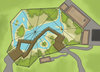
Now before we begin with this next exhibit. I wanted to address that between this and the next idea that I have. I am considering on experimenting with a format that our fellow ZooChatter @Mr Gharial uses quite frequently for his projects; and to see if this will be a good way to flesh out certain exhibit ideas. As for what I have in store for you all in the next post, here is a sneak preview of the exhibit’s general layout:

IMG_2237.jpeg
 

Attachments

  • IMG_2237.jpeg
    IMG_2237.jpeg
    135 KB · Views: 495
3. Pantanal Panorama: - (1 exhibit)

Right when you first enter is a loosely-themed thatch shelter that encloses the first of two double door entryways. Once you pass through, the sights, sounds, and perhaps the smells of the recreated Pantanal come into full effect. From there, the elevated boardwalk that you are currently on briefly splits in two directions that appear almost triangular in shape, before coming back into one as normal. For interests sake, we will take the left-facing route that overlooks a slightly forested peninsula, where, if you are lucky, is one of the best places to look out for the otherwise elusive Southern Tamandua. Beyond this peninsula are two small “islands”, with the first being a raised sandbar, while the other is a “proper” island with a selection of established shrubbery.

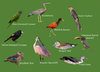
You might also notice that the entire panorama is a single, 1.24 acre walkthrough aviary, with ten species of free-flying birds being present throughout, as you will notice in the image below:

IMG_2230.jpeg

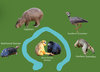
Now in addition to the free-roaming birds, there are five other animals that call the aviary home. Out of these five, only the tamanduas can directly access the visitor boardwalk, but are not considered a true free-roamer like the birds above:

IMG_2217.jpeg

To the portion of the boardwalk facing right, the most notable feature from here is an island separated from the main water feature via, a concrete barrier disguised as a sandbar. While the free-flying birds have the option to visit and leave the island with ease. The same cannot be said for the ever growing family of Black Howler Monkeys that reside on the island full time. Directly past the island and behind the main structure of the panorama is the first of three animal holding buildings, which in this case, is specifically designed to hold the howler monkeys.

Looking on the opposite direction from this part of the boardwalk, you’ll encounter a relatively open and grassy portion of the panorama, with some trees and foliage behind it to conceal the aviary’s back wall. The most notable animals of the panorama that make use of this portion is the zoo’s pair of Southern Screamers that have bred before in the past, but have not produced young together for quite some time.

After following the route of the boardwalk to your right, a slightly more forested section of the panorama comes into view. Much like the previous section, this area has a relatively open beach where guests will often find and adore the panorama’s Capybara family that frequently relax along this section of shore. Behind the beach and past the trees is the main service area where the other two holding areas are situated. Unlike the first building, the following holding areas are designed to accommodate the majority of the aviary’s inhabitants. A smaller building that encloses the main filtration system neighbors the larger holding area, and helps to keep the main water feature as close to crystal-clear as possible.

Adjacent to the beach is the remainder of the boardwalk that faces towards the exit. Right before leaving, however, you are given a brief chance to look towards the monkey island one last time. Just before you turn around and exit through the other entryway, which from there, we conclude our showcase through this replicated version of the Pantanal.
 

Attachments

  • IMG_2230.jpeg
    IMG_2230.jpeg
    92.4 KB · Views: 496
  • IMG_2217.jpeg
    IMG_2217.jpeg
    85.2 KB · Views: 487
Looks wonderful! And next time, feel free to send me a private chat for the images. I've got thousands of them just laying around, no use in you having to cut them out yourself if I already have them ready ;)

Also: Beautiful artwork!
 
I suppose I’ll do just that for the next idea that I have for the thread. But otherwise, I had some fun in working on the images myself; and thus, I’ll let my creativity do the work instead.

Yeah, it can certainly be relaxing to cut out the images sometimes, but I also know from experience it can be a real pain having to find good images of certain animals :D

Ironically though, we seem to have found the exact same Jacana and Aracari pictures :p

Can't wait to see more of this project
 
1. Beringia: Past and Present: - (9 exhibits)

To begin our time-traveling journey, you’ll first enter *Beringia: Past and Present* through a 65 foot long replication of a permafrost tunnel. Placed throughout the tunnel’s walls are graphic panels that orient visitors to the ideas behind Beringia; and defines a transition zone from the Zoo’s present day setting to that of the Bering Land Bridge during the Pleistocene.

Beyond the tunnel’s end, you’ll step into a small plaza featuring a life-sized pair of Woolly Mammoth statues that guests can interact with. Also, near the second statue is a sign that helps to connect and compare these prehistoric pachyderms with their modern day relatives. If you walk past these statues, the general vista opens up onto a sprawling, 89,559 sq ft paddock that currently displays 0.4.0 Bactrian Camels and 1.5.4 Siberian Reindeer. As seen from a sign towards your left, the sign tells you that sometimes, on select days of the week; this enclosure might be home to a different animal while the camels and reindeer are displayed elsewhere. This means that the inhabitants of each paddock are on a scheduled rotation to better improve the animals’ welfare, in addition to make things more unpredictable and exciting for zoo visitors.

In a separate, 900 sq ft enclosure lowered beneath the first paddock, not unlike the watering hole at the Columbus Zoo and Aquarium; contains a lively scurry of 6.6.0 Arctic Ground Squirrels. Visitors can passively watch the playful squirrels while the rotating ungulates look down from above, giving us a good sense on how impressive the megafauna truly are. The path then curves towards the right, to which you can already notice the man-made mud walls towering above as you continue to head straight. Shortly afterward, you encounter a sliding door that leads you into an air-conditioned viewing gallery concealed with strategically-planted grasses and the aforementioned mudbanks.

Once inside and directly towards your right, is a large, floor-to-ceiling angled glass window that looks out into the lair of the zoo’s mighty 1.3.0 African Lions. Now some of you might be puzzled as to why there are lions in an ice age-themed exhibit. Well, in the case of both them and several other animals in this complex; they are described as a “living example” of an extinct animal that was closely related to them. Which in this case, is the Beringian Cave Lion, which once prowled Beringia’s ancient steppe on the pursuit of potential prey.

Adjacent to this habitat are more graphic panels that provide visitors with additional information of both species of lion; as well as a cast replica of a cave lion skull, that shows us how big these cats truly were. But it’s not just the lions that visitors will pay attention to, for on the opposite end of the building is yet another angled window that overlooks a smaller habitat for a relatively small predator. It is here that one could find our dozing pair of 0.2.0. Arctic Foxes; where they have 1,392 sq ft of room to spread out and explore. Another unique feature of this otherwise simple habitat is that the foxes are able to look out towards one of the three rotational paddocks; which we’ll see momentarily. But first, we must exit, since there is another sliding door that directly leads you out of the building. Towards the right of this exit, is a panoramic outdoor viewing area that overlooks the lion enclosure; which, in contrast to what we have seen indoors, is that the amount of space for the zoo’s pride of four is much larger than how it first appears, especially since this enclosure alone is an impressive 28,400 sq ft in size.

Facing left, the path continues to meander through a series of man-made hills and rocky terrain; which makes for the perfect setting for a 4,000 sq ft aviary. At the moment, this aviary contains a single 0.1.0 Golden Eagle, along with a flock of Common Ravens that have kept her company, after the eagle lost her partner many years ago. Regardless of its size, the aviary itself is still spacious enough for the birds to occasionally spread their wings; to which the eagle especially takes full advantage of.

Passing by a few more rock formations and looking out to your left once more; straight ahead is the largest enclosure in the entire complex. An impressive, 120,899 sq ft grassy paddock with panoramic vistas as far as the eye can see. This is the same paddock that guests can view from the Arctic Fox habitat, which just comes to show on how enormous this paddock truly is. Currently inhabiting this paddock, and serving as the modern representatives of their Steppe Bison relatives, are the zoo’s aging herd of 1.2.0 American Bison. While the 0.5.0 Persian Onagers that share the same space as them represent the Yukon Horses that were once present on the ancient steppe. Through the use of nearby interpretative signs, guests are informed of how Beringia was once a vast patchwork of steppe and mesic tundra; and how the region’s herbivorous megafauna were each an important keystone species in their respective ecosystem. This is further compared to the conservation success story of the American Bison, and it shows how the bison of today are a modern example of a keystone species.

Past the second paddock and after walking a short distance straight. Up ahead is an immersive, 37,070 sq ft enclosure that is the next to be encountered. Similar to the lions and foxes, the zoo’s 2.0.0 Alaskan Brown Bears are primarily viewed from an indoor viewing gallery; but contrary to the first building, the glass viewing windows here are curved in shape. The bear exhibit itself is also much larger in size than it first appears; with the enclosure being a vast, grassy meadow with the occasional boulder or log being scattered throughout.

Upon entering and exiting out of the same sliding doors; to your right is a far smaller, outdoor viewing area for the bears we saw moments ago. While to your left, is the third and final rotational paddock in the complex. At an approximate size of 76,600 sq ft, it is also the smallest of the three, although it might not appear that way at first glance, since this is still a very large enclosure. Rather than representing an extinct relative, the herd of 0.4.0 Musk Oxen that currently inhabit this paddock are a stellar example of a living Ice Age survivor.

Backtracking the path from the musk ox paddock, and after making a right past the brown bears. Directly up ahead is a spacious, 35,150 sq ft portion of enclosed native forest; which is considerably larger than what is typically expected for the following species. That is, if you are lucky enough to catch a glimpse of the zoo’s pair of 1.1.0 Wolverines. Carried on from the musk oxen sign, the graphics in front of this habitat also tell you how wolverines are another great example of surviving the warming era that ended the Ice Age; and how they too, are in risk of extinction today.

The graphic signs also inform you that as the megafauna began to die out, and sea levels began to rise. Beringia as we have seen it so far would never be the same ever again. From here, the mostly straight path takes you deeper and deeper into the more wooded areas of the zoo; which marks it as the official conclusion of today’s journey.

But until next time, do feel free to discuss, and let me know on what you think of the current design of this first exhibit.
I really love how you use living animals to represent their extinct relatives.
 
Now before we begin, I just wanted to give a brief shoutout to @Mr Gharial for the animal images that I used with his permission. Also, because the following enclosure only contains six species within a single complex, this next post will have a stronger focus on the exhibit itself.
 
4. Simien Slopes: - (1 exhibit)

As soon as you arrive at the exhibit’s entrance, all around you is a replicated landscape of the Ethiopian highlands that the complex strives to faithfully depict; with exotic and native foliage being used to better convey the unique flora found in this part of the world. Straight ahead, a wheelchair-accessible ramp and a neighboring set of stairs allows everyone to easily access the route that lies ahead. Once you turn to your right from the top of the stairs or ramp, straight ahead to your left is the entrance to the exhibit’s only viewing area. Once inside this sheltered structure, facing your direction is the main reason why you decided to enter, and by that only a massive panel of bird-safe glass that spans the entire length of the viewing area is the only physical barrier that stands between you and the animals.

As for the exhibit itself, there are quite a few things to talk about here. For example, from ground level to the very top of the aviary structure; the entire attraction is approximately 60 feet or 18 meters in height, with the visitor area being directly above the exhibit’s lowest portions. While in terms of space, the exhibit itself covers a sizable area of 21,000 sq ft in size.

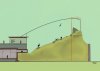
Within the very back of the main exhibit is an impressive series of man-made rock formations to allow smaller animals like the Rock Hyrax a safe refuge in which to escape from their larger neighbors. Speaking of which, directly in front of these formations is a steep decline reinforced by hot wire to intentionally keep out the larger animals from getting too close to the so called “safe zone” that the birds and hyraxes take full advantage of. To understand a bit more of what I have just explained, here below is a cross-section view of not just the exhibit itself, but also some additional features that I will cover momentarily:

IMG_2415.jpeg

Aside from the aforementioned rock formations, the remainder of the exhibit is covered in semi-shortened grass, partially in due to the extensive grazing of the two most notable animals that you will see in this enclosure. Which of course, are the Geladas and the Nubian Ibex, in which the latter represents the absent-in-captivity Walia Ibex. At the moment, the exhibit is home to both a prolific breeding troop of geladas and a smaller bachelor herd of ibex; for which, the zoo helps to further expand the amount of holders that both species are desperate for in real life.

Towards the left side of the exhibit is a smaller rock formation that the ibex use quite frequently, and is often one of the best places to find them if they happen to be on exhibit that day. Throughout the middle and lower parts of the exhibit are separate feeding areas to allow the geladas and ibex to peacefully feed without having the need to compete with each other. Now one of the most unique features of the entire complex can be found directly beneath your feet (ok, maybe not literally, but you get the point). As you may have noticed in the cross-section above, the indoor holding areas are mostly beneath your feet, with the separate ibex building being located further behind the general visitor path. While visitors won’t exactly see this next feature in general, directly behind the main structure of the exhibit is a concrete retaining wall to help keep back the soil that was raised during the exhibit’s construction, as well as to give the enclosure an extra sense of unseen dimension and height.

Now in addition to the already covered mammals, there are also three species of bird that can fly freely throughout the entirety of the main enclosure, as you can see in the image below:

IMG_2413.jpeg

Shortly before you face the direction out of the viewing shelter, don’t forget to turn around for there is also an impressive photo mural of a typical highland landscape that is further complimented by a diverse array of educational displays and signage. Not only do these displays describe facts about the plants and animals that live there, but they also cover topics related to the conservation efforts that the zoo is dedicated to support. From there, the exit of the viewing area is near, and after going through this said exit; you then walk through a pedestrian bridge that connects this area to the rest of the zoo. This said bridge also passes over the main service road that is used to access the previously mentioned indoor areas; and as we reach our main conclusion of today’s showcase. I’ll finish off this post by wishing my fellow American ZooChatters a happy Thanksgiving.
 

Attachments

  • IMG_2415.jpeg
    IMG_2415.jpeg
    40.2 KB · Views: 478
  • IMG_2413.jpeg
    IMG_2413.jpeg
    67.8 KB · Views: 481
Last edited:
4. Simien Slopes: - (1 exhibit)

As soon as you arrive at the exhibit’s entrance, all around you is a replicated landscape of the Ethiopian highlands that the complex strives to faithfully depict; with exotic and native foliage being used to better convey the unique flora found in this part of the world. Straight ahead, a wheelchair-accessible ramp and a neighboring set of stairs allows everyone to easily access the route that lies ahead. Once you turn to your right from the top of the stairs or ramp, straight ahead to your left is the entrance to the exhibit’s only viewing area. Once inside this sheltered structure, facing your direction is the main reason why you decided to enter, and by that only a massive panel of bird-safe glass that spans the entire length of the viewing area is the only physical barrier that stands between you and the animals.

As for the exhibit itself, there are quite a few things to talk about here. For example, from ground level to the very top of the aviary structure; the entire attraction is approximately 60 feet or 18 meters in height, with the visitor area being directly above the exhibit’s lowest portions. While in terms of space, the exhibit itself covers a sizable area of 21,000 sq ft in size.

Within the very back of the main exhibit is an impressive series of man-made rock formations to allow smaller animals like the Rock Hyrax a safe refuge in which to escape from their larger neighbors. Speaking of which, directly in front of these formations is a steep decline reinforced by hot wire to intentionally keep out the larger animals from getting too close to the so called “safe zone” that the birds and hyraxes take full advantage of. To understand a bit more of what I have just explained, here below is a cross-section view of not just the exhibit itself, but also some additional features that I will cover momentarily:

View attachment 669422

Aside from the aforementioned rock formations, the remainder of the exhibit is covered in semi-shortened grass, partially in due to the extensive grazing of the two most notable animals that you will see in this enclosure. Which of course, are the Geladas and the Nubian Ibex, in which the latter represents the absent-in-captivity Walia Ibex. At the moment, the exhibit is home to both a prolific breeding troop of geladas and a smaller bachelor herd of ibex; for which, the zoo helps to further expand the amount of holders that both species are desperate for in real life.

Towards the left side of the exhibit is a smaller rock formation that the ibex use quite frequently, and is often one of the best places to find them if they happen to be on exhibit that day. Throughout the middle and lower parts of the exhibit are separate feeding areas to allow the geladas and ibex to peacefully feed without having the need to compete with each other. Now one of the most unique features of the entire complex can be found directly beneath your feet (ok, maybe not literally, but you get the point). As you may have noticed in the cross-section above, the indoor holding areas are mostly beneath your feet, with the separate ibex building being located further behind the general visitor path. While visitors won’t exactly see this next feature in general, directly behind the main structure of the exhibit is a concrete retaining wall to help keep back the soil that was raised during the exhibit’s construction, as well as to give the enclosure an extra sense of unseen dimension and height.

Now in addition to the already covered mammals, there are also three species of bird that can fly freely throughout the entirety of the main enclosure, as you can see in the image below:

View attachment 669423

Shortly before you face the direction out of the viewing shelter, don’t forget to turn around for there is also an impressive photo mural of a typical highland landscape that is further complimented by a diverse array of educational displays and signage. Not only do these displays describe facts about the plants and animals that live there, but they also cover topics related to the conservation efforts that the zoo is dedicated to support. From there, the exit of the viewing area is near, and after going through this said exit; you then walk through a pedestrian bridge that connects this area to the rest of the zoo. This said bridge also passes over the main service road that is used to access the previously mentioned indoor areas; and as we reach our main conclusion of today’s showcase. I’ll finish off this post by wishing my fellow American ZooChatters a happy Thanksgiving.
Wow!!! This is an extremely cleverly designed and amazing complex! !
 
4. Simien Slopes: - (1 exhibit)

As soon as you arrive at the exhibit’s entrance, all around you is a replicated landscape of the Ethiopian highlands that the complex strives to faithfully depict; with exotic and native foliage being used to better convey the unique flora found in this part of the world. Straight ahead, a wheelchair-accessible ramp and a neighboring set of stairs allows everyone to easily access the route that lies ahead. Once you turn to your right from the top of the stairs or ramp, straight ahead to your left is the entrance to the exhibit’s only viewing area. Once inside this sheltered structure, facing your direction is the main reason why you decided to enter, and by that only a massive panel of bird-safe glass that spans the entire length of the viewing area is the only physical barrier that stands between you and the animals.

As for the exhibit itself, there are quite a few things to talk about here. For example, from ground level to the very top of the aviary structure; the entire attraction is approximately 60 feet or 18 meters in height, with the visitor area being directly above the exhibit’s lowest portions. While in terms of space, the exhibit itself covers a sizable area of 21,000 sq ft in size.

Within the very back of the main exhibit is an impressive series of man-made rock formations to allow smaller animals like the Rock Hyrax a safe refuge in which to escape from their larger neighbors. Speaking of which, directly in front of these formations is a steep decline reinforced by hot wire to intentionally keep out the larger animals from getting too close to the so called “safe zone” that the birds and hyraxes take full advantage of. To understand a bit more of what I have just explained, here below is a cross-section view of not just the exhibit itself, but also some additional features that I will cover momentarily:

View attachment 669422

Aside from the aforementioned rock formations, the remainder of the exhibit is covered in semi-shortened grass, partially in due to the extensive grazing of the two most notable animals that you will see in this enclosure. Which of course, are the Geladas and the Nubian Ibex, in which the latter represents the absent-in-captivity Walia Ibex. At the moment, the exhibit is home to both a prolific breeding troop of geladas and a smaller bachelor herd of ibex; for which, the zoo helps to further expand the amount of holders that both species are desperate for in real life.

Towards the left side of the exhibit is a smaller rock formation that the ibex use quite frequently, and is often one of the best places to find them if they happen to be on exhibit that day. Throughout the middle and lower parts of the exhibit are separate feeding areas to allow the geladas and ibex to peacefully feed without having the need to compete with each other. Now one of the most unique features of the entire complex can be found directly beneath your feet (ok, maybe not literally, but you get the point). As you may have noticed in the cross-section above, the indoor holding areas are mostly beneath your feet, with the separate ibex building being located further behind the general visitor path. While visitors won’t exactly see this next feature in general, directly behind the main structure of the exhibit is a concrete retaining wall to help keep back the soil that was raised during the exhibit’s construction, as well as to give the enclosure an extra sense of unseen dimension and height.

Now in addition to the already covered mammals, there are also three species of bird that can fly freely throughout the entirety of the main enclosure, as you can see in the image below:

View attachment 669423

Shortly before you face the direction out of the viewing shelter, don’t forget to turn around for there is also an impressive photo mural of a typical highland landscape that is further complimented by a diverse array of educational displays and signage. Not only do these displays describe facts about the plants and animals that live there, but they also cover topics related to the conservation efforts that the zoo is dedicated to support. From there, the exit of the viewing area is near, and after going through this said exit; you then walk through a pedestrian bridge that connects this area to the rest of the zoo. This said bridge also passes over the main service road that is used to access the previously mentioned indoor areas; and as we reach our main conclusion of today’s showcase. I’ll finish off this post by wishing my fellow American ZooChatters a happy Thanksgiving.
Blue-winged Goose would further enhance this exhibit
 
If the exhibit had room for a body of water or two, I would’ve added this species back when the project was near completion; but in its current form, it wouldn’t be possible.
 
From starting out as a humble question on a separate thread, to what you are about to read below. It would be hard enough to fathom the amount of research that I did both on and beyond ZooChat; let alone to justify the hours that were spared to better enhance the concept that sparked from that very question. But for what it’s worth, let us begin once more.

Also, much like the previously added Simien Slopes; this next post will yet again have a stronger focus on the exhibit itself.
 
5. Kiemga Veldt: - (6+ exhibits)

To begin our African adventure, one must first pass through a safari-style archway that serves as both the entrance and exit of this expansive attraction; and once you do, up ahead to your right is the first of many vantage points that allow guests to overlook the first of four main enclosures.

Now while I did mention before that the complex would comprise of a single large exhibit. Later on, would I realize that while it was a nice idea to think about back then. I’ve decided that if such a mix were to end up being successful; it would be better safe than sorry to divide the exhibit into several interconnected yards intentionally designed to allow the flexibility of success and/or failure. Which thus, future-proofs the complex as a whole; while also maintaining the welfare of all four species involved moving forward, as seen in the image below:

IMG_3041.jpeg

But coming back to the exhibit we overlook; this two-acre yard which is labeled Veldt Alpha, is the second largest of the four exhibits, and of those four, contains the most amount of public vantage points. At the moment, you might have noticed the zoo’s tower of Masai Giraffes passing by in unison, and as of today they are also given access to a smaller yard that we’ll encounter momentarily.

From here, we turn towards a sudden commotion as crowds of other guests gather around a more loosely themed archway not too far from the first viewing area. Soon, several keepers begin to stand by and close off the entryway with massive gates from both sides, which connects Veldt Alpha to the nearest major veldt. Given the width and size of this crossing, it allows the zoo’s Southern White Rhinos to walk along a section of visitor walkway, and in between the surrounding crowds. Typically occurring once in the morning and once near closing hours; guests that are viewing the animals from the opposite side from where we stand, are confined there until all of the rhinos are transferred.

But once the keepers open the entryway once again, we can now continue our tour by following the animals to the adjacent exhibit. While the following one-acre enclosure labeled as Veldt Bravo is primarily designed for the rhinos in mind. Sometimes, the zoo’s Impala herd will occasionally find their way in and peacefully coexist alongside them. Nearby are the rhino night quarters that the rhinos transfer to once they’ve passed through the nearby crossing. On the opposite end of this area, there is a separate access gate which is directly attached to the nearest veldt.

Continuing on, the views into Veldt Bravo can still be seen, even if it is through a different perspective in the form of bleacher-style seating. That is because we have now reached a sectioned off portion of the next main enclosure that can be closed off from the rest of the habitat via, a heavy sliding gate. During certain times of the day, is when the elephant keeper demonstrations take place, in which one or two elephants that choose to participate show off their impressive size and skills to the viewing public. But since the bleachers are roped off and no keepers are present at the moment, we are going to continue on and view the remainder of the enclosure that the demonstration yard is attached to.

Like the previous two yards, this habitat labeled as Veldt Charlie is also an acre in size and is currently attached to the fourth and final main yard which are both displaying the zoo’s all-female herd of African Bush Elephants; all of whom are post-reproductive and are now here with us to spend the rest of their days in rotation with the other inhabitants of the veldt. While there have been times when the elephants do coexist alongside the giraffes and rhinos; for the most part, they prefer to be alone with their own kind and thus, it is more likely for us to see them alone rather than being mixed with the other large animals. Sometimes, if the elephants want nothing more than a bit of privacy, directly attached to Veldt Alpha is a smaller, 14,000 sq ft reserved just for the elephants.

Next door, in the much larger three-acre Veldt Delta, is the largest body of water present in the complex. During the hotter months of the year, the elephants are given exclusive access to an impressive 150,000-gallon swimming hole deep enough for the elephants to swim with ease; and given their age, the pool also allows them to improve and maintain their physical health while swimming.

Behind us nearby is an extension of the veldt that can also be closed off with an even taller gate hidden beneath an overhead visitor footbridge. Rather than being enclosed by typical fencing, the barriers used for this section are man-made mud walls that replicate a dry riverbed. At the moment, this section is currently attached to Veldt Alpha, and is used by keepers during non-visitor hours to transfer the elephants from their night quarters to the adjacent habitats that we previously covered; and on days like today, visitors are permitted to get up close and feed the giraffes firsthand from a designated feeding platform connected to this part of the veldt. Looping back to where we first began, we’ll turn to our right and walk towards a semi-outdoor kiosk that overlooks a previously unseen section of Veldt Alpha.

Here guests can learn and interact with a variety of interpretative signage among other features, in addition to the temporary kiosks assembled by zoo educators to better engage with guests about the conservation efforts that the zoo actively supports. From this overlook, we can barely make out both the private yards and night quarters that the giraffes and impala share since more mud walls and assorted foliage help block the view of this area from the eyes of most guests.

Further down the path, a smaller extension of the veldt comes into view, which is often labeled as a separate exhibit by some. No matter how temperamental their larger neighbors can be, this “self-separation” area is utilized by the impala as an important refuge for these flighty antelope to safely hide away from both guests and their cohabitants. Soon afterward, we cross over yet another visitor footbridge and are greeted by the same entryway from before, albeit without crossing rhinos. But before we continue our way back, you are given the option to look out into Veldt Alpha for a final time, and perhaps bid farewell to the giraffes and impala. Which from there, we’ll return to the entrance of this attraction and conclude our adventure.


(All photo credits, in order, go to @Maguari, @Julio C Castro, and myself respectively)
 

Attachments

  • IMG_3041.jpeg
    IMG_3041.jpeg
    69.9 KB · Views: 348
Welcome everyone, for another entry of the showcase is upon us, but before we get started. I just want to mention that for how ambitious “Kiemga Veldt” was on paper, I’ll admit that the project’s execution wasn’t up to the same standards that were previously established. But worry not, for this next project will hopefully make up for how lacking things were in the previous entry.

I should also mention that there will not be a separate map designed for the next few projects (this one included), yet despite that, it does not mean that each of these entries will be nothing more than mountains of sentences. Otherwise, I want to give another shoutout to @Mr Gharial for the provided animal images that were used with his permission once again.
 
Back
Top