Is Mogo a realistic candidate to hold a pair of surplus bull elephants in the future? I think they have enough space but I don't know if they have the money or other resources available (or the inclination to do so).
You are using an out of date browser. It may not display this or other websites correctly.
You should upgrade or use an alternative browser.
You should upgrade or use an alternative browser.
Australasian Asian Elephant Population 2023
- Thread starter Zoofan15
- Start date

Is Mogo a realistic candidate to hold a pair of surplus bull elephants in the future? I think they have enough space but I don't know if they have the money or other resources available (or the inclination to do so).
I don’t think Mogo’s a realistic option. They don’t have the space (only sitting at 32 acres which is smaller than most of our city zoos). I also don’t think they have the money unfortunately, being privately owned.

Is Mogo a realistic candidate to hold a pair of surplus bull elephants in the future? I think they have enough space but I don't know if they have the money or other resources available (or the inclination to do so).
From what I can tell, their focus is mainly on felids and primates at this point in time.
Due to the high start up cost of acquiring elephants (bull elephants have more advanced fencing requirements; barn requirements etc.) I think this would deter them; along with finding the space.
The most realistic chance of a new facility is Monarto Safari Park. They’d be of great assistance as a bachelor facility, ideally with multiple exhibits to allow fission-fusion groupings amongst the bulls.
The surplus bulls is our region at the moment are: Man Jai (2013), Sabai (2016) and Roi-Yim (2022). All three come from (regionally) well represented lines and are of little use to the breeding programme.
Just thinking forwards to the next possible round of breeding the 3 cows, Since the herd will have been moved to Werribee the next time the cows are due to breed I would of thought perhaps using the Perth bull over the cows considering how under represented he is in the regions population and considering he is wild caught, any thoughts?.
That would definitely be advisable.
Pairing Luk Chai and Mali means their son will have relatively few options for breeding within the region considering the representation of Gung and Bong Su; so pairing Mali with Putra Mas next time would at least allow their calf the option of breeding with any descendant of Gung that didn’t have Dokkoon as a shared ancestor.
Additionally, Putra Mas is 34 years old. While he could potentially live another three decades, there’s no guarantees and it would be prudent to make use of him while there’s time - with the aim of younger bulls (like Luk Chai) covering his daughters a decade or so from now.
With the now in progress Werribee state of the art elephant complex being built within the next 2 years or less?, and the fact that the Melbourne herd now have 3 home bred females (all going well) is a great outlook for the future of this herd. I believe one of the key markers for outstanding success with the Rockton herd in Canada was the large number of female calfs born to the herd (luck?) and also the number of mature breeding bulls kept on site!That would definitely be advisable.
Pairing Luk Chai and Mali means their son will have relatively few options for breeding within the region considering the representation of Gung and Bong Su; so pairing Mali with Putra Mas next time would at least allow their calf the option of breeding with any descendant of Gung that didn’t have Dokkoon as a shared ancestor.
Additionally, Putra Mas is 34 years old. While he could potentially live another three decades, there’s no guarantees and it would be prudent to make use of him while there’s time - with the aim of younger bulls (like Luk Chai) covering his daughters a decade or so from now.
I do hope future births born at Dubbo do contain more female calfs or it may lead to a stunted herd with less of an outlook than the Melbourne herd!
Also perhaps making more use of the Perth bull in future breeding.
With the now in progress Werribee state of the art elephant complex being built within the next 2 years or less?, and the fact that the Melbourne herd now have 3 home bred females (all going well) is a great outlook for the future of this herd. I believe one of the key markers for outstanding success with the Rockton herd in Canada was the large number of female calfs born to the herd (luck?) and also the number of mature breeding bulls kept on site!
I do hope future births born at Dubbo do contain more female calfs or it may lead to a stunted herd with less of an outlook than the Melbourne herd!
Also perhaps making more use of the Perth bull in future breeding.
All going well, the Werribee complex should be ready to receive the elephants mid-2024. It’s a delay from the previous plans of transferring the herd over in 2023, but understandable considering the pandemic and the consequences for the construction industry.
A decade from now, Werribee could have six cows of reproductive age. Though they won’t be breeding to natural birth intervals, I’d at least expect regular breeding of around five years - probably within cohorts as we’ve just seen. They give the herd and a shared focus and the calves benefit from each other versus two year age gaps where the elder calf can be a hindrance.
Werribee will still have to be mindful of space (they can only accomodate so many bulls), but I’m confident we’ll see Num Oi breed again within the next five years - probably alongside Mali, who they’ll be hoping to get a daughter from to establish her matriarchal line. If Dokkoon was bred from as well in this rotation, I imagine we’d see her retired at that point as she would then have four calves.

The only way I could see Mogo Zoo ever being a holder of a small group of Asian Elephants (or more likely a couple of bulls like Sydney Zoo) would be to purchase more land directly to the north of their site (westward and southward the boundary is Mogo creek and the Tomaga river and eastward is Tomakin road) because in order to have any space available on their present site would involve having to use what is their Giraffe, Zebra, Sth White Rhino', Fallow Deer and Eastern Grey Kangaroo paddocks along their western boundary, that would give them close to 66,000 sq m of space. But am close to certain that they wouldn't consider doing that as that would entail parting with a lot of other awesome (and widely loved by public and keepers alike) species going in place of one they've never had any experience with holding before.
directly to the north of the zoo's property is between 164,000 - 165,000 sq m of land (some of which I believe was owned by the Padeys on which they kept their Water Buffalos and sometimes Dromedaries, not sure if the current owners own some of that land too, I'd assume they do and that it came as part of the November 2019 purchase).
directly to the north of the zoo's property is between 164,000 - 165,000 sq m of land (some of which I believe was owned by the Padeys on which they kept their Water Buffalos and sometimes Dromedaries, not sure if the current owners own some of that land too, I'd assume they do and that it came as part of the November 2019 purchase).
Last edited:
The only way I could see Mogo Zoo ever being a holder of a small group of Asian Elephants (or more likely a couple of bulls like Sydney Zoo) would be to purchase more land directly to the north of their site (westward and southward the boundary is Mogo creek and the Tomaga river and eastward is Tomakin road) because in order to have any space available on their present site would involve having to use what is their Giraffe, Zebra, Sth White Rhino', Fallow Deer and Eastern Grey Kangaroo paddocks along their western boundary, that would give them close to 66,000 sq m of space. But am close to certain that they wouldn't consider doing that as that would entail parting with a lot of other awesome (and widely loved by public and keepers alike) species going in place of one they've never had any experience with holding before.
directly to the north of the zoo's property is between 164,000 - 165,000 sq m of land (some of which I believe was owned by the Padeys on which they kept their Water Buffalos and sometimes Dromedaries, not sure if the current owners own some of that land too, I'd assume they do and that it came as part of the November 2019 purchase).
It’d be ideal if within the region an additional two holders for bachelor bulls could arise.
Mogo taking two bulls; and Monarto taking up to six bachelor bulls within a larger complex would allow Man Jai (2013) and Sabai (2016) to transfer out of Werribee Open Range Zoo and Taronga Western Plains Zoo respectively - and allow both facilities the confidence to breed another cohort of calves each.
Under this provision, up to five of the six calves those cohorts would produce could be bulls - and even this is statistically unlikely.
Without these holders, Werribee could afford to breed a further bull calf, bearing in mind they now have three and will likely be obtaining a fourth (Putra Mas); while Taronga Western Plains Zoo are almost at capacity bearing in mind Pathi Harn and Sabai will need seperate paddocks by the time the new barn is built.
@Zoofan15
If our region really requires two other zoos to put their hands up for Asian Elephant non-breeding/bull holders I think perhaps Darling Downs, Altina or (like you said) Monarto would be the most optimal candidates. Have long thought Mogo would be wise to expand though and would be cool if they did; it's just not sure if neighbouring landowners would be willing to relinquish their properties. If it did happen it would mean the visitors pathway extending beyond the other side of the Primate Islands which would be exciting too to have visual access on the other side to the islands and the lake (obviously the land directly to the other side of those islands is already part of the property but the set up for visitors is the path skirting the southern end of the lake islands in a loop with staff only access to the other side).
If our region really requires two other zoos to put their hands up for Asian Elephant non-breeding/bull holders I think perhaps Darling Downs, Altina or (like you said) Monarto would be the most optimal candidates. Have long thought Mogo would be wise to expand though and would be cool if they did; it's just not sure if neighbouring landowners would be willing to relinquish their properties. If it did happen it would mean the visitors pathway extending beyond the other side of the Primate Islands which would be exciting too to have visual access on the other side to the islands and the lake (obviously the land directly to the other side of those islands is already part of the property but the set up for visitors is the path skirting the southern end of the lake islands in a loop with staff only access to the other side).
Last edited:
@Zoofan15
If our region really requires two other zoos to put their hands up for Asian Elephant non-breeding/bull holders I think perhaps Darling Downs, Altina or Monarto would be the most optimal candidates. Have long thought Mogo would be wise to expand though and would be cool if they did it's just not sure if neighbouring landowners would be willing to relinquish their properties. If it did happen it would mean the visitors pathway extending beyond the other side of the Primate Islands which would be exciting too to have visual access on the other side to the islands and the lake.
I’ve often wondered if Altina might have an interest in Asian elephants. Like Mogo, the maximum we could expect them to take is a pair of bachelor bulls - but every little helps.
It’s a shame that Hamilton Zoo and Orana Wildlife Park lack the funding to make holding elephants a reality as both would otherwise have the space to accomodate elephants.
In the meantime, I’m hopeful North America might have an interest in importing some of our surplus bulls. Man Jai (2013) and Sabai (2016) are both first generation bulls (genetically valuable) and the latter is of no relation to our previous export (Ongard).
@Zoofan15
Wish a philanthropist would donate to Hamilton and Orana in order to establish required paddocks spaces for some bull Eles' at least, would be good to know once Burma has found her new home somewhere that residents of both the North Island and the South Island of New Zealand had the opportunity to go and see some Asian Elephants without having to leave New Zealand. Thought Orana made an excellent decision taking on that bachelor troop of Wst' Lowland Gorillas and would be awesome (if they didn't struggle financially) to do the same with male Asian Eles' (and Hamilton).
Wish a philanthropist would donate to Hamilton and Orana in order to establish required paddocks spaces for some bull Eles' at least, would be good to know once Burma has found her new home somewhere that residents of both the North Island and the South Island of New Zealand had the opportunity to go and see some Asian Elephants without having to leave New Zealand. Thought Orana made an excellent decision taking on that bachelor troop of Wst' Lowland Gorillas and would be awesome (if they didn't struggle financially) to do the same with male Asian Eles' (and Hamilton).
@Zoofan15
Wish a philanthropist would donate to Hamilton and Orana in order to establish required paddocks spaces for some bull Eles' at least, would be good to know once Burma has found her new home somewhere that residents of both the North Island and the South Island of New Zealand had the opportunity to go and see some Asian Elephants without having to leave New Zealand. Thought Orana made an excellent decision taking on that bachelor troop of Wst' Lowland Gorillas and would be awesome (if they didn't struggle financially) to do the same with male Asian Eles' (and Hamilton).
I agree. At this point in time, it appears New Zealand will never hold elephants again after Burma’s export - though I’d love to be proved wrong.
Hamilton would need to acquire additional land (which I understand is an option), but unlike Orana Wildlife Park they’re government funded, so would have the confidence to establish a herd knowing they’d be funded long term with regards to their upkeep (a confidence Orana wouldn’t have, being privately owned).
Either could establish a small to medium sized matriarchal herd, but bull facilities would be preferable as it’s the preference of the region not to split herds i.e. Dubbo and Werribee’s. In this case, it’d likely be a one way trip for bulls they can say with confidence will not be needed for breeding in Australia e.g. Sabai.
@Zoofan15
Yeah would be excellent if it happened. I know now thanks to you and other amigos on here that Hamilton City Council funds HZ, wish willing philanthropists would give handsome multi million donations (like the ones who rescued London Zoo from financial strife in the '80s or '90s).
Would be good to see some female Asian Eles' form a matriarchal herd at Hamilton or Orana too albeit only if adequate space was found, so New Zealanders could experience female Asian Eles' (and female Eles' impressive social grouping herds) too in future years. Wonder if perhaps in the future the male Eles' might suddenly be of breeding use afterall and perhaps sperm could be donated the way Putra Mas had his donated eastward (technically NZ is closer distance to eastern Australia than Perth is).
Yeah would be excellent if it happened. I know now thanks to you and other amigos on here that Hamilton City Council funds HZ, wish willing philanthropists would give handsome multi million donations (like the ones who rescued London Zoo from financial strife in the '80s or '90s).
Would be good to see some female Asian Eles' form a matriarchal herd at Hamilton or Orana too albeit only if adequate space was found, so New Zealanders could experience female Asian Eles' (and female Eles' impressive social grouping herds) too in future years. Wonder if perhaps in the future the male Eles' might suddenly be of breeding use afterall and perhaps sperm could be donated the way Putra Mas had his donated eastward (technically NZ is closer distance to eastern Australia than Perth is).
@Zoofan15
Yeah would be excellent if it happened. I know now thanks to you and other amigos on here that Hamilton City Council funds HZ, wish willing philanthropists would give handsome multi million donations (like the ones who rescued London Zoo from financial strife in the '80s or '90s).
Would be good to see some female Asian Eles' form a matriarchal herd at Hamilton or Orana too albeit only if adequate space was found, so New Zealanders could experience female Asian Eles' (and female Eles' impressive social grouping herds) too in future years. Wonder if perhaps in the future the male Eles' might suddenly be of breeding use afterall and perhaps sperm could be donated the way Putra Mas had his donated eastward (technically NZ is closer distance to eastern Australia than Perth is).
Potentially a split herd from Werribee Open Range Zoo’s herd could be made two or three decades down the line. Dokkoon for example has two daughters (Mali and Aiyara), who will each hopefully establish their own matrilineal line. One of these lines could then be split from the herd; with the other remaining in support of Dokkoon. This occurs naturally in the wild when herds exceed the carrying capacity of the environment.
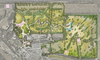
Werribee Open Range Zoo Complex
Now we have confirmation of the genders of the three calves from the latest cohort, I thought it’d be interesting to project the likely housing arrangements for the Werribee population over the next decade.
This is the schematics for Werribee’s complex:

The complex will consist of six large, interconnected paddocks.
We can assume the groupings over the next decade will be as follows:
1) Matriachal Herd
2) Luk Chai (2009)
3) Man Jai (2013)
4) Putra Mas (1989) assumed
5) Roi-Yim (2022) as of 2029
The groupings will be rotated through the paddocks to allow for variety and for stand down/recovery time of the paddock/s not in use.
The complex will allow for fission-fusion e.g. as Roi-Yim transitions out of the matriarchal herd, we’d expect to see him housed with the cows on some days; a mentor bull on other days/half days; and on his own on other days.
It should also be noted that the six exhibits are large paddocks - some of which are serviced by holding yards suitable for short term holding of elephants. This will increase the capacity of the complex for housing additional elephants e.g. Burma and Permai during an introductory period to the main herd if need be.
Now we have confirmation of the genders of the three calves from the latest cohort, I thought it’d be interesting to project the likely housing arrangements for the Werribee population over the next decade.
This is the schematics for Werribee’s complex:
The complex will consist of six large, interconnected paddocks.
We can assume the groupings over the next decade will be as follows:
1) Matriachal Herd
2) Luk Chai (2009)
3) Man Jai (2013)
4) Putra Mas (1989) assumed
5) Roi-Yim (2022) as of 2029
The groupings will be rotated through the paddocks to allow for variety and for stand down/recovery time of the paddock/s not in use.
The complex will allow for fission-fusion e.g. as Roi-Yim transitions out of the matriarchal herd, we’d expect to see him housed with the cows on some days; a mentor bull on other days/half days; and on his own on other days.
It should also be noted that the six exhibits are large paddocks - some of which are serviced by holding yards suitable for short term holding of elephants. This will increase the capacity of the complex for housing additional elephants e.g. Burma and Permai during an introductory period to the main herd if need be.
Attachments
Werribee Open Range Zoo Complex
Now we have confirmation of the genders of the three calves from the latest cohort, I thought it’d be interesting to project the likely housing arrangements for the Werribee population over the next decade.
This is the schematics for Werribee’s complex:
View attachment 599263
The complex will consist of six large, interconnected paddocks.
We can assume the groupings over the next decade will be as follows:
1) Matriachal Herd
2) Luk Chai (2009)
3) Man Jai (2013)
4) Putra Mas (1989) assumed
5) Roi-Yim (2022) as of 2029
The groupings will be rotated through the paddocks to allow for variety and for stand down/recovery time of the paddock/s not in use.
The complex will allow for fission-fusion e.g. as Roi-Yim transitions out of the matriarchal herd, we’d expect to see him housed with the cows on some days; a mentor bull on other days/half days; and on his own on other days.
It should also be noted that the six exhibits are large paddocks - some of which are serviced by holding yards suitable for short term holding of elephants. This will increase the capacity of the complex for housing additional elephants e.g. Burma and Permai during an introductory period to the main herd if need be.
Where did you get the map?
I’m not sure if I’ve mentioned this on here or not before, but just a thought on elephants in New Zealand. Why not have Aukland take Permai, which would simultaneously achieve the goal of both keeping elephants in New Zealand, while also giving both girls female companionship, and when one dies, simply bring in a surplus bull or two and transition to a bachelor facility? This would enable Auckland to continue to exhibit elephants, without any of the associated concern with exhibiting a single or pair of cow(s) due to males less demanding social needs and naturally semi solitary nature. Since Permai and Burma are both managed free contact, it would be a fairly straight forwards transition to have Permai come over and remain in free contact management with Burma, with the added bonus that for whichever cow ends up outliving the other, in addition to whatever social interaction can be gained from the Australian bulls, she would still be able to interact free contact with her human keepers, helping fill their social need as well.
Honestly, Luk Chai would be ideal as one of the bulls to go over to Aukland. He not only has a full brother to take his place if he's desired to be bred from again, but given his social history he would be a logical choice as well. He seems to have a fairly affable nature, and is proven to be able to interact with both older cows and other bulls in a socially appropriate fashion, so in addition to actually being a realistic candidate for a periodic social partner for Burma/Permai until their death, it can also be expected that he would be socially compatible with which ever other young bull comes his way down the road (and honestly, it could very well be Roi-Yim once he’s completely split from the matriarchal herd).
As it’s already been mentioned, there’s going to be minimal options available for surplus bulls in the Australasian region, realistically North America could be expected to be interested in taking another two to three (from the remaining two founder lines, and perhaps another from Bong Su’s lineage if Ongard ends up being a non breeder for whatever reason) and Europe perhaps three to four animals. Of course there’s always the potential for sending animals to Japan or other “eastern” countries, but I don’t see any of them being likely options. So even if they only take two or three animals, the support from NZ would be a definite asset to the regional program.
Honestly, Luk Chai would be ideal as one of the bulls to go over to Aukland. He not only has a full brother to take his place if he's desired to be bred from again, but given his social history he would be a logical choice as well. He seems to have a fairly affable nature, and is proven to be able to interact with both older cows and other bulls in a socially appropriate fashion, so in addition to actually being a realistic candidate for a periodic social partner for Burma/Permai until their death, it can also be expected that he would be socially compatible with which ever other young bull comes his way down the road (and honestly, it could very well be Roi-Yim once he’s completely split from the matriarchal herd).
As it’s already been mentioned, there’s going to be minimal options available for surplus bulls in the Australasian region, realistically North America could be expected to be interested in taking another two to three (from the remaining two founder lines, and perhaps another from Bong Su’s lineage if Ongard ends up being a non breeder for whatever reason) and Europe perhaps three to four animals. Of course there’s always the potential for sending animals to Japan or other “eastern” countries, but I don’t see any of them being likely options. So even if they only take two or three animals, the support from NZ would be a definite asset to the regional program.
Where did you get the map?
Werribee complex:
The map can be found here: Werribee Zoo's World Class Upgrade.
There’s additional details about the Werribee complex in this comprehensive article: Three baby elephants are soon to be born at Melbourne Zoo. And a move to a new open-plains life at Werribee may be next.
Instead of three small, gated spaces at Melbourne Zoo, the elephants will have six huge and interconnected habitats to roam across. A 1.6-kilometre, 30-metre-high gondola will ferry up to 1000 visitors an hour over the zoo’s open plains to a cafe that looks on to the elephants’ swimming pools. Then they can walk within an enclosed path, which the elephants will be free to traverse via overpasses.
I’m not sure if I’ve mentioned this on here or not before, but just a thought on elephants in New Zealand. Why not have Aukland take Permai, which would simultaneously achieve the goal of both keeping elephants in New Zealand, while also giving both girls female companionship, and when one dies, simply bring in a surplus bull or two and transition to a bachelor facility? This would enable Auckland to continue to exhibit elephants, without any of the associated concern with exhibiting a single or pair of cow(s) due to males less demanding social needs and naturally semi solitary nature. Since Permai and Burma are both managed free contact, it would be a fairly straight forwards transition to have Permai come over and remain in free contact management with Burma, with the added bonus that for whichever cow ends up outliving the other, in addition to whatever social interaction can be gained from the Australian bulls, she would still be able to interact free contact with her human keepers, helping fill their social need as well.
Honestly, Luk Chai would be ideal as one of the bulls to go over to Aukland. He not only has a full brother to take his place if he's desired to be bred from again, but given his social history he would be a logical choice as well. He seems to have a fairly affable nature, and is proven to be able to interact with both older cows and other bulls in a socially appropriate fashion, so in addition to actually being a realistic candidate for a periodic social partner for Burma/Permai until their death, it can also be expected that he would be socially compatible with which ever other young bull comes his way down the road (and honestly, it could very well be Roi-Yim once he’s completely split from the matriarchal herd).
As it’s already been mentioned, there’s going to be minimal options available for surplus bulls in the Australasian region, realistically North America could be expected to be interested in taking another two to three (from the remaining two founder lines, and perhaps another from Bong Su’s lineage if Ongard ends up being a non breeder for whatever reason) and Europe perhaps three to four animals. Of course there’s always the potential for sending animals to Japan or other “eastern” countries, but I don’t see any of them being likely options. So even if they only take two or three animals, the support from NZ would be a definite asset to the regional program.
That’s a great idea and solves multiple issues regarding the export of Burma (1982) and Permai (1989) from their respective zoos.
While they’re much loved individuals, being realistic, their acquisition will do little to enhance any herd in the region. Taronga have an abundance of adult cows (and previously refused Burma); and Werribee will have little desire to take them now that there’s a clear path to succession within their herd.
Auckland did/do seem anxious to phase out elephants. They’ve cited the social welfare of their elephants, but I find it difficult to argue that Burma would be any less better off if she was joined by Permai as you describe - remaining within her familiar environment. Nobody can deny this would be a better alternative to export outside the region, which is the only option if Werribee won’t take her.
In the ideal scenario, Auckland would transition to a bachelor facility as the two middle aged cows pass on. This may be more of a commitment to this species than Auckland Zoo are willing to make; but in that case, I hope they’d at least consider your idea of importing Permai (1989) as a compromise.
The paddocks don't really appear that well defined on that map from what I can see?Werribee Open Range Zoo Complex
Now we have confirmation of the genders of the three calves from the latest cohort, I thought it’d be interesting to project the likely housing arrangements for the Werribee population over the next decade.
This is the schematics for Werribee’s complex:
View attachment 599263
The complex will consist of six large, interconnected paddocks.
We can assume the groupings over the next decade will be as follows:
1) Matriachal Herd
2) Luk Chai (2009)
3) Man Jai (2013)
4) Putra Mas (1989) assumed
5) Roi-Yim (2022) as of 2029
The groupings will be rotated through the paddocks to allow for variety and for stand down/recovery time of the paddock/s not in use.
The complex will allow for fission-fusion e.g. as Roi-Yim transitions out of the matriarchal herd, we’d expect to see him housed with the cows on some days; a mentor bull on other days/half days; and on his own on other days.
It should also be noted that the six exhibits are large paddocks - some of which are serviced by holding yards suitable for short term holding of elephants. This will increase the capacity of the complex for housing additional elephants e.g. Burma and Permai during an introductory period to the main herd if need be.