Australasian Asian Elephant Population 2023

@Zoofan15

Times like this wish (government funded) zoo(s) management in our region would follow your posts on here, would be to their advantage big time.

Thanks, that means a lot. :) I like to think I have a few good ideas here and there though most of them are commonsense things I’d like to think the zoos involved are capable of thinking up themselves.

The most obvious transfer in the next few years is that of Putra Mas to Werribee and unless a new holder like Monarto arises, I will be extremely disappointed if instead of going to Werribee, he’s exported.

It’s so important to think of the next step and I’m encouraged to hear Zoos Victoria have a succession plan for the management of their herd over the next half a century, which will be updated every five to ten years as the demographics change. They’re surely already considering what they need for the next generation, which is an unrelated bull and you couldn’t ask for one more genetically valuable than Putra Mas.
 
The public can now vote on the name of Num-oi's female calf at Melbourne and to no one's surprise, two of the choices are Mai Pai and Chaiyo, which were both recycled from the past two elephant naming competitions at the zoo

The third option is Kati - meaning "Coconut Milk, an ingredient commonly used in Thai cooking. The calf's mother, Num-Oi, means Sugar Cane Juice."

https://surveys.syd1.qualtrics.com/jfe/form/SV_8AkwT6ziKV90kgm
And she’s been named Kati!

 
Good. It was clear this name was going to win from the outset given the competing names had been rejected twice - but a good result nonetheless.

0.1 Aiyara (16/11/2022) Luk Chai x Dokkoon
1.0 Roi-Yim (25/11/2022) Luk Chai x Mali
0.1 Kati (01/01/2023) Luk Chai x Num Oi

Three calves, one male and two females, all three healthy and with lovely names. Couldn't hope for a better result.:)
 
Update

My friend visited Taronga Zoo today and has an update on their plans:

Taronga phase out:

The plan is still to transfer Pak Boon (1992) and Tang Mo (2000) to Taronga Western Plains Zoo, but this won’t take place for at least another five years. I assume construction of the expanded cow and calf facility has been delayed as that will need to be up and running before they can receive the cows from Taronga.

Burma:

Taronga Zoo have offered to take Burma. This remains an offer at this time, so I will not be announcing it in the respective news threads (plans can easily change); though I have no doubt Auckland will be happy to send Burma there. In the event these plans eventuate, Burma would be reunited with Anjalee at Taronga Western Plains Zoo when the trio transfer to Dubbo.

In the event Burma was sent to Taronga, it’ll be interesting to see if they accept Permai from Perth as well; or whether they undertake negotiations with Werribee instead.
 
Taronga should take Burma and Permai, then keep elephants their long term as a retirement exhibit/ eventual bull holding exhibit. It's not the worlds largest exhibit, but Taronga has the means to care for them properly as they age.
The zoo also needs something as a draw card species. It's becoming more and more a human zoo with a few animals around. The wasted space in tiger trek is ridiculous. And one can guarantee when they redo the elephant area more space will be dedicated to humans in a zoo that already has to much.
 
Taronga should take Burma and Permai, then keep elephants their long term as a retirement exhibit/ eventual bull holding exhibit. It's not the worlds largest exhibit, but Taronga has the means to care for them properly as they age.
The zoo also needs something as a draw card species. It's becoming more and more a human zoo with a few animals around. The wasted space in tiger trek is ridiculous. And one can guarantee when they redo the elephant area more space will be dedicated to humans in a zoo that already has to much.

It’s not out of the question, but I’m under the impression Taronga wish to phase out elephants altogether. They’ve been planning to transfer Pak Boon and Tang Mo to Dubbo for a while now and bearing in mind Burma’s acquisition isn’t confirmed, that would represent a phase out.

Though they’re not in a position to be fussy, Auckland would prefer Burma to go to a facility which can provide her with a multigenerational herd - so their preference would be for her to go Dubbo long term, once their cow/calf facility is up and running.

If Taronga take Burma, there’s also no guarantee they’ll take Permai. I’d expect Perth will be able to negotiate with Werribee to take her given Werribee will want Putra Mas.
 
It indeed has changed.
Melbourne Zoo's former strategic planning director David Hancocks, who helped design TOTE in the early 2000s in order to improve elephant welfare at MZ. In an article in 2008 it highlights his change in stance in a matter of a couple of years.

Animal rights and wrongs

"Hancocks helped design the enclosure, which he now says was a mistake. While he believes it to be better than any such exhibit in Australia, he says his study of elephants since has convinced him that no urban enclosure is adequate for them. He likens the enclosure to "being locked in a hotel room with four other people, not of your choosing, for the rest of your life"."

I remember reading another article on the topic where he was quoted as saying by the time it had actually opened (or not long after - couldn't refind the article so going off of memory) he was sad as he realised it was no where near enough to be acceptable and regretted not pushing more to have them transferred to Werribee in the early 2000s.

The 2008 article the quote is from does highlights that the main reason why the imported Thai elephants was they would have more exposure for education purposes at Melbourne and Taronga rather than their respective open-range zoos.

Melbourne’s complex is definitely the best of any of the city zoos in the region. Space in a city zoo is always going to be limited and the success of the breeding programme has been beyond what anyone imagined - with six of the seven imported cows producing a total of 13 calves between them.

I would rate Melbourne’s complex as a vast improvement on the elephant houses and concrete yards of the 20th century; but standards continue to evolve and now even Melbourne’s complex is regarded as inadequate to meet the needs of the herd.

It’s a quick evolution when you consider an elephant house/concrete yard was standard accomodation for decades, but one that has nonetheless seen the inevitable decision to move Melbourne’s herd to Werribee. I truly believe this is a complex that will fulfill their social needs well into the next century - which isn’t something that can be said for many exhibits throughout our region’s zoos.
 
Melbourne’s complex is definitely the best of any of the city zoos in the region. Space in a city zoo is always going to be limited and the success of the breeding programme has been beyond what anyone imagined - with six of the seven imported cows producing a total of 13 calves between them.

I would rate Melbourne’s complex as a vast improvement on the elephant houses and concrete yards of the 20th century; but standards continue to evolve and now even Melbourne’s complex is regarded as inadequate to meet the needs of the herd.

It’s a quick evolution when you consider an elephant house/concrete yard was standard accomodation for decades, but one that has nonetheless seen the inevitable decision to move Melbourne’s herd to Werribee. I truly believe this is a complex that will fulfill their social needs well into the next century - which isn’t something that can be said for many exhibits throughout our region’s zoos.
It definitely was a quick evolution considering, as you said, just how long the small paddock with a concrete barn was the norm, that Melbourne went from that to what we have now, to soon an enclosure the size of a city zoo in just over 20 years.

Melbourne's complex is the best of all city zoos in the region, and up there amongst the best of city zoos globally I'd wager! The success of the breeding program is a testament to the efforts of the keepers, and their ability to change the way they approached the herd, moving to protected contact, enabling the elephants do more for themselves and each other. It's so exciting thinking about Melbourne's herd's future.

A great thing about the new enclosure is that (according to a MZ elephant keeper on my Elephant encounter in late February) it will mean that keepers will not have to engineer any enrichment activities in any real way, as according to the keeper the space is what they need. She was saying that all the research and studies have shown that if given space to roam and behave more like a non-captive matrilineal herd gives them the enrichment they need.

I am sure they will still provide some enrichment but it will most likely be more targeted than now, only occuring when seen to be necessary.
 
It definitely was a quick evolution considering, as you said, just how long the small paddock with a concrete barn was the norm, that Melbourne went from that to what we have now, to soon an enclosure the size of a city zoo in just over 20 years.

Melbourne's complex is the best of all city zoos in the region, and up there amongst the best of city zoos globally I'd wager! The success of the breeding program is a testament to the efforts of the keepers, and their ability to change the way they approached the herd, moving to protected contact, enabling the elephants do more for themselves and each other. It's so exciting thinking about Melbourne's herd's future.

A great thing about the new enclosure is that (according to a MZ elephant keeper on my Elephant encounter in late February) it will mean that keepers will not have to engineer any enrichment activities in any real way, as according to the keeper the space is what they need. She was saying that all the research and studies have shown that if given space to roam and behave more like a non-captive matrilineal herd gives them the enrichment they need.

I am sure they will still provide some enrichment but it will most likely be more targeted than now, only occuring when seen to be necessary.

I agree Melbourne’s keepers have done exceptionally well. The latest cohort of births provided a unique challenge for the team as it was the first time a first time mother had given birth at the zoo post-protected contact. The barn limited their ability to have the whole matriarchal herd present and the keepers were unable to play the role of midwife as they did for Dokkoon, Kulab and Num-Oi at their first births.

The challenge of accomodating two bulls, five cows and three newborns has been no easy task with the facilities they have an indeed the solution (a transfer to Werribee) will involve the largest mass transfer of this species in the history of the region.

I’ve heard similar things about the environment at Werribee providing the mental stimulation the elephants need. A key component of this is that they’ll be making decisions - as they would in the wild; as opposed to a single cow or pair of cows standing in a cramped exhibit, waiting for keepers to provide that same direction.
 
I agree Melbourne’s keepers have done exceptionally well. The latest cohort of births provided a unique challenge for the team as it was the first time a first time mother had given birth at the zoo post-protected contact. The barn limited their ability to have the whole matriarchal herd present and the keepers were unable to play the role of midwife as they did for Dokkoon, Kulab and Num-Oi at their first births.

The challenge of accomodating two bulls, five cows and three newborns has been no easy task with the facilities they have an indeed the solution (a transfer to Werribee) will involve the largest mass transfer of this species in the history of the region.

I’ve heard similar things about the environment at Werribee providing the mental stimulation the elephants need. A key component of this is that they’ll be making decisions - as they would in the wild; as opposed to a single cow or pair of cows standing in a cramped exhibit, waiting for keepers to provide that same direction.
I also appreciate that they will have training facilities that are separate to their barns.
 
I also appreciate that they will have training facilities that are separate to their barns.

The most exciting thing about the Werribee complex is that there’s the space to manage every one of the elephants needs - from fission-fushion transitions of young bulls out of the herd; to the introduction of elephants for breeding.

There’s paddocks of varying size, which can accomodate calves varying in size from neonates finding their feet; to boisterous calves wanting to explore and run off energy.

The transition to protected contact was noted by keepers to make the elephants interact with each other more; and I have no doubt this is something we’ll soon see on an even wider scale. It’ll be truly inspiring.
 
I hope there's some level of variation within the paddocks' design (along with visually unobtrusive barriers akin to Kubu Hippo River) - I like how there is elevation/rocks/logs within the current Trail of the Elephants enclosures, and if those are included in the new habitats, I'd reckon the zoo'd have taken advantage of the majority of enrichment possibilities. Maybe a running stream, a more forested paddock, just a variety of habitats in general rather than just *open space* and *modern architecture that doesn't jive with the rest of Werribee*.
 
I hope there's some level of variation within the paddocks' design (along with visually unobtrusive barriers akin to Kubu Hippo River) - I like how there is elevation/rocks/logs within the current Trail of the Elephants enclosures, and if those are included in the new habitats, I'd reckon the zoo'd have taken advantage of the majority of enrichment possibilities. Maybe a running stream, a more forested paddock, just a variety of habitats in general rather than just *open space* and *modern architecture that doesn't jive with the rest of Werribee*.

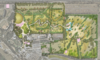
Looking at the plan below, it shows some exhibits are more densely forested than others, which are more open plan. The largest exhibit will have the main water area - which will include a fully submersible pool. This will be a key source of enrichment for the elephants (especially on hot days), so this has been strategically placed around the main visitor observation area.

With regards to architecture, I’m not expecting too much. The buildings will be practical first and foremost and not all will be in public view. The emphasis will be on space and natural features, with the elephants rotated between paddocks so as not to wear out the terrain and allow vegetation recovery time.

upload_2023-3-10_8-18-45.png
 

Attachments

  • upload_2023-3-10_8-18-45.png
    upload_2023-3-10_8-18-45.png
    1.2 MB · Views: 28
I hope there's some level of variation within the paddocks' design (along with visually unobtrusive barriers akin to Kubu Hippo River) - I like how there is elevation/rocks/logs within the current Trail of the Elephants enclosures, and if those are included in the new habitats, I'd reckon the zoo'd have taken advantage of the majority of enrichment possibilities. Maybe a running stream, a more forested paddock, just a variety of habitats in general rather than just *open space* and *modern architecture that doesn't jive with the rest of Werribee*.

The plan is to have paddocks similar to Melbourne’s; all suiting different needs of the elephants and all with different theming. Eg. The fields, the forest, the village, the waterhole ect.
 
upload_2023-4-18_11-10-57.png

I ran this as a sort of "hypothetical" in the event Taronga ended up deciding to keep elephants in the long-term; this was assuming they would maintain Andean condor and (presumably) incorporate Aldabra giant tortoises elsewhere in the zoo. The calculation ended up being about 1.3 acres, which is roughly the same size as National Zoo's Elephant Trails facility. They could expand the footprint as well, also given that they build a new space for their condors elsewhere in the zoo.
 

Attachments

  • upload_2023-4-18_11-10-57.png
    upload_2023-4-18_11-10-57.png
    1 MB · Views: 17
View attachment 617425

I ran this as a sort of "hypothetical" in the event Taronga ended up deciding to keep elephants in the long-term; this was assuming they would maintain Andean condor and (presumably) incorporate Aldabra giant tortoises elsewhere in the zoo. The calculation ended up being about 1.3 acres, which is roughly the same size as National Zoo's Elephant Trails facility. They could expand the footprint as well, also given that they build a new space for their condors elsewhere in the zoo.

Interesting concept! Though Taronga Zoo have confirmed plans to phase out elephants long term, they confirmed it wouldn’t be within the next five years, so Pak Boon (1992) and Tang Mo (1999) will be there for the foreseeable.

Taronga have also reportedly offered to take on Burma (1982) from Auckland Zoo, so I can see them considering exhibiting elephants long term. Aside from them being a popular attraction, there’s more than enough space for three cows in the plan you’ve outlined; and I doubt they’d want to concede a point of difference to Sydney Zoo.

I’m also doubtful they’d want to add an additional 2-3 cows to the Dubbo herd. The matriarchal herd already numbers three adult cows (all reproductively viable) and a five year old female. There’s plans to breed in the near future (potentially from all three cows as we saw at Melbourne) and even when the new barn is finally built, space will be limited.
 
Interesting concept! Though Taronga Zoo have confirmed plans to phase out elephants long term, they confirmed it wouldn’t be within the next five years, so Pak Boon (1992) and Tang Mo (1999) will be there for the foreseeable.

Taronga have also reportedly offered to take on Burma (1982) from Auckland Zoo, so I can see them considering exhibiting elephants long term. Aside from them being a popular attraction, there’s more than enough space for three cows in the plan you’ve outlined; and I doubt they’d want to concede a point of difference to Sydney Zoo.

I’m also doubtful they’d want to add an additional 2-3 cows to the Dubbo herd. The matriarchal herd already numbers three adult cows (all reproductively viable) and a five year old female. There’s plans to breed in the near future (potentially from all three cows as we saw at Melbourne) and even when the new barn is finally built, space will be limited.
I figured if they wanted to bring back the "walking trail" idea for the elephants, they could have a crossing that leads to another paddock. Said paddock would take up the space of the Aldabra giant tortoise habitat up to the bird show, and potentially the condor aviary as well if they had a new space for the condors in mind. (perhaps closer to the bird show area?), along with a trail/series of paddocks that would run past the harbor view lawns, akin to National's Elephant Trek/Cheyenne Mountain's elephant walkway. Maybe even a "private" paddock near the bus/ferry station (which could also add additional acreage), and you'd have about 2.3-2.5 acres for the elephants in total! Honestly, I could see Taronga either taking Burma in and having these multiple paddocks, and/or taking in a bachelor group to fulfill the Australasian elephant program's needs, if they do decide to keep elephants long-term.
 
Last edited:
I figured if they wanted to bring back the "walking trail" idea for the elephants, they could have a crossing that leads to another paddock. Said paddock would take up the space of the Aldabra giant tortoise habitat up to the bird show, and potentially the condor aviary as well if they had a new space for the condors in mind. (perhaps closer to the bird show area?), along with a trail/series of paddocks that would run past the harbor view lawns, akin to National's Elephant Trek/Cheyenne Mountain's elephant walkway. Maybe even a "private" paddock near the bus/ferry station (which could also add additional acreage), and you'd have about 2.3-2.5 acres for the elephants in total! Honestly, I could see Taronga either taking Burma in and having these multiple paddocks, and/or taking in a bachelor group to fulfill the Australasian elephant program's needs, if they do decide to keep elephants long-term.

I imagine both Gung and Pathi Harn will be used in the next breeding rotation at Dubbo. Gung to sire a calf to Pathi Harn’s mother; and Pathi Harn to sire a calf to Thong Dee (who has previously bred twice with Gung). This only leaves Sabai as a surplus bull, who they wouldn’t want to transfer out alone.

The next breeding rotation will surely produce at least one bull calf, so a decade or so down the track, they may decide to transfer this calf (and Sabai) to Taronga in place of the cows. Burma may well have passed by then, meaning it’d be just Pak Boon and Tang Mo rejoining the matriarchal herd at Dubbo.
 
Back
Top