Australasian Asian Elephant Population 2024

Partially anesthetised, yes. However in that case it would still be inadvisable for him to be kept in this state for the potential 30+ hour road trip across the Nullarbor to Monarto - a flight would be the only theoretical option.

I dont actually think they would anesthetiser at all. I think they would give a dose of midaz which would make him calm and forgetful.
Which is a much different ball game then say fent which is respiratory depressor where he would need respiratory monitoring. If they make him sleepy it would only be while moving him into the create. The rest of the journey via air or road would be done under sedation of the calming type not so much the going to sleep type.

ETA Anaesthetise*
 
Last edited:
I dont actually think they would anesthetiser at all. I think they would give a dose of midaz which would make him calm and forgetful.
Which is a much different ball game then say fent which is respiratory depressor where he would need respiratory monitoring. If they make him sleepy it would only be while moving him into the create. The rest of the journey via air or road would be done under sedation of the calming type not so much the going to sleep type.

I agree. As @Trua also mentioned, it would be inadvisable to anaesthetise Putra Mas due to the risks involved to his health and when he awoke during transit. As I also previously said, elephants aren’t designed to be immobile for long period of time. They typically only sleep for a few hours per night.

Globally, there have been many deaths of elephants while under anaesthetic, so it’s nothing something that would be taken lightly.

In Postcards from the Zoo, it was detailed how an elephant died at Taronga Zoo in the process of being transferred out. She had a slip while being loaded into the crate. It’s a high risk procedure, but hopefully one that will see Putra Mas arrive safely at Monarto.
 
I dont actually think they would anesthetiser at all. I think they would give a dose of midaz which would make him calm and forgetful.
Which is a much different ball game then say fent which is respiratory depressor where he would need respiratory monitoring. If they make him sleepy it would only be while moving him into the create. The rest of the journey via air or road would be done under sedation of the calming type not so much the going to sleep type.
If it does get to this stage where this is required he would require it the whole trip. If he doesn't feel comfortable in the crate beforehand he absolutely won't have a change of heart when he's in it. And that could pose several risks to himself and his transport.

Even mild sedation still poses the same risks as deep sedation though. Same same.
 
If it does get to this stage where this is required he would require it the whole trip. If he doesn't feel comfortable in the crate beforehand he absolutely won't have a change of heart when he's in it. And that could pose several risks to himself and his transport.

Even mild sedation still poses the same risks as deep sedation though. Same same.

Technically it depends on the drug and what dose.

In other news we are arguing over what appears to already have be decided
When googling elephant sedation, this popped up.https://perthzoo.wa.gov.au/article/tiny-steps-will-lead-to-big-success

It appears they are already planning and have already decided what sedation plan to use for the journey. So it very well could be just getting him into the create that's an issue. Or if the sedation they use/plan to use needs him out of musth to be more effective.
 
Technically it depends on the drug and what dose.

In other news we are arguing over what appears to already have be decided
When googling elephant sedation, this popped up.Tiny steps will lead to big success | Perth Zoo
It appears they are already planning and have already decided what sedation plan to use for the journey. So it very well could be just getting him into the create that's an issue. Or if the sedation they use/plan to use needs him out of musth to be more effective.
Not surprising, it's absolutely going to be required considering the duration of the journey and Putra Mas's nature.

Perth would be wanting to avoid his musth period in general. Not only will it pose concerns for the sedative (with high levels of testerone pumping through, potentially diluting the effects) but would also pose a concern when travelling due to their unpredictability. Getting him into the crate would also be difficult.

Outside of that, it does seem like getting him into the crate in the first place may be an issue. He was intended to travel to Texas back in 2000 but this fell through when he refused to enter his crate. Being an adult bull elephant, they can't force him in. So eventually it will all come down to whether he elects to enter said crate
 
Technically it depends on the drug and what dose.

In other news we are arguing over what appears to already have be decided
When googling elephant sedation, this popped up.https://perthzoo.wa.gov.au/article/tiny-steps-will-lead-to-big-success
It appears they are already planning and have already decided what sedation plan to use for the journey. So it very well could be just getting him into the create that's an issue. Or if the sedation they use/plan to use needs him out of musth to be more effective.
I stand corrected! It's a decision that isn't the easiest to make so hopefully this is the best decision for Putra Mas and trying to get him across to Monarto.

Upon reflection, he is a bull elephant. He has an unpredictable tendency and it's dislikes crates for whatever reason. So there were really going to be risks anyway. It's sort of a choose your own adventure situation. Both present risks in their own manner but I guess Perth are confident in their sedative and the journey going to plan.
 
I stand corrected! It's a decision that isn't the easiest to make so hopefully this is the best decision for Putra Mas and trying to get him across to Monarto.

Upon reflection, he is a bull elephant. He has an unpredictable tendency and it's dislikes crates for whatever reason. So there were really going to be risks anyway. It's sort of a choose your own adventure situation. Both present risks in their own manner but I guess Perth are confident in their sedative and the journey going to plan.

It would be a massive game changer if Putra Mas is unable to be transferred to Monarto, not just for Perth in that they’ll need to commit to housing a bull elephant for the next 20-30 years; but Monarto, who will have the facilities for a bull elephant and nothing to fill it.

If that eventuated, it’d be interesting to see what alternative bull (if any) was transferred to Monarto. If they wanted Pak Boon to breed, it’d be preferable to have a proven bull on site sooner rather than later. We could likely rule out Luk Chai given there’s plans for him to sire calves at Werribee in the coming years (likely at least 1-2 years away); while Pathi Harn and the Sydney bulls are unproven. That really just leaves Gung, who may well have done his dash at Dubbo - though genetics wise, Pathi Harn would be a better option.
 
It would be a massive game changer if Putra Mas is unable to be transferred to Monarto, not just for Perth in that they’ll need to commit to housing a bull elephant for the next 20-30 years; but Monarto, who will have the facilities for a bull elephant and nothing to fill it.

If that eventuated, it’d be interesting to see what alternative bull (if any) was transferred to Monarto. If they wanted Pak Boon to breed, it’d be preferable to have a proven bull on site sooner rather than later. We could likely rule out Luk Chai given there’s plans for him to sire calves at Werribee in the coming years (likely at least 1-2 years away); while Pathi Harn and the Sydney bulls are unproven. That really just leaves Gung, who may well have done his dash at Dubbo - though genetics wise, Pathi Harn would be a better option.
For what it's worth I don't believe Monarto has begun construction of their bull facilities yet, so it's possible they are giving it another few months until there's some further confirmation on Putra Mas's response to his crate training thus far.

Considering Luk Chai will presumably be bred circa 2026 again it's not unreasonable to rule him out as a potential replacement. Putra Mas will be arriving in late 2025 anyway so waiting an additional year for Luk Chai can't necessarily be ruled out. In saying that, I do agree Gung will probably be the likely option. He's also previously naturally mated Pak Boon too so it would be a win win in that case.
 
For what it's worth I don't believe Monarto has begun construction of their bull facilities yet, so it's possible they are giving it another few months until there's some further confirmation on Putra Mas's response to his crate training thus far.

Considering Luk Chai will presumably be bred circa 2026 again it's not unreasonable to rule him out as a potential replacement. Putra Mas will be arriving in late 2025 anyway so waiting an additional year for Luk Chai can't necessarily be ruled out. In saying that, I do agree Gung will probably be the likely option. He's also previously naturally mated Pak Boon too so it would be a win win in that case.

Monarto’s bull facilities (including the barn) will surely be the last to be completed; with priority going towards accomodating the cows.

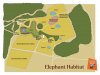
The complex will include four areas and on socials, it was mentioned Burma is on exhibit in the cloverleaf area, which is three acres in size. This would be what’s labelled as area one on the map (shaped like a clover/fidget spinner):

upload_2024-12-17_1-27-27.jpeg
 

Attachments

  • upload_2024-12-17_1-27-27.jpeg
    upload_2024-12-17_1-27-27.jpeg
    34.2 KB · Views: 36
Monarto’s bull facilities (including the barn) will surely be the last to be completed; with priority going towards accomodating the cows.

The complex will include four areas and on socials, it was mentioned Burma is on exhibit in the cloverleaf area, which is three acres in size. This would be what’s labelled as area one on the map (shaped like a clover/fidget spinner):

View attachment 754500
It would be a great disappointment if this complex wasn't used for breeding down the line, its superbly designed and would flourish with a growing herd in it
 
It would be a great disappointment if this complex wasn't used for breeding down the line, its superbly designed and would flourish with a growing herd in it

I fully agree. I was so excited when I heard Monarto were building a complex 2/3 the size of Werribee’s as it suggested a third breeding facility.

It would be equally disappointing if Putra Mas and Pak Boon (the most valuable male and female in the region) weren’t bred together and in the case of Pak Boon, her line lost from the region in time. Given the size of the complex and that she’d be the only viable female, it’s our best hope of seeing a cow breed to natural birth intervals.
 
It would be a great disappointment if this complex wasn't used for breeding down the line, its superbly designed and would flourish with a growing herd in it
I would be very surprised if Zoos-SA did not want to try breeding them, Its great PR for the zoo not to mention the extra visitor numbers that could be expected having a new calf on show to the public. Also with the aim a building a herd for the future where they can become the third breeding centre within the country and having a greater gene pool shared amongst the three open range zoos!
 
I would be very surprised if Zoos-SA did not want to try breeding them, Its great PR for the zoo not to mention the extra visitor numbers that could be expected having a new calf on show to the public. Also with the aim a building a herd for the future where they can become the third breeding centre within the country and having a greater gene pool shared amongst the three open range zoos!

If they don’t breed from Pak Boon, the herd will have died out around 30 years from now. Succession is crucial and if they do breed, they’ll be hoping for a minimum of two daughters from Pak Boon. Breeding at natural birth intervals, she could have three calves between circa 2027-2035 - with the inevitable bull calf no less valuable on a regional level as the only son of his founder father.

If they fail to generate succession within this herd, an import of a well represented female line from Europe or a splinter off herd from Werribee seems the most likely.

Three decades from now, Werribee will likely have lines from the following:

0.1 Mali (2010)
0.1 Aiyara (2022)
0.1 Kati (2023)

All of which would have hopefully built up matrilines of their own. Keeping the unrelated Dokkoon/Num-Oi lines together is beneficial in terms of maintaining a genetically diverse herd; but social factors may necessitate a split as the cows build up their family groups.
 
If they don’t breed from Pak Boon, the herd will have died out around 30 years from now. Succession is crucial and if they do breed, they’ll be hoping for a minimum of two daughters from Pak Boon. Breeding at natural birth intervals, she could have three calves between circa 2027-2035 - with the inevitable bull calf no less valuable on a regional level as the only son of his founder father.

If they fail to generate succession within this herd, an import of a well represented female line from Europe or a splinter off herd from Werribee seems the most likely.

Three decades from now, Werribee will likely have lines from the following:

0.1 Mali (2010)
0.1 Aiyara (2022)
0.1 Kati (2023)

All of which would have hopefully built up matrilines of their own. Keeping the unrelated Dokkoon/Num-Oi lines together is beneficial in terms of maintaining a genetically diverse herd; but social factors may necessitate a split as the cows build up their family groups.

It would be a waste to import from Europe when there are female asian elephants with greater genetic value, sitting in south east Asia. There captive elephant numbers far outweigh any other captive population. It would be a complete waste to import from anywhere else.

Fracturing the group at Werribee will probably happen. But again we need to look at how female herds naturally behave and with their enclosure sizes. The females should be allowed to have a fission and fussion herd dynamic, without separation.
 
It would be a waste to import from Europe when there are female asian elephants with greater genetic value, sitting in south east Asia. There captive elephant numbers far outweigh any other captive population. It would be a complete waste to import from anywhere else.

Fracturing the group at Werribee will probably happen. But again we need to look at how female herds naturally behave and with their enclosure sizes. The females should be allowed to have a fission and fussion herd dynamic, without separation.

Importing from South East Asia would be extremely difficult. Auckland Zoo managed to import Anjalee from Sri Lanka (South Asia), which was assessed as the most viable source, but was unable to import a second (Nandi). TB and other diseases are a concern, making Europe a much easier source. Case in point, Sydney Zoo imported two bulls from Dublin rather than SE Asia.

I too hope the Werribee complex will negate any conflicts and for now at least, the herd seems very settled. It was clear a strong bond exists between Kulab and Num-Oi; and of course, Dokkoon and Mali are close as mother and daughter, so will be interesting to see if this divide presents as those groupings wandering off into different paddocks and then converging later in the day (fission-fushion ) when they move to Werribee.
 
Importing from South East Asia would be extremely difficult. Auckland Zoo managed to import Anjalee from Sri Lanka (South Asia), which was assessed as the most viable source, but was unable to import a second (Nandi). TB and other diseases are a concern, making Europe a much easier source. Case in point, Sydney Zoo imported two bulls from Dublin rather than SE Asia.

I too hope the Werribee complex will negate any conflicts and for now at least, the herd seems very settled. It was clear a strong bond exists between Kulab and Num-Oi; and of course, Dokkoon and Mali are close as mother and daughter, so will be interesting to see if this divide presents as those groupings wandering off into different paddocks and then converging later in the day (fission-fushion ) when they move to Werribee.

Importing from south East Asian zoos would have to be on par with Europe. TB is going to be a concern anywhere. From a disease point of view I would even wonder if Europe would actually be a more high risk from that angle.
Either way the importance of going new genetics from founder animals over well represented animals should take precedence. We are the closest and easiest zoo region to acquire new genetics outside of the asian elephants home range.
 
Importing from south East Asian zoos would have to be on par with Europe. TB is going to be a concern anywhere. From a disease point of view I would even wonder if Europe would actually be a more high risk from that angle.
Either way the importance of going new genetics from founder animals over well represented animals should take precedence. We are the closest and easiest zoo region to acquire new genetics outside of the asian elephants home range.

Not even close. Numerous European countries are listed as approved countries in IRA’s including Hippopotamus and Bovid because from a biosecurity perspective, they’re considered comparatively safe. Singapore is the only SE country in both IRA’s. Pak Boon came from SE Asian with TB laying dormant in her system; and Steve Robinson has mentioned bear sanctuaries in SE Asia are rife with TB.

Although importing is a complex and lengthy process, Europe appears the most straightforward region we import from compared to North America, Asia etc.
 
Not even close. Numerous European countries are listed as approved countries in IRA’s including Hippopotamus and Bovid because from a biosecurity perspective, they’re considered comparatively safe. Singapore is the only SE country in both IRA’s. Pak Boon came from SE Asian with TB laying dormant in her system; and Steve Robinson has mentioned bear sanctuaries in SE Asia are rife with TB.

Although importing is a complex and lengthy process, Europe appears the most straightforward region we import from compared to North America, Asia etc.

The problem with TB, is that its natural vector are bushy tail possums. Australia isnt TB free ( We can't test every single possum) we only assume we are, It was never fully determined where Pak boons TB came from. It was not much more then a year or so difference and chimp was infected with TB, which does not spread through the air and of memory non of tarongas staff tested positive. So how did a chimp magically get TB ?

The media story at the time was that it was a latency infection, when we discussed it during a uni trip. They were not sure whether it was true latency or whether a possum was a carrier that was on zoo grounds. Given a chimp was also infected without a known source, it's very likely a possum as the source. It's very very difficult for a person to catch TB from a possum, however it's fairly easy for species that may feed/drink out of sources where possums have had access, or share areas where they are in close proximity to them.


The approved countries for import is only a list of countries that tick the right boxes for testing etc. That can be amended, and most of Australia's elephants have been sourced from SE Asia. It can be done again if imports are needed, and it should be done. Lazy importing of easy animals with a very high level of relatedness to other elephants with in the captive zoo population should not be done. When we can put the effort in and obtain genetically valuable animals, that also help to widen the gene pool.
 
The problem with TB, is that its natural vector are bushy tail possums. Australia isnt TB free ( We can't test every single possum) we only assume we are, It was never fully determined where Pak boons TB came from. It was not much more then a year or so difference and chimp was infected with TB, which does not spread through the air and of memory non of tarongas staff tested positive. So how did a chimp magically get TB ?

The media story at the time was that it was a latency infection, when we discussed it during a uni trip. They were not sure whether it was true latency or whether a possum was a carrier that was on zoo grounds. Given a chimp was also infected without a known source, it's very likely a possum as the source. It's very very difficult for a person to catch TB from a possum, however it's fairly easy for species that may feed/drink out of sources where possums have had access, or share areas where they are in close proximity to them.


The approved countries for import is only a list of countries that tick the right boxes for testing etc. That can be amended, and most of Australia's elephants have been sourced from SE Asia. It can be done again if imports are needed, and it should be done. Lazy importing of easy animals with a very high level of relatedness to other elephants with in the captive zoo population should not be done. When we can put the effort in and obtain genetically valuable animals, that also help to widen the gene pool.

On that note, we as a region have imported numerous founders and bred several first generation calves from them. I’ve been completely underwhelmed by the interest of North America and Europe in importing any of these. To date, only Ongard has been exported; with Sabai still remaining, despite him having no apparent application to the breeding programme beyond a vague hope he could mentor a bull calf which hasn’t even been born yet.

Auckland Zoo previously attempted to import a pair of elephants from India in the late 1980’s, which fell through after they failed testing. It will be a long time before additional imports are needed (probably 30 years), but I’m confident Europe will once again be the source - following on from the import of the Dublin bulls.
 
It’s because Europe and North America don’t need any more founders at the moment. Both regions have numerous bulls of good genetic value, and quite frankly, importing an elephant from Australia is INCREDIBLY expensive and logistically challenging. It’s cheaper, easier, and quicker to send animals between Europe and North America versus either region to import from Australia. Europe already has a self-sustaining population with a massive surplus of bulls, some of whom are rather genetically valuable, why would they be interested in importing yet another from Australia?

Same goes for North America, there are multiple founders with virtually no representation, hell, the bull that was imported from Australia hasn’t even been put into a breeding situation yet, and he’s been in the country for multiple years.

Realistically, there’s just zero point for either region to be needing new genetics from Australia for the foreseeable future.
 
Back
Top