Australasian Exotic Mammal Species in Decline

I would say the best space within Auckland for this would be the former Rainforest precinct. The current Capybara enclosure would be ideal for Pygmy Hippos; as would the former Saimang enclosure for Mandrills (although I believe it's now been demolished?).

Mandrill at Auckland Zoo:

The best place would be the site of the current elephant exhibit. Aside from being a huge, flat expanse of land that can be further extended, it connects to the African trail (which primarily consists of Savannah exhibits) offering a point of contrast. As an additional bonus, the Mandrill exhibit would then be in close proximity to the Hamadryas baboon exhibit allowing for opportunities to compare and contrast the two species.

The Siamang exhibit has been demolished, but floor space isn’t large enough for anything sizeable to inhabit the area without extending beyond the footprint of the exhibit into the surrounding bush (something they may consider).
 
Mandrill at Auckland Zoo:

The best place would be the site of the current elephant exhibit. Aside from being a huge, flat expanse of land that can be further extended, it connects to the African trail (which primarily consists of Savannah exhibits) offering a point of contrast. As an additional bonus, the Mandrill exhibit would then be in close proximity to the Hamadryas baboon exhibit allowing for opportunities to compare and contrast the two species.

The Siamang exhibit has been demolished, but floor space isn’t large enough for anything sizeable to inhabit the area without extending beyond the footprint of the exhibit into the surrounding bush (something they may consider).
I would believe that having Mandrills in any African rainforest exhibit in a Australian zoo would be a no brainier. They are colourful, Interesting, active and easy to import if new bloodlines are needed, I hope our zoos don't start making backward steps of having a 1 or perhaps 2 species items representing a whole biosphere!
 
Australasian Exotic Mammal Species in Decline

—————————————

Introduction:

I thought it’d be interesting to identify the exotic mammal species held in Australasian zoos that are in decline and likely to disappear from the region. To do this, I identified exotic mammals species where the regional population numbers 10 individuals or less.

From here, the species can be identified as:

- Predicted to increase (reasonable evidence of intention to continue)
- Predicted to phase out (confirmation or reasonable evidence to suggest phase out)
- Unknown (no clear indication has been given either way)

Not included are hybrids, colour morphs or species that are additionally farmed commercially in non accredited facilities (and could therefore be easily sourced) e.g. several deer species.

Updates to this list will be made by myself when a species can be removed or added from the list e.g. an import or birth/births takes the regional population of a species to above 10; if the last individual of a species dies or is exported; or if a species not on this list falls to 10 individuals or less.

—————————————

Regional population predicted to increase:


Indian rhinoceros (Rhinoceros unicornis) 2.1 at Dubbo
Black rhinoceros (Diceros bicornis) 4.4 at Dubbo; 2.0 at Monarto
Common hippopotamus (Hippopotamus amphibius) 1.4 at Dubbo; 0.5 at Werribee
Pygmy hippopotamus (Hexaprotodon liberiensis) 1.0 at Adelaide; 0.1 at Darling Downs; 1.0 at Melbourne; 1.1 at Taronga
Brazilian tapir (Tapirus terrestris) 1.2 at Adelaide; 0.1 at Darling Downs
Bornean orangutan (Pongo pygmaeus) 2.1 at Auckland Zoo
Mandrill (Mandrillus sphinx) 2.1 at Adelaide; 0.1 at Tasmania
Snow leopard (Panthera uncia) 2.1 at Billabong; 1.4 at Melbourne; 0.1 at Mogo
Sri Lankan leopard (Panthera pardus kotiya) 3.1 at Canberra; 2.2 at Darling Downs
Clouded leopard (Neofelis nebulosa) 2.2 at WCCC
Fishing cat (Prionailurus viverrinus) 1.1 at Taronga; 1.0 at WCCC; 1.2 at Hamilton

Regional population predicted to be phased out:

Persian onager Equus hemionus onager) 2.0 at Dubbo
Malayan tapir (Tapirus indicus) 0.1 at Adelaide; 0.1 at Melbourne
Guanaco (Lama guanicoe) 1.0 at Darling Downs
Collared peccary (Pecari tajacu) 1.2 at Melbourne
North African crested porcupine (Hystrix cristata) 0.2 at Orana
Barton's long-beaked echidna (Zaglossus bartoni) 1.0 at Taronga
Lar gibbon (Hylobates lar) 1.1 at Dubbo, 3.0 at Gorge, 0.2 at Mogo; 0.1 at Pouakai
Brown spider monkey (Ateles hybridus) 0.1 at Wellington
Vervet monkey (Chlorocebus pygerythrus) Less than 10 at Werribee
Sulawesi black macaque (Macaca nigra) 0.1 at Tasmania Zoo
Dusky langur (Trachypithecus obscurus) 2.2 at Adelaide Zoo
Colombian white-fronted capuchin (Cebus versicolor) Less than 10 at Gorge and Mansfield
Sun bear (Helarctos malayanus) 1.0 at Canberra; 1.1 at Perth; 0.1 at Taronga; 0.1 at Wildlife HQ; 0.1 at Wellington

Regional population unclear in direction:

Springbok (Antidorcas marsuplialis) 2.4 at Orana
Sunda slow loris (Nycticebus coucang) 1.0 at Perth
Francois' Langur (Trachypithecus francoisi) 2.4 at Taronga; 2.0 at Canberra
Polar bear (Ursus maritimus) 1.2 at Sea World
Giant panda (Ailuropoda melanoleuca) 1.1 at Adelaide

—————————————
Regarding Orana Springbok, They need to get off the fence with this one, as it stands they hold 2.4. As NZ zoos can import new stock from South Africa like they did with the Nyala so they should make a move on before they lose what they have now with time to recover.

Regarding Francois Langur, This is an odd situation, since it has been mentioned by a couple of members here recently that they were the chosen Langur species for the region, So since they have been at Taronga for some years now as the real reason why no other zoos the region (barring 2 males) have not been able to acquire them, Would it be 1, That even though they were chosen for the regions zoos why then no other zoo/s are holding them, surely a number of zoos would have been asked as to which species was to become the one and only species to be held through out the region?. Or 2, Are they to be seen as strictly Taronga only perhaps a point of difference between it and other zoos in the region?. ;)
 
Regarding Sunbears. Again a species chosen for the region which seriously lacked real commitment. I struggle to understand as to why a species is chosen above all others and them support falls away?. Surely there must be some long term planning/committment as to species direction within the regions zoos?. Where now?. Has there been any plans to move to another species of bear yet or at all?.
 
Regarding Onager. As was mentioned in the first post easy to import if required. After the great start from the original imports by TWPZ interest appeared to have dropped away to end up as we are now a whisker away from a total phase out. Again we had a species which was only held by Taronga/WPZ, So why was it not possible to ever send any to other collections within the region who could have stepped in to save this endangered species like Altina did with the Maned Wolfs from TWPZ who have now taken this species to a level never seen before within our region?.
 
Australasian Exotic Mammal Species in Decline

—————————————

Introduction:

I thought it’d be interesting to identify the exotic mammal species held in Australasian zoos that are in decline and likely to disappear from the region. To do this, I identified exotic mammals species where the regional population numbers 10 individuals or less.

From here, the species can be identified as:

- Predicted to increase (reasonable evidence of intention to continue)
- Predicted to phase out (confirmation or reasonable evidence to suggest phase out)
- Unknown (no clear indication has been given either way)

Not included are hybrids, colour morphs or species that are additionally farmed commercially in non accredited facilities (and could therefore be easily sourced) e.g. several deer species.

Updates to this list will be made by myself when a species can be removed or added from the list e.g. an import or birth/births takes the regional population of a species to above 10; if the last individual of a species dies or is exported; or if a species not on this list falls to 10 individuals or less.

—————————————

Regional population predicted to increase:

Indian rhinoceros (Rhinoceros unicornis) 2.1 at Dubbo
Black rhinoceros (Diceros bicornis) 4.4 at Dubbo; 2.0 at Monarto
Common hippopotamus (Hippopotamus amphibius) 1.4 at Dubbo; 0.5 at Werribee
Pygmy hippopotamus (Hexaprotodon liberiensis) 1.0 at Adelaide; 0.1 at Darling Downs; 1.0 at Melbourne; 1.1 at Taronga
Brazilian tapir (Tapirus terrestris) 1.2 at Adelaide; 0.1 at Darling Downs
Bornean orangutan (Pongo pygmaeus) 2.1 at Auckland Zoo
Mandrill (Mandrillus sphinx) 2.1 at Adelaide; 0.1 at Tasmania
Snow leopard (Panthera uncia) 2.1 at Billabong; 1.4 at Melbourne; 0.1 at Mogo
Sri Lankan leopard (Panthera pardus kotiya) 3.1 at Canberra; 2.2 at Darling Downs
Clouded leopard (Neofelis nebulosa) 2.2 at WCCC
Fishing cat (Prionailurus viverrinus) 1.1 at Taronga; 1.0 at WCCC; 1.2 at Hamilton

Regional population predicted to be phased out:

Persian onager Equus hemionus onager) 2.0 at Dubbo
Malayan tapir (Tapirus indicus) 0.1 at Adelaide; 0.1 at Melbourne
Guanaco (Lama guanicoe) 1.0 at Darling Downs
Collared peccary (Pecari tajacu) 1.2 at Melbourne
North African crested porcupine (Hystrix cristata) 0.2 at Orana
Barton's long-beaked echidna (Zaglossus bartoni) 1.0 at Taronga
Lar gibbon (Hylobates lar) 1.1 at Dubbo, 3.0 at Gorge, 0.2 at Mogo; 0.1 at Pouakai
Brown spider monkey (Ateles hybridus) 0.1 at Wellington
Vervet monkey (Chlorocebus pygerythrus) Less than 10 at Werribee
Sulawesi black macaque (Macaca nigra) 0.1 at Tasmania Zoo
Dusky langur (Trachypithecus obscurus) 2.2 at Adelaide Zoo
Colombian white-fronted capuchin (Cebus versicolor) Less than 10 at Gorge and Mansfield
Sun bear (Helarctos malayanus) 1.0 at Canberra; 1.1 at Perth; 0.1 at Taronga; 0.1 at Wildlife HQ; 0.1 at Wellington

Regional population unclear in direction:

Springbok (Antidorcas marsuplialis) 2.4 at Orana
Sunda slow loris (Nycticebus coucang) 1.0 at Perth
Francois' Langur (Trachypithecus francoisi) 2.4 at Taronga; 2.0 at Canberra
Polar bear (Ursus maritimus) 1.2 at Sea World
Giant panda (Ailuropoda melanoleuca) 1.1 at Adelaide

—————————————

Interesting thread, thanks for posting! My brother and I had been chatting the other day (inspired by the long-beaked echidna at Taronga) as to whether J.R. was the only sole representative of his species in Australia - I figured that he wouldn't have been, but couldn't recall any others, so great to have the stats to confirm the other species (5 species down to 1 individual across Aust/NZ).

As other members have done, I'll sort my thoughts into the categories you've outlined:

Regional population predicted to increase:

I don't believe, at this stage, Perth Zoo is planning on acquiring Indian rhinoceros, instead choosing to expand their African savannah area (using the flexible exhibit model) to absorb the existing Asian elephant exhibit area once Putra Mas and Permai depart from the zoo. I'd love to see them at Melbourne, though, and possibly also at Werribee.

Taronga seems to be reasonably committed to Fishing cats; it's a shame that the current pair are incompatible. It will be interesting to see if they make any moves, or simply keep the current pair, either as display animals or hoping that something will change for them breeding-wise. The exhibit could also suit a sole clouded leopard, potentially, although it would be more suited to the smaller cats.

Regional population predicted to be phased out:

Regarding sun bears, when did Otay at National Zoo pass away? If that isn't a typo, I'm sorry to hear that news. Perth Zoo's masterplan contains exhibit space for sun bear, so I'm hopeful that they would continue with the species. It seems like imports of rescued bears have dried up as well as breeding, possibly because of the difficulties of breeding rescue bears, or a preference to now keep rescued bears in-situ rather than exporting them to ex-situ institutions.

Regional population unclear in direction:

Like many others, I'm a little confused as to the state of the regional Francois Langur population. I do believe that Taronga will continue with them. It has been suggested that, as one of the males at Canberra is only related to Elke (who is a behavioural non-breeder), he could become the new breeding male at Taronga. I think that would be a good idea, as long as the other male could be integrated into a group somehow, so he is not left as a lone animal.

From my perspective, Polar bear (for welfare reasons, given they are an Arctic species) and Giant panda (due to limited availability in captivity outside of China) will never be widespread within the region. I gather that Sea World would continue with their Polars unless it becomes practicable to do so. Personally, I'm ambivalent to whether Adelaide keeps their pandas, they seem committed to them, so it might depend on what can be organised.
 
Mandrill at Auckland Zoo:

The best place would be the site of the current elephant exhibit. Aside from being a huge, flat expanse of land that can be further extended, it connects to the African trail (which primarily consists of Savannah exhibits) offering a point of contrast. As an additional bonus, the Mandrill exhibit would then be in close proximity to the Hamadryas baboon exhibit allowing for opportunities to compare and contrast the two species.

The Siamang exhibit has been demolished, but floor space isn’t large enough for anything sizeable to inhabit the area without extending beyond the footprint of the exhibit into the surrounding bush (something they may consider).

It’s an incredibly large space. A bit too large for just mandrills; but also too large for both Gorillas and Mandrills. I think the space would be better suited for just Gorillas.

Mandrills sometimes do enjoy climbing too, and the former Saimang exhibit would give them such opportunities. There’s no reason why they can’t expand further back, although I believe that’s where some of the larger animals have been buried in the past?
 
I would believe that having Mandrills in any African rainforest exhibit in a Australian zoo would be a no brainier. They are colourful, Interesting, active and easy to import if new bloodlines are needed, I hope our zoos don't start making backward steps of having a 1 or perhaps 2 species items representing a whole biosphere!

It’s an incredibly large space. A bit too large for just mandrills; but also too large for both Gorillas and Mandrills. I think the space would be better suited for just Gorillas.

Mandrills sometimes do enjoy climbing too, and the former Saimang exhibit would give them such opportunities. There’s no reason why they can’t expand further back, although I believe that’s where some of the larger animals have been buried in the past?

Mandrill would be such an asset to Auckland Zoo. There’s plenty of space to accomodate them and gorillas on the site of the existing elephant exhibit - which takes up a significant footprint beyond what you see in the immediate forefront of the exhibit, where elephants are enticed to stay via browse and enrichment items. This area has previously been used to exercise the Cheetah due to it being one of the largest open spaces in the zoo.

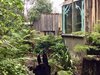
This is a side view of the old Siamang exhibit. To the rear of the exhibit (to the left in this photo) is relatively dense bush that would be a significant undertaking to clear and level out (digging out roots of trees etc). The majority of their animals are incinerated as per containment protocols, but I know an exception was made for Kashin, who was buried on a hill overlooking the zoo. I assumed was the hill viewable from the New Zealand precinct (if you stand near the High Country Aviary).

upload_2022-10-2_16-21-41.jpeg
 

Attachments

  • upload_2022-10-2_16-21-41.jpeg
    upload_2022-10-2_16-21-41.jpeg
    287.6 KB · Views: 30
Regarding Sunbears. Again a species chosen for the region which seriously lacked real commitment. I struggle to understand as to why a species is chosen above all others and them support falls away?. Surely there must be some long term planning/committment as to species direction within the regions zoos?. Where now?. Has there been any plans to move to another species of bear yet or at all?.

Malayan sun bears:

Malayan sun bears are an interesting case. They appeared the ideal species - endlessly charismatic, the smallest of the bear species and the perfect addition to any South East Asian precinct.

All bear species (especially Polar bears) were a challenge to breed throughout the 20th century and so the lack of success experienced in breeding sun bears was overlooked in zoos that housed them in the 50’s, 60’s etc. At Wellington Zoo, one was put in a pit with larger bear species that killed it!

Since then husbandry methods have been greatly refined and many species breed readily in captivity, but sun bears remain a challenge. There’s many limiting factors - one of many we’ve observed in the region being the provision of mother raised, well socialised bears. The majority of our founders have been rescued bears, with a whole host of behavioural issues. This has compounded the challenges in breeding them and has not been helped by the shortage of male bears - both within our region and in Europe.

As to the future, no plans have publicly been announced. Many zoos aren’t looking beyond the decade they’re confident they’ll have their middle aged bears for; but a phase out is inevitable. Sloth bears are the logical alternative, but again this is speculation on our part - not information publicly announced by any zoo.
 
Taronga seems to be reasonably committed to Fishing cats; it's a shame that the current pair are incompatible. It will be interesting to see if they make any moves, or simply keep the current pair, either as display animals or hoping that something will change for them breeding-wise. The exhibit could also suit a sole clouded leopard, potentially, although it would be more suited to the smaller cats.

Neither Taronga or Hamilton has had a lot of luck with this species. As with most small cats, off display exhibits are of huge assistance to breeding efforts, so if they’re serious about breeding, a dedicated off display area and multiple cats (to allow incompatible pairs to be remixed) are what’s needed.

I believe Taronga would consider Clouded leopards in the future. They’d certainly be more popular on Fishing cats and would be a good fit for their collection.
Regarding sun bears, when did Otay at National Zoo pass away? If that isn't a typo, I'm sorry to hear that news. Perth Zoo's masterplan contains exhibit space for sun bear, so I'm hopeful that they would continue with the species. It seems like imports of rescued bears have dried up as well as breeding, possibly because of the difficulties of breeding rescue bears, or a preference to now keep rescued bears in-situ rather than exporting them to ex-situ institutions.
Otay is alive and well, that was a typo. Good spotting! Lucky her inclusion didn’t take us over the required limit of 10 or the mistake would have been much worse.

Perth’s exhibit will see them rotate with Sumatran tigers, which will be interesting. I’m unsure how successful this will be given the male bear can’t be transferred to another zoo due to her lack of confidence. I’m not sure this will improve with the scent of a tiger in his exhibit space.
From my perspective, Polar bear (for welfare reasons, given they are an Arctic species) and Giant panda (due to limited availability in captivity outside of China) will never be widespread within the region. I gather that Sea World would continue with their Polars unless it becomes practicable to do so. Personally, I'm ambivalent to whether Adelaide keeps their pandas, they seem committed to them, so it might depend on what can be organised.

Polar bears attract a high level of interest from animal rights groups, third to cetaceans (first) and elephants (second) respectively. Throw in their lack of suitability to our climate and the expenses around countering that and there’s a decent argument for not exhibiting them in our zoos. They’re not being bred in large numbers, so sourcing new specimens will become increasingly difficult.

With all this in mind, it’s a sad reality they’re now a species of the past in our region’s zoos.
 
Mandrill would be such an asset to Auckland Zoo. There’s plenty of space to accomodate them and gorillas on the site of the existing elephant exhibit - which takes up a significant footprint beyond what you see in the immediate forefront of the exhibit, where elephants are enticed to stay via browse and enrichment items. This area has previously been used to exercise the Cheetah due to it being one of the largest open spaces in the zoo.

This is a side view of the old Siamang exhibit. To the rear of the exhibit (to the left in this photo) is relatively dense bush that would be a significant undertaking to clear and level out (digging out roots of trees etc). The majority of their animals are incinerated as per containment protocols, but I know an exception was made for Kashin, who was buried on a hill overlooking the zoo. I assumed was the hill viewable from the New Zealand precinct (if you stand near the High Country Aviary).

View attachment 578408

I believe if they wanted to hold Gorillas; using the entirety of the elephant enclosure may be best, especially if they wish to hold a breeding group. It would be superb if they could manage to create a facility with possibly multiple exhibits ect.

That photo of the former Saimang exhibit looks amazing for Mandrills. Of course, additional floor space would be needed, but that could be achieved.

I believe a lot of Auckland's past animals were buried up on that hill where you mention Kashin was buried. This was back in the 90's/00's of course. The trail running from the left side of the Rainforest precinct wides up and around the back towards the NZ area.
 
Malayan sun bears:

Malayan sun bears are an interesting case. They appeared the ideal species - endlessly charismatic, the smallest of the bear species and the perfect addition to any South East Asian precinct.

All bear species (especially Polar bears) were a challenge to breed throughout the 20th century and so the lack of success experienced in breeding sun bears was overlooked in zoos that housed them in the 50’s, 60’s etc. At Wellington Zoo, one was put in a pit with larger bear species that killed it!

Since then husbandry methods have been greatly refined and many species breed readily in captivity, but sun bears remain a challenge. There’s many limiting factors - one of many we’ve observed in the region being the provision of mother raised, well socialised bears. The majority of our founders have been rescued bears, with a whole host of behavioural issues. This has compounded the challenges in breeding them and has not been helped by the shortage of male bears - both within our region and in Europe.

As to the future, no plans have publicly been announced. Many zoos aren’t looking beyond the decade they’re confident they’ll have their middle aged bears for; but a phase out is inevitable. Sloth bears are the logical alternative, but again this is speculation on our part - not information publicly announced by any zoo.

I think the simple fact that Melbourne initially planned to hold this species five years ago, but pulled out just demonstrates where the region is at with this species. With overseas populations dwindling too, it seems a phase out is inevitable for this species.
 
I believe if they wanted to hold Gorillas; using the entirety of the elephant enclosure may be best, especially if they wish to hold a breeding group. It would be superb if they could manage to create a facility with possibly multiple exhibits ect.

That photo of the former Saimang exhibit looks amazing for Mandrills. Of course, additional floor space would be needed, but that could be achieved.

I believe a lot of Auckland's past animals were buried up on that hill where you mention Kashin was buried. This was back in the 90's/00's of course. The trail running from the left side of the Rainforest precinct wides up and around the back towards the NZ area.

I’m sure Auckland’s preference would be to hold a breeding troop of Western lowland gorilla and they have the resources to do so. Orana have two exhibits (and no intention to import), so long term they could receive adolescent males from Auckland’s breeding troop to form a second bachelor troop. Fataki (2003) and Fuzu (2007) would be middle aged by then.

This means Auckland doesn’t have to dedicate additional space towards building a bachelor exhibit like Taronga are proposing; and could therefore accomodate Mandrills in an adjacent exhibit. Auckland Zoo are proud of their geographic flow, so would be unlikely to disrupt this by housing Mandrills in what is now the South America trail. The spider monkey exhibit has aged extremely well and they’d be unlikely to shift this species etc. from their current location.

The zoo’s largest animals that died in the 1990’s would have been Polar bears, lions, hippopotamus and giraffes.
 
I’m sure Auckland’s preference would be to hold a breeding troop of Western lowland gorilla and they have the resources to do so. Orana have two exhibits (and no intention to import), so long term they could receive adolescent males from Auckland’s breeding troop to form a second bachelor troop. Fataki (2003) and Fuzu (2007) would be middle aged by then.

This means Auckland doesn’t have to dedicate additional space towards building a bachelor exhibit like Taronga are proposing; and could therefore accomodate Mandrills in an adjacent exhibit. Auckland Zoo are proud of their geographic flow, so would be unlikely to disrupt this by housing Mandrills in what is now the South America trail. The spider monkey exhibit has aged extremely well and they’d be unlikely to shift this species etc. from their current location.

The zoo’s largest animals that died in the 1990’s would have been Polar bears, lions, hippopotamus and giraffes.

A bachelor facility is much more desirable for the region anyway. It's just a rather good thing that Melbourne and Mogo haven't experienced success recently, otherwise a bachelor facility would be in high demand now. If Adelaide join the program too, it'd be even more of a reason to create a third dedicated regional bachelor facility; as the region would then have five breeding facilities (counting Orana too).

I was thinking a species like Colobus may be well suited to the Spider Monkey island, although this would unfortunately leave both the Spider Monkeys and Squirrel Monkeys without a home. The area where the former Lemur enclosure was could potentially be suiter for the aforementioned species. In saying that, though, I do agree with you as the South American trail now has a nice flow to it; as does the whole zoo in general (Africa - NZ - Asia - South America- Australia).
 
A bachelor facility is much more desirable for the region anyway. It's just a rather good thing that Melbourne and Mogo haven't experienced success recently, otherwise a bachelor facility would be in high demand now. If Adelaide join the program too, it'd be even more of a reason to create a third dedicated regional bachelor facility; as the region would then have five breeding facilities (counting Orana too).

I was thinking a species like Colobus may be well suited to the Spider Monkey island, although this would unfortunately leave both the Spider Monkeys and Squirrel Monkeys without a home. The area where the former Lemur enclosure was could potentially be suiter for the aforementioned species. In saying that, though, I do agree with you as the South American trail now has a nice flow to it; as does the whole zoo in general (Africa - NZ - Asia - South America- Australia).

I anticipate Orana Wildlife Park will remain a bachelor facility for gorillas long term. They’ve cancelled their plans to import a breeding troop and also have no plans to import the orangutans that I’m aware of. It’s a shame because the 1991 primate planning meeting proposed managing Bornean orangutans in New Zealand; Sumatran orangutans in Australia.

It would have been great to see Orana Willdife Park import Bornean orangutans and support Auckland Zoo. Their only support to date has been from Taronga’s brief affair with Borneans, which was abandoned after the young male died in 1998.

The completion of the South East Asia precinct ties up many of Auckland Zoo’s loose ends - merging the tiger and orangutan exhibits into one trail; and demolishing the meerkat exhibits, with replacements built within the African precinct.
 
I anticipate Orana Wildlife Park will remain a bachelor facility for gorillas long term. They’ve cancelled their plans to import a breeding troop and also have no plans to import the orangutans that I’m aware of. It’s a shame because the 1991 primate planning meeting proposed managing Bornean orangutans in New Zealand; Sumatran orangutans in Australia.

It would have been great to see Orana Willdife Park import Bornean orangutans and support Auckland Zoo. Their only support to date has been from Taronga’s brief affair with Borneans, which was abandoned after the young male died in 1998.

The completion of the South East Asia precinct ties up many of Auckland Zoo’s loose ends - merging the tiger and orangutan exhibits into one trail; and demolishing the meerkat exhibits, with replacements built within the African precinct.

A second exhibit will also give them further options with managing a bachelor troop. They could hold two; or even mix up the groups if desired. Zoos in the US did this; albeit with younger males though.

It would've been great for NZ to manage Borneans, but i guess Auckland just didn't have any support with Borneans within NZ, let alone Australia. Wellington don't really have the space for them, and Hamilton isn't the ideal zoo for Orangs.
 
A second exhibit will also give them further options with managing a bachelor troop. They could hold two; or even mix up the groups if desired. Zoos in the US did this; albeit with younger males though.

It would've been great for NZ to manage Borneans, but i guess Auckland just didn't have any support with Borneans within NZ, let alone Australia. Wellington don't really have the space for them, and Hamilton isn't the ideal zoo for Orangs.

The regional orangutan population has declined across all zoos. It’s long been acknowledged that orangutans don’t live in colonies and are happier either solitary or in male-female pairs. Ironically, this is a reversal of the trend throughout the early to mid 20th century of keeping troop dwelling gorillas and chimpanzees in monogamous pairs!

As a consequence, it’s not hard to imagine the region’s zoos will continue to keep small numbers of orangutans. Melbourne will import a female Sumatran orangutan to pair with Malu; as will Adelaide to pair with Kluet.

Auckland Zoo will almost certainly remain the only regional holder for Bornean orangutans, probably importing a female to pair with Bahmi a decade from now (assuming Melur never produces a daughter). There’s a slim chance they might breed Charlie and Melur again five years from now (if Charlie is still alive) - though probably not since their current infant is a male; a second male infant would mean one of them would have to be exported.
 
What species are currently being phased out, replaced or brought into Aussie zoos? Here's a few that came to mind.
Collared Peccary
Dusky Leaf-Monkey: phased out over Francois' Leaf-Monkey
Malayan Tapir: phased out over Brazilian Tapir

South American Coatimundi
Sun Bear: replaced with Sloth Bear?
I know there will be a few others.
 
What species are currently being phased out, replaced or brought into Aussie zoos? Here's a few that came to mind.
Collared Peccary
Dusky Leaf-Monkey: phased out over Francois' Leaf-Monkey
Malayan Tapir: phased out over Brazilian Tapir

South American Coatimundi
Sun Bear: replaced with Sloth Bear?
I know there will be a few others.

Malayan sun bears versus Sloth bear:

Though it’s been confirmed Malayan sun bear are on the phase out list, no replacement species has been confirmed. Sloth bear have been widely speculated to be the replacement and based on the number of holdings in Europe and North America, I’d say that’s a likely assumption.

Fishing cat versus Clouded leopard:

I wouldn’t be surprised to see the region give up on Fishing cat. They’re poorly suited to public display and haven’t been bred in the region for two decades. There’s been a surge of interest in Clouded leopard, so potentially that could be the new species of interest.

Bovid IRA:

I’m hopeful the completion of the Bovid IRA will mean new species for a few of the Australian zoos. On the live import list (easier to import) and not currently held in Australian zoos are the following:

Nilgai, Boselaphus tragocamelus
Red Lechwe, Kobus leche
Dama Gazelle, Nanger dama ruficollis
Grant's Gazelle, Nanger granti
Gemsbok, Oryx gazella
Sable Antelope, Hippotragus niger
Sitatunga, Tragelaphus spekii
Greater Kudu, Tragelaphus strepsiceros
 
Back
Top