scallywag2024
Well-Known Member
Are the mandrill still at Adelaide? Can anyone confirm?

Yes they still have a trio of which are the only ones in the region;Are the mandrill still at Adelaide? Can anyone confirm?

Are the mandrill still at Adelaide? Can anyone confirm?
Yes they still have a trio of which are the only ones in the region;
1.0 Tabah (05/04/2005) Yonaton x Timbiri
0.1 Niari (06/05/1996) Unknown x Unknown
1.0 Jumoke (09/10/2017) Tabah x Niari
Niari the Mandrill turns 29:
Niari celebrated her 29th birthday last week. To my knowledge, she’s the oldest Mandill on record for the region:
Log in or sign up to view
Yes they still have a trio of which are the only ones in the region;
1.0 Tabah (05/04/2005) Yonaton x Timbiri
0.1 Niari (06/05/1996) Unknown x Unknown
1.0 Jumoke (09/10/2017) Tabah x Niari
It'll be intriguing to see how the males adapt. Bachelor groupings usually don't work too well, with the males fighting for dominance, but it seems that thus far the males have adjusted without much issue. Tabah is much older, so at the point where he'd be more very respectful of his son, and so this grouping could work well.Niari (1996-2025)
Some sad news from Adelaide Zoo.
The regional population now numbers 2.0:
1.0 Tabah (05/04/2005) Yonaton x Timbiri
1.0 Jumoke (09/10/2017) Tabah x Niari
From socials:
This week, we said goodbye to Niari the Mandrill, a much-loved member of the Adelaide Zoo family and one of the oldest female Mandrills in human care.
At 29, Niari had reached the end of her natural life. Our veterinary team made the compassionate decision to ease her suffering after diagnosing irreversible age-related spinal degeneration.
Born and raised at Adelaide Zoo, Niari was more than just a beautiful face. She was a gentle matriarch, a successful mother, and a powerful ambassador for her vulnerable species.
With her passing, Tabah (20) and Jumoke (8), our two remaining adult males, are adjusting to life as a bachelor pair. Mandrills are naturally social, and while shifts in group structure can be tricky, the boys are doing well. Jumoke has stepped into a more dominant role and Tabah is respecting that space, which is a positive sign.
It'll be intriguing to see how the males adapt. Bachelor groupings usually don't work too well, with the males fighting for dominance, but it seems that thus far the males have adjusted without much issue. Tabah is much older, so at the point where he'd be more very respectful of his son, and so this grouping could work well.
Overall though it's sad news that the region is down to just two males - it'll be interesting to see hat they elect to do with Jumoke once Tabah eventually passes.

I anticipate the bachelor arrangement will work well for them due to the age difference. Tabah apparently seems happy to relinquish the dominant position to his son (not unlike the ageing gorilla Motaba at Werribee), so I don’t foresee any issues there.
Long term, there’s really only two options:
1. Bring in more females. We can discount this due to the omission of Mandrill from masterplan.
2. Export the younger male (Jumoke) to a zoo in North America or Europe. If a decline is noted in his sire, it may be possible to align his export with the inevitable euthanasia of Tabah; but a sudden decline that necessitates euthanasia would leave the younger male in isolation until export can be arranged (which wouldn’t be ideal).
One thing’s for certain, we should all enjoy these two Mandrill while we can!
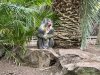
Tabah (November 2024):
View attachment 834574
A species we rather take for granted in the UK, though there are actually far fewer collections with them now than previously, they were more commonly kept a few decades ago. Amazing to think they are effectively defunct in Australia though with less traditional zoos its perhaps not surprising.
Yet another species lost to the zoos in this country from a lack of interest that appeared to have thrivedIt’s been disappointing to watch their decline in Australasia. Adelaide and Melbourne formerly held large breeding troops (albeit Melbourne’s being discovered to have Drill DNA). These dwindled to small troops and along the way, we’ve lost holders such as Taronga, Perth and Tasmania. In the 1990’s, there was even a plan to establish a colony at Auckland Zoo.
It’s interesting as looking at facilities overseas (especially in North America), it’s not uncommon to see small troops consisting of parents and offspring. It’s surprising considering the social structure of the species is that of a large troop, with multiple matrilines. To state the obvious, having large, regularly breeding troops enables a greater supply of young animals to be exchanged between the zoos.
. It’s surprising considering the social structure of the species is that of a large troop, with multiple matrilines. To state the obvious, having large, regularly breeding troops enables a greater supply of young animals to be exchanged between the zoos.
Yes, in the wild they call them 'hordes' apparently. There can be dozens if not hundreds in one horde! There were a couple of particularly successful groups in the UK, at both Colchester and Southport zoos( Southport now is defunct.) Southport's grew from just a single initial pair I believe, that were obtained from a dealer. Colchester's stemmed from a trio that was formed from three different existing genetic lines (London, Paignton & Southport). The latter grew to around 25 in number which was quite an impressive spectacle. They have changed breeding males on more than one occassion but also found it necessary to castrate all the older males apart from the one breeder. The castrated ones lost their chunky weight and intense colour and looked rather odd. I think the group is much reduced in number nowadays though and breeding long ceased. Chester has probably the largest group in the UK now.
I remember seeing the ones in Melbourne back in the 80's/90's. Didn't know there had been Mandrill/Drill hybridisation in their ancestry. I did see a whole cage full of hybrids in Europe once -though I can't remember where.
I remember seeing the Mandrills at Colchester zoo back in 1970 it appears they have kept them for the long term!Yes, in the wild they call them 'hordes' apparently. There can be dozens if not hundreds in one horde! There were a couple of particularly successful groups in the UK, at both Colchester and Southport zoos( Southport now is defunct.) Southport's grew from just a single initial pair I believe, that were obtained from a dealer. Colchester's stemmed from a trio that was formed from three different existing genetic lines (London, Paignton & Southport). The latter grew to around 25 in number which was quite an impressive spectacle. They have changed breeding males on more than one occassion but also found it necessary to castrate all the older males apart from the one breeder. The castrated ones lost their chunky weight and intense colour and looked rather odd. I think the group is much reduced in number nowadays though and breeding long ceased. Chester has probably the largest group in the UK now.
I remember seeing the ones in Melbourne back in the 80's/90's. Didn't know there had been Mandrill/Drill hybridisation in their ancestry. I did see a whole cage full of hybrids in Europe once -though I can't remember where.
Yes, I think the current group is descended from a fresh trio they started with a bit later. Not 100% certain if there was a gap or not.I remember seeing the Mandrills at Colchester zoo back in 1970 it appears they have kept them for the long term!
Do you remember at that time they held the largest captive lion (Simba) in the world it was absolutely huge? (not to go off topic)Yes, I think the current group is descended from a fresh trio they started with a bit later. Not 100% certain if there was a gap or not.

It wasn’t actually theirs, but belonged to ‘Nyoka’ (Adrian Darley) who moved between zoos with the lion and one or two other animals. I think he left Isle of Wight Zoo in a hurry after the lion ate the owner’s dogDo you remember at that time they held the largest captive lion (Simba) in the world it was absolutely huge? (not to go off topic)
I remember the owner entering the enclosure with him and pouring a full bottle of milk into the Lions mouthIt wasn’t actually theirs, but belonged to ‘Nyoka’ (Adrian Darley) who moved between zoos with the lion and one or two other animals. I think he left Isle of Wight Zoo in a hurry after the lion ate the owner’s dog
History of Melbourne Zoo’s troop:
A research paper published in 1993 detailed Melbourne’s troop, which at the time consisted of eight animals. All except the breeding male (a purebred Mandrill from Taronga) were Mandrill-Drill hybrids. It was suspected that the founding female of that troop was 50% Drill (with her dam suspected to have been a purebred Drill). It was noted the females lacked the colouration one would expect to see in purebred female Mandrills.
Melbourne founded a new troop with a purebred male Mandrill named Yonaton (1994-2017), who was imported from the Jerusalem Biblical Zoo; and two purebred female Mandrills (mother and daughter) named Louise (1986-2017) and Timbiri (1994-2017), who were transferred in from Adelaide Zoo. They produced at least three young - Lara (born 2002 to Louise); Tabah (born 2005 to Timbiri); and Leroy (born 2007 to Louise).
I don’t know how the two troops outlined above overlapped (if at all). A likely assumption is the two purebred females from Adelaide Zoo joined Melbourne’s original troop in 1996 (but not breeding); with Yonaton joining this troop four years later in 2000 (once the last male had died/transferred out).
I found a Zoolex article which seems to come from the beginning of 2002 and states that Melbourne had five Mandrill at the time. Yonaton, Louise and Timbiri are obviously three of them. I'd assume Lara hadn't been born yet, so that would essentially mean that there were indeed some of the hybrids previously born at Melbourne (in the 80's?). At any rate, Melbourne were down to just the purebreds by 2010.Further information on Melbourne’s troop:
In addition to gaining full access to the research article from 1993, I spoke to an acquaintance of mine who was a regular visitor to Melbourne Zoo. They recalled the zoo having a troop of ‘Mandrill’ that were led by a male named ‘Max’; and then a male named ‘Barron’. They said Barron was the troop leader before Yonaton and came from Taronga Zoo.
According to the research paper, Melbourne’s ‘Mandrill’ population in 1993 descended from three founders. A 1.1 pair that were imported from Berlin Zoo; and 1.0 that was later transferred in from Taronga Zoo. None of these three animals were alive when the study in the research paper was conducted (1992/1993). It was determined the founder female was a Mandrill-Drill hybrid and therefore, so too were all eight living members of Melbourne’s troop.
The eight members weren’t named, but were detailed in the study as follows:
MZ1 - daughter of the Berlin pair.
MZ2 - offspring of MZ1 and male from Taronga
MZ3 - offspring of MZ1 and male from Taronga
MZ4 - offspring of MZ1 and male from Taronga
MZ5 - offspring of MZ1 and male from Taronga
MZ6 - offspring of MZ1 and male from Taronga
MZ7 - offspring of MZ6 and male from Taronga
MZ8 - offspring of MZ2 and male from Taronga
It therefore appears Max was the founder male from Berlin; and Barron was the male transferred in from Taronga.
We know MZ1, MZ2 and MZ6 were female; and while the gender of the other five Mandrill isn’t explicitly stated, this line in the research paper implies all eight were female:
The original founding female and the members of the current population all lack the red facial coloration that usually distinguishes female mandrills from their closest relatives, the black-faced drills.
If so, Melbourne Zoo held an all female population of Mandrill for most (if not all) of the 1990’s until the import of Yonaton in 2000. It would be interesting to know how many (if any) of the hybrid Mandrill were alive when he arrived and what overlap there was between the troops. It wouldn’t surprise me if purebred females Louise and Timbiri (arrived 1996) were housed with the hybrid troop; with Yonaton joining the remnants four years later. It appears breeding from the purebred troop began with the birth of Lana in 2002 (and followed by the birth of Tabah in 2005), possibly indicating a delay due to capacity reasons.
Research article (1993):
https://onlinelibrary.wiley.com/doi/abs/10.1002/zoo.1430120406