Australasian Orangutan Population

Assuming that PZ's management approach to orangs hasn't changed, then the idea is to breed just enough for the colony to tick over. For many years the complex was limited to five enclosures - one for the male and four females plus young. I know there are more enclosures now, but not certain on numbers. They time the breedings both on age of individual and also to allow overlap of rearing mums, so that inexperienced individuals can watch what's going on (over the fence). Sure the zoo could pump out more youngsters, but they take up to 8 or so years learning from mum and then where would they go? It's not as if there are zoos in the region screaming out for them. Realistically there needs to be more regional zoos committing to holding orangs due to the complex social requirements (which don't affect chimp and gorilla husbandry). But they are expensive exhibits.
Personally I thing Auckland committing to Borneans was a huge mistake. Just not enough zoos in Australasia to manage two types of orang, and the public cannot tell the difference anyway.

That seems a likely way to progress - based on their facilities, the demands of the regional population and their history of managing the colony.

There will presumably be more space given recent two deaths and one export have occurred in recent years; combined with the upgrade, but they will surely be glad to have the extra space as a contingency for having to hold infants bred on site into adolescence - as they’re currently doing with the youngest male, Sungai, now 11 years old.

When I contacted the zoo they advised Pulang (1993) was next on their list to breed and combined with her age and your note that they like experienced females to demonstrate to inexperienced females, I’d assume Sekara (1990) will also be a priority - with either Teliti (2009) or Lestari (2012) to follow on from them.
 
A side affect of PZ's success with orangs is that they end up swamping the region's gene pool, which would be made even worse if individuals were exported to other zoos. In an ideal world all of the region's zoos would breed unrelated orangs at the same successful rate, but given how slow they breed and how long they live, then what do you you with all the grown-up offspring? Releasing them into the wild is a slow and expensive process (not without it's own issues).
Unlike the other great apes, they are a difficult species to manage on both a single institutional level plus a regional one.
 
A side affect of PZ's success with orangs is that they end up swamping the region's gene pool, which would be made even worse if individuals were exported to other zoos. In an ideal world all of the region's zoos would breed unrelated orangs at the same successful rate, but given how slow they breed and how long they live, then what do you you with all the grown-up offspring? Releasing them into the wild is a slow and expensive process (not without it's own issues).
Unlike the other great apes, they are a difficult species to manage on both a single institutional level plus a regional one.

Even today we’re dealing with the fall out of the production of hybrids in the region - with 1.3 hybrid orangutans remaining aged between 32-44 years of age. I understand the criticism of zoos for exporting so many of their hybrids to Hyderabad and other Indian zoos (where the majority died within a few years) - but it was a decisive move that freed up a lot of space. Like you say, they’re a long lived species.

Releasing zoo bred orangutans back into the wild is great for public image, but conversely I’ve heard criticism that it achieves nothing from a conservation perspective as they’re merely taking the place of a confiscated/orphaned orangutan at the release sanctuary.
 
Even today we’re dealing with the fall out of the production of hybrids in the region - with 1.3 hybrid orangutans remaining aged between 32-44 years of age. I understand the criticism of zoos for exporting so many of their hybrids to Hyderabad and other Indian zoos (where the majority died within a few years) - but it was a decisive move that freed up a lot of space. Like you say, they’re a long lived species.

Releasing zoo bred orangutans back into the wild is great for public image, but conversely I’ve heard criticism that it achieves nothing from a conservation perspective as they’re merely taking the place of a confiscated/orphaned orangutan at the release sanctuary.
Surely the current holders would have a common plan to work together to have a management plan and a minimum number, Also perhaps encourage some new holders within the region?. Its all appears a little bit hit and miss!
 
Surely the current holders would have a common plan to work together to have a management plan and a minimum number, Also perhaps encourage some new holders within the region?. Its all appears a little bit hit and miss!

It’d be interesting to know the regional plans. A number of the zoos seem committed to maintaining a 1.1 breeding pair - partly influenced by the acknowledgment they aren’t a colony dwelling species.

@tetrapod raised an interesting point about the genetic over representation of the Atjeh/Puan line which means the focus may be on importing unrelated orangutans as Adelaide and Melbourne plan to do; while Perth Zoo proceed with minimal breeding - with the acceptance offspring bred on site, may have to be accommodated on site into adulthood.
 
It’d be interesting to know the regional plans. A number of the zoos seem committed to maintaining a 1.1 breeding pair - partly influenced by the acknowledgment they aren’t a colony dwelling species.

@tetrapod raised an interesting point about the genetic over representation of the Atjeh/Puan line which means the focus may be on importing unrelated orangutans as Adelaide and Melbourne plan to do; while Perth Zoo proceed with minimal breeding - with the acceptance offspring bred on site, may have to be accommodated on site into adulthood.
That was the general plan, then Adelaide went and imported a male related to PZ's line, and now I understand that imported males were related. Can't they just bring in completely fresh bloodlines?
You are correct that zoos do seem happy to sit on a pair, knowing that even if they don't breed, with good husbandry, they will last decades as a display. Really to do orangs properly you need multiple individuals in an extended 'family' approach, but then come back to the cost of infrastructure in providing multiple enclosures. Small private zoos aren't going to be taking orangs in a hurry...
 
That was the general plan, then Adelaide went and imported a male related to PZ's line, and now I understand that imported males were related. Can't they just bring in completely fresh bloodlines?
You are correct that zoos do seem happy to sit on a pair, knowing that even if they don't breed, with good husbandry, they will last decades as a display. Really to do orangs properly you need multiple individuals in an extended 'family' approach, but then come back to the cost of infrastructure in providing multiple enclosures. Small private zoos aren't going to be taking orangs in a hurry...

It was indeed strange that someone out there thought the Adelaide Zoo should import a male from Singapore Zoo in 2000 (Pusung) that’d been previously sent there from the Perth colony. I see from Adelaide’s records he replaced his full brother (Puntjak) who was paired with a succession of females unrelated to the Perth line - Chantek, Susi and Karta (producing two infants with Chantek; and two infants with Karta). In retrospect however, Pusung’s import made little difference given Karta’s unfortunate history.

Adelaide’s current male (Kluet) is unrelated to Perth’s colony, but his relation to Maimunah, who is also a founder greatly limits the potential for pairings within the region. It appears Adelaide and Melbourne will now import unrelated females to breed with these two related males.
 
Auckland Zoo - Early Plans for a Second Bornean Orangutan Exhibit

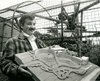
Auckland Zoo posted this photo today on their socials from 1985, which shows the zoo’s curator (Dr David Folwell) holding an early model of the zoo’s orangutan exhibit, which opened in January 1987.

This exhibit held the species for 30 years until November 2017, when it was demolished ahead of the construction of the current exhibit (opened March 2020).

Prior to this, the orangutans were housed in the small, relatively barren cage seen in the background of this photo.

upload_2022-11-14_14-47-30.jpeg
Photo source: Auckland Zoo’s socials

I thought people would be interested in seeing this design as while similar in appearance to the finished result, there was one important difference - it featured a dividing wall and second night house/indoor room.

Auckland Zoo founded their colony with 2.2 Bornean orangutans:

0.1 Dara (1977) - Imported from Frankfurt Zoo 1983
1.0 Horst (1978) - Imported from Frankfurt Zoo 1983
0.1 Indra (1980) - Imported from Rotterdam Zoo 1983
1.0 Charlie (1981) - imported from Singapore Zoo 1984

On hindsight, it always seemed a strange decision to me to import two males as (predictably) conflict arose and by the end of the decade they were having to be housed separately - rotating access to the female/offspring group and outdoor exhibit.

Seeing the original plans for a dividing wall (creating two outdoor exhibits) and two night houses explains this decision as it would have allowed the two males to be held separately. It also would have made pairing the orangutans for breeding easier and could have avoided Dara’s first infant being sired by Horst (her half brother).

The estimated cost of this complex was $1 million, so the logical assumption is funding dictated costs needing to be cut - namely the removal of the second night house/indoor room and dividing wall.

In any event, the zoo got it’s second orangutan exhibit (the old chimpanzee exhibit) in 2005 - the year the zoo’s colony reached nine individuals with the birth of Madju.
 

Attachments

  • upload_2022-11-14_14-47-30.jpeg
    upload_2022-11-14_14-47-30.jpeg
    84.8 KB · Views: 77
Auckland Zoo - Early Plans for a Second Bornean Orangutan Exhibit

Auckland Zoo posted this photo today on their socials from 1985, which shows the zoo’s curator (Dr David Folwell) holding an early model of the zoo’s orangutan exhibit, which opened in January 1987.

This exhibit held the species for 30 years until November 2017, when it was demolished ahead of the construction of the current exhibit (opened March 2020).

Prior to this, the orangutans were housed in the small, relatively barren cage seen in the background of this photo.

View attachment 587985
Photo source: Auckland Zoo’s socials

I thought people would be interested in seeing this design as while similar in appearance to the finished result, there was one important difference - it featured a dividing wall and second night house/indoor room.

Auckland Zoo founded their colony with 2.2 Bornean orangutans:

0.1 Dara (1977) - Imported from Frankfurt Zoo 1983
1.0 Horst (1978) - Imported from Frankfurt Zoo 1983
0.1 Indra (1980) - Imported from Rotterdam Zoo 1983
1.0 Charlie (1981) - imported from Singapore Zoo 1984

On hindsight, it always seemed a strange decision to me to import two males as (predictably) conflict arose and by the end of the decade they were having to be housed separately - rotating access to the female/offspring group and outdoor exhibit.

Seeing the original plans for a dividing wall (creating two outdoor exhibits) and two night houses explains this decision as it would have allowed the two males to be held separately. It also would have made pairing the orangutans for breeding easier and could have avoided Dara’s first infant being sired by Horst (her half brother).

The estimated cost of this complex was $1 million, so the logical assumption is funding dictated costs needing to be cut - namely the removal of the second night house/indoor room and dividing wall.

In any event, the zoo got it’s second orangutan exhibit (the old chimpanzee exhibit) in 2005 - the year the zoo’s colony reached nine individuals with the birth of Madju.
Quite interesting. Its highly likely that Auckland Zoo have the best Orang exhibit within the region by far. I would of hoped for another 2 to 3 holders for the region such as Australia Zoo who had shown a big interest in them a while back also perhaps the Rockhampton zoo who show a big interest in primates!
 
Quite interesting. Its highly likely that Auckland Zoo have the best Orang exhibit within the region by far. I would of hoped for another 2 to 3 holders for the region such as Australia Zoo who had shown a big interest in them a while back also perhaps the Rockhampton zoo who show a big interest in primates!

Factor in that Auckland Zoo’s orangutan exhibit includes a 2km aerial pathway (passing over a lake) and it’s the best orangutan exhibit in the region by a country mile.

I’ve seen Perth Zoo’s renovation plans and they’re impressive, but nothing on the scale of Auckland Zoo. It’ll be interesting to see what Melbourne Zoo produce over the coming years.

It would have been helpful if Australia Zoo had come onboard as planned in 2006 as Auckland Zoo was the only Bornean orangutan holder in the region at that point. They had a large surplus which could have been sent to Australia Zoo and allowed Auckland Zoo to continue breeding.
 
Orangutan Population - 2022/2023 Summary

2022 Summary:

The highlight of the year was the birth of the 1.0 Bornean orangutan at Auckland Zoo in March. Bahmi was the first Bornean orangutan born at Auckland Zoo since 2005 and was the first surviving orangutan infant born in the region since 2012.

Auckland Zoo was also sad to announce the only death in the region this year, with the passing of their hybrid female. Wanita was born at Taronga Zoo in 1979 and had lived at Auckland Zoo since 2001. She had a close relationship with Melur’s previous infant, Madju; and it’s not hard to imagine she would have enjoyed interacting with Bahmi - who’s name was a tribute to Melur.

There were no population changes across the other five holders.

2023 Summary:

There will be no births in 2023. Adelaide, Sydney, Melbourne and Mogo have none reproductive pairings/trios; Auckland’s pair have an infant; and Perth are on a breeding hiatus pending extensive renovations to their complex.

Long term, Melbourne and Adelaide plan to import females - but this won’t be until 2023.

————————————

Please note: This summary will be followed next month by a full population list update.
 
Australasian Orangutan Population 2023

Auckland Zoo:


Bornean orangutan:

1.0 Charlie (21/03/1981) Zabu x Girlie
0.1 Melur (11/06/1988) Laki x Yasmin; Imported 1995
1.0 Bahmi (20/03/2022) Charlie x Melur

Adelaide Zoo:

Sumatran orangutan:

1.0 Kluet (18/07/1995) Gambar x Gina; Imported 2003
0.1 Puspa (01/01/1975) Atjeh x Puan

Melbourne Zoo:

Sumatran orangutan:

1.0 Malu (29/07/2003) Santan x Maimunah

Hybrid orangutan:

0.1 Kiani (24/06/1978) Bobby x Olga
0.1 Gabby (01/01/1990) Santan x Kiani

Mogo Zoo:


Hybrid orangutan:

1.0 Jantan (11/07/1987) Perang x Judy II
0.1 Willow (09/05/1985) Perang x Wendy

Perth Zoo:

Sumatran orangutan:

1.0 Dinar (06/03/1987) Dinding x Abigail; Imported 2004
0.1 Puteri (12/06/1970) Atjeh x Puan
0.1 Utama (19/06/1979) Atjeh x Puteri
0.1 Sekara (20/07/1990) Hsing Hsing x Puspa
0.1 Pulang (21/12/1993) Atjeh x Puan
0.1 Teliti (20/10/2009) Hsing Hsing x Puteri
1.0 Sungai (30/12/2011) Dinar x Sekara
0.1 Lestari (09/01/2012) Hsing Hsing x Pulang

Sydney Zoo:

Sumatran orangutan:

1.0 Santan (12/10/1977) Mias x Puppe; Imported 1987
0.1 Maimunah (23/05/1986) Pongo x Timor
0.1 Dewi (06/12/2010) Santan x Maimunah

Total regional population: 8.13

2.1 Bornean orangutan
5.9 Sumatran orangutan
1.3 Hybrid orangutan

Note: Year of import is year imported into the region.
 
As many of you would be aware, and is demonstrated in the current population and in historical listings, many great apes born in Australasia are named with the same first initial as their mother's name. The same is true, often, for other primate species, like baboons and mandrills, to follow the maternal lines.

This convention was used at Perth Zoo. Sumatran orangutan Puan's offspring were named with P names (and mostly Pu names), and Mawas and Binte's hybrid offspring were named with M and B names accordingly. However, when Puan's daughters started reproducing, then Perth were faced with the challenge of whether or not to continue the convention.

Puteri's first two surviving offspring, Utama and Udara, were therefore named with the second letter of their mother's name as their first initial. By the 1990s, when Puteri's sisters (save for Pulang, who herself was born to Puan in 1993) started having babies to unrelated males, it seems that, for uniformity's sake, the third letter of each mother's name was designated for each line.

So, Puteri gave birth to Temara and Teliti.

Puspa gave birth to Sekara, who in turn gave birth to Semeru and Sungai.

Punya gave birth to Negara, who gave birth to Nyaru.

Pulang gave birth to Lestari.

I gather that, were Perth to breed again, they would continue this tradition, with Teliti's offspring given T names, Sekara's S names, and Pulang and Lestari's L names.

So, if you, like me, had wondered how the consonants were selected as the initials for Puan's grandchildren and great-grandchildren, I believe we may have found the answer!
 
As many of you would be aware, and is demonstrated in the current population and in historical listings, many great apes born in Australasia are named with the same first initial as their mother's name. The same is true, often, for other primate species, like baboons and mandrills, to follow the maternal lines.

This convention was used at Perth Zoo. Sumatran orangutan Puan's offspring were named with P names (and mostly Pu names), and Mawas and Binte's hybrid offspring were named with M and B names accordingly. However, when Puan's daughters started reproducing, then Perth were faced with the challenge of whether or not to continue the convention.

Puteri's first two surviving offspring, Utama and Udara, were therefore named with the second letter of their mother's name as their first initial. By the 1990s, when Puteri's sisters (save for Pulang, who herself was born to Puan in 1993) started having babies to unrelated males, it seems that, for uniformity's sake, the third letter of each mother's name was designated for each line.

So, Puteri gave birth to Temara and Teliti.

Puspa gave birth to Sekara, who in turn gave birth to Semeru and Sungai.

Punya gave birth to Negara, who gave birth to Nyaru.

Pulang gave birth to Lestari.

I gather that, were Perth to breed again, they would continue this tradition, with Teliti's offspring given T names, Sekara's S names, and Pulang and Lestari's L names.

So, if you, like me, had wondered how the consonants were selected as the initials for Puan's grandchildren and great-grandchildren, I believe we may have found the answer!

It’s great you managed to identify that pattern in naming Puan’s Perth bred grandchildren (and great grandchildren). It’s clear considering how many descendants she produced that it’d be a struggle to give them all P names, plus this convention allowed identification of the branches of her family tree.

Until I looked back on my notes just now, I forgot that one of Binte’s daughters had time to breed before Perth ceased breeding hybrids. Bintang gave birth to Indah in 1979; so it appears like with Puteri and her daughters, Utama and Udara, they realised there weren’t unlimited B names and applied this convention.

From the records, we can see when Perth identified the hybrid issue - the last two hybrid infants were born 1979; and Binte was sent to Singapore Zoo in 1983 to breed with a purebred Bornean male.

Unlike Taronga Zoo, which founded their breeding colony with two Bornean males and two Sumatran females, Perth at least had the opportunity to streamline their colony via the Atjeh/Puan line - and ceased breeding hybrids several years before Taronga (1987) and Melbourne (1990).

Breeding records are below:

Mawas (Bornean Orangutan)

Mawas (F)
Born in Borneo 01/01/1941
Arrived at Perth Zoo 31/12/1968
Died at Perth Zoo

Mawas gave birth to two offspring at Perth Zoo:

Unnamed (F)
Stillborn at Perth Zoo 06/08/1973
Sire: Bobby

Majizat (M)
Born at Perth Zoo 26/06/1976
Sent to Peshwae Park Zoo 08/11/1985
Sire: Atjeh

Binte (Bornean Orangutan)

Binte (F)

Born in Borneo 01/01/1958
Arrived at Perth Zoo 31/12/1968
Sent to Singapore Zoo 29/06/1983
Died at Singapore Zoo 12/12/1984

Binte gave birth to five offspring at Perth Zoo:

Bintang (F)
Born at Perth Zoo 09/10/1970
Sent to Hyderabad Zoo 21/03/1986
Died at Hyderbad Zoo 30/08/1987
Sire: Atjeh

Unnamed (M)
Born at Perth Zoo 22/03/1973
Died at Perth Zoo 22/03/1973
Sire: Atjeh

Binar (F)
Born at Perth Zoo 02/05/1974
Sent to Hyderbad Zoo 21/03/1986
Died at Hyderbad Zoo 01/09/1988
Sire: Atjeh

Bini (F)
Born at Perth Zoo 09/12/1975
Sent to Peshwae Park Zoo 08/11/1985
Sent to Nandankanan Bio Park Unknown
Sire: Atjeh

Bingkis (M)
Born at Perth Zoo 09/10/1979
Sent to Kamla Nehru Zoo 29/11/1985
Died at Kamla Nehru Zoo 28/06/1988
Sire: Atjeh


Bintang gave birth to one offspring at Perth Zoo:

Indah (F)
Born at Perth Zoo 25/01/1979
Sent to Kamla Nehru Zoo 29/11/1985
Died at Kamla Nehru Zoo 17/06/1986

Puan (F)
Born in Sumatra 01/01/1953
Arrived at Perth Zoo 31/12/1968
Died at Perth Zoo 18/06/2018

Puan gave birth to ten offspring at Perth Zoo:

Puteri (F)
Born at Perth Zoo 12/06/1970
Still at Perth Zoo
Sire: Atjeh

Puntjak (M)
Born at Perth Zoo 24/03/1972
Sent to Adelaide Zoo 03/08/1982
Died at Adelaide Zoo 00/12/1999
Sire: Atjeh

Unnamed (M)
Born at Perth Zoo 25/02/1974
Died at Perth Zoo 08/03/1974
Sire: Atjeh

Puspa (F)
Born at Perth Zoo 30/01/1975
Sent to Adelaide Zoo 21/12/1978
Sent to Perth Zoo 02/12/1981
Sent to Adelaide Zoo 13/01/2011
Sire: Atjeh

Puas (F)
Born at Perth Zoo 09/12/1976
Died at Perth Zoo 16/06/1978
Sire: Atjeh

Pusung (M)
Born at Perth Zoo 25/02/1978
Sent to Singapore Zoo 28/03/1989
Sent to Adelaide Zoo 11/10/2000
Died at Adelaide Zoo 15/04/2009
Sire: Atjeh

Putik (F)
Born at Perth Zoo 15/01/1980
Died at Perth Zoo 10/09/1980
Sire: Atjeh

Punya (F)
Born at Perth Zoo 05/06/1981
Died at Perth Zoo 05/06/2013
Sire: Atjeh

Puluh (M)
Born at Perth Zoo 23/09/1987
Sent to Chester Zoo 15/12/1996
Sire: Atjeh

Pulang (F)
Born at Perth Zoo 21/12/1993
Still at Perth Zoo
Sire: Atjeh


Puteri has given birth to six offspring at Perth Zoo:

Utama (F)
Born at Perth Zoo 19/06/1979
Still at Perth Zoo
Sire: Atjeh

Unnamed (M)
Born at Perth Zoo 10/12/1981
Died at Perth Zoo 20/12/1981
Sire: Puntjak

Unnamed (F)
Born at Perth Zoo 24/06/1983
Died at Perth Zoo 26/07/1983
Sire: Atjeh

Udara (F)
Born at Perth Zoo 06/02/1987
Died at Perth Zoo 07/09/1991
Sire: Atjeh

Temara (F)
Born at Perth Zoo 14/09/1992
Sent to Sumatra 31/10/2006 - Release
Sire: Hsing Hsing

Teliti (F)
Born at Perth Zoo 20/10/2009
Still at Perth Zoo
Sire: Hsing Hsing

Utama has given birth to one offspring at Perth Zoo:

Unnamed (F)
Stillborn at Perth Zoo 16/10/2012
Sire: Hsing Hsing


Puspa gave birth to one offspring at Perth Zoo:

Sekara (F)
Born at Perth Zoo 20/07/1990
Still at Perth Zoo
Sire: Hsing Hsing

Sekara has given birth to two offspring at Perth Zoo:

Semeru (M)
Born at Perth Zoo 13/06/2005
Sent to Sumatra 16/10/2011 - Release
Died in Sumatra 03/04/2013
Sire: Dinar

Sungai (M)
Born at Perth Zoo 30/12/2011
Still at Perth Zoo
Sire: Dinar


Punya gave birth to one offspring at Perth Zoo:

Negara (F)
Born at Perth Zoo 05/12/1993
Sent to Oklahoma City Zoo 12/10/2016
Sire: Hsing Hsing

Negara gave birth to one offspring at Perth Zoo:

Nyaru (M)
Born at Perth Zoo 20/10/2007
Sent to Sumatra 10/05/2016 - Release
Sire: Dinar


Pulang has given birth to one offspring at Perth Zoo:

Lestari (F)
Born at Perth Zoo 09/01/2012
Still at Perth Zoo
Sire: Hsing Hsing
Aaaaa
 
Population Forecasting

I thought it would be interesting to undertake a population forecast of the region’s orangutan population based on the information we have available.

I will be conducting this exercise for a few of my population threads.

Facts:

The maximum life expectancy is around 45 years for males and 50 years for females; females are typically bred for the first time in their mid-teens. New imports into the region are likely to be adolescents.

Charlie (Auckland Zoo) and Kluet (Adelaide Zoo) are genetically valuable males and both zoos intend to receive new females in the future.

Perth Zoo are on breeding hiatus while their complex is redeveloped (completion date unknown).

Forecast:

The following is a speculatory forecast based on the above facts.

Australasian Orangutan Population 2033 (Forecast)

Auckland Zoo:


Bornean orangutan:

0.1 Melur (11/06/1988) Laki x Yasmin; Imported 1995
1.0 Bahmi (20/03/2022) Charlie x Melur
0.1 Imported Female (2010)
0.0.1 Juvenile (2025) Charlie x Imported Female
0.0.1 Juvenile (2027) Charlie x Melur
0.0.1 Infant (2030) Bahmi x Imported Female

A female born approximately 2010 was imported around 2024 and bred with Charlie to produce an infant in 2025; Charlie and Melur had a second infant in 2027, after which Charlie passed.

Bahmi and the imported female are the new breeding pair, with their first infant together born in 2030.


Adelaide Zoo:

Sumatran orangutan:

1.0 Kluet (18/07/1995) Gambar x Gina; Imported 2003
0.1 Pulang (21/12/1993) Atjeh x Puan
0.1 Lestari (09/01/2012) Hsing Hsing x Pulang
0.0.1 Juvenile (2027) Kluet x Pulang
0.0.1 Infant (2030) Kluet x Lestari

Pulang and Lestari were transferred over from Perth to breed with Kluet (a genetically valuable male) in the expanded exhibit. Pulang bred first to demonstrate maternal care to her daughter, who subsequently bred 2-3 years later.

Puspa is deceased.

Melbourne Zoo:

Sumatran orangutan:

1.0 Malu (29/07/2003) Santan x Maimunah
0.1 Imported Female (2015)
0.0.1 Infant (2030) Malu x Imported Female

Hybrid orangutan:

0.1 Gabby (01/01/1990) Santan x Kiani

After Kiani passes, a female is imported from Europe to breed with Malu.

Mogo Zoo:

Hybrid orangutan:

1.0 Jantan (11/07/1987) Perang x Judy II
0.1 Willow (09/05/1985) Perang x Wendy

No change assuming both are alive.

Perth Zoo:

Sumatran orangutan:

1.0 Dinar (06/03/1987) Dinding x Abigail; Imported 2004
0.1 Utama (19/06/1979) Atjeh x Puteri
0.1 Sekara (20/07/1990) Hsing Hsing x Puspa
0.1 Teliti (20/10/2009) Hsing Hsing x Puteri
0.0.1 Juvenile (2025) Dinar x Sekara
0.0.1 Juvenile (2027) Dinar x Teliti

Puteri is deceased; Pulang and Lestari are at Adelaide; Sungai is at Sydney Zoo.

Sekara has her third offspring in 2025, demonstrating maternal care to Teliti, who gives birth to her first offspring in 2027. A breeding pause follows, with the plan to replace the elderly Dinar when he passes.

Sydney Zoo:

Sumatran orangutan:

0.1 Maimunah (23/05/1986) Pongo x Timor
0.1 Dewi (06/12/2010) Santan x Maimunah
1.0 Sungai (30/12/2011) Dinar x Sekara
0.0.1 Juvenile (2027) Sungai x Dewi

Santan is deceased; Sungai and Dewi are the new breeding pair and welcomed their first infant in 2027; with Dewi pregnant and due early 2034.

New Holders:

None - Orana Wildlife Park considering
Aaaaa
 
Auckland Zoo - New Female Orangutan

Exciting news! This is the first Bornean orangutan imported into the region since 1995!

Charlie and Daya will be paired for breeding in the future, which is fantastic news given how genetically valuable Charlie is.

From socials:

Earlier today we welcomed beautiful 11-year-old female Bornean orangutan Daya from Ouwehands Dierenpark Rhenen in The Netherlands.

Once matured, Daya (whose name means power, energy, and strength in Indonesian), will have the opportunity to breed with the Zoo’s male Charlie – recognised as very genetically valuable to the international programme.

Auckland Zoo welcomes female orangutan Daya | Auckland Zoo News
 
Incredibly exciting news! I was not expecting this at all and had assumed Auckland wouldn’t import any more individuals after they cancelled the import of Nanika and Cantik a couple years ago.

Also, I just checked and it appears Daya’s mother Jewel was wildborn so Daya is also quite the genetically valuable young female. Exciting times ahead for Auckland!!!
 
That's fabulous news, and a long time coming for the region's orangutan population!
Incredibly exciting news! I was not expecting this at all and had assumed Auckland wouldn’t import any more individuals after they cancelled the import of Nanika and Cantik a couple years ago.

Also, I just checked and it appears Daya’s mother Jewel was wildborn so Daya is also quite the genetically valuable young female. Exciting times ahead for Auckland!!!

I’m thrilled Auckland Zoo have succeeded in importing after the previous cancellation; and even better considering she’s genetically valuable.

Charlie and Melur are both relatively placid individuals and so I’m optimistic for the chances of forming a cohesive group. With Daya breeding in the coming years, it’ll be great to see Auckland’s colony grow and make use of their incredible exhibit. It’s greatly under-utilised by the existing pair and their 16 month old infant.

Daya is a good looking orangutan. She reminds me a lot of Indra and Intan in appearance.

upload_2023-7-12_14-52-20.jpegPhoto source: Auckland Zoo’s socials
 

Attachments

  • upload_2023-7-12_14-52-20.jpeg
    upload_2023-7-12_14-52-20.jpeg
    89.6 KB · Views: 56
Back
Top