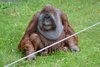
Australasian Orangutan Population

Auckland Zoo - New Female Orangutan

Exciting news! This is the first Bornean orangutan imported into the region since 1995!

Charlie and Daya will be paired for breeding in the future, which is fantastic news given how genetically valuable Charlie is.

From socials:

Earlier today we welcomed beautiful 11-year-old female Bornean orangutan Daya from Ouwehands Dierenpark Rhenen in The Netherlands.

Once matured, Daya (whose name means power, energy, and strength in Indonesian), will have the opportunity to breed with the Zoo’s male Charlie – recognised as very genetically valuable to the international programme.

Auckland Zoo welcomes female orangutan Daya | Auckland Zoo News
Fabulous news; and definitely a long time coming for Auckland! I After all those years of planning its awesome to see them finally acquire a new female. It's been a real thrill to see Auckland still stick with Borneans despite and no real support regionally.

Daya looks to be healthy, young female and I'm excited to see her breed down the line with Charlie and grow Auckland's troop even more.:D
 
Fabulous news; and definitely a long time coming for Auckland! I After all those years of planning its awesome to see them finally acquire a new female. It's been a real thrill to see Auckland still stick with Borneans despite and no real support regionally.

Daya looks to be healthy, young female and I'm excited to see her breed down the line with Charlie and grow Auckland's troop even more.:D

I can still remember how excited I was to hear Auckland Zoo were going to be sticking with Bornean orangutans (due to their conservation status being upgraded to Critically Endangered), 15 years after announcing plans to switch to Sumatran orangutans.

It was bittersweet as by then, Auckland Zoo had exported six Bornean orangutans from their colony and I can only imagine how well utilised this exhibit would have been by their colony, which once numbered nine orangutans. At least now, the colony can grow to at least 5-7 orangutans.

Given the genetic value of Charlie and Daya, it wouldn’t surprise me to see them breed twice together (if Charlie’s lifespan allows) and if Melur breeds once more, they may be able to breed the females concurrently. It’d be great for the social development of the infants and the first such occurance at Auckland since 1989 (Intan and Datuk).
 
Additional information on Daya:

Daya was born 27/05/2012 to Bako and Jewel.

As noted by @IndianRhino, Jewel was wild born. Her date of birth is estimated as 1987; while Bako was captive born on 21/03/1996.

Jewel gave birth again to a male infant on 11/05/2016, so Daya has observed the raising of her younger sibling. In addition, another female in the colony gave birth to Daya’s half sister on 10/03/2019, so this has also given Daya experience in observing maternal care.

Combined with observing Melur with her 16 month old son, Daya will be primed to care for her own infant when the time comes.
 
Last edited:
Additional information on Daya:

Daya was born 27/05/2012 to Bako and Jewel.

As noted by @IndianRhino, Jewel was wild born. Her date of birth is estimated as 1987; while Bako was captive born on 21/03/1996.

Jewel gave birth again to a male infant on 11/05/2016, so Daya has observed the raising of her younger sibling. In addition, another female in the colony gave birth to Daya’s half sister on 10/03/2019, so this has also given Daya experience in observing maternal care.

Combined with observing Melur with her 16 month old son, Daya will be primed to care for her own infant when the time comes.
A very valuable female then. An offspring of her and Charlie would be a very very valuable orangutan! :)

I found a photo of her father Bako, and he looks to be a very impressive male!

Courtesy of @Antonupload_2023-7-13_8-42-37.jpeg
 

Attachments

  • upload_2023-7-13_8-42-37.jpeg
    upload_2023-7-13_8-42-37.jpeg
    196.7 KB · Views: 77
I can still remember how excited I was to hear Auckland Zoo were going to be sticking with Bornean orangutans (due to their conservation status being upgraded to Critically Endangered), 15 years after announcing plans to switch to Sumatran orangutans.

It was bittersweet as by then, Auckland Zoo had exported six Bornean orangutans from their colony and I can only imagine how well utilised this exhibit would have been by their colony, which once numbered nine orangutans. At least now, the colony can grow to at least 5-7 orangutans.

Given the genetic value of Charlie and Daya, it wouldn’t surprise me to see them breed twice together (if Charlie’s lifespan allows) and if Melur breeds once more, they may be able to breed the females concurrently. It’d be great for the social development of the infants and the first such occurance at Auckland since 1989 (Intan and Datuk).

Auckland have effectively joined the European breeding program (EEP) for Bornean Orangs. It's an unusual situation given the distance but similar agreements have worked well in the past for Gorillas.

Because of this, and the genetic value of Charlie and Daya it is likely they will receive several breeding recommendations over the next few decades. Assuming that no other Australasian zoo does the same thing and starts to hold them in the future, then any offspring will either stay at Auckland long term or be sent to European zoos collections inline with EEP recommendations. Because of that latter option (more holders = more space) they aren't as restricted on breeding as they might otherwise have been
 
A very valuable female then. An offspring of her and Charlie would be a very very valuable orangutan! :)

I found a photo of her father Bako, and he looks to be a very impressive male!

Courtesy of @AntonView attachment 635931
Auckland have effectively joined the European breeding program (EEP) for Bornean Orangs. It's an unusual situation given the distance but similar agreements have worked well in the past for Gorillas.

Because of this, and the genetic value of Charlie and Daya it is likely they will receive several breeding recommendations over the next few decades. Assuming that no other Australasian zoo does the same thing and starts to hold them in the future, then any offspring will either stay at Auckland long term or be sent to European zoos collections inline with EEP recommendations. Because of that latter option (more holders = more space) they aren't as restricted on breeding as they might otherwise have been

Charlie is 42 years old, so hopefully they don’t delay breeding from Daya too long. They’ve stated an intention to wait until she’s reached maturity, which is around 14-15 years. This appears to be the recommended regional age, with several of the Sumatran females in Australia giving birth for the first time in their mid-teens.

If Charlie’s lifespan allows, a second recommendation for Charlie and Daya will surely follow soon after. Daya’s mother gave birth again almost four years to the day, so it may be possible; but if not, then Bahmi and Daya would also be a match.

If full integration with the Siamang is achieved, Auckland Zoo will have the use of two outdoor exhibits, the high ropes and the BOH dens, allowing the housing of at least three groupings. A cohesive colony of 1.2 adults plus the 16 month old infant is the goal for now though.
 
Auckland Zoo - Birth Data (Age of Dams)

Auckland Zoo have had eight orangutan births. The first was a stillbirth to their Sumatran orangutan pair in 1967; followed by seven live births to their Bornean orangutan colony (two of which died as neonates).

Following Auckland Zoo’s statement Daya will breed once she’s reached maturity (14-15 years), I thought it’d be interesting to compare maternal age at birth for the four females that have bred at Auckland Zoo.

—————————————————————

Sumatran orangutan births:


0.1 Topsy (01/01/1954) gave birth to:

0.0.1 Unnamed (29/05/1967) aged 13 years 4 months 28 days

—————————————————————

Bornean orangutan births:

0.1 Dara (16/06/1977) gave birth to:

1.0 Datuk (18/05/1989) aged 11 years 11 months 2 days
0.1 Darli (22/06/2000) aged 23 years 0 months 6 days

0.1 Indra (07/09/1980) gave birth to:

0.1 Intan (17/03/1989) aged 8 years 6 months 10 days
1.0 Isim (15/06/1994) aged 13 years 9 months 8 days

0.1 Melur (11/06/1988) gave birth to:

0.1 Unnamed (08/08/2002) aged 14 years 1 month 28 days
1.0 Madju (09/11/2005) aged 17 years 4 months 29 days
1.0 Bahmi (20/03/2022) aged 33 years 9 months 9 days

—————————————————————
 
I found a photo of her father Bako, and he looks to be a very impressive male!

Courtesy of @AntonView attachment 635931

I’m very sorry to tell you that the Bako in the photo is not the Bako you are discussing. Tha Bako in the photo lives in Borås Zoo in Sweden where he arrived in 1990 from London Zoo. He was born in London in 1987. He lives together with the female Sabine who also arrived in Borås in 1990 and they have lived together since then.
 
I’m very sorry to tell you that the Bako in the photo is not the Bako you are discussing. Tha Bako in the photo lives in Borås Zoo in Sweden where he arrived in 1990 from London Zoo. He was born in London in 1987. He lives together with the female Sabine who also arrived in Borås in 1990 and they have lived together since then.

Thanks for letting us know.

Photos of Daya’s Parents

Photos of Daya’s parents can be seen in these links. Bako is still an impressive looking male and it’s easy to see the resemblance between Jewel and Daya. They remind me so much of Indra and Intan, who were by far the prettiest female orangutans Auckland Zoo has had.

Bako:

Orang Oetan Bako

Jewel (with Daya’s sibling):

Baby orang-oetan Sabbar voor het eerst naar buiten
Aaaa
 
Auckland Zoo - Orangutan Introductions

Daya went on display this week and has begun introductions to the rest of the zoo’s Bornean orangutan colony.

Now she has Bahmi, Melur has been tiring of Charlie’s attention by all accounts, so she’ll surely be glad to share it with Daya.

Orangutan Daya takes to the trees! | Auckland Zoo News

Now out of quarantine, this very sensitive, smart, and lovely natured orangutan is slowly learning to navigate all of the different inside areas of the habitat and from a safely separated physical distance, gradually getting to know her new orangutan family.

“It’s really important that Daya feels completely comfortable and confident in all of the inside and outside areas of the habitat before she’s integrated with Charlie, Melur and Melur’s son Bahmi,” says primate keeper Grace.


“We have been seeing lots of positive interest both ways. They’ve been passing food to each other through the mesh, and there’s been some lovely interactions between Daya and Bahmi, who is clearly intrigued by her. Charlie is also very interested, though she is taking a bit more time to feel confident around him.”
 
Unfortunately Australia's Orang population is dwindling as fast as its gorilla population.

I suspect the apparent lack of breeding recommendations for Australia’s Sumatran orangutans has been influenced not just by the planned renovations at Melbourne and Perth; but global trends.

The Bornean species was upgraded from endangered to critically endangered, so I imagine preference was previously given to breeding the more endangered Sumatran orangutan. Now they’re both critically endangered, I’ve observed an increase in Bornean breeding recommendations; and a global levelling out or decreasing of Sumatran breeding recommendations. This has been observed in Australasia on a smaller scale.

Long term, I anticipate Taronga will acquire Bornean orangutans for this reason.
 
I firmly believe if AZ built a south East Asian exhibit like the Auckland zoos exhibit it would have major benefit's for the zoo while adding Orangs which was in their past plans, All the future plans which were once place upon the zoos website has long since been removed. I sit back and wait to see if there ever will be any major future development happening there.

I for one would love to see Australia Zoo (and Taronga) join the Bornean orangutan breeding programme. Circa 2006, Australia Zoo likely would have taken the surplus hybrids of the region (Jantan, Willow etc); and space dependent, Bornean orangutans from Auckland Zoo. Their colony grew to nine orangutans in 2005 and was separated into three groups (each with a male). The exports that followed could have provided Australia Zoo with various bloodlines (including Isim and Gangsa, an unrelated breeding pair).

It’s interesting to note Taronga imported a purebred male Sumatran orangutan (Kluet) in 2003, which would have been around the time Australia Zoo decided to hold orangutans. Jantan and Willow’s transfer to Australia Zoo would have allowed them to establish a Sumatran colony. Kluet’s transfer to Adelaide in 2007 provided Karta with a mate; and created space at Taronga, following Australia Zoo’s abandonment of orangutan plans.
 
I for one would love to see Australia Zoo (and Taronga) join the Bornean orangutan breeding programme. Circa 2006, Australia Zoo likely would have taken the surplus hybrids of the region (Jantan, Willow etc); and space dependent, Bornean orangutans from Auckland Zoo. Their colony grew to nine orangutans in 2005 and was separated into three groups (each with a male). The exports that followed could have provided Australia Zoo with various bloodlines (including Isim and Gangsa, an unrelated breeding pair).

It’s interesting to note Taronga imported a purebred male Sumatran orangutan (Kluet) in 2003, which would have been around the time Australia Zoo decided to hold orangutans. Jantan and Willow’s transfer to Australia Zoo would have allowed them to establish a Sumatran colony. Kluet’s transfer to Adelaide in 2007 provided Karta with a mate; and created space at Taronga, following Australia Zoo’s abandonment of orangutan plans.
I still find it perplexing that a zoo with so much potential has stagnated the way they have done, apart from the elephants and more resent Cheetah exhibit which I suspect was done to move them finally out of the Tigers holding areas for which they have been situated for years.

The sub tropical climate is definitely in their favour (as one of the keepers stated on tv that the climate was perfect for their Giraffes). The rain fall is very favourable being so near the coast, also they are sitting on a very large area of land, The Sunshine Coast is a central tourist hub, so everything seems to be working for them.

If they wanted to build a tropical rain forest I could think of a better place, their plantings there are wonderful it's like a tropical paradise. Now, they have on site accomodation which was wanted for some time, So where now? Expansion or status quo?, Only time will tell.
 
I still find it perplexing that a zoo with so much potential has stagnated the way they have done, apart from the elephants and more resent Cheetah exhibit which I suspect was done to move them finally out of the Tigers holding areas for which they have been situated for years.

The sub tropical climate is definitely in their favour (as one of the keepers stated on tv that the climate was perfect for their Giraffes). The rain fall is very favourable being so near the coast, also they are sitting on a very large area of land, The Sunshine Coast is a central tourist hub, so everything seems to be working for them.

If they wanted to build a tropical rain forest I could think of a better place, their plantings there are wonderful it's like a tropical paradise. Now, they have on site accomodation which was wanted for some time, So where now? Expansion or status quo?, Only time will tell.

If Australia Zoo did acquire orangutans down the line, it’d be interesting to see if they imported any from Indonesia. Australia Zoo have a good working relationship with Taman Safari and the imports of both the Sumatran tiger cubs and the Sumatran elephants demonstrate their willingness to import from overseas rather than wait to surplus to become available in the region.

Though the global captive population of orangutan (both Bornean and Sumatran) isn’t suffering from the limited number of founders as Sumatran tiger and Western lowland gorilla population; if there was the opportunity to import unreleasable wild orangutan or their first generation offspring, they’d be valuable additions to the breeding programme and guarantee Australia Zoo regular breeding recommendations.
 
If Australia Zoo did acquire orangutans down the line, it’d be interesting to see if they imported any from Indonesia. Australia Zoo have a good working relationship with Taman Safari and the imports of both the Sumatran tiger cubs and the Sumatran elephants demonstrate their willingness to import from overseas rather than wait to surplus to become available in the region.

Though the global captive population of orangutan (both Bornean and Sumatran) isn’t suffering from the limited number of founders as Sumatran tiger and Western lowland gorilla population; if there was the opportunity to import unreleasable wild orangutan or their first generation offspring, they’d be valuable additions to the breeding programme and guarantee Australia Zoo regular breeding recommendations.
As always with AZ seeing is believing! ;)
 
As always with AZ seeing is believing! ;)

Australia Zoo’s lack of a great ape species is surely something they will feel the need to address long term. Over the past couple of decades, it’s become widely recognised chimpanzees need to be housed in large groups, which make them expensive to maintain. Orangutans are happy living in pairs or small groups and the innovation of aerial lines is great for PR, promoting the image of a zoo without bars.
 
Australia Zoo’s lack of a great ape species is surely something they will feel the need to address long term. Over the past couple of decades, it’s become widely recognised chimpanzees need to be housed in large groups, which make them expensive to maintain. Orangutans are happy living in pairs or small groups and the innovation of aerial lines is great for PR, promoting the image of a zoo without bars.
I tend to disagree, I don't believe they feel the need to have anything in particular, as has been mentioned here before they are lacking in many areas for a long time I don't expect much to change!.
 
I'm struggling to reconcile the positions of an east coast zoo importing this species from Indonesia while a west coast zoo is returning captive born animals to Indonesia.

While Perth Zoo should be proud of their achievements in releasing three captive bred orangutans to the wild, at least one person on here has previously questioned the value of this on a tangible level. Their argument was that the Perth bred orangutans were merely occupying a place that could otherwise been filled by other orphaned rescued/orangutans eligible for rehabilitation/release. My opinion is irregardless of that fact, the release of these orangutans inspired a lot of people on the conservation role zoos play and was a pioneering achievement nonetheless; but their point still stands.

In the meantime, we have a global captive population that long term will require more founders to maintain genetic diversity. As and when new founders will become available is an unknown, so no (appropriate) opportunity to receive them should be refused imo.
 
Auckland Zoo Update

I asked about the zoo’s breeding plans on my visit this weekend and was interested to learn that Charlie is ranked the second highest genetically valuable male in the international breeding programme.

The news came as a surprise to me given his father (Zabu) sired 22 offspring - though looking through the studbook I see several died as infants, died without reproducing or left the breeding programme e.g. were donated to an unaccredited facility. Two were even sent to Fox Television Studios in the USA.

No imports are scheduled for 2023, but the keeper said it’s possible the zoo will acquire another female or two in the next few years. It’s worth noting the zoo were originally planning to hold a group of 1.4 adults in this exhibit, so I’m willing to believe the likelihood of this occurring is high.

@Zoofan15 - Auckland Zoo staff have also told me, if I remember right, that Zabu was wild-born and that added to Charlie's genetic value (possibly his mother Girlie was also, but I am not sure about that). Some of Zabu's surviving offspring have been determined to be hybrids, also - I always thought that Mandai Wildlife Reserve never confirmed the paternity of the iconic Sumatran orangutan Ah Meng's hybrid daughter, Medan, but an Australian friend who knows the Singapore orangutans well has informed me that Zabu did indeed sire Medan (and also, unfortunately, Medan's son Budi).

I've wondered if new import Daya was chosen because, not only will she soon be old enough to breed with Charlie, she will also still be of prime breeding age when Bahmi matures, should the unthinkable happen and Charlie passes away. and Auckland Zoo therefore decided to retain Bahmi as breeding male.
 
Last edited:
Back
Top