Your quite right one one the major problems within our zoo system has been the way they loose interest in a species and I could name a few of them, its counter productive, its a waste of time and money (look at the time and money that was likely spent on the two imports of Persian Onagers and how they ended up), not just that its a disservice to the actual species. Some "parts" of our zoo system needs a shake up and to become more professional in its management!It's quite likely that the facilities wanted to avoid inbreeding, hence breeding essentially being halted by the 2000's. Imports should've honestly came decades ago, to continue the population, but I honestly think our region has the habit of simply loosing interest in a species when such investment has to be made to revive a population.
There were a lot of transfers, switching of breeding individuals, so I doubt it was due to little cooperation, although perhaps there was also the issue of also having to limit breeding due to regional capacity. I'm not sure how much space Dubbo had - but it's quite likely that they had to take on majority of the regions surplus.
You are using an out of date browser. It may not display this or other websites correctly.
You should upgrade or use an alternative browser.
You should upgrade or use an alternative browser.
Australasian Tapir Population
- Thread starter Patrick Keegan
- Start date
-
- Tags
- population tapir

Considering Raymond passed in the early 90's, it would make sense if he was indeed the San Diego male. It seems Melbourne followed the trend of giving their tapirs South American themed names, so I also wouldn't be surprised if Jacquita was Melbourne born.
It's possible Jacquita unexpectadly passed soon after she last calved, hence Adelaide electing to import Talara from the UK that same time.
Yes, if Raymond was imported young (possibly at dispersal age) from San Diego Zoo, he could have been around 23-24 years in 1991, which is feasible.
Similarly, a female acquired in 1977 (and old enough to calve the following year) could theoretically still be breeding 10 years later (Jaquita last calved 1988).
Talara was imported 1990, which ties in with what we suspect was the death of Jaquita (Adelaide’s breeding female) circa 1989. Isabella only bred once (at four years of age), so possibilities include she died; or this was an accidental mating and she was transfered out to avoid further mating with her father.

Swanson02
Well-Known Member
I find it funny how the AZA can just pick and choose which species they interbreed with. Like it's perfectly fine for Eland and Blackbuck but was taboo for Tapir? Seems rather contrived. If it comes down to losing a species to the region forever or inbreeding. I'm in favour of inbreeding every day. The reason we had such a successful hippo population for 60 odd years without imports was because of inbreeding.It's quite likely that the facilities wanted to avoid inbreeding, hence breeding essentially being halted by the 2000's. Imports should've honestly came decades ago, to continue the population, but I honestly think our region has the habit of simply loosing interest in a species when such investment has to be made to revive a population.
There were a lot of transfers, switching of breeding individuals, so I doubt it was due to little cooperation, although perhaps there was also the issue of also having to limit breeding due to regional capacity. I'm not sure how much space Dubbo had - but it's quite likely that they had to take on majority of the regions surplus.
To me it sounds like someone in Adelaide Zoo's management was really into Tapirs back in the late 80/90s and after their tenure things fell away. Akin to how the current director is a reptiles man, so it doesn't surprise me that Adelaide has recently acquired an African spurred tortoise and chameleons. Likewise I'd expect the planned salties sooner rather than later with him in charge

Swanson02
Well-Known Member
our region has the habit of simply loosing interest in a species when such investment has to be made to revive a population.
Looks like Wild Dogs, Sun Bear and Bongo are next
I find it funny how the AZA can just pick and choose which species they interbreed with. Like it's perfectly fine for Eland and Blackbuck but was taboo for Tapir? Seems rather contrived. If it comes down to losing a species to the region forever or inbreeding. I'm in favour of inbreeding every day. The reason we had such a successful hippo population for 60 odd years without imports was because of inbreeding.
To me it sounds like someone in Adelaide Zoo's management was really into Tapirs back in the late 80/90s and after their tenure things fell away. Akin to how the current director is a reptiles man, so it doesn't surprise me that Adelaide has recently acquired an African spurred tortoise and chameleons. Likewise I'd expect the planned salties sooner rather than later with him in charge
As another point of interest, inbred lines have even proved valuable once merged with a more genetically diverse population that lacks those founder ancestors.
The Colorado Springs line of Sumatran tiger is a prime example. A pair of wild born Sumatran tigers born in the 1930’s were imported and inbreeding occurred for several decades. This line later joined the international population of Sumatran tigers and in 2022, it came to Australasia with the import of Ramah and Zayana. Compare this to the countless purebred Sumatran tigers who would have been imported by zoos around the world at that time and then hybridised with other subspecies.
Similarly, the inbreeding of Common hippopotamus Snorkel to her father Kabete at Auckland sustained three founders that otherwise would have been lost. Snorkel’s daughter then bred with her half-brother, further sustaining this line through Cuddles, who was Dubbo’s last breeding female.
Absolutely spot on this has been happening very often with our zoos look at some of the antelope species that we had and gone now in more resent years Greater Kudu, Sable antelopes, sitatunga and Gemsbok. Look at all the Langur species that were all phased out from Australian collections to make way for the Francois Langur species that was the "ZAA chosen" species to replace them all. Since they arrived at Taronga not one "pair" (apart from 2 spare males) has been placed into any other zoo in the region even in all the years that they have been there but quite a few have been exported overseas, We see the same with the Indian rhinos another "Taronga only" species, It just appears that some zoos want to be "the one and only gate keeper" with that species to give them "perhaps" some "one up-menship" among the zoo community.Looks like Wild Dogs, Sun Bear and Bongo are next
Also look how the Melbourne zoo had the only pair of Philippine crocodiles and once bred sent all the young back to the Philippines where they can be seen in many places in captivity even down to almost road side zoo collections, I believe there was some interest among other zoos in the country to obtain some of the young but they were exported away and the net result was the breeding female died all the young gone only to be left with the adult male and as far as I know is still at Melbourne zoo just as a display animal. The 1960s mindset needs to be putdown and fast forwarded to 2025 and take on a more professional mindset!

Indeed, I'm sure any of the smaller regional facilities would've jumped at the opportunity to continue breeding from the remaining Tapir population a few decades ago. Instead the zoos elected to hold onto them - and the population slowly died out as a result. I know Melbourne did send their last Tapir to Mogo, but I wouldn't have been surprised if the males were neutered prior to transfer.Absolutely spot on this has been happening very often with our zoos look at some of the antelope species that we had and gone now in more resent years Greater Kudu, Sable antelopes, sitatunga and Gemsbok. Look at all the Langur species that were all phased out from Australian collections to make way for the Francois Langur species that was the "ZAA chosen" species to replace them all. Since they arrived at Taronga not one "pair" (apart from 2 spare males) has been placed into any other zoo in the region even in all the years that they have been there but quite a few have been exported overseas, We see the same with the Indian rhinos another "Taronga only" species, It just appears that some zoos want to be "the one and only gate keeper" with that species to give them "perhaps" some "one up-menship" among the zoo community.
Also look how the Melbourne zoo had the only pair of Philippine crocodiles and once bred sent all the young back to the Philippines where they can be seen in many places in captivity even down to almost road side zoo collections, I believe there was some interest among other zoos in the country to obtain some of the young but they were exported away and the net result was the breeding female died all the young gone only to be left with the adult male and as far as I know is still at Melbourne zoo just as a display animal. The 1960s mindset needs to be putdown and fast forwarded to 2025 and take on a more professional mindset!
It would be far more beneficial if all of the facilities work together in a joint effort to conserve and mantain species within our region, instead of solely worrying about their own interests/endeavors. Not on Tapirs specifically, but the EEP is currently looking for new holders for Indian Rhinos, so it would be great if some of our regional facilities were allowed to provide support there!
Indeed, I'm sure any of the smaller regional facilities would've jumped at the opportunity to continue breeding from the remaining Tapir population a few decades ago. Instead the zoos elected to hold onto them - and the population slowly died out as a result. I know Melbourne did send their last Tapir to Mogo, but I wouldn't have been surprised if the males were neutered prior to transfer.
It would be far more beneficial if all of the facilities work together in a joint effort to conserve and mantain species within our region, instead of solely worrying about their own interests/endeavors. Not on Tapirs specifically, but the EEP is currently looking for new holders for Indian Rhinos, so it would be great if some of our regional facilities were allowed to provide support there!
On the subject of breeding tapir, it’d be interesting to know more about their reproductive physiology, namely if females are subject to sterility issues from long periods of non-breeding (or delayed breeding). They’re related to zebras and rhinoceros, so it would by no means be surprising.
For whatever reason, Hamilton Zoo’s pair of Brazilian tapir never bred. One theory was that because the pair were housed together from adolescence, they became too familiar with each other to regard each other with interest. To remedy this, they were separated and brought together while the female was in season to no avail. By this time, the female was in her mid-teens and had never bred.
By contrast, successful breeding pairs such as the ones outlined by @steveroberts were producing calves at regular intervals. They’re clearly not hard to breed if zoos have the right formula of compatible, fertile animals. Hopefully this is achieved this time around with the new imports!
I have some difficulty understanding as to why our zoos are nothing working together more for the benefit of some species the Onager being an example they could have when they lost interest in them to pass them on to any other zoos within the region to continue with this "endangered" species. It still surprises me that Altina managed to acquire the maned wolf from Dubbo when they too last interest in the species and go on to become very successful with them!Indeed, I'm sure any of the smaller regional facilities would've jumped at the opportunity to continue breeding from the remaining Tapir population a few decades ago. Instead the zoos elected to hold onto them - and the population slowly died out as a result. I know Melbourne did send their last Tapir to Mogo, but I wouldn't have been surprised if the males were neutered prior to transfer.
It would be far more beneficial if all of the facilities work together in a joint effort to conserve and mantain species within our region, instead of solely worrying about their own interests/endeavors. Not on Tapirs specifically, but the EEP is currently looking for new holders for Indian Rhinos, so it would be great if some of our regional facilities were allowed to provide support there!
Absolutely spot on this has been happening very often with our zoos look at some of the antelope species that we had and gone now in more resent years Greater Kudu, Sable antelopes, sitatunga and Gemsbok. Look at all the Langur species that were all phased out from Australian collections to make way for the Francois Langur species that was the "ZAA chosen" species to replace them all. Since they arrived at Taronga not one "pair" (apart from 2 spare males) has been placed into any other zoo in the region even in all the years that they have been there but quite a few have been exported overseas, We see the same with the Indian rhinos another "Taronga only" species, It just appears that some zoos want to be "the one and only gate keeper" with that species to give them "perhaps" some "one up-menship" among the zoo community.
Also look how the Melbourne zoo had the only pair of Philippine crocodiles and once bred sent all the young back to the Philippines where they can be seen in many places in captivity even down to almost road side zoo collections, I believe there was some interest among other zoos in the country to obtain some of the young but they were exported away and the net result was the breeding female died all the young gone only to be left with the adult male and as far as I know is still at Melbourne zoo just as a display animal. The 1960s mindset needs to be putdown and fast forwarded to 2025 and take on a more professional mindset!
I agree, but also why did we go for the Francois langur, a more difficult to acquire species with lower captive populations. We could have picked easier ones to focus on. But im not surprised given those same managers have seen our primate species numbers dwindle spectacularly. For a genera that is easy to keep and low on space. I will also die on this hill that phasing out all the langurs to focus on Francois then not letting other zoos obtain them, but sending them back overseas. Is one of if not the most idiotic thing our zoo managers have ever done. Complete incompetence.
Hopefully we will see tapir managed better this time around.
I do really hope that we get some future managers with a much better mindset and more professional outlook than what we have had in ""some"" of our major zoos over the last few years, This "gate keeper" mindset is antiquated and should have been left in the 20th century, it smells a bit of elitism of wanting to be head and shoulders above the competition.I agree, but also why did we go for the Francois langur, a more difficult to acquire species with lower captive populations. We could have picked easier ones to focus on. But im not surprised given those same managers have seen our primate species numbers dwindle spectacularly. For a genera that is easy to keep and low on space. I will also die on this hill that phasing out all the langurs to focus on Francois then not letting other zoos obtain them, but sending them back overseas. Is one of if not the most idiotic thing our zoo managers have ever done. Complete incompetence.
Hopefully we will see tapir managed better this time around.
I
Hopefully we will see tapir managed better this time around.
I’m really excited to see what the region can do with Brazilian tapir this time around, with the hope multiple pairs can be imported into the region. Darling Downs Zoo, Melbourne Zoo and Adelaide Zoo will surely do great things with them.
Brazilian tapir have previously breed well into their mid-teens, so with reasonable intergenerational gaps, there’s hope a sustainable breeding programme can be established without the need for further imports for at least 2-3 decades.

@Patrick Keegan
Hey Patrick. Got a helpful reply from Adelaide Zoo about the Brazilian tapirs who were born there between 1987 and 1996:
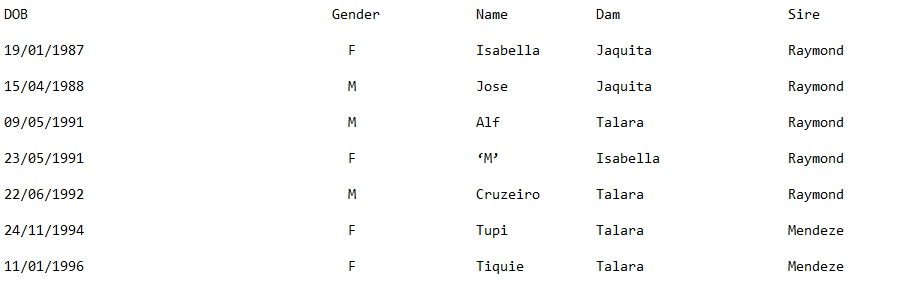
Someone at the zoo replied again to query about them:
''
Jaquita - Adelaide Zoo born – 29/4/1979
Raymond – Melbourne Zoo born – 11/8/1981
Talara – Marwell Zoo, United Kingdom born – 21/9/1987
Mendeze – Melbourne Zoo – 2/11/1991
There are no records of any other offspring born at Adelaide Zoo earlier.
''
We know thanks to @WhistlingKite24 with finding and sharing about the details of the zoo's animals over the century in Cecil Rix authored 'The Royal Zoological Society of South Australia 1878-1978': ''The Brazilian Tapirs started with a pair from San Diego Zoo, USA in 1969. They bred and in July 1973 produced a youngster. It only survived for about 18 hours however, and its mother died in the following December. In 1967 a female was obtained from Melbourne and with the San Diego male, produced a female calf in April 1978."
Sounds almost certain Jaquita was that female calf, and she was born in April 1978 rather than April 1979, or vice versa?
Edit: realise now too, if had worded query more specifically could of maybe gotten names and other info about the 1.1 pair from San Diego Zoo, and the female from Melbourne Zoo.
Last edited:
Thanks for that!Someone at the zoo replied again to query about them:
''
Jaquita - Adelaide Zoo born – 29/4/1979
Raymond – Melbourne Zoo born – 11/8/1981
Talara – Marwell Zoo, United Kingdom born – 21/9/1987
Mendeze – Melbourne Zoo – 2/11/1991
There are no records of any other offspring born at Adelaide Zoo earlier.
''
We know thanks to @WhistlingKite24 with finding and sharing about the details of the zoo's animals over the century in Cecil Rix authored 'The Royal Zoological Society of South Australia 1878-1978': ''The Brazilian Tapirs started with a pair from San Diego Zoo, USA in 1969. They bred and in July 1973 produced a youngster. It only survived for about 18 hours however, and its mother died in the following December. In 1977 a female was obtained from Melbourne and with the San Diego male, produced a female calf in April 1978."
Sounds almost certain Jaquita was that female calf, and she was born in April 1978 rather than April 1979, or vice versa?
Edit: realise now too, if had worded query more specifically could of maybe gotten names and other info about the 1.1 pair from San Diego Zoo, and the female from Melbourne Zoo.
Jacquita is obviously the offspring of that original breeding pair (male from San Diego and female from Melbourne). It's possible she was born in 1978 (not 1979) and was the individual mentioned in that Century Report, however it's also possible she was the second calf of the pair, and she had an older sister born a year earlier.
It's also intriguing to know Raymond was Melbourne born in 1981. Since Jacquita's likely mother arrived from Melbourne in 1977, it's reasonable to assume that she and Raymond would be closely related in some way or another.
Since Raymond's first calf wasn't born until 1987, I wonder whether Adelaide had simply maintained a mother/daughter pairing up until that point. If Jacquita was the last surviving calf born, prior to her own daughter nine years later, it's likely the San Diego male also passed (or was transferred out) soon after her birth in 1978/1979.
Would also be equally good to know what happened to the following tapir (whether they passed at Adelaide, or were transferred out): Jacquita, Raymond, Isabella, Jose, Cruz; and Tupi and Mendeze (would be good to know transfer out dates for both of those to).
Someone at the zoo replied again to query about them:
''
Jaquita - Adelaide Zoo born – 29/4/1979
Raymond – Melbourne Zoo born – 11/8/1981
Talara – Marwell Zoo, United Kingdom born – 21/9/1987
Mendeze – Melbourne Zoo – 2/11/1991
There are no records of any other offspring born at Adelaide Zoo earlier.
''
We know thanks to @WhistlingKite24 with finding and sharing about the details of the zoo's animals over the century in Cecil Rix authored 'The Royal Zoological Society of South Australia 1878-1978': ''The Brazilian Tapirs started with a pair from San Diego Zoo, USA in 1969. They bred and in July 1973 produced a youngster. It only survived for about 18 hours however, and its mother died in the following December. In 1967 a female was obtained from Melbourne and with the San Diego male, produced a female calf in April 1978."
Sounds almost certain Jaquita was that female calf, and she was born in April 1978 rather than April 1979, or vice versa?
Edit: realise now too, if had worded query more specifically could of maybe gotten names and other info about the 1.1 pair from San Diego Zoo, and the female from Melbourne Zoo.
Thanks for that!
Jacquita is obviously the offspring of that original breeding pair (male from San Diego and female from Melbourne). It's possible she was born in 1978 (not 1979) and was the individual mentioned in that Century Report, however it's also possible she was the second calf of the pair, and she had an older sister born a year earlier.
It's also intriguing to know Raymond was Melbourne born in 1981. Since Jacquita's likely mother arrived from Melbourne in 1977, it's reasonable to assume that she and Raymond would be closely related in some way or another.
Since Raymond's first calf wasn't born until 1987, I wonder whether Adelaide had simply maintained a mother/daughter pairing up until that point. If Jacquita was the last surviving calf born, prior to her own daughter nine years later, it's likely the San Diego male also passed (or was transferred out) soon after her birth in 1978/1979.
Would also be equally good to know what happened to the following tapir (whether they passed at Adelaide, or were transferred out): Jacquita, Raymond, Isabella, Jose, Cruz; and Tupi and Mendeze (would be good to know transfer out dates for both of those to).
Great work @steveroberts!
The 1978 report only included events from the first half of 1978, so Jacquita being born April 1979 would have made her the second calf born to the female who produced the April 1978 calf (assuming they didn’t have multiple females on site). It would have been a very quick conception after the birth of the previous calf!
Male tapir reach reproductive maturity circa 30 months and Raymond was just over four years when he sired his first calf, so this isn’t too far off, accounting for variances between individuals. He was likely transferred in 1985 (or slightly earlier at dispersal age).
I’m assuming Raymond died at Adelaide Zoo. He was unrelated to Talara, so there was otherwise little reason to break up this pairing after two calves (Alf and Cruzeiro), the latter of which may not have even survived to adulthood given there’s no info searchable on him.
@Patrick Keegan
Hey Patrick. Got a helpful reply from Adelaide Zoo about the Brazilian tapirs who were born there between 1987 and 1996:
Someone at the zoo replied again to query about them:
''
Jaquita - Adelaide Zoo born – 29/4/1979
Raymond – Melbourne Zoo born – 11/8/1981
Talara – Marwell Zoo, United Kingdom born – 21/9/1987
Mendeze – Melbourne Zoo – 2/11/1991
There are no records of any other offspring born at Adelaide Zoo earlier.
''
We know thanks to @WhistlingKite24 with finding and sharing about the details of the zoo's animals over the century in Cecil Rix authored 'The Royal Zoological Society of South Australia 1878-1978': ''The Brazilian Tapirs started with a pair from San Diego Zoo, USA in 1969. They bred and in July 1973 produced a youngster. It only survived for about 18 hours however, and its mother died in the following December. In 1967 a female was obtained from Melbourne and with the San Diego male, produced a female calf in April 1978."
Sounds almost certain Jaquita was that female calf, and she was born in April 1978 rather than April 1979, or vice versa?
Edit: realise now too, if had worded query more specifically could of maybe gotten names and other info about the 1.1 pair from San Diego Zoo, and the female from Melbourne Zoo.
@Patrick Keegan
Really grateful that one of the legends at Adelaide Zoo, same lady who wrote back first time sharing about the Brazilian tapirs born there in '80s and '90s, answered questions again, thanks so much seriously if you ever by chance come across this post.
And you guys were right btw, about two females who were sisters born just over a year apart there in late '70s:
''
Male, ‘Juan’ DOB. 31/3/1968
Female, ‘Juanita’ DOB. 31/3/1968
Arrived from San Diego Zoo on 23/5/1969.
'Lisa' was born at Melbourne Zoo on 18/3/1975 and arrived at Adelaide Zoo on loan on 17/2/1976. She was returned to Melbourne Zoo on 25/3/1981.
Lisa was the dam of Jaquita.
‘Jaquita’ was born 29/4/1979 and her full sister ‘Jacintha’ was born the year prior as stated on 13/2/1978.
".
Juanita and Juan surely must have been twins hey. Aren't twins apparently extremely rare for tapirs?
That’s really interesting. In that case, Larry may have been a relative of the female Brazilian tapir that was sent to Adelaide Zoo...
Yeah wonder if Lisa was his mother or sister?
Last edited:
Thanks Steve! The pieces of the puzzle are slowly coming together...@Patrick Keegan
Really grateful that one of the legends at Adelaide Zoo, same lady who wrote back first time sharing about the Brazilian tapirs born there in '80s and '90s, answered questions again, thanks so much seriously if you ever by chance come across this post.
And you guys were right btw, about two females who were sisters born just over a year apart there in late '70s:
''
Male, ‘Juan’ DOB. 31/3/1968
Female, ‘Juanita’ DOB. 31/3/1968
Arrived from San Diego Zoo on 23/5/1969.
'Lisa' was born at Melbourne Zoo on 18/3/1975 and arrived at Adelaide Zoo on loan on 17/2/1976. She was returned to Melbourne Zoo on 25/3/1981.
Lisa was the dam of Jaquita.
‘Jaquita’ was born 29/4/1979 and her full sister ‘Jacintha’ was born the year prior as stated on 13/2/1978.
"
Yeah wonder if Lisa was his mother or sister?
Lisa's transfer back to Melbourne does explain why breeding seemingly ceased after Jacquita's birth. I wonder why Melbourne wanted her back so soon, perhaps they lost her mother, and wanted her back as their new breeding female (there's a lot of possibilities honestly).
I think it's very possible that Lisa birthed Larry in 1983 at Melbourne, once she returned there.
One hole though is Toby - he was apparently born at Adelaide in 1978 to Lisa. Unless Toby is Jacintha... originally thought to be a female at birth?
@Patrick Keegan
Really grateful that one of the legends at Adelaide Zoo, same lady who wrote back first time sharing about the Brazilian tapirs born there in '80s and '90s, answered questions again, thanks so much seriously if you ever by chance come across this post.
And you guys were right btw, about two females who were sisters born just over a year apart there in late '70s:
''
Male, ‘Juan’ DOB. 31/3/1968
Female, ‘Juanita’ DOB. 31/3/1968
Arrived from San Diego Zoo on 23/5/1969.
'Lisa' was born at Melbourne Zoo on 18/3/1975 and arrived at Adelaide Zoo on loan on 17/2/1976. She was returned to Melbourne Zoo on 25/3/1981.
Lisa was the dam of Jaquita.
‘Jaquita’ was born 29/4/1979 and her full sister ‘Jacintha’ was born the year prior as stated on 13/2/1978.
".
Juanita and Juan surely must have been twins hey. Aren't twins apparently extremely rare for tapirs?
Yeah wonder if Lisa was his mother or sister?
Thanks Steve! The pieces of the puzzle are slowly coming together...
Lisa's transfer back to Melbourne does explain why breeding seemingly ceased after Jacquita's birth. I wonder why Melbourne wanted her back so soon, perhaps they lost her mother, and wanted her back as their new breeding female (there's a lot of possibilities honestly).
I think it's very possible that Lisa birthed Larry in 1983 at Melbourne, once she returned there.
One hole though is Toby - he was apparently born at Adelaide in 1978 to Lisa. Unless Toby is Jacintha... originally thought to be a female at birth?
Wow, it’s great to have information on the early tapirs. Great research @steveroberts.
How curious that Juan and Juanita shared a DOB, implying they were twins. Twin births in this species are uncommon and the mortality rate is higher.
As I suspected, Jacquita (born April 1979) was a full sibling of the calf born 1978; though it appears there was an error in the report that stated a calf was born April 1978 (not February 1978). 14 months would be a more plausible birth interval than what was just under 13 months (the required gestation period for the species).
Adelaide seem to have the February 1978 calf recorded as a female (Jacintha) to this day, so I would assume this was not Toby; but there’s otherwise limited options of how he fits into this.
@Jambo @Zoofan15 Cheers guys. But its the work of the two staff at ZoosSA really and just have copy pasted what they shares.
Yeah with Toby. If like you said @Jambo, it turns out in fact, he was Jacintha and gender was redetermined. Also perhaps if he was born in Feb '78, but perhaps his birth was not announced until April '78 (or was retedermined he was a male then and renamed?) explains with Taronga's record, one of the really helpful ladies who works there with stating in email reply about him: ''...I am not sure of his parents but he was born sometime between 1/4/78 and 30/4/1978...'' makes sense, and ties in with the book from Adelaide Zoo @WhistlingKite24 discovered and shared about how the Melbourne female and San Diego male we now know were named Lisa & Juan had a baby in April 1978, may have been a report record from then readressing the tapir calf born 13th Feb, believed to be a female calf and first named Jacintha?
Agree with your suggestion @Zoofan15 as it seems Toby wasn't born at Adelaide Zoo, and he came there from Melbourne Zoo? or a zoo in the UK (CITES mentioned 1 Brazilian tapir was imported into Australia from Great Britain in 1979).
“
Toby came from Adelaide to Taronga Western Plains Zoo (Dubbo) 1985 and then Dubbo to Taronga 29/10/1988 and then returned to Dubbo 1995. I am not sure of his parents but he was born sometime between 1/4/78 and 30/4/1978
“
When had read he came from Adelaide, hadn't personally considered that sure he came from there but not born there (like how Taronga Sydney would say Toby came from Dubbo is they weren't jointly managed zoos, and might assume he was born there too).
Wasn't expecting to see this on CITES records when having a look: 2 Tapirus indicus (Malayan tapirs) from the Netherlands to Australia in 1981! Unless do they record cancelled plans sometimes too? or tiny chance it's a mistake for Tapirus terrestris? If not, wow.
Yeah with Toby. If like you said @Jambo, it turns out in fact, he was Jacintha and gender was redetermined. Also perhaps if he was born in Feb '78, but perhaps his birth was not announced until April '78 (or was retedermined he was a male then and renamed?) explains with Taronga's record, one of the really helpful ladies who works there with stating in email reply about him: ''...I am not sure of his parents but he was born sometime between 1/4/78 and 30/4/1978...'' makes sense, and ties in with the book from Adelaide Zoo @WhistlingKite24 discovered and shared about how the Melbourne female and San Diego male we now know were named Lisa & Juan had a baby in April 1978, may have been a report record from then readressing the tapir calf born 13th Feb, believed to be a female calf and first named Jacintha?
Agree with your suggestion @Zoofan15 as it seems Toby wasn't born at Adelaide Zoo, and he came there from Melbourne Zoo? or a zoo in the UK (CITES mentioned 1 Brazilian tapir was imported into Australia from Great Britain in 1979).
“
Toby came from Adelaide to Taronga Western Plains Zoo (Dubbo) 1985 and then Dubbo to Taronga 29/10/1988 and then returned to Dubbo 1995. I am not sure of his parents but he was born sometime between 1/4/78 and 30/4/1978
“
When had read he came from Adelaide, hadn't personally considered that sure he came from there but not born there (like how Taronga Sydney would say Toby came from Dubbo is they weren't jointly managed zoos, and might assume he was born there too).
Wasn't expecting to see this on CITES records when having a look: 2 Tapirus indicus (Malayan tapirs) from the Netherlands to Australia in 1981! Unless do they record cancelled plans sometimes too? or tiny chance it's a mistake for Tapirus terrestris? If not, wow.
Last edited:
@Jambo @Zoofan15 Cheers guys. But its the work of the two staff at ZoosSA really and just have copy pasted what they shares.
Yeah with Toby. If like you said @Jambo, it turns out in fact, he was Jacintha and gender was redetermined. Also perhaps if he was born in Feb '78, but perhaps his birth was not announced until April '78 (or was retedermined he was a male then and renamed?) explains with Taronga's record, one of the really helpful ladies who works there with stating in email reply about him: ''...I am not sure of his parents but he was born sometime between 1/4/78 and 30/4/1978...'' makes sense, and ties in with the book from Adelaide Zoo @WhistlingKite24 discovered and shared about how the Melbourne female and San Diego male we now know were named Lisa & Juan had a baby in April 1978, may have been a report record from then readressing the tapir calf born 13th Feb, believed to be a female calf and first named Jacintha?
Agree with your suggestion @Zoofan15 as it seems Toby wasn't born at Adelaide Zoo, and he came there from Melbourne Zoo? or a zoo in the UK (CITES mentioned 1 Brazilian tapir was imported into Australia from Great Britain in 1979).
“
Toby came from Adelaide to Taronga Western Plains Zoo (Dubbo) 1985 and then Dubbo to Taronga 29/10/1988 and then returned to Dubbo 1995. I am not sure of his parents but he was born sometime between 1/4/78 and 30/4/1978
“
When had read he came from Adelaide, hadn't personally considered that sure he came from there but not born there (like how Taronga Sydney would say Toby came from Dubbo is they weren't jointly managed zoos, and might assume he was born there too).
Wasn't expecting to see this on CITES records when having a look: 2 Tapirus indicus (Malayan tapirs) from the Netherlands to Australia in 1981! Unless do they record cancelled plans sometimes too? or tiny chance it's a mistake for Tapirus terrestris? If not, wow.
Yes, I can’t see Toby being Jacintha, as they replied to you this week to say she was born there in February 1978. As such, they’ve had 47 years to amend their records if that female was discovered to be a male and renamed Toby.
That’s really interesting to hear that a tapir was imported from the UK in 1979 and Toby would certainly be a strong candidate (being at dispersal age, if he was born in 1978). The sending facility was almost certainly Marwell, which would also explain the lack of information on Toby’s parentage.
Toby (1978) transferred to Dubbo in 1985, which is around the time Raymond (1981) came to Adelaide from Melbourne Zoo. Perhaps Toby showed no inclination to breed with Adelaide’s females in the time he was on site. Tapir reach reproductive maturity in their third year and he was seven when he transferred out (ample time to ascertain breeding wasn’t going to follow).