Australia Zoo Australia Zoo Species List

WhistlingKite24

Well-Known Member
10+ year member
Looking back through my past reviews, I realised I never actually provided a proper species list for Australia Zoo. I was thinking of writing up a simple species list but I thought it would be a lot more useful and interesting to create one exhibit by exhibit, especially for future visitors or Zoochatters who don’t know the layout of the zoo very well. So, this is an attempt to list every species I saw on-display on 27/09/2020.

For interest’s sake and considering how abundant the wildlife is at Australia Zoo, under the sections in green, I have also listed some of the wild species of animal I have seen in particular sections of the zoo over the last couple of years. It is important to remember that some of these wild species cannot always be reliably seen but I find it’s always good to have an idea where to look. The list will be broken into sections reflecting the main portions of zoo for clarity. I also hope to keep this species list going throughout the years and will give updates on species the zoo has lost/gained in relation to future visits.


The zoo's map to follow along: https://www.australiazoo.com.au/wp-content/uploads/2020/07/Australia-Zoo-Map-July-2020.pdf
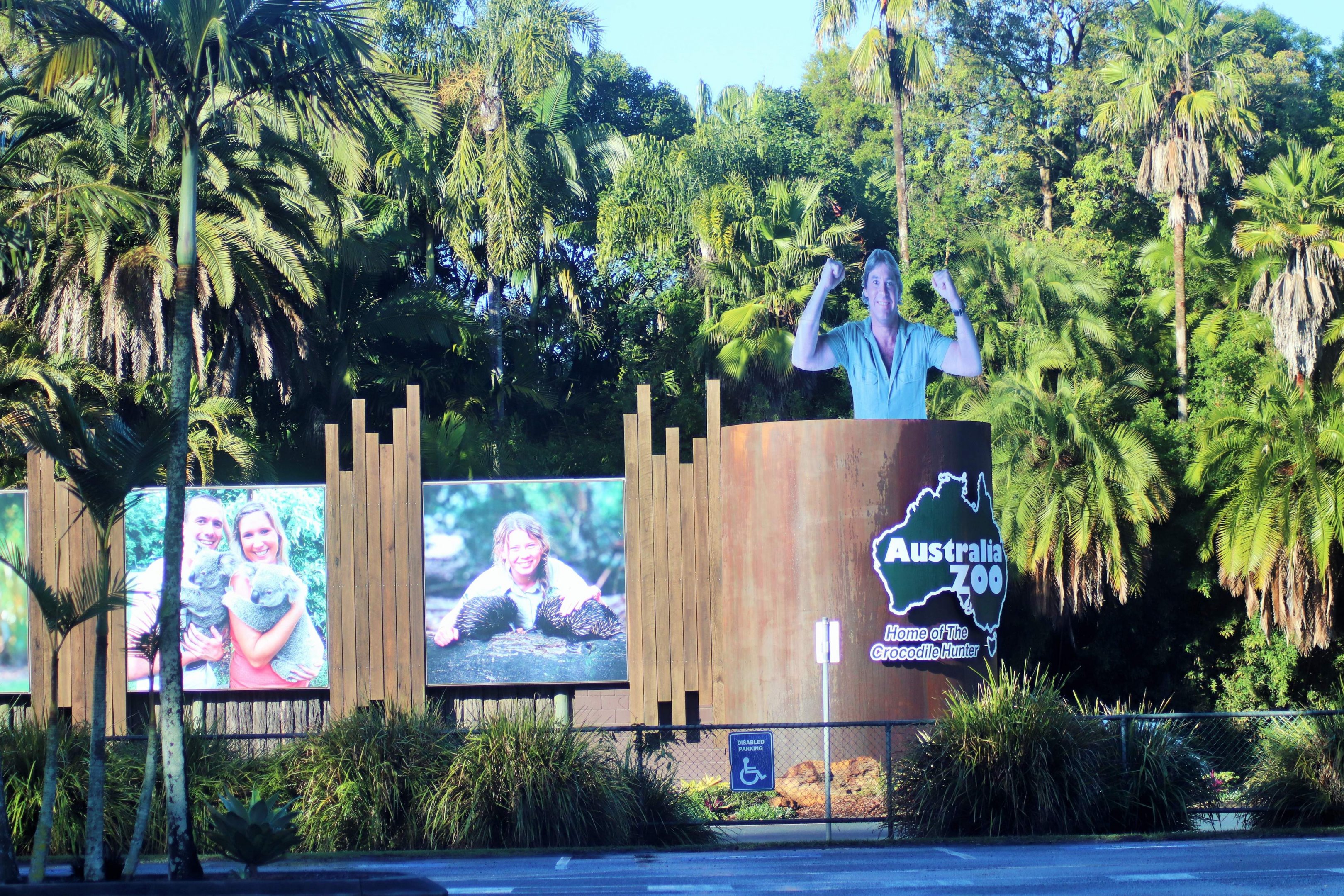
 
ENTRY AREA - PINK ZONE ON MAP (11 Exhibits):
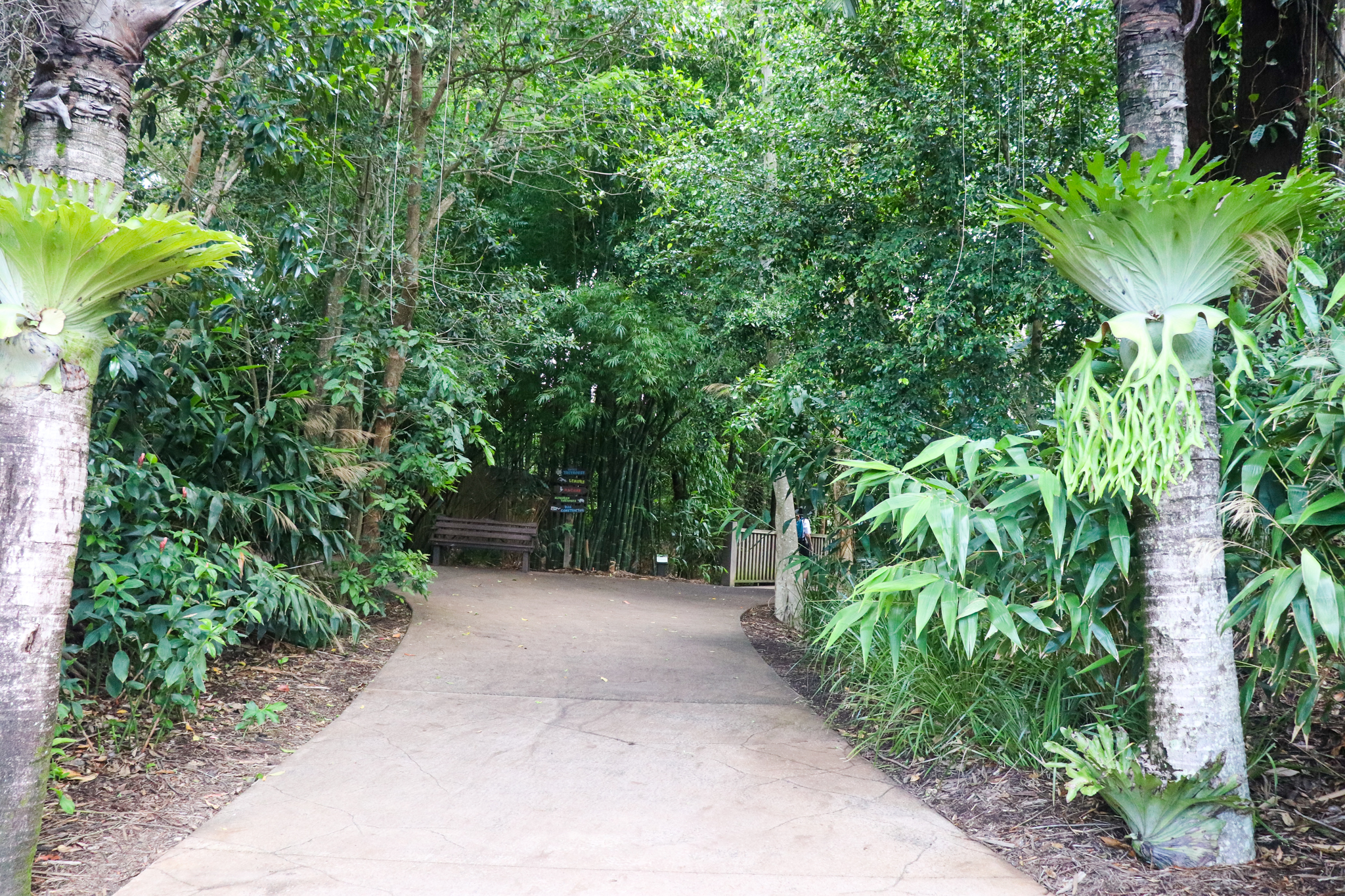
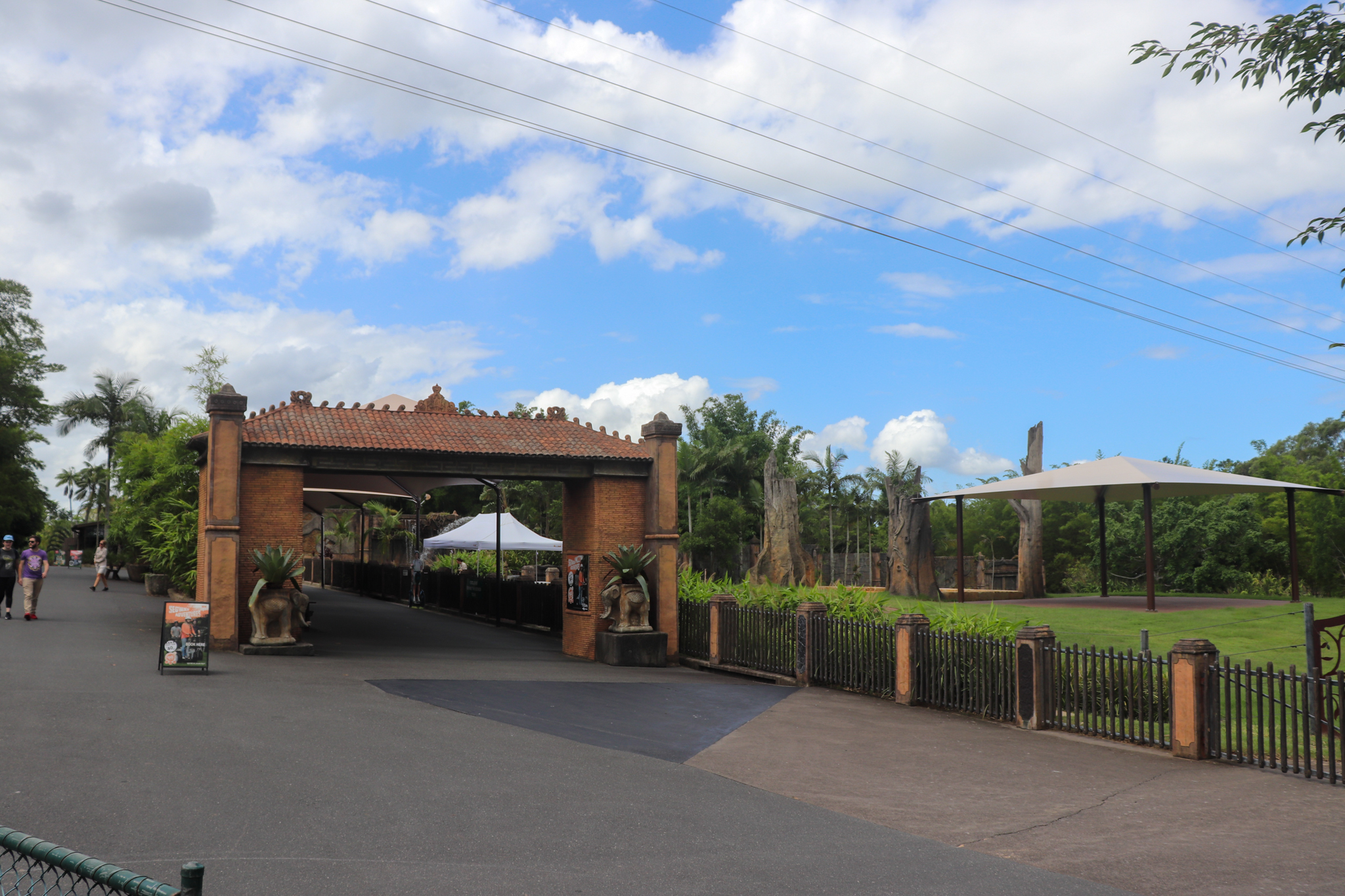
These enclosures are situated right after entering the zoo and include the majority of the zoo’s smaller outdoor reptile enclosures, otters and a few other odds and ends. A lot of these exhibits were constructed/remodelled in the early 2000s and a few of them (like the alligator enclosures) remain largely the same from even earlier on.
Wild Species Common Near the Entry Area/Throughout the Zoo: Australian White Ibis, Australian Brush Turkey, Laughing Kookaburra [Wild Kookaburra on Car - ZooChat], Blue-faced Honeyeater [Wild Blue-faced Honeyeater (Entomyzon cyanotis) - ZooChat], Lewin’s Honeyeater [Wild Lewin's Honeyeater (Meliphaga lewinii) - ZooChat], Noisy Miner, Pied Butcherbird, Grey Butcherbird, Australian Magpie, Magpie Lark, Willie Wagtail, Welcome Swallow, Eastern Water Dragon [Wild Eastern Water Dragon (Intellagama lesueurii) - ZooChat]


A pair of open-topped mock rock exhibits with glass viewing. These exhibits have Pandanus trees, staghorn ferns and a small den area for the lizards. Females are in one exhibit and a male in the other:
Rhinoceros Iguana (Cyclura cornuta)

Three smallish grassy enclosures fringed with palm trees. Each of these exhibits have a small pool:
American Alligator (Alligator mississippiensis)

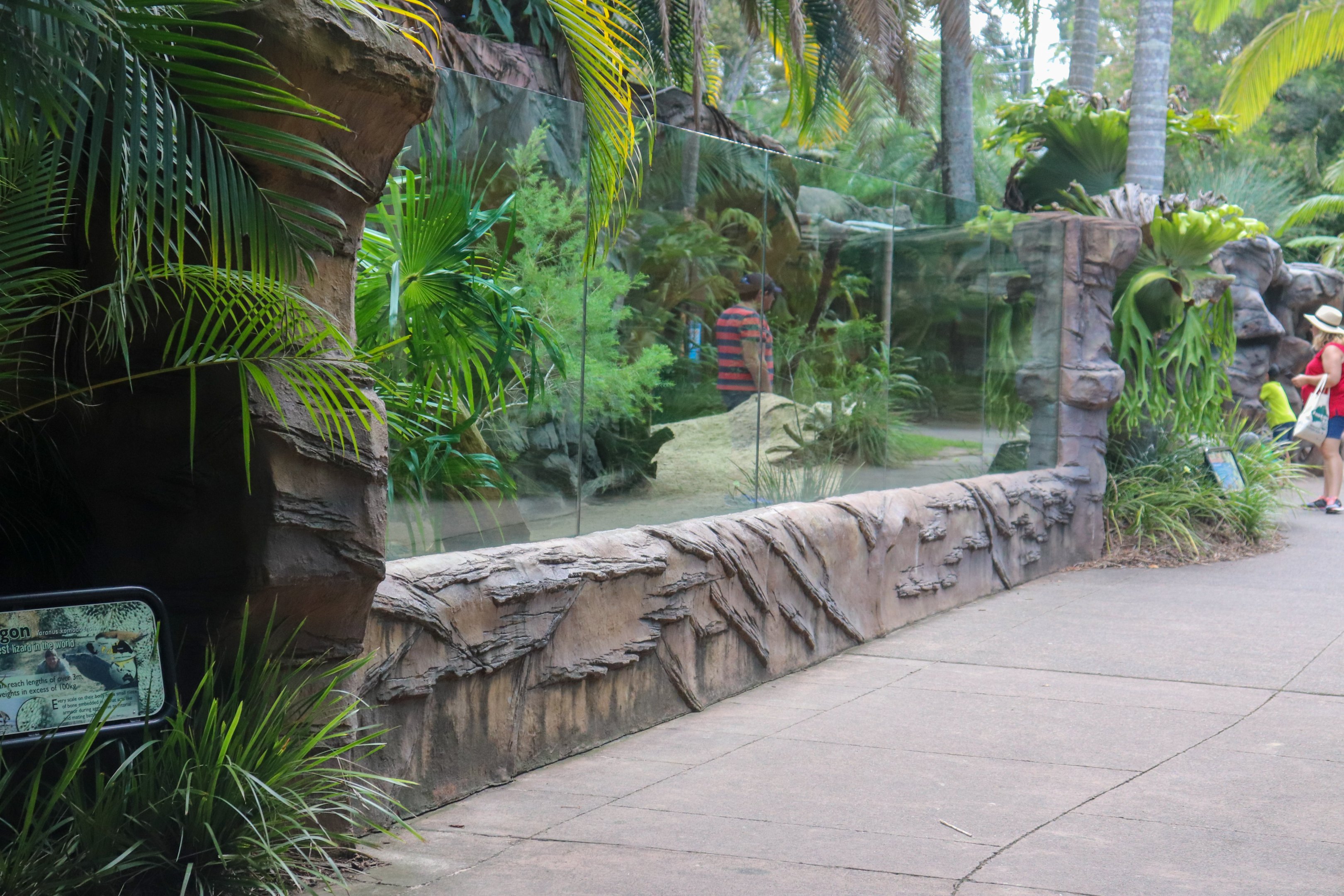
A large, glass-fronted enclosure with a heated den and a lot of mock rock. Their male Komodo Dragon from the Prague import lives in this enclosure currently:
Komodo Dragon (Varanus komodoensis)

A desert-themed, glass-fronted enclosure which formerly housed Perenties. This enclosure is smaller than the first exhibit for the male Komodo dragon and currently houses the zoo’s resident female:
Komodo Dragon (Varanus komodoensis)

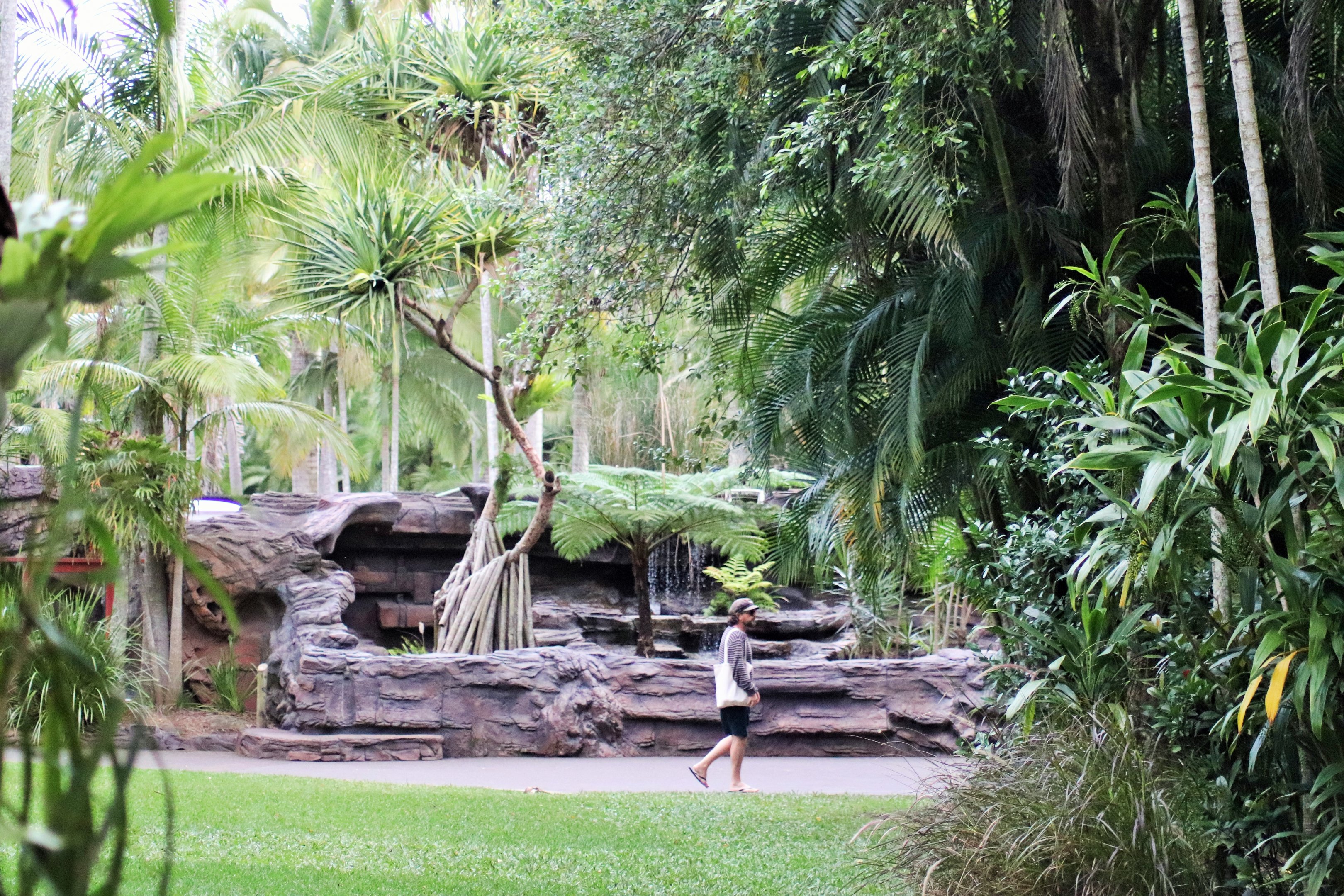
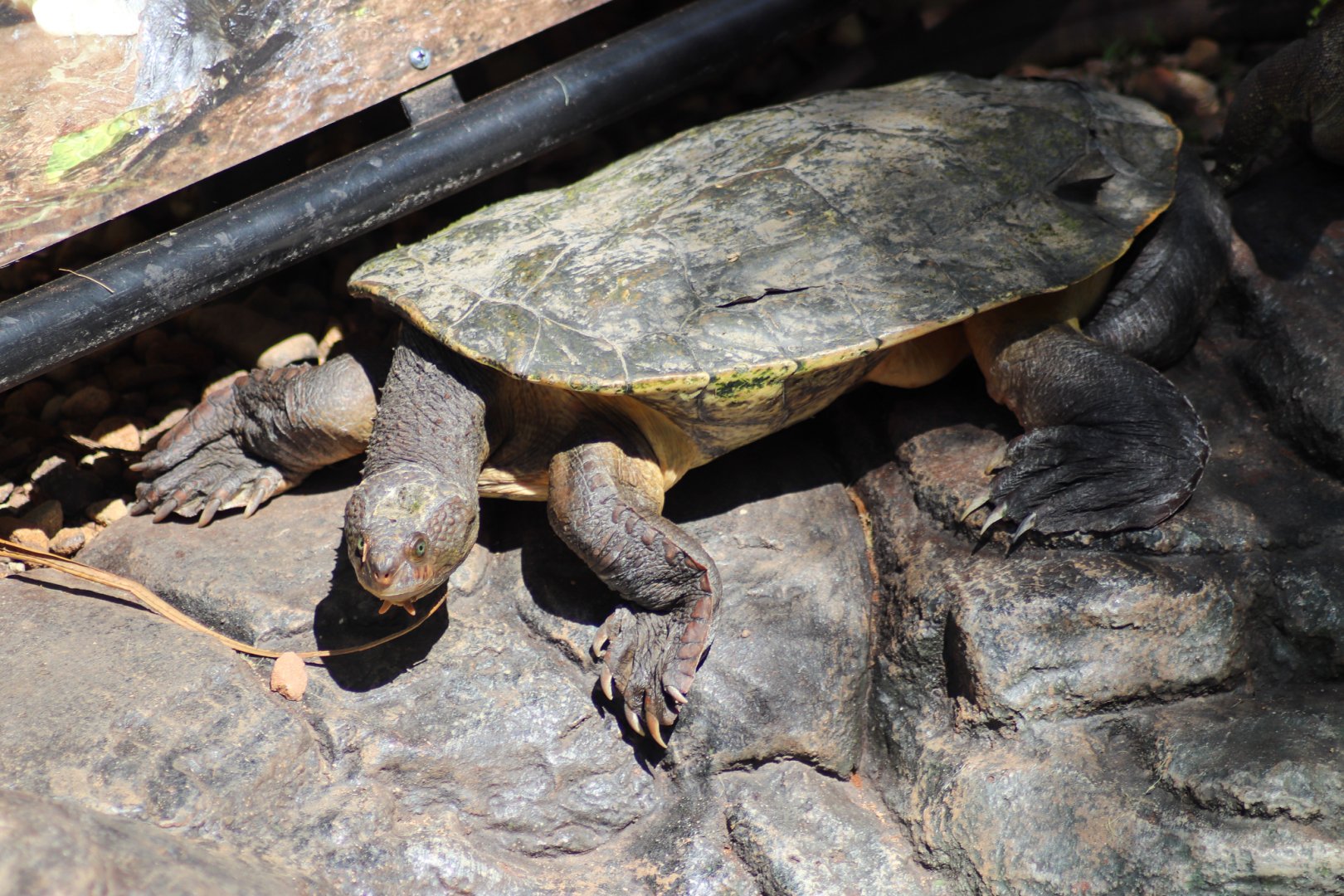
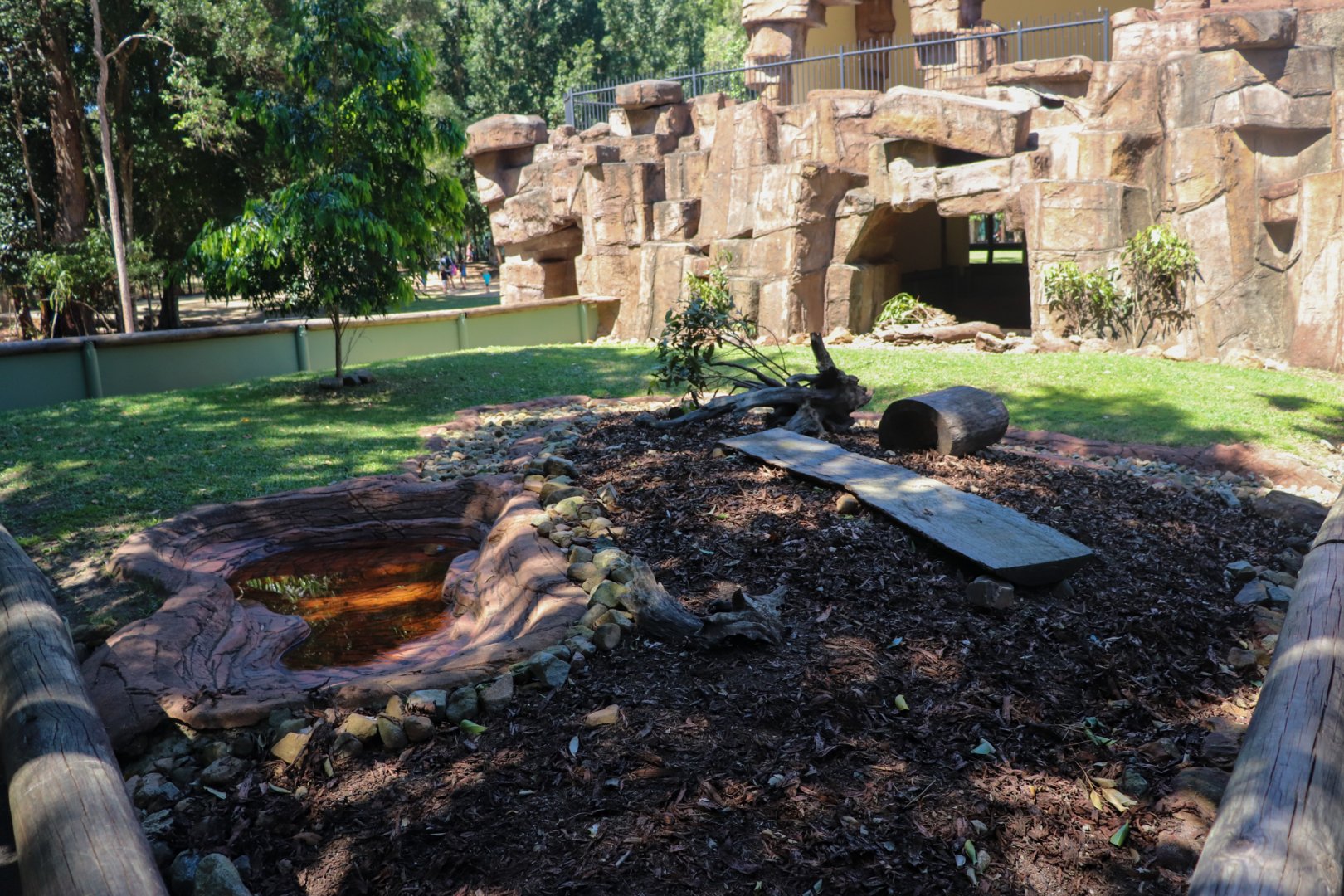
Finishing the row of lizard enclosures, is a smallish mock-rock enclosure with gravel substrate, a small waterfall and a small pool running through the centre of the exhibit. There are several rocky ledges, a tree fern and a large Pandanus Tree:
Mary River Turtle (Elusor macrurus)
Merten’s Water Monitor (Varanus mertensi)
Cunningham’s Skink (Egernia cunninghami)
Eastern Bluetongue (Tiliqua scincoides scincoides)
Eastern Water Dragon (Intellagama lesueurii)

The following species are also signed but have never been seen in this enclosure:
Land Mullet (Egernia major)
Eastern Bearded Dragon (Pogona barbata)

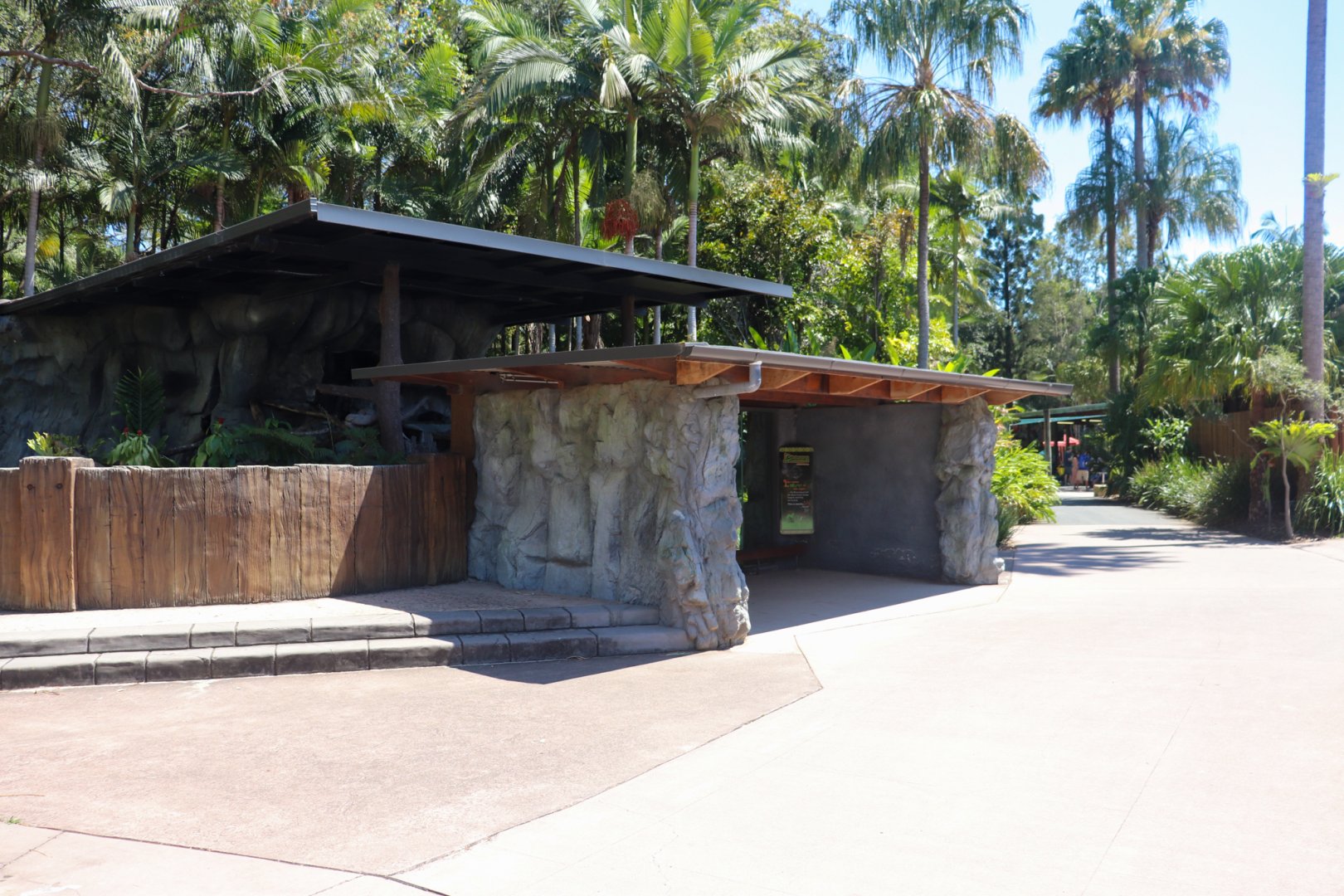
A medium-sized rocky enclosure with a small pool, glass viewing and several large logs. The visitor viewing area is shaded. The zoo currently house a sibling pair of otters (who were born at Taronga Western Plains Zoo) in this exhibit:
Asian Small-clawed Otter (Aonyx cinereus)

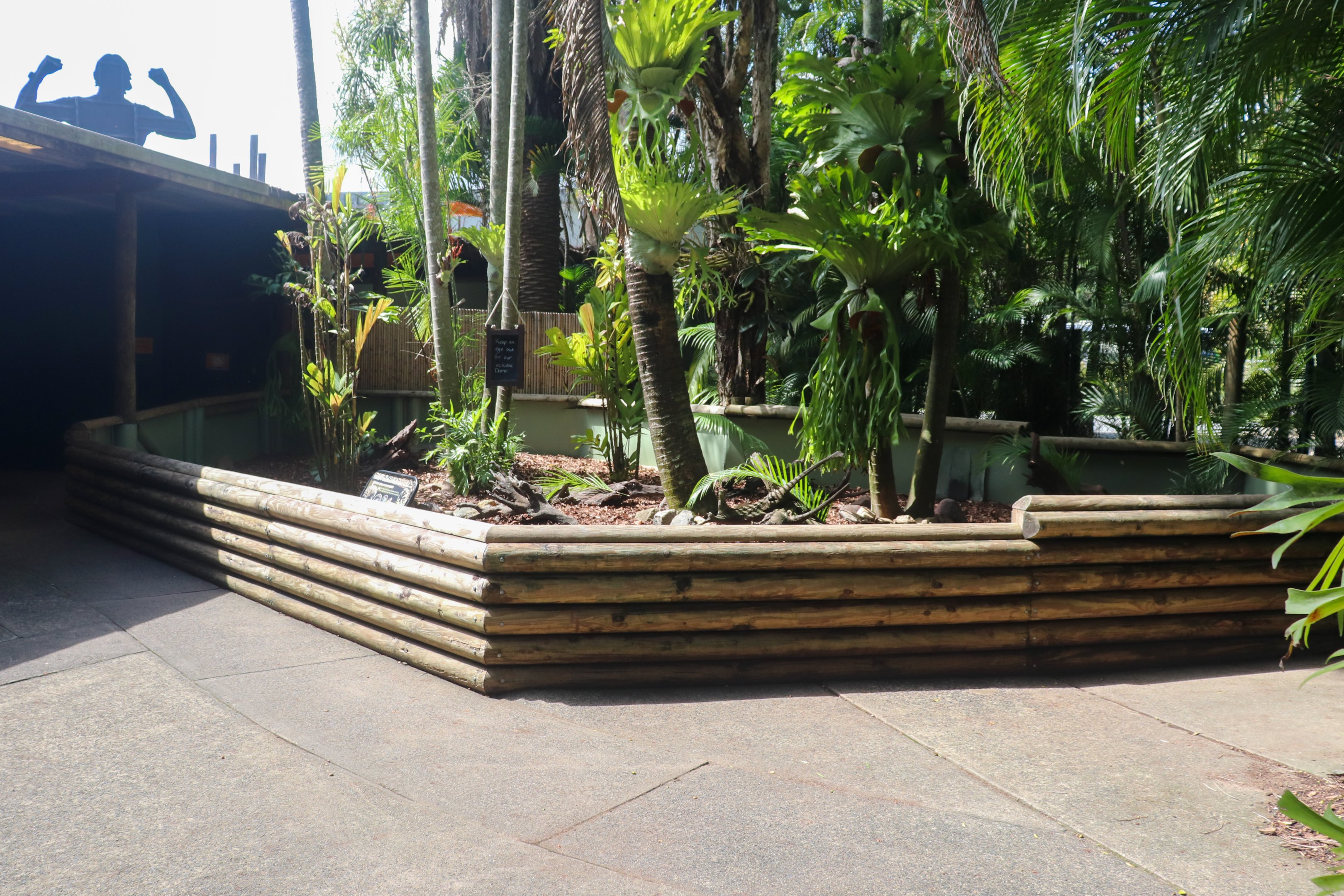
A small open-topped enclosure with a low wooden barrier tucked in a corner. This enclosure now contains a pair of this species:
Short-beaked Echidna (Tachyglossus aculeatus)

A large grassy yard with a wooden fence and a mock rock back. This enclosure also has a den area for the species:
Aldabra Giant Tortoise (Aldabrachelys gigantea)


CROCODILE ENVIRONMENTAL PARK – PINK ZONE ON MAP (5 Exhibits):
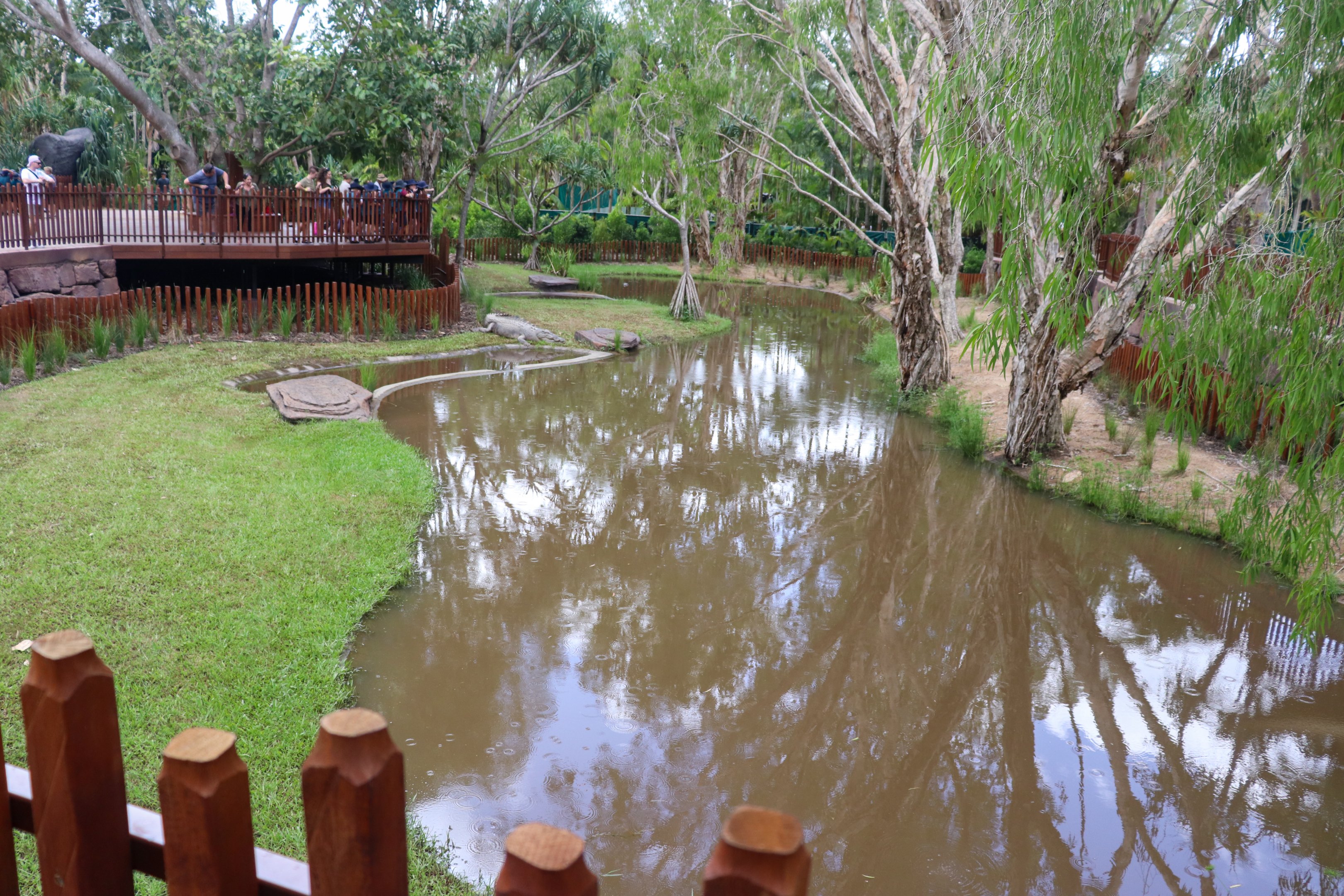
Built in the 1980s, the Crocodile Environmental Park recently underwent a renovation which mainly consisted of adding a raised boardwalk for visitor viewing and theming around the zoo’s history with crocodiles. The renovation has not been fully-completed and there is still at least one more enclosure that needs to be finished.

Wild Species: Great Egret [note it’s a very exposed and busy area of the zoo so it's not as rich in wildlife as other parts]

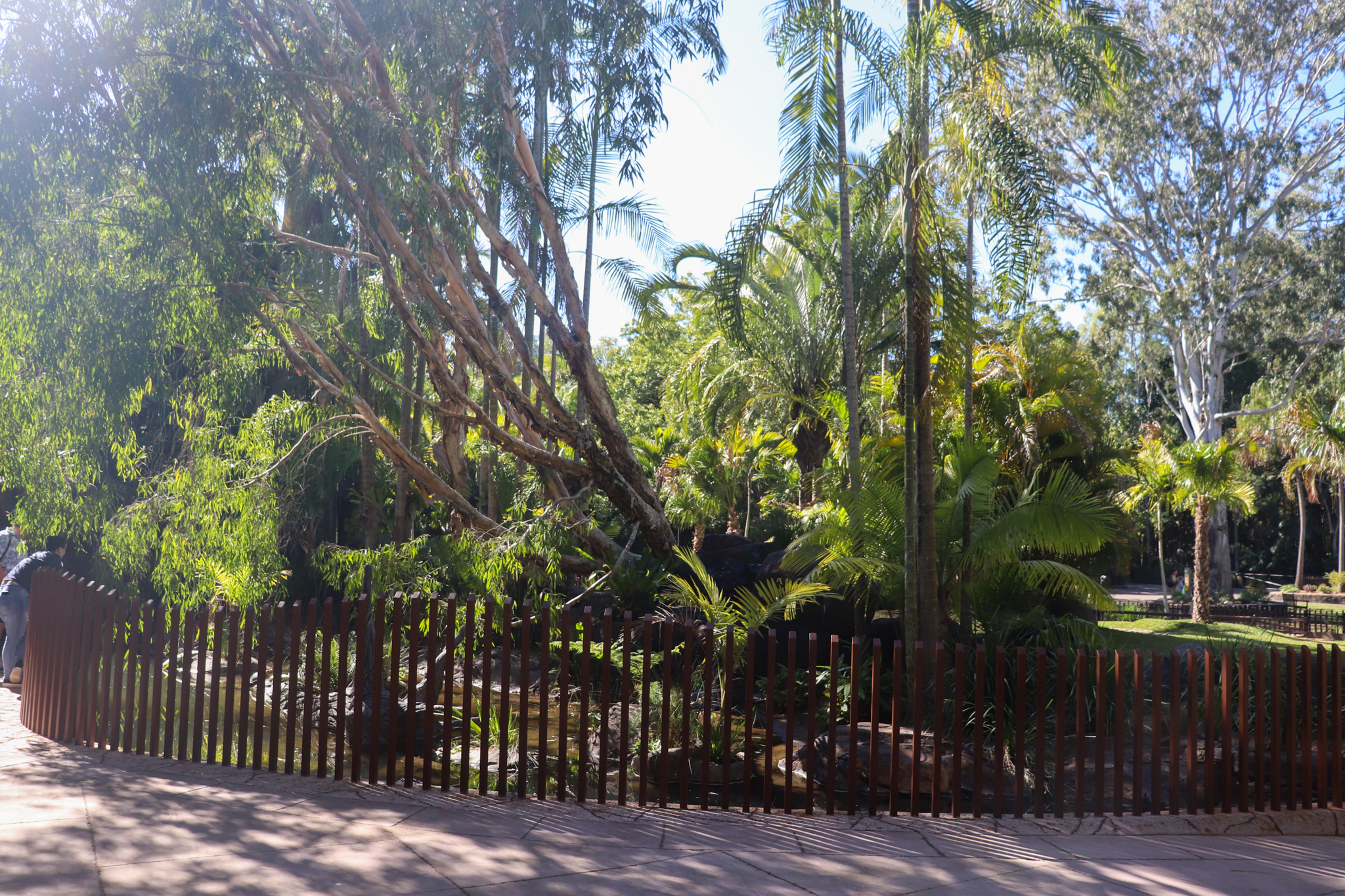
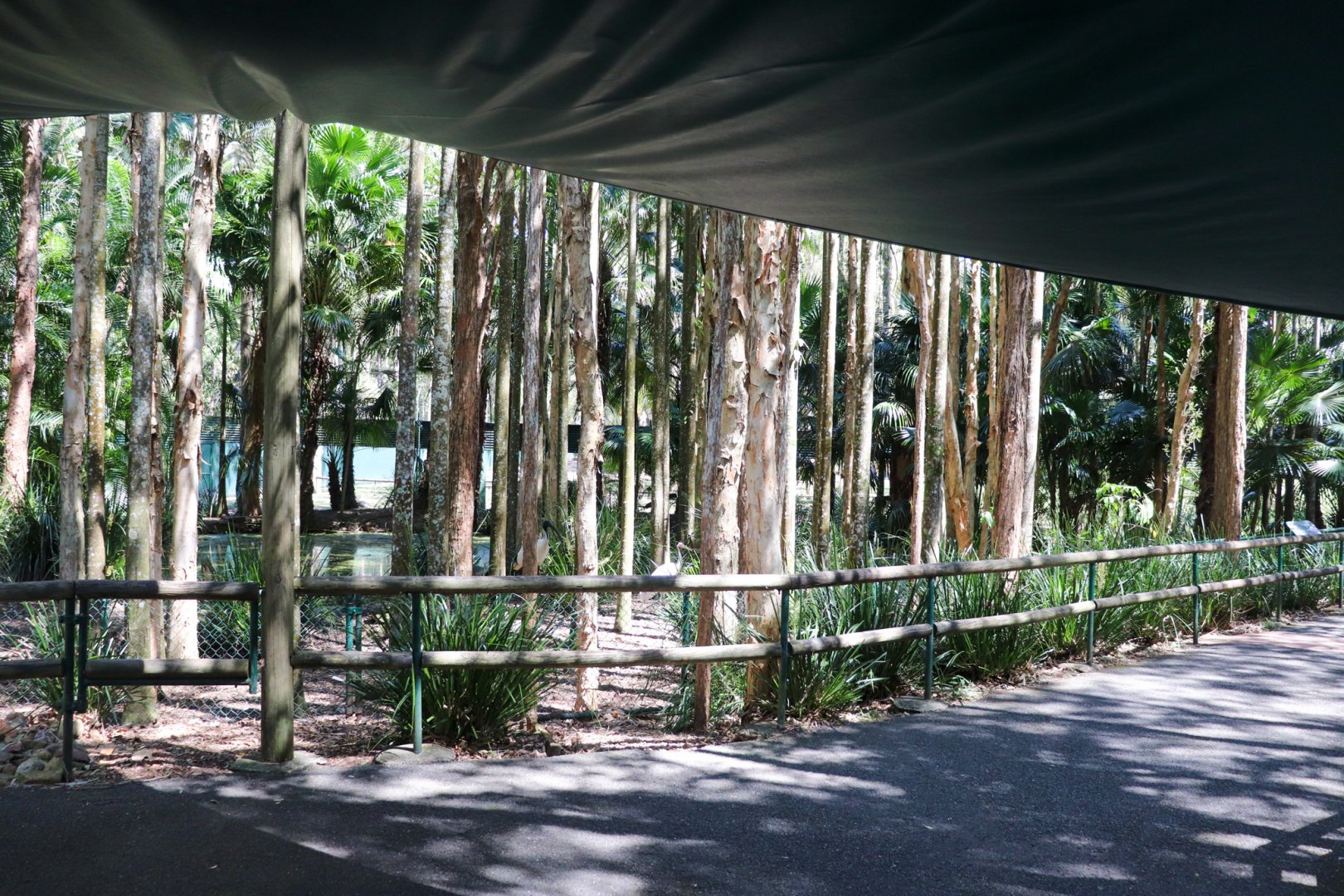
A large, shady enclosure with a body of water, fenced with wooden poles. This exhibit has several basking logs and mature eucalypts. It is positioned directly opposite the tortoises:
Broad-shelled River Turtle (Chelodina expansa)
Brisbane River Turtle (Emydura krefftii signata)
Kreftt’s Turtle (Emydura krefftii)

An enclosure under construction which largely remains the same as the original design (an exhibit with a lot of tree cover):
Currently vacant – future enclosure for Saltwater Crocodile (Crocodylus porosus)

The main enclosure has a large body of water, fringed with trees. Visitors view this species from a raised boardwalk. This exhibit contains a pair (Weipa and Lucy):
Saltwater Crocodile (Crocodylus porosus)

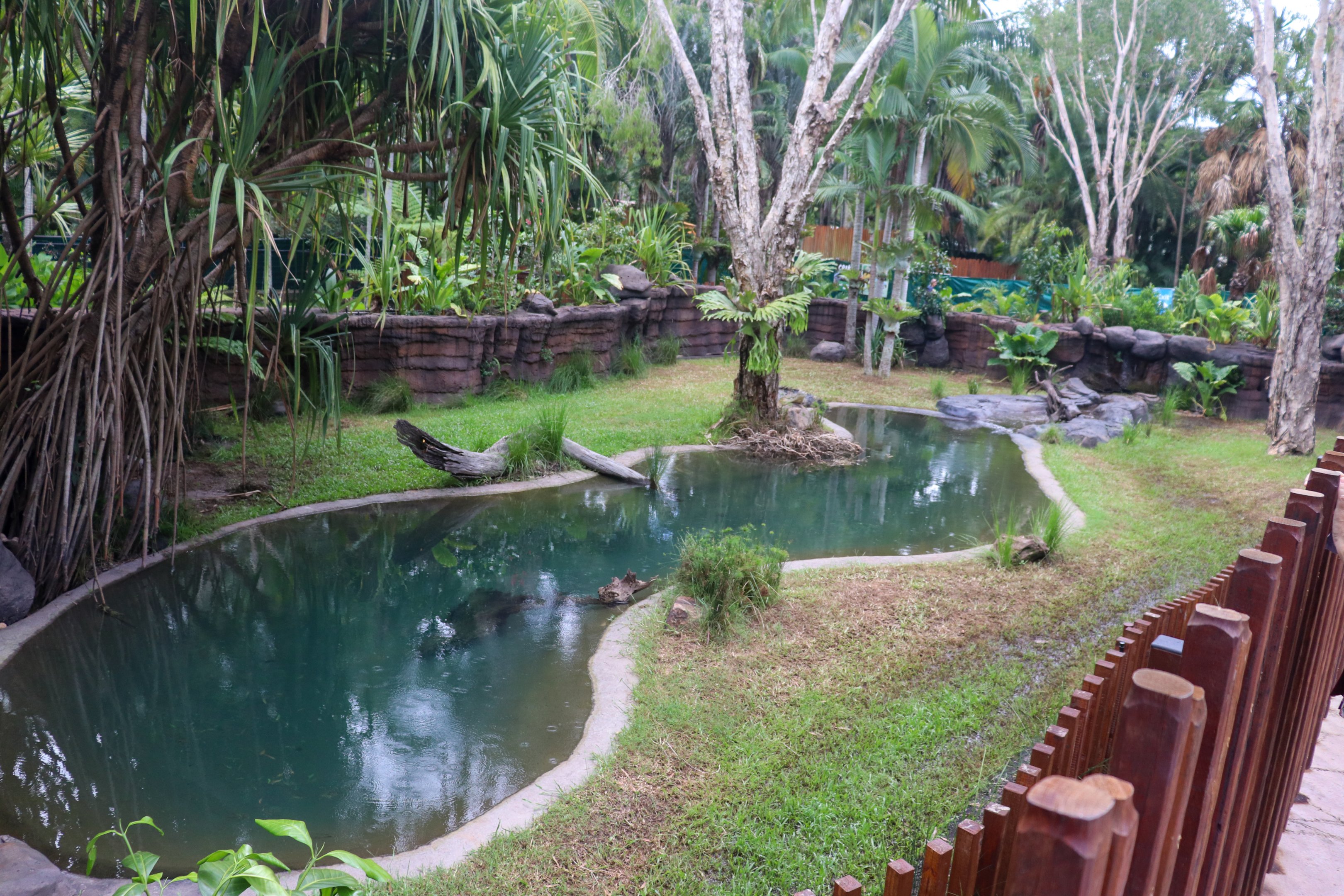
A sandier enclosure with several different pools and grassy areas:
Freshwater Crocodile (Crocodylus johnsoni)

A smaller enclosure with a body of water and several trees. This exhibit houses a lone male, Mossman:
Saltwater Crocodile (Crocodylus porosus)


Why 3 enclosures dedicated for saltwater crocodile: They are not exactly rare in Australia!
I would be nice if Australia Zoo diversify: f.i. New Guinea crocs (there are actually 2 species around) and even the Sunda gharial would be a nice addition. It would make a really nice exhibit and call station for AZ.

Probably, me .... dreaming???
 
Why 3 enclosures dedicated for saltwater crocodile: They are not exactly rare in Australia!
I would be nice if Australia Zoo diversify: f.i. New Guinea crocs (there are actually 2 species around) and even the Sunda gharial would be a nice addition. It would make a really nice exhibit and call station for AZ.

Probably, me .... dreaming???
They actually have about six on-display Saltwater Crocodile enclosures (and that's not including the ones you can see from the Crocoseum)! I've mentioned it before but Australia Zoo would be an ideal location for a new crocodilian species (a lot space and the crocodilians can be kept outdoors all year round). I don't think they will acquire any new species of crocodilian but I would be happy to be proved wrong.
 
CROCOSEUM AREA – PINK ZONE ON MAP (14 Exhibits)
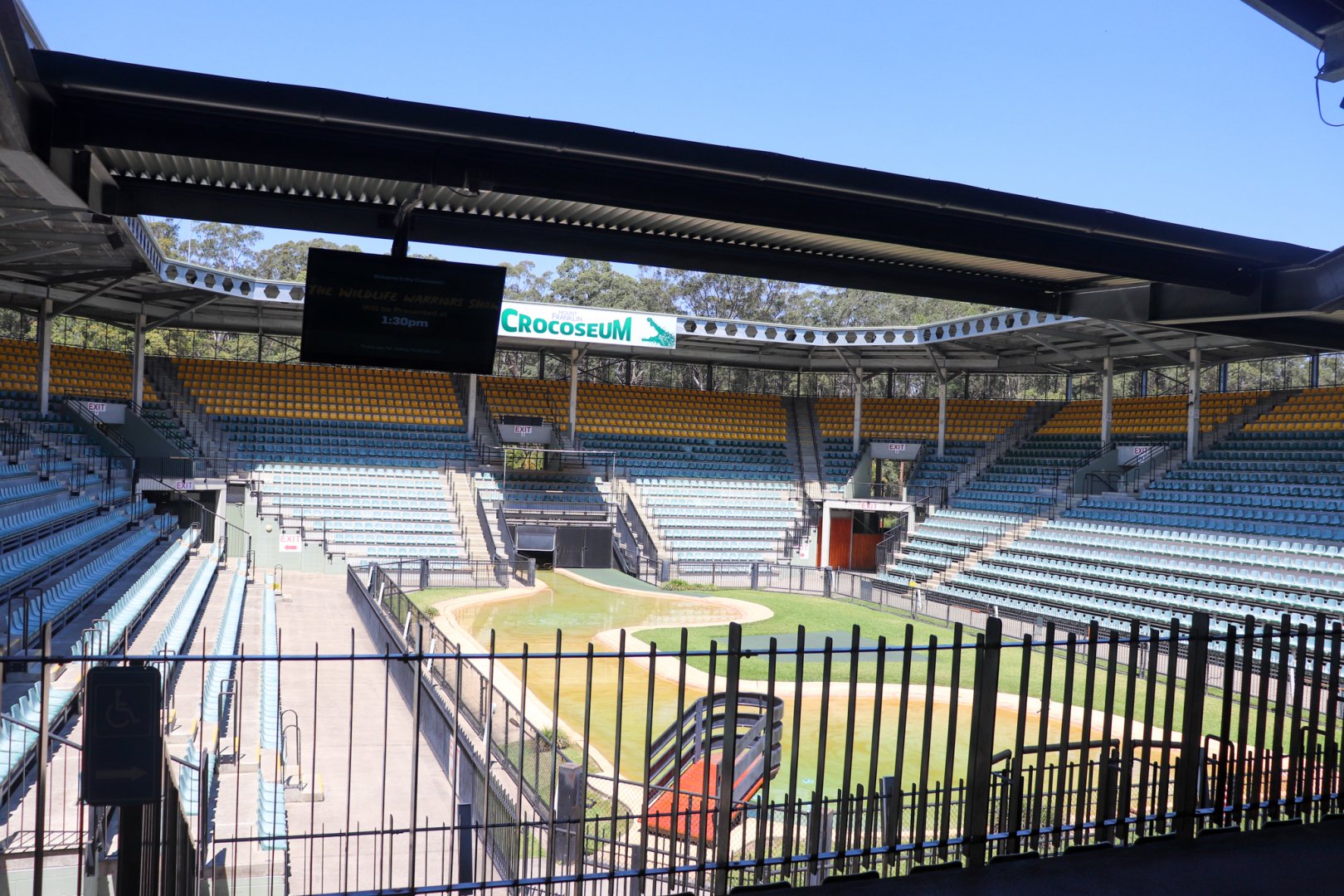
Built in 2004, the Crocoseum area revolves around a large complex that consists of a 5000-seat arena for the main wildlife show which combines snakes, birds and the final crocodile feeding. There are also a few animal exhibits that are included in and around this area.

Wild Species: Scarlet Honeyeater [probably the busiest section of the zoo so there are not many notable species besides some of the common wild species mentioned in part one]

A circular enclosure with a boardwalk viewing area for visitors. This enclosure contained several females and their pouch young:
Koala (Phascolarctos cinereus)

A trio of grassy, chain-link grassy enclosures with clear-water ponds. Each enclosure has a feeding platform and several palm trees:
Saltwater Crocodile (Crocodylus porosus)

The main 5000-seat arena that is used for the main show (the Wildlife Warriors Show) which uses the following species usually in this order. Note some of the species rotate like the snakes and black cockatoos so sometimes they use different combinations. Raptors have traditionally been featured in the show as well but I haven’t seen any recently:
Green-winged Macaw (Ara chloropterus)
Blue and Gold Macaw (Ara ararauna)
Boa Constrictor (Boa constrictor)
Black-headed Python (Aspidites melanocephalus)
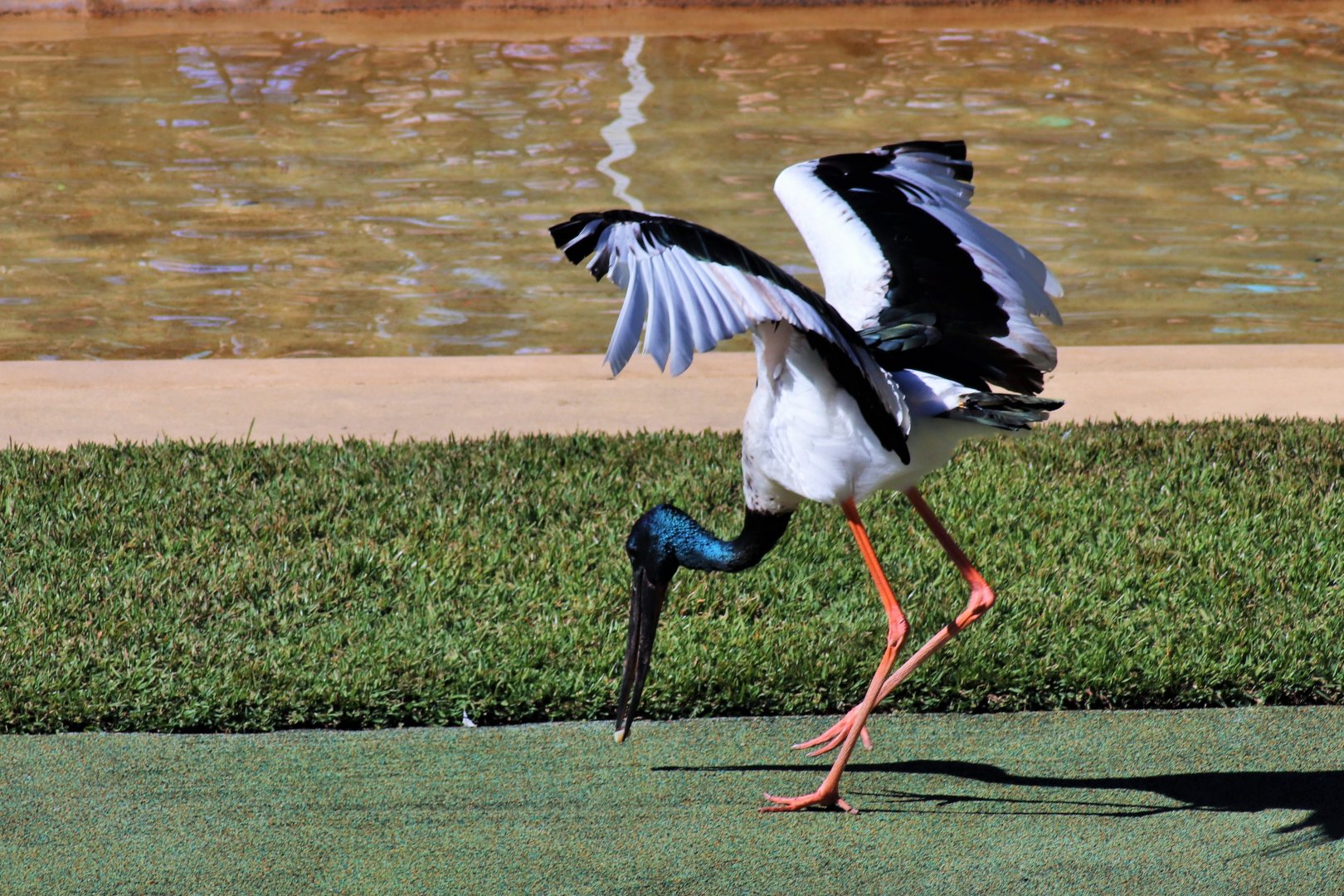
Black-headed Stork (Ephippiorhynchus asiaticus)
Little Pied Cormorant (Microcarbo melanoleucos)
Great Cormorant (Phalacrocorax carbo)
Yellow-tailed Black Cockatoo (Calyptorhynchus funereus)
Red-tailed Black Cockatoo (Calyptorhynchus banksii)
Eclectus Parrot (Eclectus roratus)
Rainbow Lorikeet (Trichoglossus moluccanus)
Red-collared Lorikeet (Trichoglossus rubritorquis)
Saltwater Crocodile (Crocodylus porosus)

Seven enclosures that are situated behind the arena and can be seen from the top level of the Crocoseum. They house all the crocodiles used in the main show:
Saltwater Crocodile (Crocodylus porosus)

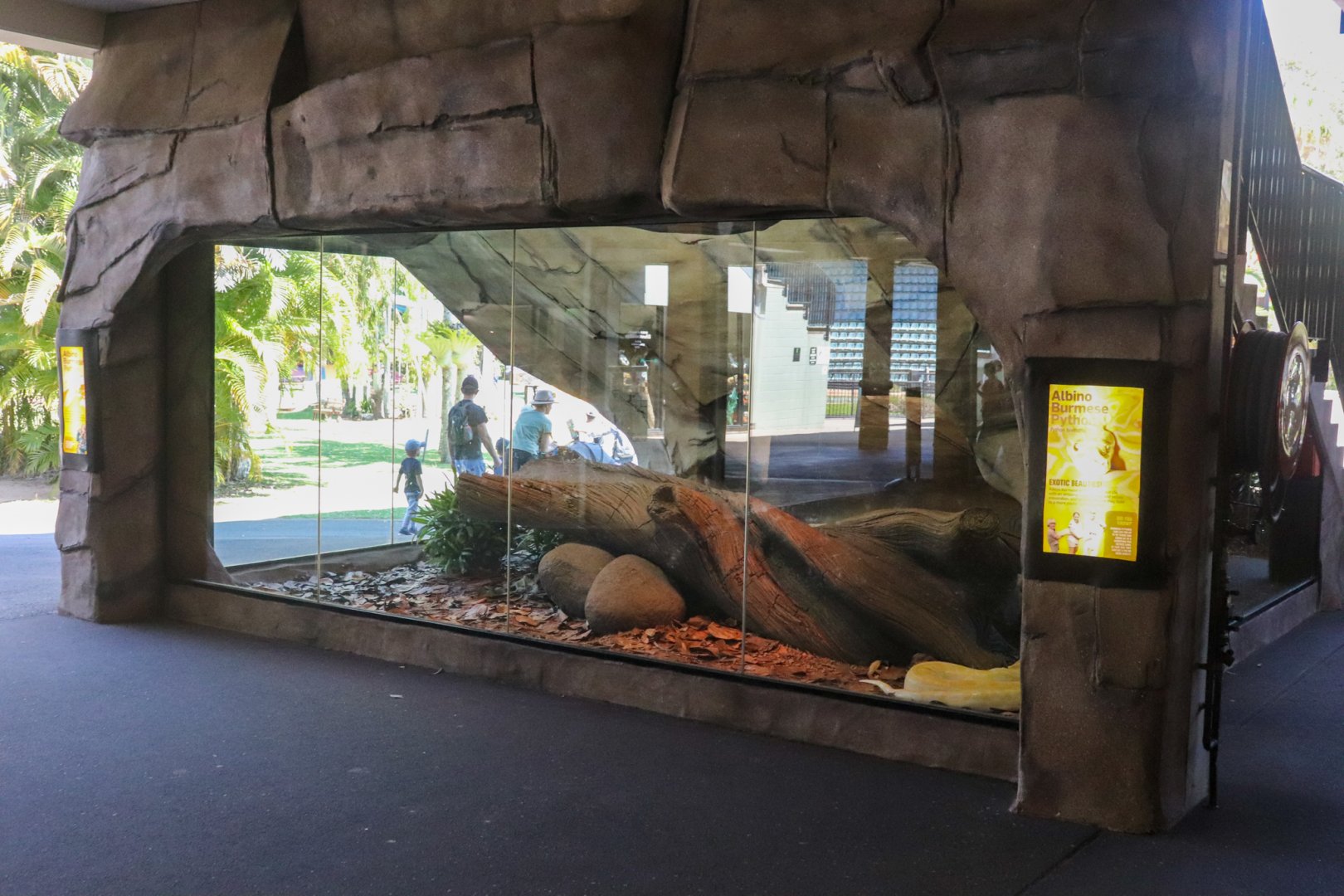
A glass-fronted enclosure with leaf litter substrate and logs located near the Crocoseum entry:
Burmese Python (Python bivittatus)

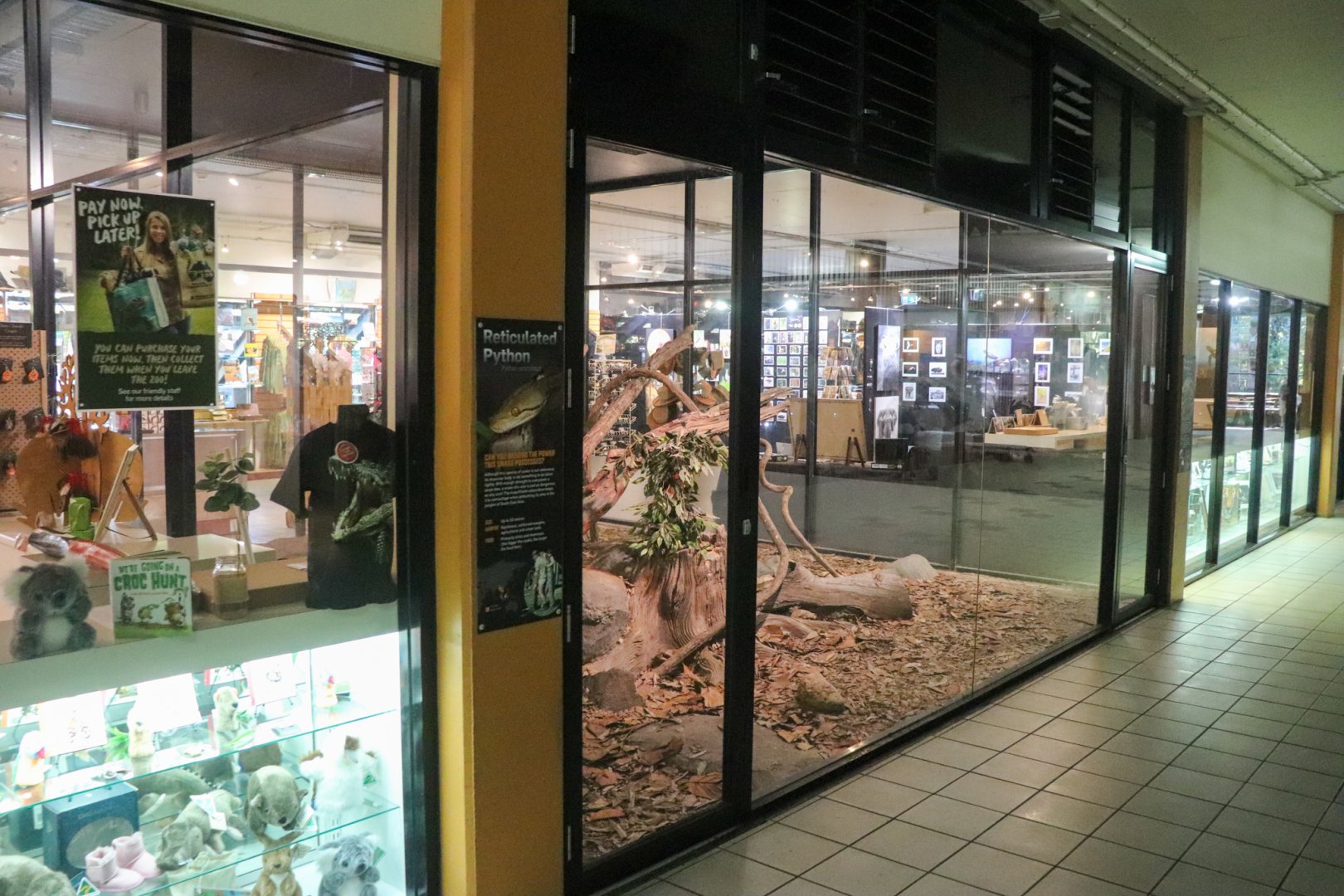
Another similar but slightly smaller enclosure situated further within the Crocoseum. This exhibit was signed for Reticulated Python (and usually has one) but on my visit yesterday it housed another:
Burmese Python (Python bivittatus)


REMAINDER OF PINK ZONE ON MAP (7 Exhibits):
This area consists of the final few enclosures situated in the front area (pink zone on the map) of the zoo. These are quite old-looking exhibits but have the advantage of having a lot of mature foliage and vegetation. This is usually a quiet area compared to the Crocoseum.

Wild Species: Eastern Yellow Robin, Eastern Water Skink [seen in the small water features in the Tasmanian devil enclosure]

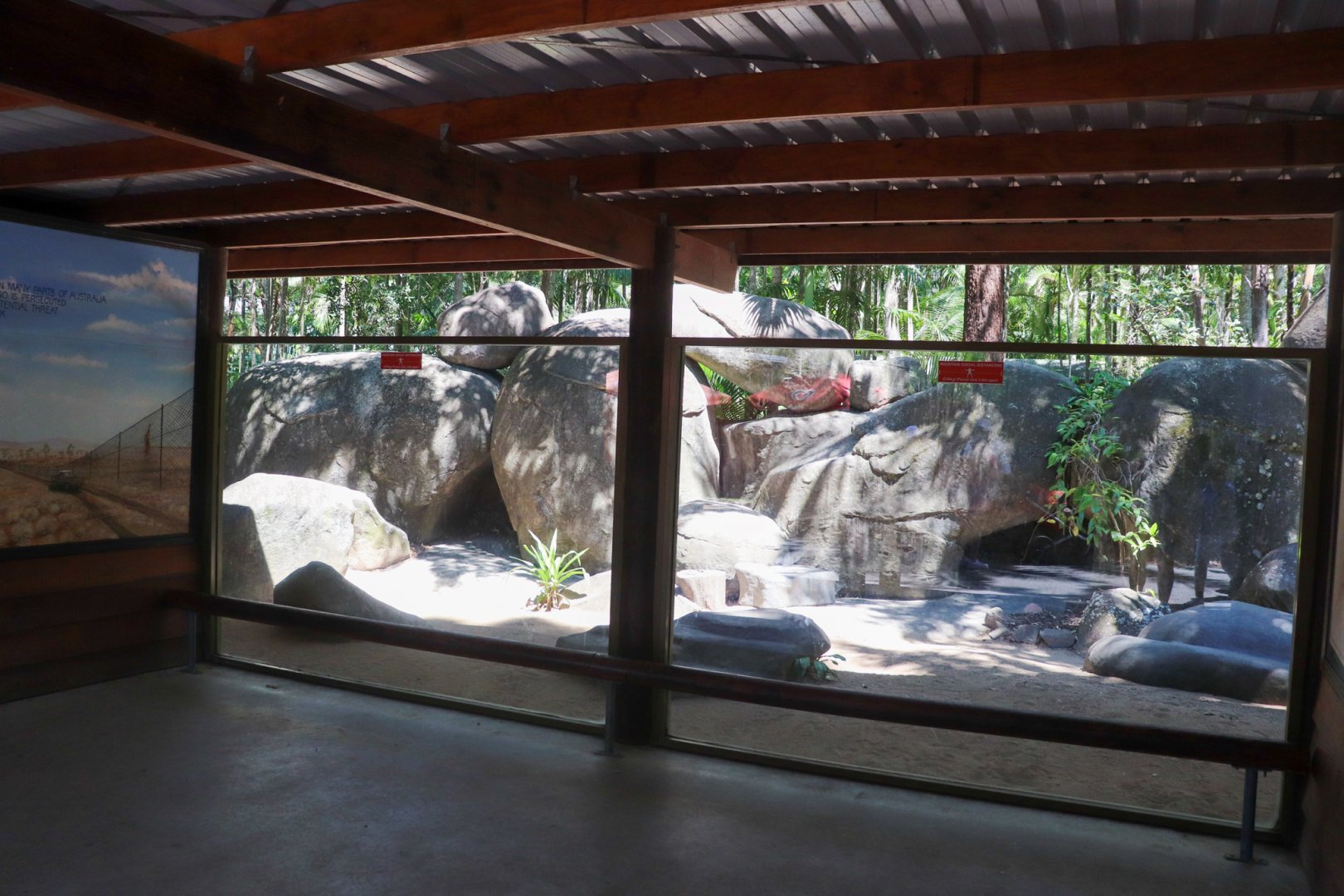
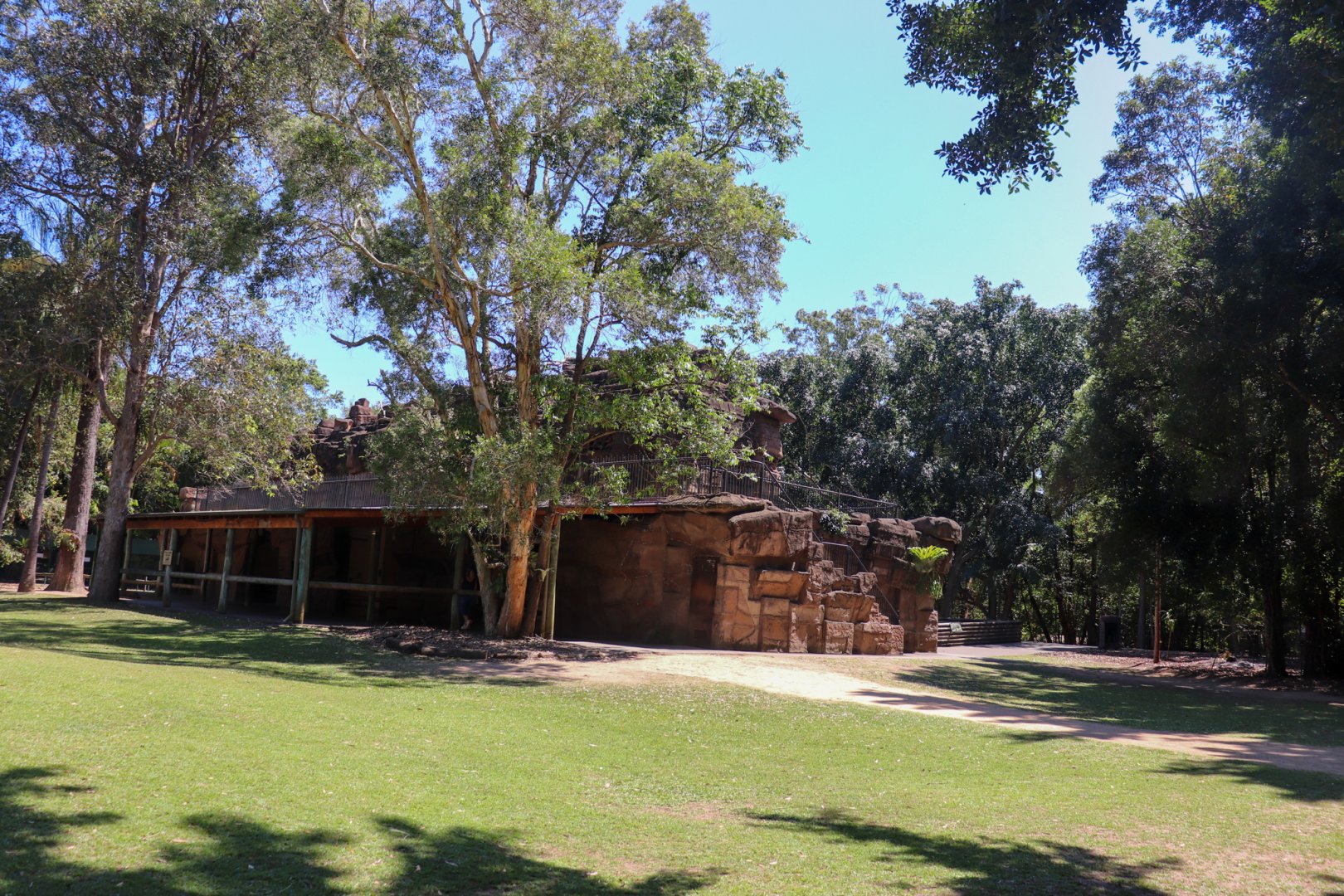
A medium-sized, mock-rock enclosure with a glass-viewing window and a few plantings. This enclosure has several rocky ledges at the back on which you can often find this species sleeping on:
Binturong (Arctictis binturong)

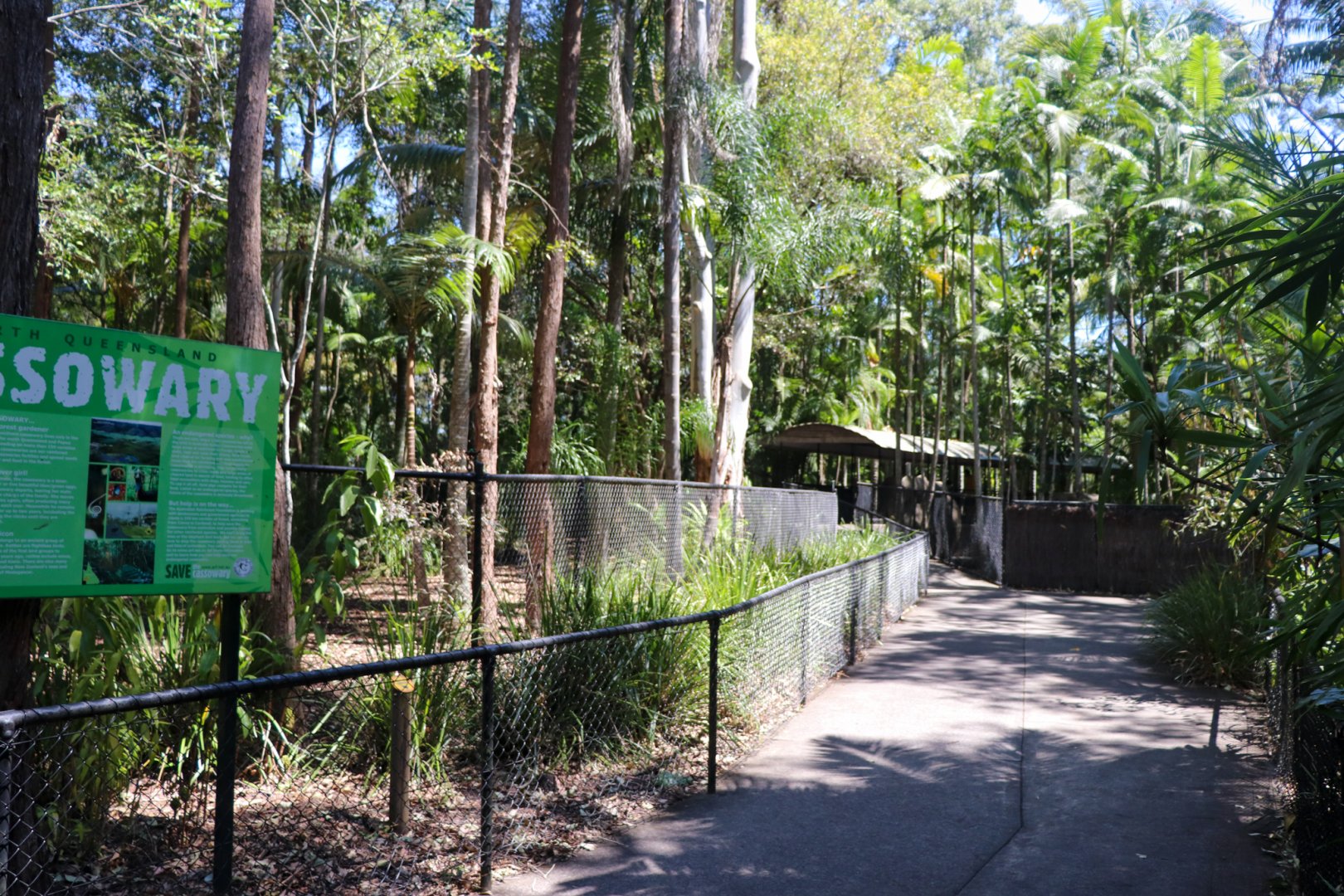
A large, well-planted complex of enclosures that can be divided into several exhibits with a series of gates. On my visit it was divided into two exhibits:
Southern Cassowary (Casuarius casuarius johnsonii)

Opposite the cassowaries, is a large enclosure with a small stream and a glass-viewing window for visitors. This enclosure houses three (1.2) siblings:
Dingo (Canis dingo)

A pair of enclosures with glass-fronted panels and mock rock boulders with thick plantings and a waterfall with an indoor den area:
Tasmanian Devil (Sarcophilus harrisii)

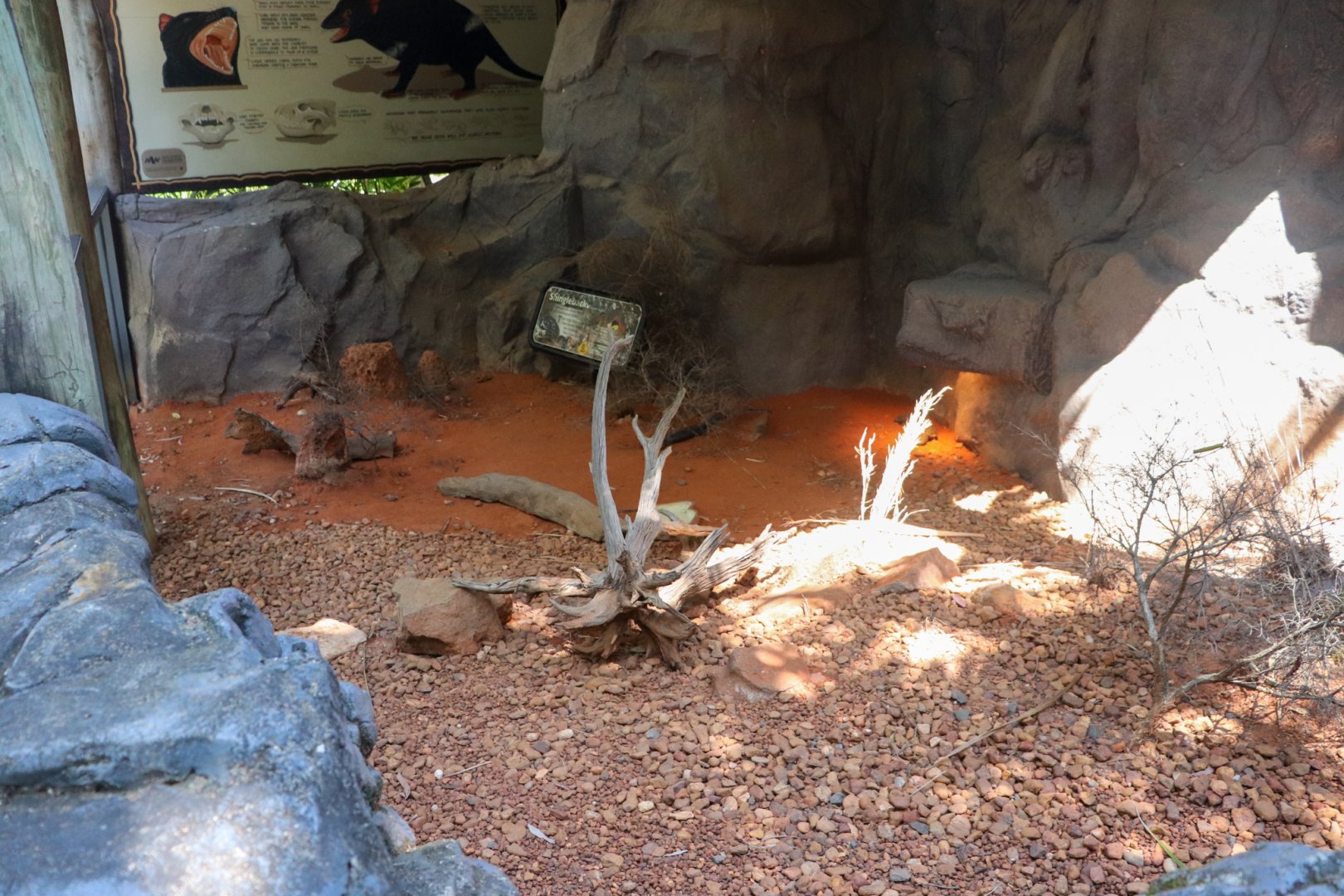
A small desert-themed enclosure with more mock rock. This exhibit was located near the Tasmanian devils and isn't signed on the map:
Shingleback (Tiliqua rugosa)


Last edited:
ROO HEAVEN - YELLOW ZONE ON MAP (2 Exhibits) :
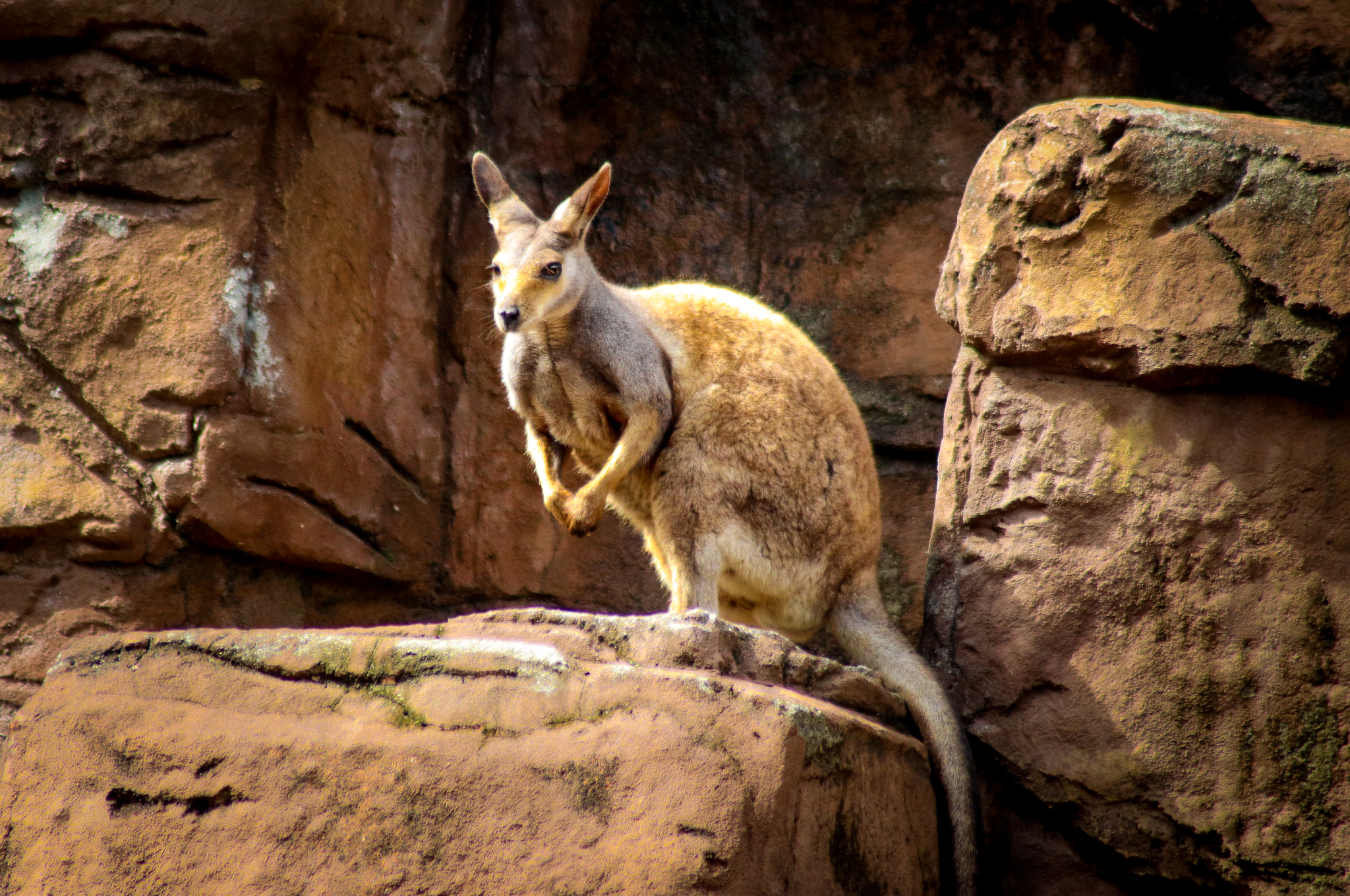
The zoo’s main macropod enclosure which is located near the Crocoseum. The only way to get to the other sections of the zoo is to walk through this exhibit. The rock wallabies (Australia Zoo only has 1.1 left) are usually very difficult to see unless you visit when they are being fed around 9am. They retreat to the top of the mound, out of sight for most of the day.

Wild Species: Pacific Black Duck, Australian Wood Duck, Grey Fantail [Wild Grey Fantail (Rhipidura albiscapa) - ZooChat], Large-billed Scrubwren, Scarlet Honeyeater, Spectacled Monarch [Wild Spectacled Monarch (Symposiachurus trivirgatus) - ZooChat], Peaceful Dove [Wild Peaceful Dove (Geopelia placida) - ZooChat]

A very large walkthrough exhibit with a tall rocky mound. This enclosure has a small stream running through the enclosure and several mature trees:
Eastern Grey Kangaroo (Macropus giganteus)
Red-necked Wallaby (Notamacropus rufogriseus banksianus)
Swamp Wallaby (Wallabia bicolor)
Black-footed Rock Wallaby (Petrogale lateralis)

A medium-sized, open-topped enclosure with an outdoor and indoor area. This exhibit also has a small pool:
Short-beaked Echidna (Tachyglossus aculeatus)


Last edited:
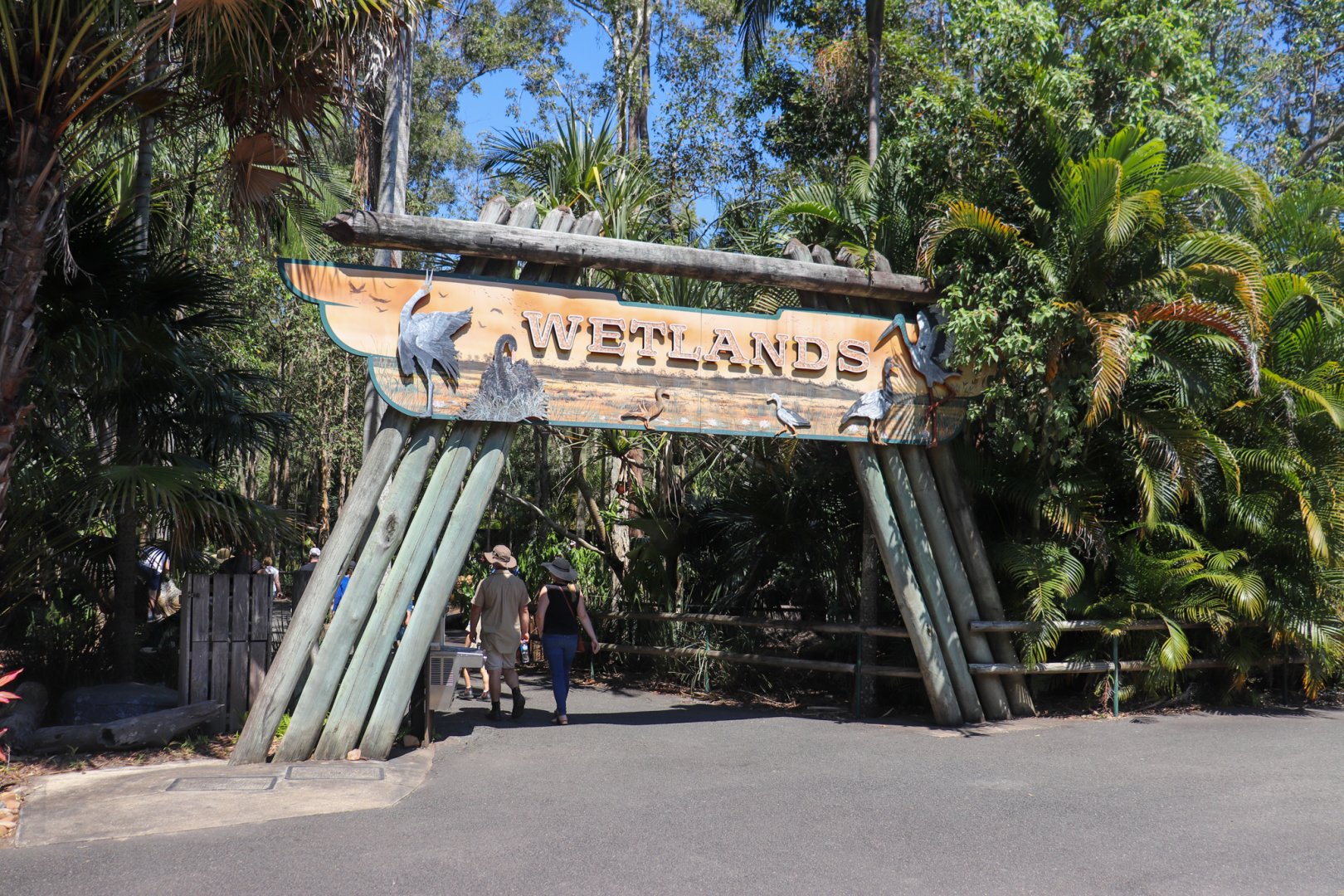
WETLANDS – YELLOW ZONE ON MAP (4 Exhibits):
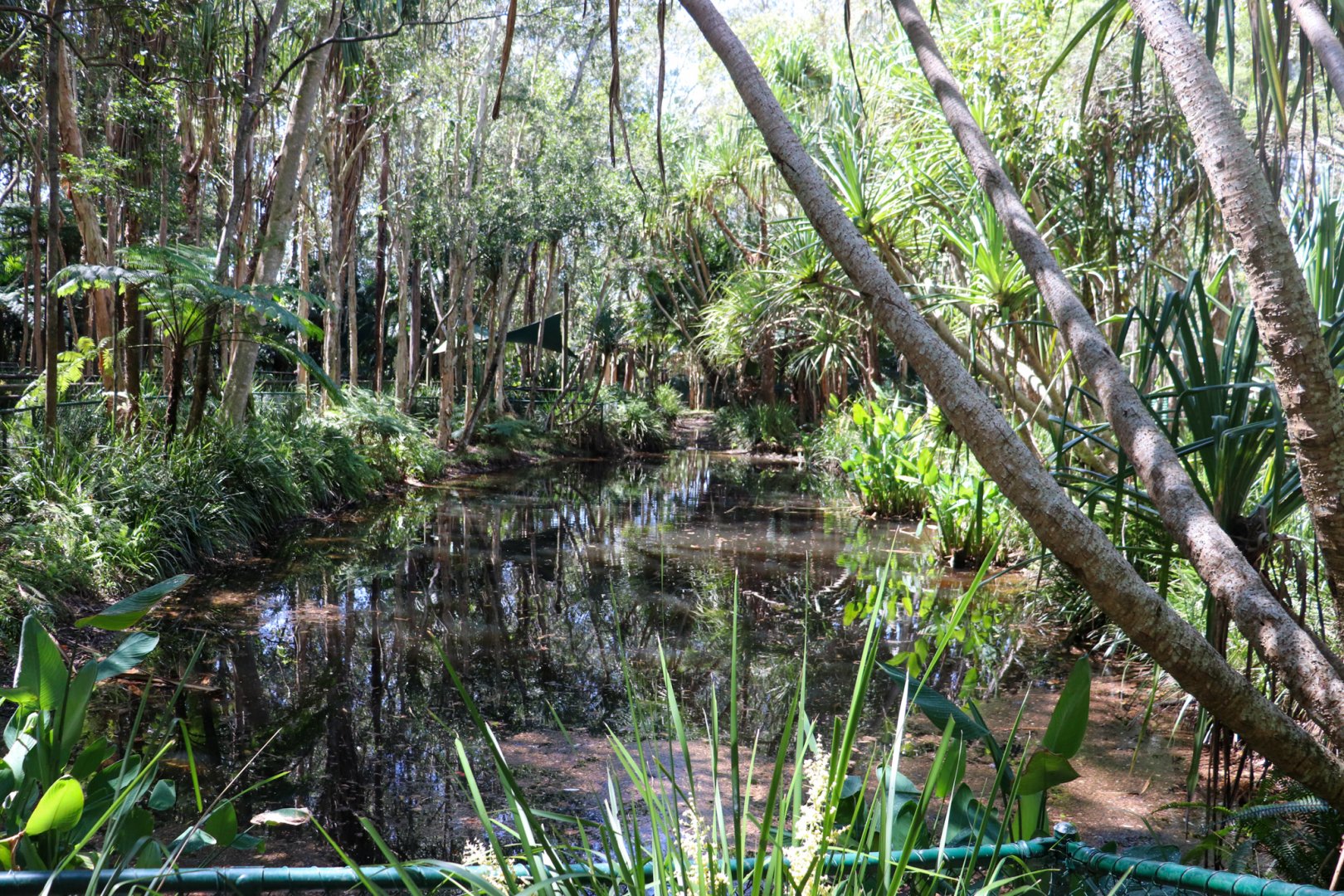
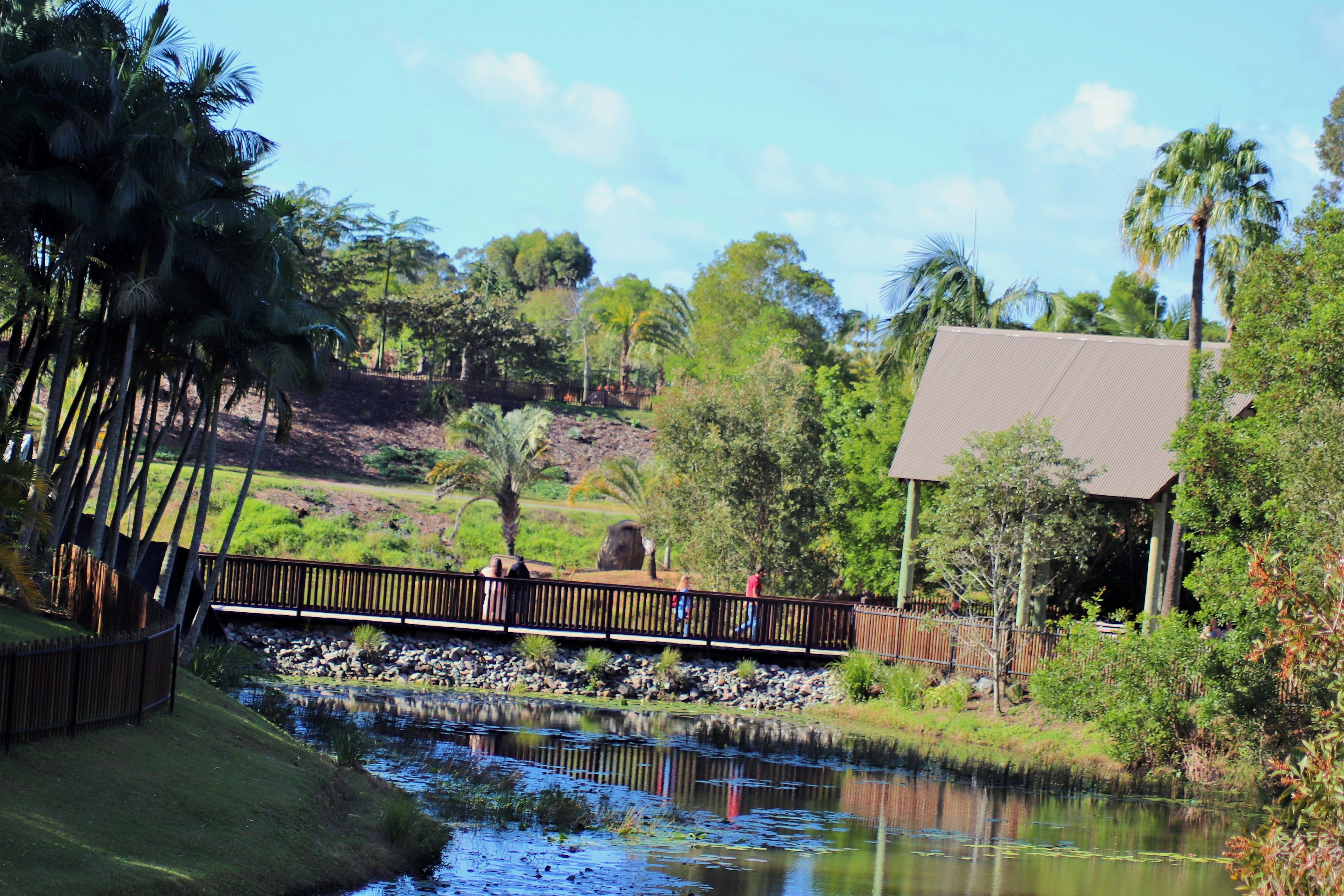
The most naturalistic section of Australia Zoo, using the pre-existing environment around them to create large open-topped exhibits. The entire area is well-shaded and diverse with wildlife which complements nicely with the few captive species found here.

Wild Species: Grey Goshawk [Wild Grey Goshawk (Accipiter novaehollandiae) - ZooChat], Red-browed Finch [Wild Red-browed Finches (Neochmia temporalis) - ZooChat], Bar-shouldered Dove [Wild Bar-shouldered Dove (Geopelia humeralis) - ZooChat], Peaceful Dove, Rufous Fantail, Lace Monitor [A Wild Lace Monitor! - ZooChat], Green Tree Snake

A large naturalistic enclosure with several viewing areas:
Brolga (Antigone rubicunda)

A similarly-designed enclosure with thick vegetation and a large body of water. This exhibit is larger than the other ones. It houses a pair of this species:
Black-necked Stork (Ephippiorhynchus asiaticus)

Another large enclosure with thick vegetation and a pool of water with several viewing areas:
Brolga (Antigone rubicunda)

A fenced enclosure with a raised viewing area for visitors and several mature eucalyptus trees:
Emu (Dromaius novaehollandiae)


WALKTHROUGH ENCLOSURES – PURPLE ZONE ON MAP (6 Exhibits):
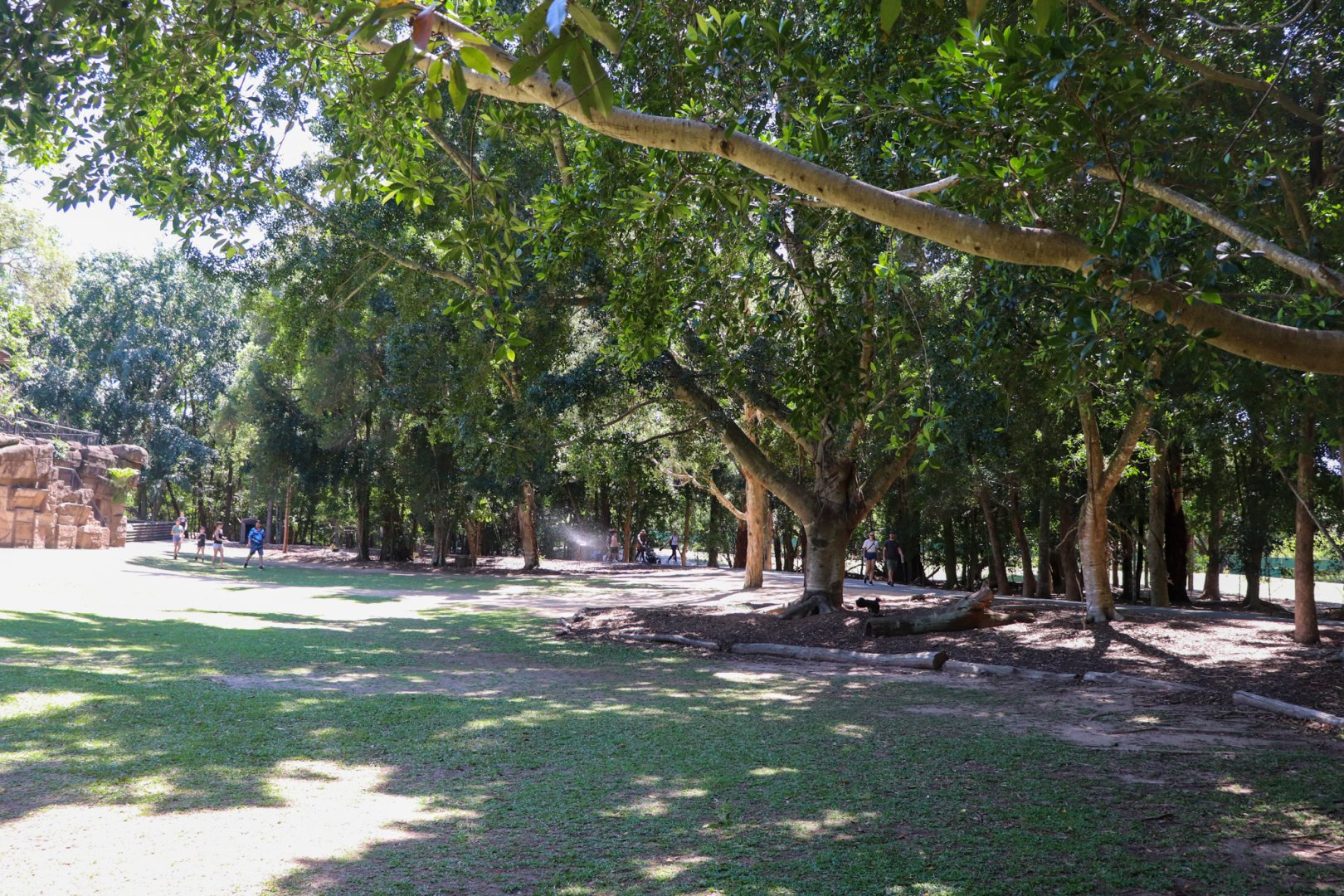
This section includes three of main walkthrough enclosures at the zoo and some of the other nearby exhibits. This land used to be a macadamia plantation and a lot of mature macadamia trees can be found throughout the enclosures. The koala walkthrough is particularly rich in birdlife with all the flowering plants.

Wild Species: Scarlet Honeyeater [Wild Male Scarlet Honeyeater (Myzomela sanguinolenta) - ZooChat], White-cheeked Honeyeater [Wild White-cheeked Honeyeater (Phylidonyris niger) - ZooChat], Eastern Yellow Robin [Wild Eastern Yellow Robin (Eopsaltria australis) - ZooChat], Golden Whistler [Wild Golden Whistler (Pachycephala pectoralis) - ZooChat], Brown Thornbill, Bar-shouldered Dove, Peaceful Dove, Spotted Turtle Dove, Bush Stone Curlew [pair nest annually in red kangaroo enclosure: Wild Bush Stone Curlew Family (Burhinus grallarius) - ZooChat]

A walkthrough enclosure with macadamia trees and a great diversity of flowering native plants like bottlebrushes, kangaroo paws and grevilleas. There are also two shaded sections for the koalas. Many years ago, the koalas also shared this area with rufous bettongs and curlews:
Koala (Phascolarctos cinereus)

A grassy well-shaded walkthrough enclosure with an undercover area. Red-necked Wallaby also used to live in this enclosure however don’t seem to anymore:
Red Kangaroo (Osphranter rufus)

A lushly-planted walkthrough aviary with a straight path for visitors running through the middle of the exhibit. Macadamia trees are the main tree species and there is a small stream running through the aviary:
Magpie Goose (Anseranas semipalmata)
Radjah Shelduck (Radjah radjah)
Glossy Ibis (Plegadis falcinellus)
Bush Stone Curlew (Burhinus grallarius)
Rose-crowned Fruit Dove (Ptilinopus regina)
Peaceful Dove (Geopelia placida)
Bar-shouldered Dove (Geopelia humeralis)
Pacific Emerald Dove (Chalcophaps longirostris)
Wonga Pigeon (Leucosarcia melanoleuca)
White-headed Pigeon (Columba leucomela)
Torresian Imperial Pigeon (Ducula spilorrhoa)
Eclectus Parrot (Eclectus roratus)
Sacred Kingfisher (Todiramphus sanctus)
Regent Honeyeater (Anthochaera phrygia)
Superb Fairywren (Malurus cyaneus)
Gouldian Finch (Erythrura gouldiae)

The zoo recently updated the signage in this aviary (after almost a decade of having the old signage up) and the following species was signed but not seen:
Chestnut-breasted Mannikin (Lonchura castaneothorax)

Keepers also brought in a few larger parrots to do laps of the aviary:
Galah (Eolophus roseicapilla)
Red-tailed Black Cockatoo (Calyptorhynchus banksii)
Blue and Gold Macaw (Ara ararauna)

A very large netted aviary:
Wedge-tailed Eagle (Aquila audax)

A large, grassy enclosure with mock rock. There is also an indoor glass-fronted den area that the wombats had access to during my visit. The zoo mixes both species together and have for a few years:
Southern Hairy-nosed Wombat (Lasiorhinus latifrons)
Common Wombat (Vombatus ursinus)

A second enclosure with a similar layout to the first wombat enclosure, only slightly smaller:
Common Wombat (Vombatus ursinus)


Thanks very much for all of your extensive work on this thread. Once again I'm amazed at the high quality of the exhibits at this zoo and I appreciate you taking all of us through the grounds on a tour. :)
 
Thanks very much for all of your extensive work on this thread. Once again I'm amazed at the high quality of the exhibits at this zoo and I appreciate you taking all of us through the grounds on a tour. :)
I'm glad you appreciate it. :) Australia Zoo certainly have some quality enclosures as space is no issue for them. I am sure they will continue this pattern when their Sumatran elephants hopefully go on-display next year in their future exhibit (as you'll see in the following posts).
 
REPTILE HOUSE - PURPLE ZONE ON MAP (16 Exhibits):
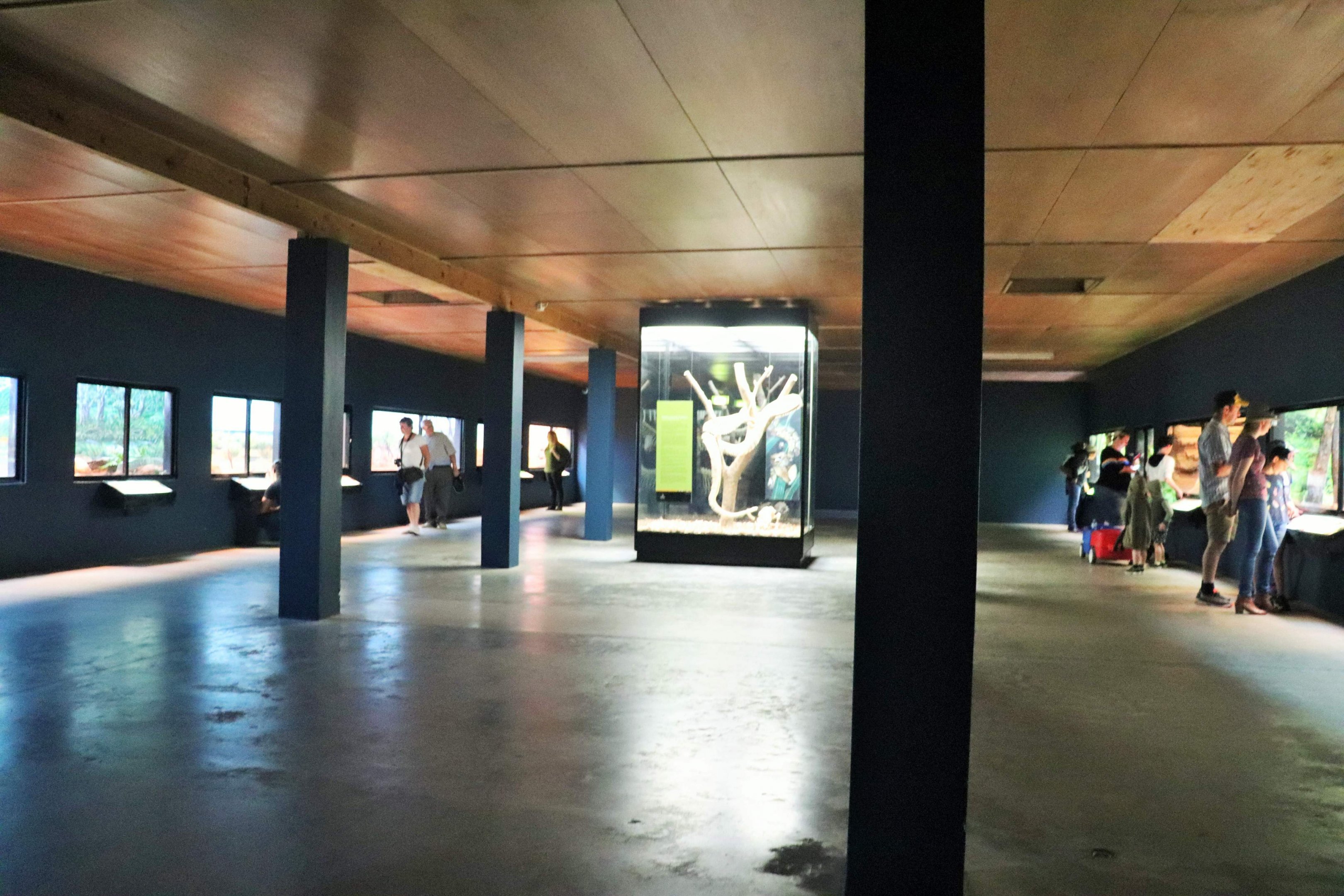
For many years, this reptile house exclusively housed Australian species of snakes. However, over the past five years or so, the zoo have been gradually adding species of exotic reptiles. Currently the reptile house has 18 species of herptile; the most diverse it has ever been. Several of the exhibits also have live plants but not all of them. The zoo also keep other species off-display like Elongated Tortoise, Green Anaconda and poison dart-frogs so there are always other opportunities for new species to be introduced on-display.

Wild Species: None; it’s a completely indoor area.

A desert-themed enclosure with several hiding opportunities:
Gila Monster (Heloderma suspectum)

A small enclosure with live plants and a tropical background:
Veiled Chameleon (Chamaeleo calyptratus)

Another smallish enclosure with a desert theme:
Western Brown Snake (Pseudonaja nuchalis)

Continuing the desert theme, a larger enclosure with a sandy substrate:
King Brown Snake (Pseudechis australis)

A slightly smaller enclosure with a beach background:
Black Tiger Snake (Notechis scutatus humphreysi)

A similarly-sized enclosure with more furnishings:
Eastern Tiger Snake (Notechis scutatus scutatus)

A large enclosure with a good amount of hiding opportunities:
Eastern Brown Snake (Pseudonaja textilis)

A small enclosure with leaf litter substrate:
Common Death Adder (Acanthophis antarcticus)

A large enclosure with several logs, branches and dried grasses:
Coastal Taipan (Oxyuranus scutellatus)

A very barren enclosure with a sandy substrate:
Inland Taipan (Oxyuranus microlepidotus)

A large enclosure with leaf litter substrate, rocks and logs:
Australian Scrub Python (Simalia kinghorni)

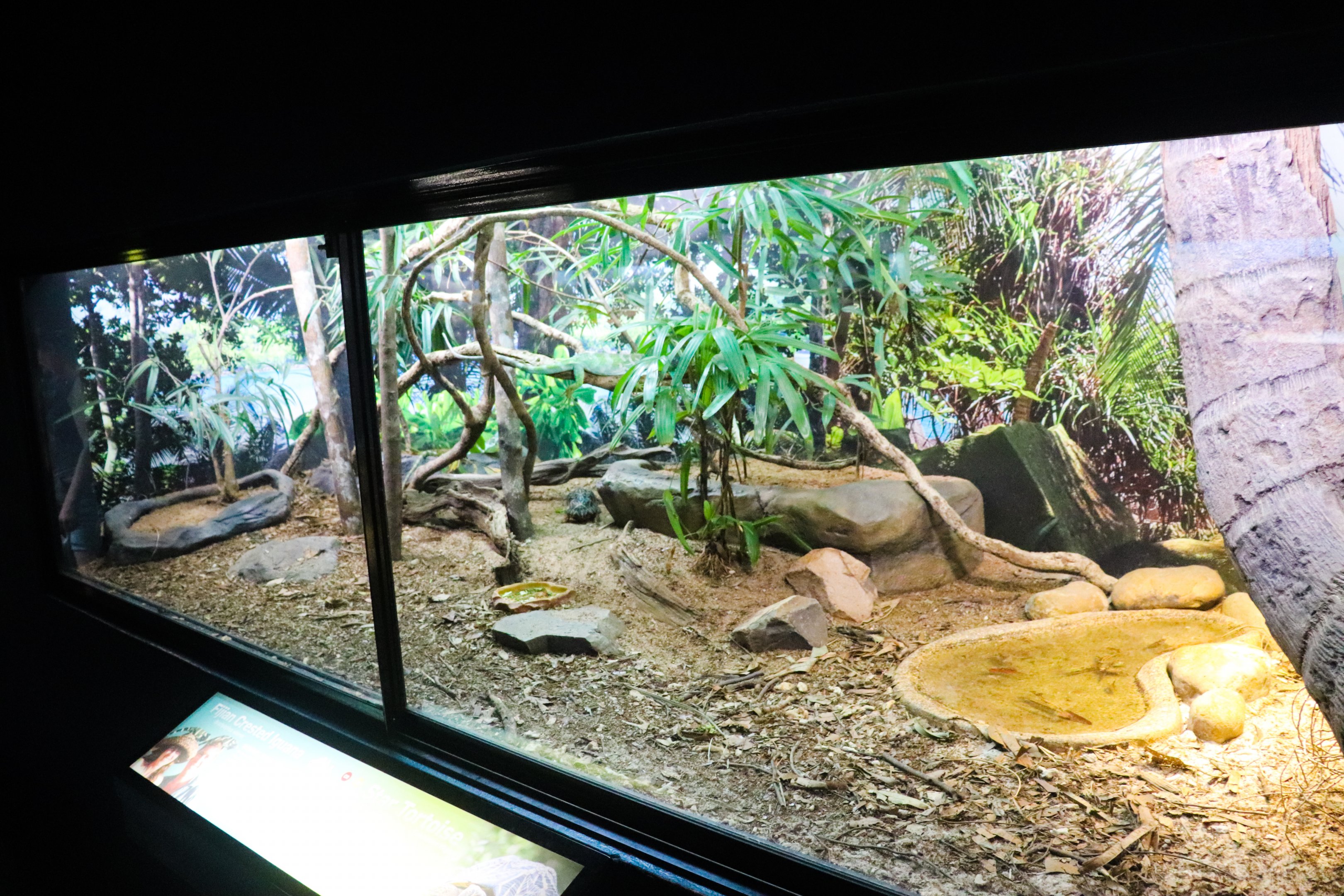
A large enclosure with multiple types of substrate, live plants and an island-themed background. This enclosure was renovated for these two species in 2018:
Indian Star Tortoise (Geochelone elegans)
Fijian Crested Iguana (Brachylophus vitiensis)

A similarly-sized enclosure with a pine needle substrate, pine cones and several hiding opportunities. The corn snakes were mixed with rattlesnakes only recently:
Eastern Diamondback Rattlesnake (Crotalus adamanteus)
Corn Snake (Pantherophis guttatus)

A large desert-themed enclosure with a mock rock background with raised ledges for the snakes:
Woma Python (Aspidites ramsayi)

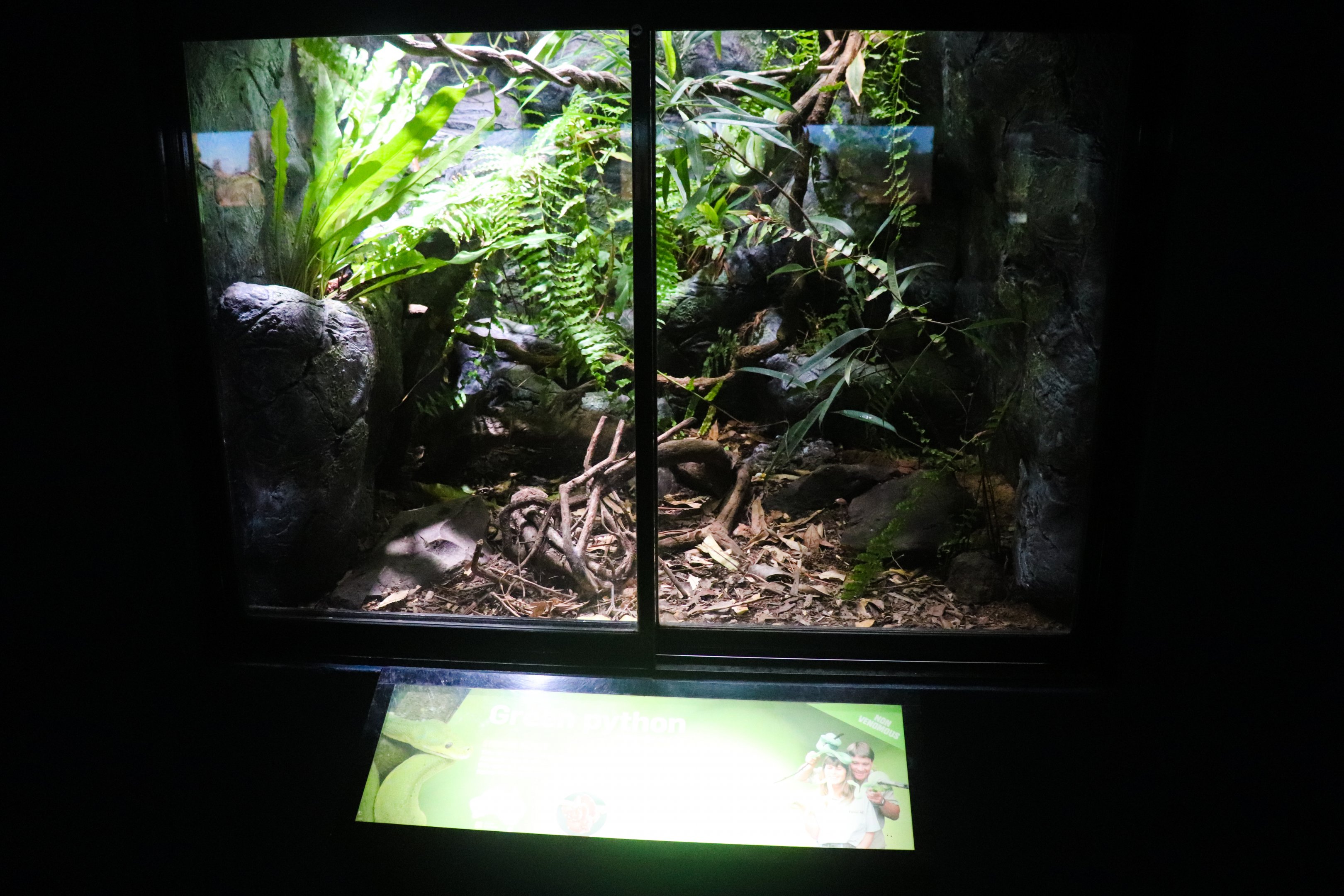
A small tropical enclosure with live plants. The frogs were only introduced very recently into the enclosure:
Green Tree Python (Morelia viridis)
White-lipped Tree Frog (Litoria infrafrenata)

A large enclosure with leaf litter substrate and bamboo theming:
King Cobra (Ophiophagus hannah)


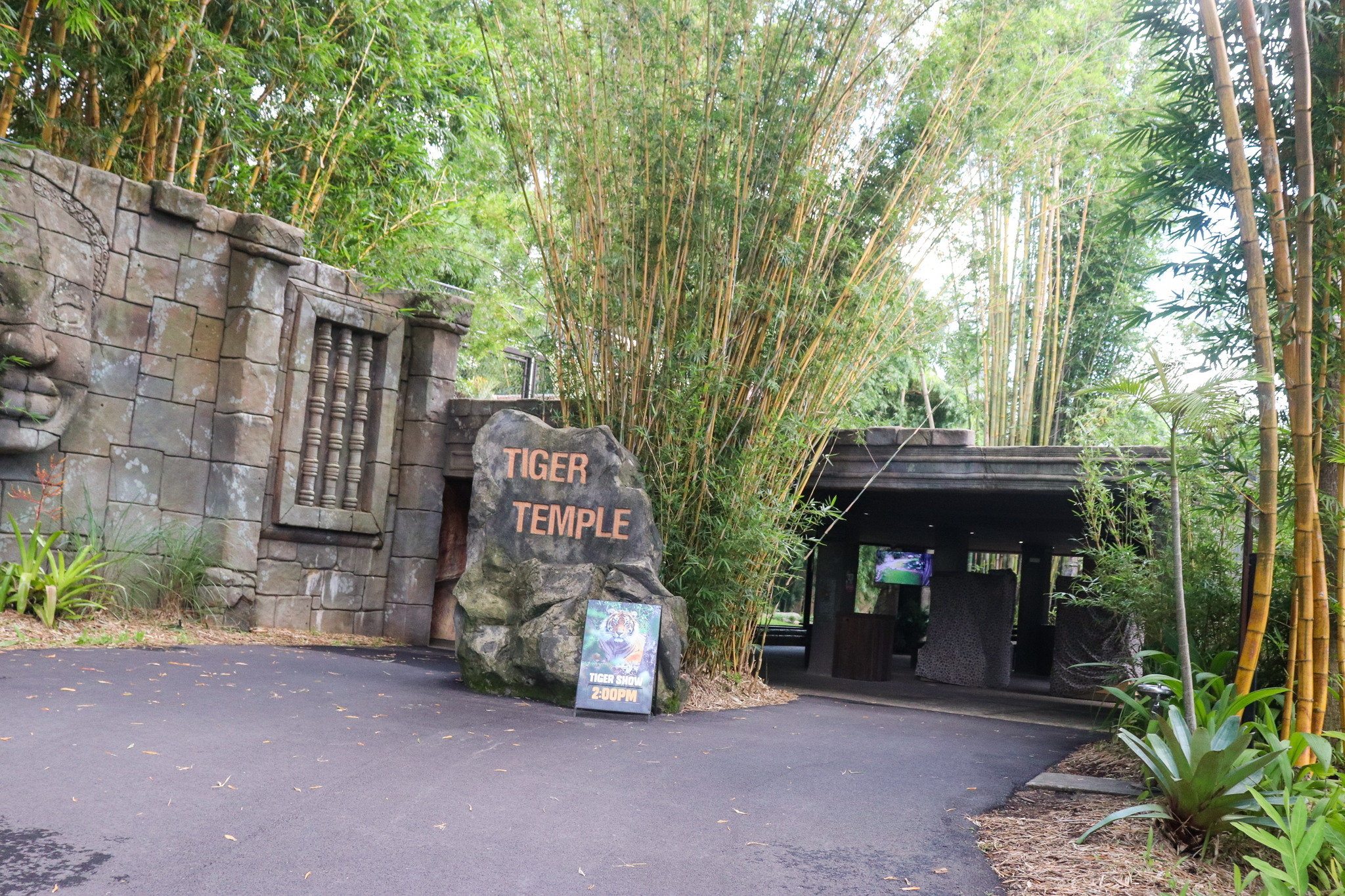
TIGER TEMPLE/ELEPHANTASIA – ORANGE ZONE ON MAP (5 Exhibits):
The zoo’s tiger and elephant enclosures are situated directly opposite one another, and create the zoo’s small Asian section (the zoo also have otters, binturongs, Komodo dragons and other species of Asian reptile but for some reason, they are spread out across the zoo).

Wild Species: Green Catbird [A Well-Camouflaged Green Catbird (Ailuroedus crassirostris) - Wild - ZooChat], Australasian Figbird [Wild Australasian Figbird (Sphecotheres vieilloti) - ZooChat]

A small glass-fronted enclosure that usually houses tiger cubs or roving animals, but on yesterday's visit it was:
Vacant

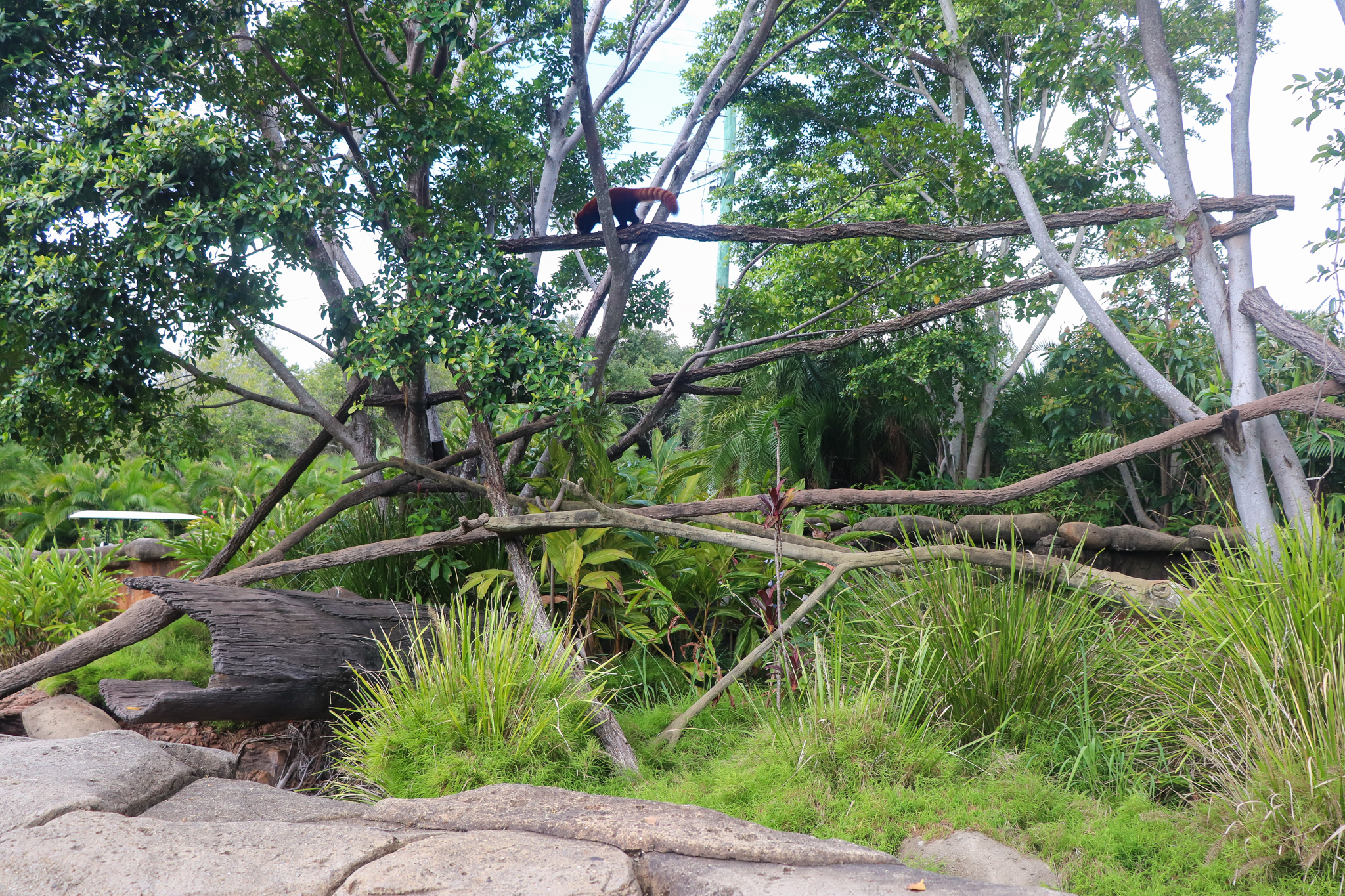
A mock rock enclosure with mature trees and several climbing opportunities. This species also has access to an air-conditioned den:
Red Panda (Ailurus fulgens)

A large complex of glass-fronted enclosures which can be divided into two exhibits. The first portion is smaller than the second. There is also a large pool with underwater viewing and the whole area is thickly planted with bamboo. The zoo rotates their Sumatran and hybrid tigers several times a day but usually the Sumatrans are on-display:
Sumatran Tiger (Panthera tigris sumatrae)

A very large grassy paddock with a large pool and shaded area. The enclosure is well fenced and lushly-planted along the perimeter. This exhibit has been sitting empty for years however the zoo have announced that they hope to place the elephants that arrived last year, on-display next year:
Vacant – future enclosure for Sumatran Elephant (Elephas maximus sumatrensis)


BINDI’S ISLAND – ORANGE ZONE ON MAP (7 Exhibits):
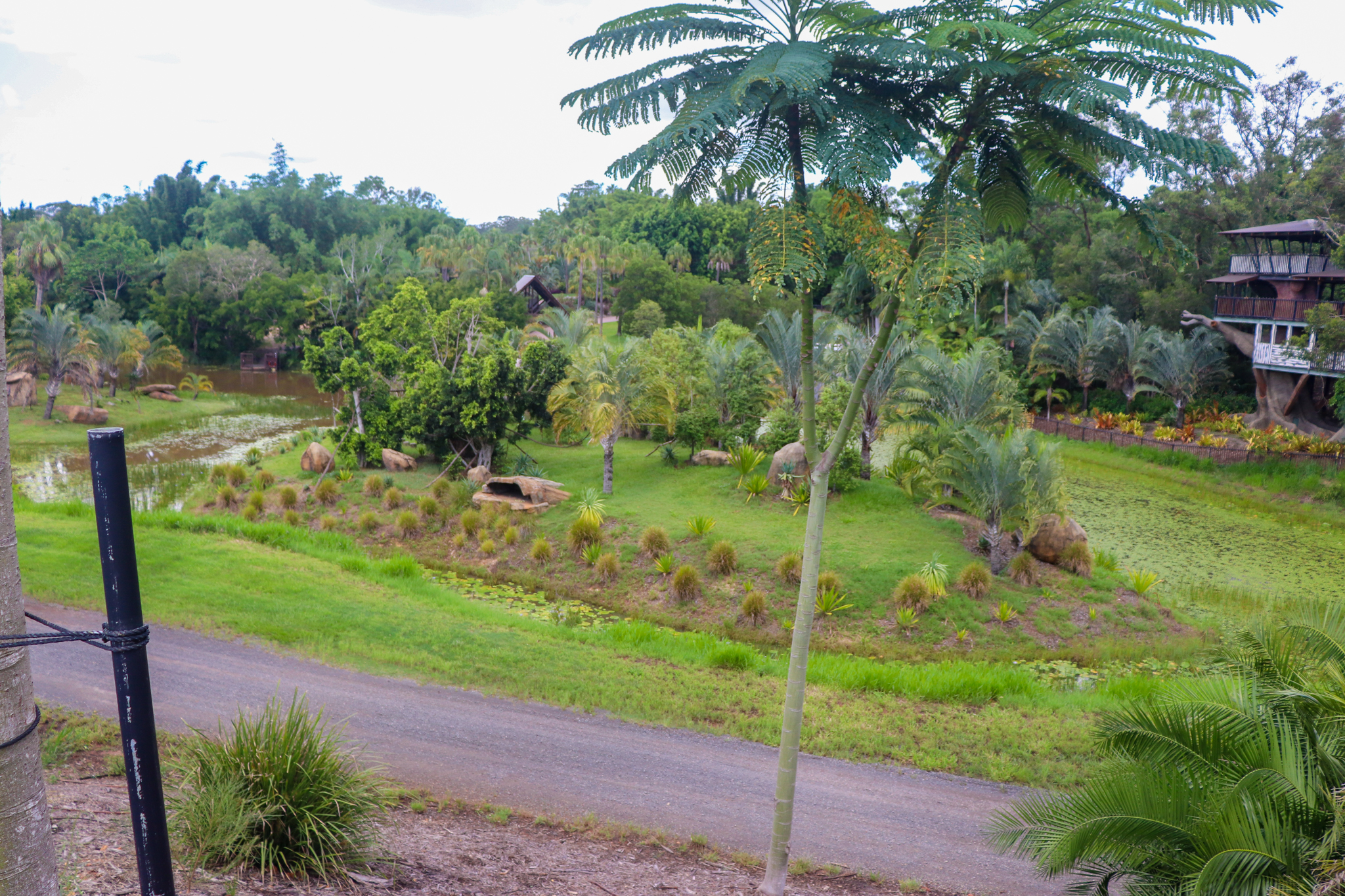
Opened in 2014, Bindi’s Island is a geographical mix of species located on three separate islands, surrounded by water. The main island contains a few free-ranging species along with some exhibits in and around a wooden treehouse. The final two islands cannot be accessed by the general public but can be viewed from the treehouse.

Wild Species: Australasian Grebe, Eurasian Coot, Dusky Moorhen, Hardhead, Golden Whistler [Wild Golden Whistler (Pachycephala pectoralis) - ZooChat], Brown Thornbill

The main island can be accessed via a bridge and airlock. The plantings are very lush and the following species are free-ranging on the island:
Ring-tailed Lemur (Lemur catta)
Helmeted Guineafowl (Numida meleagris)

A large yard with a wooden fence. The lemurs can access this enclosure:
Aldabra Giant Tortoise (Aldabrachelys gigantea)

A small open-topped enclosure with a few branches:
Scarlet Macaw (Ara macao)
Blue and Gold Macaw (Ara ararauna)

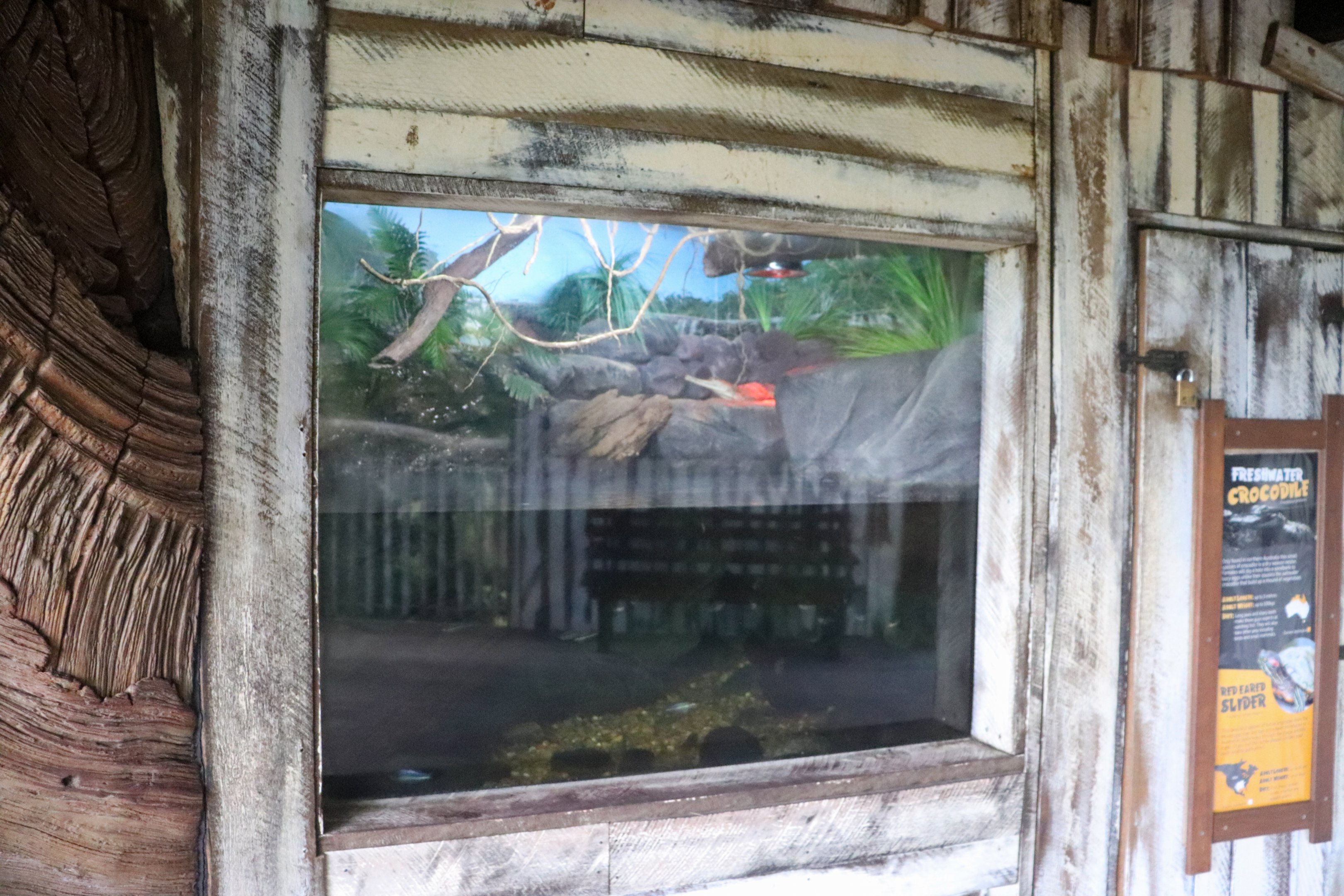
A small wall tank located in the treehouse. It formerly housed Red-eared Sliders and before that, an Alligator Snapping Turtle:
Freshwater Crocodile (Crocodylus johnsoni)
Turtle (unidentified, awaiting an identification from the zoo)
Crimson-spotted Rainbowfish (Melanotaenia duboulayi)
Purple-spotted Gudgeon (Mogurnda adspersa)

A glass-fronted enclosure located in the upper level of the treehouse:
Boa Constrictor (Boa constrictor)

A pair of well-furnished islands that can be seen from the main island. There was no sign of the animals yesterday but they usually have:
Ring-tailed Lemur (Lemur catta)


AFRICA – ORANGE ZONE ON MAP (4 Exhibits):
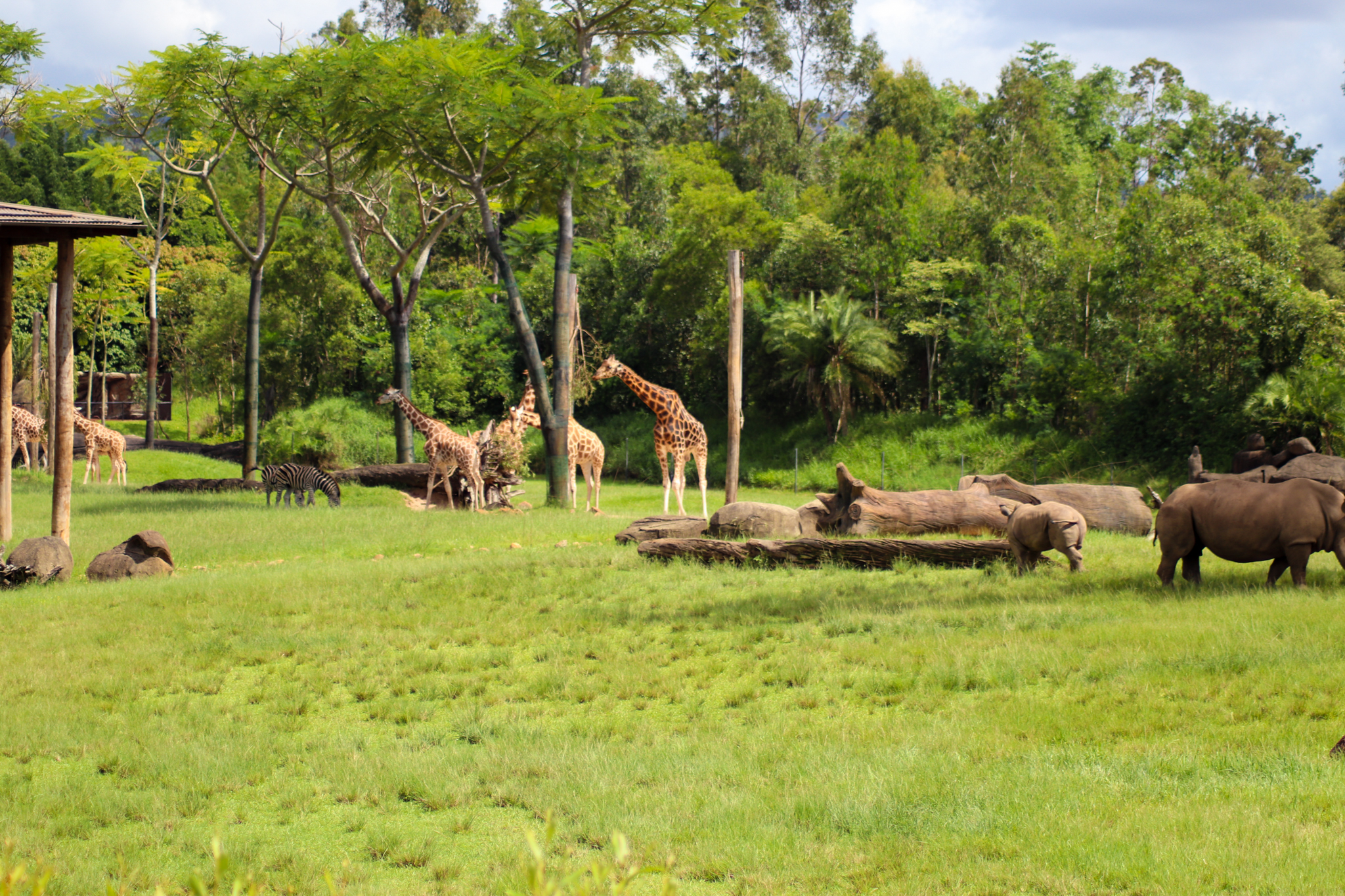
Opened in 2011, Africa contains Australia Zoo’s few species of African animals. The rhinoceros were originally mixed with the giraffe/zebra but have since been separated with a natural-looking rocky barrier. The meerkats only arrived a few years ago after the main savannah exhibit opened. The entire area is also very well-planted with aloes and gingers.

Wild Species: Red-backed Fairy Wren [Wild Red-backed Fairy Wren (Malurus melanocephalus) - ZooChat], Brown Honeyeater, Masked Lapwing, Cattle Egret

A very large grassy enclosure with several shade trees:
Giraffe (Giraffa sp.)
Plains Zebra (Equus quagga)

An equally large enclosure:
Southern White Rhinoceros (Ceratotherium simum simum)

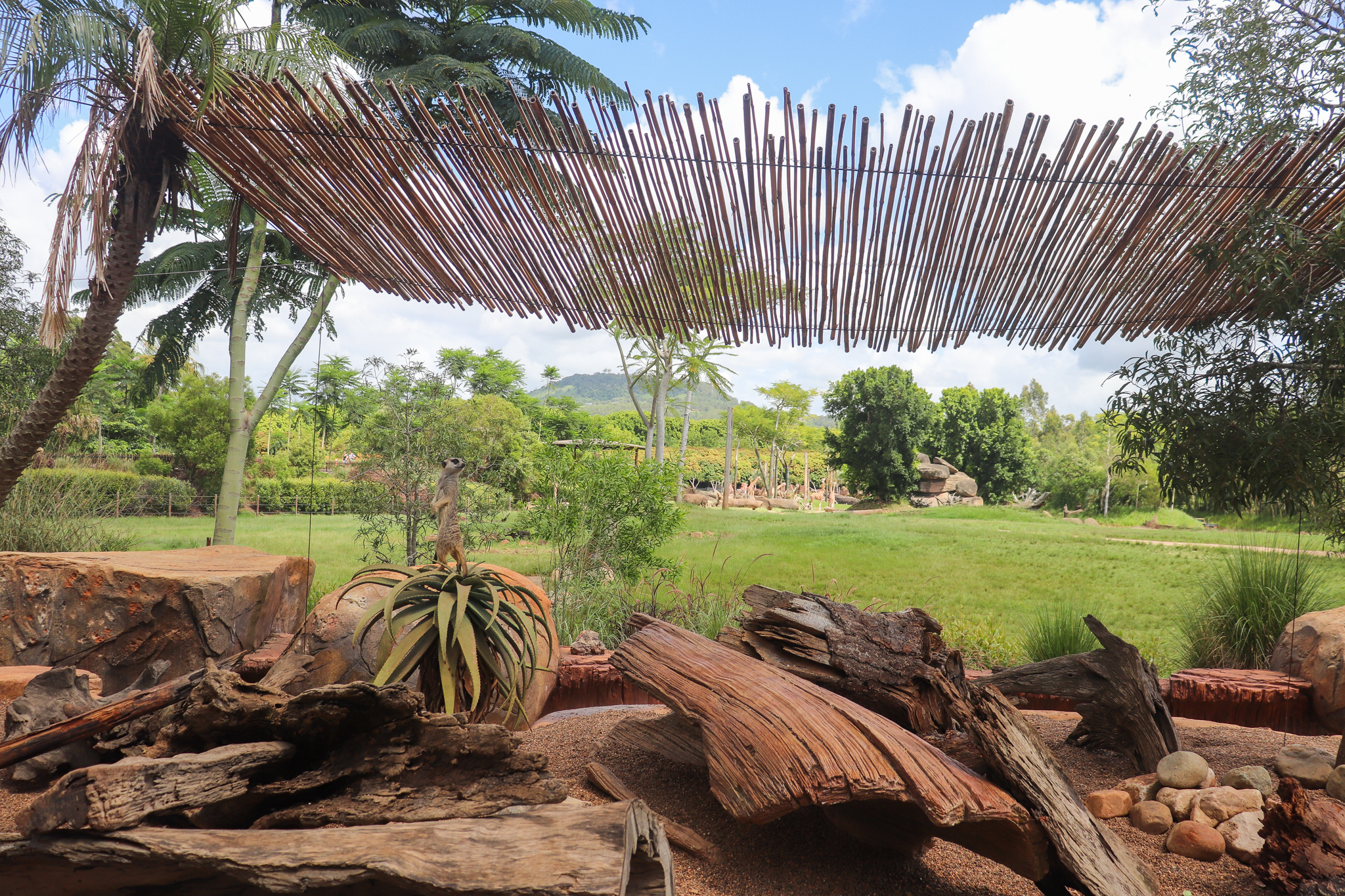
A pair of mock rock enclosures with gravel substrate, that overlook the main enclosure. The zoo house two groups of females:
Meerkat (Suricata suricatta)

A note about the Cheetah: The zoo does not have a permanent on-display enclosure for their Cheetah (Acinonyx jubatus) but they are often seen with their keepers around the upper part of the zoo. For example, on yesterday’s visit I saw one in the future elephant enclosure and one near Bindi’s Island.


And with that, concludes my species list of Australia Zoo. By my count, there are approximately 81 exhibits with 94 species seen. Please note this does not include the species that are currently off-display or the species that are used as educational animals. If we break this down further, we get the following:

*21 species of mammal (10 exotic species; 11 native species)

Exotics: Giraffe, Plains Zebra, Southern White Rhinoceros, Ring-tailed Lemur, Binturong, Asian Small-clawed Otter, Meerkat, Red Panda, Tiger, Cheetah,

Natives: Short-beaked Echidna, Tasmanian Devil, Koala, Common Wombat, Southern Hairy-nosed Wombat, Eastern Grey Kangaroo, Red Kangaroo, Red-necked Wallaby, Swamp Wallaby, Black-footed Rock Wallaby, Dingo

*33 species of bird (4 exotic species; 29 native species)

Exotics: Helmeted Guineafowl, Scarlet Macaw, Blue and Gold Macaw, Green-winged Macaw

Natives: Emu, Southern Cassowary, Magpie Goose, Radjah Shelduck, Glossy Ibis, Little Pied Cormorant, Great Cormorant, Bush Stone Curlew, Black-necked Stork, Brolga, Rose-crowned Fruit Dove, Peaceful Dove, Bar-shouldered Dove, Pacific Emerald Dove, Wonga Pigeon, White-headed Pigeon, Torresian Imperial Pigeon, Yellow-tailed Black Cockatoo, Red-tailed Black Cockatoo, Galah, Eclectus Parrot, Rainbow Lorikeet, Red-collared Lorikeet, Wedge-tailed Eagle, Sacred Kingfisher, Regent Honeyeater, Superb Fairywren, Gouldian Finch, Chestnut-breasted Mannikin

*37 species of reptile (13 exotic species; 24 native species)

Exotics: American Alligator, Aldabra Giant Tortoise, Indian Star Tortoise, Rhinoceros Iguana, Fijian Crested Iguana, Veiled Chameleon, Gila Monster, Komodo Dragon, Burmese Python, Boa Constrictor, Corn Snake, King Cobra, Eastern Diamondback Rattlesnake

Natives: Saltwater Crocodile, Freshwater Crocodile, Krefft's Turtle, Mary River Turtle, Broad-shelled River Turtle, unidentified turtle, Merten's Water Monitor, Cunningham's Skink, Eastern Water Dragon, Eastern Bearded Dragon, Eastern Bluetongue, Shingleback, Land Mullet, Black-headed Python, Woma Python, Australian Scrub Python, Green Tree Python, Western Brown Snake, King Brown Snake, Tiger Snake, Eastern Brown Snake, Common Death Adder, Taipan, Inland Taipan

*1 species of amphibian (1 native species)

Natives: White-lipped Tree Frog

* 2 species of fish (2 native species)

Natives: Crimson-spotted Rainbowfish, Purple-spotted Gudgeon
 
Back
Top