Australian Asian Elephant Population 2025

It appears to me that the elephants future in Australia is going to heavily revolve around the Werribee herd they have by far the best and largest exhibit/complex in the country and are blessed with a lot of potential breeding females, they have made one wise move after the other unfortunately its not the case with the Dubbo herd where they are dropping out two fertile adult breeding cows because of the lack of investment in enough infrastructure but ok to spend $105 million on a zoo cable car ride at Taronga, This will cause a major setback to the Dubbo herd for the long term I feel for the keepers who would be doing the very best they can with what they have.
Monarto zoo for the elephants is to early to say and an open book to what may happen, Its going to be an uphill battle to unite this herd from 3 different zoos I hope the transfer of Putra Mas goes to plan and above all that can kick start they own breeding herd to happen!
 
It appears to me that the elephants future in Australia is going to heavily revolve around the Werribee herd they have by far the best and largest exhibit/complex in the country and are blessed with a lot of potential breeding females, they have made one wise move after the other unfortunately its not the case with the Dubbo herd where they are dropping out two fertile adult breeding cows because of the lack of investment in enough infrastructure but ok to spend $105 million on a zoo cable car ride at Taronga, This will cause a major setback to the Dubbo herd for the long term I feel for the keepers who would be doing the very best they can with what they have.
Monarto zoo for the elephants is to early to say and an open book to what may happen, Its going to be an uphill battle to unite this herd from 3 different zoos I hope the transfer of Putra Mas goes to plan and above all that can kick start they own breeding herd to happen!

The forecast is certainly bright for the Werribee herd with three viable cows from two lines, with a further two juvenile cows coming through. A second daughter from Num-Oi in the next cohort would provide confidence in succession of her line, in addition to hopes Kati will survive to reproductive age.

It’s interesting to contemplate how the Dubbo herd would have turned out had Pak Boon and Tang Mo gone to Dubbo as planned. It would have surely necessitated the construction of the expanded herd barn and enabled multiple cows to breed. Though I doubt all four viable cows would have bred, at a minimum I’d have expected Pak Boon and possibly Porntip to have joined Anjalee in breeding.

Obviously the hope is for Putra Mas and Pak Boon to naturally breed, but if this is successful for any reason, I would be disappointed if that’s the end of Putra Mas’ breeding career. AI isn’t ideal, but if it’s the only way to get additional calves from him, it would preferable to accepting Kanlaya will be his sole representation. She’s only seven years old and is not expected to breed for another 5-7 years.
 
Auckland Zoo (Historical Footage)

I thought people would be interested to see video footage of Auckland Zoo’s elephants and facilities from 1973.

Details of the elephants are as follows.

0.1 Ma Schwe (Indian elephant)
Born in the wild (Thailand) 00/00/1964
Arrived at Auckland Zoo 30/10/1968 (via San Diego Zoo)
Died at Auckland Zoo 02/08/1982

0.1 Kashin (Indian elephant)
Born at Dusit Zoo (Thailand) 00/00/1968
Arrived at Auckland Zoo 00/00/1972 (via Como Zoo)
Died at Auckland Zoo 24/08/2009


From 0.09 to 0.52, they’re seen frolicking in the elephant pool, with a view of the Elephant House in the background at 0.49; and at 1.42-1.51, there’s a view of the elephants in the yard that adjoined the Elephant House.

Kashin is identifiable by her ear tufts and smaller size.

The four year age gap between these elephants was the second closest age gap Auckland Zoo ever had between two elephants (the first being Jamuna and Rajah, who were both born 1917). Every other pairing included an age gap of more than a decade.

Sadly, Ma Schwe died of heart failure in 1982 aged 18 years. She dropped dead while being walked around the zoo. She was replaced by African elephant Koru (1980-1983), who died the year she arrived; who was in turn replaced by Indian elephant Burma (1982) in 1990.

Kashin died relatively young herself at 41 years. She had chronic arthritis, which was attributed to standing on concrete floors during her younger years. The new exhibit elephant opened in 1992 (remaining operational until Burma’s departure in 2024) and marked a significant improvement in welfare.
 
Putra Mas scheduled to transfer early November:

Perth Zoo have made a comment on one of their posts this evening advising they’re working towards transferring Putra Mas in early November (all going to plan).

Pak Boon’s cycle was previously noted to be just under three months in length; so while it won’t be a long wait until her next cycle if it’s missed, fingers crossed they can catch it.

While I acknowledge pregnancy hormones can complicate introductions, time is of the essence given its been eight years since her last calf.
 
Does anyone know the height and weight of Putra Mas as compared to Gung, Luk Chai, and Pathi Harn? Granted Pathi Harn is the youngest, but he is only slighter younger than Luk Chai who already is a proven breeder.

Putra Mas was 4760kg in 2023.

Luk Chai was 4280kg in February 2025 (and still growing). Gung is stated to be over 5000kg and is the largest bull/elephant in Australia. Interestingly, he was 4200kg at the age of 18 years in 2018, so it wouldn’t surprise me to see Luk Chai eclipse his sire given he reached 4.2 tonnes around three years earlier.

I don’t have a current weight for Pathi Harn, but he was 3000kg at 11 years 5 months. Luk Chai was 3450kg at 11 years and 9 months, so Luk Chai would be a fraction heavier now I assume. Bong Su (sire of Pathi Harn) was 4750kg, so Luk Chai has a heavier sire. Despite being the dominant bull of the pair, Pathi Harn always looked small compared to Luk Chai when they were at Dubbo together.
 
Does anyone know the height and weight of Putra Mas as compared to Gung, Luk Chai, and Pathi Harn? Granted Pathi Harn is the youngest, but he is only slighter younger than Luk Chai who already is a proven breeder.
My understanding is even mature bulls keep thickening out much of their lives and thus gaining weight as they keep maturing and developing!
 
My understanding is even mature bulls keep thickening out much of their lives and thus gaining weight as they keep maturing and developing!

I’ve heard the same (cows too) re. continuing to grow in weight throughout their lives.

For historical context, Heman at Taronga/Dubbo was 4.5 tonnes at 50 years of age. He always appeared to be a very impressive bull, but was clearly bulky rather than tall like Bong Su. I don’t have weights for Gandhi and other historic bulls, but it’s likely Gung is the largest Asian elephant ever to live in Australia. I’ll be fascinated to see how his sons (Luk Chai and Sabai) track.

It’s also worth noting the mother of Gung’s next calf (Anjalee) is a large cow, typical of the Sri Lankan subspecies. If their unborn calf is a bull, he would be a surefire bet for breaking records one day.
 
I’ve heard the same (cows too) re. continuing to grow in weight throughout their lives.

For historical context, Heman at Taronga/Dubbo was 4.5 tonnes at 50 years of age. He always appeared to be a very impressive bull, but was clearly bulky rather than tall like Bong Su. I don’t have weights for Gandhi and other historic bulls, but it’s likely Gung is the largest Asian elephant ever to live in Australia. I’ll be fascinated to see how his sons (Luk Chai and Sabai) track.

It’s also worth noting the mother of Gung’s next calf (Anjalee) is a large cow, typical of the Sri Lankan subspecies. If their unborn calf is a bull, he would be a surefire bet for breaking records one day.
I only saw Heman the once in 1977 I was impressed by him even his one tusk was thick. I also will be keeping an eye on the two import bulls at the Sydney zoo from Ireland they may be of a large size also I believe their sire was on the large side!
 
I only saw Heman the once in 1977 I was impressed by him even his one tusk was thick. I also will be keeping an eye on the two import bulls at the Sydney zoo from Ireland they may be of a large size also I believe their sire was on the large side!

Upali reportedly weighs 6000kg, so I expect great things of his sons.
Thanks, I knew Gung was huge but was not sure where Putra Mas compares. It seems he is the second biggest behind Gung at this time.

Yes, Gung would be the biggest, followed by Putra Mas; but I would anticipate Luk Chai will overtake both of them. He’s fast catching up and at 16 years of age, still has several years until he reaches his prime. He’s a tall bull like Bong Su was, but with more bulk.

Kavi and Ashoka at Sydney will be ones to watch as if they take after their sire, they too could attain large weights. They’re 11 years old now, so it’d be interesting to know their current weights to compare to Luk Chai (3450kg) and Pathi Harn (3000kg) at that age.
 
Putra Mas was 4760kg in 2023.

Luk Chai was 4280kg in February 2025 (and still growing). Gung is stated to be over 5000kg and is the largest bull/elephant in Australia. Interestingly, he was 4200kg at the age of 18 years in 2018, so it wouldn’t surprise me to see Luk Chai eclipse his sire given he reached 4.2 tonnes around three years earlier.

I don’t have a current weight for Pathi Harn, but he was 3000kg at 11 years 5 months. Luk Chai was 3450kg at 11 years and 9 months, so Luk Chai would be a fraction heavier now I assume. Bong Su (sire of Pathi Harn) was 4750kg, so Luk Chai has a heavier sire. Despite being the dominant bull of the pair, Pathi Harn always looked small compared to Luk Chai when they were at Dubbo together.
Upali reportedly weighs 6000kg, so I expect great things of his sons.


Yes, Gung would be the biggest, followed by Putra Mas; but I would anticipate Luk Chai will overtake both of them. He’s fast catching up and at 16 years of age, still has several years until he reaches his prime. He’s a tall bull like Bong Su was, but with more bulk.

Kavi and Ashoka at Sydney will be ones to watch as if they take after their sire, they too could attain large weights. They’re 11 years old now, so it’d be interesting to know their current weights to compare to Luk Chai (3450kg) and Pathi Harn (3000kg) at that age.
Bong Su was quite a tall bull but was very lean, hence Gung weighing less than him. It's also impressive to see how big Gung's grown considering he was always quite a small male in his youth; hence his name. He seemingly has had a huge growth spurt since reaching Dubbo.

Luk Chai's quite tall too. Not as tall as Bong Su, but he's definitely more filled out than Bong Su was. In saying that, Luk Chai is still quite a lean bull so I imagine he will start filling out like his father very soon. Eclipsing the 5000 kg mark by the end of this decade is very possible imo.

In regards to Pathi Harn, both of his parents were/are rather 'tall' elephants, whereas Luk Chai's are also quite tall but also quite bulky which would give him the advantage in the weight department. Pathi very much takes after his parents, and is very tall and lean, similar to his half brother of the same age, Ongard. It'll be interesting to see big Ongard is now!

I don't know whether there was mis-reporting re. Upali's weight initially, but he was almost exactly 5000 kgs by 2018. He's a very short bull, but very very stocky. It would be intriguing to see how much Kavi and Ashoka now weigh. They both look huge from recent photos.
 
Pathi very much takes after his parents, and is very tall and lean, similar to his half brother of the same age, Ongard. It'll be interesting to see big Ongard is now!
The last reported weight I could find on Ongard was about 2857 kg at age 7 (upon his arrival in Miami). Not sure how much Luk Chai and Pathi Harn weighed at that age.
He's definitely been filling out quite nicely since then though.
Screenshot_20251009-233819_Instagram.jpg Screenshot_20251009-233735_Google.jpg
 

Attachments

  • Screenshot_20251009-233819_Instagram.jpg
    Screenshot_20251009-233819_Instagram.jpg
    119.1 KB · Views: 9
  • Screenshot_20251009-233735_Google.jpg
    Screenshot_20251009-233735_Google.jpg
    76.5 KB · Views: 10
The last reported weight I could find on Ongard was about 2857 kg at age 7 (upon his arrival in Miami). Not sure how much Luk Chai and Pathi Harn weighed at that age.
He's definitely been filling out quite nicely since then though.
View attachment 832934 View attachment 832935

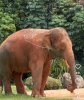
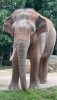
Wow, that is big. For context, Pathi Harn (paternal half brother) was only 143kg heavier when he was 11 years old (3000kg).

Ongard’s mother Kulab is 3840kg, so it’s not surprising in that sense. Ongard was a large calf (the heaviest on record in the region).

Monarto’s cows are all large cows (ranging from 3.8 to 3.9 tonnes); but within the Werribee herd, Kulab is the largest, with Dokkoon only weighing 2.8 tonnes and Mali weighing 2.3 tonnes!
 
Wow, that is big. For context, Pathi Harn (paternal half brother) was only 143kg heavier when he was 11 years old (3000kg).

Ongard’s mother Kulab is 3840kg, so it’s not surprising in that sense. Ongard was a large calf (the heaviest on record in the region).
I seem to remember he was a very big bull even prior to his departure to Miami. I would guess he was around the same height as Luk Chai was upon his arrival from Dubbo. Ongard was very tall, and obviously has the benefits of having two of the tallest males and females within the region for parents!
 
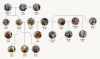
I went ahead and made a family tree for the (living) Australian elephant population. Very interesting to note that every single reproductive animal (minus Pak Boon) is connected somehow.
Beige Minimalist Lines Family Tree_20251010_154730_0000.png
 

Attachments

  • Beige Minimalist Lines Family Tree_20251010_154730_0000.png
    Beige Minimalist Lines Family Tree_20251010_154730_0000.png
    309.7 KB · Views: 28
Last edited:
I went ahead and made a family tree for the (living) Australian elephant population. Very interesting to note that every single reproductive animal (minus Pak Boon) is connected somehow.
View attachment 833216

Good work!

The number of living descendants in the region per founder are as follows:

Bulls:

1.0 Gung (2000) 6 (including unborn calf)
1.0 Bong Su (1974-2017) 3
1.0 Putra Mas (1989) 1
1.0 Kavi (2014) 0
1.0 Ashoka (2014) 0

Cows:

0.1 Thong Dee (1997) 5
0.1 Dokkoon (1993) 3
0.1 Porntip (1992) 2
0.1 Num-Oi (2001) 1
0.1 Anjalee (2006) 1 (due December 2025)
0.1 Pak Boon (1992) 0

Non-viable:

0.1 Mek Kapah (1973) 0
0.1 Burma (1982) 0
0.1 Permai (1989) 0
0.1 Tang Mo (1999) 0
0.1 Kulab (2000) 0 (1 exported)

The current plan is for Werribee to breed another cohort of calves, sired by Luk Chai, which will increase the number of shared Gung/Thong Dee descendants by up to three. Gung is additionally represented via his unborn calf with Anjalee.

Mali breeding again will boost Bong Su’s living descendants to four, which greatly exceeds the three founder bulls below him. However, it should be taken into account that two of those bulls come from a line well represented within the global captive population.

The one thing that’s abundantly clear above all else is that breeding from Pak Boon ASAP should be a priority; in addition to securing more calves from Putra Mas. Monarto will hopefully have the perfect opportunity to achieve both come November.
 
If Australia zoo had followed with the same sub-species as the rest of the region the over all picture in the country would have been looking far better than the current dead end situation that it is currently

Very true. They imported 2019, when there was three young bulls in the region who were clearly surplus to requirements:

1.0 Man Jai (2013)
1.0 Sabai (2016)
1.0 Jai Dee (2017)

I acknowledge the premature deaths of two of these bulls renders this point moot; but they could have created a bachelor facility for these bulls, freeing up space at the open range zoos. We’ve since had an additional bull calf (Roi-Yim), with the chance of up to six more bull calves to come within the next five years (Anjalee’s calf due December; up to three at Werribee; and up to two at Monarto).

Clearly acquiring cows they could have free contact with was one of Australia Zoo’s intentions; but now they’re a non-breeding protected contact facility, there’s no doubt energetic and majestic bulls would be a greater visitor attraction than the four cows they hold.

Alternatively, Australia Zoo could have imported surplus cows from Europe. They easily could have been supplied with a bull from within the region by now had they chosen to do so.
 
Back
Top