Australian Asian Elephant Population 2025

Pak Boon was born 1992 and her last calf was in 2017.

Her calves are as follows:

0.1 Tukta (2010-2018)
1.0 Jai Dee (2017-2020)

Dubbo’s limiting factor is their barn space. They have three barns (believed to be three stalls; two stalls; and three stalls). The cows occupy one of the three stall barns; the bulls the other; with the two stall believed to be used to manage the adult bull when in musth.

Dubbo have five outdoor exhibits, so the barn space is really what’s holding them back. They have long term plans to build a large herd barn, which will address these problems.
Thank you. At 34 I feel waiting 3-6 months is no problem for Monarto. Cows 2-4 years her senior have had the same if not longer gaps and calved just fine. Is it ideal, no it’s not at all but I wouldn’t discount her just yet.

I do however see why this is the thought. It’s crazy to think that so many cows have been “retired” from breeding at such young ages in a population that needs every calf they can get. And for capacity at that…I am highly shocked that Dubbo has limited their breeding so much. A zoo like Houston houses over double their numbers with just one extra stall and less outdoor space. Grant it it’s a different country and management style and arguably a different climate but I just don’t understand it. If their herd is as cohesive as it seems in this thread, moms could easily be housed in the same stall with two calves overnight as I’ve seen done here in North America, no? Many places have even housed older calves with herd mates directly after the birth of a sibling and then housed them in the same stall as said sibling and mother once boundaries have been established or even in a hallway/transfer space given their size. It’s just you would think you would do everything in your power to have a sustainable population and restricting breeding to the point they have is not it.
 
Last edited:
Thank you. At 34 I feel waiting 3-6 months is no problem for Monarto. Cows 2-4 years her senior have had the same if not longer gaps and calved just fine. Is it ideal, no it’s not at all but I wouldn’t discount her just yet.

I do however see why this is the thought. It’s crazy to think that so many cows have been “retired” from breeding at such young ages in a population that needs every calf they can get. And for capacity at that…I am highly shocked that Dubbo has limited their breeding so much. A zoo like Houston houses over double their numbers with just one extra stall and less outdoor space. Grant it it’s a different country and management style and arguably a different climate but I just don’t understand it. If their herd is as cohesive as it seems in this thread, moms could easily be housed in the same stall with two calf’s overnight as I’ve seen done here in North America, no? Many places have even housed older calves with herd mates directly after the birth of a sibling and then housed them in the same stall as said sibling and mother once boundaries have been established or even in a hallway/transfer space given their size. It’s just you would think you would do everything in your power to have a sustainable population and restricting breeding to the point they have is not it.

The longest gap in the region between births is eight years and 11 months, with the cow in question conceiving on the first cycle given the chance.

I agree with you that Pak Boon conceiving next year likely won’t be an issue; though as a point of interest, Pak Boon cycles at short intervals (just under three months) and since the sterility issue originates from cows cycling (ovulation scarring), I assume it would be detrimental to cycle frequently (versus a cow with longer cycles).

The Dubbo temperature are slightly colder (lows typically around 3-4 Degrees Celsius) than Houston. The new barn was planned to accomodate the entire herd for an extended period over winter, with cold temperatures being a concern with regards to EEHV.

With regards to cows sharing stalls, I suppose it depends first and foremost on the dimensions of the stall. The original barn (three stalls) was built in 1977 and we suspect originally had 4-5 stalls that have since been merged to give the current three. The 2014 barn was built with three (presumably larger) stalls and currently accomodate the cows: Porntip/Kanlaya; Thong Dee; and Anjalee.
 
The longest gap in the region between births is eight years and 11 months, with the cow in question conceiving on the first cycle given the chance.

I agree with you that Pak Boon conceiving next year likely won’t be an issue; though as a point of interest, Pak Boon cycles at short intervals (just under three months) and since the sterility issue originates from cows cycling (ovulation scarring), I assume it would be detrimental to cycle frequently (versus a cow with longer cycles).

The Dubbo temperature are slightly colder (lows typically around 3-4 Degrees Celsius) than Houston. The new barn was planned to accomodate the entire herd for an extended period over winter, with cold temperatures being a concern with regards to EEHV.

With regards to cows sharing stalls, I suppose it depends first and foremost on the dimensions of the stall. The original barn (three stalls) was built in 1977 and we suspect originally had 4-5 stalls that have since been merged to give the current three. The 2014 barn was built with three (presumably larger) stalls and currently accomodate the cows: Porntip/Kanlaya; Thong Dee; and Anjalee.
That is interesting, however the problem isn’t just from ovulation scarring themselves. The scarring actually does very little to inhibit pregnancy as the scarring happens in every mammal. And is a normal part of reproduction. They can sometimes cause fibroids but that’s more of a problem in the uterus. The real problem here would be if she’s having anovulatory cycles meaning she’s cycling and theres follicular development but she’s not actually ovulating. Or weakening in her uterine lining due to no implantation so it’s less receptive to carrying a pregnancy. Regardless the gap can be a problem however one would assume they’ve done a reproductive assessment to check all of this prior to attempting to breed. Does anyone know if she had one prior to transfer? I know she had one way back in 2010.
 
That is interesting, however the problem isn’t just from ovulation scarring themselves. The scarring actually does very little to inhibit pregnancy as the scarring happens in every mammal. And is a normal part of reproduction. They can sometimes cause fibroids but that’s more of a problem in the uterus. The real problem here would be if she’s having anovulatory cycles meaning she’s cycling and theres follicular development but she’s not actually ovulating. Or weakening in her uterine lining due to no implantation so it’s less receptive to carrying a pregnancy. Regardless the gap can be a problem however one would assume they’ve done a reproductive assessment to check all of this prior to attempting to breed. Does anyone know if she had one prior to transfer? I know she had one way back in 2010.

Pak Boon hadn’t recently undergone a reproductive assessment when I enquired in November 2024. That’s not to say one wasn’t carried out in the months between then and her transfer to Monarto; but the keeper I spoke to didn’t mention one was planned.

Monitoring of her cycle was undertaken (and I assume still is); but to my knowledge, her last full reproductive assessment was prior to her import in 2006 - bar whatever assessments were conducted in conjunction with her AI procedures in 2009 (first pregnancy) and 2015 (second pregnancy).
 
If their herd is as cohesive as it seems in this thread, moms could easily be housed in the same stall with two calves overnight as I’ve seen done here in North America, no?
The problem is the design of the stalls in the current barn occupied by the cows - each stall is designed with a sandbox in the corner of each stall. This sandbox in particular is designed for just a single adult elephant, and serves as a 'bed' for them. So although the stalls are sizeable, the problem comes down to the size of the 'beds' in particular. It's honestly quite poor design - Werribee's new barn is covered with sand all over, meaning they can sleep anywhere in the barn, and far more elephants can be accommodated.
 
I know there is on-going discussion about exactly how much of a priority breeding here is or isn't, but wouldn't Putra Mas be more likely to attempt (or succeed in) mating while he is in Musth, rather than in his non-musth period? (I am not too well up on the details of sexual behaviour of elephants). But they could try it with Pak Boon once he is settled, before or while they are trying to integrate the cows together as a group, which itself will have one of various outcomes.
 
Wouldn't Putra Mas be more likely to attempt (or succeed in) mating while he is in Musth, rather than in his non-musth period? (I am not too well up on the details of sexual behaviour of elephants). But they could try it with Pak Boon once he is settled, before or while they are trying to integrate the cows together as a group, which itself will have one of various outcomes.
That's true, but since the two elephants aren't familiar with one another, the zoo likely won't risk introducing the two elephants during such a high tension period for the bull.

It seems they'll try breeding in the future, once the cows are better integrated. I hope it's sooner that a cohesive trio can be established; perhaps between Burma and the two Taronga girls. By this time next year though I think we'll be able to get a concrete answer on how those introductions are likely to eventuate, and that will in turn impact the zoo's decision on when breeding attempts will begin.
 
I know there is on-going discussion about exactly how much of a priority breeding here is or isn't, but wouldn't Putra Mas be more likely to attempt (or succeed in) mating while he is in Musth, rather than in his non-musth period? (I am not too well up on the details of sexual behaviour of elephants). But they could try it with Pak Boon once he is settled, before or while they are trying to integrate the cows together as a group, which itself will have one of various outcomes.

Australian zoos are very hands off with their bulls while in musth, Contact sessions between the bull in musth and elephants they’re familiar with (e.g. the matriarchal herd, other bulls on site) are not undertaken; and in Putra Mas’ case, his favourite keeper (a man) ceases working with him during that musth period.

Monarto Safari Park have been extremely cautious around introducing their cows (which is understandable ); and I’d expect to see that translate to the introduction of Putra Mas to the cows. Introducing him in this heightened state to any of the cows would be advisable in my opinion. They’ll have to simply wait things out and assess where things are in March. By then, the cows would have hopefully built up stronger bonds, enabling them to support each other when the bull is introduced.
 
Thanks for the explanation.

But why does Putra Mas' favourite keeper stop working with him during his musth periods. Danger? Why only him though?
This bull appears to respond better to this one person going by pass history of him being difficult to handle before especially when they tried to crate train him 25 years ago to send him to the US, there would have been some concern about shipping out of the Perth zoo to Monarto but its likely its because of his keepers relationship with him that it seemed to go like clock work a big congratulations to them and by the look of the new videos of him he is liking his new home
 
Thanks for the explanation.

But why does Putra Mas' favourite keeper stop working with him during his musth periods. Danger? Why only him though?

The reason has never been stated (only that Steve and Putra Mas take a break from each other while Putra Mas is in musth). I’m wondering if it’s because Putra Mas would be more likely to respond aggressively to another male (even if that male happens to be human); or perhaps because Steve and Putra Mas have such a positive working relationship, they don’t want to undo that by having them working together at a time when the interactions won’t be as positive.

@Zorro raises an interesting point. Steve would be invaluable to Putra Mas in settling into Monarto and was originally stated to be staying on for a while to help him settle in. I wonder if their usual protocol of not working together while the bull is in musth will see him return to Perth or whether it will be modified given the circumstances.
 
I think that might have a bearing on it ...

When Putra Mas entered musth last summer, his crate training was also paused. Aside from the obvious of having less direction/control over the elephant, they had made excellent progress and likely didn’t want to undo what they’d already achieved.

As mentioned, Steve also wasn’t working with Putra Mas during musth and their strong bond/trust that had been established from decades of working together was instrumental in conditioning him to the crate.
 
So how they manage putra mas while he’s in musth? Surely they have to shift him every day so they can feed and clean, etc.

I recall someone saying Gung can be nasty when he’s in musth. So it’s a wonder.
 
So how they manage putra mas while he’s in musth? Surely they have to shift him every day so they can feed and clean, etc.

I recall someone saying Gung can be nasty when he’s in musth. So it’s a wonder.

Putra Mas is managed in protected contact (same as usual); but at Perth Zoo, only female keepers worked with him while he was in musth. Monarto haven’t advised what their staffing protocols will be while Putra Mas in musth, so that’ll be interesting to follow.

Dubbo have an off display paddock which is used to house Gung while in musth. He’s notorious for throwing projectiles such as rocks while he’s in musth and for obvious reasons, they want to keep their visitors out of harms way.
 
Putra Mas is managed in protected contact (same as usual); but at Perth Zoo, only female keepers worked with him while he was in musth. Monarto haven’t advised what their staffing protocols will be while Putra Mas in musth, so that’ll be interesting to follow.

Dubbo have an off display paddock which is used to house Gung while in musth. He’s notorious for throwing projectiles such as rocks while he’s in musth and for obvious reasons, they want to keep their visitors out of harms way.
I am not sure if I had mentioned this before but on my visit to Perth zoo back in 2000 I was allowed to take a few pics of Putra Mas in the off exhibit yard out the back but was warned not to get to close as he also had a habit of throwing things, not sure if that was while in musth or just as his normal behaviour!
 
I am not sure if I had mentioned this before but on my visit to Perth zoo back in 2000 I was allowed to take a few pics of Putra Mas in the off exhibit yard out the back but was warned not to get to close as he also had a habit of throwing things, not sure if that was while in musth or just as his normal behaviour!

That’s interesting to know!

Putra Mas would have been 11 years old at the time, so may have been experiencing moda musth (an adolescent musth cycle). Luk Chai began undergoing these during his last year at Taronga Western Plains Zoo and was having one as a 14 year old when I visited Melbourne Zoo in 2023. He picked up a small log and threw it at one stage.

Luk Chai in moda musth (December 2023):

upload_2025-11-20_20-18-8.jpeg
 

Attachments

  • upload_2025-11-20_20-18-8.jpeg
    upload_2025-11-20_20-18-8.jpeg
    234.1 KB · Views: 27
Dubbo have an off display paddock which is used to house Gung while in musth. He’s notorious for throwing projectiles such as rocks while he’s in musth and for obvious reasons, they want to keep their visitors out of harms way.

I've heard of bulls in Europe with this habit too, but I don't know if its confined just to their musth period or not.
 
This bull appears to respond better to this one person going by pass history of him being difficult to handle before especially when they tried to crate train him 25 years ago to send him to the US, there would have been some concern about shipping out of the Perth zoo to Monarto but its likely its because of his keepers relationship with him that it seemed to go like clock work a big congratulations to them and by the look of the new videos of him he is liking his new home
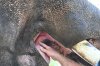
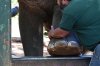
Keeper Steve is the only keeper able to get into close contact with Putra Mas, ever, whilst he isn't the only male keeper, the other male keepers can only throw feed to him or pass it to his trunk. Whilst this didn't stop these keepers from still engaging with him as they could still provide him with his favorite activities etc... Keeper Steve (as shown in my photo below) is very close and has been with Putra Mas for years and when he visits, it's very contact :) This would not be safe for Steve during musth and so they stop all contact with the pair as mentioned above they wouldn't want to break that bond. I doubt that even in musth Putra Mas would harm him or any other keepers but it's a precaution that should be followed.
 

Attachments

  • DSC_3000.JPG
    DSC_3000.JPG
    229.9 KB · Views: 8
  • DSC_3006.JPG
    DSC_3006.JPG
    111.9 KB · Views: 8
  • IMG_6910 3.jpeg
    IMG_6910 3.jpeg
    121.3 KB · Views: 8
  • IMG_6914.jpeg
    IMG_6914.jpeg
    131 KB · Views: 8
Keeper Steve is the only keeper able to get into close contact with Putra Mas, ever, whilst he isn't the only male keeper, the other male keepers can only throw feed to him or pass it to his trunk. Whilst this didn't stop these keepers from still engaging with him as they could still provide him with his favorite activities etc... Keeper Steve (as shown in my photo below) is very close and has been with Putra Mas for years and when he visits, it's very contact :) This would not be safe for Steve during musth and so they stop all contact with the pair as mentioned above they wouldn't want to break that bond. I doubt that even in musth Putra Mas would harm him or any other keepers but it's a precaution that should be followed.
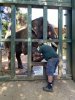
That was my thought that he was the centre figure for Putra Mas
 
Back
Top