Australian Wildlife in the USA?

Brayden Delashmutt

Well-Known Member
So, as I’m working on a few speculative masterplans, I was wondering if it was possible for a few Australian species not currently held in the USA to be moved here-namely Quolls and Bilbies. Quolls seem to be doing well in Europe, so is there a chance they could make it here?
 
I am not as well versed with quolls as much as I wish I could be but as far as I know, the European population could barely maintain itself due to how quolls have short lifespans. Said short lifepan doesn't help when you have to deal with paperwork which could take as long as a big fraction of the lifespan of a quoll.
 
Quolls have proven difficult to keep viable populations going due to short lifespans. Basically to set up any sort of sustainable population one would need a lot of quolls - more than are accessible outside Australia. Breeding would have to be regular and an emphasis. Essentially a lot of work for relatively little result.

Far as bilbies, no. As a general rule no Australian or New Zealand wildlife leaves their respective countries legally. Occasional exceptions are made such as platypuses to SDZ, but they are not regular nor the norm. This is why most Australian exhibits have the same handful of species - what we have is what we get.
 
Quolls have proven difficult to keep viable populations going due to short lifespans. Basically to set up any sort of sustainable population one would need a lot of quolls - more than are accessible outside Australia. Breeding would have to be regular and an emphasis. Essentially a lot of work for relatively little result.

Far as bilbies, no. As a general rule no Australian or New Zealand wildlife leaves their respective countries legally. Occasional exceptions are made such as platypuses to SDZ, but they are not regular nor the norm. This is why most Australian exhibits have the same handful of species - what we have is what we get.
You are right about the quolls, but wrong with your general rule. Any Aussie animal is available for export to reputable zoos as long as they fulfill certain conditions and can cope with the paperwork. They must also be born in captivity. The issue is that most Australian animals are small and nocturnal but require specialist care. This makes them not a great proposition for a zoo.

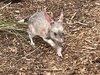
Anyway, I’m off now to release two bilbies into their new enclosure here at Moonlit Sanctuary.
 
You are right about the quolls, but wrong with your general rule. Any Aussie animal is available for export to reputable zoos as long as they fulfill certain conditions and can cope with the paperwork. They must also be born in captivity. The issue is that most Australian animals are small and nocturnal but require specialist care. This makes them not a great proposition for a zoo.

Anyway, I’m off now to release two bilbies into their new enclosure here at Moonlit Sanctuary.
Anyway, as you can’t have your own ones I thought I’d show you a photo of one our new ones, just so you know what you are missing :)
upload_2022-12-21_16-11-18.jpeg
 

Attachments

  • upload_2022-12-21_16-11-18.jpeg
    upload_2022-12-21_16-11-18.jpeg
    204 KB · Views: 27
Any Aussie animal is available for export to reputable zoos as long as they fulfill certain conditions and can cope with the paperwork. They must also be born in captivity. The issue is that most Australian animals are small and nocturnal but require specialist care. This makes them not a great proposition for a zoo.

Fair - though given the paperwork and approval seems to frequently take forever, it does generally seem like nothing can be exported. Most zoos seem to feel it's not worth the hassle.
 
Fair - though given the paperwork and approval seems to frequently take forever, it does generally seem like nothing can be exported. Most zoos seem to feel it's not worth the hassle.
Well that's true. I know a friend of mine, who was the curator of a major Australian zoo, when doing a swap, would often do the paperwork for the receiving zoo because he knew they would not do it and otherwise he would not get the animals he wanted.
 
Well that's true. I know a friend of mine, who was the curator of a major Australian zoo, when doing a swap, would often do the paperwork for the receiving zoo because he knew they would not do it and otherwise he would not get the animals he wanted.

Very true.

Even the owner of a minor Australian zoo frequently has to do this to ensure that global recommendations can eventuate - let alone any other transfers.

Strangely, it is often the large, well known, well staffed zoos that can't handle the paperwork. We have had several European zoos renege on global recommendations to transfer species this year. Species such as Golden Lion-tamarins and other globally managed species simply because it was all too hard for them - even though we offer to walk them through the process.

The more hands-on zoos work their way through it.
 
Very true.

Even the owner of a minor Australian zoo frequently has to do this to ensure that global recommendations can eventuate - let alone any other transfers.

Strangely, it is often the large, well known, well staffed zoos that can't handle the paperwork. We have had several European zoos renege on global recommendations to transfer species this year. Species such as Golden Lion-tamarins and other globally managed species simply because it was all too hard for them - even though we offer to walk them through the process.

The more hands-on zoos work their way through it.
Although if it was a mountain gorilla or giant panda perhaps they might find the time.
 
Back
Top