Information on the Neotropical expansion:
The park's website has included a page explaining what we will find in the new expansion.
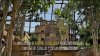
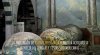
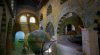
The new expansion is inspired by the historic first circumnavigation of the world carried out by Juan Sebastián Elcano and the men of the ship Victoria. Just like the Spanish explorers did, the expansion will allow visitors to discover the rich biodiversity of Central and South American reefs, rivers and jungles, thus promoting greater awareness and appreciation for their conservation. The park's design accurately reproduces these habitats, offering an immersive and educational experience that connects the history of the discovery of nature in the New World, in a tour of reefs, navigation rooms, a cabinet of curiosities, Amazonian aquariums and a large aviary in which, through collapsed cenotes, you reach a Mayan pyramid.
Initial plaza:
A large terrarium that will house baby Komodo dragons says goodbye to the Indonesian jungles. We are at a transition point between the current route of the park and the beginning of the Journey to Infinity that the new project recreates.
Visitors will delve into cosmography from the Bronze Age to the Renaissance, symbolized by an 8-meter-high armillary sphere and the recreation of the Nebra celestial disk and the map of the Copernicus system.
Saltwater aquarium room:
In this dark room full of the life of the seas and reefs that welcomed the first Spanish navigators when they arrived in America, the journey begins.
Behind large saltwater aquariums they recreate the continuous vision of a reef. Dozens of types of anemones, gorgonians and corals will provide shelter for fish and invertebrates of the reef.
The room, inspired by an old shipyard, is dominated by the recreation of the globe by the German Martin Behaim, the first globe in history, and a painting of the Virgin of Victory of Seville, the virgin to whom the members entrusted themselves of Magellan's expedition before starting the expedition and which gave its name to the only ship of the same that arrived safely in Seville after making the first circumnavigation of the world.
Navigation Room
The journey continues towards the interior of the American continent, through a museum hall dedicated to navigation, crowned with a Catalan vault of 'Piranesi' inspiration.
The visitor can see frescoes from the ships of the expedition, 7 cartographic elements, letters from Elcano and Magellan or a facsimile of Miller's Atlas, among other elements.
Bromeliad Room
With this space begins the approach to the first South American jungles. The lush vegetation makes its way with a large collection of bromeliads over an Amazonian river. I
n the room, the visitor can enjoy two large freshwater aquariums where dozens of species of fish and invertebrates live; a space in which nature and art coexist again. Different species of American bromeliads, the theming with sculpted, modeled and treated concrete and mural paintings envelop the visitor, transporting them to distant jungles.
Cabinet of Curiosities
The museum essence is reflected in spaces like this. Visitors encounter a reproduction of a chamber of wonders. On a Renaissance coffered ceiling, a period piece of furniture contains skeletons and shells, horns of supposed unicorns, bones that were supposed to belong to cyclops and giants, herbalists and albarelos from the first apothecaries, fossils and collections of insects, books and scales to weigh spices, herbariums and taxidermies of legendary or then unknown animals; wonders that served to advance science and knowledge of the natural world.
Highlights here are the space dedicated to spices, the authentic economic engine of the 15th and 16th centuries.
Discovery room
The trip itself takes center stage. The art pays tribute to the Spanish sailors and their exploits. The nature and cultures of a new world are opened to the public. Large murals and two enormous globes – one of them, a recreation of Leonardo Da Vinci – accompany the visitor who discovers the navigation routes of the first trip around the world.
An aquarium shows axolotls, a species described by fray Bernardino de Sahagún, representing the study and knowledge of the first Spaniards who arrived in New Spain. In a gigantic aquarium, at the bottom of which you can see the ruins of a Mayan temple,
the visitor will see the largest freshwater fish in South America, the arapaimas, along with rays and paddlefish. The image of the Virgin of Victory of Malaga bids farewell to the room, the first representation of the Virgin of Victory and patron saint of the province.
Underwater vision tunnel
Through an underwater corridor you access the Mayan world through an
underwater vision tunnel where giant arapaimas surround the visitor and, through which, you can see the recreation of a sunken Mayan temple after the collapse of a cenote.
Aviary and Maya world
A 14-meter-high aviary contains a jungle in which species of birds and Central and South American mammals will coexist where the visitor is immersed in the interior of the Yucatan jungle. The recreation of the Mayan pyramid of Muyil presides over the itinerary. The tour continues
following the bed of an Amazonian river that will house diverse and symbolic species such as piranhas, lizard fish, leaf fish, ocellated river stingrays as well as caiman lizards, among others.
The experience ends in the temple itself through the door of Xibalbá, the Mayan underworld and
discovering a watercourse where giant otters, the largest in the world, live.
-
Golden lion tamarin (
Leontopithecus rosalia),
Goeldi's marmoset (
Callimico goeldii),
White-faced saki (
Pithecia pithecia),
Giant otter (
Pteronura brasiliensis),
Blue-throated conure (
Pyrrhura cruentata),
Bare-faced curassow (
Crax fasciolata),
Caiman lizard (
Dracaena guianensis),
Axolotl (
Ambystoma mexicanum),
Red-bellied piranha (
Pygocentrus nattereri),
Occelate river stingray (
Potamotrygon motoro),
Missisipi paddlefish (
Polyodon spathula) and
Arapaima (
Arapaima gigas) are the confirmed species within the site. They also mention
sloths, which I guess are Linnaeuse's two-toed sloths,
anemones, gorgonians, corals, leaf fish, lizard fish, clownfish, surgeonfish and river stingrays without specifying any concrete taxa.
TÚ ERES EL PROTAGONISTA - BIOPARC Fuengirola

Promotional images also showcase
Sunbittern (
Eurypyga helias),
Giant wood rail (
Aramides ypecaha) and what looks like a
Crismon-rumped toucanet (
Aulacorhynchus haematopygus).
Chilean (
Phoenicopterus chilensis) and
Caribbean flamingoes (
Phoenicopterus ruber) also appear in the background of said image. This should be taken with a pinch of salt, maybe the marketing team just picked up random neotropical birds for the publicity.