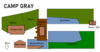
First opening its doors in 1948, Black Ridge Zoo has expanded from a mere 60 acres to 189. What opened as a small Natural History Museum with an attached animal park has spread into a sprawling zoo with 5 main areas: Africa, Asia, North America, The Islands, and Australia.
Africa

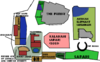
To the left, Africa begins with a true blast to the past, The Pachyderm Barn. Formerly home to African Elephants, the main yard of this 1960’s building is currently serving as a retirement home for Juba, the zoo’s remaining elderly White Rhino. While the main corridor of the Pachyderm Barn is closed to guests, visitors can look down the aisle at the former home of the zoo’s Nile Hippos, Malayan Tapirs, Pygmy Hippos, and Red River Hogs until 2007. A small display discusses the history of the barn and the advances made in animal hospitality since it opened.
Across the path from the barn is the Nile River Trek. Opening in 2006, this sprawling complex is home to parents Red and Jiko, and their son Johan, the zoo’s three Nile Hippos. The hippos have access to a 8 ½ ft deep by 100 ft long recreation of the Nile River. Swimming along with the hippos are Nile Perch, African Softshell Turtles, and various other fish. Three small research huts contain displays about the reptiles that call the Nile home. Exhibited here are Egyptian Cobra, Nile Monitor ,and African Rock Python. A smaller section of the river contains the legendary Nile Crocodile. Don't worry, they cannot reach the hippos.
Nestled in between these exhibits is the Rocky Ledges exhibit, a rocky grotto which was formerly part of the Cat Grottos, a ring of small rocky grottos formerly containing Lions, Jaguars, Cheetahs and Mountain Lions. In 2005, three of the four exhibits were bulldozed and the fourth was converted to a rocky ledge for Klipspringer and Rock Hyrax. A small yard also contains a family of Meerkats.
At some point in the near future, Rocky Ledges and The Pachyderm Barn will both be demolished to make way for Majesty of the Gorilla and Cheetah Racer.
Down the main path from the Pachyderm Barn is the staple of Africa, African Elephant Savannah. Opening August 2009, and replacing a food court, gift shop, a bathroom building, and several outdated bird exhibits, this 3 ½ acre savannah provides a spacious, multi-terrain home for and the zoo’s 4 African Elephants. The left side of the exhibit features a 8 foot deep pond complete with a waterfall, perfect for wallowing on hot days. The farthest right side replicates the African forests. Trees provide shade for the pachyderms, and occasionally activated underground sprinklers provide mud at all times.
Inside the elephant care center are 3 night stalls, each large enough to hold 3 elephants at a time. The two bull elephants, Simba and Tungi, have a third smaller indoor stall for when they need to be kept away from females Frieda and Lady. Inside the building, guests have access to a restroom, and a small classroom for educational programs.
Across from Elephant Savannah is The Boma, a secluded dining area surrounded by artificial thorn walls. Diners at the café, as well as visitors on the path can get amazing views of the 1 ½ acre Savannah exhibit featuring Grant’s Zebras, Reticulated Giraffes, Bonteboks, and Thompson's Gazelle.
Next to the Boma is The Lion Exhibit. The zoo’s two Lions (Formerly kept at Cat Grotto), Mufasa and Nala, have a large rock formation to either sunbathe or seek shade from the sun. While the lions are next to their prey, they cannot reach them due to a moat that surrounds the exhibit.
The final open part of Africa is 2016’s The Forest. The Forest begins in a walkthrough aviary containing several African birds flying overhead, with glass fronted but open top exhibits for Kinga, the Pygmy Hippo on one side, and on the other side, in their first appearance at Black Ridge, brothers Tibi and Wuhu, a pair of Okapi. Their exhibit is full of natural trees so the naturally shy animals can hide if they wish. Both these exhibits also have access to an outdoor yard if weather permits.
Passing through a pair of double doors, visitors find themselves in the midst of lemur territory. Several floor to ceiling exhibits contain Ring Tailed Lemurs, Red Ruffed Lemurs, Aye Ayes, Black Lemurs, and Sifakas. Each exhibit features a glass walk-in portion where visitors can come face- to- face with the lemurs. Before we move along, we can find a small exhibit home to a Fossa.
The final part of the Forest is the reptile room. This exhibit contains two walls of exhibits containing: Black Mambas, Cape Cobras, Boomslangs, Dwarf Crocodiles, African Rock Pythons, Desert Monitors, Leopard Tortoise, and more!
Between the Forest and Elephant Savannah is Kalahari Safari, which is currently under construction and willl replace the original 1970’s Great Ape, Rhino, and grassland exhibits. When Kalahari opens in 2023, it will be home to Black Rhinos, Warthogs, and several small bird exhibits. Originally a Cheetah exhibit was planned for the land, but it has been changed to become one of the two exhibits replacing the Pachyderm Barn.
And that’s it for Africa. Next we’ll be traveling to North America!
Africa
To the left, Africa begins with a true blast to the past, The Pachyderm Barn. Formerly home to African Elephants, the main yard of this 1960’s building is currently serving as a retirement home for Juba, the zoo’s remaining elderly White Rhino. While the main corridor of the Pachyderm Barn is closed to guests, visitors can look down the aisle at the former home of the zoo’s Nile Hippos, Malayan Tapirs, Pygmy Hippos, and Red River Hogs until 2007. A small display discusses the history of the barn and the advances made in animal hospitality since it opened.
Across the path from the barn is the Nile River Trek. Opening in 2006, this sprawling complex is home to parents Red and Jiko, and their son Johan, the zoo’s three Nile Hippos. The hippos have access to a 8 ½ ft deep by 100 ft long recreation of the Nile River. Swimming along with the hippos are Nile Perch, African Softshell Turtles, and various other fish. Three small research huts contain displays about the reptiles that call the Nile home. Exhibited here are Egyptian Cobra, Nile Monitor ,and African Rock Python. A smaller section of the river contains the legendary Nile Crocodile. Don't worry, they cannot reach the hippos.
Nestled in between these exhibits is the Rocky Ledges exhibit, a rocky grotto which was formerly part of the Cat Grottos, a ring of small rocky grottos formerly containing Lions, Jaguars, Cheetahs and Mountain Lions. In 2005, three of the four exhibits were bulldozed and the fourth was converted to a rocky ledge for Klipspringer and Rock Hyrax. A small yard also contains a family of Meerkats.
At some point in the near future, Rocky Ledges and The Pachyderm Barn will both be demolished to make way for Majesty of the Gorilla and Cheetah Racer.
Down the main path from the Pachyderm Barn is the staple of Africa, African Elephant Savannah. Opening August 2009, and replacing a food court, gift shop, a bathroom building, and several outdated bird exhibits, this 3 ½ acre savannah provides a spacious, multi-terrain home for and the zoo’s 4 African Elephants. The left side of the exhibit features a 8 foot deep pond complete with a waterfall, perfect for wallowing on hot days. The farthest right side replicates the African forests. Trees provide shade for the pachyderms, and occasionally activated underground sprinklers provide mud at all times.
Inside the elephant care center are 3 night stalls, each large enough to hold 3 elephants at a time. The two bull elephants, Simba and Tungi, have a third smaller indoor stall for when they need to be kept away from females Frieda and Lady. Inside the building, guests have access to a restroom, and a small classroom for educational programs.
Across from Elephant Savannah is The Boma, a secluded dining area surrounded by artificial thorn walls. Diners at the café, as well as visitors on the path can get amazing views of the 1 ½ acre Savannah exhibit featuring Grant’s Zebras, Reticulated Giraffes, Bonteboks, and Thompson's Gazelle.
Next to the Boma is The Lion Exhibit. The zoo’s two Lions (Formerly kept at Cat Grotto), Mufasa and Nala, have a large rock formation to either sunbathe or seek shade from the sun. While the lions are next to their prey, they cannot reach them due to a moat that surrounds the exhibit.
The final open part of Africa is 2016’s The Forest. The Forest begins in a walkthrough aviary containing several African birds flying overhead, with glass fronted but open top exhibits for Kinga, the Pygmy Hippo on one side, and on the other side, in their first appearance at Black Ridge, brothers Tibi and Wuhu, a pair of Okapi. Their exhibit is full of natural trees so the naturally shy animals can hide if they wish. Both these exhibits also have access to an outdoor yard if weather permits.
Passing through a pair of double doors, visitors find themselves in the midst of lemur territory. Several floor to ceiling exhibits contain Ring Tailed Lemurs, Red Ruffed Lemurs, Aye Ayes, Black Lemurs, and Sifakas. Each exhibit features a glass walk-in portion where visitors can come face- to- face with the lemurs. Before we move along, we can find a small exhibit home to a Fossa.
The final part of the Forest is the reptile room. This exhibit contains two walls of exhibits containing: Black Mambas, Cape Cobras, Boomslangs, Dwarf Crocodiles, African Rock Pythons, Desert Monitors, Leopard Tortoise, and more!
Between the Forest and Elephant Savannah is Kalahari Safari, which is currently under construction and willl replace the original 1970’s Great Ape, Rhino, and grassland exhibits. When Kalahari opens in 2023, it will be home to Black Rhinos, Warthogs, and several small bird exhibits. Originally a Cheetah exhibit was planned for the land, but it has been changed to become one of the two exhibits replacing the Pachyderm Barn.
And that’s it for Africa. Next we’ll be traveling to North America!
Attachments
Last edited: