Black Ridge Zoo Redesign

EagleScout610

Well-Known Member
10+ year member
So I decided to redesign my fantasy zoo Black Ridge Zoo to make more appropriate habitat sizes and more realistic exhibits. Hope you all enjoy it.

Black Ridge Zoo
First opening its doors in 1948, Black Ridge Zoo has expanded from a mere 15 acres to 189. What opened as a small Natural History Museum with an attached animal park has spread into a sprawling zoo with 5 main areas: Africa, The Yukon, Asia, The Islands, and Strange World.

Welcome Building
Welcome Center.png

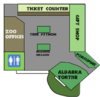
The moment guests step into the zoo’s Welcome Building, which was formerly part of the original Nature Center, they find restrooms, a gift shop and the ticket counter. Even here there’s critters around. In the center of the room are built-in exhibits for a Green Tree Python and a Bearded Dragon. In the space next to the gift shop is an exhibit for Spike and Sharp, two American Porcupines. Across from the porcupines is a moderate exhibit for Aldabra Tortoises. The tortoises also have an outdoor yard viewers coming up the path can visit them from.

After we go through the doors, we find ourselves in the heart of Africa, which we'll see next time!
 

Attachments

  • Welcome Center.png
    Welcome Center.png
    162.7 KB · Views: 42

Africa


Africa.png
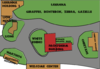
The first thing visitors find upon entering the zoo, is the 1954 Pachyderm Building. This 1-acre yard was home to the zoo’s lone African Elephant, as well as two Giraffes until 1996, now it’s home to Juba, the zoo’s extremely elderly White Rhino. At some point in the future, likely after Juba passes away, the Pachyderm Building will be demolished to make way for the all new Majesty of the Gorilla Exhibit.

The zoo’s two Lions, Mufasa and Nala, have a large rock formation to either sunbathe or seek shade from the sun. Two glass viewing windows allow visitors face-to-face encounters with the lions. Across from them is a grassy and muddy yard home to a family of Warthogs.

Behind the Pachyderm Building is the Cheetah Exhibit. This exhibit was part of The Cat Grottos, four similar size grottos which were home to Lions, Jaguars, Cheetahs and Tigers up until 1985, when half the grottos were demolished and two were combined into a grassy yard for The Flash and McQueen, twin Cheetahs.

The main attraction of Africa is The Savanna, which is a 6.5 acre grassland home to Masai Giraffe, Bontebok, Grant’s Zebra, Ostrich, Flamingos, and Thompson’s Gazelle.

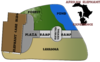
Down the path between the Lions and Warthogs, built on the site of the zoo’s former neighbor KiddieLand Park is African Elephant Experience. This five acre complex contains two yards for the zoo’s four African Elephants.

Elephant Experience FInal.png

The yard on the right of the exhibit features a 8 foot deep pond complete with a waterfall, perfect for wallowing on hot days. This exhibit replicates the African forests. Trees provide shade for the pachyderms, and occasionally activated underground sprinklers provide mud at all times. On the left is a savanna exhibit with several trees and mud pits.

The visitor path actually elevates over the elephants and at the center is a glassed-in observation deck. Under the path is a gate which keepers can use to transfer elephants between yards as need be.

Inside the Elephant Care Center, visitors get to see the Elephants in three public care stalls, with a fourth and fifth behind the scenes for when bulls Tungi and Harambe need to be kept away from cows Frieda and Shanti.
 

Attachments

  • Africa.png
    Africa.png
    274.2 KB · Views: 37
  • Elephant Experience FInal.png
    Elephant Experience FInal.png
    336.4 KB · Views: 41
The African Forest
Past the Cheetah Exhibit is The African Forest, a sprawling 2.5 acre complex home to three buildings: The Aviary, Primate Path, and The Reptile Room.

The Forest begins in a walkthrough aviary containing several African birds free-flying overhead, with glass fronted but open top exhibits for Kinga, the Pygmy Hippo on one side, and on the other side, in their first appearance at Black Ridge, brothers Tibi and Wuhu, a pair of Okapi. Their exhibit is full of natural trees so the naturally shy animals can hide if they wish. Both these exhibits also have access to an outdoor yard if weather permits.

Passing through a pair of double doors, visitors find themselves in the midst of lemur territory. Several floor to ceiling exhibits contain Ring Tailed Lemurs, Red Ruffed Lemurs, Aye Ayes, Black Lemurs, and Sifakas. Each exhibit features a glass walk-in portion where visitors can come face- to- face with the lemurs. The lemurs all have outdoor exhibits that can rotate species via overhead net tunnels. Before we move along, we can find a small exhibit home to a Fossa.

The final part of the Forest is the reptile room. This exhibit contains two walls of exhibits containing: Black Mambas, Cape Cobras, Boomslangs, Dwarf Crocodiles, African Rock Pythons, Desert Monitors, Leopard Tortoise, and more!
 
Asia Final.jpg

The Asian Wilds

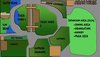
Moving down the trail from the Cheetah exhibit, the African theme fades away until we reach a Bamboo arch welcoming us to The Asian Wilds’. This 2013 expansion completely replaced several outdated exhibits and part of an unused parking lot.

The first thing we encounter is a crowd-pleaser in any Asian themed area, Red Panda brothers Po and Mo. These two will keep visitors delighted as they watch the pandas make the most of their two level exhibit, complete with a climbing tower made entirely of fallen trees.

The path forks up ahead, with a path to the left and right. We’re going to be going to the right, saving the best for last.

On the right, we find a mesh-topped exhibit which is home to a family of White Cheek Gibbons. Much like the pandas behind them, the apes are a sure crowd pleaser as they climb, swing, jump, and run all around the enclosure.

Across from them are two animals who you won’t find climbing trees, but instead basking on their heated rocks, walking in their creek, or lounging in the shade. Meet Spike and Lucius, a pair of Komodo Dragons. The dragons rotate on and off exhibit together, and while one is visible on exhibit, the other can be seen in the indoor Komodo viewing.

More primates await in another mesh topped exhibit as we move around the circle. This time, say hello to Bucky, Misha, and Dana, a family of Siamangs. The exhibit’s three trees and rope course ensure that no matter what time of day, you’re likely to see the three engaged in athletics of some sort.

Reaching the top of the circle, we leave the cuddly behind and meet the carnivorous. A rocky ledge and small pond give us a pretty clear sign we’ve entered the domain of Tai (Yes, named after the movie character) and Yeti (named for the mythical snow monster itself), the Snow Leopards. These cats can be seen either lounging on the rock walls of the exhibit or patrolling the ground, particularly near the glass viewing, giving visitors a chance to get nose-to-nose with the cats.

Crossing the pathway that takes visitors to Australia, we find our final exhibit of the circle. Two nearly identical grassy yards complete with several tall trees and climbing structures. A small running creek and waterfall bring an almost calming feeling to these exhibits. These exhibits formerly had the ability to rotate animals, but in 2022 were modified to have set inhabitants.

In the left yard is Ravi, the zoo’s elderly Malayan Sun Bear. He doesn’t do much, but you’ll most likely catch him reclining in his favorite tree stand. His neighbors to the right are Sloth Bears Tic and Tac.

Our final exhibit in Asia is truly fit for a king. King of the jungle, that is. In the center of the land are two exhibits, complete with pools, climbing rocks, sunning spots, and more for Shere Khan, Kirpesh, Joy, and Tigger (All guest-named), the zoo’s four Bengal Tigers.

Cutting through the two yards is a temple themed pathway for visitors. While both sides of the temple have glass windows to see the cats, one side features educational displays about Tigers, and the other features a behind-the-scenes look at the tiger’s indoor quarters.

Above the path are two wire-caged walkways which the tigers can use to cross from one yard to the other at their leisure, or to keep them apart in separate yards if need be.

Asian Wilds is set to expand yet again in 2024 after the zoo’s purchase of land next to Asia. The 3.5 acre expansion is set to be anchored by Borneon Orangutan. Also appearing will be Musk Deer and a walk-through aviary.

Join us next time as we travel up the path (or down the globe, depending on how you look at it) to AUSTRALIA.
 

Attachments

  • Asia Final.jpg
    Asia Final.jpg
    79.2 KB · Views: 37
Back
Top