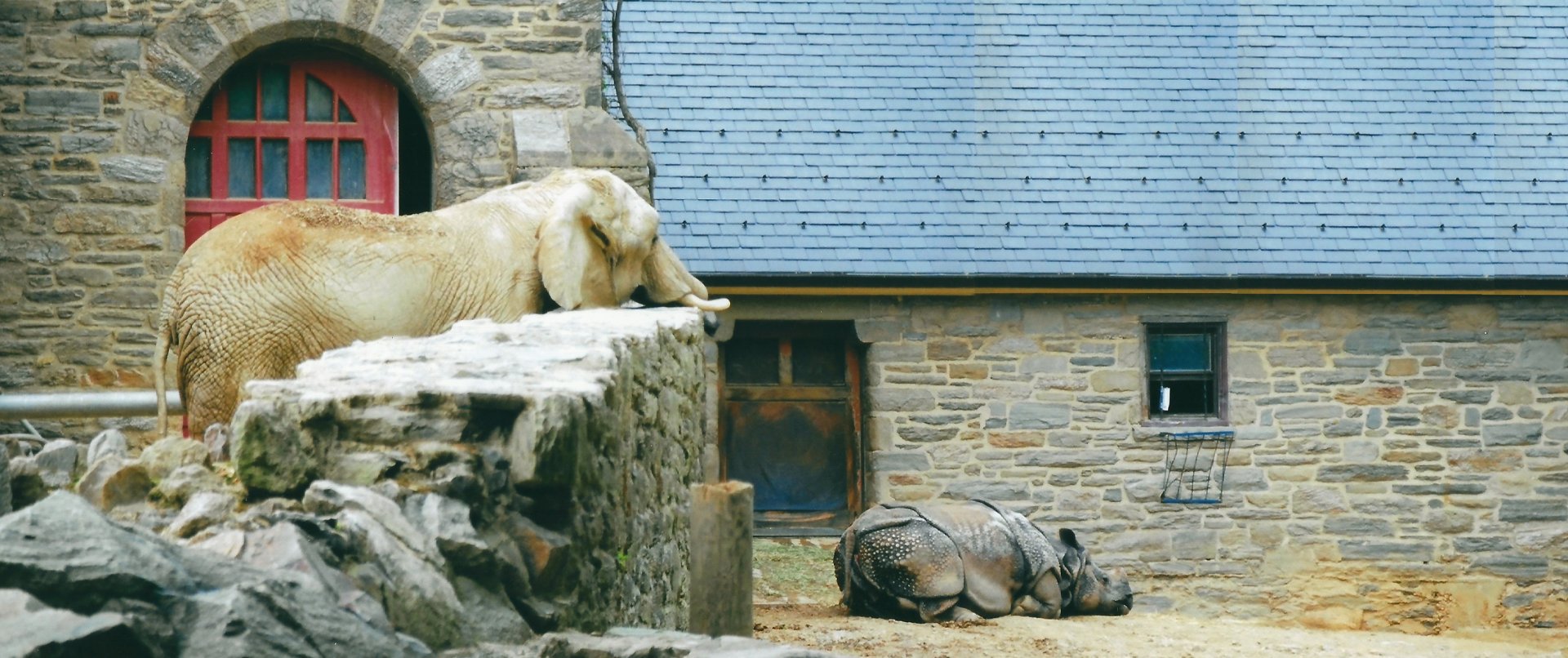
Philadelphia Zoo Bolivar The elephant at Philadelphia Zoo 1888-1908

Also another little snippet- is that caste system of elephants a real thing? Or just nonsense? I feel like it’s nonsense but would appreciate an elephant experts opinion Ambikafan!

Urgh, I’ll post it below, this forum doesn’t like my iPhone
 
I have the same problems posting anything but links. I actually brought this up in a forum thread that you might understand better than I. It's called Uploading Files.

I'm so glad we three academics came together here amidst a conflation of interests about elephants. I feel very much at a loss without even an old copy of the studbook. I like to liken research to finding lots of individual data points--like trees in a forest--and being able to come to more general trends or conclusions--like a forest---based on those facts. I am so hungry for historical elephant data that I'll be heartbroken if Sarus doesn't let me read his trove! I would have tried to be insistent and bang on a few East-Coast doors if your exhibition weren't coming upon us so rapidly and if I were even a bit more mobile at the moment. My hip break/replacement healed easily, but all the adductor and groin muscles were shredded by the broken femur. My leg was partially paralyzed for two months, and my surgeon finally said I had to quit PT and sit on the couch to let it heal until school starts. I have someone willing to go to take me to NZP in a wheelchair, but I don't really have anyone interested in shlepping around for research, let alone elephant research, especially this close to school starting!
 
I can only see the picture and the text below, but what it says is true. Princes and royalty had their own special elephants, often rare white elephants, who were physically spectacular. NZP bred its first surviving elephant by AI, and it was the first successful AI birth, so the zoo was eager to give him a name of great import. The chose Kandula, the name of a famous Sri Lankan elephant almost 2000 years ago who grew up with his prince Dutugamunu. I'm not sure if this means the Indian "caste" system for elephants applied to Sri Lanka or if this gift was a one-off and not a tradition. Nor do I know just what "caste" really refers to even in India. I knew there were royal elephants and sacred elephants prized by Hindus, but I don't know if this counted as one or two levels of the hierarchy. The other group was of course the working elephants, the laborers. I have no idea if this group had subdivisions, so on the whole I can't say if the elephant caste system bore some relationship to the four levels of the human caste system or not.

;) But you can be sure I'll be starting to look in about 15".
 
Last edited:
Several older books that I've read mention 3 "castes" of Asiatic elephants - the koomeriah or thoroughbred, the dwasala or half-bred, and the mirga (lowest caste). The Handbook of the Management of Animals in Captivity in Lower Bengal by Ram Brahma Sanyal lists the defining traits of each caste. The scanned book is available online at A hand-book of the management of animals in captivity in Lower Bengal : Sanyal, Ram Bramha : Free Download, Borrow, and Streaming : Internet Archive, and the elephant castes are described on page 127.
 
I have the same problems posting anything but links. I actually brought this up in a forum thread that you might understand better than I. It's called Uploading Files.

I'm so glad we three academics came together here amidst a conflation of interests about elephants. I feel very much at a loss without even an old copy of the studbook. I like to liken research to finding lots of individual data points--like trees in a forest--and being able to come to more general trends or conclusions--like a forest---based on those facts. I am so hungry for historical elephant data that I'll be heartbroken if Sarus doesn't let me read his trove! I would have tried to be insistent and bang on a few East-Coast doors if your exhibition weren't coming upon us so rapidly and if I were even a bit more mobile at the moment. My hip break/replacement healed easily, but all the adductor and groin muscles were shredded by the broken femur. My leg was partially paralyzed for two months, and my surgeon finally said I had to quit PT and sit on the couch to let it heal until school starts. I have someone willing to go to take me to NZP in a wheelchair, but I don't really have anyone interested in shlepping around for research, let alone elephant research, especially this close to school starting!
Oooft! That sounds horrific! You rest up!
 
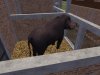
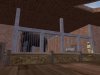
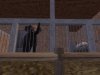
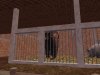
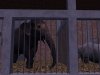
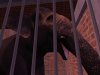
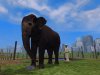
Took a trip back in time via ZT2 to the Philadelphia Zoo. It took me all day to create this. I know I can't get everything to look exactly alike, but I'm trying. Here are some screenshots of bringing this legend back to life:

Overhead view.

Bolivar1.jpg
Bolivar & Pete's stalls.

Bolivar2.jpg

Bolivar3.jpg

Bolivar4.jpg
Pete's banging the brick wall, upsetting Bolivar and making him charge.

Bolivar5.jpg
Closeup of him charging the bars.

Bolivar6.jpg
Outside on the grass.

Bolivar7.jpg

I hope you enjoyed my progress so far. I can try to see if I can make rafters inside like in the original photos, but its very difficult because I would have to add more elevated paths, make them invisible and then add the rafters. Creating the individual skylights was painstaking!
 

Attachments

  • Bolivar1.jpg
    Bolivar1.jpg
    624.1 KB · Views: 18
  • Bolivar2.jpg
    Bolivar2.jpg
    535.6 KB · Views: 19
  • Bolivar3.jpg
    Bolivar3.jpg
    512 KB · Views: 17
  • Bolivar4.jpg
    Bolivar4.jpg
    586.3 KB · Views: 16
  • Bolivar5.jpg
    Bolivar5.jpg
    513 KB · Views: 16
  • Bolivar6.jpg
    Bolivar6.jpg
    493.7 KB · Views: 18
  • Bolivar7.jpg
    Bolivar7.jpg
    478.4 KB · Views: 16
Last edited:
Took a trip back in time via ZT2 to the Philadelphia Zoo. It took me all day to create this. I know I can't get everything to look exactly alike, but I'm trying. Here are some screenshots of bringing this legend back to life:

Overhead view.

View attachment 408308
Bolivar & Pete's stalls.

View attachment 408309

View attachment 408310

View attachment 408311
Pete's banging the brick wall, upsetting Bolivar and making him charge.

View attachment 408312
Closeup of him charging the bars.

View attachment 408313
Outside on the grass.

View attachment 408314

I hope you enjoyed my progress so far. I can try to see if I can make rafters inside like in the original photos, but its very difficult because I would have to add more elevated paths, make them invisible and then add the rafters. Creating the individual skylights was painstaking!
Wow these are so interesting! I’ll try and find the funny article about Bolivar and Pete’s ‘Peanut war’. Really brings it to life!
 
So astonishing! You've really brought history to life! I am reminded again how this ancient building is far better aesthetically and functionally than the Paul Cret replacement. But, Sarus, I did see the long video on your YouTube of the Elephant House interior in 2003! Remarkable in several ways, not the least of which that I thought the inside of the building had been closed to the public by 2003! Was that precocious all-knowledged questioner you, on some behind-the-scenes tour?! It was hilarious watching the keepers fail to answer your questions or match your knowledge.

Why did you do the scene on the grass? Did that really happen? Everything I've seen suggests that he never left the confines of that stall, even presumably as masons worked around him to rebuild the brick wall he destroyed.

Thanks for your Google Docs. I'm going to figure it out. My laptop is on the fritz, and I'm going to send it to the Gedk Squad while I'm out of town next week, but after that, it should be easier. I can't deal with docs on my phone.

I did do some more searching before my laptop succombed, but I got very frustrated every time a journal I wanted to pore over was in EBSCO, which wouldn't allow me remove the search criteria "Simon" so I wouldn't get inundated with Simon Bolivar info. A librarian friend agrees that it would be hard to imagine in what field articles about Bolivar could have been written. I started with history and got all the Simon Bolivar stuff before turning to popular culture and zoology. He's intrigued now, so I'll let you know if I get any good information from either him or Bob Lee. It is summertime, and people are on vacations.....

From reading both of your notes, I've come to wonder just how that mounting for the natural history museum was ever deemed acceptable. Even if they knew going in that the sore would cause facial problems, they certainly should have been able to see how terrible the end result was. Taxidermy for museums had become quite competent by the 1910s, and Bolivar is just terrible. I don't believe they recreated his shape accurately at all and just seemed to paste the hide onto the skeleton, forgetting muscle mass and fat stores. I'm so glad you've corrected that in your recreations, Sarus.

I'll look through my pics, and if I don't find anything good enough, I'll try to photograph Shanthi and Rani next week in DC to show you what I mean about their similarity to Bolivar's physique.
 
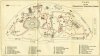
To be honest, I don't know the exact layout of the first elephant house at the zoo. It was designed by Frank Furness and built in 1875 and I found an image online, but can't find a blueprint for it as to how the stalls inside were organized. I just know that it was the two female elephants followed by Bolivar, then Pete the rhino so my design isn't exactly correct. I just went by the very few photos I could find. Furness also designed a restaurant at the zoo and the entry gates which were slightly altered but still greet visitors to the zoo today.

Philadelphia Zoo Map 1907.jpg

It also appears on this map from 1907 that where the buffalo paddocks used to be was replaced by the Paul Cret elephant house. Now I could recreate that much easier than the Furness structure and having visited the zoo often from my childhood have many fond memories of Petal, & Dulary the elephants, Xavira & Sanjay the Indian rhinos, and Cindy & Unna the hippos.
And yes that was me in the vid. That is my favorite Philadelphia Zoo memory and the first time I was that close to an Indian rhino. I miss Xavira! Here are the blueprints for the 1940's Paul Cret Elephant House but you have to pay to access them.

As for Bolivar on the grass, I put him there for a clear full body photo. There might have been one or more instances early on where he might have gone outside but I don't know for certain. That's too bad about your computer. I hope Geek Squad can fix it. In terms of Bolivar's mounting from Bonnie's Twitter photos it seems that McCadden just made a crude structure to mount him on not making a lifelike form including the musculature and fat deposits like you said. The first time I saw the pic of his mount from the Academy's blog, I thought it could've been the real life version of a heffalump from Winnie the Pooh. Its that bad!

Oh and by the way, I tried logging into Newspapers.com with the old connection I used to have to look for articles. It didn't work as the subscription that my old work colleague had was only good for 6 months and must've expired some time ago.

The National Zoo is a lot of fun. I was last there in Sept 2016 before Spike came. I saw him at Busch gardens in winter 2017 before he left, but never got the chance to see him closeup to appreciate his full size as the habitat is lower than where you're standing. I really enjoyed watching the elephant cam of when he came in spring of last year and how much Rani and him were "in love". They make such an adorable couple! Also when at the zoo, they have a Lesser Kudu calf as well as Amur Tigers. I'm curious if giraffes and rhinos will ever make it back to the zoo.

Spike & Maharani

National Zoo by me. (Asian elephants appear at 30:15)
 

Attachments

  • Philadelphia Zoo Map 1907.jpg
    Philadelphia Zoo Map 1907.jpg
    140.2 KB · Views: 16
The terrain and convoluted paths required by the Elephant Trails habitat really show how difficult it was to carve out every square foot for a large species. I can think of no space at all for giraffes or rhinos unless one of the public gathering spaces is relinquished. But those are already so busy with campers and other fundraising events that I can't imagine it happening. In fact, the Bird House redesign removed all of the duckponds and a number of specimen trees to make it an event space. For anything new, something would have to go, but they would be exciting up in the cheetah area.

Well, you really get to see Maharani there, but she has enough weight that you can't see how long her legs are. I should go look for Kandula pics--just realized he's 18 now and may really look like an adult now.

Btw, I wasn't criticizing the grass renderings, and if you hadn't mentioned it, I would have thought the barn was perfect from the two pictures. I just wondered if you knew of some reprieve from the chains. Any idea how keepers cleaned or rebuilt that wall? So many institutions had to do a lot of renovations in the last 20 years to safely keep bulls; it doesn't seem Philly did so badly with only that one wall problem. I remember Dulary! She stood out amidst all the Africans. That yard was so small for all of them...
 
Hello!
I'm hoping zoo chat might be able to help me out with the following:

1. A contact name for an archivist or educator at the Philly zoo who might be able to help
So... after all of this discussion... do you still need to know who to contact at the zoo? Have you called them?
I will be there tomorrow (Monday) and can ask if you wish. Let me know before 8:30amEDT
I will be meeting with staff so getting the correct contact for you (if there is such a staff member) will be no problem
 
Found this gem yesterday while looking at old photos. The 21st Century version of Bolivar & Pete, except its Petal & Xavira from summer 2005!

 
The terrain and convoluted paths required by the Elephant Trails habitat really show how difficult it was to carve out every square foot for a large species. I can think of no space at all for giraffes or rhinos unless one of the public gathering spaces is relinquished. But those are already so busy with campers and other fundraising events that I can't imagine it happening. In fact, the Bird House redesign removed all of the duckponds and a number of specimen trees to make it an event space. For anything new, something would have to go, but they would be exciting up in the cheetah area.

Well, you really get to see Maharani there, but she has enough weight that you can't see how long her legs are. I should go look for Kandula pics--just realized he's 18 now and may really look like an adult now.

Btw, I wasn't criticizing the grass renderings, and if you hadn't mentioned it, I would have thought the barn was perfect from the two pictures. I just wondered if you knew of some reprieve from the chains. Any idea how keepers cleaned or rebuilt that wall? So many institutions had to do a lot of renovations in the last 20 years to safely keep bulls; it doesn't seem Philly did so badly with only that one wall problem. I remember Dulary! She stood out amidst all the Africans. That yard was so small for all of them...
Dulary moved to the elephant sanctuary in 2008. She passed at the age of 50 in December 2013. I know you weren't criticizing it, I'm just a perfectionist when it comes to these things that's all. ;)

 
I'm not sure what I said, but I actually loved and followed Dulary's life both at the zoo for 20 years and then the sanctuary over those 5 years. She represented my first real pangs of conflict-- missing her but more and more sickened by that tiny yard overflowing with elephants. I'll never forget her.
 
So... after all of this discussion... do you still need to know who to contact at the zoo? Have you called them?
I will be there tomorrow (Monday) and can ask if you wish. Let me know before 8:30amEDT
I will be meeting with staff so getting the correct contact for you (if there is such a staff member) will be no problem

In case Bonnie doesn't see this, I'll accept your offer in her stead. I don't think either Sarus or I have helped her with that reference, so if you have the opportunity, kindly do see if you get contact info for their archivist and if they have any material not held by Temple. I know Temple does not have digitized archives, so if they can approve perusal of those materials, I would be the one to go look personally, as I'm the only one of us on the East Coast. Thank you!
 
Bolivar was notable because he was genuinely very big and he was part of the large elephant craze that gripped American circuses in the late 1800s. He was often used in comparison to the slightly taller but lighter African elephant Jumbo of Barnum's circus, but Bolivar outlived Jumbo (who somehow (considering his value to the circus) managed to be hit by a train in 1885). For me Bolivar is interesting because although he was a celebrity in his day, his legacy has been somewhat lost, his only real footnote was as 'Philadelphia's unfriendliest resident' on the Academy website and I just thought that considering Bolivar probably saw his mother killed, travelled continuously through his early life, was made to perform, beaten until he submitted, fed inappropriate foods, lived in damp conditions, had to live amongst tigers and other predators, moved around between circuses and probably never had the chance to make familial bonds with other elephants....he was remarkable well behaved!!!! Some of the stories of these animals lives are the most depressing things to read, so my exhibition is trying to create a more positive look and show my admiration for what Bolivar endured. He's probably no more or less special than all the other animals in zoos and circuses but his celebrity meant that I was able to research much of his life and his experience probably mirrors that of other circus and zoo animals of the time. I guess he's just one of those animals that gets under your skin - I want to do Ironsides and more on Jackson the rhino (who's history I collated at Bristol) after this so I defo have a 'thing' for animal histories!
As an Asian Elephant, Bolivar is unlikely to have seen his mother killed. He would almost certainly have been captured from the wild as a calf, which may have involved the whole herd. African Elephant calves were indeed caught by shooting the mother, but this was not the case with Asiatics. He may even gave been born to an already captive working elephant. Otherwise, thus individual history stuff of old zoo animals is fascinating. Thank you.
 
Ironsides was in next door to Bolivar during his time at Philadelphia and there's some funny stories of the 'Great Peanut War' which played on the trope that rhinos and elephants are sworn enemies.

Jackson was in my care at Bristol Museum and is still on display, my research was used for this blog post and i'm obsessed with the image of the bombed out museum with his silhouette. He also features on a postage stamp! hs capture notes are heartbreaking - we gathered a lot of information for a future new display for him because he's so special and at risk, but sadly the money couldn't be found.
Jackson the Rhinoceros
Fascinating story about Jackson. Interesting that (a) he's at Bristol where I can easily visit him & (b) that ZSL could keep him for three decades when his species nowadays has a relatively high mortality rate in captivity.
Begum was the other long lived Sumatran at that time.
 
Last edited:
Fascinating story about Jackson....Begum was the other long lived Sumatran at that time.
Indeed. It's interesting that London Zoo's two longest lived Sumatran rhinoceroses, "Begum" (1872-1900) and "Jackson" (1886-1910) were both of the lasiotis subspecies; “Begum” being the type specimen of Dicerorhinus sumatrensis lasiotis.
 
Back
Top