Bovine Import Review

Just to expand the point above on Adelaide’s history with wildebeest. In 1906-7, Adelaide Zoo acquired a pair of Black Wildebeest. The pair produced a calf in December 1907 but survived for 10 days. In 1908, the male had to be separated due to aggression. The last record of them was in 1922.

A pair of Blue Wildebeest arrived by ship in March 1930 from Africa. The pair produced a calf (not surviving) in 1941. There are limited records but it was believed that they really produced a calf eleven years after arrival. Two more calves were born in 1942 and 1946 respectively. The breeding male died in 1945 leaving the pregnant female. The female gave birth and didn’t raise the calf. A Jersey cow was brought it to raise the calf quite successfully for six months! Unfortunately, it died in July 1946. The breeding female lived till September 1947 and the final wildebeest (her daughter) died in 1953.
 
@WhistlingKite24 While the same can be said for Taronga and Melbourne historically, for a small city zoo like Adelaide at less than 10 hectares it sure has had an impressive history of species during the 20th century especially. Until recently I only knew and was impressed by what I'd learned on here about their many different smaller mammals, carnivores and birds over the years but didn't know just how many different 'mega-fauna' species they had kept at stages like both Blue and Black Wildebeests at different times, really quite impressive (the exception to the not knowing about their 'mega-fauna' diversity would be being impressed that until recently they had both Hippo species and Malayan & Brazilian Tapir); with Monarto having 10 sq km of space too it will be cool to see what ZSSA/SAZS does with this success with Bovidae importations.
With Wildebeest it would be great if they still had the Cocos Islands quarantine station to try persuade the government to allow a handful of both blue and Black Wildebeest into Australia provided they spent like six months at a non mainland quarantine station to ensure they don't have the disease(s) mentioned. Only suggested six months as am wondering if with the disease theyre concerned about it takes longer in quarantine to rule out?

Read a Trove article a while back from the 1930s that mentioned a couple of Blue Wildebeest being brought to Perth Zoo in a shipment from South Africa that included heaps of other animals but from memory they only lived a few years (will try find the article), think from memory they came on the same ship(ment) as the zoo's first pair of Giraffes.
 
@WhistlingKite24 While the same can be said for Taronga and Melbourne historically, for a small city zoo like Adelaide at less than 10 hectares it sure has had an impressive history of species during the 20th century especially. Until recently I only knew and was impressed by what I'd learned on here about their many different smaller mammals, carnivores and birds over the years but didn't know just how many different 'mega-fauna' species they had kept at stages like both Blue and Black Wildebeests at different times, really quite impressive (the exception to the not knowing about their 'mega-fauna' diversity would be being impressed that until recently they had both Hippo species and Malayan & Brazilian Tapir); with Monarto having 10 sq km of space too it will be cool to see what ZSSA/SAZS does with this success with Bovidae importations.
With Wildebeest it would be great if they still had the Cocos Islands quarantine station to try persuade the government to allow a handful of both blue and Black Wildebeest into Australia provided they spent like six months at a non mainland quarantine station to ensure they don't have the disease(s) mentioned. Only suggested six months as am wondering if with the disease theyre concerned about it takes longer in quarantine to rule out?

Read a Trove article a while back from the 1930s that mentioned a couple of Blue Wildebeest being brought to Perth Zoo in a shipment from South Africa that included heaps of other animals but from memory they only lived a few years (will try find the article), think from memory they came on the same ship(ment) as the zoo's first pair of Giraffes.

Auckland Zoo held Black wildebeest and Blue wildebeest (both feature on a 1926 map) and were successful in breeding Blue wildebeest: https://paperspast.natlib.govt.nz/newspapers/THD19300208.2.75

They don’t feature on maps from the 1960’s - so were apparently phased out sometime before then.
 
Thats awesome about Auckland Zoo, again another zoo that has had an impressive species variety spread out over its history (speaking of its history, didnt realise until earlier this year that it first opened its gates in the 1920s a lot later than assumed so was established two decades after Wellington Zoo but seemed to be very quick to establish itself in its variety etc)

Btw was wrong, it was Black Wildebeest that Perth Zoo had in 1932:
ADDITIONS TO THE SOUTH PERTH ZOO. - The West Australian (Perth, WA : 1879 - 1954) - 30 Dec 1932
 
idgi, so these animals were legal to import, then became illegal to import, and are legal to import again?

Well to put in simply - during the first few decades of the 20th Century, you could import pretty much whatever you wanted. Then biosecurity restrictions came in (as well as CITES). Now we have legislation put in place, which while avoiding any risks to Australia’s biosecurity, allows us to import some of these species again (within very strict parameters).
 
idgi, so these animals were legal to import, then became illegal to import, and are legal to import again?
From my understanding (which is admittedly limited when it comes to this sort of regulatory information), the live import list is a combination of historical listings and animals that have been added recently due to a zoo's interest to import. Certain groups of animals have always been permitted to be imported but others (bovids, parrots etc.) have only been allowed into the country for short periods of time. For example, the 1990s was the last time there were several imports for many antelope species but then it closed again quickly.

If a zoo would like to import a species then an IRA [import risk analysis] must be in place for that specific group of animals outlining specific conditions to minimise biosecurity risk. Secondly, the species must then be on the import list to be permitted to enter the country. For example, Australian zoos have recently applied to amend the list to add Red Ruffed Lemurs and there is already an IRA in place for primates. Some of these import list applications are successful, some are not and sometimes there are added restrictions to permit entry (e.g. only male Yellow Anacondas are allowed, desexed Pumas).
 
Thats awesome about Auckland Zoo, again another zoo that has had an impressive species variety spread out over its history (speaking of its history, didnt realise until earlier this year that it first opened its gates in the 1920s a lot later than assumed so was established two decades after Wellington Zoo but seemed to be very quick to establish itself in its variety etc.

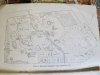
As shown by this 1926 map (four years after Auckland Zoo opened), they had a species list that today puts any of our region’s main zoos to shame:

upload_2021-10-24_12-25-58.jpeg
Photo credit: @zooboy28

The trade off is the small exhibits - wolves, hyenas, jackals, tigers, pumas and leopards all crammed into tiny cages; but it was still an incredible zoo by anyone’s standards.

The Polar bear and African lion exhibits were two of the biggest investments the zoo made in the early years and were major crowd pullers for many decades.
 

Attachments

  • upload_2021-10-24_12-25-58.jpeg
    upload_2021-10-24_12-25-58.jpeg
    146.8 KB · Views: 38
From my understanding (which is admittedly limited when it comes to this sort of regulatory information), the live import list is a combination of historical listings and animals that have been added recently due to a zoo's interest to import. Certain groups of animals have always been permitted to be imported but others (bovids, parrots etc.) have only been allowed into the country for short periods of time. For example, the 1990s was the last time there were several imports for many antelope species but then it closed again quickly.

If a zoo would like to import a species then an IRA [import risk analysis] must be in place for that specific group of animals outlining specific conditions to minimise biosecurity risk. Secondly, the species must then be on the import list to be permitted to enter the country. For example, Australian zoos have recently applied to amend the list to add Red Ruffed Lemurs and there is already an IRA in place for primates. Some of these import list applications are successful, some are not and sometimes there are added restrictions to permit entry (e.g. only male Yellow Anacondas are allowed, desexed Pumas).
Why is there a requirement for pumas to be desexed? It makes little sense when animals that could adapt to Australia more easily like the serval and peccary don’t need to be desexed.
 
Why is there a requirement for pumas to be desexed? It makes little sense when animals that could adapt to Australia more easily like the serval and peccary don’t need to be desexed.

Probably because they don't want any chance of a large, adaptable, secretive cat starting a population? Puma are extremely versatile in terms of habitat, they likely would do just fine in many areas of Australia. (Remember they're found from Canada to Teirra del Fuego, in habitats from the high Andes to the Amazon to the Sonoran Desert and Canadian boreal forests.) And unlike most of Australia's introduced mammals, they are quite good climbers and large enough to be a danger to everything but the crocs. So despite the low likelihood of cougars ending up in the bush, I don't blame Australia for not wanting to take any chances.
 
Probably because they don't want any chance of a large, adaptable, secretive cat starting a population? Puma are extremely versatile in terms of habitat, they likely would do just fine in many areas of Australia. (Remember they're found from Canada to Teirra del Fuego, in habitats from the high Andes to the Amazon to the Sonoran Desert and Canadian boreal forests.) And unlike most of Australia's introduced mammals, they are quite good climbers and large enough to be a danger to everything but the crocs. So despite the low likelihood of cougars ending up in the bush, I don't blame Australia for not wanting to take any chances.
That doesn’t explain why caracals and collared peccaries, thar latter of which has a range from southern US all the way to northern Argentina, are allowed to be breed.
 
That doesn’t explain why caracals and collared peccaries, thar latter of which has a range from southern US all the way to northern Argentina, are allowed to be breed.

I don't know the specifics regarding the Australian laws on them, but they're much easier to spot and less of a threat to both humans and wildlife. Peccary would be easy to target and remove if necessary. Caracal would definitely be tougher, not fully sure on that one.

Also per the Exotic Mammals in Australia thread there's only 1.2 peccary left in Australia, so chances of them getting off the ground is basically nil anyway. Quite a few Caracals, including some recent imports.
 
That doesn’t explain why caracals and collared peccaries, thar latter of which has a range from southern US all the way to northern Argentina, are allowed to be breed.
The puma requirement is an odd one. There are two possible reasons that I can see:

1. There were a very small number of pumas that were in private hands (ie personal pets). Big cat ownership is not something governments here want to see. They may have been allowed to keep their animals so long as they were neutered. Given there is no interest from the major zoos in pumas, this may have been embedded in law.

2. Someone in government took all those reports about feral pumas seriously and decided this was a way to stop the growth of these feral "populations".

The other species mentioned are only in zoos. While escapes from zoos do occur they are extremely rare and usually only involve single animals. Feral populations result from deliberate or multiple accidental releases.
 
@MRJ I remember reading a folktale/urban myth presented as fact nearly 20 years ago online on one of the forums to do with feral cats in Aus' and read this claim that there was an American battalion that happened to be near the Grampian ranges when the second World War ended and they had not just one but two Pumas (1 male, 1 female of course for story to work) in cages as their mascot(s); and to celebrate the war's end they released them from their cages in the Grampians (may have been the Snowy mountains but I seem to remember the story said the Grampians). I know there were heaps of American soldiers in Australia during the war of course all through 1942-late 1945, but the story just shouts tall-tale, although I remember it was written about like it was a fact at the time (guess it was still slightly easier to tell a tale like that without fact research dispelling one's anecdote), I could totally imagine some politicians believing the story of course, I think your first possibility is still the most likely (wow had no idea that there were several Pumas in private hands back in the day besides the Bullen family, Padeys at Mogo, Irwin's in the 90s and Zambi until last year). It's a real shame that no Zoos in Australia have any Pumas now. With the big city Zoos losing interest a long time ago that makes sense in terms of their species downsizing over last few decades with (not that I agreed with them losing interest, I just assumed it had something to do with Puma's least concern status in conservation data. Taronga gave up theirs to make room for their Snow Leopards but I often wondered why they couldn't just keep both species being a large zoo for a city zoo?) but would love to see the ever impressively growing smaller private zoos find a few, even just a couple would be great, within their zoo circle that would be keen to keep Pumas. They were one of the big cat species that made the list I wrote down recently when trying to conceptualise how a hypothetical smaller private zoo between Bunbury and Busselton in WA might be a potential possibility in a few years.
(and a lot more Bovidaes now on the potential list due to the excellent news this thread was started over)
 
Last edited:
@MRJ I remember reading a folktale/urban myth presented as fact nearly 20 years ago online on one of the forums to do with feral cats in Aus' and read this claim that there was an American battalion that happened to be near the Grampian ranges when the second World War ended and they had not just one but two Pumas (1 male, 1 female of course for story to work) in cages as their mascot(s); and to celebrate the war's end they released them from their cages in the Grampians (may have been the Snowy mountains but I seem to remember the story said the Grampians). I know there were heaps of American soldiers in Australia during the war of course all through 1942-late 1945, but the story just shouts tall-tale, although I remember it was written about like it was a fact at the time (guess it was still slightly easier to tell a tale like that without fact research dispelling one's anecdote), I could totally imagine some politicians believing the story of course, I think your first possibility is still the most likely (wow had no idea that there were several Pumas in private hands back in the day besides the Bullen family, Padeys at Mogo, Irwin's in the 90s and Zambi until last year). It's a real shame that no Zoos in Australia have any Pumas now. With the big city Zoos losing interest a long time ago that makes sense in terms of their species downsizing over last few decades with (not that I agreed with them losing interest, I just assumed it had something to do with Puma's least concern status in conservation data. Taronga gave up theirs to make room for their Snow Leopards but I often wondered why they couldn't just keep both species being a large zoo for a city zoo?) but would love to see the ever impressively growing smaller private zoos find a few, even just a couple would be great, within their zoo circle that would be keen to keep Pumas. They were one of the big cat species that made the list I wrote down recently when trying to conceptualise how a hypothetical smaller private zoo between Bunbury and Busselton in WA might be a potential possibility in a few years.
(and a lot more Bovidaes now on the potential list due to the excellent news this thread was started over)
I think you can take that story and insert whatever location you want to claim there is a big cat population - they all seem to be the fault of those G.I.'s.
 
I think your first possibility is still the most likely (wow had no idea that there were several Pumas in private hands back in the day besides the Bullen family, Padeys at Mogo, Irwin's in the 90s and Zambi until last year).

I had no idea Australia Zoo held Puma? I was well aware of Terri’s history with the species - founding a wildlife rehabilitation facility in Oregon called ‘Cougar Country’ and of course her Puma, Malina, but didn’t know they were at Australia Zoo. Do you have any further details on them?
 
@Zoofan15 During one of the Crocodile Hunter episodes from the late '90s Steve Irwin was shown talking next to at least one Puma (also a Bobcat in a nearby exhibit). I think Terri must have brought them over from Oregon. Am fairy sure they must have passed away by 2001 or gone elsewhere because when I first checked the zoo's website Small-Clawed Otters, Galapagos Tortoise, American Alligators and a few others were the only exotic animals listed at that time.
 
1. There were a very small number of pumas that were in private hands (ie personal pets). Big cat ownership is not something governments here want to see. They may have been allowed to keep their animals so long as they were neutered. Given there is no interest from the major zoos in pumas, this may have been embedded in law.

I guess that would make a lot of sense. But considering that almost every exotic mammal, including pumas, has an import condition of “Eligible non-commercial purpose only, excluding household pets” I am sure that the government was prepared about exotic owners beforehand. So it’s probably the latter explanation you gave which might be the reason why pumas need to be desexed. Albeit I still find the decision odd.
 
@Zoofan15 During one of the Crocodile Hunter episodes from the late '90s Steve Irwin was shown talking next to at least one Puma (also a Bobcat in a nearby exhibit). I think Terri must have brought them over from Oregon. Am fairy sure they must have passed away by 2001 or gone elsewhere because when I first checked the zoo's website Small-Clawed Otters, Galapagos Tortoise, American Alligators and a few others were the only exotic animals listed at that time.

Are you thinking of the pilot episode of Crocodile Hunter? There’s a shot of Steve Irwin with a Puma here: Harriet the Famous Tortoise's Connection to Steve Irwin Day - Wildlife Images Rehabilitation and Education Center

Prior to emigrating to Australia to begin her life with Steve, Terri sent Malina (her handraised Puma) to this wildlife sanctuary in Oregon (Wildlife Images) and they visited her together as part of the series. The sanctuary likely had a Bobcat at the time.
 
Are you thinking of the pilot episode of Crocodile Hunter? There’s a shot of Steve Irwin with a Puma here: Harriet the Famous Tortoise's Connection to Steve Irwin Day - Wildlife Images Rehabilitation and Education Center

Prior to emigrating to Australia to begin her life with Steve, Terri sent Malina (her handraised Puma) to this wildlife sanctuary in Oregon (Wildlife Images) and they visited her together as part of the series. The sanctuary likely had a Bobcat at the time.
Oh right so it was in Oregon ok that makes sense, so we can strike the Irwin's from the list of past Puma holders in Australia then. To be honest I cant remember what episode it was except I saw it in the late 90s but I'm absolutely certain you're right about which episode it was. Something cute I remember from an episode from around that time was Steve talking about a Southern Grey Cuscus (just refered to as a Cuscus but it wasn't a Spotted so deducing) while the little fella was hanging out on a branch eating part of a peeled banana just above Steve who gently grabbed the banana piece for a moment which made the Cuscus give off a very animated unique sound (growl like) of irritation/frustration but was quickly handed back his/her banana piece by the late Mr Irwin.
 
Back
Top