Well I suppose it was only a matter of time before I eventually made one of these Two members so far have requested I write this up and one (a certain chatroom-dwelling mod) has asked several times so here I go!
I suppose I shall take a page out of TeaLovingDave’s book and write this section-by-section since Bronx is so huge. Also, please excuse me if this reads a little biased in the end! I’ve been visiting Bronx since I was a small child and enjoy the place very much so I can’t exactly help it if I sometimes glorify the place.
My walk-through will go section-by-section along the path I generally take when visiting the zoo and will be written as of the current species line-up as of my last visit (December 27, 2014) but I may update any major things as time goes on.
Lastly before I begin, make sure to tell me what you think and ask any questions if you have them!
NOTE: Being as the second floor of World of Birds and the Children’s Zoo are currently undergoing large renovations I will refrain from talking about them until they reopen.
*General Info.
The Bronx Zoo is located within the Bronx Park, within the Bronx borough of New York City, New York. The zoo is one of the five New York City collections run and maintained by the Wildlife Conservation Society and it functions as the main base of operations for the organization. The zoo is 265 acres (107 ha), making it one of the largest metropolitan zoos in the world and one of the largest in North America. Much of its land is covered in large forested sections and a small portion in the Northeast of the zoo is sectioned off as the Mitsubishi Riverwalk, which is a large trail through a natural forested environment along the Bronx River which flows through the zoo. Pricing is generally around $23 for adults, $16-19 for children ages 3-12, and $21 for seniors ages 65 and up. On Wednesdays the zoo is free of charge, although I wouldn’t suggest visiting on Wednesdays as the zoo becomes insanely crowded. Certain exhibits such as Congo Gorilla Forest (except during the winter months), JungleWorld, the Children’s Zoo (as of before the renovations), the Bug Carousel, and the 4-D Theater require an additional fee of $5 to enter, though an all-experience ticket can get into all of these for free (last I checked buying one of these online isn’t much more expensive than a regular ticket at the gate so really it’s a good deal if you ask me). Parking also costs extra. Currently, the zoo is open from 10am to 5:30pm from April 4th to November 1st, and from 10am to 4:30pm (though most indoor exhibits close down at 4pm) from November 2nd to April 3rd. It should be said that it’d likely take the average ZooChatter two days to complete this zoo to their liking.
*I do realize most of those reading this will already know this information but I felt this was a necessary section to include.
Bronx River Parkway Entrance-Northern Ponds
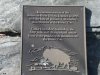
When you enter the zoo from this entrance (one of three), first you’ll find yourself walking along a nice forested stretch next to the Bronx River for a short period. After moving up a bit, you’ll find yourself looking at a nice large herd of American Bison (Bison bison) along with a small plague talking about the American Bison Society which, largely working from the Bronx Zoo, worked to breeding this species in captivity and release animals back into the wild.
Just about across the path and up a pretty steep hill from the bison, you’ll find World of Birds. This huge, two story building features dozens of often changing species of birds and monkeys in many large, naturalistic enclosures. Now as mentioned earlier I’ll only talk about the first floor while the second floor undergoes renovations. The first floor displays several different habitats in various enclosures ranging in sizes from tall but a tad thin to extremely large. Some enclosures could even be viewed from both floors pre-renovation. As with most bird exhibits I’ve encountered, most of the enclosures are set in a rainforest scene representing species from both South America and Asia in general. However, there are also enclosures which have a dry African scrubland and European forest as their settings as well. Along with these enclosures, the first floor of World of Birds also features several wonderful educational displays. These range from signage talking about the effects of Domesticated Cats on wild bird populations to subtle nods of poaching/deforestation with a chainsaw on a stump or a “no hunting” sign riddled with bullet holes in an enclosure to dramatic displays of fake cut down trees or fake birds in tiny cages to stress the effects of the exotic pet trade and deforestation. My favorite and probably the most famous of these educational displays is the large room in which the walls are covered with small illustrations of bird species driven to extinction by people. These species include everything from the more infamous Dodo and moa to the more unknown species such as the Mysterious Starling and Chatham Island Rail. The hope is that, when visitors enter this room, they’re struck with all the hundreds of amazing birds that have gone Extinct in Human hands and are moved to at least think about the endangered species still alive today. Now as for the living species within the exhibit, the most notable species include:
Western Capercaillie (Tetrao urogallus)
Blue-Billed Curassow (Crax alberti)
Sulawesi Dwarf Hornbill (Penelopides exarhatus sanfordi)
Grand Cayman Amazon (Amazona leucocephala caymanensis)
Blue-Fronted Amazon (Amazona aestiva xanthopteryx)
Green Junglefowl (Gallus varius)
Lesser Bird-of-Paradise (Paradisaea minor)
Red Bird-of-Paradise (Paradisaea rubra)
Raggiana Bird-of-Paradise (Paradisaea raggiana)
Maleo (Macrocephalon maleo)
Common Hoopoe (Upupa epops)
Haitian Bananaquit (Coereba flaveola bananivora)
Spur-Winged Lapwing (Vanellus spinosus)
Egyptian Plover (Pluvianus aegyptius)
White-Throated Bee-Eater (Merops albicollis)
Northern Carmine Bee-Eater (Merops nubicus nubicus)
Beautiful Sunbird (Cinnyris pulchellus)
Golden-Headed Quetzal (Pharomachrus auriceps)
Crimson-Rumped Toucanet (Aulacorhynchus haematopygus)
Racquet-Tailed Roller (Coracias spatulatus)
Kenyan Crested Guineafowl (Guttera pucherani pucherani)
Malayan Great Argus (Argusianus argus argus)
Other species include:
Grey-Winged Trumpeter (Psophia crepitans)
Plum-Headed Parakeet (Psittacula cyanocephala)
Bali Mynah (Leucopsar rothschildi)
Guira Cuckoo (Guira guira)
Elegant Crested Tinamou (Eudromia elegans)
Inca Jay (Cyanocorax yncas yncas)
Blue Dacnis (Dacnis cayana)
Blue-Grey Tanager (Thraupis episcopus)
Tawny Frogmouth (Podargus strigoides)
Falcated Duck (Anas falcata)
Song Thrush (Turdus philomelos)
Smew (Mergellus albellus)
Victoria Crowned Pigeon (Goura victoria)
Green-Naped Pheasant Pigeon (Otidiphaps nobilis)
Cut-Throat Finch (Amadina fasciata)
Southern Red Bishop (Euplectes orix)
In addition to all these fascinating birds, the exhibit also currently features three mammal species- Golden Lion Tamarin (Leontopithecus rosalia), Bolivian Grey Titi (Callicebus donacophilus), and Cotton-Top Tamarin (Saguinus oedipus). Outside of the building, there’s also a large enclosure for Emu (Dromaius novaehollandiae) on the side.
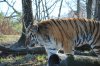
After World of Birds, you’re in for a bit of a walk (something you’d best get used to if you’re planning on visiting Bronx!) through some of the natural landscaping again until you come across the next exhibit- Tiger Mountain The first animals you’ll see will be on your right, where there’s a very large enclosure for a herd of Père David’s Deer (Elaphurus davidianus) and a pair of Whooper Swans (Cygnus cygnus). This enclosure is very wide and deep as it gradually goes uphill towards the back. There’s also a large pond/stream set-up along the front that often attracts wild waterfowl such as Canada Geese and Mallad ducks. For viewing it varies- at some points there’s an unobstructed view, at other points a bit of fencing in the way, and at one far end there’s a little wooden viewing hut. Now on the other side of the path, you’ll have to start up a bit of a climb (something else you’d best get used to!) along a trail that branched off from the main path. Tiger Mountain features two viewing areas for the zoo’s Amur Tigers (Panther tigris altaica) and, occasionally, Malayan Tigers (Panthera tigris jacksoni), though I wouldn’t count on seeing the later on a regular visit. Each viewing area is a large, covered space with glass barriers between you and the tigers. Each area offers a little bit of education on tigers and some fun activities such as a fake log with a chained ball inside that guests are suppose to try and pull out, just as the tigers would with the ones inside their enclosures. The two enclosures are both quite large with living trees within them. The first enclosure has a large mesh section of the viewing where keepers can go over with food and get the tigers standing up right in front of you while second enclosure has a small but deep pool with underwater viewing. Apart from the animals, this exhibit also has several stations talking about tiger conservation in the wild and what the WCS is doing to help. Towards the end of the trail, there’s even a fake poacher’s truck filled with crates and such that visitors can climb aboard and learn a little about poaching.
Now just past Tiger Mountain, you’ll find the main path goes off in two directions. One path heads Northwest up towards Astor Court (which is where I’ll backtrack to after this part) and the other heads East along Northern Ponds. This exhibit is more or less just three large natural-looking ponds with various bird species within. Now the species list can get pretty confusing due to the loads of wild species that like to hang within the ponds so I can only give you what I know is 100% suppose to be there. The first enclosure contains a pair of Trumpeter Swans (Cygnus buccinators), the second and largest is home to Redhead ducks (Aythya americana), American Ruddy Ducks (Oxyura jamaicensis jamaicensis), Black Swans (Cygnus atratus), and Barnacle Geese (Branta leucopsis), and the final enclosure contains Red-Breasted Geese (Branta ruficollis), Lesser White-Fronted Geese (Anser erythropus), and a Black-Necked Crane (Grus nigricollis).
(Below are images for Golden-Headed Quetzal, Black-Necked Crane, Amur Tiger, the plague for the American Bison Society, Maleo, and Golden Lion Tamarin)
~Thylo
Two members so far have requested I write this up and one (a certain chatroom-dwelling mod) has asked several times so here I go!I suppose I shall take a page out of TeaLovingDave’s book and write this section-by-section since Bronx is so huge. Also, please excuse me if this reads a little biased in the end! I’ve been visiting Bronx since I was a small child and enjoy the place very much so I can’t exactly help it if I sometimes glorify the place.
My walk-through will go section-by-section along the path I generally take when visiting the zoo and will be written as of the current species line-up as of my last visit (December 27, 2014) but I may update any major things as time goes on.
Lastly before I begin, make sure to tell me what you think and ask any questions if you have them!
NOTE: Being as the second floor of World of Birds and the Children’s Zoo are currently undergoing large renovations I will refrain from talking about them until they reopen.
*General Info.
The Bronx Zoo is located within the Bronx Park, within the Bronx borough of New York City, New York. The zoo is one of the five New York City collections run and maintained by the Wildlife Conservation Society and it functions as the main base of operations for the organization. The zoo is 265 acres (107 ha), making it one of the largest metropolitan zoos in the world and one of the largest in North America. Much of its land is covered in large forested sections and a small portion in the Northeast of the zoo is sectioned off as the Mitsubishi Riverwalk, which is a large trail through a natural forested environment along the Bronx River which flows through the zoo. Pricing is generally around $23 for adults, $16-19 for children ages 3-12, and $21 for seniors ages 65 and up. On Wednesdays the zoo is free of charge, although I wouldn’t suggest visiting on Wednesdays as the zoo becomes insanely crowded. Certain exhibits such as Congo Gorilla Forest (except during the winter months), JungleWorld, the Children’s Zoo (as of before the renovations), the Bug Carousel, and the 4-D Theater require an additional fee of $5 to enter, though an all-experience ticket can get into all of these for free (last I checked buying one of these online isn’t much more expensive than a regular ticket at the gate so really it’s a good deal if you ask me). Parking also costs extra. Currently, the zoo is open from 10am to 5:30pm from April 4th to November 1st, and from 10am to 4:30pm (though most indoor exhibits close down at 4pm) from November 2nd to April 3rd. It should be said that it’d likely take the average ZooChatter two days to complete this zoo to their liking.
*I do realize most of those reading this will already know this information but I felt this was a necessary section to include.
Bronx River Parkway Entrance-Northern Ponds
When you enter the zoo from this entrance (one of three), first you’ll find yourself walking along a nice forested stretch next to the Bronx River for a short period. After moving up a bit, you’ll find yourself looking at a nice large herd of American Bison (Bison bison) along with a small plague talking about the American Bison Society which, largely working from the Bronx Zoo, worked to breeding this species in captivity and release animals back into the wild.
Just about across the path and up a pretty steep hill from the bison, you’ll find World of Birds. This huge, two story building features dozens of often changing species of birds and monkeys in many large, naturalistic enclosures. Now as mentioned earlier I’ll only talk about the first floor while the second floor undergoes renovations. The first floor displays several different habitats in various enclosures ranging in sizes from tall but a tad thin to extremely large. Some enclosures could even be viewed from both floors pre-renovation. As with most bird exhibits I’ve encountered, most of the enclosures are set in a rainforest scene representing species from both South America and Asia in general. However, there are also enclosures which have a dry African scrubland and European forest as their settings as well. Along with these enclosures, the first floor of World of Birds also features several wonderful educational displays. These range from signage talking about the effects of Domesticated Cats on wild bird populations to subtle nods of poaching/deforestation with a chainsaw on a stump or a “no hunting” sign riddled with bullet holes in an enclosure to dramatic displays of fake cut down trees or fake birds in tiny cages to stress the effects of the exotic pet trade and deforestation. My favorite and probably the most famous of these educational displays is the large room in which the walls are covered with small illustrations of bird species driven to extinction by people. These species include everything from the more infamous Dodo and moa to the more unknown species such as the Mysterious Starling and Chatham Island Rail. The hope is that, when visitors enter this room, they’re struck with all the hundreds of amazing birds that have gone Extinct in Human hands and are moved to at least think about the endangered species still alive today. Now as for the living species within the exhibit, the most notable species include:
Western Capercaillie (Tetrao urogallus)
Blue-Billed Curassow (Crax alberti)
Sulawesi Dwarf Hornbill (Penelopides exarhatus sanfordi)
Grand Cayman Amazon (Amazona leucocephala caymanensis)
Blue-Fronted Amazon (Amazona aestiva xanthopteryx)
Green Junglefowl (Gallus varius)
Lesser Bird-of-Paradise (Paradisaea minor)
Red Bird-of-Paradise (Paradisaea rubra)
Raggiana Bird-of-Paradise (Paradisaea raggiana)
Maleo (Macrocephalon maleo)
Common Hoopoe (Upupa epops)
Haitian Bananaquit (Coereba flaveola bananivora)
Spur-Winged Lapwing (Vanellus spinosus)
Egyptian Plover (Pluvianus aegyptius)
White-Throated Bee-Eater (Merops albicollis)
Northern Carmine Bee-Eater (Merops nubicus nubicus)
Beautiful Sunbird (Cinnyris pulchellus)
Golden-Headed Quetzal (Pharomachrus auriceps)
Crimson-Rumped Toucanet (Aulacorhynchus haematopygus)
Racquet-Tailed Roller (Coracias spatulatus)
Kenyan Crested Guineafowl (Guttera pucherani pucherani)
Malayan Great Argus (Argusianus argus argus)
Other species include:
Grey-Winged Trumpeter (Psophia crepitans)
Plum-Headed Parakeet (Psittacula cyanocephala)
Bali Mynah (Leucopsar rothschildi)
Guira Cuckoo (Guira guira)
Elegant Crested Tinamou (Eudromia elegans)
Inca Jay (Cyanocorax yncas yncas)
Blue Dacnis (Dacnis cayana)
Blue-Grey Tanager (Thraupis episcopus)
Tawny Frogmouth (Podargus strigoides)
Falcated Duck (Anas falcata)
Song Thrush (Turdus philomelos)
Smew (Mergellus albellus)
Victoria Crowned Pigeon (Goura victoria)
Green-Naped Pheasant Pigeon (Otidiphaps nobilis)
Cut-Throat Finch (Amadina fasciata)
Southern Red Bishop (Euplectes orix)
In addition to all these fascinating birds, the exhibit also currently features three mammal species- Golden Lion Tamarin (Leontopithecus rosalia), Bolivian Grey Titi (Callicebus donacophilus), and Cotton-Top Tamarin (Saguinus oedipus). Outside of the building, there’s also a large enclosure for Emu (Dromaius novaehollandiae) on the side.
After World of Birds, you’re in for a bit of a walk (something you’d best get used to if you’re planning on visiting Bronx!) through some of the natural landscaping again until you come across the next exhibit- Tiger Mountain The first animals you’ll see will be on your right, where there’s a very large enclosure for a herd of Père David’s Deer (Elaphurus davidianus) and a pair of Whooper Swans (Cygnus cygnus). This enclosure is very wide and deep as it gradually goes uphill towards the back. There’s also a large pond/stream set-up along the front that often attracts wild waterfowl such as Canada Geese and Mallad ducks. For viewing it varies- at some points there’s an unobstructed view, at other points a bit of fencing in the way, and at one far end there’s a little wooden viewing hut. Now on the other side of the path, you’ll have to start up a bit of a climb (something else you’d best get used to!) along a trail that branched off from the main path. Tiger Mountain features two viewing areas for the zoo’s Amur Tigers (Panther tigris altaica) and, occasionally, Malayan Tigers (Panthera tigris jacksoni), though I wouldn’t count on seeing the later on a regular visit. Each viewing area is a large, covered space with glass barriers between you and the tigers. Each area offers a little bit of education on tigers and some fun activities such as a fake log with a chained ball inside that guests are suppose to try and pull out, just as the tigers would with the ones inside their enclosures. The two enclosures are both quite large with living trees within them. The first enclosure has a large mesh section of the viewing where keepers can go over with food and get the tigers standing up right in front of you while second enclosure has a small but deep pool with underwater viewing. Apart from the animals, this exhibit also has several stations talking about tiger conservation in the wild and what the WCS is doing to help. Towards the end of the trail, there’s even a fake poacher’s truck filled with crates and such that visitors can climb aboard and learn a little about poaching.
Now just past Tiger Mountain, you’ll find the main path goes off in two directions. One path heads Northwest up towards Astor Court (which is where I’ll backtrack to after this part) and the other heads East along Northern Ponds. This exhibit is more or less just three large natural-looking ponds with various bird species within. Now the species list can get pretty confusing due to the loads of wild species that like to hang within the ponds so I can only give you what I know is 100% suppose to be there. The first enclosure contains a pair of Trumpeter Swans (Cygnus buccinators), the second and largest is home to Redhead ducks (Aythya americana), American Ruddy Ducks (Oxyura jamaicensis jamaicensis), Black Swans (Cygnus atratus), and Barnacle Geese (Branta leucopsis), and the final enclosure contains Red-Breasted Geese (Branta ruficollis), Lesser White-Fronted Geese (Anser erythropus), and a Black-Necked Crane (Grus nigricollis).
(Below are images for Golden-Headed Quetzal, Black-Necked Crane, Amur Tiger, the plague for the American Bison Society, Maleo, and Golden Lion Tamarin)
~Thylo
Attachments
Last edited by a moderator:


 in any case, I am well underway with the third post in a week and - if writers block does not strike again - will hopefully finish my report on Day Two within a week or so more. Day Three is already finished.