Captive Animal Mutations You Don't Like Seeing

birdsandbats

Well-Known Member
5+ year member
I know sometimes captive animal mutations can get weird and somewhat disturbing, often with negative effects on the animal (think Bubble-eye Goldfish).

I just found out that something called a Feather-dusted Budgie exists:
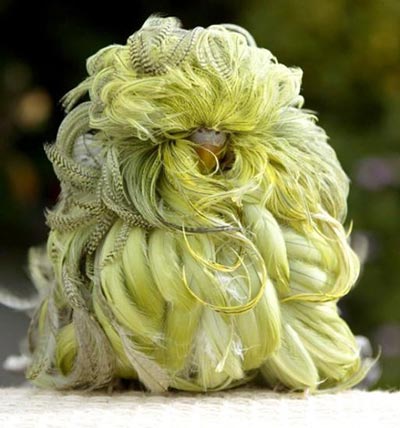
Whipper-The-Feather-Duster-Budgie.jpg


I already feel sorry for it.
 
I know sometimes captive animal mutations can get weird and somewhat disturbing, often with negative effects on the animal (think Bubble-eye Goldfish).

I just found out that something called a Feather-dusted Budgie exists:

Whipper-The-Feather-Duster-Budgie.jpg


I already feel sorry for it.
Feather dusters are a by product of breeding exhibition budgerigars, and usually live only a few months. I don't think they ever breed. Very different from a variant that has been selected and propagated.
 
Glofish, no matter matter what species.

Albino corydoras as well, I've always found them kind of creepy looking.
 
Feather dusters are a by product of breeding exhibition budgerigars, and usually live only a few months. I don't think they ever breed. Very different from a variant that has been selected and propagated.
Well that's just another reason for me to not like them.
 
I find balloon fish (shortened bodies) in species like mollies and various cichlids, particularly disturbing.
Bubble-eye goldfish are another one.
 
Last edited:
What are the feelings on here about designer clownfish? The aquarium hobby seems quite fond of them, and being captive bred for several generations has made them pretty solid aquarium fish.
Personally, I don't mind them other than the long-finned and zombie varieties, although I've heard a few aquarists say only the natural pattern is the best.
 
Scaleless reptiles. Just abominable and a real indictment on the captive reptile industry, which is an ethical swamp overall, unfortunately.

Why would there be a market for scaleless reptiles? Is it just novelty or does it have other effects on the animals that potential buyers find desirable?
 
Why would there be a market for scaleless reptiles? Is it just novelty or does it have other effects on the animals that potential buyers find desirable?

Novelty, basically.

There's an awful lot of quote-unquote 'snake lovers' out there who clearly don't give a **** about their animals.
 
Novelty, basically.

There's an awful lot of quote-unquote 'snake lovers' out there who clearly don't give a **** about their animals.

I've heard the scaleless reptiles are far more delicate and pretty susceptible to disease... It's not a good life for a reptile, the scaleless ones live much shorter lives than their scales cousins so I hear...
 
What are the feelings on here about designer clownfish? The aquarium hobby seems quite fond of them, and being captive bred for several generations has made them pretty solid aquarium fish.
Personally, I don't mind them other than the long-finned and zombie varieties, although I've heard a few aquarists say only the natural pattern is the best.
I'm pretty fond of them. My opinions about mutations of animals could probably be seen as heretic here on ZooChat, as I am quite fond of some genetically mutated fish and reptiles (e.g.designer clownfish, goldfish/koi mutations, flowerhorns, snake morphs, birds), though I do see where there are problems with these mutations that exist. There are some where I do have mixed opinions on (e.g. scaleless snakes), but there are also some I do not like at all (GloFish, spider ball pythons, etc.).
 
I don't like seeing mutated macaws, but mutations are more of a private trade thing
 
Back
Top