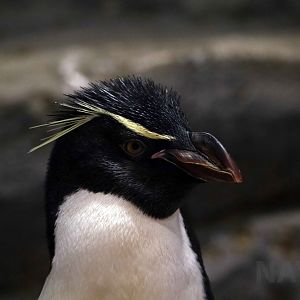
First post: list of living penguin species with photos from the Zoochat galleries as illustration, plus brief notes on distribution, subspecies, and general captive status.
Second post: break-down of total numbers of penguin species in captivity for each region.
Third post: current captive holdings arranged by species.
..........................................................................................................
Firstly, this is the list of living species of penguin. I've noted the subspecies (with respective distributions) for those species which have them, and where there are differences of opinion between species versus subspecies. Distributions are the breeding ranges.
*Emperor Penguin Aptenodytes forsteri
Range: Antarctica.
No subspecies.
Captive status: rare in captivity, currently found in several zoos in China and Japan, and one in the USA. Has been kept more widely in the distant past (late 1800s, early 1900s) in Europe, New Zealand, etc, but birds rarely survived long in those early days.
Photo by @Ituri at SeaWorld San Diego, USA, in 2011.

Penguin Encounter | ZooChat
*King Penguin Aptenodytes patagonicus
Range: subantarctic islands.
Two subspecies:
**A. p. patagonicus - South Georgia, the Falkland Islands, and southern Chile.
**A. p. halli - Kerguelen Islands, Crozet Island, Prince Edward Islands, Heard Island and McDonald Islands, and Macquarie Island.
Captive status: common in captivity, found in all the regions as presented here (Australia, New Zealand, Asia, Middle East, Africa, Europe, South America, North America). Both subspecies are in captivity, with A. p. patagonicus probably the most common, but captive populations are usually mixed regardless of origin.
Photo by @lintworm in the wild, Falkland Islands, in 2017.

King penguin colony | ZooChat
*Adelie Penguin Pygoscelis adeliae
Range: Antarctica.
No subspecies.
Captive status: not common, found in Asia, Europe and North America, but in relatively few collections due to its environmental requirements. Most holders are in China and Japan.
Photo by @Tomek at Faunia Madrid, Spain, in 2016.

Adelie Penguin (Pygoscelis adeliae), August 2016 | ZooChat
*Chinstrap Penguin Pygoscelis antarctica
Range: mostly the Antarctic Peninsula and subantarctic islands of the South Atlantic.
No subspecies.
Captive status: not common, found in Asia, Europe and North America, but in relatively few collections.
Photo by @Maguari at Faunia Madrid, Spain, in 2011.

Chinstrap Penguin at Faunia, 27/05/11 | ZooChat
*Gentoo Penguin Pygoscelis papua
Range: Antarctica and subantarctic islands.
Two subspecies:
**P. p. papua - Falkland Islands, South Georgia, Kerguelen, Heard, Macquarie, and Staten Islands.
**P. p. ellsworthi - Antarctic Peninsula, South Shetland Island, South Orkney, and South Sandwich Island.
Captive status: common, found in most of the regions as presented here (only excepting Africa and South America) and in numerous collections. The nominate subspecies P. p. papua is most common in captivity overall, although interestingly in North America P. p. ellsworthi is the most commonly-held subspecies.
Photo by @geomorph at SeaWorld San Diego, USA, in 2014.

Penguin Encounter - Antarctic Penguin Exhibit - Gentoo Penguin | ZooChat
*Australian Little Blue Penguin Eudyptula novaehollandiae
Alternative names: Little Penguin; Blue Penguin; Fairy Penguin
Genetics strongly suggest that there are two species of Eudyptula as presented here. Visually they are probably inseparable.
Range: southwest and southeast Australia, and Otago (New Zealand). The New Zealand population is believed to have colonised from Australia between 1500 and 1900AD.
No subspecies.
Captive status: common in Australia, and probably kept in New Zealand also (amongst New Zealand Little Blues). Rare outside Australia, currently only in Japan, UK, and USA.
Photo by @m30t at Cincinnati Zoo, USA, in 2017.

Blue Penguin | ZooChat
*New Zealand Little Blue Penguin Eudyptula minor
Alternative names: Little Penguin; Blue Penguin
Genetics strongly suggest that there are two species of Eudyptula as presented here. Visually they are probably inseparable.
Range: New Zealand and the Chatham Islands.
No subspecies. (Various subspecies have been used in the past based on broad distributions within New Zealand, but none can be distinguished genetically or visually).
Captive status: kept in several collections in New Zealand, via rescue birds. Not found in captivity elsewhere.
Photo by @Kokakola11 at Auckland Zoo, New Zealand, in 2011.

Little Blue Penguin at Auckland Zoo | ZooChat
*White-flippered Penguin Eudyptula "albosignata"
A regional form of Eudyptula which visually is easily-separable from other Little Blue Penguins (being larger, with distinctive colouration). The taxonomic status has swung back and forth between species/subspecies/morph. Genetically it is identical with New Zealand Little Blue Penguins.
Range: Canterbury (New Zealand).
Captive status: only a few birds in New Zealand, via rescue birds.
Photo by @Chlidonias at the International Antarctic Centre, New Zealand, in 2011.
The White-flippered Penguins are the larger pale birds in the middle, flanked by New Zealand Little Blue Penguins.

penguins at the International Antarctic Centre | ZooChat
*Yellow-eyed Penguin Megadyptes antipodes
Range: Auckland and Campbell Islands, and southern New Zealand. The New Zealand population is thought to be of recent origin, with colonisation from the subantarctic islands following the post-Maori extinction of the related Waitaha Penguin Megadyptes waitaha in c.1500AD.
No subspecies.
Captive status: none currently in captivity except as rescue birds in New Zealand (almost always able to be seen at Penguin Place). Has formerly been kept at London Zoo (UK) in the late-1800s/early 1900s, and Napier Marineland (NZ) in the 1980s.
Photo by @Chlidonias at Penguin Place, New Zealand, in 2022.

Yellow-eyed Penguins (Megadyptes antipodes) - ZooChat
*Fiordland Crested Penguin Eudyptes pachyrhynchus
Range: southern New Zealand.
No subspecies. Sometimes the Snares Crested Penguin is treated as a subspecies.
Captive status: very rare in captivity, currently only at Taronga Zoo (Australia); occasionally rescue birds are held temporarily in New Zealand. Has formerly been kept at Amsterdam (Netherlands) in the early-1900s.
Photo by @Chlidonias at Wellington Zoo, New Zealand, in 2017.

Fiordland Crested Penguin (Eudyptes pachyrhynchus) | ZooChat
*Snares Crested Penguin Eudyptes robustus
Range: Snares Islands.
No subspecies. Sometimes this is treated as a subspecies of Fiordland Crested Penguin.
Captive status: none currently in captivity; occasionally rescue birds are held temporarily in New Zealand. Has also been kept in the distant past, e.g. fifteen short-lived birds brought to Wellington Zoo (NZ) in 1909 were probably this species.
No photos in the Zoochat galleries.
*Erect-crested Penguin Eudyptes sclateri
Alternative name: Sclater's Penguin
Range: Antipodes and Bounty Islands.
No subspecies.
Captive status: none currently in captivity; occasionally rescue birds are held temporarily in New Zealand. Has been kept in the distant past, e.g. London Zoo (UK) in the late 1800s, and Wellington Zoo (NZ) in the early 1900s. According to post #72 of this thread, the species was also kept at the Okhotsk Aquarium, Japan, in the 1970s.
No photos in the Zoochat galleries.
*Macaroni Penguin Eudyptes chrysolophus
Range: the Atlantic and Indian Ocean sectors of the Southern Ocean (South Georgia, South Sandwich and South Orkney Islands, Falkland Islands and southern Chile, and Crozet, Kerguelen, Marion, Prince Edward, Heard and McDonald Islands)
No subspecies. Royal Penguin was formerly treated as a subspecies.
Captive status: rare in comparison to the similar Rockhopper Penguins; found in Asia, Europe and North America, but in only a few collections. The USA has more holders than elsewhere.
Photo by @Bwassa at Living Coasts, UK, in 2016.

Macaroni Penguin @ Living Coasts 22.09.2016 | ZooChat
*Royal Penguin Eudyptes schlegeli
Range: Macquarie Island.
No subspecies. Formerly treated as a subspecies of the Macaroni Penguin.
Captive status: none currently in captivity. I haven't seen any records for birds kept in zoos previously, apart for several birds at Wellington Zoo (NZ) in 1921 which was actually a misidentification for Erect-crested Penguins.
Photo by @Hix in the wild, Tasmania, in 2024 (dark-faced morph - typically they are white-faced).

Royal Penguin - ZooChat
*Southern Rockhopper Penguin Eudyptes chrysocome
The Eastern Rockhopper Penguin is sometimes split as a full species, but more usually retained as a subspecies.
Range: subantarctic islands.
Two subspecies:
**Western Rockhopper Penguin E. c. chrysocome - southern Atlantic (mainly Falkland Islands and islands off southern Chile).
**Eastern Rockhopper Penguin E. c. filholi - Campbell, Auckland, Antipodes, Macquarie, Heard, Kerguelen, Crozet, Marion, and Prince Edward Islands.
Captive status: quite common in captivity, found in Asia, Europe, South America and North America in numerous collections. Most collections list their birds as just "Southern Rockhopper" but they are probably almost all Western Rockhoppers. There are very few Eastern Rockhoppers left in captivity.
Photo of Western Rockhopper by @lintworm in the wild, Falkland Islands, in 2017.

Southern rockhopper | ZooChat
Photo of Eastern Rockhopper by @devilfish at Osaka Aquarium, Japan, in 2017.

Eastern rockhopper penguin, October 2017 | ZooChat
*Northern Rockhopper Penguin Eudyptes moseleyi
Formerly all three forms of Rockhopper Penguin were treated as conspecific (i.e. all one species). E. moseleyi is usually split as a full species now, but not universally.
Range: southern Indian and Atlantic Oceans (mainly Gough, Tristan da Cunha, Amsterdam, and St Paul Islands).
No subspecies.
Captive status: relatively rare in captivity, found in only a few collections spread through Asia, Africa, Europe and North America.
Photo by @Javan Rhino at Edinburgh Zoo, UK, in 2012.

Northern rockhopper penguin | ZooChat
*African Penguin Spheniscus demersus
Alternative names: Black-footed Penguin; Jackass Penguin
Range: southern Africa.
No subspecies.
Captive status: very common, found in numerous collections everywhere except Australasia and South America.
Photo by @Dormitator at Birdworld, UK, in 2018.

African penguin (Spheniscus demersus) | ZooChat
*Humboldt Penguin Spheniscus humboldti
Alternative names: Chilean Penguin; Peruvian Penguin
Range: Chile, Peru.
No subspecies.
Captive status: very common, found in numerous collections everywhere except Australasia and Africa.
Photo by @Fresco3 at Chessington Zoo, UK, in 2017.

Humboldt Penguin (Spheniscus humboldti) | ZooChat
*Magellanic Penguin Spheniscus magellanicus
Range: Argentina, Chile, Falkland Islands.
No subspecies.
Captive status: less common than African or Humboldt Penguins, but still found in multiple collections in Asia, Europe, South America and North America.
Photo by @NigeW at Blackpool Zoo, UK, in 2018.

Magellanic Penguin at Blackpool Zoo 15th Feb 2018 | ZooChat
*Galapagos Penguin Spheniscus mendiculus
Range: Galapagos Islands.
No subspecies.
Captive status: none currently in captivity, but has been kept in the past in the USA and Bermuda as below.
- Bermuda Aquarium (Bermuda): as of 1938 the Aquarium had eight pairs and had apparently kept the species for fifteen years (i.e. since about 1923). The penguins bred at the Aquarium in the 1930s but most eggs were infertile. (izn.org.uk). They were still kept in 1968 (as per this newspaper article: Independent Press-Telegram from Long Beach, California on May 19, 1968 · Page 118).
- Bronx Zoo (USA): the two birds at the New York Aquarium (see below) came from the Bronx Zoo.
- New York Aquarium (USA): two birds kept, one of which came to the USA in 1926 and the other in 1927. At the time the following article was published (in 1927) one of these had died through an accidental fall. The article seems to suggest that the two birds were survivors of a larger group kept at the Bronx Zoo but it isn't explicit if they were all of this species. (https://sora.unm.edu/sites/default/files/journals/auk/v044n04/p0509-p0512.pdf).
- Point Defiance Zoo (USA): at least one bird kept. As of the following 1969 newspaper article, the penguin had been alone at the zoo for 18 years. (Press and Sun-Bulletin from Binghamton, New York on May 21, 1969 · Page 29).
- San Diego Zoo (USA): at least two birds in the 1930s (the following photo is from 1939: Isabel and Isadore). They were collected from the Galapagos during the Hancock Expedition in 1933.
- SeaWorld San Diego (USA): I have seen a passing reference to this but no further information.
Photo by @elefante in the wild, Galapagos Islands, in 2015.

Gal?pagos penguins and Brown pelican | ZooChat
Second post: break-down of total numbers of penguin species in captivity for each region.
Third post: current captive holdings arranged by species.
..........................................................................................................
Firstly, this is the list of living species of penguin. I've noted the subspecies (with respective distributions) for those species which have them, and where there are differences of opinion between species versus subspecies. Distributions are the breeding ranges.
*Emperor Penguin Aptenodytes forsteri
Range: Antarctica.
No subspecies.
Captive status: rare in captivity, currently found in several zoos in China and Japan, and one in the USA. Has been kept more widely in the distant past (late 1800s, early 1900s) in Europe, New Zealand, etc, but birds rarely survived long in those early days.
Photo by @Ituri at SeaWorld San Diego, USA, in 2011.
Penguin Encounter | ZooChat
*King Penguin Aptenodytes patagonicus
Range: subantarctic islands.
Two subspecies:
**A. p. patagonicus - South Georgia, the Falkland Islands, and southern Chile.
**A. p. halli - Kerguelen Islands, Crozet Island, Prince Edward Islands, Heard Island and McDonald Islands, and Macquarie Island.
Captive status: common in captivity, found in all the regions as presented here (Australia, New Zealand, Asia, Middle East, Africa, Europe, South America, North America). Both subspecies are in captivity, with A. p. patagonicus probably the most common, but captive populations are usually mixed regardless of origin.
Photo by @lintworm in the wild, Falkland Islands, in 2017.
King penguin colony | ZooChat
*Adelie Penguin Pygoscelis adeliae
Range: Antarctica.
No subspecies.
Captive status: not common, found in Asia, Europe and North America, but in relatively few collections due to its environmental requirements. Most holders are in China and Japan.
Photo by @Tomek at Faunia Madrid, Spain, in 2016.
Adelie Penguin (Pygoscelis adeliae), August 2016 | ZooChat
*Chinstrap Penguin Pygoscelis antarctica
Range: mostly the Antarctic Peninsula and subantarctic islands of the South Atlantic.
No subspecies.
Captive status: not common, found in Asia, Europe and North America, but in relatively few collections.
Photo by @Maguari at Faunia Madrid, Spain, in 2011.
Chinstrap Penguin at Faunia, 27/05/11 | ZooChat
*Gentoo Penguin Pygoscelis papua
Range: Antarctica and subantarctic islands.
Two subspecies:
**P. p. papua - Falkland Islands, South Georgia, Kerguelen, Heard, Macquarie, and Staten Islands.
**P. p. ellsworthi - Antarctic Peninsula, South Shetland Island, South Orkney, and South Sandwich Island.
Captive status: common, found in most of the regions as presented here (only excepting Africa and South America) and in numerous collections. The nominate subspecies P. p. papua is most common in captivity overall, although interestingly in North America P. p. ellsworthi is the most commonly-held subspecies.
Photo by @geomorph at SeaWorld San Diego, USA, in 2014.
Penguin Encounter - Antarctic Penguin Exhibit - Gentoo Penguin | ZooChat
*Australian Little Blue Penguin Eudyptula novaehollandiae
Alternative names: Little Penguin; Blue Penguin; Fairy Penguin
Genetics strongly suggest that there are two species of Eudyptula as presented here. Visually they are probably inseparable.
Range: southwest and southeast Australia, and Otago (New Zealand). The New Zealand population is believed to have colonised from Australia between 1500 and 1900AD.
No subspecies.
Captive status: common in Australia, and probably kept in New Zealand also (amongst New Zealand Little Blues). Rare outside Australia, currently only in Japan, UK, and USA.
Photo by @m30t at Cincinnati Zoo, USA, in 2017.
Blue Penguin | ZooChat
*New Zealand Little Blue Penguin Eudyptula minor
Alternative names: Little Penguin; Blue Penguin
Genetics strongly suggest that there are two species of Eudyptula as presented here. Visually they are probably inseparable.
Range: New Zealand and the Chatham Islands.
No subspecies. (Various subspecies have been used in the past based on broad distributions within New Zealand, but none can be distinguished genetically or visually).
Captive status: kept in several collections in New Zealand, via rescue birds. Not found in captivity elsewhere.
Photo by @Kokakola11 at Auckland Zoo, New Zealand, in 2011.
Little Blue Penguin at Auckland Zoo | ZooChat
*White-flippered Penguin Eudyptula "albosignata"
A regional form of Eudyptula which visually is easily-separable from other Little Blue Penguins (being larger, with distinctive colouration). The taxonomic status has swung back and forth between species/subspecies/morph. Genetically it is identical with New Zealand Little Blue Penguins.
Range: Canterbury (New Zealand).
Captive status: only a few birds in New Zealand, via rescue birds.
Photo by @Chlidonias at the International Antarctic Centre, New Zealand, in 2011.
The White-flippered Penguins are the larger pale birds in the middle, flanked by New Zealand Little Blue Penguins.
penguins at the International Antarctic Centre | ZooChat
*Yellow-eyed Penguin Megadyptes antipodes
Range: Auckland and Campbell Islands, and southern New Zealand. The New Zealand population is thought to be of recent origin, with colonisation from the subantarctic islands following the post-Maori extinction of the related Waitaha Penguin Megadyptes waitaha in c.1500AD.
No subspecies.
Captive status: none currently in captivity except as rescue birds in New Zealand (almost always able to be seen at Penguin Place). Has formerly been kept at London Zoo (UK) in the late-1800s/early 1900s, and Napier Marineland (NZ) in the 1980s.
Photo by @Chlidonias at Penguin Place, New Zealand, in 2022.
Yellow-eyed Penguins (Megadyptes antipodes) - ZooChat
*Fiordland Crested Penguin Eudyptes pachyrhynchus
Range: southern New Zealand.
No subspecies. Sometimes the Snares Crested Penguin is treated as a subspecies.
Captive status: very rare in captivity, currently only at Taronga Zoo (Australia); occasionally rescue birds are held temporarily in New Zealand. Has formerly been kept at Amsterdam (Netherlands) in the early-1900s.
Photo by @Chlidonias at Wellington Zoo, New Zealand, in 2017.
Fiordland Crested Penguin (Eudyptes pachyrhynchus) | ZooChat
*Snares Crested Penguin Eudyptes robustus
Range: Snares Islands.
No subspecies. Sometimes this is treated as a subspecies of Fiordland Crested Penguin.
Captive status: none currently in captivity; occasionally rescue birds are held temporarily in New Zealand. Has also been kept in the distant past, e.g. fifteen short-lived birds brought to Wellington Zoo (NZ) in 1909 were probably this species.
No photos in the Zoochat galleries.
*Erect-crested Penguin Eudyptes sclateri
Alternative name: Sclater's Penguin
Range: Antipodes and Bounty Islands.
No subspecies.
Captive status: none currently in captivity; occasionally rescue birds are held temporarily in New Zealand. Has been kept in the distant past, e.g. London Zoo (UK) in the late 1800s, and Wellington Zoo (NZ) in the early 1900s. According to post #72 of this thread, the species was also kept at the Okhotsk Aquarium, Japan, in the 1970s.
No photos in the Zoochat galleries.
*Macaroni Penguin Eudyptes chrysolophus
Range: the Atlantic and Indian Ocean sectors of the Southern Ocean (South Georgia, South Sandwich and South Orkney Islands, Falkland Islands and southern Chile, and Crozet, Kerguelen, Marion, Prince Edward, Heard and McDonald Islands)
No subspecies. Royal Penguin was formerly treated as a subspecies.
Captive status: rare in comparison to the similar Rockhopper Penguins; found in Asia, Europe and North America, but in only a few collections. The USA has more holders than elsewhere.
Photo by @Bwassa at Living Coasts, UK, in 2016.
Macaroni Penguin @ Living Coasts 22.09.2016 | ZooChat
*Royal Penguin Eudyptes schlegeli
Range: Macquarie Island.
No subspecies. Formerly treated as a subspecies of the Macaroni Penguin.
Captive status: none currently in captivity. I haven't seen any records for birds kept in zoos previously, apart for several birds at Wellington Zoo (NZ) in 1921 which was actually a misidentification for Erect-crested Penguins.
Photo by @Hix in the wild, Tasmania, in 2024 (dark-faced morph - typically they are white-faced).
Royal Penguin - ZooChat
*Southern Rockhopper Penguin Eudyptes chrysocome
The Eastern Rockhopper Penguin is sometimes split as a full species, but more usually retained as a subspecies.
Range: subantarctic islands.
Two subspecies:
**Western Rockhopper Penguin E. c. chrysocome - southern Atlantic (mainly Falkland Islands and islands off southern Chile).
**Eastern Rockhopper Penguin E. c. filholi - Campbell, Auckland, Antipodes, Macquarie, Heard, Kerguelen, Crozet, Marion, and Prince Edward Islands.
Captive status: quite common in captivity, found in Asia, Europe, South America and North America in numerous collections. Most collections list their birds as just "Southern Rockhopper" but they are probably almost all Western Rockhoppers. There are very few Eastern Rockhoppers left in captivity.
Photo of Western Rockhopper by @lintworm in the wild, Falkland Islands, in 2017.
Southern rockhopper | ZooChat
Photo of Eastern Rockhopper by @devilfish at Osaka Aquarium, Japan, in 2017.
Eastern rockhopper penguin, October 2017 | ZooChat
*Northern Rockhopper Penguin Eudyptes moseleyi
Formerly all three forms of Rockhopper Penguin were treated as conspecific (i.e. all one species). E. moseleyi is usually split as a full species now, but not universally.
Range: southern Indian and Atlantic Oceans (mainly Gough, Tristan da Cunha, Amsterdam, and St Paul Islands).
No subspecies.
Captive status: relatively rare in captivity, found in only a few collections spread through Asia, Africa, Europe and North America.
Photo by @Javan Rhino at Edinburgh Zoo, UK, in 2012.
Northern rockhopper penguin | ZooChat
*African Penguin Spheniscus demersus
Alternative names: Black-footed Penguin; Jackass Penguin
Range: southern Africa.
No subspecies.
Captive status: very common, found in numerous collections everywhere except Australasia and South America.
Photo by @Dormitator at Birdworld, UK, in 2018.
African penguin (Spheniscus demersus) | ZooChat
*Humboldt Penguin Spheniscus humboldti
Alternative names: Chilean Penguin; Peruvian Penguin
Range: Chile, Peru.
No subspecies.
Captive status: very common, found in numerous collections everywhere except Australasia and Africa.
Photo by @Fresco3 at Chessington Zoo, UK, in 2017.
Humboldt Penguin (Spheniscus humboldti) | ZooChat
*Magellanic Penguin Spheniscus magellanicus
Range: Argentina, Chile, Falkland Islands.
No subspecies.
Captive status: less common than African or Humboldt Penguins, but still found in multiple collections in Asia, Europe, South America and North America.
Photo by @NigeW at Blackpool Zoo, UK, in 2018.
Magellanic Penguin at Blackpool Zoo 15th Feb 2018 | ZooChat
*Galapagos Penguin Spheniscus mendiculus
Range: Galapagos Islands.
No subspecies.
Captive status: none currently in captivity, but has been kept in the past in the USA and Bermuda as below.
- Bermuda Aquarium (Bermuda): as of 1938 the Aquarium had eight pairs and had apparently kept the species for fifteen years (i.e. since about 1923). The penguins bred at the Aquarium in the 1930s but most eggs were infertile. (izn.org.uk). They were still kept in 1968 (as per this newspaper article: Independent Press-Telegram from Long Beach, California on May 19, 1968 · Page 118).
- Bronx Zoo (USA): the two birds at the New York Aquarium (see below) came from the Bronx Zoo.
- New York Aquarium (USA): two birds kept, one of which came to the USA in 1926 and the other in 1927. At the time the following article was published (in 1927) one of these had died through an accidental fall. The article seems to suggest that the two birds were survivors of a larger group kept at the Bronx Zoo but it isn't explicit if they were all of this species. (https://sora.unm.edu/sites/default/files/journals/auk/v044n04/p0509-p0512.pdf).
- Point Defiance Zoo (USA): at least one bird kept. As of the following 1969 newspaper article, the penguin had been alone at the zoo for 18 years. (Press and Sun-Bulletin from Binghamton, New York on May 21, 1969 · Page 29).
- San Diego Zoo (USA): at least two birds in the 1930s (the following photo is from 1939: Isabel and Isadore). They were collected from the Galapagos during the Hancock Expedition in 1933.
- SeaWorld San Diego (USA): I have seen a passing reference to this but no further information.
Photo by @elefante in the wild, Galapagos Islands, in 2015.
Gal?pagos penguins and Brown pelican | ZooChat
Last edited: