For once I can say I've seen all your target species from your latest excursion, as many years ago now I was in Kamchatka in Russia. Sea Otters abounded off the coast where we were, also Harlequin ducks and saw Stellers Sea eagle overhead also. I agree Sea Otters seem huge, when I first saw one in a museum yonks ago, I did a double-take...its the word 'otter' that is misleading I think. Rotterdam Zoo had some at one stage and I've seen them there also. Your walk out to the Cape sounds like misery but it paid off!Looking across from the first viewing area (where I saw the Harlequin Ducks) to Cape Kiritappu where I saw the Sea Otters. It was even colder than it looks because of the wind, and again the snow doesn't really show up on the photo. The white on the cliff face to the right is ice.
You can just see the lighthouse in the distance, and can also see the height of the cliffs from which I took the photos of the otters!
View attachment 770918
You are using an out of date browser. It may not display this or other websites correctly.
You should upgrade or use an alternative browser.
You should upgrade or use an alternative browser.
Chlidonias Goes To Asia, part seven: 2024-2025
- Thread starter Chlidonias
- Start date

Do the Hokkaido buses not have Suica or other IC card capability?Catching the bus in Hokkaido is really easy (so long as you know which bus to catch). You board through the back door, take a numbered ticket from the machine there, and when you get off you put the ticket into another machine at the front door which tells you the fare. At the front of bus there is also a digital display showing the fare increases as the bus travels from stop to stop, so you know how much change to have ready. The local trains here have the same system.
Very nice on the Harlequin Ducks, one of my most wanted species left for my home state. However, I'm a bit surprised on the lack of Alcids and other seabirds, like the scoters. I hope Cape Nosappu provided more on that end.

Only in the area of Sapporo and Hakodate in the west of the island (which is where most tourists go). The only metro system on the island is in Sapporo, and Hakodate has a tram system. Everywhere else you need cash.Do the Hokkaido buses not have Suica or other IC card capability?

Not far before Chanai I saw my first Steller's Sea Eagle - what a gigantic bird! I knew they would be big, but seeing one perched in a small tree is like seeing a gorilla sitting on a child's swing set.
They are impressively big, the overall bulk definitely adds to the image! Have you not ever seen a condor in your travels, the even bigger raptor?
Then I saw a pair of Sea Otters. They are huge! Like the Steller's Sea Eagles I knew they would be big but I had no idea they would be that big! I had been checking out every dark shape on the ocean, which were all ducks and grebes and cormorants, but it turned out that the otters are so big that there's no mistaking what they are, even from the cliffs.
They're surprisingly easy to spot most of the time, with their large size and propensity to spend time at the surface. The high buoyancy keeps them high and visible unlike sneaking pinnipeds. I've never had much difficulty finding them in Monterey.
I had imagined they would just be floating about on their backs and when swimming they would do it like a normal otter, but they seem to use their tail and hind feet to propel themselves backwards across the surface. Really fast too, like they have outboard motors, which I guess they sort of do with that tail.
It's not particularly noticeable when they're floating on their backs, but they are built somewhat more pinniped-like than an otter. The rear legs are set far back and thus they're somewhat awkward on land with more paddle-like feet. This photo shows it fairly well -
Photo by Astrotom3000
Yes, I have seen Andean Condor, and also Philippine Eagle and New Guinea Harpy, but seeing a wild bird in a tree is much more impressive than a bird in an aviary. I think also that the enormous bill of a Steller's Sea Eagle gives it a much bigger presence than a condor has.They are impressively big, the overall bulk definitely adds to the image! Have you not ever seen a condor in your travels, the even bigger raptor?
Snow Day in Kushiro
The day after I had been to Cape Kiritappu I had planned on going to the Kushiro Zoo. While having breakfast I was looking out the window (I was on the 10th floor), thinking things seemed very ominous over the city. I checked my phone - there was a Level 3 Alert for an approaching snowstorm, a level which the Japanese met service defines as "Elderly people, those with disabilities, and others who may need more time to evacuate should evacuate from affected areas."
So no zoo today because I remained inside all day, and it is closed on Wednesdays (tomorrow).
I was intending to go to the town of Nemuro (to the east of Kushiro on the Nemuro Peninsula) and stay there for several days, using it as a base for visiting Cape Nosappu, Cape Ochiishi, and Lake Furen. However, as mentioned in a previous post, I can't use GooglePay any more because I can't "update" my card details (because it was stolen), so the only way I can pay for anything online now is via WePay on Trip. And there were no hotels listed on Trip for Nemuro. There are very few hotels in Nemuro so I didn't want to turn up without anything being booked. My plan therefore became to go to Nemuro initially as a day-trip from Kushiro, and try to book a hotel there in person for the following days. Worst comes to worst, if I couldn't find an available room there I could always keep staying in Kushiro and commute to Nemuro for the bird sites.
On Wednesday the train tracks remained closed for most of the day due to the snow from the storm. I therefore couldn't go to Nemuro. Instead I had a wander around town, which wasn't particularly easy because the streets were still being cleared, and the cleared areas had already frozen over with ice. I didn't fall over although I came close several times.
First I went to the nearby river, where I saw a Great Crested Grebe, Red-breasted Mergansers, and Pelagic Cormorants.
I had seen a couple of other likely-looking areas on the map. One was a lake which when I got there was just a blank field of snow, although I did see some Oriental Greenfinches on the walk there. I also saw a few groups of Tree Sparrows which seem so unusual in the snow - I'm used to seeing them in the tropics of southeast Asia! The second was a park which was also just a blank field of snow. I then gave up and went back to the hotel.
The day after I had been to Cape Kiritappu I had planned on going to the Kushiro Zoo. While having breakfast I was looking out the window (I was on the 10th floor), thinking things seemed very ominous over the city. I checked my phone - there was a Level 3 Alert for an approaching snowstorm, a level which the Japanese met service defines as "Elderly people, those with disabilities, and others who may need more time to evacuate should evacuate from affected areas."
So no zoo today because I remained inside all day, and it is closed on Wednesdays (tomorrow).
I was intending to go to the town of Nemuro (to the east of Kushiro on the Nemuro Peninsula) and stay there for several days, using it as a base for visiting Cape Nosappu, Cape Ochiishi, and Lake Furen. However, as mentioned in a previous post, I can't use GooglePay any more because I can't "update" my card details (because it was stolen), so the only way I can pay for anything online now is via WePay on Trip. And there were no hotels listed on Trip for Nemuro. There are very few hotels in Nemuro so I didn't want to turn up without anything being booked. My plan therefore became to go to Nemuro initially as a day-trip from Kushiro, and try to book a hotel there in person for the following days. Worst comes to worst, if I couldn't find an available room there I could always keep staying in Kushiro and commute to Nemuro for the bird sites.
On Wednesday the train tracks remained closed for most of the day due to the snow from the storm. I therefore couldn't go to Nemuro. Instead I had a wander around town, which wasn't particularly easy because the streets were still being cleared, and the cleared areas had already frozen over with ice. I didn't fall over although I came close several times.
First I went to the nearby river, where I saw a Great Crested Grebe, Red-breasted Mergansers, and Pelagic Cormorants.
I had seen a couple of other likely-looking areas on the map. One was a lake which when I got there was just a blank field of snow, although I did see some Oriental Greenfinches on the walk there. I also saw a few groups of Tree Sparrows which seem so unusual in the snow - I'm used to seeing them in the tropics of southeast Asia! The second was a park which was also just a blank field of snow. I then gave up and went back to the hotel.
Approaching snowstorm


Going birding in the snow

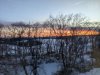
Unrelated to the snowstorm, but this was the view from my room. You can just barely see the ocean in the top left corner, with ships on it.
Going birding in the snow
Unrelated to the snowstorm, but this was the view from my room. You can just barely see the ocean in the top left corner, with ships on it.
Attachments
Cape Nosappu (Nemuro)
By Thursday I had changed my plan again and decided not to stay at Nemuro after all. I would still go there as a day-trip for Cape Nosappu but I would (at least for now) skip Cape Ochiishi because I had already seen Sea Otters at Cape Kiritappu, and I'd also skip Lake Furen.
It is 2.5 hours by train from Kushiro to Nemuro. I caught the 5.35am train, which gets to Nemuro at 8am. From the station there was a bus to the cape at 8.20am, which was a forty minute ride. The return bus was at either 9.55am or 12.50pm - the former gives plenty of time if a person is just there to say they've been at the easternmost point of Japan, but not nearly enough time to look for birds.
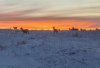
There were lots of Sika on the train ride. This is the same railway line I caught to get to Cape Kiritappu (and later for Cape Ochiishi), and every ride there were dozens of Sika seen. The Steller's Sea Eagles were still in the same place as the other day when I went to Chanai Station, and I also saw a Red Fox walking along the rail. I saw another Red Fox on the bus ride to the cape. In Hokkaido I only ever saw foxes from buses or trains which was a bit annoying because I never had any opportunities to try and photograph them.
Cape Nosappu is the easternmost point in Japan. Technically the easternmost point of Japan is Minami Torishima, which is a tiny island way to the southeast of Japan in the Pacific Ocean, but the easternmost point of "mainland" Japan (aka "real" Japan) is Cape Nosappu.
There was not much wind when I was there - a bit but not bad - and it was not extremely cold.
A rock just offshore from the viewpoint was covered in Pelagic Cormorants. The rarer Red-faced Cormorant also gets reported from here, and they mix with Pelagics at roosts, but I didn't see any.

Pelagic Cormorants
An exhibition building at the site has telescopes set up on the upper floor which is handy for scanning the scattered groups of ducks on the sea.
There were lots of sea-ducks, some flocks being close enough to shore that I could view them easily through my binoculars but others were much further out, too far even for the telescopes to be much help in identifying them sufficiently well (for me, at least). The bulk of the flocks were Harlequin Ducks - possibly the most spectacular duck in the world - and Black Scoters. The former tended to be the ones closest to shore, along with Common Goldeneyes and Red-breasted Mergansers (and Red-necked Grebes). The Black Scoters were mostly further out and I used the scopes to confirm those ones because they were lifers. Long-tailed Ducks were also seen adequately through the scopes, another one of my "most-wanted" ducks.

Harlequin Duck

Common Goldeneye
In winter, Cape Nosappu is the only place in Japan that Steller's Eider occurs. I looked for ages through all the scopes (they line the windows of the building, so cover a good area) but couldn't see any ducks that I could say were Steller's Eiders, nor any scoters other than the Black Scoters. I did, however, manage to see several Ancient Murrelets which were the first auks I have ever seen in the wild. They are very small and even though they were actually quite close to shore I wouldn't have been able to see them properly with just the binoculars.
I was surprised to see a Sea Otter cruising the shoreline, especially with it being in the crashing surf. I have always imagined Sea Otters as being lazy floating-around-on-calm-water sort of creatures because that's all you see them doing in photos. But they are fast! Not just motoring backwards across the surface like I saw at Cape Kiritappu, but underwater as well. This one would dive and while waiting for it to surface to try and get more photos, I would see it out of the corner of my eye come up way off to the side.

Sea Otter
I saw another Kuril Seal here as well, making a four-mammal day.
I had intended to go to Lake Furen afterwards because is only fifteen minutes away from Nemuro by bus, but the timings were way too awkward. I was back at the station from Cape Nosappu at 1.30pm, the next bus to the Tobai stop (for Lake Furen) wasn't until 3pm and the return bus was at 4.29pm - which would give me an hour there - but that return bus got back to Nemuro at 4.46pm and the train back to Kushiro was at 4.08pm with the next (and last) one at 7.04pm, and that wouldn't reach Kushiro until 9.45pm. So it would have been hours of waiting for connections for just one hour at Lake Furen and I had a pretty good idea that I wasn't really going to see much there anyway. I didn't think it was worth it.
On the train back to Kushiro the Sika were even more plentiful. During most train trips the deer were usually seen alongside the tracks, and the driver blows his whistle to tell any deer on the tracks to get out of the way which they quickly do. But at dusk the deer seem to lose all sense of self-preservation. Several times the train had to come to a complete stop until groups of deer decided to move casually to the side. And, unfortunately, this came at an inevitable cost. As the train came around a curve in the track a couple of deer appeared out of nowhere and the driver didn't have time to stop. One deer leapt off to the side, but the other one tried to run forwards along the track. The driver had already laid on the brakes but it was too late and the train went right over it. The train came to a stop, and the driver hopped into the night. Hopefully the deer was already dead and he hadn't had to put it out of its misery.
By Thursday I had changed my plan again and decided not to stay at Nemuro after all. I would still go there as a day-trip for Cape Nosappu but I would (at least for now) skip Cape Ochiishi because I had already seen Sea Otters at Cape Kiritappu, and I'd also skip Lake Furen.
It is 2.5 hours by train from Kushiro to Nemuro. I caught the 5.35am train, which gets to Nemuro at 8am. From the station there was a bus to the cape at 8.20am, which was a forty minute ride. The return bus was at either 9.55am or 12.50pm - the former gives plenty of time if a person is just there to say they've been at the easternmost point of Japan, but not nearly enough time to look for birds.
There were lots of Sika on the train ride. This is the same railway line I caught to get to Cape Kiritappu (and later for Cape Ochiishi), and every ride there were dozens of Sika seen. The Steller's Sea Eagles were still in the same place as the other day when I went to Chanai Station, and I also saw a Red Fox walking along the rail. I saw another Red Fox on the bus ride to the cape. In Hokkaido I only ever saw foxes from buses or trains which was a bit annoying because I never had any opportunities to try and photograph them.
Cape Nosappu is the easternmost point in Japan. Technically the easternmost point of Japan is Minami Torishima, which is a tiny island way to the southeast of Japan in the Pacific Ocean, but the easternmost point of "mainland" Japan (aka "real" Japan) is Cape Nosappu.
There was not much wind when I was there - a bit but not bad - and it was not extremely cold.
A rock just offshore from the viewpoint was covered in Pelagic Cormorants. The rarer Red-faced Cormorant also gets reported from here, and they mix with Pelagics at roosts, but I didn't see any.
Pelagic Cormorants
An exhibition building at the site has telescopes set up on the upper floor which is handy for scanning the scattered groups of ducks on the sea.
There were lots of sea-ducks, some flocks being close enough to shore that I could view them easily through my binoculars but others were much further out, too far even for the telescopes to be much help in identifying them sufficiently well (for me, at least). The bulk of the flocks were Harlequin Ducks - possibly the most spectacular duck in the world - and Black Scoters. The former tended to be the ones closest to shore, along with Common Goldeneyes and Red-breasted Mergansers (and Red-necked Grebes). The Black Scoters were mostly further out and I used the scopes to confirm those ones because they were lifers. Long-tailed Ducks were also seen adequately through the scopes, another one of my "most-wanted" ducks.
Harlequin Duck
Common Goldeneye
In winter, Cape Nosappu is the only place in Japan that Steller's Eider occurs. I looked for ages through all the scopes (they line the windows of the building, so cover a good area) but couldn't see any ducks that I could say were Steller's Eiders, nor any scoters other than the Black Scoters. I did, however, manage to see several Ancient Murrelets which were the first auks I have ever seen in the wild. They are very small and even though they were actually quite close to shore I wouldn't have been able to see them properly with just the binoculars.
I was surprised to see a Sea Otter cruising the shoreline, especially with it being in the crashing surf. I have always imagined Sea Otters as being lazy floating-around-on-calm-water sort of creatures because that's all you see them doing in photos. But they are fast! Not just motoring backwards across the surface like I saw at Cape Kiritappu, but underwater as well. This one would dive and while waiting for it to surface to try and get more photos, I would see it out of the corner of my eye come up way off to the side.
Sea Otter
I saw another Kuril Seal here as well, making a four-mammal day.
I had intended to go to Lake Furen afterwards because is only fifteen minutes away from Nemuro by bus, but the timings were way too awkward. I was back at the station from Cape Nosappu at 1.30pm, the next bus to the Tobai stop (for Lake Furen) wasn't until 3pm and the return bus was at 4.29pm - which would give me an hour there - but that return bus got back to Nemuro at 4.46pm and the train back to Kushiro was at 4.08pm with the next (and last) one at 7.04pm, and that wouldn't reach Kushiro until 9.45pm. So it would have been hours of waiting for connections for just one hour at Lake Furen and I had a pretty good idea that I wasn't really going to see much there anyway. I didn't think it was worth it.
On the train back to Kushiro the Sika were even more plentiful. During most train trips the deer were usually seen alongside the tracks, and the driver blows his whistle to tell any deer on the tracks to get out of the way which they quickly do. But at dusk the deer seem to lose all sense of self-preservation. Several times the train had to come to a complete stop until groups of deer decided to move casually to the side. And, unfortunately, this came at an inevitable cost. As the train came around a curve in the track a couple of deer appeared out of nowhere and the driver didn't have time to stop. One deer leapt off to the side, but the other one tried to run forwards along the track. The driver had already laid on the brakes but it was too late and the train went right over it. The train came to a stop, and the driver hopped into the night. Hopefully the deer was already dead and he hadn't had to put it out of its misery.
On the way to Nemuro:

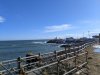
Cape Nosappu, the easternmost point in Japan - over there, where the lighthouse is:

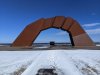
Cape Nossapu marker:

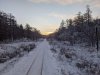
On the way back to Kushiro at dusk:


The mystery fire-train of Hokkaido, seen only rarely by me at this exact time:

Cape Nosappu, the easternmost point in Japan - over there, where the lighthouse is:
Cape Nossapu marker:
On the way back to Kushiro at dusk:
The mystery fire-train of Hokkaido, seen only rarely by me at this exact time:
Attachments


Are there any places in Japan where brown bears can be seen reliably (and safely), and if so, are you going to try and see them?
The Ezo Brown Bear can be easily seen in Hokkaido - but not in winter when they are hibernating. Lots of places I went had warning signs up about bears.Are there any places in Japan where brown bears can be seen reliably (and safely), and if so, are you going to try and see them?
I don't know how safely they can be seen. They seem to have a real reputation for being dangerous. In Rausu (which is the location of my next post) they do bear tours by boat in the right seasons.

Given the last record of Steller's Eider from Nemuro in eBird is from 2003, I do't really think you had much of a shot at seeing it anyway.On the way to Nemuro:
View attachment 771628
Cape Nosappu, the easternmost point in Japan - over there, where the lighthouse is:
View attachment 771626
Cape Nossapu marker:
View attachment 771627
On the way back to Kushiro at dusk:
View attachment 771624
View attachment 771625
The mystery fire-train of Hokkaido, seen only rarely by me at this exact time:
View attachment 771629

Ah, I was going to check the list for Cape Nosappu specifically before posting to see when the last sighting was but I forgot. I'd been looking at the full Hokkaido list for which the most recent record was last year and just assumed it was from Cape Nosappu.Given the last record of Steller's Eider from Nemuro in eBird is from 2003, I do't really think you had much of a shot at seeing it anyway.

While missing the chance to add a new zoo to the galleries, along with a guarantee to see the fish owls, does blow, I don’t think you missed much for the zoo itself is quite outdated. Kushiro zoo is at best a lifetick.The day after I had been to Cape Kiritappu I had planned on going to the Kushiro Zoo. While having breakfast I was looking out the window (I was on the 10th floor), thinking things seemed very ominous over the city. I checked my phone - there was a Level 3 Alert for an approaching snowstorm, a level which the Japanese met service defines as "Elderly people, those with disabilities, and others who may need more time to evacuate should evacuate from affected areas."
So no zoo today because I remained inside all day, and it is closed on Wednesdays (tomorrow).
No Spectacled Guillemots?On the way to Nemuro:
View attachment 771628
Cape Nosappu, the easternmost point in Japan - over there, where the lighthouse is:
View attachment 771626
Cape Nossapu marker:
View attachment 771627
On the way back to Kushiro at dusk:
View attachment 771624
View attachment 771625
The mystery fire-train of Hokkaido, seen only rarely by me at this exact time:
View attachment 771629
Very nice on the Harlequin Ducks, one of my most wanted species left for my home state. However, I'm a bit surprised on the lack of Alcids and other seabirds, like the scoters. I hope Cape Nosappu provided more on that end.
I don't know if it is just down to chance / bad luck, or if a scope is a essential requirement for the coasts here, but I haven't seen much in that line.No Spectacled Guillemots?
Partly it is probably also inexperience. I suspect someone more familiar with Japanese seabirds (or just Northern Hemisphere seabirds) could identify various species at a distance whereas I need them to be close up.
Harlequin Ducks are everywhere. Before coming to Hokkaido I was really hoping I would see one while here - and ended up seeing them almost every day. Any day I was at the coast I saw them. Excluding gulls and cormorants, the other common floating-on-water birds close to shore were Common Goldeneye, Red-breasted Merganser and Red-necked Grebe, and sometimes Tufted Duck, Common Merganser and Whooper Swan.
However the only sea-ducks I got apart for the Harlequins were Black Scoters and Long-tailed Ducks, both of which I saw only at Cape Nosappu and in Wakkanai Port.
Cape Nosappu and Wakkanai were also the only places I saw alcids. There were Ancient Murrelets at the former, and today from a ferry off Wakkanai I saw (as in, the ones I was confident in identifying) Ancient Murrelet, Japanese Auklet, and Common Murre.
I don't know if it is just down to chance / bad luck, or if a scope is a essential requirement for the coasts here, but I haven't seen much in that line.
Partly it is probably also inexperience. I suspect someone more familiar with Japanese seabirds (or just Northern Hemisphere seabirds) could identify various species at a distance whereas I need them to be close up.
Given it is still winter, I would expect the majority of alcids are still living well offshore past where even a scope would help. Though even in breeding season many species can be tough to spot from shore unless you're in the right places along their routes or next to the colonies. The species you have seen so far are the ones I'd expect, looking at what species occur.

Looking a bit further on ebird, it seems like you need the right conditions and a bit of luck to be able to spot some of the mentioned species from the coast. Most of them seem to be reported from offshore, such as from the 'Ochiishi Nature Cruise' which seems to have very good chances for the two Guillemots, Red-faced and Japanese Cormorant. The only other sea duck which is expected is Stejneger's, which seems to be quite sparse.I don't know if it is just down to chance / bad luck, or if a scope is a essential requirement for the coasts here, but I haven't seen much in that line.
Partly it is probably also inexperience. I suspect someone more familiar with Japanese seabirds (or just Northern Hemisphere seabirds) could identify various species at a distance whereas I need them to be close up.
Harlequin Ducks are everywhere. Before coming to Hokkaido I was really hoping I would see one while here - and ended up seeing them almost every day. Any day I was at the coast I saw them. Excluding gulls and cormorants, the other common floating-on-water birds close to shore were Common Goldeneye, Red-breasted Merganser and Red-necked Grebe, and sometimes Tufted Duck, Common Merganser and Whooper Swan.
However the only sea-ducks I got apart for the Harlequins were Black Scoters and Long-tailed Ducks, both of which I saw only at Cape Nosappu and in Wakkanai Port.
Cape Nosappu and Wakkanai were also the only places I saw alcids. There were Ancient Murrelets at the former, and today from a ferry off Wakkanai I saw (as in, the ones I was confident in identifying) Ancient Murrelet, Japanese Auklet, and Common Murre.
Japanese Murrelet is very nice! It looks like you got most of what you could, and some nice add-ons as well!
Last edited:
I did get to Ochiishi but the nature cruise is only on Friday, Saturday and Sunday, and also requires a minimum number of passengers, so the timing didn't work out for that.Looking a bit further on ebird, it seems like you need the right conditions and a bit of luck to be able to spot some of the mentioned species from the coast. Most of them seem to be reported from offshore, such as from the 'Ochiishi Nature Cruise' which seems to have very good chances for the two Guillemots, Red-faced and Japanese Cormorant. The only other sea duck which is expected is Stejneger's, which seems to be quite sparse.
Japanese Murrelet is very nice! It looks like you got most of what you could, and some nice add-ons as well!