Chlidonias Goes To Asia, part seven: 2024-2025

I take it the cats in the glass cases are also Iriomote Cats and that one of them therefore is an Albino?
The white one is a domestic cat. There used to be loads of feral cats on the island which not only competed with the Iriomote Cat but also spread disease (I think Feline Aids was the one specifically mentioned as having been found in the feral cats). They have all been removed now - live-trapped and re-homed as house cats in mainland Japan.
 
The white one is a domestic cat. There used to be loads of feral cats on the island which not only competed with the Iriomote Cat but also spread disease (I think Feline Aids was the one specifically mentioned as having been found in the feral cats). They have all been removed now - live-trapped and re-homed as house cats in mainland Japan.
But they didn't hybridise at all?
 
OKINAWA again


Final stop for Japan!

The Ishigaki airport has a tropical marine aquarium (as in, one tank) and a butterfly garden. The butterfly garden is a single glassed-in room and there were no butterflies present at that particular time as far as I could see, but still - Singapore airport better watch out!

full


full


Okinawa airport also has a marine tank, provided by the Churaumi Aquarium I think, which even had a shark in it. I saw it when I came back from Ishigaki but there were a load of little kids in front of it so I didn't take a photo. When I came back to the airport, for my flight to Taiwan, I couldn't find it again so still no photos.


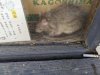
I was only back in Okinawa for two days, one of which was rained out, and on the other day I went to the Okinawa Zoo. I still managed to fortuitously add two more wild mammals to my Japan list (and year list) with a Brown Rat seen in a restaurant window on my way to the hotel and a Small Indian Mongoose scurrying into the bushes while at the zoo.


.................................................


The Okinawa Zoo is situated in the island's main city of Naha, although it is quite a way north of the city centre where my hotel was. It took about an hour by bus to the Nakanomachi bus stop, followed by ten or fifteen minutes walking through some narrow streets. The entry fee is 1000 Yen.

It is a fairly big site, but the animals are all on the left side of the lake which is in the middle of the grounds. The top part, by the main entry gate, is taken up with play areas, food courts, and the Wonder Museum. I had a quick run through the museum before I left - it is aimed at kids and there are no animals in there.

The map looked pretty straightforward but in practice some back-tracking was required to see everything because several of the areas have quite convoluted pathways - one area is even named "Satoyama Labyrinth"!

This is one of those Japanese zoos which is a strange mix of extremely good exhibits and absolutely awful ones. The "Ryukyu Archipelago" zone starts off with a row of very large aviaries - two levels high - and an excellent set of terrariums for ectotherms, but then straight afterwards is a row of horrendous box-like concrete cages for monkeys. And then almost opposite those cages is a great big cage for Yakushima Macaques which is large enough to have a whole separate visitor tunnel running through the middle of it. The juxtaposition of the good-then-awful is so bizarre.

However, on the whole, the enclosures at the zoo are not terrible. The worst, after the aforementioned monkey cages, are the tiny Giant Anteater pens and the very small Hippo pen. Other than that I'd say most enclosures are fairly small but adequate.

I have posted a review and species list for the zoo here: Okinawa Zoo and Museum: review and species list, 17 April 2025


full

Yonaguni Keeled Rat Snake, looking like a sleeping dragon.

full

Okinawa Sword-tailed Newt

full

Okinawa Tip-nosed Frog

full

Miyako Toad


.................................................


I am now in Taiwan. I just have the final round-up post for Japan to do - costs, numbers, highlights, that sort of thing - and then I can get right into being weeks behind on Taiwanese blog posts instead of weeks behind on Japanese blog posts!

What an amazing Japan trip! Thanks for sharing all the great sightings. Look forward to seeing what you find in Taiwan.
 
I don't think so. There are a lot of websites saying that hybridization with feral cats is a big threat to the Iriomote Cat but I don't know that has ever actually been a thing - I can't see any evidence for it.
The domestic bengal cat is a hybrid between Felis catus and Prionailurus bengalensis, so there is certainly precedance for their ability to hybridise. Whilst, i cant find any reliable reports of these exact species mating the wild, there is evidence of natural hybrids between domestic cats and the rusty-spotted cat (same genus as iriomote cat) without human manipulation.
 
The domestic bengal cat is a hybrid between Felis catus and Prionailurus bengalensis, so there is certainly precedance for their ability to hybridise. Whilst, i cant find any reliable reports of these exact species mating the wild, there is evidence of natural hybrids between domestic cats and the rusty-spotted cat (same genus as iriomote cat) without human manipulation.
Yes, but a possibility of something happening is not even close to "a big threat" as lots of websites state. For example, something called the Feline Conservation Foundation (Iriomote Cat - Feline Conservation Foundation) says "Hybridization with feral domestic cats has greatly endangered this species".

There have been several genetic studies on Iriomote Cats and I can't find anything saying there has been any evidence of hybridisation with feral cats.

I rather suspect someone originally wrote something along the lines of "hybridisation with feral cats could be a threat to the species" and that got changed into "it IS a big threat". Or, less charitably, someone did not know what DNA hybridisation is when referenced in genetic studies...
 
JAPAN ROUND-UP


I was in Japan for almost three months, visiting all the major islands except Shikoku.

Recapping my trip: the general plan was to begin in the far north in Hokkaido for winter and work my way southwards through the islands to the very bottom at Iriomote. I started in the middle at Izumi (on Kyushu) because I wanted to see the wintering cranes while they were still there and then headed north, with a brief stop-over in Tokyo (on Honshu, for just one day), before taking a ferry from Oarai to Tomakomai on Hokkaido. Most of my time in Hokkaido was based in Kushiro in the east, from which I made day-trips by train to the surrounding bird sites. I also stayed in the towns of Rausu and Wakkanai which are both in the north of the island.

After finishing with Hokkaido I flew down to Honshu again and headed to Nagano for the "Snow Monkeys" (Japanese Macaques) in their hot pools, and then to Karuizawa in the Japanese Alps. Karuizawa was probably my least favourite place in Japan unfortunately (I expected it to be my most favourite!).

I intended to then go to the Ogasawara Islands but I had to wait almost three weeks for a hotel to become available there, so I spent this time in Tokyo and Osaka visiting zoos and looking for birds. Included in here was a day-trip to Oshima Island, one of the Izu Islands south of Tokyo.

The Ogasawaras took a week, and was a great side-trip, especially because I successfully found and photographed the Bonin White-eye which was one of the most "important" birds for me in all of Japan.

I then returned to Izumi for a few days to look for Copper Pheasants, then went down to Kagoshima at the south end of Kyushu, made a trip out to Yakushima Island for the endemic sika and macaque subspecies, and then headed to the Ryukyu Islands - Amami, then Okinawa, then Ishigaki and Iriomote.

Then I returned to Okinawa and flew out to Taiwan.

In rough amounts, I was in Hokkaido, Honshu, and Kyushu / Ryukyu Islands for about a month each.


Overall the trip through Japan was a big success. Although the number of bird species I saw was quite low (187 species) there isn't much I actually missed. Looking through the lists of endemics I didn't see the Izu Thrush, Ijima's Leaf Warbler or Owston's Tit (all from the Izu Islands), the Bonin Greenfinch (which is basically restricted to offshore islets now), and down in the Ryukyu Islands there was the Amami Thrush, Ryukyu Robin and Ryukyu Flycatcher.

For non-endemics, I would have liked to have seen Black Woodpecker on Hokkaido, the Painted Snipe and Woodcock on Ishigaki, and I was always keeping an eye out for Hawfinch and Bullfinch. Ptarmigan would have been nice but they aren't really accessible in winter.

For mammals, I expected to see Mountain Hare on Hokkaido and Japanese Hare on the other islands, but didn't. Same for Northern Fur Seal on Hokkaido. The season was wrong for pikas and bears, so I wasn't expecting them at all. Otherwise species I missed were Japanese Marten, Japanese Weasel, Japanese Flying Squirrel (the little one - I saw the Giant one) and down in the Ryukyus the Giant Long-tailed Rat. All of these are nocturnal, and I didn't go out spotlighting in Hokkaido because it was too cold and it was difficult enough walking around during the day when I could see where the ice was on the ground. I thought the giant rat would have been very likely though, because so many reports say how commonly it is seen at night while looking for the Amami Rabbit and Woodcock.


I doubt I'll be back to Japan. I really enjoyed it, but I think I covered it all well enough. If I was to return it would be for pikas and bears in Hokkaido, and the Giant Long-tailed Rat on Amami. I would not be averse to returning to Iriomote either, and giving myself a good amount of time to look for the Iriomote Cat.


There were a couple of places in my original plan which I dropped. One was Miyakejima in the Izu Islands. This island is home to several birds of note - the resident Izu Thrush and Owston's Tit, and the breeding-migrants Ijima's Leaf Warbler and Japanese Robin. I did intend to go there but I kept putting it off and eventually just didn't go. I had found out that the thrush and warbler are also found on other islands (although I ended up not seeing them on those), and I thought I'd likely be too early for the return of the warbler and robin anyway. I did see the robin later. If I did come back to Japan I'd probably make the effort to get out to Miyakejima.

The other place I didn't go was Tsushima Island, north of Kyushu, which is home to the Tsushima Leopard Cat and to endemic subspecies of marten and sika deer. The discarding of this destination was partly a time-issue, but also I just thought it really unlikely I'd see the cat or marten. Unlike the Iriomote Cat which is the island's symbol and the islanders are proud of it, on Tsushima the local cat is regarded as a pest and persecuted.

There was an addition to the plan, though. When I was at Inokashira Park Zoo, just after I arrived in Japan, I saw the Yakushima Sika Deer which is a dwarf island form, and instantly put Yakushima on my list. No regrets about doing that!


My favourite place in all Japan was Izumi - the town itself, the cranes, and the badgers at Kogawa Dam. My least favourite place was Karuizawa, but I think that was just randomly bad for me and if I went back it might be better received.

Particular highlights of the trip (apart for Izumi) were the Steller's Sea Eagles at Rausu, Sea Otters and Harlequin Ducks in Hokkaido, the "snow monkeys" in their hot pools at Nagano, The Bonin White-eye and Bonin Flying Fox, the Amami Rabbit, and the Okinawa Woodpecker.


.........................................................


BIRDS and MAMMALS:

I saw 187 species of birds in Japan, of which 65 were lifers.

Broken down by island (or island group), the number of species seen at each were, going north to south: 54 species on Hokkaido; 108 species on Honshu (including the Izu and Ogasawara Islands); 86 species on Kyushu (basically just Izumi and Yakushima); and 73 species in the Ryukyu Islands (Amami, Okinawa, Ishigaki, and Iriomote).

I saw 23 species of mammals in Japan, of which 15 were lifers.

I will list all these in the next post.


.........................................................


ZOOS AND AQUARIUMS:

I visited twenty Zoos and Aquariums while in Japan, listed below in the order of visitation. I have reviews and / or species lists for all the Zoos and one of the Aquariums. I might review the remaining Aquariums at a later date if I can find time (there are brief summaries for each within this thread already). I took photos of all the signage at a couple of the Aquariums as well, so I might even be able to make full species lists - in general, those Aquariums which had good signage had complete and accurate signage (and then some of the Aquariums had almost no signage!).


1) Inokashira Park Zoo (Tokyo, Honshu)
Inokashira Park Zoo species list, January 2025 [Inokashira Park Zoo]

2) Sumida Aquarium (Tokyo, Honshu)

3) Aqua World Ibaraki Oarai (Oarai)
Aqua World Ibaraki Oarai, visit January 2025 [Aqua World Ibaraki Oarai Aquarium]

4) Kushiro Zoo (Kushiro, Hokkaido)
Kushiro Zoo (Hokkaido) visit and species list: February 2025

5) Wakkanai Aquarium (Noshappu [Wakkanai], Hokkaido)

6) Joyama Zoo (Nagano, Honshu)
Joyama Zoo (Nagano, Japan), species list February 2025

7) Tokyo Sea Life Park (Tokyo, Honshu)

8) Ueno Zoo (Tokyo, Honshu)
Ueno Zoo - visit and species list: February 2025 [Ueno Zoo]

9) Tennoji Zoo (Osaka, Honshu)
Tennoji Zoo (Osaka), review and species list: March 2025 [Tennōji Zoo]

10) Osaka Aquarium Kaiyukan (Osaka, Honshu)

11) Kobe Animal Kingdom (Kobe, Honshu)
Kobe Animal Kingdom, review and species list: 3 March 2025 [Kobe Animal Kingdom]

12) Minoh Park Insect Museum (Osaka, Honshu)
Minoh Park Insect Museum (Osaka)

13) Tama Zoo (Tokyo, Honshu)
Tama Zoo visit and species list, March 2025 [Tama Zoo]

14) Oshima Park Zoo (Izu Islands, Honshu)
Oshima Park Zoo (Izu Islands), March 2025

15) Sunshine Aquarium (Tokyo, Honshu)

16) Saitama Childrens Zoo (Tokyo, Honshu)
Saitama Childrens Zoo review and species list, March 2025

17) Kagoshima City Aquarium (Kagoshima, Kyushu)

18) Hirakawa Zoo (Kagoshima, Kyushu)
Hirakawa Zoo (Kagoshima): visit and species list, March 2025

19) Okinawa Churaumi Aquarium (Okinawa)

20) Okinawa Zoo and Museum (Okinawa)
Okinawa Zoo and Museum: review and species list, 17 April 2025


.........................................................


COSTS:

I keep track in a notebook of all my expenditures during a trip, so that I know what and where I'm spending money and can later work out average costs for a country, just because I like to know that sort of stuff. Usually this is pretty straightforward because I typically pay for almost everything in cash and I usually don't book many hotels online (I mostly just turn up in a place and look for something in person). However on this trip I have been booking almost everything ahead of time (albeit usually just a few days ahead), because Japan in particular is expensive and the cities aren't as conducive to just "turning up" as the cities in somewhere like Malaysia or Thailand are. This means that my usual "just add up the costs from my notebook" doesn't really work because of the way booking online adds on fees and varying currency conversion rates and stuff like that.

So what I have done for Japan's costs is go through my bank withdrawals and add all those up, because that covers all the hotel bookings, flights, ATM withdrawals, and whatever else, and gives a "real" total of what I spent. It isn't properly reflective of the actual costs of things there because of the extra fees on the online bookings, but it is a full total of how much money came out of my bank while there.

Total spent and average per day (currency conversions were using XE and I've rounded up or down, usually to the nearest dollar):
NZ$ 14,236 total = UK£ 6375 ; Euro 7495.50 ; US$ 8469
Over 80 days that’s a rough average per day of: NZ$ 178 ; UK£ 79 ; Euro 94 ; US$ 106

This is including all internal flights, as well as the boats, trains and buses; but not the initial flights in and out of Japan (both bought before the trip).


Internal Flights:
Total NZ$ 674.14 (UK£ 301.80 ; Euro 355 ; US$ 401)
For five flights, that equals an average cost per flight of NZ$ 134.83 ; UK£ 60.40 ; Euro 71 ; US$ 80

Individual flight costs (these are all in NZ$ because I bought them online):
NZ$127.60 - Jetstar, from Kagoshima (Kyushu) to Narita (Tokyo)
NZ$212.78 - Air Do, from Sapporo (Hokkaido) to Haneda (Tokyo)
NZ$109.47 - Skymark, from Kagoshima (Kyushu) to Amami island
NZ$224.29 - Solaseed Air, return flight Okinawa island to Ishigaki island


Ferries:
Total 115,750 Yen, which is roughly NZ$ 1343 ; UK£ 602 ; Euro 707.50 ; US$ 799
For twelve ferries, that equals an average cost per ferry of NZ$ 112 ; UK£ 50 ; Euro 59 ; US$ 66.60

Individual ferry costs (these are all in Yen because I bought tickets with cash directly at the ferry terminals):
*10,000 Yen (one way) - MOL Sunflower, from Oarai (Honshu) to Tomakomai (Hokkaido)
*7900 Yen (return) - Heartland Ferries, from Wakkanai to Rebun Island (Hokkaido)
*19,060 Yen (return) - Tokai Kisen, from Tokyo to Oshima (Izu Islands)
*56,500 Yen (return) - OgasawaraKaiun, from Tokyo to the Ogasawara Islands
*9920 Yen (return) - Izu Shoto Kaihatsu Company, from Chichijima to Hahajima (Ogasawara Islands)
*6600 Yen (one way) - Marix Line, from Amami to Okinawa (Ryukyu Islands)
*5770 Yen (return) - YKF, from Ishigaki to Iriomote (Ryukyu Islands)


Trains and buses:

I was going to list all of these but I didn't actually take many trains between cities. I did a number of day-trips out of Kushiro (on Hokkaido) on trains which cost between 1000 and 3000 Yen each, and Tokyo to Oarai was a combination of metro trains and "regular" trains which cost 2400 Yen, but otherwise the only city-to-city train rides I had were (in order of price) 3260 Yen for Izumi to Kagoshima, 9440 Yen for Tomakomai to Kushiro, and 30,080 Yen for Tokyo to Izumi - this last one was obviously the most expensive by a long shot and was a seven hour bullet train.

1000 Yen is roughly NZ$ 11.60 ; UK£ 5.20 ; Euro 6.10 ; US$ 6.90
9440 Yen is roughly NZ$ 110 ; UK£ 49 ; Euro 58 ; US$ 65
30,080 Yen is roughly NZ$ 349 ; UK£ 156 ; Euro 184 ; US$ 208

The most expensive city-to-city buses I took were the overnight buses between Tokyo and Osaka which were 7300 Yen in one direction and 7000 Yen in the other.

7300 Yen is roughly NZ$ 85 ; UK£ 38 ; Euro 44.60 ; US$ 50.40


HOTELS:

*Izumi was through booking .com before leaving New Zealand. The first Tokyo hotel was also through booking .com. The hotels in Rausu and in the Ogasawara Islands were in cash. The rest were booked through Trip so the prices are only rough exchanges into Yen because they were paid for in Chinese Yuan (because I use WePay for Trip and it only works if the currency is in Chinese Yuan), and then the conversion to NZ Dollars during the bank payment adds on more to the price, sometimes significantly so.

The range of room prices I had were (all in Yen): 7050 (Izumi); 3960 (Tokyo); c.10,150 (Tomakomai; but it did include free breakfast); c.6000 (Kushiro [6800 for the final night which I paid in cash]); 4700 Rausu; c.4000 Kushiro (different hotel than previous stay in Kushiro; also includes breakfast [and 4861 for the final night which I paid in cash]); c.7400 (Wakkanai); c.7300 (Sapporo); c.7250 (Nagano, including breakfast); c.6210 (Karuizawa); c.8000 (Tokyo, including breakfast); 1700 (Osaka); 30,000 (Ogasawara Islands); c.5600 (Izumi again); c.3500 or 3800 (Kagoshima [different prices for different bookings]); c.7000 (Yakushima, including breakfast); c.4000 (Amami); c.6300 (Nago, Okinawa); c.5600 (Ishigaki, including breakfast); c.8500 (Iriomote, including breakfast); c.7000 (Ishigaki again); c.4500 (Naha, Okinawa).

All those numbers added together makes 171,181 Yen (c. NZ$ 2130 ; UK£ 890 ; Euro 1046 ; US$ 1182), which gives an average room price of 6847 Yen (c.NZ$ 85.20 ; UK£ 35.60 ; Euro 41.85 ; US$ 47.30).

Working out the average per night that I spent it is, interestingly enough, almost the same at 6674 Yen (c.NZ$ 83 ; UK£ 34.70 ; Euro 40.80 ; US$ 46) - the full total for hotel bills (using the prices above, so not totally accurate!) was 493,871 Yen (c.NZ$ 6145 ; UK£ 2567 ; Euro 3019 ; US$ 3410) over 74 days.

However, the 30,000 Yen per night (for three nights) which I had to pay for the Ogasawara Islands was a real outlier - if that 90,000 Yen is removed then the average room price drops dramatically to about NZ$ 68.30 (UK£ 30.60 ; Euro 36 ; US$ 40.60), and the average I spent per night over the whole of Japan becomes about NZ$ 63.40 (UK£ 28.40 ; Euro 33.40 ; US$ 37.70).

I was actually in Japan for 80 days, but three nights were spent on ferries and two on overnight buses, so they aren't included in the totals above. The 80th day was the final day when I flew to Taiwan in the afternoon.

In Japan I was staying almost always in what I guess you'd call mid-range hotels. You can stay cheaper by using dorms but I just didn't want to. I was thinking about why I don't want to stay in dorms any more, and I think the reason - apart for me just being much more old and cantankerous now - is that on my earlier trips I used internet cafes to write blogs and that sort of thing, so I would spend all day out doing stuff, go to an internet cafe for a few hours in the evening, then just go back to the dorm and go to sleep. Since I have been taking a laptop with me on my trips I want to have my own private space to sit down, spread all my stuff around me, and do my "work". I don't know if internet cafes even exist any more. Even back then I'd often end up in a gaming place rather than a proper internet cafe.

Anyway, the point is I mostly stayed in "average-priced" hotels because on the booking site I used there was a bit of a gap between those and dorms - dorms will be under 1000 Yen, then there would be a jump to the 5000+ Yen hotels. In the middle are the "business hotels" which are basic rooms (e.g. like the one I had in Osaka for 1700 Yen per night), but they were almost never on the booking site. I'm not sure if this is because they simply sold out well before, or if they don't use booking sites. It could also be that they utilise the Japanese hotel booking site and not foreign ones.

Needless to say, that average hotel price of NZ$ 83 is far higher than on any other trip I've made in Asia!
 
BIRDS:

I saw 187 species of birds in Japan, of which 65 were lifers.

In the list I have put lifers in bold but just left any subsequent subspecies of that species in plain text.

The list was just copied off my rough draft so there will be some quirks in it, and I haven't bothered with italicising the scientific names.


Little Grebe Tachybaptus ruficollis poggei
Great Crested Grebe Podiceps cristatus cristatus
Red-necked Grebe Podiceps grisegena holbolii
Laysan Albatross Phoebastria immutabilis
Black-footed Albatross Phoebastria nigripes
Short-tailed Albatross Phoebastria albatrus
Streaked Shearwater Calonectris leucomelas

Wedge-tailed Shearwater Ardenna pacifica chlororhyncha
Bulwer's Petrel Bulweria bulwerii
Leach's Storm Petrel Hydrobates leucorhous leucorhous
Brown Booby Sula leucogaster plotus
Brewster's Booby Sula brewsteri brewsteri
Great Cormorant Phalacrocorax carbo hanedae
Temminck's (Japanese) Cormorant Phalacrocorax capillatus
Pelagic Cormorant Urile pelagicus pelagicus
Great Egret Egretta alba modesta
Intermediate Egret Egretta intermedia
Little Egret Egretta garzetta garzetta
Eastern Reef Heron Egretta sacra sacra
Grey Heron Ardea cinerea jouyi
Purple Heron Ardea purpurea manilensis
Eastern Cattle Egret Bubulcus coromandus
Black-crowned Night Heron Nycticorax nycticorax nycticorax
Malayan Night Heron Gorsarchius melanolophus
Chinese Pond Heron Ardeola bacchus
Cinnamon Bittern Ixobrychus cinnamomeus
Black-faced Spoonbill Platalea minor
Whooper Swan Cygnus cygnus
Common Shelduck Tadorna tadorna
Mallard Anas platyrhynchos platyrhynchos
Eastern Spot-billed Duck Anas zonorhyncha
Pintail Anas acuta
Common (Eurasian) Wigeon Anas penelope
Gadwall Anas strepera
Common (Eurasian) Teal Anas crecca crecca
Falcated Duck Anas falcata
Baikal Teal Anas formosa

Northern Shoveller Anas clypeata
Harlequin Duck Histrionicus histrionicus
Long-tailed Duck Clangula hyemalis
Black Scoter Melanitta americana

Common Pochard Aythya ferina
Tufted Duck Aythya fuligula
Greater Scaup Aythya marila nearctica
Common Goldeneye Bucephala clangula clangula
Mandarin Duck Aix galericulata
Smew Mergellus albellus
Common Merganser Mergus merganser merganser
Red-breasted Merganser Mergus serrator
Osprey Pandion haliaetus haliaetus
Steller's Sea Eagle Haliaeetus pelagicus
White-tailed Sea Eagle Haliaeetus albicilla albicilla
Black Kite Milvus migrans lineatus
Eastern Buzzard Buteo japonicus japonicus
***Ogasawara Buzzard Buteo japonicus toyoshimai
Grey-faced Buzzard Butastur indicus
Crested Serpent-Eagle Spilornis cheela perplexus
Black-winged Kite Elanus caeruleus vociferus
Northern Goshawk Accipiter gentilis fujiyamae[/b]
Korean Ring-necked Pheasant Phasianus colchicus karpowi
Feral Peafowl Pavo cristatus
Green Pheasant Phasianus versicolor tohkaidi
Copper Pheasant Syrmaticus soemmerringii ijimae (?)
Red-crowned Crane Grus japonensis

Common Crane Grus grus lilfordi
Hooded Crane Grus monacha
Sandhill Crane Antigone canadensis canadensis
White-naped Crane Antigone vipio
Common Coot Fulica atra atra
Common Moorhen Gallinula chloropus chloropus
White-breasted Waterhen Amaurornis phoenicurus phoenicurus
Okinawa Rail Gallirallus okinawae
Ruddy-breasted Crake Zapornia fusca erythrothorax

Northern Lapwing Vanellus vanellus
Grey-headed Lapwing Vanellus cinereus
Greater Sand Plover Charadrius leschenaultii leschenaultii
Kentish Plover Charadrius alexandrinus nihonensis
Little Ringed Plover Charadrius dubius curonicus
Long-billed Plover Thinornis placidus
Pacific Golden Plover Pluvialis fulva
Common Snipe Gallinago gallinago gallinago
Amami Woodcock Scolopax mira
Ruddy Turnstone Arenaria interpres interpres
Common Sandpiper Actitis hypoleuca
Green Sandpiper Tringa ochropus
Marsh Sandpiper Tringa stagnatilis
Common Redshank Tringa totanus
Common Greenshank Tringa nebularia
Grey-tailed Tattler Tringa brevipes
Wood Sandpiper Tringa glareola
Sharp-tailed Sandpiper Calidris acuminata
Temminck's Stint Calidris temminckii
Dunlin Calidris alpina arcticola
Black-winged Stilt Himantopus himantopus
Vega Gull Larus vegae
Black-tailed Gull Larus crassirostris
Black-headed Gull Larus ridibundus
Glaucous Gull Larus hyperboreus
Glaucous-winged Gull Larus glaucescens
Slaty-backed Gull Larus schistisagus
Common Murre Uria aalge inornata
Ancient Murrelet Synthliboramphus antiquus antiquus
Japanese Auklet Synthliboramphus wumizusume

Indian Ringneck Psittacula krameri manillensis
Feral Pigeon Columba livia
Japanese Wood Pigeon Columba janthina janthina
***Red-headed Wood Pigeon Columba janthina nitens
Oriental Turtle Dove Streptopelia orientalis orientalis
***Oriental Turtle Dove Streptopelia orientalis stimpsoni
White-bellied Green Pigeon Treron sieboldii sieboldii
Ryukyu Green Pigeon Treron permagnus permagnus

***Ryukyu Green Pigeon Treron permagnus medioximus
Northern Boobook Ninox japonica totogo
Blakiston's Fish Owl Ketupa blakistoni blakistoni

Common Kingfisher Alcedo atthis bengalensis
Ruddy Kingfisher Halcyon coromanda bangsi
Japanese Green Woodpecker Picus awokera awokera
***Japanese Green Woodpecker Picus awokera horii
Great Spotted Woodpecker Dendrocopos major japonicus
Owston's Woodpecker Dendrocopos owstoni
Okinawa Woodpecker Dendrocopos noguchii
Japanese Pigmy Woodpecker Yungipicus kizuki kizuki

***Japanese Pigmy Woodpecker Yungipicus kizuki nippon
***Japanese Pigmy Woodpecker Yungipicus kizuki seebohmi
***Japanese Pigmy Woodpecker Yungipicus kizuki shikokuensis (?)
***Japanese Pigmy Woodpecker Yungipicus kizuki amamii
Eurasian Skylark Alauda arvensis japonica
Olive-backed Pipit Anthus hodgsoni hodgsoni
Japanese Wagtail Motacilla grandis
Grey Wagtail Motacilla cinerea cinerea
White Wagtail Motacilla alba
Eastern Yellow Wagtail Motacilla tschutschensis taivana
Barn Swallow Hirundo rustica gutturalis
Pacific Swallow Hirundo tahitica namiyei
Asian House Martin Delichon dasypus dasypus
Ryukyu Minivet Pericrocotus tegimae
Brown-eared Bulbul Hypsipetes amaurotis amaurotis
***Brown-eared Bulbul Hypsipetes amaurotis squamiceps
***Brown-eared Bulbul Hypsipetes amaurotis matchiae
***Brown-eared Bulbul Hypsipetes amaurotis ogawae
***Brown-eared Bulbul Hypsipetes amaurotis pryeri
***Brown-eared Bulbul Hypsipetes amaurotis stejnegeri
Chinese Bulbul Pycnonotus sinensis orii
(Japanese) Brown Shrike Lanius cristatus superciliosus
(Philippines) Brown Shrike Lanius cristatus lucionensis
Bull-headed Shrike Lanius bucephalus bucephalus
Common Wren Troglodytes troglodytes ogawae
Japanese Accentor Prunella rubida fervida
Japanese Waxwing Bombyilla japonica

Brown Dipper Cinclus pallasii pallasii
White's Thrush Zoothera aurea toratugumi
Naumann's Thrush Turdus naumanni
Brown-headed Thrush Turdus chrysolaus chrysolaus

Pale Thrush Turdus pallidus
Dusky Thrush Turdus eunomus
Pekin Robin Leiothrix lutea
Chinese Hwamei Garrulax canorus
Japanese White-eye Zosterops japonicus japonicus
***Japanese White-eye Zosterops japonicus stejnegeri
***Japanese White-eye Zosterops japonicus insularis
***Japanese White-eye Zosterops japonicus loochooensis
***Japanese White-eye Zosterops japonicus (mixed subspecies - introduced stejnegeri X alani - Ogasawara Islands)
Bonin White-eye Apalopteron familiare hahasima
Goldcrest Regulus regulus japonensis
Japanese Bush Warbler Horornis diphone diphone
***Japanese Bush Warbler Horornis diphone cantans
Zitting Cisticola Cisticola juncidis brunniceps
Red-throated Flycatcher Ficedula parva
Daurian Redstart Phoenicurus auroreus auroreus
Japanese Robin Larvivora akahige akahige
Okinawa Robin Larvivora namiyei

Blue Rock Thrush Monticola solitarius phillipensis
Red-flanked Bluetail Tarsiger cyanurus
Long-tailed Tit Aegithalos caudatus trivirgatus
***Long-tailed Tit Aegithalos caudatus japonicus
***Long-tailed Tit Aegithalos caudatus kiusiuensis
Varied Tit Sittiparus varius varius
***Yakushima Varied Tit Sittiparus varius yakushimensis
***Ryukyu Varied Tit Sittiparus varius amamii
Iriomote Tit Sittiparus olivaceus
Japanese Tit Parus minor minor
***Japanese Tit Parus minor amamiensis
***Japanese Tit Parus minor okinawae
***Japanese Tit Parus minor nigriloris
Coal Tit Periparus ater insularis
Willow Tit Poecile montanus restrictus
Eurasian Nuthatch Sitta europaea clara
***Eurasian Nuthatch Sitta europaea hondoensis
Eurasian Treecreeper Certhia familiaris orientalis
Japanese Grosbeak Eophona personata personata
Oriental Greenfinch Chloris sinica minor
***Oriental Greenfinch Chloris sinica kawarahiba
Common Redpoll Acanthis flammea flammea
Eurasian Siskin Spinus spinus
Long-tailed Rosefinch Carpodacus sibiricus sanguinolentus
Brambling Fringilla montifringilla
Asian Rosy Finch Leucosticte arctoa
Rustic Bunting Emberiza rustica rustica
Masked Bunting Emberiza personata
Grey Bunting Emberiza variabilis
Reed Bunting Emberiza schoeniclus pyrrhulina
Chestnut-eared Bunting Emberiza fucata fucata

Yellow-throated Bunting Emberiza elegans elegans
Meadow Bunting Emberiza cioides ciopsis
Tree Sparrow Passer montanus saturatus
Russet Sparrow Passer cinnamomeus rutilans
White-cheeked Starling Spodiopsar cineraceus
White-shouldered Starling Sturnia sinensis
Asian Glossy Starling Aplonis panayensis panayensis
Azure-winged Magpie Cyanopica cyanus japonica
Eurasian Jay Garrulus glandarius hiugaensis (?)
***Eurasian Jay Garrulus glandarius japonicus
Lidth's Jay Garrulus lidthi
Eastern Rook Corvus frugilegus pastinator
Daurian Jackdaw Corvus dauuricus
Carrion Crow Corvus corone orientalis
Large-billed Crow Corvus macrorhynchos japonensis
***Large-billed Crow Corvus macrorhynchos connectens
***Large-billed Crow Corvus macrorhynchos osai


MAMMALS:

I saw 23 species of mammals, of which 15 were lifers.

The mammal list (lifers in bold):


Bonin Flying Fox Pteropus pselaphon
Ryukyu Flying Fox Pteropus dasymallus inopinatus
**Yaeyama Flying Fox Pteropus dasymallus yayeyamae

Japanese Macaque Macaca fuscata fuscata
**Yakushima Macaque Macaca fuscata yakui

Japanese Serow Capricornis crispus

Honshu Sika Deer C. n. nippon / aplodontus
**Hokkaido Sika Deer Cervus nippon yesoensis
**Yakushima Sika Deer Cervus nippon yakushimae
Reeves' Muntjac Muntiacus reevesi micrurus
Japanese Wild Pig Sus scrofa leucomystax
**Ryukyu Wild Pig Sus scrofa riukiuanus

Red Fox Vulpes vulpes schrencki
Japanese Raccoon Dog Nyctereutes viverrinus viverrinus
Sea Otter Enhydra lutris lutris
Japanese Badger Meles anakuma

Small Indian Mongoose Urva auropunctatus
Steller's Sealion Eumetopias jubatus jubatus
Kuril Seal Phoca vitulina stejnegeri
Spotted Seal Phoca largha


Humpback Whale Megaptera novaeangliae kuzira
Stejneger's Beaked Whale Mesoplodon stejnegeri
Pantropical Spotted Dolphin Stenella attenuata

Amami Rabbit Pentalagus furnessi

Japanese Giant Flying Squirrel Petaurista leucogenys nikkonis
Japanese Squirrel Sciurus lis

Pallas' (Red-bellied) Squirrel Callosciurus erythraeus thaiwanensis
Brown Rat Rattus norvegicus
 
Last edited:
As noted above, I saw 23 species of mammals in Japan. Of those 23 mammals I got photos of 13.

These were the ones of which I didn't get photos, mostly because the sighting was too brief or not close enough for photos. I saw quite a few Red Foxes in Hokkaido, but always from buses or trains. I also saw quite a lot of Humpback Whales in the Ogasawara Islands, but their emergence was always too unpredictable to get any photos which showed anything worthwhile.

Reeves' Muntjac Muntiacus reevesi micrurus
Red Fox Vulpes vulpes schrencki
Small Indian Mongoose Urva auropunctatus
Kuril Seal Phoca vitulina stejnegeri
Humpback Whale Megaptera novaeangliae kuzira
Stejneger's Beaked Whale Mesoplodon stejnegeri
Pantropical Spotted Dolphin Stenella attenuata
Japanese Giant Flying Squirrel Petaurista leucogenys nikkonis
Japanese Squirrel Sciurus lis
Pallas' (Red-bellied) Squirrel Callosciurus erythraeus thaiwanensis


Bonin Flying Fox Pteropus pselaphon

full


Ryukyu Flying Fox Pteropus dasymallus inopinatus

full


Yaeyama Flying Fox Pteropus dasymallus yayeyamae

full


Japanese Macaque Macaca fuscata fuscata

full


Yakushima Macaque Macaca fuscata yakui

full


Japanese Serow Capricornis crispus

full


Hokkaido Sika Deer Cervus nippon yesoensis

full


Honshu Sika Deer C. n. nippon / aplodontus

full


Yakushima Sika Deer Cervus nippon yakushimae

full


Japanese Wild Pig Sus scrofa leucomystax
(I also saw the Ryukyu Wild Pig Sus scrofa riukiuanus several times but didn't get any photos of that subspecies)

full


Japanese Raccoon Dog Nyctereutes viverrinus viverrinus

full


Sea Otter Enhydra lutris lutris

full


Japanese Badger Meles anakuma

full


Steller's Sealion Eumetopias jubatus jubatus
(Not a good photo of the animals themselves, obviously, but this was best I could get)

full


Spotted Seal Phoca largha

full


Amami Rabbit Pentalagus furnessi

full


Brown Rat Rattus norvegicus
(This one was taken with my phone and it's not any good so I haven't put it in the gallery)

PXL_20250415_062100516.jpg
 

Attachments

  • PXL_20250415_062100516.jpg
    PXL_20250415_062100516.jpg
    171.2 KB · Views: 101
PXL_20250418_121518191.jpg

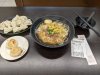
My first meal in Taiwan, which was coconut curry at the airport.

I don't think I took photos of any meals in Japan because most of my food came from convenience stores like 7-eleven, simply because that was cheaper than most other options. In Taiwan there are even more convenience stores than Japan! FamilyMarts and 7-elevens are everywhere - sometimes it literally seemed like they were around every corner. Like Japan they sell packaged meals which they heat up for you in a microwave, but unlike Japan they heat them to molten levels rather than just warm. The selection seems to be better as well. One other difference is that they all have tables for people to eat their meals there. I did see a couple in Japan which had seats, but in Taiwan it is standard. The one next to my hotel in Taichung had eight or ten tables in it!


In animal news, my first bird in Taiwan was Spotted Dove, and my first lifer bird was Taiwan Barbet. My first mammal in Taiwan was Pallas' Squirrel, and my first lifer mammal was Taiwan Ferret-Badger.
 

Attachments

  • PXL_20250418_121518191.jpg
    PXL_20250418_121518191.jpg
    145.4 KB · Views: 97
Given that I mentioned the convenience store prepared meals in that last post I thought I'd put some photos here, so I went to the 7-eleven around the corner from the hotel (in Chiayi).


PXL_20250510_104151439.jpg

This is part of the area for prepared meals (only part - it keeps going to the right). The bottom few shelves are all prepared meals. There are other shelves above for sandwiches, rice, etc. The sandwiches are interesting too - mostly they are typical fillings like chicken, ham, cheese, things like that, but there are also fruit sandwiches which seem odd. On this shelf there are blueberry and cream sandwiches (the ones on the right end of the sandwich line). In Japan I saw sandwiches containing strawberries or apple slices, but the strangest one was mandarin segments in a sandwich.


These are examples of 7-eleven meals. The two together cost 154 TWD.

PXL_20250510_104748023.jpg
PXL_20250510_104826837.jpg


This was a restaurant meal earlier the same day (for lunch) which was 210 TWD.

PXL_20250510_040232304.jpg


And, sort of related, I took this photo today at one of the "roadside" drink vending machines (in Taitung). Not something I wanted to buy.

PXL_20250512_041054013.jpg
 

Attachments

  • PXL_20250510_104151439.jpg
    PXL_20250510_104151439.jpg
    192.2 KB · Views: 81
  • PXL_20250510_104748023.jpg
    PXL_20250510_104748023.jpg
    161.5 KB · Views: 82
  • PXL_20250510_104826837.jpg
    PXL_20250510_104826837.jpg
    149.9 KB · Views: 89
  • PXL_20250510_040232304.jpg
    PXL_20250510_040232304.jpg
    183.8 KB · Views: 87
  • PXL_20250512_041054013.jpg
    PXL_20250512_041054013.jpg
    72.9 KB · Views: 75
And, sort of related, I took this photo today at one of the "roadside" drink vending machines (in Taitung). Not something I wanted to buy.

pxl_20250512_041054013-jpg.792364

Asparagus juice just sounds off-putting. I don't mind asparagus myself but I really can't imagine the juice tasting that great. Apparently there's enough market it ended up in a vending machine, but I don't think I'd care to spend money on it either!
 
Yes, but a possibility of something happening is not even close to "a big threat" as lots of websites state. For example, something called the Feline Conservation Foundation (Iriomote Cat - Feline Conservation Foundation) says "Hybridization with feral domestic cats has greatly endangered this species".

There have been several genetic studies on Iriomote Cats and I can't find anything saying there has been any evidence of hybridisation with feral cats.

I rather suspect someone originally wrote something along the lines of "hybridisation with feral cats could be a threat to the species" and that got changed into "it IS a big threat". Or, less charitably, someone did not know what DNA hybridisation is when referenced in genetic studies...
I have noticed there is a standard list of "threats" that are often added to threatened species listings, indicating in my view a lack of research into the threatening processes.
 
I have noticed there is a standard list of "threats" that are often added to threatened species listings, indicating in my view a lack of research into the threatening processes.

Unfortunately you are right. There are so many threatened species, that even if we would increase biodiversity monitoring investment 10-fold we would still only be able to cover a small part of all threatened species. Even for well studied tax like birds and mammals there are so many gaps. So when people are analysing threats they often look at related, well-studied taxa and just copy paste. Not because of mall practice but just that this is the best that is available.

If I would have the investments that were done in Colossal I could do so much to improve biodiversity monitoring and taxonomy, but unfortunately both topics are not very investible.
 
TAIWAN


And now I'm in Taiwan! Possibly this had already been guessed from the previous posts. I arrived on April 18th, so I'm already three weeks behind on updates.

Getting from the airport into the city is easy on the metro system, as may be expected - Taiwan is sort of a lesser Japan and a better China, and all three have excellent and reliable metro systems. There was a guard standing in the train car who kept reprimanding tourists trying to take drinks from their water bottles - no drinking allowed on the metro!

The buses in Taiwan only take exact change. There are no money-changer machines on the bus like in Japan. I hadn't bothered getting an IC card in Japan because it was just as easy for me to either buy a metro ticket from one of the machines or pay cash on the bus. The IC cards are said to be good for saving time because you don't need to queue to buy tickets, but in reality almost everyone is using IC cards so there were never queues at the machines! However, for Taiwan I got an EasyCard at the train station because needing exact change makes trying to take a bus much more complicated - not only in having the change itself but also in finding out from a non-English-speaking driver how much the exact fare is.


Taiwan didn't start out in the greatest fashion. Normally for a trip I have everything planned out in some detail - what places I'm going to, how to get to them, what animals are there, back-up locations, everything ready to go. On this trip I had all of China and Japan planned out, but then ran out of time to do the Taiwan plan. I thought I'd work on the plan as I went through the other countries but obviously never found the time, so I came into Taiwan with just the bare-bones ideas from when I was contemplating coming here a few years ago. Basically I had a list of places with some notes, and a map with dots on it for those places.

Luckily I knew that someone had just been to Taiwan and had started a trip thread on it, so I sent a message to @CMP (trip thread here: CMP Travels Asia (Part 1?)) and received a whole lot of useful information in reply. From this I worked out what seemed to be a usable itinerary. Honestly, I've never been so disorganised and unprepared for a trip before. It has been really aggravating trying to figure out how to get everywhere and where to even go, and as each day passed I seemed to get more disorganised.

The "main" site I had in mind was Dasyueshan in the central mountains, because almost all the endemic birds and mammals are found there. There were some other sites I'd include in Taipei (for species like the Taiwan Blue Magpie) and I'd need to go to the far south for the Styan's Bulbul, and Lanyu Island off the southeast also seemed interesting for some birds otherwise not found in Taiwan.

However Dasyueshan pretty quickly took itself out of the equation. I had looked it up and most sites were saying the accommodation there needed to be booked a month in advance, which sounded "not promising". I looked up their website (in Chinese) and it listed the rooms at 2400 TWD per night (or 3400 TWD on Fridays and Saturdays) which is expensive - 2400 TWD is about NZ$134, or US$79, or UK£60, or 71 Euros - but does include breakfast and dinner so there wouldn't really be any other costs than food for lunch. I asked the guy at my hotel's reception to call them and see if they had anything available in the next couple of weeks, and discovered that apparently the company which manages the accommodation is changing so the lodges are closed until August!

People can still visit Dasyueshan, but without a car that becomes awkward. There is a bus which goes up the mountain from the Fengyuan Transfer Center north of Taichung city, which needs to be pre-booked and is of a limited schedule, so it's possible but a little fiddly.

See here for the link to the bus: https://www.taichung.travel/taichung-tour-bus/en/route/889

Alishan became my new plan. It is also in the mountains and has all (or most) of the same birds. I hadn't been going there because it was expensive (it is primarily a tourist village), but the hotels there aren't really that much more than Dasyueshan's lodges. I did have to shuffle days around due to the expense of the hotels though - the rooms in hotels are different rates depending on the days of the week, with Fridays and Saturdays being more expensive than mid-week days, sometimes two or three times more expensive, so I had to pick out a group of mid-week days which gave the cheapest prices (which were still about NZ$140 per night!). This meant I'd be back-tracking a little, going from Taipei to Taichung and then all the way down south for Styan's Bulbul, and then coming back up to go to Alishan, and then going south again.

I ended up booking a bunch of hotels in different cities all in one go. I don't like fixing myself into a time-frame but Taiwan seemed like it's really difficult to play by ear. There are a lot of tourists here as well - perhaps not as many as in Japan, but certainly a lot. I didn't book all my nights for Taiwan, only as far as Alishan, leaving myself wiggle-room from that point on which might end up biting me in the bottom.


In Taipei itself I only visited three locations - the Erbazi Botanical Gardens (twice), Datongshan (once), and Fuyang Eco Park (twice, in the evenings) - because I spent several days trying to catch up on Japanese blog-posts and trying to organise the Taiwan planning. I'll write about those in the next few posts. I'll be back in Taipei at the end though, so I should have time to visit some more spots (the Taipei Zoo is an obvious place I haven't been yet!).


The hotel I stayed at in Taipei was called The Dealer Hotel, which was close to the Taipei Main Station (which the airport line goes to) and also to the Beimen metro station which made getting to Erbazi and Datongshan easier (buses for both leave from the Xindian metro station, which you get to on the line from Beimen station).

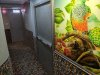
I really liked this hotel, but the decor made it look like someone had just transplanted a hotel from an English village in the 1960s. It was interesting.

Just as an additional note of interest, unlike both China and Japan no hotels in Taiwan provide disposable items in the room any more (toothbrushes and the like) due to an environmental protection law introduced this year.
 
Photos from The Dealer Hotel (corridor, room, and the interesting choice of bed-spread). All the hotels also have escape equipment in or near the rooms, which I haven't seen in Japan or China.


PXL_20250418_135010298.jpg

PXL_20250418_135215423.jpg

PXL_20250418_135500077.jpg

PXL_20250418_232106229.jpg
 

Attachments

  • PXL_20250418_135010298.jpg
    PXL_20250418_135010298.jpg
    193.2 KB · Views: 77
  • PXL_20250418_135215423.jpg
    PXL_20250418_135215423.jpg
    137.7 KB · Views: 79
  • PXL_20250418_135500077.jpg
    PXL_20250418_135500077.jpg
    94.7 KB · Views: 82
  • PXL_20250418_232106229.jpg
    PXL_20250418_232106229.jpg
    93.9 KB · Views: 81
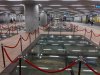
The Beimen metro station has archaeological dig-sites left as displays in the floor, from the Qing Dynasty and the 1800s Japanese colonial period, which were uncovered during the construction of the station.

PXL_20250421_052440280.NIGHT.jpg

PXL_20250421_052720021.jpg

PXL_20250421_052821737.jpg


The Great Wave, Taiwan style, also in Beimen station but not of any archaeological significance.

PXL_20250423_101509909.jpg
 

Attachments

  • PXL_20250421_052440280.NIGHT.jpg
    PXL_20250421_052440280.NIGHT.jpg
    182.3 KB · Views: 84
  • PXL_20250421_052821737.jpg
    PXL_20250421_052821737.jpg
    212.2 KB · Views: 86
  • PXL_20250421_052720021.jpg
    PXL_20250421_052720021.jpg
    190.2 KB · Views: 82
  • PXL_20250423_101509909.jpg
    PXL_20250423_101509909.jpg
    177 KB · Views: 83
Erbazi Botanical Gardens (Taipei)


While in Taipei I visited three animal spots - the Erbazi Botanical Gardens (twice), Datongshan (once), and Fuyang Eco Park (twice, in the evenings). Rather than a day-by-day account for these first few days I will just do three posts, one for each of these places.


The Erbazi Botanical Gardens were said to be good for two endemic birds in particular, the Taiwan Barbet and the Taiwan Blue Magpie. The barbets are found all over Taiwan but the magpies seem to be more restricted - in fact, in early trip reports I often read that it is a difficult bird or one which requires a specific search. Yet they are common in many places around Taipei.

The gardens are easy to get to, but it took about an hour in total from my hotel. From Beimen metro station I took the train to Xindian metro station, and then caught bus #839 which has the gardens as its last stop. This bus runs about every 15 minutes in the morning and about every half an hour in the afternoon.

One important thing to bear in mind if using the bus to get there, is that while the Xindian station and the Botanic Gardens are the two terminal stops, the bus doesn't actually wait at the Xindian station at all, it just arrives and then straight away leaves if there isn't anyone waiting (and by "waiting" I mean you need to physically let the driver know you want that bus, and not just be waiting by the stop). They use the Erbazi stop as their waiting point to make up time. The first time I went to the gardens there were other people getting on the bus so it had to wait, but the second time it caught me out. There was a bus scheduled for 6.25am but the train didn't arrive until 6.25am. I rushed out to the buses just in case it was a bit late but there was no bus and no passengers waiting. No matter, the next bus was at 6.45am. Just after 6.30am a #839 arrived, obviously coming from Erbazi on its inbound route because it was full loaded with passengers. They all got off and the driver immediately closed the doors and backed out of the bay. I didn't react to this because I thought it was the 6.45am bus arriving, and it just had ten minutes to wait for its departure time. Then at 6.45am the next bus arrived (different driver) and I realised my mistake.

Another quirk to note, which I discovered coming back on that second day, is that if all the bays are full at Xindian the bus just stops behind all the other buses and then leaves without coming into any bay, so if you don't see it back there you will miss it.


The Botanic Gardens are actually forest, at the top of a hill which is also covered in forest. Some parts are specifically planted for decoration but mostly it seems to just be forest with paths put through it. There's a paved path sloping downhill in one direction and sets of steps going steeply downhill in the other. I have a habit of always taking the most difficult path first and then later finding all the birds on the easy path, so I took the easy paved path first today. Because of the rain last night it was a bit slippery but wasn't too bad. Did not see a single bird! Lots of cats though. Lots and lots of cats!

I came back up the hill, and right where I had started there were a couple of Black Bulbuls, and then a pair of Taiwan Barbets at the top of a tree - in silhouette so I didn't bother with photos, but my first endemic for the island.

full

Black Bulbuls


So now I took the steps. The forest here is quite nice, but it was really hot and humid and the birds were just not here. I had thought Iriomote was too hot and that was only 24 degrees (and humid obviously, which makes it feel hotter), but Taipei for these first few days was high-30s and it was killing me. After a few days the temperature dropped to mid-20s and it was much more pleasant.

I saw some more barbets along the steps and got some photos, as well as a Grey Treepie (I had already seen one from the bus on the way up).

full

Taiwan Barbet


I walked all the way down the steps without seeing anything else. All the way back up, and finally I saw a Taiwan Blue Magpie - after almost two hours!! It was foraging in a tree and stopping on a clear branch to feed on whatever it had caught, so I got some photos of this one as well. Unfortunately it was shaded by the tree and was also against the light because it was in a gap so, while I could see how blue it was with my binoculars, in the photos it just came out black.

Just after that a whole flock of the Blue Magpies turned up, hurtling through the trees all about, so I got a lot of good views of them but no photos because they never stopped in the open where I could get any. They were joined by more Grey Treepies.

At the top of the steps I went back along the paved path again. With the important barbets and magpies taken care of, I was a bit more relaxed about just seeing whatever came along. It really was dead quiet though, the only other bird species I saw were a Plain Flowerpecker and a Grey-capped Pigmy Woodpecker.


I did see a Pallas' Squirrels as well, which became my first wild mammal in Taiwan. The Taiwan subspecies is endemic, but I had actually already seen it in the wild because they have been introduced to the Japanese island of Oshima (via a zoo escape) and I saw one there - albeit not as well as I saw them in Taiwan where they are very common everywhere!


Of cold-blooded animals, I saw several lovely little lizards which I thought were some kind of tree-dwelling skink but later identified as Kuhne's Grass Lizards.

full


full


The second time I went to the Botanic Gardens it was much cooler - about ten degrees cooler - because it was overcast and threatening to rain. I saw the Blue Magpies easily this time, even from the bus right beside the zigzag road leading up to the gardens, and then as soon as I arrived at the entrance. However it was so overcast that it was too dark to take photos of them!

The rain starting pattering down just as I got off the bus, and for the first hour and a half it was constant but light. Despite the cooler temperature I had no better luck than the previous day with the birds. The one new addition was a Taiwan Whistling Thrush - my third endemic bird - which was foraging for worms by the toilet block.

full


Then it started thundering down. I waited under the shelter where the cats hang out. As soon as it lessened I headed back to the bus stop. Just as I got there it started pouring again, this time with furious winds whipping into a proper storm. I had just missed a bus as well, and it was now on the half-hour schedule. Fortunately there was an actual shelter here which provided good protection from the weather.

If I have time I am going to try and get back here when I return to Taipei, to get photos of the Blue Magpies. They really are the most outrageously blue birds. The gardens might be a good place for spotlighting as well. There is a big signboard there with local animals on it, which includes civet, ferret-badger, and pangolin, and the food people leave out for the cats may well attract the first two of those.


Signboard - those shapes on the roof aren't more art, those are silhouettes of sunbathing cats.

PXL_20250421_023744406.jpg
 

Attachments

  • PXL_20250421_023744406.jpg
    PXL_20250421_023744406.jpg
    222.8 KB · Views: 77
Datongshan (Taipei)


Just outside Taipei, on the way to the hot-springs village of Wulai - itself a well-known birding spot - is a place called Datongshan which was brought to my attention by @CMP. The area is titled on eBird as "Xindian Shikanshui (WBST Birdwatching Route". There are a number of endemics found here, including Swinhoe's Pheasant, so it seemed like a good location to visit.

There is a free bus from Xindian metro station to the top which showed up on Google's map directions. It doesn't have a number or English name so I wasn't sure how I'd find it so I got to the station early. I looked at all the bus timetables on the boards and couldn't see it, and the bus station is really just a place where the buses stop, there doesn't seem to be an office or anyone to ask. I went to the metro station's counter and asked them. They were confused as well, until I said it was the Guishan Line and then the guy was like "oh, I know" and he left the counter to take me outside and down the street to the stop, which is not where all the regular buses stop and is only marked with a little sign so I never would have found it on my own.

The bus only runs a few times a day, with the first one at 7.50am. It was late - buses in Taiwan are not as punctual as in Japan! - and so I wasn't even sure it was the right bus when it arrived at 8am. I asked one of the other people getting on (I had put Datongshan into my phone's translation app to show them), and she said no. I thought I better double-check with the driver, who didn't seem to know, and there was a bit of discussion amongst the passengers. One guy said yes this is the bus, so I sat down and the bus left.

Then the guy wanted to check my phone again, and said that no this wasn't the right bus. I was getting stressed out now because there wasn't another bus until something like 10.30am and I was getting further and further away from the bus stop. I showed him the map on the phone and he looked at it carefully, and then declared that this was the correct bus after all, and that the last stop was Datongshan, which sounded right. The Alien Tracker on my map was already moving along the road out of town towards Datongshan, so I decided to see how it played out.

Luckily the bus was the right one. It passes through the village of Guishan which is at a junction by a bridge, and continues on the other side of that bridge up an extremely narrow - almost single lane - road up the mountain. At the last stop, about half an hour from Xindian metro station, there is a little side-road marked for "Mt Datong" (shan means mountain). From here you can either walk up to the end of that track (and back down), or just walk straight back down the road to Guishan which I think is about three or four kilometres.


The alternative way to do this trip is to catch the #849 bus from Xindian metro station. This also doesn't stop where the other buses stop, but it is easier to find because it is just on the other side of the plaza by the stairs (i.e. behind you if facing the main bus stops) and it has a proper sign with a number. This is a much more regular service, running every 15 to 20 minutes through the day, starting at 5.30am. You would catch this bus to Guishan, getting off at the Taipower Company Training Center and then walking across the bridge and up the mountain road. The #849, incidentally, is the same bus which runs on to Wulai.


On this day I combined the two - catching the free bus to the top, walking up the Datongshan track, and then back down and all the way to Guishan, and then catching the #849 bus back to Xindian station. This has the advantage that you start at the top and are walking downhill, but it is a late start and I saw almost no birds (it was extremely hot), so probably the best idea is to use the #849 both ways so you can start really early.


When I got off the bus one of the other passengers told me that if I was walking to the top to make sure I took the left path further ahead and not the right, because that one leads to a farm. So when I came to a fork, which had a van sitting there overgrown with ferns, I took the left path which ended a minute later at someone's gate. But beside that was a narrow foot-track, so I thought this must be it. I went up the track and after a couple of minutes it joined onto a rough path which was the actual path to the top. Coming back down later I just followed that path all the way down to the van. I think the fork she meant was the one just after the van, where the left path is fairly obviously the correct track so I wouldn't have gone the wrong way anyway.

full

Dung Beetle on the track


There was a lot of bird noise coming from the forest right beside the path, where the narrow foot-track joined to it, but I couldn't see anything. This happened repeatedly. A couple of times there were birds calling which must have literally been a couple of feet from me and I couldn't see them at all because the undergrowth was so dense. I wasted a lot of time on these invisible birds.

It was almost an hour before I actually saw any birds, firstly a Grey-faced Buzzard and then just after that a Morrison's Fulvetta, which is another one of the endemic birds. Just one. Not a pair, not a flock, not a bird-wave, just one single bird. I hung around that spot for a bit, thinking where there was one bird there must be others, but all that showed up were a pair of Black Bulbuls.

full

Morrison's Fulvetta


I continued on, and the path suddenly came out into the open at a tea field. I thought it must keep going on the other side but no, this appeared to be the end of the track. I saw a Grey Treepie up here, and fly-overs from Large-billed Crow and Black Kite. On the way back down I passed a fellow walking up who asked if I had seen the "tea garden", so I guess that really is the point of the track. Although it took me over an hour to go up the track - spending so much time trying to see birds which refused to be seen - it isn't really very long. Coming down took almost no time at all.

Then I walked back down to Guishan, again seeing very little. At the river I was surprised to see an Osprey bathing, and even more surprised to see a very late Arctic Warbler.

I saw a few other birds either in the forest or along the road on the way down (Blue Magpies and White-bellied Erpornis were the main ones of note), but the Morrison's Fulvetta turned out to be the only "new" bird seen today. I blame the weather. Both yesterday at Erbazi and today were mid- to high-30s which in the tropics with the high humidity feels much hotter than 30s in a dry climate. Even the bulbuls and barbets I saw were often just sitting on branches with their beaks open trying to cool down.

The hot weather was good for reptiles though. There were a lot of lizards by the roads, although most were too nippy to even see before they disappeared let alone photograph. My favourite one of the day was the Taiwan Japalure which looks like a little dragon.

full

Taiwan Japalure

full

Indian Forest Skink
 
Last edited:
Back
Top