Yes, they have toned down nicely with all the walking Chlidonias did to reach all those birding places.Personal opinion - they look better dirty. That green is just too much.
You are using an out of date browser. It may not display this or other websites correctly.
You should upgrade or use an alternative browser.
You should upgrade or use an alternative browser.
Chlidonias Goes To Asia, part seven: 2024-2025
- Thread starter Chlidonias
- Start date

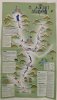
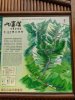
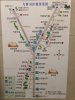
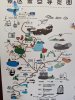
Before the Jiuzhaigou posts start, here are some maps of the scenic area - all showing the same but in different styles - so it is easier to visualize what I'm writing about.
The entry gates are at the bottom. There is a long initial road leading past a series of lakes (Rhinoceros Lake at the top to Reed Lake at the bottom), then at the junction the road splits up the west valley to Long Lake and the east valley to Primeval Forest. The east valley also has a series of lakes along it, the ones I mention most in the posts being (from the top going down) Swan Lake, Arrow Bamboo Lake and Panda Lake.


The entry gates are at the bottom. There is a long initial road leading past a series of lakes (Rhinoceros Lake at the top to Reed Lake at the bottom), then at the junction the road splits up the west valley to Long Lake and the east valley to Primeval Forest. The east valley also has a series of lakes along it, the ones I mention most in the posts being (from the top going down) Swan Lake, Arrow Bamboo Lake and Panda Lake.
Attachments
Last edited:
Jiuzhaigou National Park - day one
First day in the park. I really didn't know what to expect here. The park opens at 8am, and when I got there at 7.45am there were already hundreds of people waiting in long queues. I could see the park buses lined up beyond the scanner gates. Dead on 8am it was opening time and the queues surged forwards. Despite the numbers it was actually very quick because the "ticket" is your ID card (or passport for the foreigners), so each person just required a second's scan and they were through. I took slightly longer because the passport number had to be put in manually, but the whole entry process was extremely fast and efficient.
As can be seen from the maps which I posted above, from the entrance there is a single road up to a forked junction which leads up the west and east valleys. There are shuttle stops all along the roads - mostly at lakes - but the morning buses only stop at a few of the most popular places along the way before reaching the end points (although I imagine they would stop at any of them if you requested a specific one). When coming back you can get them to stop at any of them.
It had been pouring down all night and was very drizzly all morning but cleared up before noon, remaining cloudy but without any more rain.
I had bought latex shoe covers today. I'd seen people wearing them at Fanjingshan so tried them out here rather than having wet feet, and they work great. I had been wondering about whether they would be slippery to wear, but they have ridged "soles" so gripped the wet surfaces of the boardwalks and roads really well.
On this first day I took the bus all the way to the end of the east valley at the Primeval Forest, where I didn't see much at all. There are a few short boardwalks up here through the forest, and one much longer one which was blocked off. There were an awful lot of people up here. Every bus is full when it leaves the gates, and although a lot of the visitors are stopping at lakes along the way there are still plenty on the bus when it gets to the end point, and they almost all head straight to the boardwalks as soon as they arrive.
The only birds I saw up here were Elliot's Laughing Thrush, Bianchi's Warbler (one of those grey-capped yellow warblers I've mentioned in the Fanjingshan posts), a Buff-barred Warbler, and an unidentified treecreeper - there are three species of treecreeper here and I couldn't see this one well enough to tell which one.

Elliot's Laughing Thrush
I then walked down the boardwalk heading back along the valley. Quite a few people do this stretch down to Swan Lake, which is about 2.5km, so it's not quiet but it's not really busy either (the majority of people still take the bus down instead). It is initially through forest but then passes through a grassy wetland with copses of small trees filled with Phylloscopus leaf warblers.
So. Many. Warblers!
I had read in trip reports that Jiuzhaigou is warbler paradise but I hadn't imagined just how intensely warblery it would be. It's like if you'd heard that the ocean is salty, and then you drink a glass of it and throw up because it is so very very salty. Exactly like that. Except without throwing up.
Just today I managed to identify Bianchi's, Buff-barred, Sichuan, Tickell's, Yellow-streaked, Greenish, and Claudia's Leaf Warblers. The next day I came in with a cheat-sheet I'd made with all the specifics to identify the rest and added Kloss', Large-billed, Chinese, and Hume's. On the third day I actively avoided looking at warblers.
Amongst other birds seen along this boardwalk were a pair of Grey-headed Bullfinches and a lone female Himalayan Beautiful Rosefinch, which were feeding together in a tree. The bullfinches were in the same place every day.


Grey-headed Bullfinches - male in the top photo, female in the lower photo.
After Swan Lake the next stretch of boardwalk runs for 6.8km before reaching the next shuttle stop at Arrow Bamboo Lake, so almost nobody walks this part. It is very quiet, and also most of it is in the forest rather than alongside the road so it is really nice. I didn't see a lot of birds along here (on any of the times I walked it), but today they included a Sichuan Treecreeper and Great Spotted Woodpecker, as well as a lifer Baikal Bush Warbler.
I actually missed this boardwalk the first time because it is on the opposite side of the road from the first stretch of boardwalks, and it isn't signed obviously at the shuttle stop until you are actually on it. I caught the shuttle, thinking there was no boardwalk along this part, and saw it while driving downhill. So at the next stop I got off and walked up the boardwalk. It's not steep, but it is a lot easier going downhill on it, as I did the next day.
The paths around the main lakes are packed with people - thousands of them. Literally thousands, not just as a figure of speech. The next day (which was a Sunday) Arrow Bamboo Lake, which is a big lake, was fully encircled with crowds already by the time I passed it on the bus. If you only saw that you wouldn't even set foot in the park for birding, but in actuality the crowds do tend to be concentrated in specific places and often the boardwalks (or at least many of the boardwalks) are relatively free of people. But I figure the birds will be used to them, because if they couldn't tolerate the noise and crowds then they're not going to still be here anyway. I didn't see a single mammal at the park though, on any of the days, not even a squirrel.
From Arrow Bamboo Lake I walked maybe four or five kilometres of the way down the road towards the junction, passing some more lakes of which Panda Lake in particular was very birdy. I saw a thrush here which I'm thinking was either a Long-tailed or a Sichuan Thrush, but it was wet from bathing and it could well have just been a Chinese Thrush - all three are spotty Song Thrush-like birds - and it left before I could get a photo. White-collared Yuhinas, on the other hand, were more obliging.

White-collared Yuhina
I then caught a shuttle down to the bottom end of Rhinoceros Lake, on the main access road below the junction, and walked from there to the bottom of Reed Lake (where there were supposed to be Spectacled Parrotbills according to one birding site I read, but I didn't see any). One particularly interesting thing though was a swarm of Dark-sided Flycatchers hawking insects around one of the waterfalls. I've never seen Muscicapa doing this in a flock like that. I thought they were swallows at first.
I really liked Jiuzhaigou today. There were some serious crowds there, but there were still lots of birds around. Ninety percent of them were near-identical warblers it is true, but I did end up on 32 species for the day which was a real surprise when I worked out the day's total because it didn't feel like I was seeing that much. Also the Jiuzhaigou checklists on eBird are mostly in pretty low numbers (Recent Checklists - 九寨沟自然保护区 (Jiuzhaigou NNR), Sichuan, China - eBird Hotspot).
Of the 41 checklists from 2021-2025, 20 lists are under ten species, 14 lists are between 10 and 20 species, 6 lists are between 20 and 30 species, and only one list is over 30 species (36 species in May 2024).
Going back a bit, there are some lists on there into the 40s and 50s, and even a bit higher like one of 62 species (June 2017, although 9 species are heard-only). There is another one with 67 species (May 2016) but when you look at the list it actually covers two days and two different locations.
If you go way back to the early 2000s there are some really big lists, even a couple getting into the 70s, because in the "old days" you used to be able to drive around the park in your own vehicle. I'm glad that's no longer allowed though - it would be chaos with the number of visitors they now have!
I saw 53 species total for my three days in the park. There are 228 species recorded on eBird for June (333 species total recorded in all months), so I saw roughly a quarter of that.
First day in the park. I really didn't know what to expect here. The park opens at 8am, and when I got there at 7.45am there were already hundreds of people waiting in long queues. I could see the park buses lined up beyond the scanner gates. Dead on 8am it was opening time and the queues surged forwards. Despite the numbers it was actually very quick because the "ticket" is your ID card (or passport for the foreigners), so each person just required a second's scan and they were through. I took slightly longer because the passport number had to be put in manually, but the whole entry process was extremely fast and efficient.
As can be seen from the maps which I posted above, from the entrance there is a single road up to a forked junction which leads up the west and east valleys. There are shuttle stops all along the roads - mostly at lakes - but the morning buses only stop at a few of the most popular places along the way before reaching the end points (although I imagine they would stop at any of them if you requested a specific one). When coming back you can get them to stop at any of them.
It had been pouring down all night and was very drizzly all morning but cleared up before noon, remaining cloudy but without any more rain.
I had bought latex shoe covers today. I'd seen people wearing them at Fanjingshan so tried them out here rather than having wet feet, and they work great. I had been wondering about whether they would be slippery to wear, but they have ridged "soles" so gripped the wet surfaces of the boardwalks and roads really well.
On this first day I took the bus all the way to the end of the east valley at the Primeval Forest, where I didn't see much at all. There are a few short boardwalks up here through the forest, and one much longer one which was blocked off. There were an awful lot of people up here. Every bus is full when it leaves the gates, and although a lot of the visitors are stopping at lakes along the way there are still plenty on the bus when it gets to the end point, and they almost all head straight to the boardwalks as soon as they arrive.
The only birds I saw up here were Elliot's Laughing Thrush, Bianchi's Warbler (one of those grey-capped yellow warblers I've mentioned in the Fanjingshan posts), a Buff-barred Warbler, and an unidentified treecreeper - there are three species of treecreeper here and I couldn't see this one well enough to tell which one.
Elliot's Laughing Thrush
I then walked down the boardwalk heading back along the valley. Quite a few people do this stretch down to Swan Lake, which is about 2.5km, so it's not quiet but it's not really busy either (the majority of people still take the bus down instead). It is initially through forest but then passes through a grassy wetland with copses of small trees filled with Phylloscopus leaf warblers.
So. Many. Warblers!
I had read in trip reports that Jiuzhaigou is warbler paradise but I hadn't imagined just how intensely warblery it would be. It's like if you'd heard that the ocean is salty, and then you drink a glass of it and throw up because it is so very very salty. Exactly like that. Except without throwing up.
Just today I managed to identify Bianchi's, Buff-barred, Sichuan, Tickell's, Yellow-streaked, Greenish, and Claudia's Leaf Warblers. The next day I came in with a cheat-sheet I'd made with all the specifics to identify the rest and added Kloss', Large-billed, Chinese, and Hume's. On the third day I actively avoided looking at warblers.
Amongst other birds seen along this boardwalk were a pair of Grey-headed Bullfinches and a lone female Himalayan Beautiful Rosefinch, which were feeding together in a tree. The bullfinches were in the same place every day.
Grey-headed Bullfinches - male in the top photo, female in the lower photo.
After Swan Lake the next stretch of boardwalk runs for 6.8km before reaching the next shuttle stop at Arrow Bamboo Lake, so almost nobody walks this part. It is very quiet, and also most of it is in the forest rather than alongside the road so it is really nice. I didn't see a lot of birds along here (on any of the times I walked it), but today they included a Sichuan Treecreeper and Great Spotted Woodpecker, as well as a lifer Baikal Bush Warbler.
I actually missed this boardwalk the first time because it is on the opposite side of the road from the first stretch of boardwalks, and it isn't signed obviously at the shuttle stop until you are actually on it. I caught the shuttle, thinking there was no boardwalk along this part, and saw it while driving downhill. So at the next stop I got off and walked up the boardwalk. It's not steep, but it is a lot easier going downhill on it, as I did the next day.
The paths around the main lakes are packed with people - thousands of them. Literally thousands, not just as a figure of speech. The next day (which was a Sunday) Arrow Bamboo Lake, which is a big lake, was fully encircled with crowds already by the time I passed it on the bus. If you only saw that you wouldn't even set foot in the park for birding, but in actuality the crowds do tend to be concentrated in specific places and often the boardwalks (or at least many of the boardwalks) are relatively free of people. But I figure the birds will be used to them, because if they couldn't tolerate the noise and crowds then they're not going to still be here anyway. I didn't see a single mammal at the park though, on any of the days, not even a squirrel.
From Arrow Bamboo Lake I walked maybe four or five kilometres of the way down the road towards the junction, passing some more lakes of which Panda Lake in particular was very birdy. I saw a thrush here which I'm thinking was either a Long-tailed or a Sichuan Thrush, but it was wet from bathing and it could well have just been a Chinese Thrush - all three are spotty Song Thrush-like birds - and it left before I could get a photo. White-collared Yuhinas, on the other hand, were more obliging.
White-collared Yuhina
I then caught a shuttle down to the bottom end of Rhinoceros Lake, on the main access road below the junction, and walked from there to the bottom of Reed Lake (where there were supposed to be Spectacled Parrotbills according to one birding site I read, but I didn't see any). One particularly interesting thing though was a swarm of Dark-sided Flycatchers hawking insects around one of the waterfalls. I've never seen Muscicapa doing this in a flock like that. I thought they were swallows at first.
I really liked Jiuzhaigou today. There were some serious crowds there, but there were still lots of birds around. Ninety percent of them were near-identical warblers it is true, but I did end up on 32 species for the day which was a real surprise when I worked out the day's total because it didn't feel like I was seeing that much. Also the Jiuzhaigou checklists on eBird are mostly in pretty low numbers (Recent Checklists - 九寨沟自然保护区 (Jiuzhaigou NNR), Sichuan, China - eBird Hotspot).
Of the 41 checklists from 2021-2025, 20 lists are under ten species, 14 lists are between 10 and 20 species, 6 lists are between 20 and 30 species, and only one list is over 30 species (36 species in May 2024).
Going back a bit, there are some lists on there into the 40s and 50s, and even a bit higher like one of 62 species (June 2017, although 9 species are heard-only). There is another one with 67 species (May 2016) but when you look at the list it actually covers two days and two different locations.
If you go way back to the early 2000s there are some really big lists, even a couple getting into the 70s, because in the "old days" you used to be able to drive around the park in your own vehicle. I'm glad that's no longer allowed though - it would be chaos with the number of visitors they now have!
I saw 53 species total for my three days in the park. There are 228 species recorded on eBird for June (333 species total recorded in all months), so I saw roughly a quarter of that.



Lafone
Well-Known Member
Jiuzhaigou National Park - day one
First day in the park. I really didn't know what to expect here. The park opens at 8am, and when I got there at 7.45am there were already hundreds of people waiting in long queues. I could see the park buses lined up beyond the scanner gates. Dead on 8am it was opening time and the queues surged forwards. Despite the numbers it was actually very quick because the "ticket" is your ID card (or passport for the foreigners), so each person just required a second's scan and they were through. I took slightly longer because the passport number had to be put in manually, but the whole entry process was extremely fast and efficient.
As can be seen from the maps which I posted above, from the entrance there is a single road up to a forked junction which leads up the west and east valleys. There are shuttle stops all along the roads - mostly at lakes - but the morning buses only stop at a few of the most popular places along the way before reaching the end points (although I imagine they would stop at any of them if you requested a specific one). When coming back you can get them to stop at any of them.
It had been pouring down all night and was very drizzly all morning but cleared up before noon, remaining cloudy but without any more rain.
I had bought latex shoe covers today. I'd seen people wearing them at Fanjingshan so tried them out here rather than having wet feet, and they work great. I had been wondering about whether they would be slippery to wear, but they have ridged "soles" so gripped the wet surfaces of the boardwalks and roads really well.
On this first day I took the bus all the way to the end of the east valley at the Primeval Forest, where I didn't see much at all. There are a few short boardwalks up here through the forest, and one much longer one which was blocked off. There were an awful lot of people up here. Every bus is full when it leaves the gates, and although a lot of the visitors are stopping at lakes along the way there are still plenty on the bus when it gets to the end point, and they almost all head straight to the boardwalks as soon as they arrive.
The only birds I saw up here were Elliot's Laughing Thrush, Bianchi's Warbler (one of those grey-capped yellow warblers I've mentioned in the Fanjingshan posts), a Buff-barred Warbler, and an unidentified treecreeper - there are three species of treecreeper here and I couldn't see this one well enough to tell which one.
Elliot's Laughing Thrush
I then walked down the boardwalk heading back along the valley. Quite a few people do this stretch down to Swan Lake, which is about 2.5km, so it's not quiet but it's not really busy either (the majority of people still take the bus down instead). It is initially through forest but then passes through a grassy wetland with copses of small trees filled with Phylloscopus leaf warblers.
So. Many. Warblers!
I had read in trip reports that Jiuzhaigou is warbler paradise but I hadn't imagined just how intensely warblery it would be. It's like if you'd heard that the ocean is salty, and then you drink a glass of it and throw up because it is so very very salty. Exactly like that. Except without throwing up.
Just today I managed to identify Bianchi's, Buff-barred, Sichuan, Tickell's, Yellow-streaked, Greenish, and Claudia's Leaf Warblers. The next day I came in with a cheat-sheet I'd made with all the specifics to identify the rest and added Kloss', Large-billed, Chinese, and Hume's. On the third day I actively avoided looking at warblers.
Amongst other birds seen along this boardwalk were a pair of Grey-headed Bullfinches and a lone female Himalayan Beautiful Rosefinch, which were feeding together in a tree. The bullfinches were in the same place every day.
Grey-headed Bullfinches - male in the top photo, female in the lower photo.
After Swan Lake the next stretch of boardwalk runs for 6.8km before reaching the next shuttle stop at Arrow Bamboo Lake, so almost nobody walks this part. It is very quiet, and also most of it is in the forest rather than alongside the road so it is really nice. I didn't see a lot of birds along here (on any of the times I walked it), but today they included a Sichuan Treecreeper and Great Spotted Woodpecker, as well as a lifer Baikal Bush Warbler.
I actually missed this boardwalk the first time because it is on the opposite side of the road from the first stretch of boardwalks, and it isn't signed obviously at the shuttle stop until you are actually on it. I caught the shuttle, thinking there was no boardwalk along this part, and saw it while driving downhill. So at the next stop I got off and walked up the boardwalk. It's not steep, but it is a lot easier going downhill on it, as I did the next day.
The paths around the main lakes are packed with people - thousands of them. Literally thousands, not just as a figure of speech. The next day (which was a Sunday) Arrow Bamboo Lake, which is a big lake, was fully encircled with crowds already by the time I passed it on the bus. If you only saw that you wouldn't even set foot in the park for birding, but in actuality the crowds do tend to be concentrated in specific places and often the boardwalks (or at least many of the boardwalks) are relatively free of people. But I figure the birds will be used to them, because if they couldn't tolerate the noise and crowds then they're not going to still be here anyway. I didn't see a single mammal at the park though, on any of the days, not even a squirrel.
From Arrow Bamboo Lake I walked maybe four or five kilometres of the way down the road towards the junction, passing some more lakes of which Panda Lake in particular was very birdy. I saw a thrush here which I'm thinking was either a Long-tailed or a Sichuan Thrush, but it was wet from bathing and it could well have just been a Chinese Thrush - all three are spotty Song Thrush-like birds - and it left before I could get a photo. White-collared Yuhinas, on the other hand, were more obliging.
White-collared Yuhina
I then caught a shuttle down to the bottom end of Rhinoceros Lake, on the main access road below the junction, and walked from there to the bottom of Reed Lake (where there were supposed to be Spectacled Parrotbills according to one birding site I read, but I didn't see any). One particularly interesting thing though was a swarm of Dark-sided Flycatchers hawking insects around one of the waterfalls. I've never seen Muscicapa doing this in a flock like that. I thought they were swallows at first.
I really liked Jiuzhaigou today. There were some serious crowds there, but there were still lots of birds around. Ninety percent of them were near-identical warblers it is true, but I did end up on 32 species for the day which was a real surprise when I worked out the day's total because it didn't feel like I was seeing that much. Also the Jiuzhaigou checklists on eBird are mostly in pretty low numbers (Recent Checklists - 九寨沟自然保护区 (Jiuzhaigou NNR), Sichuan, China - eBird Hotspot).
Of the 41 checklists from 2021-2025, 20 lists are under ten species, 14 lists are between 10 and 20 species, 6 lists are between 20 and 30 species, and only one list is over 30 species (36 species in May 2024).
Going back a bit, there are some lists on there into the 40s and 50s, and even a bit higher like one of 62 species (June 2017, although 9 species are heard-only). There is another one with 67 species (May 2016) but when you look at the list it actually covers two days and two different locations.
If you go way back to the early 2000s there are some really big lists, even a couple getting into the 70s, because in the "old days" you used to be able to drive around the park in your own vehicle. I'm glad that's no longer allowed though - it would be chaos with the number of visitors they now have!
I saw 53 species total for my three days in the park. There are 228 species recorded on eBird for June (333 species total recorded in all months), so I saw roughly a quarter of that.
Really enjoying all the thrushes, as well as all the other unusual birds, amazing colours. Looks like a lovely place. Huge numbers of people! But like most places, they spread out, birds in those places are often good to get views of as they can put up with the folk I suppose.
Jiuzhaigou National Park - day two
Originally I had been going to use the Sunday (today) or Monday to go to the Baihe National Nature Reserve which is about 30km from here, because there are Golden Snub-nosed Monkeys there. I asked at the hotel reception how I would get there and they said a taxi was the only way and it would cost about 300 Yuan. That's about the same price as getting into Jiuzhaigou, but then when I looked on Trip (which is a Chinese booking site, so their information on open/closed should be accurate for Chinese attractions) it said Baihe was "temporarily closed".
There are local buses running along the main road - it is the road to the town of Jiuzhaigou - which pass the side-road which leads to Baihe, but it looked like a long walk just to get to the entrance let alone to where-ever the monkeys might be. I was pretty sure this would be one of those situations where I would waste a day turning up somewhere and not being able to get in, so I decided to just use the day for Jiuzhaigou instead. At least I knew I could get in there.
However I did not like Jiuzhaigou at all today! It's really a place which I liked on the one hand but which also just felt like the worst place I've been in China.
Yesterday had been a Saturday and, although there were a lot of people, it actually wasn't as busy as I thought it would be for a weekend day. Today was Sunday, and it was twice as busy! So I started off the day already getting a little annoyed with all the shoving and so forth getting on the bus. I got onto the 18th bus, and I made a point of counting how many buses were lined up at the entrance to take people into the park - seventy of them!
Just as an aside, I only saw two white people the whole time I was at Jiuzhaigou. Even though it is the middle of China where white people are rare I was still expecting more given that it is so well known.
Today's weather was fine, even without clouds at some points, and no rain all day.
I had a feeling that the west valley might be more open mountain country than the east valley's forests, and this might be where birders were seeing the pheasants and other gamebirds which are listed on eBird, so today's plan was to take the bus to Long Lake at the top of that road and walk back down.
I got off at the junction and changed buses to go up to Long Lake. I'm not sure how the initial buses work. I know some of them go straight to Primeval Forest at the top of the east valley, and some go straight to Long Lake at the top of the west valley, but I don't know how you know which is which. When the gates open everyone just pours out and gets shoved onto whichever bus is closest. Maybe nobody chooses where they go, and just end up where-ever they end up. All three days I was in the park the buses I got on were going to Primeval Forest.
lt is a lot further up the west valley than the east valley. Higher up the road started passing open slopes and I thought this looked perfect. There is an 8.7km stretch between shuttle stops up here - 15km if including the lower part to the junction - and there's a boardwalk the whole way. Nobody's going to be walking 15km so I was anticipating having a great day all alone with no crowds, just looking for pheasants.
I got off at Long Lake, walked around a short boardwalk loop in forest accompanied by a hundred other visitors - no birds were seen - then took the boardwalk to Colourful Pond, which ended up being a whole lot of steps going steeply downhill in a convoy of people - still no birds - and ended up at the Colourful Pond's shuttle stop where I found that the start of the 8.7km boardwalk was blocked up! There was a lady there, and a security guy, and they made it clear that it was closed and that I was also not allowed to walk along the road either because it was too dangerous (the translation app said they were saying it was "slippery" but I'm not sure if that's accurate).
I was mightily peeved at this. The entire road could only be done by bus, and there was nothing at the top by Long Lake (just a short boardwalk, and it's in forest the same as in the east valley). I had just wasted most of the morning because now I had to take the bus all the way back to the junction, and get on another bus up to the top of the east valley which I didn't reach until around 10.45am (after starting at 8am)! I didn't see a single bird until 10.40am and that was just a couple of Mallards and a Carrion Crow at Grass Lake, seen from the bus.
I went down the boardwalks, same as yesterday. Almost all the birds I saw along the way were warblers. The bullfinches were feeding in the same tree as yesterday. Then I did the 6.8km boardwalk, although again not a lot was seen along it.

A male Slaty-backed Flycatcher. This one was photographed along the above-mentioned 6.8km boardwalk on one of the days.
I took a lot of time along this boardwalk, marvelling at how free of people it was, finally reaching the top of Arrow Bamboo Lake at about 4pm to find the entire place deserted. This was eerie. There should have been hundreds of people here.
A bus driver parked at the lake's shuttle stop started honking at me. I don't know what was going on, but apparently this part of the park was now closed. The bus drove down the road, picking up a few more stragglers, but then further down there were still people at the other lakes - although in the tens rather than the thousands there had been when I came up before 11am. But the driver started letting people off the bus to go to those lakes, while a guy with a megaphone was yelling at the people to (I presume) leave the area.
The park closes at 6pm. It was 5pm when the bus reached the junction point, so I figured I may as well get off here and take a bus back up the west valley to Long Lake for a quick revisit. At least I could look out the window at the slopes on the way up there and back. Blue Eared Pheasants are big and distinctive enough that if there were any walking past I'd be able to see and recognise them. Of course there were none doing that, but it was worth a shot.
At the Long Lake shuttle stop, there was again a guy with a megaphone yelling for people to leave. I was really hating today. I made a quick loop around the short boardwalk - still no birds at all up there! - and then took another bus back down to the entrance. Just before the junction on the way back I saw a Ring-necked Pheasant near the road.
Originally I had been going to use the Sunday (today) or Monday to go to the Baihe National Nature Reserve which is about 30km from here, because there are Golden Snub-nosed Monkeys there. I asked at the hotel reception how I would get there and they said a taxi was the only way and it would cost about 300 Yuan. That's about the same price as getting into Jiuzhaigou, but then when I looked on Trip (which is a Chinese booking site, so their information on open/closed should be accurate for Chinese attractions) it said Baihe was "temporarily closed".
There are local buses running along the main road - it is the road to the town of Jiuzhaigou - which pass the side-road which leads to Baihe, but it looked like a long walk just to get to the entrance let alone to where-ever the monkeys might be. I was pretty sure this would be one of those situations where I would waste a day turning up somewhere and not being able to get in, so I decided to just use the day for Jiuzhaigou instead. At least I knew I could get in there.
However I did not like Jiuzhaigou at all today! It's really a place which I liked on the one hand but which also just felt like the worst place I've been in China.
Yesterday had been a Saturday and, although there were a lot of people, it actually wasn't as busy as I thought it would be for a weekend day. Today was Sunday, and it was twice as busy! So I started off the day already getting a little annoyed with all the shoving and so forth getting on the bus. I got onto the 18th bus, and I made a point of counting how many buses were lined up at the entrance to take people into the park - seventy of them!
Just as an aside, I only saw two white people the whole time I was at Jiuzhaigou. Even though it is the middle of China where white people are rare I was still expecting more given that it is so well known.
Today's weather was fine, even without clouds at some points, and no rain all day.
I had a feeling that the west valley might be more open mountain country than the east valley's forests, and this might be where birders were seeing the pheasants and other gamebirds which are listed on eBird, so today's plan was to take the bus to Long Lake at the top of that road and walk back down.
I got off at the junction and changed buses to go up to Long Lake. I'm not sure how the initial buses work. I know some of them go straight to Primeval Forest at the top of the east valley, and some go straight to Long Lake at the top of the west valley, but I don't know how you know which is which. When the gates open everyone just pours out and gets shoved onto whichever bus is closest. Maybe nobody chooses where they go, and just end up where-ever they end up. All three days I was in the park the buses I got on were going to Primeval Forest.
lt is a lot further up the west valley than the east valley. Higher up the road started passing open slopes and I thought this looked perfect. There is an 8.7km stretch between shuttle stops up here - 15km if including the lower part to the junction - and there's a boardwalk the whole way. Nobody's going to be walking 15km so I was anticipating having a great day all alone with no crowds, just looking for pheasants.
I got off at Long Lake, walked around a short boardwalk loop in forest accompanied by a hundred other visitors - no birds were seen - then took the boardwalk to Colourful Pond, which ended up being a whole lot of steps going steeply downhill in a convoy of people - still no birds - and ended up at the Colourful Pond's shuttle stop where I found that the start of the 8.7km boardwalk was blocked up! There was a lady there, and a security guy, and they made it clear that it was closed and that I was also not allowed to walk along the road either because it was too dangerous (the translation app said they were saying it was "slippery" but I'm not sure if that's accurate).
I was mightily peeved at this. The entire road could only be done by bus, and there was nothing at the top by Long Lake (just a short boardwalk, and it's in forest the same as in the east valley). I had just wasted most of the morning because now I had to take the bus all the way back to the junction, and get on another bus up to the top of the east valley which I didn't reach until around 10.45am (after starting at 8am)! I didn't see a single bird until 10.40am and that was just a couple of Mallards and a Carrion Crow at Grass Lake, seen from the bus.
I went down the boardwalks, same as yesterday. Almost all the birds I saw along the way were warblers. The bullfinches were feeding in the same tree as yesterday. Then I did the 6.8km boardwalk, although again not a lot was seen along it.
A male Slaty-backed Flycatcher. This one was photographed along the above-mentioned 6.8km boardwalk on one of the days.
I took a lot of time along this boardwalk, marvelling at how free of people it was, finally reaching the top of Arrow Bamboo Lake at about 4pm to find the entire place deserted. This was eerie. There should have been hundreds of people here.
A bus driver parked at the lake's shuttle stop started honking at me. I don't know what was going on, but apparently this part of the park was now closed. The bus drove down the road, picking up a few more stragglers, but then further down there were still people at the other lakes - although in the tens rather than the thousands there had been when I came up before 11am. But the driver started letting people off the bus to go to those lakes, while a guy with a megaphone was yelling at the people to (I presume) leave the area.
The park closes at 6pm. It was 5pm when the bus reached the junction point, so I figured I may as well get off here and take a bus back up the west valley to Long Lake for a quick revisit. At least I could look out the window at the slopes on the way up there and back. Blue Eared Pheasants are big and distinctive enough that if there were any walking past I'd be able to see and recognise them. Of course there were none doing that, but it was worth a shot.
At the Long Lake shuttle stop, there was again a guy with a megaphone yelling for people to leave. I was really hating today. I made a quick loop around the short boardwalk - still no birds at all up there! - and then took another bus back down to the entrance. Just before the junction on the way back I saw a Ring-necked Pheasant near the road.


Jiuzhaigou National Park - day three
My third and last day at Jiuzhaigou was a Monday. It was nowhere near as busy as Sunday, but probably on par with the Saturday. It was raining all day - not heavy rain but still proper rain rather than the drizzling of Saturday.
I started once again at the top of the east valley at Primeval Forest. It was much quieter up there people-wise than the weekend, although still with precious few birds. All day it seemed like I wasn't seeing anything in fact, but when I counted up the day's list it came out at 22 species, and I was completely ignoring warblers today as well so it still wasn't too bad a total.
It's kind of weird that on all three days I felt like I was seeing almost nothing but then when I counted them up it was 32 species on the first day, 25 on the next, and 22 on the third.
The pair of bullfinches were feeding in the same tree as the last two days, but no rosefinches were with them. However on the 6.8km boardwalk between Swan Lake and Arrow Bamboo Lake I saw a pair of Vinaceous Rosefinches in the forest, a species which I recognised instantly because they look exactly like the Taiwan Rosefinch (which was split from the Vinaceous Rosefinch).
Further down that boardwalk, where it passes a group of buildings labelled on the signs as the "Rize Service Office", I then came across a party of what I initially thought were Pink-rumped Rosefinches feeding in the grass outside the buildings (but which turned out upon further inspection to be more Himalayan Beautiful Rosefinches, which also have pink rumps).
Conveniently, there is an underpass under the road here, leading between the walkway and the offices, which gave me a dry place to stop and eat lunch out of the rain. While doing so I saw a pair of Tibetan Serins feeding in the conifers nearby.
From Arrow Bamboo Lake I walked a part of the way down past the other lakes but it wasn't much fun in the rain so I caught a shuttle to Rhinoceros Lake and walked down that road instead. A Brown-breasted Flycatcher was new for the trip list.

Rosy Pipit. This one was photographed at Arrow Bamboo Lake.
At the end of the day, the sun came out right when the bus I was on got back to the entrance and the sky magically turned blue.
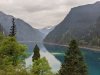
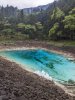
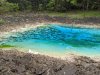
I really liked Jiuzhaigou, most of the time. It is expensive (roughly NZ$70 per day for entry), and is extremely popular and busy but you can (sort of) avoid the crowds to some degree when you're in there. It would be best to not go on a weekend but that can't necessarily be helped when travelling - you get the days you get. The scenery is incredible, which is the only reason most people are there. There are lots of birds, especially if you have a thing for leaf warblers.
The only thing that really irked me was the long boardwalk along the west valley being closed. I'm sure I would have seen Blue Eared Pheasants if that hadn't been the case, and I was hoping to see a Monal-Partridge as well because they look awesome (it really looks like a monal and a grouse had a baby together - https://ebird.org/species/verpar1/L1220556 ).
I honestly wouldn't mind going back to Jiuzhaigou if I were to be in Sichuan again.
My third and last day at Jiuzhaigou was a Monday. It was nowhere near as busy as Sunday, but probably on par with the Saturday. It was raining all day - not heavy rain but still proper rain rather than the drizzling of Saturday.
I started once again at the top of the east valley at Primeval Forest. It was much quieter up there people-wise than the weekend, although still with precious few birds. All day it seemed like I wasn't seeing anything in fact, but when I counted up the day's list it came out at 22 species, and I was completely ignoring warblers today as well so it still wasn't too bad a total.
It's kind of weird that on all three days I felt like I was seeing almost nothing but then when I counted them up it was 32 species on the first day, 25 on the next, and 22 on the third.
The pair of bullfinches were feeding in the same tree as the last two days, but no rosefinches were with them. However on the 6.8km boardwalk between Swan Lake and Arrow Bamboo Lake I saw a pair of Vinaceous Rosefinches in the forest, a species which I recognised instantly because they look exactly like the Taiwan Rosefinch (which was split from the Vinaceous Rosefinch).
Further down that boardwalk, where it passes a group of buildings labelled on the signs as the "Rize Service Office", I then came across a party of what I initially thought were Pink-rumped Rosefinches feeding in the grass outside the buildings (but which turned out upon further inspection to be more Himalayan Beautiful Rosefinches, which also have pink rumps).
Conveniently, there is an underpass under the road here, leading between the walkway and the offices, which gave me a dry place to stop and eat lunch out of the rain. While doing so I saw a pair of Tibetan Serins feeding in the conifers nearby.
From Arrow Bamboo Lake I walked a part of the way down past the other lakes but it wasn't much fun in the rain so I caught a shuttle to Rhinoceros Lake and walked down that road instead. A Brown-breasted Flycatcher was new for the trip list.
Rosy Pipit. This one was photographed at Arrow Bamboo Lake.
At the end of the day, the sun came out right when the bus I was on got back to the entrance and the sky magically turned blue.
I really liked Jiuzhaigou, most of the time. It is expensive (roughly NZ$70 per day for entry), and is extremely popular and busy but you can (sort of) avoid the crowds to some degree when you're in there. It would be best to not go on a weekend but that can't necessarily be helped when travelling - you get the days you get. The scenery is incredible, which is the only reason most people are there. There are lots of birds, especially if you have a thing for leaf warblers.
The only thing that really irked me was the long boardwalk along the west valley being closed. I'm sure I would have seen Blue Eared Pheasants if that hadn't been the case, and I was hoping to see a Monal-Partridge as well because they look awesome (it really looks like a monal and a grouse had a baby together - https://ebird.org/species/verpar1/L1220556 ).
I honestly wouldn't mind going back to Jiuzhaigou if I were to be in Sichuan again.
Labahe - getting there
On my 2013 trip to China I had visited the Labahe Nature Reserve to look for Red Pandas. Labahe is possibly the best place in the world to see Red Pandas but there is a very narrow window of about one month in winter when they are "easy" (late October to mid November, when a certain tree has lost its leaves but is in fruit, so the pandas are in those trees feeding on the berries). The pandas are still in the forest the rest of the year of course, but are much less easy to find because they aren't feeding in exposed places.
You can read about my 2013 visit to Labahe here if you wish: Chlidonias Goes To Asia, part three: 2013-2014
I hadn't been planning on returning to Labahe on this trip, partly because it was outside the Red Panda season, but mainly because it wasn't straightforward to get there without a car and I had been planning to use my time for going to Balang Shan to look for pheasants. However, Balang Shan was out now - I had found a thing online about the state of Sichuan birding sites for 2025 and it said that the particular place at Balang Shan where the pheasants were seen was now off limits. Since 2013 (when I went to Balang Shan as well) they have built a great long tunnel along the road up there, and the "old road" was then deserted and really good for walking along for birding purposes. But there was some sort of fatal accident and the authorities had posted guards to stop any access.
The main pheasant I wanted to see at Balang Shan was the Chinese Monal, and the document said that at Labahe they have finished their cable-car to the top of the mountain and that Chinese Monals could be seen from the boardwalk up there. So Labahe went into my itinerary in place of Balang Shan.
There were a couple of other animals of particular interest to me at Labahe as well. First was the Lady Amherst's Pheasant. Most birders who go to Labahe see these everywhere. I didn't see any in 2013. Most birders who go to Dali also see these everywhere. I didn't see any there either.
The second animal was the Golden Snub-nosed Monkey, which of course I have had no joy with but an awful lot of frustration. The website for Labahe says that they can be seen here, and apparently "often" near the lower cable-car station. Fingers crossed then!
To get to Labahe I had to go by bus from Jiuzhaigou to Huanglongjiuzhai (where the train station is), then by train to Chengdu, then on another train to Ya'an, then by bus to Tianquan, and then finally from there to Labahe by whatever means of transport was the current method.
I hadn't booked the Chengdu to Ya'an train in advance because I wasn't sure I'd even catch my first train when I left Jiuzhaigou. Before booking any trains I had checked with the girls at the hotel reception what time the earliest bus was from Jiuzhaigou to Huanglongjiuzhai and they said 6am, and that they could book it for me. So I went and checked the train schedules to Chengdu and booked one for 9.04am which had one seat left for about NZ$40. It's two hours from Jiuzhaigou to Huanglongjiuzhai station, so that was plenty of time.
After I had booked the train I went back for them to book the bus - except now they said it would pick me up at 7am. That was on the Sunday when I'd had an annoying day in Jiuzhaigou so I just went "yeah okay whatever". I'd see what happened on the day. The worst that would happen would be I'd miss the train and lose the $40 I'd spent on the ticket, but then just catch a later train (or bus if all the trains were full); maybe I'd have to stay overnight in the town and catch a train the next morning.
The girls said it was 50 Yuan for a bus or 70 Yuan for a small car - the difference is only about NZ$4 so I chose the car because it would be quicker - and then they said to pay them the next afternoon. When I came back from Jiuzhaigou that day I went to pay them and they hadn't even booked it yet. So they did that and now the time was back to 6am again.
I wasn't overly confident that a car would even be there in the morning but it arrived at 6am, and it took about 1.5 hours to the train station (about half an hour quicker than a bus).
Now that I knew I was definitely catching that first train I booked the next leg to Ya'an while I was sitting in the Huanglongjiuzhai station. I had been thinking that, in theory, I could get to Labahe in one day - about 1.5 hours by train from Huanglongjiuzhai to Chengdu, then 1.5 hours by train to Ya'an, then another 1.5 hours by bus to Tianquan, then however long to Labahe from there (probably another 1.5 hours given that every other distance covered was taking 1.5 hours).
I did get most of the way. The train to Chengdu was at 9.04am, getting into Chengdu at 10.45am, but the next train I could get to Ya'an wasn't until 1.12pm. I arrived in Ya'an at 2.40pm, crossed the road to the bus station where I got a bus at 3.30pm, and arrived in Tianquan at 5pm.
It was zero degrees in Huanglongjiuzhai, 32 degrees in Ya'an, and 25 degrees in Tianquan.
Everything online had told me that there was no bus to Labahe. At the bus station in Tianquan I nevertheless asked whether there was a bus, thinking the answer would be no, but I was immediately told there was a bus at 9am! There was a guy working there who spoke okay English, but I showed them the whole "Labahe National Nature Reserve" in Chinese so that there was no misunderstanding, and he said yes. Last time I went to Labahe (in 2013) the "bus to Labahe" was actually a bus to a neighbouring area and they handed me over en route to the car of a passing staff member. So I'd see tomorrow what the situation was currently.
The Tianquan bus station is on the other side of a lake to the town area where the hotels are. I had a look on Trip and just booked the closest hotel to the station, the Tianquan Lakeside Cloud Hotel which was 122 Yuan. Japan and Taiwan have ruined my budget-brain. Earlier in China if a hotel was even 100 Yuan that was too expensive, but after Japan suddenly 100 Yuan seems really cheap for a hotel.
Tianquan seems quite birdy. From my hotel window in the morning I could see a Black Bulbul (of the white-headed variety) and Oriental Greenfinches in the trees outside, and some Red-rumped Swallows over the lake. When I went out to get some breakfast I came across a Forest Wagtail in a tree by the lake.
It had been a hot walk from the bus station when I arrived the previous afternoon so even though it was only ten or fifteen minutes I was going to catch one of the little tuktuk-type taxis back in the morning so that I wouldn't arrive there all sweaty. When I got up, however, it was only 14 degrees so I just walked.
Getting to Labahe turned out to be quite straightforward in hindsight, although it did have some seemingly confusing parts in the moment.
I went to the ticket counter and showed the lady the Chinese name for Labahe, and she pointed to a business card for a bus (i.e. not a regular bus). I said I couldn't call the number because I don't speak Chinese, so she called and said to wait. After five minutes or so another lady arrived and through her phone translation app told me that she couldn't take me to Labahe today because her car was being repaired, but she could arrange a "transfer" to the ticket gate. Back in 2013 that was the case for buses anyway - they weren't really going to the reserve itself, but they could drop you at the junction for the entrance road (which is still something like 22km from the park's visitor centre and accommodation). It would cost 80 Yuan, she said. I'd been half-expecting to be taking a taxi today, which would probably be several hundred Yuan, so 80 was fine. I had completely forgotten that yesterday the English-speaker at the bus station had told me the bus was 35 Yuan.
The lady led me into the bus station to one of the waiting mini-buses. The English-speaker from yesterday came along, and said that because it was just me alone the price was 80 Yuan, but on the weekend it would be 35 Yuan because there are a lot of people going there then. That made sense. Then I said how the lady had told me that her car was broken and he kind of scoffed and said that was a lie, she just didn't want to bother taking only one person all that way. Fair enough - at least I was getting there!
The bus left at 9am and drove through the town picking up other passengers going to where-ever the end destination of this bus was. I had the feeling I was being ripped off (which isn't something that normally happens in China, unlike constantly in southeast Asia!), especially when I made sure I looked at what the guy next to me was paying when he put the amount into his WeChat to pay - 15 Yuan! However, at about 10.20am the bus pulled up at a junction and there was a car waiting to take me to Labahe. The lady had said it was a transfer, but I'd thought that was just a translation thing which didn't necessarily mean transfer. So, no rip-off after all. On the other hand, when I came back from Labahe I only paid 20 Yuan to get all the way back to Tianquan...

Here's a photo to break up the post - Asian House Martins collecting mud to build nests.
The road to Labahe follows a river (probably the La Ba River) for several kilometres to a big car-park and building where the entry tickets are purchased (just 50 Yuan). This was new since 2013 - back then there was just a guard post by the road because the reserve wasn't a big tourist site. Another change is that it is now called the Giant Panda National Park La Ba River Area. All the signs along the way from Tianquan say Giant Panda National Park. Or maybe it's the Erlang Mountain National Forest Area, which is on other signs at the park.
I had to spend quite some time here in phone-translated discussion with the staff. In 2013 there were chalets in the reserve next to the visitor centre (which is 15km further on from this entrance building), which were 200 Yuan at the time, and then there was an expensive hotel about a kilometre further on. One of the girls at the ticket entrance said that the rooms at the visitor centre were there but might be full, but the other girl said that there was only two hotels - the expensive one (the Luming Hotel) and another one 4.5km further up the road from the Luming (called Lanshuijing Hotel on Trip, but on the signs at the park called the Blue Crystal Hotel which may or may not be the same place). But in any case, I would need to have the accommodation booked before they would let me progress.
I said that I hadn't been able to find the hotels on Trip, but in fact the Luming Hotel was there, I had just missed it because I was looking at distances and it said that the hotel was 8.8 miles (14km) away from Labahe. So I booked it on the spot for the next four nights, even though it was Japanese prices (436 Yuan per night, which is over NZ$100 - that price is an averaged-out rate because I was staying on the Saturday as well; the weekday price was 419 Yuan, and the Saturday price 488 Yuan). I was just pleased I was actually getting into a reserve in China after the issues I'd encountered earlier in the year! The hotel is pretty nice, but really the room is just the same as most of the NZ$20 rooms I've had in China and is hugely overpriced.
The next day I enquired at the visitor centre inside the park about the chalets - just for interests' sake - and was told that they were being renovated, so there currently were only the two expensive hotels available. Interestingly I later found another one a couple of kilometres up the road, called the Baigelin Mountain Villa, which is individual cabins scattered across either side of the road, but it seemed to be entirely unoccupied with not a single light on when I went through the middle at about 9pm one night while spotlighting. This place turned out to be listed on Trip as well (with no English name), and might actually be the same place as the Lanshuijing Hotel and / or Blue Crystal Hotel because it is pinned at the same place on the Trip map, and in one of the reviews it said as much. It's pretty confusing. Anyway, whether there are one, two, or three additional hotels, the over-priced Luming Hotel is still the least expensive of them and it is the closest one by some distance to the entrance of the scenic area.
There were more visitors at Labahe than I expected but not really many in total. Today was Wednesday and I'd be here until Sunday, so it would be interesting to see what Saturday will be like.
With the logistics now out of the way, I'll continue in the next post with what I did and saw on this first day...
On my 2013 trip to China I had visited the Labahe Nature Reserve to look for Red Pandas. Labahe is possibly the best place in the world to see Red Pandas but there is a very narrow window of about one month in winter when they are "easy" (late October to mid November, when a certain tree has lost its leaves but is in fruit, so the pandas are in those trees feeding on the berries). The pandas are still in the forest the rest of the year of course, but are much less easy to find because they aren't feeding in exposed places.
You can read about my 2013 visit to Labahe here if you wish: Chlidonias Goes To Asia, part three: 2013-2014
I hadn't been planning on returning to Labahe on this trip, partly because it was outside the Red Panda season, but mainly because it wasn't straightforward to get there without a car and I had been planning to use my time for going to Balang Shan to look for pheasants. However, Balang Shan was out now - I had found a thing online about the state of Sichuan birding sites for 2025 and it said that the particular place at Balang Shan where the pheasants were seen was now off limits. Since 2013 (when I went to Balang Shan as well) they have built a great long tunnel along the road up there, and the "old road" was then deserted and really good for walking along for birding purposes. But there was some sort of fatal accident and the authorities had posted guards to stop any access.
The main pheasant I wanted to see at Balang Shan was the Chinese Monal, and the document said that at Labahe they have finished their cable-car to the top of the mountain and that Chinese Monals could be seen from the boardwalk up there. So Labahe went into my itinerary in place of Balang Shan.
There were a couple of other animals of particular interest to me at Labahe as well. First was the Lady Amherst's Pheasant. Most birders who go to Labahe see these everywhere. I didn't see any in 2013. Most birders who go to Dali also see these everywhere. I didn't see any there either.
The second animal was the Golden Snub-nosed Monkey, which of course I have had no joy with but an awful lot of frustration. The website for Labahe says that they can be seen here, and apparently "often" near the lower cable-car station. Fingers crossed then!
To get to Labahe I had to go by bus from Jiuzhaigou to Huanglongjiuzhai (where the train station is), then by train to Chengdu, then on another train to Ya'an, then by bus to Tianquan, and then finally from there to Labahe by whatever means of transport was the current method.
I hadn't booked the Chengdu to Ya'an train in advance because I wasn't sure I'd even catch my first train when I left Jiuzhaigou. Before booking any trains I had checked with the girls at the hotel reception what time the earliest bus was from Jiuzhaigou to Huanglongjiuzhai and they said 6am, and that they could book it for me. So I went and checked the train schedules to Chengdu and booked one for 9.04am which had one seat left for about NZ$40. It's two hours from Jiuzhaigou to Huanglongjiuzhai station, so that was plenty of time.
After I had booked the train I went back for them to book the bus - except now they said it would pick me up at 7am. That was on the Sunday when I'd had an annoying day in Jiuzhaigou so I just went "yeah okay whatever". I'd see what happened on the day. The worst that would happen would be I'd miss the train and lose the $40 I'd spent on the ticket, but then just catch a later train (or bus if all the trains were full); maybe I'd have to stay overnight in the town and catch a train the next morning.
The girls said it was 50 Yuan for a bus or 70 Yuan for a small car - the difference is only about NZ$4 so I chose the car because it would be quicker - and then they said to pay them the next afternoon. When I came back from Jiuzhaigou that day I went to pay them and they hadn't even booked it yet. So they did that and now the time was back to 6am again.
I wasn't overly confident that a car would even be there in the morning but it arrived at 6am, and it took about 1.5 hours to the train station (about half an hour quicker than a bus).
Now that I knew I was definitely catching that first train I booked the next leg to Ya'an while I was sitting in the Huanglongjiuzhai station. I had been thinking that, in theory, I could get to Labahe in one day - about 1.5 hours by train from Huanglongjiuzhai to Chengdu, then 1.5 hours by train to Ya'an, then another 1.5 hours by bus to Tianquan, then however long to Labahe from there (probably another 1.5 hours given that every other distance covered was taking 1.5 hours).
I did get most of the way. The train to Chengdu was at 9.04am, getting into Chengdu at 10.45am, but the next train I could get to Ya'an wasn't until 1.12pm. I arrived in Ya'an at 2.40pm, crossed the road to the bus station where I got a bus at 3.30pm, and arrived in Tianquan at 5pm.
It was zero degrees in Huanglongjiuzhai, 32 degrees in Ya'an, and 25 degrees in Tianquan.
Everything online had told me that there was no bus to Labahe. At the bus station in Tianquan I nevertheless asked whether there was a bus, thinking the answer would be no, but I was immediately told there was a bus at 9am! There was a guy working there who spoke okay English, but I showed them the whole "Labahe National Nature Reserve" in Chinese so that there was no misunderstanding, and he said yes. Last time I went to Labahe (in 2013) the "bus to Labahe" was actually a bus to a neighbouring area and they handed me over en route to the car of a passing staff member. So I'd see tomorrow what the situation was currently.
The Tianquan bus station is on the other side of a lake to the town area where the hotels are. I had a look on Trip and just booked the closest hotel to the station, the Tianquan Lakeside Cloud Hotel which was 122 Yuan. Japan and Taiwan have ruined my budget-brain. Earlier in China if a hotel was even 100 Yuan that was too expensive, but after Japan suddenly 100 Yuan seems really cheap for a hotel.
Tianquan seems quite birdy. From my hotel window in the morning I could see a Black Bulbul (of the white-headed variety) and Oriental Greenfinches in the trees outside, and some Red-rumped Swallows over the lake. When I went out to get some breakfast I came across a Forest Wagtail in a tree by the lake.
It had been a hot walk from the bus station when I arrived the previous afternoon so even though it was only ten or fifteen minutes I was going to catch one of the little tuktuk-type taxis back in the morning so that I wouldn't arrive there all sweaty. When I got up, however, it was only 14 degrees so I just walked.
Getting to Labahe turned out to be quite straightforward in hindsight, although it did have some seemingly confusing parts in the moment.
I went to the ticket counter and showed the lady the Chinese name for Labahe, and she pointed to a business card for a bus (i.e. not a regular bus). I said I couldn't call the number because I don't speak Chinese, so she called and said to wait. After five minutes or so another lady arrived and through her phone translation app told me that she couldn't take me to Labahe today because her car was being repaired, but she could arrange a "transfer" to the ticket gate. Back in 2013 that was the case for buses anyway - they weren't really going to the reserve itself, but they could drop you at the junction for the entrance road (which is still something like 22km from the park's visitor centre and accommodation). It would cost 80 Yuan, she said. I'd been half-expecting to be taking a taxi today, which would probably be several hundred Yuan, so 80 was fine. I had completely forgotten that yesterday the English-speaker at the bus station had told me the bus was 35 Yuan.
The lady led me into the bus station to one of the waiting mini-buses. The English-speaker from yesterday came along, and said that because it was just me alone the price was 80 Yuan, but on the weekend it would be 35 Yuan because there are a lot of people going there then. That made sense. Then I said how the lady had told me that her car was broken and he kind of scoffed and said that was a lie, she just didn't want to bother taking only one person all that way. Fair enough - at least I was getting there!
The bus left at 9am and drove through the town picking up other passengers going to where-ever the end destination of this bus was. I had the feeling I was being ripped off (which isn't something that normally happens in China, unlike constantly in southeast Asia!), especially when I made sure I looked at what the guy next to me was paying when he put the amount into his WeChat to pay - 15 Yuan! However, at about 10.20am the bus pulled up at a junction and there was a car waiting to take me to Labahe. The lady had said it was a transfer, but I'd thought that was just a translation thing which didn't necessarily mean transfer. So, no rip-off after all. On the other hand, when I came back from Labahe I only paid 20 Yuan to get all the way back to Tianquan...
Here's a photo to break up the post - Asian House Martins collecting mud to build nests.
The road to Labahe follows a river (probably the La Ba River) for several kilometres to a big car-park and building where the entry tickets are purchased (just 50 Yuan). This was new since 2013 - back then there was just a guard post by the road because the reserve wasn't a big tourist site. Another change is that it is now called the Giant Panda National Park La Ba River Area. All the signs along the way from Tianquan say Giant Panda National Park. Or maybe it's the Erlang Mountain National Forest Area, which is on other signs at the park.
I had to spend quite some time here in phone-translated discussion with the staff. In 2013 there were chalets in the reserve next to the visitor centre (which is 15km further on from this entrance building), which were 200 Yuan at the time, and then there was an expensive hotel about a kilometre further on. One of the girls at the ticket entrance said that the rooms at the visitor centre were there but might be full, but the other girl said that there was only two hotels - the expensive one (the Luming Hotel) and another one 4.5km further up the road from the Luming (called Lanshuijing Hotel on Trip, but on the signs at the park called the Blue Crystal Hotel which may or may not be the same place). But in any case, I would need to have the accommodation booked before they would let me progress.
I said that I hadn't been able to find the hotels on Trip, but in fact the Luming Hotel was there, I had just missed it because I was looking at distances and it said that the hotel was 8.8 miles (14km) away from Labahe. So I booked it on the spot for the next four nights, even though it was Japanese prices (436 Yuan per night, which is over NZ$100 - that price is an averaged-out rate because I was staying on the Saturday as well; the weekday price was 419 Yuan, and the Saturday price 488 Yuan). I was just pleased I was actually getting into a reserve in China after the issues I'd encountered earlier in the year! The hotel is pretty nice, but really the room is just the same as most of the NZ$20 rooms I've had in China and is hugely overpriced.
The next day I enquired at the visitor centre inside the park about the chalets - just for interests' sake - and was told that they were being renovated, so there currently were only the two expensive hotels available. Interestingly I later found another one a couple of kilometres up the road, called the Baigelin Mountain Villa, which is individual cabins scattered across either side of the road, but it seemed to be entirely unoccupied with not a single light on when I went through the middle at about 9pm one night while spotlighting. This place turned out to be listed on Trip as well (with no English name), and might actually be the same place as the Lanshuijing Hotel and / or Blue Crystal Hotel because it is pinned at the same place on the Trip map, and in one of the reviews it said as much. It's pretty confusing. Anyway, whether there are one, two, or three additional hotels, the over-priced Luming Hotel is still the least expensive of them and it is the closest one by some distance to the entrance of the scenic area.
There were more visitors at Labahe than I expected but not really many in total. Today was Wednesday and I'd be here until Sunday, so it would be interesting to see what Saturday will be like.
With the logistics now out of the way, I'll continue in the next post with what I did and saw on this first day...
My room in Tianquan at the Lakeside Cloud Hotel. The lake can be seen out the window. The bus station isn't visible from this angle, but it is to the left of the overpass thing visible on the other side of the lake.

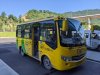
The bus from Tianquan heading in the direction of Labahe.

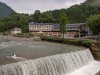
The Luming Hotel at Labahe.

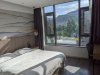
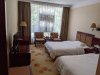
My room at the Luming Hotel.

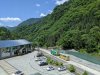
And the view out the window.

The bus from Tianquan heading in the direction of Labahe.
The Luming Hotel at Labahe.
My room at the Luming Hotel.
And the view out the window.
Attachments

Labahe: day one
Today was a half-day in the reserve after eventually arriving around noon, checking into the hotel and having lunch. The hotel's restaurant, incidentally, only has a menu accessed via a QR scan which I then cannot read because it's all in Chinese, and you pay through that as well; it's super aggravating. Not only that but they only had one option for food. I kept pointing at things and the lady would say no and point back at the one thing they had, which was shredded pork with green peppers. When you're paying over 400 Yuan for the hotel you'd think they'd have a better restaurant!
I walked along the riverside trail (new, I think, since 2013) to the visitor centre and caught the bus up to the cable-car. The visitor centre is at 1872 metres altitude, the lower cable-car station is at 2750 metres, and the upper cable-car station at 3500 metres.
The reserve itself is basically the same as in 2013 (apart for the existence of the cable-car), although it is much more touristified now. At the visitor centre you pay for the "sightseeing bus" up the mountain (35 Yuan return) and the cable-car (90 Yuan return), but it can only be paid for via a QR code which then requires a local phone number to be put into the details. The girl at the counter helped me get through it (it is all in Chinese) and used her own phone number because I don't have a Chinese one. Then you have to save the QR code it generates because you need that for the scanners to get on the bus and the cable-car. It's very Chinese. I don't think it would be possible to get any further than this point if you didn't have a phone (unless you just walked up the mountain I guess, because you've already paid to be here when you came in at the main entrance).
The road up the mountain is paved now, and there are mini-buses instead of jeeps to take people up.
There are also distance signs now at each shuttle stop. On my previous visit the distances had been estimated, with the start of the "Red Panda zone" (at the deer pen which was then present) being placed at about 8km. Now with the signs I can see it is 6km. The girl at the counter had been telling me the whole road from the visitor centre to the cable-car was 9.3km which I had thought must be wrong - I figured her phone was translating the word for miles incorrectly as kilometres, because 9.3 miles is about 15km which seemed more likely. However the signs have everything in kilometres, so it seems that is in fact the case.
Because I only had the second half of the day to work with and my "primary" reason for being here was Chinese Monal, today I would just be doing the cable-car and none of the lower parts of the reserve.
The cable-car takes about twenty minutes to the top, and is very noisy and juddery. Every so often it just stops and you're sitting there wondering if you're stuck. Then it very slowly starts creeping along the cable before speeding back up to normal.
I had read that there is now a boardwalk at the top of the mountain, which I imagined as a flat loop sort of trail. It is actually a metal-grid-walkway rather than a boardwalk, which goes up and up and up as stairs to 3800 metres (about 300 metres higher in altitude than the upper cable-car station, but stretched over a walking distance of several kilometres). It's not quiet either, it sounds like you're kicking K9 with steel-capped boots when you're walking along trying to find birds.
The slopes around the lower parts of the walkway are mainly covered in rhododendrons which are maybe six to ten feet high and which, looking down from the walkway, can form a visually-impenetrable layer above the ground. Higher up there are more open slopes, covered instead with grasses and low-growing herbs.
The main bird of interest up here is the Chinese Monal, which is a beautiful iridescent-feathered pheasant. It took me quite a long time to get to the top of the walkway because I kept stopping to scan the slopes for monals, which I did not see. A male Golden Bush-Robin sort of made up for it - you should Google a photo of that one, it is spectacular.
It was "brisk" at the very top of the walkway, with patches of ice here and there, and the surrounding mountains still with snow on them. I wondered what it would be like in mid-winter. I stayed up there about an hour. Rufous-breasted Accentors were foraging nearby and a Rosy Pipit passed by, but otherwise no birds were seen.
On a distant slope I saw something bright purple. That had to be a monal. I kept my binoculars on it so I wouldn't lose it, but it wasn't moving. There were lots of rhododendrons in flower up here but I'd only seen pink or white, no purple, and this thing was bright purple. It still wasn't moving though. I couldn't imagine what else it might be, but it never moved. In the end I had to take it that it was either rhododendron flowers or something man-made (there were lots of Tibetan flags and things up here). When I came back up the next morning the purple thing was still in the same place. I had also seen some purple-flowered rhododendrons, now that I was on the lookout for them, although they were much less common than the pink or white ones. I'm glad the purple thing was still there though - imagine if it had been gone! Then I'd have been thinking "damn, it definitely was a monal!"
On the way back down the walkway I saw a Spotted Bush Warbler (a famously-reclusive species described on eBird as "furtive and skulking") singing in full view on top of a bush, a Black-faced Laughing Thrush, and a Rufous-vented Tit.

Spotted Bush Warbler
I think the last cable-car going down is at 5pm because that's when I got there. There were three other guys coming down at the same time as me and one of the staff down at the station was yelling to them, which sounded like it probably meant "hurry up". There was a bus waiting at the lower station, which I think means the last bus down must be at 5.30pm. When we reached the visitor centre everything was shut up.
In 2013, halfway up the road where there is a circular trail called the Azalea Trail, there was an enclosure for Red Deer being kept for their antler velvet. Some time afterwards the pen was removed and apparently the deer were just released because a trip report from a couple of years later noted them roaming around. There is a rope obstacle course at this spot now, which seems really random and looks so incongruous! The released deer are still present though. On the way down from the cable-car the bus driver stopped and there were two Red Deer sitting in the grass beside the road. The other passengers all got out and started patting the deer. That's not going on my wild animal list for Labahe!

What is going on my list is a male Lady Amherst's Pheasant! This was one of the main birds I wanted to see here, and on the bus ride down one was crossing the road. It was on my side of the bus luckily, so I got a really good look at it as it strolled into the undergrowth beside the road. It turned out to be the only one I saw while here.
After dark I went out spotlighting. Sambar were seen easily because there is a salt-lick behind the restaurant which they visit every night, and there are viewing windows inside. I just looked over at them from the road, and then headed over the bridge to the walking trail along the river where I found a Masked Palm Civet.
Today was a half-day in the reserve after eventually arriving around noon, checking into the hotel and having lunch. The hotel's restaurant, incidentally, only has a menu accessed via a QR scan which I then cannot read because it's all in Chinese, and you pay through that as well; it's super aggravating. Not only that but they only had one option for food. I kept pointing at things and the lady would say no and point back at the one thing they had, which was shredded pork with green peppers. When you're paying over 400 Yuan for the hotel you'd think they'd have a better restaurant!
I walked along the riverside trail (new, I think, since 2013) to the visitor centre and caught the bus up to the cable-car. The visitor centre is at 1872 metres altitude, the lower cable-car station is at 2750 metres, and the upper cable-car station at 3500 metres.
The reserve itself is basically the same as in 2013 (apart for the existence of the cable-car), although it is much more touristified now. At the visitor centre you pay for the "sightseeing bus" up the mountain (35 Yuan return) and the cable-car (90 Yuan return), but it can only be paid for via a QR code which then requires a local phone number to be put into the details. The girl at the counter helped me get through it (it is all in Chinese) and used her own phone number because I don't have a Chinese one. Then you have to save the QR code it generates because you need that for the scanners to get on the bus and the cable-car. It's very Chinese. I don't think it would be possible to get any further than this point if you didn't have a phone (unless you just walked up the mountain I guess, because you've already paid to be here when you came in at the main entrance).
The road up the mountain is paved now, and there are mini-buses instead of jeeps to take people up.
There are also distance signs now at each shuttle stop. On my previous visit the distances had been estimated, with the start of the "Red Panda zone" (at the deer pen which was then present) being placed at about 8km. Now with the signs I can see it is 6km. The girl at the counter had been telling me the whole road from the visitor centre to the cable-car was 9.3km which I had thought must be wrong - I figured her phone was translating the word for miles incorrectly as kilometres, because 9.3 miles is about 15km which seemed more likely. However the signs have everything in kilometres, so it seems that is in fact the case.
Because I only had the second half of the day to work with and my "primary" reason for being here was Chinese Monal, today I would just be doing the cable-car and none of the lower parts of the reserve.
The cable-car takes about twenty minutes to the top, and is very noisy and juddery. Every so often it just stops and you're sitting there wondering if you're stuck. Then it very slowly starts creeping along the cable before speeding back up to normal.
I had read that there is now a boardwalk at the top of the mountain, which I imagined as a flat loop sort of trail. It is actually a metal-grid-walkway rather than a boardwalk, which goes up and up and up as stairs to 3800 metres (about 300 metres higher in altitude than the upper cable-car station, but stretched over a walking distance of several kilometres). It's not quiet either, it sounds like you're kicking K9 with steel-capped boots when you're walking along trying to find birds.
The slopes around the lower parts of the walkway are mainly covered in rhododendrons which are maybe six to ten feet high and which, looking down from the walkway, can form a visually-impenetrable layer above the ground. Higher up there are more open slopes, covered instead with grasses and low-growing herbs.
The main bird of interest up here is the Chinese Monal, which is a beautiful iridescent-feathered pheasant. It took me quite a long time to get to the top of the walkway because I kept stopping to scan the slopes for monals, which I did not see. A male Golden Bush-Robin sort of made up for it - you should Google a photo of that one, it is spectacular.
It was "brisk" at the very top of the walkway, with patches of ice here and there, and the surrounding mountains still with snow on them. I wondered what it would be like in mid-winter. I stayed up there about an hour. Rufous-breasted Accentors were foraging nearby and a Rosy Pipit passed by, but otherwise no birds were seen.
On a distant slope I saw something bright purple. That had to be a monal. I kept my binoculars on it so I wouldn't lose it, but it wasn't moving. There were lots of rhododendrons in flower up here but I'd only seen pink or white, no purple, and this thing was bright purple. It still wasn't moving though. I couldn't imagine what else it might be, but it never moved. In the end I had to take it that it was either rhododendron flowers or something man-made (there were lots of Tibetan flags and things up here). When I came back up the next morning the purple thing was still in the same place. I had also seen some purple-flowered rhododendrons, now that I was on the lookout for them, although they were much less common than the pink or white ones. I'm glad the purple thing was still there though - imagine if it had been gone! Then I'd have been thinking "damn, it definitely was a monal!"
On the way back down the walkway I saw a Spotted Bush Warbler (a famously-reclusive species described on eBird as "furtive and skulking") singing in full view on top of a bush, a Black-faced Laughing Thrush, and a Rufous-vented Tit.
Spotted Bush Warbler
I think the last cable-car going down is at 5pm because that's when I got there. There were three other guys coming down at the same time as me and one of the staff down at the station was yelling to them, which sounded like it probably meant "hurry up". There was a bus waiting at the lower station, which I think means the last bus down must be at 5.30pm. When we reached the visitor centre everything was shut up.
In 2013, halfway up the road where there is a circular trail called the Azalea Trail, there was an enclosure for Red Deer being kept for their antler velvet. Some time afterwards the pen was removed and apparently the deer were just released because a trip report from a couple of years later noted them roaming around. There is a rope obstacle course at this spot now, which seems really random and looks so incongruous! The released deer are still present though. On the way down from the cable-car the bus driver stopped and there were two Red Deer sitting in the grass beside the road. The other passengers all got out and started patting the deer. That's not going on my wild animal list for Labahe!
What is going on my list is a male Lady Amherst's Pheasant! This was one of the main birds I wanted to see here, and on the bus ride down one was crossing the road. It was on my side of the bus luckily, so I got a really good look at it as it strolled into the undergrowth beside the road. It turned out to be the only one I saw while here.
After dark I went out spotlighting. Sambar were seen easily because there is a salt-lick behind the restaurant which they visit every night, and there are viewing windows inside. I just looked over at them from the road, and then headed over the bridge to the walking trail along the river where I found a Masked Palm Civet.


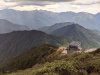
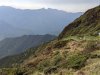


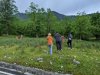
Labahe: day two
I was going to spend today along the road in the forest in the hope for snub-nosed monkeys and leave the cable-car for the next day (to try again for the monal) but it was a clear day and I didn't know what tomorrow would bring, so I switched to the cable-car. If it was raining tomorrow it would be more tolerable being in the forest in the rain than on an open mountain top at 3800 metres.
Breakfast is included in the hotel price, which at least saved me some money, especially because I took food from the buffet for my lunch as well, surreptitiously filling some plastic bags with boiled eggs, biscuits and roasted peanuts. The breakfast starts at 7.30am which is okay because the reserve opens at 8.30am. There's no coffee though. Also no tea either, which was a bit weird in China, just urns of hot water and hot milk.
There are a couple of stalls selling food by the visitor centre but otherwise food options are extremely limited at Labahe.
Before breakfast I went for a walk up the river a little way. I saw a Perny's Long-nosed Squirrel on the riverside walkway and got some poor photos (one attached below). I had seen one the previous afternoon as well, on a different part of the walkway, and got a photo of its tail as it scampered away. I think they must be quite reliable to see here, but only at the start and end of the day when there are no tourists around.

I saw a couple of Speckled Wood Pigeons along the river as well, which were a lifer. These must be common here - they seem to be in every trip report I've read - but for some reason I didn't see any when I was here in 2013. But I didn't see any Lady Amherst's Pheasants then either.
With still a little time before the breakfast started I had a short climb up some stairs on a hill just past the hotel where there were a few birds amongst the trees including Emei Leaf Warblers, another lifer and one of the few warblers I'd not seen while at Jiuzhaigou.
I saw a few lifer birds on this visit to Labahe with several of them, like the Golden Bush-Robin and Spotted Bush Warbler of the previous day, being seen up on the high mountain for which there was no access in 2013.
Back in 2013 I had written about how the staff feed the Tibetan Macaques here, which is just asking for trouble - now there are macaques everywhere and they are aggressive. On the entry road, at any place where there are pull-overs at scenic spots there were macaques loafing around waiting for food. They were therefore the first animal I had seen at Labahe. At the hotel and all along the river walkway to the visitor centre, there are macaques. Tibetan Macaques aren't petite either, they are like angry little bears. However they are only around during the main visitor hours - in the morning and when I'd come back from the reserve after 6pm there are none to be seen, and the ones I'd see in the forest would run away.

Tibetan Macaque, probably contemplating whether to attack or, well, to attack I guess.
Although the first bus up the mountain was supposed to be at 8.30am I think that must be a bit fluid depending on how many visitors are here. When I got there at 8.20am there were already a bunch of people from the hotel on the bus, and when I got on it left. Same with the cable-car - I think 9am is the "official" start but it probably just depends on when the first bus arrives.
A Sambar was seen on the bus ride up to the cable-car - I initially thought it was one of the Red Deer from yesterday until I saw it properly.
Once at the upper cable-car station I went straight up the metal staircase to try and always be ahead of anyone else. The people who had been in my carriage, literally as soon as they got out onto the platform, started screaming and yelling at the mountain. I never understand why people can't just appreciate nature and silence - they have to scream at it.
I got to the top in about forty minutes, stopping just a few times for a Himalayan Griffon Vulture soaring overhead, some redstarts and warblers, and I spent a bit of time making sure I got a good look at a Grey-sided Bush Warbler as it hopped back and forth under the rhododendrons because that was a lifer.
I had brought my coat today, even though that meant I'd have to be carrying it around for the rest of the day, because yesterday had been pretty chilly standing around at the top and a bit drizzly at times. It was quite hot on the way up as it happened, but I was glad I had it later when the wind picked up.
The people from my cable-car carriage must have given up part-way because the next people to the top didn't arrive until over an hour after I did. I had seen a few birds - Rosy Pipits mainly - but no Chinese Monals and eventually I headed back down.
On eBird the monals are only reported here in June and July (which is now). I'm not sure if that's because they only occur here in those months or just that not many birders come up here. The Labahe website says they can be seen in all seasons. When I was there the last one had been in 2024, but looking at eBird now while I'm writing this, one was seen a week after I was there: "Very nice male on a rock under cable car".
I walked back down the road from the lower cable-car station. A couple of bends down there is a Red Panda sign. I stopped to take a photo of it, turned around and went "Oh, there's a Red Panda!" Just at the next bend was a big pine tree and the Red Panda was stretched out along a horizontal branch. It was a fluke I saw it, because from any other angle it was practically invisible. I took a photo, knowing it wouldn't show much, but in every other position I tried the most I could see were bits of fur or tail.

When I was here in 2013 it was winter and the trees were leafless, so the pandas were easy to see in the branches as they fed on berries. Now all the trees are green. The pandas are still in the trees I expect, just not visible. At least it proves that you can still see Red Pandas here at any time of year, just not as easily or as well as in the prime season. Funnily enough, I recognised all the spots where I saw pandas in 2013, and checked those trees just in case, but the one in the pine tree remained the only one I saw today (or on any of the days I was here, as it turned out).
Further down I took the side-road (still just a gravel road, unlike the main road) which in 2013 led to a boardwalk through some nice bamboo-filled forest. This road is quite steep, and passes by a zipline station which wasn't here in 2013. I didn't know if the boardwalk would still be there but it was, technically at least. It has been replaced with a metal walkway, although unlike the alpine one higher up this one is relatively quiet to walk on except for a few places which had mesh grating over the metal sheets. I really liked this walkway. It goes for 3km, upwards at first but then downhill for most of its length, and there are signs about the local animal species all along the way so that you can get your hopes up about seeing a Golden Cat or a pack of Dholes.
Soon I reached a view of a grassy slope crisscrossed with animal trails which I presumed were made by Takin. This seemed like a good spot to wait and see what turned up. I started scanning the slope, following the trail routes with my binoculars to see if there was anything there which I couldn't see with the naked eye. And there was! Not a Takin, but a Chinese Goral, standing almost inside the forest at the end of one trail. I took a bunch of photos, although it was quite a long way, and then while I was looking down for a second at my camera, the Goral vanished.
I stayed where I was to see what else might turn up, and after a while the Goral reappeared, walking out further onto the slope and then stopping. He was actually very difficult to see unless you knew he was there, even though he was in plain view. A couple of other people came along, and because they were quiet folk I pointed out the Goral and let them use my binoculars to have a look.

Chinese Goral
As I was walking slowly along the walkway - discovering that there were good views of the opposite slope all along there - the people I'd just seen started calling out to me from further ahead. There was a watch-tower there, set up above a natural salt-lick in the river bed which attracts Takin - and there was a herd of eight of them there right now! A bit later two more came down the hill as well.

Takin are preposterous-looking beasts. It's like a bear and a buffalo got together and made some babies against the wishes of their parents. Especially from above (looking across at them from the tower) they look very bear-like as they walk up the hillsides.


This had been a five-mammal day so far. I hadn't seen any Tibetan Macaques in the morning but walking back down the road I saw some in the forest on the other side of the river, making six mammals.
In the evening I went out spotlighting again. Just along the road from the hotel are some cliffs rising above the river, and I had remembered that flying squirrels had been reported from here. Sure enough it wasn't long before I was looking at a Red & White Giant Flying Squirrel. I hadn't brought my camera because I knew the cliffs were on the other side of the river. It's not a wide river but the trees on the cliffs still aren't close enough for photos at night. The squirrel didn't mind the light at all, so I got to watch him through my binoculars until I left to try further along the road. I found three squirrels in total: the first one in a tree, another one on the cliff face, and a third very high up so I couldn't tell which species it was. There are Complex-toothed Flying Squirrels on these cliffs as well, but they are smaller than the Giants so I don't think it was one of those.
After that I walked along the riverside walkway down to the visitor centre, finding another Masked Palm Civet on the way which made this an eight-mammal day. That's probably noteworthy in China.
I was going to spend today along the road in the forest in the hope for snub-nosed monkeys and leave the cable-car for the next day (to try again for the monal) but it was a clear day and I didn't know what tomorrow would bring, so I switched to the cable-car. If it was raining tomorrow it would be more tolerable being in the forest in the rain than on an open mountain top at 3800 metres.
Breakfast is included in the hotel price, which at least saved me some money, especially because I took food from the buffet for my lunch as well, surreptitiously filling some plastic bags with boiled eggs, biscuits and roasted peanuts. The breakfast starts at 7.30am which is okay because the reserve opens at 8.30am. There's no coffee though. Also no tea either, which was a bit weird in China, just urns of hot water and hot milk.
There are a couple of stalls selling food by the visitor centre but otherwise food options are extremely limited at Labahe.
Before breakfast I went for a walk up the river a little way. I saw a Perny's Long-nosed Squirrel on the riverside walkway and got some poor photos (one attached below). I had seen one the previous afternoon as well, on a different part of the walkway, and got a photo of its tail as it scampered away. I think they must be quite reliable to see here, but only at the start and end of the day when there are no tourists around.
I saw a couple of Speckled Wood Pigeons along the river as well, which were a lifer. These must be common here - they seem to be in every trip report I've read - but for some reason I didn't see any when I was here in 2013. But I didn't see any Lady Amherst's Pheasants then either.
With still a little time before the breakfast started I had a short climb up some stairs on a hill just past the hotel where there were a few birds amongst the trees including Emei Leaf Warblers, another lifer and one of the few warblers I'd not seen while at Jiuzhaigou.
I saw a few lifer birds on this visit to Labahe with several of them, like the Golden Bush-Robin and Spotted Bush Warbler of the previous day, being seen up on the high mountain for which there was no access in 2013.
Back in 2013 I had written about how the staff feed the Tibetan Macaques here, which is just asking for trouble - now there are macaques everywhere and they are aggressive. On the entry road, at any place where there are pull-overs at scenic spots there were macaques loafing around waiting for food. They were therefore the first animal I had seen at Labahe. At the hotel and all along the river walkway to the visitor centre, there are macaques. Tibetan Macaques aren't petite either, they are like angry little bears. However they are only around during the main visitor hours - in the morning and when I'd come back from the reserve after 6pm there are none to be seen, and the ones I'd see in the forest would run away.
Tibetan Macaque, probably contemplating whether to attack or, well, to attack I guess.
Although the first bus up the mountain was supposed to be at 8.30am I think that must be a bit fluid depending on how many visitors are here. When I got there at 8.20am there were already a bunch of people from the hotel on the bus, and when I got on it left. Same with the cable-car - I think 9am is the "official" start but it probably just depends on when the first bus arrives.
A Sambar was seen on the bus ride up to the cable-car - I initially thought it was one of the Red Deer from yesterday until I saw it properly.
Once at the upper cable-car station I went straight up the metal staircase to try and always be ahead of anyone else. The people who had been in my carriage, literally as soon as they got out onto the platform, started screaming and yelling at the mountain. I never understand why people can't just appreciate nature and silence - they have to scream at it.
I got to the top in about forty minutes, stopping just a few times for a Himalayan Griffon Vulture soaring overhead, some redstarts and warblers, and I spent a bit of time making sure I got a good look at a Grey-sided Bush Warbler as it hopped back and forth under the rhododendrons because that was a lifer.
I had brought my coat today, even though that meant I'd have to be carrying it around for the rest of the day, because yesterday had been pretty chilly standing around at the top and a bit drizzly at times. It was quite hot on the way up as it happened, but I was glad I had it later when the wind picked up.
The people from my cable-car carriage must have given up part-way because the next people to the top didn't arrive until over an hour after I did. I had seen a few birds - Rosy Pipits mainly - but no Chinese Monals and eventually I headed back down.
On eBird the monals are only reported here in June and July (which is now). I'm not sure if that's because they only occur here in those months or just that not many birders come up here. The Labahe website says they can be seen in all seasons. When I was there the last one had been in 2024, but looking at eBird now while I'm writing this, one was seen a week after I was there: "Very nice male on a rock under cable car".
I walked back down the road from the lower cable-car station. A couple of bends down there is a Red Panda sign. I stopped to take a photo of it, turned around and went "Oh, there's a Red Panda!" Just at the next bend was a big pine tree and the Red Panda was stretched out along a horizontal branch. It was a fluke I saw it, because from any other angle it was practically invisible. I took a photo, knowing it wouldn't show much, but in every other position I tried the most I could see were bits of fur or tail.
When I was here in 2013 it was winter and the trees were leafless, so the pandas were easy to see in the branches as they fed on berries. Now all the trees are green. The pandas are still in the trees I expect, just not visible. At least it proves that you can still see Red Pandas here at any time of year, just not as easily or as well as in the prime season. Funnily enough, I recognised all the spots where I saw pandas in 2013, and checked those trees just in case, but the one in the pine tree remained the only one I saw today (or on any of the days I was here, as it turned out).
Further down I took the side-road (still just a gravel road, unlike the main road) which in 2013 led to a boardwalk through some nice bamboo-filled forest. This road is quite steep, and passes by a zipline station which wasn't here in 2013. I didn't know if the boardwalk would still be there but it was, technically at least. It has been replaced with a metal walkway, although unlike the alpine one higher up this one is relatively quiet to walk on except for a few places which had mesh grating over the metal sheets. I really liked this walkway. It goes for 3km, upwards at first but then downhill for most of its length, and there are signs about the local animal species all along the way so that you can get your hopes up about seeing a Golden Cat or a pack of Dholes.
Soon I reached a view of a grassy slope crisscrossed with animal trails which I presumed were made by Takin. This seemed like a good spot to wait and see what turned up. I started scanning the slope, following the trail routes with my binoculars to see if there was anything there which I couldn't see with the naked eye. And there was! Not a Takin, but a Chinese Goral, standing almost inside the forest at the end of one trail. I took a bunch of photos, although it was quite a long way, and then while I was looking down for a second at my camera, the Goral vanished.
I stayed where I was to see what else might turn up, and after a while the Goral reappeared, walking out further onto the slope and then stopping. He was actually very difficult to see unless you knew he was there, even though he was in plain view. A couple of other people came along, and because they were quiet folk I pointed out the Goral and let them use my binoculars to have a look.
Chinese Goral
As I was walking slowly along the walkway - discovering that there were good views of the opposite slope all along there - the people I'd just seen started calling out to me from further ahead. There was a watch-tower there, set up above a natural salt-lick in the river bed which attracts Takin - and there was a herd of eight of them there right now! A bit later two more came down the hill as well.
Takin are preposterous-looking beasts. It's like a bear and a buffalo got together and made some babies against the wishes of their parents. Especially from above (looking across at them from the tower) they look very bear-like as they walk up the hillsides.
This had been a five-mammal day so far. I hadn't seen any Tibetan Macaques in the morning but walking back down the road I saw some in the forest on the other side of the river, making six mammals.
In the evening I went out spotlighting again. Just along the road from the hotel are some cliffs rising above the river, and I had remembered that flying squirrels had been reported from here. Sure enough it wasn't long before I was looking at a Red & White Giant Flying Squirrel. I hadn't brought my camera because I knew the cliffs were on the other side of the river. It's not a wide river but the trees on the cliffs still aren't close enough for photos at night. The squirrel didn't mind the light at all, so I got to watch him through my binoculars until I left to try further along the road. I found three squirrels in total: the first one in a tree, another one on the cliff face, and a third very high up so I couldn't tell which species it was. There are Complex-toothed Flying Squirrels on these cliffs as well, but they are smaller than the Giants so I don't think it was one of those.
After that I walked along the riverside walkway down to the visitor centre, finding another Masked Palm Civet on the way which made this an eight-mammal day. That's probably noteworthy in China.
The Red Panda sign.

Starting point of the boardwalk. Erm ... all those animals are fake.

The slope where I saw the Goral. The photo of the animal itself in the post above was taken from this point. The sign in the foreground is for Milne-Edwards' Macaque, presumably because the name Tibetan Macaques is problematic.

Starting point of the boardwalk. Erm ... all those animals are fake.
The slope where I saw the Goral. The photo of the animal itself in the post above was taken from this point. The sign in the foreground is for Milne-Edwards' Macaque, presumably because the name Tibetan Macaques is problematic.
Attachments

After that I walked along the riverside walkway down to the visitor centre, finding another Masked Palm Civet on the way which made this an eight-mammal day.
If I ever go to Asia wanting to see Masked Palm Civets I know who to call! They're following you!

It is a bit weird that I had never seen a wild one before (even though they are common), and then saw them multiple times in both Taiwan and China. And I saw them on two nights at Labahe on this visit (albeit probably the same animal), but not at all in 2013.If I ever go to Asia wanting to see Masked Palm Civets I know who to call! They're following you!
Just for the sake of interest, these are the civets I have seen wild:
Asian Common Palm Civet Paradoxurus hermaphroditus
Sunda Common Palm Civet Paradoxurus musangus
Asian Small-toothed Palm Civet Arctogalidia trivirgata
Bornean Small-toothed Palm Civet Arctogalidia stigmatica
Masked Palm Civet Paguma larvata
Large Indian Civet Viverra zibetha
Malay Civet Viverra tangalunga
Small Indian Civet Viverricula indica

Takin are preposterous-looking beasts. It's like a bear and a buffalo got together and made some babies against the wishes of their parents. Especially from above (looking across at them from the tower) they look very bear-like as they walk up the hillsides.
I've always thought that Sichuan Takin are the most interesting-looking of the four subspecies - unfortunately, of the three found in European collections it's also the one which is likely to die out due to an extremely limited genepool and reduction in breeding success.
Labahe: day three
I gave the cable-car a miss today, catching the bus to the top of the road and then walking down. I checked the Red Panda tree but he wasn't there any more. I didn't see any others while I was at Labahe, so it was just a one-panda visit.
I still wasn't finding any Golden Snub-nosed Monkeys either. I do wonder if winter would be a better time for these monkeys as well, because they would be lower down and (like the Red Pandas) probably easier to see with the bare trees. I really feel like I need to be coming back to Labahe next time I'm in China!
It was really quiet for birds along the road. Southern Nutcrackers were seen (and I even photographed one), Eurasian Jays, Elliot's Laughing Thrushes, Grey-headed Bullfinches - generally, the common sort of birds you get in Sichuan mountains.

Southern Nutcracker
I passed a bird tour group who were also walking down the road, but had stopped to try and see a Himalayan Shortwing which had been calling from the undergrowth.
Where the deer pen used to be is now a rope obstacle course, with some wooden buildings on the other side of the road (a ticket office for the rope course, and toilets). The course seemed little-used and I don't know if it was still being charged for on weekends. Certainly on the weekdays (like today) it was unmanned.
A hundred metres down the road is the start of a circular trail called the Azalea Trail which comes out back at the rope course, and 300m up the road from the rope course is the gravel road which leads to the metal walkway I did yesterday.
I did the Azalea Trail which is clearly a trail very few people use, the stone steps being thick with moss. It had quite a lot of birds along it, notably a Necklaced Woodpecker, but also Blue-winged Minlas, a Red-billed Blue Magpie, a Ferruginous Flycatcher, Emei and Claudia's Leaf Warblers, and a Rufous-gorgeted Flycatcher.

Necklaced Woodpecker
There was another bird here too, which was at first a mystery to me. It was flycatcher-size and all brown apart for a prominent rufous cap. It should have been easy to identify from that alone, but I couldn't find anything like it in the field guide or online. I posted the photos on Birdforum, and found out it was a female Himalayan Shortwing.

Female Himalayan Shortwing
Then I headed back to the walkway I did yesterday. At the start of the gravel road I came across the bird tour group having a break. They said they hadn't had much luck with birds today, and asked if I had seen any Red Pandas. After I'd left them, just up the gravel road I found a mixed flock of Sooty and Black-browed Tits, amongst which was a Fire-capped Tit - the only lifer for today - which was not at all as colourful as its name might suggest. A male Himalayan Shortwing was spied next, and further along a flock of Grey-hooded Fulvettas and Pekin Robins darting through the bamboo.

Grey-hooded Fulvetta
At the watch-tower today there were 25 Takin! Several of them were calves, all chocolate-brown and fuzzy-furred. They reminded me of Mountain Tapirs. I've never seen a Mountain Tapir in real life, but I imagine they look like Takin calves.


Surprisingly, in light of yesterday being an eight-mammal day, these Takin were the first mammals seen today. I thought it might end up being just a one-mammal day, but walking back down the road I saw some Tibetan Macaques.

There was a family walking down the road ahead of me, and when they saw the macaques they instantly starting tossing food to them. So of course the macaques started following them down the road, to their consternation. At the next shuttle stop there was a big male macaque and, having learned nothing, they threw him some chocolate. Then they stood by the side of the road waiting for the next bus. The male macaque strutted over and sat down a few metres from them, staring. Unbelievably these people, obviously not being the sharpest tools in the shed, then took out a plastic bag of their food. Instantly the male macaque charged them and they screamed and threw the bag across the road, whereupon the macaque strolled over to it and started picking through his prize.
When the bus arrived, the people on board saw the macaques, and started throwing food out the windows to them. All I could think was "You eeediot Stimpy".

You don't want to get on the wrong side of a Tibetan Macaque!
It doesn't get dark until after 8.30pm currently, so I had dinner about 6pm in the hotel's restaurant (getting one of the staff to help me navigate their QR menu) then went for a walk up the river.
In that direction the riverside walkway goes through a nice park sort of area which looked like it would be good for spotlighting. I walked up two or three kilometres, then waited for dark near a roadside cliff-face with some small caves in it which I thought (based on nothing) might be home to Complex-toothed Flying Squirrels but which was fruitless. Coming back I saw a Reeves' Muntjac (the first one for this visit to Labahe, although I saw one here in 2013 as well).
Better was a Chinese Goral on the opposite bank of the river which I saw very well, especially compared to the more distant one the day before, but could not photograph in the dark.
At the "squirrel cliffs" I saw one Red & White Giant Flying Squirrel - in the same tree as last night - but still no Complex-toothed ones. Back at the hotel I popped back into the restaurant to see the Sambar through their viewing windows, making six mammals for the day. Seven if I counted the Red Deer which was grazing between the cabins at the Baigelin Mountain Villa, which I don't.

The Red Deer by the Baigelin Mountain Villa
There were fifty cars in the hotel's parking lot this Friday night, so definitely busier than the night I'd arrived.
I gave the cable-car a miss today, catching the bus to the top of the road and then walking down. I checked the Red Panda tree but he wasn't there any more. I didn't see any others while I was at Labahe, so it was just a one-panda visit.
I still wasn't finding any Golden Snub-nosed Monkeys either. I do wonder if winter would be a better time for these monkeys as well, because they would be lower down and (like the Red Pandas) probably easier to see with the bare trees. I really feel like I need to be coming back to Labahe next time I'm in China!
It was really quiet for birds along the road. Southern Nutcrackers were seen (and I even photographed one), Eurasian Jays, Elliot's Laughing Thrushes, Grey-headed Bullfinches - generally, the common sort of birds you get in Sichuan mountains.
Southern Nutcracker
I passed a bird tour group who were also walking down the road, but had stopped to try and see a Himalayan Shortwing which had been calling from the undergrowth.
Where the deer pen used to be is now a rope obstacle course, with some wooden buildings on the other side of the road (a ticket office for the rope course, and toilets). The course seemed little-used and I don't know if it was still being charged for on weekends. Certainly on the weekdays (like today) it was unmanned.
A hundred metres down the road is the start of a circular trail called the Azalea Trail which comes out back at the rope course, and 300m up the road from the rope course is the gravel road which leads to the metal walkway I did yesterday.
I did the Azalea Trail which is clearly a trail very few people use, the stone steps being thick with moss. It had quite a lot of birds along it, notably a Necklaced Woodpecker, but also Blue-winged Minlas, a Red-billed Blue Magpie, a Ferruginous Flycatcher, Emei and Claudia's Leaf Warblers, and a Rufous-gorgeted Flycatcher.
Necklaced Woodpecker
There was another bird here too, which was at first a mystery to me. It was flycatcher-size and all brown apart for a prominent rufous cap. It should have been easy to identify from that alone, but I couldn't find anything like it in the field guide or online. I posted the photos on Birdforum, and found out it was a female Himalayan Shortwing.
Female Himalayan Shortwing
Then I headed back to the walkway I did yesterday. At the start of the gravel road I came across the bird tour group having a break. They said they hadn't had much luck with birds today, and asked if I had seen any Red Pandas. After I'd left them, just up the gravel road I found a mixed flock of Sooty and Black-browed Tits, amongst which was a Fire-capped Tit - the only lifer for today - which was not at all as colourful as its name might suggest. A male Himalayan Shortwing was spied next, and further along a flock of Grey-hooded Fulvettas and Pekin Robins darting through the bamboo.
Grey-hooded Fulvetta
At the watch-tower today there were 25 Takin! Several of them were calves, all chocolate-brown and fuzzy-furred. They reminded me of Mountain Tapirs. I've never seen a Mountain Tapir in real life, but I imagine they look like Takin calves.
Surprisingly, in light of yesterday being an eight-mammal day, these Takin were the first mammals seen today. I thought it might end up being just a one-mammal day, but walking back down the road I saw some Tibetan Macaques.
There was a family walking down the road ahead of me, and when they saw the macaques they instantly starting tossing food to them. So of course the macaques started following them down the road, to their consternation. At the next shuttle stop there was a big male macaque and, having learned nothing, they threw him some chocolate. Then they stood by the side of the road waiting for the next bus. The male macaque strutted over and sat down a few metres from them, staring. Unbelievably these people, obviously not being the sharpest tools in the shed, then took out a plastic bag of their food. Instantly the male macaque charged them and they screamed and threw the bag across the road, whereupon the macaque strolled over to it and started picking through his prize.
When the bus arrived, the people on board saw the macaques, and started throwing food out the windows to them. All I could think was "You eeediot Stimpy".
You don't want to get on the wrong side of a Tibetan Macaque!
It doesn't get dark until after 8.30pm currently, so I had dinner about 6pm in the hotel's restaurant (getting one of the staff to help me navigate their QR menu) then went for a walk up the river.
In that direction the riverside walkway goes through a nice park sort of area which looked like it would be good for spotlighting. I walked up two or three kilometres, then waited for dark near a roadside cliff-face with some small caves in it which I thought (based on nothing) might be home to Complex-toothed Flying Squirrels but which was fruitless. Coming back I saw a Reeves' Muntjac (the first one for this visit to Labahe, although I saw one here in 2013 as well).
Better was a Chinese Goral on the opposite bank of the river which I saw very well, especially compared to the more distant one the day before, but could not photograph in the dark.
At the "squirrel cliffs" I saw one Red & White Giant Flying Squirrel - in the same tree as last night - but still no Complex-toothed ones. Back at the hotel I popped back into the restaurant to see the Sambar through their viewing windows, making six mammals for the day. Seven if I counted the Red Deer which was grazing between the cabins at the Baigelin Mountain Villa, which I don't.
The Red Deer by the Baigelin Mountain Villa
There were fifty cars in the hotel's parking lot this Friday night, so definitely busier than the night I'd arrived.
Last edited: