
In 2009 I set off on a six month trip through Indonesia and Malaysian Borneo. You may have read the thread here Chlidonias goes to Asia, 2009. It was exciting and arduous and fun, and I had to do it again so here I go. This time I've only got a couple of months though, and I'm basically revisiting places to try and find some of the particularly devious wildlife that evaded my sights. So some of the blog entries that will follow may sound a little familiar to those who read the last ones, but hopefully there will be enough hardship and near-death experiences to keep everyone entertained amongst the boring animal bits.
First stop will be everyone's favourite oddly-shaped island, Sulawesi. Does it look like a mimic octopus, a diseased orchid, or a child's drawing of a plesiosaur? Or perhaps all of the above? My time in Sulawesi will not be long, I'm mainly going back there to try and spot a pigmy tarsier, the cutest little weirdo amongst the Earth's many cute little weirdos. The pigmy tarsier is tiny, nocturnal, lives in the tops of forest trees and has hardly been seen by anybody ever, so my chances of seeing it....well, they're not good! To give me a hope of seeing at least something exciting on Sulawesi I'm also hoping to take the opportunity to climb Mt. Lompobattang. I mentioned this briefly during the 2009 blogs: the Lompobattang Massif is the sole home of the cunningly-named Lompobattang flycatcher, once again a rarely-seen animal. In fact after its initial discovery in 1931 it wasn't seen again until 1995 and few birders have seen it since. Mainly because no-one can be bothered because its just so incredibly boring-looking. The reason I gave it a miss in 2009 was largely due to not having any information on how to easily access a good site on Mt. Lompobattang, but now I have that info and the ascent will begin any day now.
After Sulawesi I return to the lovely isles of the Lesser Sundas, namely Sumba where I had missed nearly all the sought-after birds, West Timor where I had only missed a few but it is a conveniently sited stepping-stone, and Flores where I missed the whole point of the trip, the giant rat and the Wallace's hanging parrot. The latter is a parrot that hangs upside-down and was named after a chap called Wallace; the former is a rat that is giant. I do like self-explanatory names. The giant rat is another one of those cute weirdos I mentioned, as much as a giant rat can be cute at least. Which is to say there are giant rats that are cute - the woolly rats of the Philippines for example - but the Flores giant rat really just looks like a huge sewer rat. Not that there's anything wrong with that! Few non-locals have seen a giant rat and there are almost no photographs of them. I found out a bunch of information on them on my last visit however, so at least now I have the upper hand.
Taman Negara in Malaysia was the unmitigated disaster of the 2009 trip. I got so sick I never even got into the forest, so this time I'm determined that I will see a tapir here. Dead or alive. (Me, not the tapir).
The flight home will be via Western Australia because why not. I've never been to WA and I am pretty excited about all the wonderful critters I stand to see, potentially including quokkas, numbats, woylies, noolbengers, boojums, snarks and quangle wangles. Wait, is that right...?
I'm leaving on the 11th of August but I figured I'd start the thread early in case anyone wants to post comments or ask questions, because once I'm underway internet accessibility will be fairly sketchy.
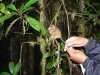
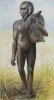
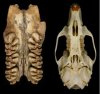
Anyway, here are some press-released photos from the internet because I haven't got any of my own yet. First, a pigmy tarsier (isn't it cute?!). Second, a Hobbit (Homo floresiensis) carrying a Flores giant rat -- not much help if you don't know how big the Hobbits were but never mind. The third photo has nothing really to do with the trip but its a tooth row from the biggest rat of all, known only from subfossil remains from East Timor, in comparison to the entire skull of a common black rat. The Timor giant rat weighed up to 6kg which is pretty hefty (the Flores giant rat probably weighs about 2kg but I don't know if anyone has actually published weight data on them before -- I must do that). The bones that have been found in East Timor were around 2000 years old, and as living rodents of unusual size have never been reported from Timor one must assume that they are now extinct (along with a whole suite of other giant rats from that island).
First stop will be everyone's favourite oddly-shaped island, Sulawesi. Does it look like a mimic octopus, a diseased orchid, or a child's drawing of a plesiosaur? Or perhaps all of the above? My time in Sulawesi will not be long, I'm mainly going back there to try and spot a pigmy tarsier, the cutest little weirdo amongst the Earth's many cute little weirdos. The pigmy tarsier is tiny, nocturnal, lives in the tops of forest trees and has hardly been seen by anybody ever, so my chances of seeing it....well, they're not good! To give me a hope of seeing at least something exciting on Sulawesi I'm also hoping to take the opportunity to climb Mt. Lompobattang. I mentioned this briefly during the 2009 blogs: the Lompobattang Massif is the sole home of the cunningly-named Lompobattang flycatcher, once again a rarely-seen animal. In fact after its initial discovery in 1931 it wasn't seen again until 1995 and few birders have seen it since. Mainly because no-one can be bothered because its just so incredibly boring-looking. The reason I gave it a miss in 2009 was largely due to not having any information on how to easily access a good site on Mt. Lompobattang, but now I have that info and the ascent will begin any day now.
After Sulawesi I return to the lovely isles of the Lesser Sundas, namely Sumba where I had missed nearly all the sought-after birds, West Timor where I had only missed a few but it is a conveniently sited stepping-stone, and Flores where I missed the whole point of the trip, the giant rat and the Wallace's hanging parrot. The latter is a parrot that hangs upside-down and was named after a chap called Wallace; the former is a rat that is giant. I do like self-explanatory names. The giant rat is another one of those cute weirdos I mentioned, as much as a giant rat can be cute at least. Which is to say there are giant rats that are cute - the woolly rats of the Philippines for example - but the Flores giant rat really just looks like a huge sewer rat. Not that there's anything wrong with that! Few non-locals have seen a giant rat and there are almost no photographs of them. I found out a bunch of information on them on my last visit however, so at least now I have the upper hand.
Taman Negara in Malaysia was the unmitigated disaster of the 2009 trip. I got so sick I never even got into the forest, so this time I'm determined that I will see a tapir here. Dead or alive. (Me, not the tapir).
The flight home will be via Western Australia because why not. I've never been to WA and I am pretty excited about all the wonderful critters I stand to see, potentially including quokkas, numbats, woylies, noolbengers, boojums, snarks and quangle wangles. Wait, is that right...?
I'm leaving on the 11th of August but I figured I'd start the thread early in case anyone wants to post comments or ask questions, because once I'm underway internet accessibility will be fairly sketchy.
Anyway, here are some press-released photos from the internet because I haven't got any of my own yet. First, a pigmy tarsier (isn't it cute?!). Second, a Hobbit (Homo floresiensis) carrying a Flores giant rat -- not much help if you don't know how big the Hobbits were but never mind. The third photo has nothing really to do with the trip but its a tooth row from the biggest rat of all, known only from subfossil remains from East Timor, in comparison to the entire skull of a common black rat. The Timor giant rat weighed up to 6kg which is pretty hefty (the Flores giant rat probably weighs about 2kg but I don't know if anyone has actually published weight data on them before -- I must do that). The bones that have been found in East Timor were around 2000 years old, and as living rodents of unusual size have never been reported from Timor one must assume that they are now extinct (along with a whole suite of other giant rats from that island).
Attachments
Last edited:


