Chli is in cattle country.
Which is for the best, really, considering where he’s from. Less…. distracting.
Chli is in cattle country.

And now I'm back, so the tale may continue...There will now be a brief recess from the travel posts in this thread. Tomorrow morning I have a 6am bus from Broome to Darwin, which will arrive there at around 8am the next day, and then the following day I fly out to Timor-Leste (East Timor) for a couple of weeks before returning to Darwin.
From what I've read I don't think I'll have much if any internet access in East Timor. I'll write the Broome posts while I'm there, and hopefully keep up to date with writing the East Timor posts as well so everything will be ready to go when I get back to Darwin. Fingers crossed.


And now I'm back, so the tale may continue...
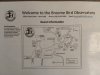
Broome Bird Observatory
The Broome Bird Observatory is the premiere shorebird site in Australia. It sits at the north end of Roebuck Bay which has ten metre tides, providing extensive and rich feeding areas for the migrating waders coming in from the Arctic for the Australian summer.
I’m not the biggest fan of waders, to be honest. I have seen quite a lot of species (of those I saw in the Broome area only the Little Curlew was a lifer) but that’s mostly from picking them up randomly here and there throughout Australasia and Asia, and I can actually tell them apart if I get proper views even if I may pretend it’s too difficult. But I’m not one of those birders who likes to take a scope out to a mudflat and spend hours looking at distant birds trying to tell which brown dot is which. However, they are still birds and I wasn’t going to be doing a trip around Australia where Broome was in reach and not visit.
I mean, there are other birds there as well – the Yellow Chat in prime place – and mammals like the Snubfin Dolphin. I’d just have to look at some waders at the same time I guess.
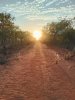
The Observatory isn’t far from Broome in a direct line, but there is a large expanse of mangroves in between, so by road it is something like 25km. The last 15km is a bright red sand road, called pindan sand, which is very fine and gets airborne very easily. There are cabins to stay in, and also sites for camper-vehicles. There is a kitchen and bathrooms but no other facilities, you have to bring in your own food, and the whole place is run on solar power. The standard rooms are AU$90 a night which is okay, especially considering the prices of Australian hotels. There is no public transport out there, but luckily they do pick-ups from town for AU$90 return so that was me sorted.
I stayed there for four nights and it was one of my favourite places so far on this trip. It was really quiet too, with only two ladies using another cabin, and a camper or two. Up until two weeks before they had been packed every night, so good timing for me! The only downsides were the heat (it was 42 degrees Celsius on one of the days, and it wasn’t even the hot time of year yet) and there is no wifi although the phone signal was strong at the cabins – and also, curiously, at the viewing deck at the beach, but non-existent in the kitchen area – so I could get internet on that when needed.


Some doves seen while at the Observatory: Bar-shouldered Doves at top, Peaceful Doves in the middle, and a Diamond Dove at the bottom.
I got picked up 8.15am at the Travellers Lodge where I had stayed last night, and then had to make a stop at the supermarket to replace the food which had all been stolen from the hostel’s fridge overnight.
On the ride in I asked about some of the animals I was after. There are various tours run by the Observatory, which mostly cost AU$100. I had planned on only doing any of these if they were the best chance of seeing certain animals. One I’d had my eye on was the Plains Tour which I’d read was a good chance for Northern Nailtail Wallabies, but I was informed that Broome is right at the edge of their range so they don’t normally see them – this year they had only been seen three times (and this was the end of September).
The tour which was going out today at 2pm, with the two ladies already booked on it, was a Shorebird Tour which would be visiting several high-tide roost sites. It cost $100 but I decided to do it because firstly it would give me the lay-out of the area so I could see where and how far apart everything was, and secondly the Snubfin Dolphins are “seen nearly every day at high tide” according to one thing I had read, so this tour seemed like it might be a good chance for the dolphins at the same time because I’d have people with me who knew what they were doing.
Spoiler alert – I didn’t see the dolphins at all during my stay!
I had several hours before the tour, which I spent inside “the Shade-House’ which is the kitchen. There are mesh-screened windows in the seating area looking out over bird baths and these, as the main water in the area, attract loads of birds (and also Agile Wallabies). Generally, my schedule each day was go out early to look for birds on trails, then spend a good chunk of the day in here out of the heat watching the birds come and go. It’s easy birding. And better than a regular hide because you can have your lunch while watching, and there is coffee.

Agile Wallaby drinking at one of the bird baths.

Brown Honeyeater, after bathing.
Today was the reverse of that routine, because the tour was in the afternoon. Waders don’t care about the time of day, they care about where the tide is. When it is at its highest they sit waiting, and as it falls they follow it down feeding along the edges. This is why places with extreme tides are such good wader sites, because the feeding areas are vast. The tours which cover the high-tide roost sites are therefore variable in timing – this would be the last one for a while because it was the highest tide and the others wouldn’t be high enough to work.
I can’t properly remember the names of the sites we visited – they all had names like Wader’s Beach and Wader’s Point. The last one of the day was definitely called One Tree though, even though there are more like a hundred trees there. Some of the shorebirds here are residents, like the oystercatchers, but most are migratory and around now is when they are arriving into Australia from the Arctic. The numbers weren’t great yet, but certainly in the thousands. Later in the year there are tens of thousands of waders at Roebuck Bay.
None of the waders we saw today were lifers for me, but we had scopes which let me get good views of them, better than my normal binocular views, and it got me up to speed with which shorebirds were here so that on the following days it made things easier when I was on my own.
The first beach we visited (I think it was named “Wader’s Beach”) had a crowd of Far-Eastern Curlews on it, absolutely dwarfing all the other shorebirds. Even the Whimbrels and godwits seemed puny in comparison. They are like the giraffes of the shorebird world. This was the best of the spots we were at because there were waders everywhere, some bunched on the sand and others scattered across rocks. I’ll put the list of today’s birds at the end rather than rattle off two dozen bird names here.
Amongst all the waders were other sea or beach birds, including pelicans and cormorants and terns, and even a Brown Booby over the ocean. Bird number 200 of this trip was today, with Australian Gull-billed Tern. A lifer tern for me were the Lesser Crested Terns, and later while driving to One Tree I saw Australian Yellow White-eyes which were another lifer (these were seen every day and are very common here).

Australian Yellow White-eye
I was also looking out for dolphins of course. They were one of the main reasons I had decided to do the Shorebird Tour. At the first beach we thought we saw some, but it was probably debris being moved by the waves. There were sea turtles poking their heads up here and there as well, but there are five or six species of those here so I don’t know which they were. At the last stop I definitely saw living animals moving through the water but they were quite far out and the view was brief. I think they were Snubfin Dolphins because what I saw reminded me of the Irrawaddy Dolphins I’ve seen in Asia, but they could have been Dugongs or even some other dolphin species. Result: inconclusive.
On the way back to the Observatory, rather than use the main dirt road, we went round the back road which skirts the edge of the salt-flats. There was a Plains Tour going out the next day, but with the Northern Nailtail Wallaby being extremely unlikely to be seen the only other animal I’d see out there which I “needed” was the Yellow Chat and I didn’t really want to pay AU$100 for it. Luckily the guy doing the Shorebird Tour knew a site where I might be able to see the chats by walking, so on the way back to the Observatory we went round this back road and he showed me where to walk from, pointing out to the very far horizon and saying to walk to that ridge. He added the cautionary advice that I would need to start very early in the morning, that I would definitely get muddy, and that there may be crocodiles out there. No problem.
Bird total for today was 55 species: Great Egret, Eastern Reef Egret, Striated Heron, Red-capped Dotterel, Lesser Sand Plover, Greater Sand Plover, Pacific Golden Plover, Black-bellied (Grey) Plover, Far-Eastern Curlew, Whimbrel, Bar-tailed Godwit, Black-tailed Godwit, Great Knot, Red Knot, Grey-tailed Tattler, Ruddy Turnstone, Terek Sandpiper, Curlew Sandpiper, Red-necked Stint, Common Greenshank, Australian Pied Oystercatcher, Silver Gull, Caspian Tern, Lesser Crested Tern, Australian Gull-billed Tern, Little Tern, Whiskered Tern, Australian Pelican, Brown Booby, Australian Darter, Pied Cormorant, Australian White Ibis, Osprey, White-bellied Sea Eagle, Brahminy Kite, Whistling Kite, Black Kite, Crested Pigeon, Bar-shouldered Dove, Peaceful Dove, Diamond Dove, Rainbow Bee-eater, White-breasted Woodswallow, Rufous Whistler, Red-backed Fairy-Wren, Golden-headed Cisticola, Paperbark Flycatcher, Australian Yellow White-eye, Brown Honeyeater, Singing Honeyeater, Little Friarbird, Zebra Finch, Owl (Double-barred) Finch, Great Bowerbird, Torresian Crow.


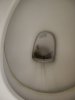
There were thirty frogs in there apparently! The back of the lid was buckled which allowed them entry.I've never seen frogs in a toilet tank - let alone that many! There are at least 14 in this photo! No wonder this attracts snakes!
By the way, these are fantastic photos throughout all of your accounts!
Broome Bird Observatory
I wasn’t sure if I would use today to try for Yellow Chat, but I thought I’d at least walk out to the area I’d been shown yesterday, just to see how long it would take to reach the “start point”. When I got there it would have been silly not to keep walking, so I did.
If you were going to try this walk yourself it would be best to ask one of the rangers for proper directions (and to make sure you’re allowed in that area), but it’s pretty simple.
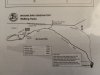
There’s a trail just by the Shade-House called the Spinifex Trail which connects with the Malurus Trail (which isn’t really a trail but is firstly part of the fire-break track which encircles the Observatory grounds, and then branches off onto a dirt road leading all the way to One Tree).
Where the Spinifex Trail comes out onto the fire-break, you turn right and follow the fire-break track for about ten minutes to where it turns right and here there is a metal gate. On the other side of the gate take the right-hand dirt road (this is part of the Malurus Trail) and after another ten minutes you reach a four-way junction of dirt tracks. You take the one directly ahead and just walk out onto the salt plains following the fenceline.
I had been told the walk would be muddy but it wasn’t. The ground was salt-clay but was mostly dry enough not to stick. There were a few damper sections but the clumps of clay adhering to my shoes from these area were small enough to fall away within a short distance.
The salt plains are very open, obviously, so most of the birds you’re seeing are the ones either large enough to be seen from a distance or the ones which will perch on the fence wires. One such fence-percher was seen within five minutes of walking from that four-way junction, when what I initially thought was a Yellow-rumped Thornbill zipped across the track. Little bird on the ground, yellow rump, seemed logical. When I got my binoculars on it I saw that it wasn’t, but I didn’t know what it was. I took some photos and figured I’d look up later.
Later, when back at the Shade-House, I checked the photos on my camera – it had been too bright out there to see them well – and had a flick through the field guide. It turned out that Yellow-rumped Thornbills are not found in this part of Australia (indeed, no thornbills at all are). The bird I had seen looked suspiciously like a juvenile Yellow Chat. It couldn’t really be that, though – I had been told I’d be walking all morning and this bird was seen after less than thirty minutes. In the evening I showed the bird to the resident birders (i.e. the staff) and they immediately said “yes, Yellow Chat”.

Back in the morning now, I continued walking along the fenceline not realising I’d already seen the bird I was looking for. Even if I had known I would have still kept going because I would have wanted to see an adult bird. It’s hard to tell how far I actually walked because it all looked the same but it was about an hour.
I came to a lower-lying bit which was flooded. Some White-faced Herons and unidentified waders took flight as I arrived. The track went straight through the water but I saw there was a second track which veered off away from the fence, which I assumed would connect back ahead.
I took that track and almost immediately saw a bright yellow bird pop up on top of a samphire bush. A Yellow Chat. As far as I knew at the time, my first one. Both sexes of Yellow Chats are yellow, but males have a black bib. This one was a female, with a juvenile in close attendance – I thought it was a male and female at the time because I’d forgotten what the females looked like and thought the yellow bird must be the male.
The birds weren’t close, but I got some photos which basically show a yellow blob.

After they flew off I continued along this track and a short distance on found two more birds. These ones I saw better but didn’t photograph at all. I pondered whether to keep looking for more but decided it was starting to get hot already and it was a long walk back. I’d seen adults and it seemed like they were too flighty for good photos, so I’d settle just for the sightings.
It’s kind of annoying that I didn’t get to see the Orange Chat at the Alice Springs sewage ponds. There are only four species of Australian chats. The White-fronted Chat is common in southern Australia where I’ve seen it lots of times, and I saw the Scarlet Chat at Alice Springs and now the Yellow Chat by Broome. The Orange Chat is the only one I’m missing (although I have seen it in captivity).
The Australian chats, incidentally, are not chats at all. They are actually aberrant honeyeaters, adapted for a life on the ground eating insects. If you know this you can see how they do look a tiny bit like honeyeaters, but it’s still weird.

This is an Orange Chat at the Alice Springs Desert Park. They’re really more yellow than orange, but the name Yellow Chat was already taken.
There was some non-bird excitement just after I got back to the Observatory when the resident Black-headed Python was sighted. He hadn’t been seen for over a week and there was speculation he was in the garage, either having eaten a big meal or shedding. This morning he was spotted sunning at the back of the garage, but by the time everyone got there he had retreated and only his tail was still visible. An hour or so later I snuck back and found him again, although his head was inside the wall. I took a quick photo on my phone and then went to tell the others, but he was gone again when they got there. He was very shy – any time he was seen only the first person would see him and then he would slide away out of sight before anyone else arrived.

After watching birds from the comfort of the Shade-House for the middle of the day, I went out at when I thought high tide was supposed to be to watch for dolphins from the viewing platform just near the Observatory, but the tide was already half-out. I made do with watching waders instead.
Bird total for today was 48 species: White-faced Heron, Red-capped Dotterel, Pacific Golden Plover, Black-bellied (Grey) Plover, Whimbrel, Bar-tailed Godwit, Black-tailed Godwit, Great Knot, Grey-tailed Tattler, Ruddy Turnstone, Terek Sandpiper, Common Sandpiper, Silver Gull, Caspian Tern, Great Crested Tern, Lesser Crested Tern, Australian Gull-billed Tern, Little Tern, Whiskered Tern, Brown Booby, Australian Darter, Australian White Ibis, Brahminy Kite, Whistling Kite, Brown Goshawk, Brown Falcon, Bar-shouldered Dove, Peaceful Dove, Diamond Dove, Sacred Kingfisher, Rainbow Bee-eater, Black-faced Cuckoo-Shrike, White-breasted Woodswallow, Rufous Whistler, Grey Shrike-Thrush, Purple-backed Fairy-Wren, Willy Wagtail, Grey-crowned Babbler, Magpie-Lark, Australian Yellow White-eye, Brown Honeyeater, Singing Honeyeater, Little Friarbird, Yellow Chat, Zebra Finch, Owl (Double-barred) Finch, Great Bowerbird, Torresian Crow.

Should I stay and hope the Long-tailed Finches came back, or go out and try to see another five birds to make an even 70

Broome Bird Observatory
Today was my “biggest” day while at the Observatory.
I started out looking for mangrove birds at One Tree. There are several mangrove specialists in the Broome area, some of which I’d seen before but most of which I hadn’t (because they are mostly only found in northern Australia).
To get to One Tree you can either walk along the sand road (not recommended unless you like being red for the next several weeks) or along the Malurus Trail, which is still a dirt road but is compacted and there wouldn’t normally be any vehicles on it anyway. The Malurus Trail is what I started out on yesterday when going after the Yellow Chats, but instead of veering off into the great expanse you keep walking on the “main” track.
The usual birds were seen along the initial walk, with the additions of some “not every day” birds like a Brown Falcon, a pair of Australian Pipits, and a some Tree Martins. There were even some of the shorebirds as fly-overs before I was anywhere near the beach, like White-faced Heron, Great Egret, White Ibis, and Whimbrel.
One Tree was the final stop on the Shorebird Tour I did on my first day, so I knew when I arrived there (as previously mentioned, there is not just one tree there!). I headed down the steps to the beach and because the tide was out could safely walk directly along the edge of the mangroves without fear of lurking crocodiles.
Mangrove Fantails (a lifer for me) were quickly found, with numerous individuals hawking for insects in the branches and on the sand itself.


A single White-breasted Whistler was crossed off the list next – a female rather than a male, but beggars can’t be choosers – and immediately after that a Dusky Gerygone to make the third mangrove-dwelling lifer of the day.

Female White-breasted Whistler
Two other flycatchers were seen in the same area, a Broad-billed Flycatcher and a Leaden Flycatcher, neither of which were lifers although the Broad-billed Flycatcher was the first one I’d seen in Australia.

Broad-billed Flycatcher
The tide was way out but I could identify some of the more obvious birds in the distance like the pelicans and gulls, and there were some Striated Herons much closer amongst the mangroves. I was pleased, also, to be able to watch a flock of Sharp-tailed Sandpipers scurrying about on the mudflats under the trees at fairly close range. In New Zealand the Sharp-tailed Sandpipers are usually seen in ones and twos, and they are usually not just ten metres away like here.
I walked back to the Observatory along the beach, adding new waders to the day’s list whenever I could see an identifiable one within viewing range (most were hundreds of metres away at the edge of the tide). There were Sacred Kingfishers here and there as well, and a White-bellied Sea Eagle perched on a high tree.
The temperature was well up there now. I retired to the Shade-House over lunch to watch the birds visiting the water dishes. Many of the birds coming here I had seen already this morning, but some of the less common visitors (as far as my viewings here went) included a Grey Shrike-Thrush, Olive-backed Oriole, Paperbark Flycatcher, and Torresian Crow.

Paperbark Flycatcher
Yesterday I had been excited when a Brown Goshawk had arrived here to drink, but it turned out it was a daily occurrence – then it had been an adult female, today there was both the adult female and a juvenile. And then a Whistling Kite showed as well. They are much bigger on the ground than they look in the air.

Female Brown Goshawk

Whistling Kite – this shot was taken through the screen hence the “misty” look to it.
I had looked up the high tide time and whatever site I was on had said high tide at Roebuck Bay was at 3pm. It wasn’t. I really don’t know what happened here – it seemed like the tide was out for the entire day. I was at the viewing deck at 3pm doing the exact opposite of seeing dolphins. Instead I saw a Pindan Dragon, not in the ocean but behind me in the dead leaves on the ground. I had heard it moving but it took a while to see it because, as I found out, even when I knew exactly where it was it basically vanished against the leaves as soon as it stopped moving.

Pindan Dragon
After taking some photos I went back to sea-watching. Hearing the lizard rustling through the leaves again I turned around only to find a completely different lizard there, a Horner’s Dragon, and he also was obliging with posing for photos.

Horner’s Dragon
There were, at least, a few additional birds sitting along the rocks below – Caspian, Lesser Crested and Little Terns, and Australian Darters. An Osprey flew past, and there were some Lesser Sand Plovers there as well (I’d seen a Greater earlier in the day for sure, but otherwise all the sand plovers had been too far away to tell apart).
There were a few people coming and going from the viewing deck while I was there – the Observatory gets a fair number of day-visitors, some of whom are birders and some of whom are just going where-ever the tourist information says they should go. One couple who came by said they had seen two Long-tailed Finches at the Shade-House a short while earlier. That was a bird I’d been wanting to see my whole time here.
Back at the Shade-House, while waiting to see if the finches would come back, I was idly counting up how many birds I had seen today. I was on 64 birds.
A White-gaped Honeyeater flew in, the first one I’d seen at the bird-baths. That made 65 birds.

White-gaped Honeyeater
I kept waiting, but I was getting fidgety. Should I stay and hope the Long-tailed Finches came back, or go out and try to see another five birds to make an even 70? My list-brain overcame my lifer-brain, and I went out on the Spinifex Trail. There was an hour before dark.
I walked the trail then at the end cut over to the beach again, just in case. It was unfortunate that I never saw a high tide today because it meant there were several “easy” shorebirds I’d missed (Terek, Red Knot, Curlew Sandpiper, Red-necked Stint, etc).
I didn’t see five more birds sadly. I saw one more – Purple-backed Fairy-Wren – and ended the day on 66 birds.


Purple-backed Fairy-Wrens – male at top and female in the lower photo.
Bird total for today, with 66 species: Great Egret, White-faced Heron, Striated Heron, Red-capped Dotterel, Lesser Sand Plover, Greater Sand Plover, Pacific Golden Plover, Black-bellied (Grey) Plover, Far-Eastern Curlew, Whimbrel, Bar-tailed Godwit, Black-tailed Godwit, Great Knot, Ruddy Turnstone, Sharp-tailed Sandpiper, Common Greenshank, Australian Pied Oystercatcher, Silver Gull, Caspian Tern, Lesser Crested Tern, Australian Gull-billed Tern, Little Tern, Whiskered Tern, Australian Pelican, Australian Darter, Pied Cormorant, Australian White Ibis, Osprey, White-bellied Sea Eagle, Whistling Kite, Brown Goshawk, Brown Falcon, Crested Pigeon, Bar-shouldered Dove, Peaceful Dove, Diamond Dove, Sacred Kingfisher, Rainbow Bee-eater, Tree Martin, Australian Pipit, Black-faced Cuckoo-Shrike, White-breasted Woodswallow, Broad-billed Flycatcher, Leaden Flycatcher, Paperbark Flycatcher, Rufous Whistler, White-breasted Whistler, Grey Shrike-Thrush, Dusky Gerygone, Purple-backed Fairy-Wren, Mangrove Fantail, Northern Fantail, Willy Wagtail, Grey-crowned Babbler, Magpie-Lark, Australian Yellow White-eye, Brown Honeyeater, Singing Honeyeater, White-gaped Honeyeater, Little Friarbird, Zebra Finch, Owl (Double-barred) Finch, Olive-backed Oriole, Great Bowerbird, Pied Butcherbird, Torresian Crow.
I don't know. I keep day-lists when I'm travelling but I don't keep track of those totals otherwise.What is the birdiest day that you have ever had in terms of number of species, and what habitat was it in?
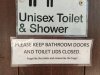
A bathroom / toilet setting might be a common one for Green Tree Frog exhibits in Australian zoos. I just saw one like that recently (at Crocosaurus Cove in Darwin, I think) and I'm fairly sure I've seen it elsewhere....I am not sure how I feel about the frogs in the toilets...given those can only be seen in zoos here, it's quite a weird thing to see in a cistern. There's a potential zoo theming area in an Australian exhibit to beat them all though.